Imagine The Following Scenario: Your Vehicle Is Broken Down and You Have to Leave It For A Period Of Time As You Need to Find, Tools, Parts, Or Fuel- How to Conceal Weapons in Your Vehicle

First, let me give you a little background.

I am a retired Army Senior NCO, Retired Master Peace Officer, drug interdiction officer and for the last 4 years, a military-contracted counter explosive canine handler in Afghanistan and Iraq.

My job depended on finding things people did not what found. I have literally searched, and taken apart thousands of vehicles in my career.

This article is about where to hide your stuff in the vehicle. Since carrying a weapon in your vehicle is legal in most of the USA, this article is geared more to hiding your weapons from those uninvited looters and scavengers who are inevitably going to come around in a social/government breakdown situation. Yes, I’m talking about the proverbial SHTF times.

So, let us set some ground rules. We are going to talk about two types of vehicles, handguns and long guns, as well as ammo. These are no concealment techniques that let you get to your firearms at a moment’s notice. This is about hidden storage that others, unless very skilled, will not find. This is for storage.

Imagine the following scenario: your vehicle is broken down and you have to leave it for a period of time as you need to find, tools, parts, or fuel. You can’t reasonably carry everything, so you are counting on your hidden cache of weapons to still be there upon your return. Or, your vehicle is parked outside, the looters and scavengers come through the area and ransack every vehicle on the block taking what they can easily steal. You don’t want them to find your stuff that was hidden. This is what this article is about. That being said, let’s get to it.

Sedan

The modern sedan has plenty of places to hide weapons. I will start with the accessible places inside the vehicle.
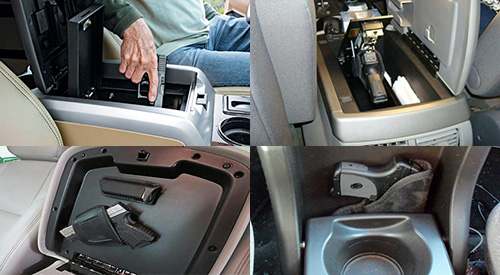
center console concealed weapon

Under the center console. The center console is held to the floor in most sedans by a series of plastic clips or a few Phillip’s screws. Remove those and the console lifts up exposing a compartment that will house a rather large pistol and a couple boxes of ammo.
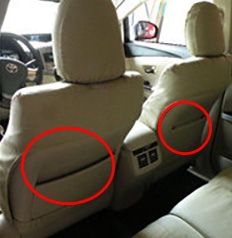
back seat bucket

Seat Backs. The modern car has bucket seats. The back of the seats has a cover that simply snaps onto the seat and covers the springs. This area will conceal a pistol, ammo, and a short barrel long gun like an MP5 or Uzi.  Snap the seat back in place and no one will know it is there. This is also very fast to access if needed.  No tools required.

Under seatsI’m not talking about just on the floor under the seat. What we are talking about here is attached to the underside of the seat by tape, zip ties or something else. This keeps it out of sight if someone looks under the seat but it is still there if you just know where to look.

Other examples:
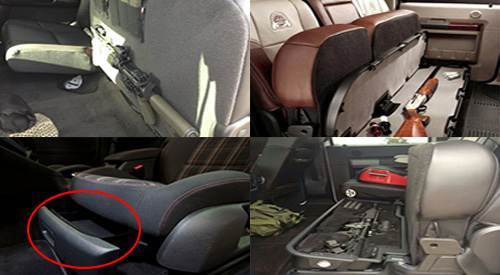
Inside door panels. You can hide a shotgun with a folding stock or a short rifle here. Clips and a couple of screws hold the door panels in place. You could remove the screws and leave them out but a sharp eye will notice something is amiss. My advice is to always put everything back the way it was so there will be no “giveaways” that there could be something behind the panel that is worth hiding.
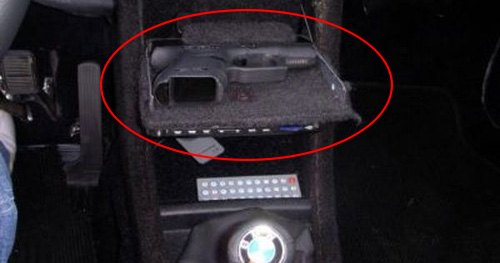
behind radio weapon

Behind the radio. The radio will have four holes in the corners. Look at yours and you will see them. Most folks don’t realize all you have to do is insert metal rods, about the size of a wire coat hanger in these holes and the entire stereo slides out, leaving a very large cavity to hide weapons and ammo behind.

Now for the outside of the vehicle

Outside. The bumpers, front and rear have cavities under them that will hold a shotgun or rifle. Duct tape is a wonderful thing and you will be using it.

Open the hood. Inside the fender wells, you will see several places to hide your firearms. Inside the air cleaner box is a good place for a pistol.

In the trunk. I don’t really suggest this area as it is very easy to detect but in a pinch, it may do. Pull the carpet away from the sides of the trunk. It will be attached to a cardboard backing. Place your weapons behind this, in the cavity that is in the lower part of the rear fender, and replace the trunk lining. If you have done this carefully, it will be undetectable to the untrained eye. I also suggest throwing some old rags or a little dirt in the area to make it look as if it has not been disturbed.

Other examples:
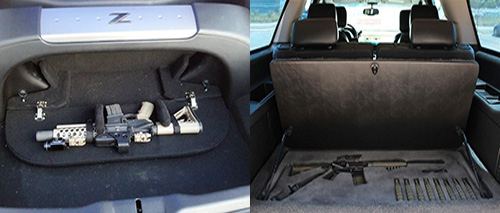
trunk concealed weapons

SUV or Truck

You have many more places to work with here. Count all of the same places mentioned for the inside of the sedan above. Those hiding places are common to just about all vehicles.

Starting at the front

The Front Bumper. Under the front bumper is a very large area to store weapons.  Tape them in a secure place. You can hide a lot of stuff here.

Front Fenders. From under the hood you have access to a very large area to place a rifle bag full of goodies.  It will fit in behind the fender well and be very hard to see without knowing it is there.

Air Box System. This is a common place for pistols and ammo. Placing a weapon here will not affect the operation of the vehicle.

Under the vehicle. The modern SUV/Truck frame is an I Beam type structure. This is a natural shelf for all sorts of things.  A few large black Zip Ties will hold a rifle, shotgun, and a lot more. These will not be visible from just bending down and looking under the vehicle. A person would have to get under the vehicle and really look for them to find your hidden arsenal.

Roof. The roof of all modern SUVs and Trucks is actually hollow. Remove the third stop light that is at the top and rear of the cab. Pull that out and you will see a vast area to hide magazines, ammo, and other items. The way to do this is to tape a string to each item with duct tape and string them together.  Replace the stop light after you have hidden your items in the roof section. Make sure you tape the end of the string to the back of the light or to an area that is concealed but you can reach again. Then to retrieve, all you do is take out the light, pull the string and the items come out one after another.

Tailgate. This is hollow. The inside can be accessed through the latch assembly OR by splitting the tailgate by removing the screws and bolts that hold it together. I have seen tailgates that were split and then resealed with silicone. To open you just cut the silicone with a razor-blade and pull the two halves apart. Not all tailgates are the same, so you may have to adapt to your situation.

Rear Bumper. Like the front of the truck, there is a vast amount of storage space.
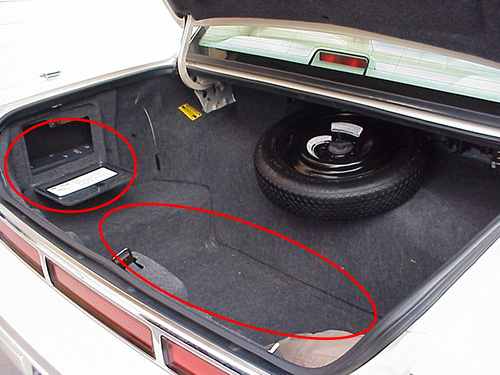
spare tire weapons

Spare Tires. Placing something inside a tire is a real pain in the rear, but hiding an item on top of the tire is easy. Lower the spare tire; most are cranked down to the ground with the jack handle. Once on the ground you can place your items inside the rim and crank the tire back into place. This is a simple and readily available storage area.
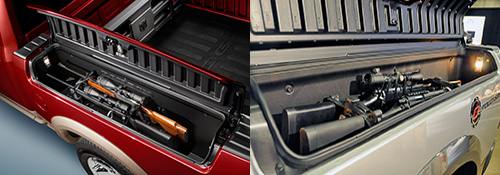
concealed weapons truck rears

Depending on your ingenuity, time you want to spend, if you want to modify the vehicle or not, it is not hard to make your vehicle a rolling arsenal and no one would ever suspect was holding weapons and ammo in every corner.

End thoughts

If you really feel this may be something that you have to deal with, I suggest throwing your roving horde of scavengers off the trail. If you have to abandon your vehicle and you are pretty sure it will get at least looked at, give them something to go after. Leave a useless (as in not functioning) pistol or something in plain sight. Let them take that and stop searching. Basically, throw them a bone. The whole point about concealing your weapons so that the looters won’t find them is just that: concealment. Make sure you leave no signs, no pointers that say “Hey, Look Here!”. Do this and when you return to your vehicle from something as simple as a walk into the woods to take care of bodily functions, you can rest assure when you get back your stuff with be safe and secure.

25 Skills That Are Going to be In Demand If We’re All thrown back On Our Own Resources

When people talk about trading after the apocalypse, usually they start discussing whether you’re better off stockpiling extra ammunition or some surplus food. These are both great trade assets – for a while. Eventually they’ll run out, though, and then what? The guy who’s been bringing you fresh eggs every day isn’t going to keep doing it when you’ve run out of shells for his 12-gauge. Trading surplus supplies might be essential from time to time, but it’s never going to be a long-term solution because, in the end, your supplies will be gone.

How about gold and silver? Some preppers have a touching belief that they’ll be highly prized after society falls apart. I’m not so sure. I don’t know about you, but I wouldn’t be too keen to trade a handful of rifle bullets or a sack of flour for something that’s basically just going to sit around looking shiny.

No, if you want a real trade asset, you can’t beat skills. Once you’ve learned a skill you have an inexhaustible supply of it. If you fixed someone’s generator today in exchange for a bag of apples from his tree, you can get more apples by fixing it again tomorrow. Years from now you can still be fixing his generator every time it goes wrong, and trading your time for his surplus fruit (unless he decides you’re either not so good at fixing generators or a bit too fond of his apples). Skills won’t run out, and in a prolonged emergency that makes them far more valuable for trade than anything else.

Here are 25 skills that are going to be in demand if we’re all thrown back on our own resources. Some of them will be valuable right away; others will kick in when hoarded goods start running out. Learning all 25 of them is probably beyond most of us, but if you get pretty good at three or four you should be able to barter your work for anything you need after the apocalypse.

1.Vehicle maintenance

Being able to keep cars on the road is going to be a vital skill. With society in disarray, most regular workshops will be closed. If you have a reputation as someone who can keep engines running that’s going to be a valuable skill – and you’ll be able to fix generators and pumps, too.

2. Electrics

If the power grid stays down for a while people are going to start looking for alternative sources of electricity. It might be a solar array, generator or wind turbine – in any case, it’s going to need wired up. That can be difficult and even dangerous. If you know how to adapt and extend house wiring, people will pay for that skill.

3. Electronics

If people have electricity they’re going to want gadgets that use it – but eventually they’re going to go wrong. You probably aren’t going to be able to make a new microprocessor, but some basic soldering skills can fix a surprising number of faulty appliances. Their owners will be pleased.

4. Plumbing

When plumbing goes wrong things can get pretty unpleasant in a hurry. That’s why everyone’s immediate reaction is to call a plumber. But what if the world as we know it has ended, and the plumber isn’t answering the phone? If you can help people out with that, they’ll be glad to help you out in some other way.

5. Medicine

Life is dangerous when society collapses; disease and injury will be more common, and the consequences of not treating them are more severe. Any medical assistance you can give, from basic first aid to advanced surgical skills, will make you a valuable asset to the community.

6. Amateur radio

Most of the communications we rely on aren’t going to survive a major social collapse. Without people to run its infrastructure, cell phones and the internet will go down in minutes. Landline phones – the ones that haven’t switched to VOIP – might last hours or even a couple of days. If you have the skills to use radios, especially CB or ham radio, that’s going to be a skill lots of people will want access to.

7. Mending clothes

Nowadays, if our clothes get damaged we just throw them away and buy new ones. Our ancestors, even a couple of generations ago, fixed them instead. If you can repair rips, replace broken zippers and even make alterations for size, you’re not likely to run out of customers willing to trade.

8. Foraging

There’s a lot of food out there if you know what to look for, in the form of edible fruits, berries, leaves, fungi and other plants. The problem is, if you don’t know what to look for you can get in a lot of trouble. Mistaking a death cap for a mushroom is a mistake you’ll only make once. If you have the right skills you can either teach them to others, or trade part of what you collect.

9. Hunting

Not everyone has the skills or equipment to harvest their own meat. If you do, you have a valuable source of food that you can trade for other things you need.

10. Fishing

If you’re elderly or infirm, and can’t do more physical jobs, you can still build up a tradeable food surplus with a fishing pole and some bait.

11. Crop growing

Not too long ago most families had their own vegetable garden. That’s a skill most of us have lost. If you still have it, it’s a valuable asset. Grow more than you need and trade the surplus, or look after people’s plots for them in exchange for a share of the crop.

12. Animal husbandry

Some livestock is a valuable asset, but it takes skill to keep it alive and productive. If you’re good at looking animals you can help out people who don’t have your experience. The most efficient way to do this is to keep their animals with your own and give them their share of the milk, meat or other products.

13. Butchery

Yes, this is the part of keeping livestock many people hate. It’s easy to buy Percy the pig as an investment in your future self-sufficiency, but a lot harder to whack him on the head with a hammer and chop him up. If you can do that for them, they’ll be happy to reward you with a few choice cuts.

14. Canning

A lot of people will manage to find or grow food, with or without your help, but won’t have the skills they need to store it safely. If you’re a canning expert you can make yourself useful by processing their surplus so they can build up stockpiles for the winter – maybe by trading your skills for a share of their crop.

15. Carpentry

It’s amazing what you can make with some timber, a few basic tools – and a bit of talent at woodworking. A good carpenter can put together anything from a storage box to a serviceable timber frame home. In other words, lots of things people will need and be happy to trade for.

16. Blacksmithing

This is a really rare skill nowadays, but it’s going to be in huge demand if the economy implodes. There are still a lot of horses round, and they need shoes – but a good smith can make a lot more than horseshoes.

17. Gunsmithing

Weapons are going to be essential when the SHTF – but they’re complex things, and sometimes they go wrong. Any good shooter can clear a stoppage, but what about repairing a broken trigger mechanism or re-crowning a barrel? Gunsmithing skills are pretty rare – and very valuable.

18. Reloading

There’s a lot of ammunition in the USA, but it won’t last forever. When stocks start to run low a lot of people will be willing to trade for more. If they can bring you their spent brass, and have it remanufactured into ammunition, that’s a very valuable skill to have.

19. Fletching

In a sustained collapse, stocks of modern weapons and ammunition will eventually be gone. To help them last as long as possible, and replace them when they’re exhausted, bows make a viable hunting – and even defensive – weapon. If you can make arrows you’ll find plenty of people willing to trade for them.

20. Soap making

Did you remember to stockpile a large supply of soap? Probably not, but that doesn’t matter – you know how to make it, using lye and any handy fats. Do you think everyone else in the neighborhood remembered to stockpile soap? Unlikely, but never mind. They can trade with you for the surplus you made.

21. Candle making

A year or two into a major collapse electric light will be a lot less common than it is now. Help your neighbors keep the darkness at bay by trading home-made candles. They’re a lot brighter – and safer – than a crude oil lamp.

22. Leatherworking

If you know how to make things from leather, you’ll never be short of work. Everything from shoe repairs to making new tack for horses will be in demand.

23. Teaching

Civilization might have collapsed, but you can help rebuild it by passing on the knowledge the next generation will need. You don’t have to be a qualified teacher, but if you have knowledge and the enthusiasm to pass it on you can turn that to your advantage.

24. Playing an instrument

No matter how bad things get, people need entertainment. In fact, when it’s really bad entertainment is more valuable than ever. If you can play a musical instrument you can do a lot to boost morale, and human nature means people will want to show their gratitude.

25. Spiritual comfort

If you’re good at choosing an uplifting piece of scripture, or making an inspirational speech, that can be a valuable skill. It might not be essential to life, but it can make people feel a lot happier about their situation. In a major emergency death is a real possibility, for example, and if you can give someone a proper send-off their loved ones will cope better.