The recent protests and accompanying riots have raised some very real concerns, both in law-enforcement and the citizenry. Countless millions of dollars worth of damage have been done in the last few months, in many cases, destroying businesses owned by members of their own community. In many cases, the home and business owners were unable to do a thing to protect their property.
This is nowhere clearer than in the case of the McCloskeys, the couple in St. Louis, who have become infamous for standing in front of their mansion, armed, to protect themselves from a protest. While Missouri state law includes the Castle Doctrine, allowing people to defend their homes, the local DA has decided to charge them with the felony offense of “unlawful use of a weapon” for “brandishing guns” during that protest.
These situations can be very tricky to deal with, both for the police and for citizens. While the law allows for the use of deadly force when you are in imminent danger of life and limb, the courts have to rule, after the fact, that the use was in self-defense. Some of these situations aren’t all that clear-cut, meaning that using lethal force to defend yourself can have some very serious ramifications.
That doesn’t just apply to individual citizens, it applies to police as well, who are being confronted with having to make such decisions with much more frequency. As long as protests continue, other groups will continue using those protests as camouflage to hide their own nefarious activities, causing riots, looting and destroying property.
One solution that police are adopting is sonic weapons.
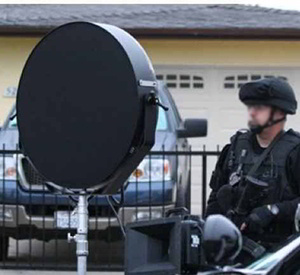
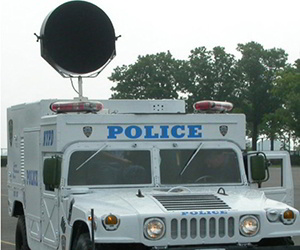
The LRAD (Long Range Acoustic Hailing Device), while not yet widely in use, has been used successfully to dissipate crowds, sometimes even before things turned violent.
While there are some questions about its constitutionality, it is a great option when a less than lethal solution is desired.
The idea of acoustic weapons originated with the need to provide ships with protection from pirates. While we tend to think of piracy as a crime that belonged in the age of sail, there are still pirates operating around the world. Ships equipped with sonic weapons have a means of protecting themselves from such potential attacks. The same technology has been used effectively by whaling ships, protecting themselves from harassment by environmental activists.
What Exactly is a Sonic Weapon?
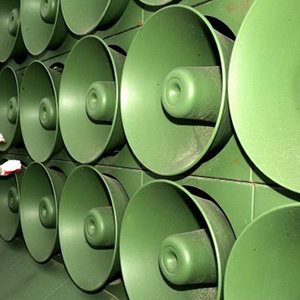
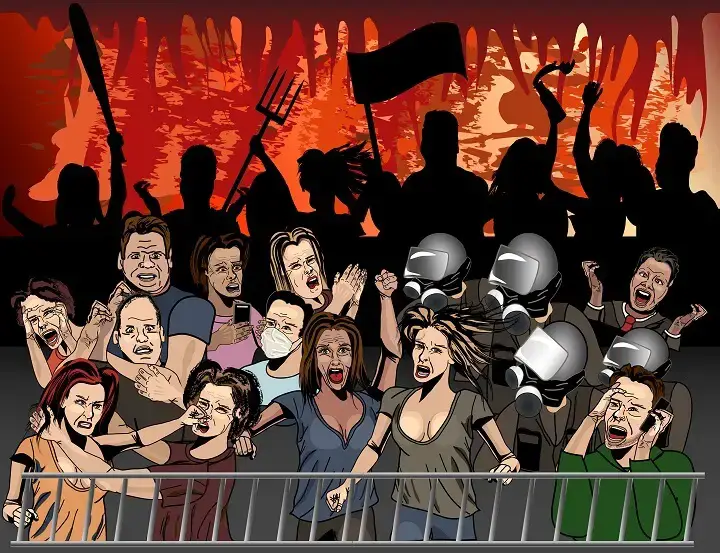
Sonic weapons are devices which produces a very loud sound, somewhere between 130 and 160 dB. This produces intense discomfort and even nausea.
As such, they provide a non-lethal method of dealing with large crowds of people. That doesn’t mean that they’ll all turn and run, with their hands clamped over their ears; but that is a possible result. A lot depends on just how loud the sound is.
Theoretically, sonic weapons can be made as lethal; although it doesn’t appear that there are any currently being manufactured that way.
For them to be lethal, the sound produced would have to be louder than any currently being produced, as well as being at an extremely low frequency, lower than what current speaker technology can reach. Such frequencies resonate with the human body, and can cause catastrophic damage.
In order to make sonic weapons effective, the sound that they produce is aimed. Typical speakers produce a cone of sound that is roughly 120 degrees. The LARS system narrows that down to roughly 60 degrees, with a 40 dB difference between the area covered by the focused sound and areas adjacent to it.
Although the LARS system is a sonic weapon, it is actually not marketed as one. Rather, it is marketed as a long-range hailing device, intended for voice communications with people at a long distance. To use it as a non-lethal weapon, a warbling tone, such as one that might be used for a burglar alarm or as a siren on an emergency vehicle, is put through it, rather than voice. Such tones are easily downloaded from the internet.
Are Sonic Weapons Legal?
As of right now, there don’t appear to be any laws on the books which make sonic weapons illegal in any of the 50 states.
However, at a ticket price of $100,000 to $190,000, the price pretty much limits it to use by law enforcement agencies, military and commercial; ocean-going ships.
There are a few smaller sonic weapons which are made for the civilian market and available for prices ranging from $39.95 to $1,000.
How effective these might be is another question entirely. Little real information, in the form of specifications, is provided by companies selling this equipment. So it’s hard to determine just how effective these devices are.
Making Your Own Sonic Weapon
The basic difference between the LARS system and a public address system is that they have succeeded in narrowing the cone of sound coming out of the speaker. This can be done, even without spending $100,000.
To make your own such system, you need to start out with an amplifier and speaker capable of producing at least 160 decibels. While most home stereos don’t do this, some of the high-end systems can reach this level. Even easier, some of the amplifiers used for car audio systems can produce more than 780 dB of sound. Yes, all those annoying cars whose drivers go by with their sound cranked up enough to shake your car are actually using a sonic weapon against you.
With a good enough sound system to start with, all you need is a means of focusing the sound. I’ve never managed to get the opportunity to take a LARS system apart, I know one very effective way of doing that. It’s not as compact as theirs, but it will work.
All you need to do is create a bundle of tubes, which is larger in diameter than your speaker (not necessarily the speaker cabinet) and mount it to the front of your speaker. The individual tubes need to be two to three feet long (the longer the better) and made of a hard substance which will reflect sound, such as acrylic plastic tubing. PVC will work as well, but not as well as acrylic, because it is softer.
What this bundle of tubing will do, is to reflect the sound waves back and forth, until they come out the end. While this will not totally eliminate the sound that is radiated towards the sides, it will reduce it considerably, sending that sound downrange instead.
In addition to the tubes, it would be helpful to insulate the speaker cabinet, so as to absorb sound and lower the amount of sound pressure going out to the sides and back. In most cases, you can open a speaker cabinet fairly easily, by removing the speaker itself, which is held in with screws. Then just loosely stuff the inside of the cabinet with fiberglass home insulation, making sure to leave room for the speaker you just took out. Once filled, reinstall the speaker.
The whole thing can be mounted on a tripod, allowing you to aim it where you will. Find the balance point for the entire unit and mount it there, creating a custom bracket to mount the speaker. This will allow you to aim the unit the easily, without having to support the weight of the unit with your hands, while you are using it.
If you’re going to use this unit to defend your home from rioters, you’ll want to set it up somewhere where you have a good vantage point and can point it at the rioters from a distance, while at the same time keeping them from getting to you. A second-floor balcony would be a great choice, as would putting it on the roof, if you have a roof where the pitch isn’t so steep as to make it dangerous.
Keep in mind that this is not a foolproof weapon. While it will discourage rioters and might even drive them away, all that they need to do, to slightly protect themselves from it, is to put on noise cancelling headphones, which totally enclose the ear, or at least cover their ears with their hands. That will allow the most daring of them to approach you. So you will want to be sure to have some other sort of weapon available to yourself, should the situation escalate like that and you find yourself needing to protect yourself.
For the Americans, the time of Great Depression is unforgettable. It was the nation’s most serious economic tragedy during the time of modern history. The biggest misfortune was the fact that the nation’s working class had the full burden of it squarely on their shoulders due to which they wrestled badly for their survival during this most difficult period. The following great depression foods helped them survive when nothing else was available.
Indeed but sadly, many could not survive while all suffered. Each American life was shaken up completely by this tragedy in different ways. The Great Depression forced the affluent empire to bend on its knees. Not only money and industries but also the food resources waned almost overnight. This marked the worst time for all Americans.
Will This Worst Time Strike Back?
In reality, the likelihood of such a tragedy shaking the country again is certainly not as low as you may forecast or envision. Certainly, there are new poises and checks acting as safety measures to prevent the nation’s stock market from crashing quickly. However, no one can deny the fact that the economy was badly shaken in 2008 and was sinking again through what was termed as the Great Recession.
The next economic decline can either match or surpass that of The Great Depression. It is a fact that history usually repeats itself. This is where the famous quote of Edmond Burke should be recalled, which says that those who are unfamiliar with the history are destined to repeat it.
So, How Do We Prepare for Survival if Such Period Turns Up in Future?
It is actually simple! All you need to do is learn from the survivalists or survival techniques of the past to become a smart prepper. The most reliable way to keep the past suffering at bay is to learn from the experiences and mistakes of our ancestors and hone them to prepare ourselves for a more challenging time, which is yet to come.
It is hard to believe that the big authorities did not actually learn from the past. The lessons of the past were somehow ignored. Well, the good news is that each American still has time to become a better prepper.
One of the most challenging but must-have skills of such a prepper is to arrange for food. It is truly a challenge to ask your kids to eat a dandelion salad, bizarre grass soup, or a stew of some less favorite veggies. However, if you know what our forebears did to make their family members survive, it certainly makes the same challenge easier for us. Thus, the key here is only to know the ‘where’ and ‘how’ aspects of the food arrangements or preparations during this depressive period.
What Our ForeBears Did to Survive During The Great Depression?
This was the time of scarcity-instilled invention, where families had no other option for survival except for to use whatever they get. They had to manage without several household staples and utilize their ingenuity to plan for alternatives, which were based on readily available products.
Right from using dandelion in salads to mending shoes with a cardboard, the people of those days used whatever they get to make up for scarcity of practically each good and food. Initially, desperation took over ingenuity in the average kitchens.
Urged by First Lady Eleanor Roosevelt who cheered families to save as many resources as possible by practicing savvier home finance management, there were some seriously disgusting food combinations that the Americans followed during the Great Depression. However, even this is true that not the recipes of this time were transient. Big companies such as Kraft used the modern norms and preferences to turn those recipes, such as mac ‘n’ cheese, into a modern household staple.
Many recipes of that time are not for a weak stomach or a faint heart. They tend to reflect the true national spirit of resiliency and adaptive creativity. For countless families, preparing a meal without using any processed or ready-made foods was no longer meant only for a weekend party. It became a skill for people to learn and master how to make those great depression foods.
People who survived and recalled what was it like to have meals during this economic disaster talked about frugality, growing produce on their own and sharing with others, and coping with what they had. It was the time when leftovers were precious.
Anything that could be grown was on priority. Unbelievable pot pies, salads, soups, stews, dumplings, and margarine wrappers all found their way to be in kitchens for several days. Well, these recipes today are unlikely to be seen in kitchens. However, in the 1930s, those recipes were a part of kitchen art, refined by inevitability.
Recalling Top 10 Great Depression Foods
Many Americans did not learn to prepare food as they grew up. This is the reason why they are dependent on packaged food. However, the food preparation experience was totally different at the time of economic depression in the late 1920s. Here are the top 10 Great Depression foods to learn and remember for being a better prepper.
Mock Apple Pie
This was perhaps the most common recipe of that time! You may be thinking how come apples would be available? Well, the most interesting aspect of this recipe is that it was made without apples. It is a fact that apples were not so readily available during that tough time. Nevertheless, this could not force the Americans to live without their treasured apple pie.
This recipe replaced apples with crushed crackers, cinnamon, and a flavored syrup, all of which were baked to form a crispy crust. There are many versions of this recipe but the most famous ones were published on the rear of the 1934’s Ritz cracker box.
The Ritz Mock Apple Pie was perhaps the most famous deceitful treat. It contained sugar, butter, cinnamon, lemon juice, and Ritz crackers to feature a distinct texture and a creamy taste for gratifying your senses.
Prune Pudding
This recipe may sound quite logical, as prunes were widely available. In fact, they are easy to store, and were more affordable than other fruits. Further, they have all the nutrients for being a Great Depression diet, ranging from fiber and 1/3rd of daily needs of Vitamin K.
This recipe got popularity as a simple dessert during that time when Eleanor Roosevelt convinced her consort who was the President to serve it to the White House’s guests. The honorable lady was simply not going to sit back and allow the bad time to bring down the prestige of her nation down.
She was an early patron of the movement called, the home economics, and she sincerely followed what she advised. Well, the food served in the President’s house was notably the most boring one in the history. The poor guests had to eat those eggs in a tomato sauce and crushed potatoes with prune pudding.
Mulligan Stew
This was the name of many stews that the homeless people made at the time of the Great Depression. The recipe varied as per the ingredients or food items on hand. Nevertheless, you can imagine it to be the result of tossing in the pot all that the maker has to feed the belly.
The stew is certainly not an ordinary dish of the tough time! It is a traveler food, which is usually also made using stolen onions, potatoes, corn, mixed scavenged greens, and some navy beans stored in pocket or wallet for months.
Here are two more secret ingredients in it that you cannot imagine. A bit of lint and Bull Durham tobacco for making the broth interesting.
Dandelion Salad
Okay, the dandelion is believed to be an annoying weed. However, at the same time, it has a long history of acting as a therapeutic herb for healing swelling, upset stomach, skin issues, eye issues, diarrhea, and heartburn. It is also a richer source of Vitamins A and C than spinach and tomatoes, respectively. Moreover, they are full of Vitamins B and D, potassium, calcium, and iron.
This is perhaps why it got an esteemed place in the Great Depression diet. The dandelion salad was the favorite of preppers and wild experts. It was a nutritious option that includes simple greens sought from any neighborhood, vinegar if available for taste, pepper, and salt. It was also a tasty dish to add to the daily menu without spending any money.
Peanut Butter Stuffed Onions
Well, this name may appear surreal to you, as both the items in the name have nothing to do with each other. They are also nowhere correlated with each other. However, this bizarre blend of baked onions and peanut butter was common during the Great Depression.
The Bureau of Home Economics made it for the first time and since then, it was popular just for its strange taste. Onions were baked and scoops of peanut butter were filled inside them, resulting in a highly disliked recipe. The maker itself urged the housewives to serve this recipe to all family members and become budgeteers.
Vinegar Cobbler
Both the name and taste sounded weird! Well, this is a dessert that replaced a huge amount of vinegar for costlier fruits and contained sugar, water, butter, nutmeg, flour, and vanilla on the baking plate. Rather than the pieces of apples, the apple cider vinegar was used to forge the real taste for all budgeteers.
Interestingly, Chris Shepherd, an award-winning chef is serving this recipe at his Houston restaurant. Its flavor is much like a custard of vinegar chips and salt that triggers a tingling sensation in the roof of your mouth.
Spaghetti and Carrot Casserole
Casseroles were madly famous during this tough period. The recipes involved mixing all types of leftovers to form a single dish. This is how families were able to get a variety in their daily menu without looking for difficult-to-find ingredients.
While meat was an unaffordable indulgence, spaghetti casserole was commonly made. The hard workign moms were using boiled carrots covered in a white sauce made up of butter, salt, flour, and milk. The First Lady Eleanor Roosevelt was the pioneer of this item. She promoted some truly dull dishes for supporting the savvy home economics.
Meatless Loaves
Meatloaves, as dietary staples, were no longer available when the food scarcity commenced during the Great Depression. Thus, a meatloaf was twisted as per the available ingredients. It then became a meatless loaf made using any item that was available ranging right from raisins to peanuts. People used their ingenuity to make this item their weekly favorite.
Potato Pancakes
Potato is one such food that is widely available even during the tough times. It is also among the most affordable foods, whether it is a good or a bad time. Thus, it was no wonder why potatoes were widely used during the period of Great Depression.
Depression-era chefs highly relied on potatoes as alternatives in their different dishes. One of the commonly cooked dishes was a potato pancake. This was a simple recipe, in which grated potatoes were fried or cooked in a pan. Mostly, all meals had this dish. It is one of the most common great depression foods that people still remember.
Milkorno
In Cornell University, a few scientists came up with a dish called milkorno in 1933. It is a blend of cornmeal, powdered skim milk, and salt, a recipe that was made for families to fulfill their nutritional needs without increasing their budget. Upon boiling, all ingredients of Milkorno become a part of a porridge. The recipe promised a fulfilling experience for the family of five members for $5 per week.
Again, this recipe of combining corn and milk was what that guests of Eleanor Roosevelt probably ate and made. Another two variations of this recipe were Milkoato and Milkwheato, of which the latter gave scope for big business for which dystopian dust was purchased by the government for use in the recipe.
Conclusion
For the younger generation the foods described here are most likely uneapeling. They cannot imagine eating something like that even during a crisis. Our generation is no longer familar with the outcomes of a widespred famine. The time of distressing economic uncertainty has taught some great cooking skills to Americans. It is up to us how sincerely we master it and how dedicatedly we improve or learn it! Remember, future is uncertain and the economy can become volatile at any point in time. So, readiness to face it is indispensable!
Riots and Looting are Nothing New, but This Time May Be Different.
In the midst of a global pandemic, riots and looting have returned to the streets of the United States. In some areas, they’re becoming the norm. Once again, the trigger for the civil unrest was racially driven, but other factors simmering beneath the surface come into play.
Currently, the presidential election is probably the biggest factor. America often becomes very tense in election years, but this election is unprecedented. We’re in a situation where both sides view a loss as the end of democracy as we know it. People on the left think Trump will become a full-fledged dictator if he’s reelected, and people on the right think the deep state or radical left will take over the government if he isn’t reelected.
But on top of that, we have a situation where Trump could look like the clear winner on election night, but as the mail-in ballots are counted in the following days, it could look like Biden is the actual winner. They’re calling it a red mirage, and it could happen because there will be far more mail-in voting than usual due to the pandemic, and Democrats are more likely to use mail-in ballots.
But can the mail-in ballots be trusted? Will there be widespread voter fraud? Both sides are worried about these issues and suspicious of the other side. If Democrats or Republicans feel like the election is being stolen from them, the powderkeg that is America could ignite.
So how likely are we to see riots and violence in the coming months? In order to understand the current situation, we need to look at what sorts of things have caused riots in the past.
If society collapses, you can bet that the foods the pioneers ate will become dietary staples
In a number of studies, the underlying factors that move peaceful protests to the violence of a riot have come to light.
1. Economic Factors
In the past, poverty and unemployment contributed to many instances of civil unrest. This simmering anger driven by economic disparity is what has made looting a part of most riots. People living in poverty are often desperate, and when groups take to the streets to protest, they join because they’re filled with anger and resentment at a society that seems to have left them behind.
The second great blackout hit New York City in 1977 when the grid went down. The first blackout to hit the east coast was peaceful. The second led to a night of arson and looting resulting in 4,500 arrests and $300 million in damage.
2. Political Factors
Extremists on both sides of the political spectrum often take advantage of civil unrest to further promote their agendas. In these instances, the motivation for the civil unrest is immaterial and the unrest simply provides a backdrop to demonstrate extreme and unrelated ideas and feelings.
The Seattle riots of 1999 were the result of anti-globalization activists protesting the World Trade Organization Ministerial Conference. It resulted in 157 people arrests and $20 million in property damage.
3. Criminal Factors
Where there’s chaos, there’s money to be made, and criminals take full advantage of times when police are overwhelmed. When that happens, the rule of law seems to break down.
Looting is the primary activity, but crimes generally rise during times of civil unrest for the simple reason that there are fewer police officers available to respond. Just look at what happened when the police in Montreal went on strike.
4. Radical Factors
Anarchists step into periods of civil unrest and often aggravate the situation to further their agenda of disruption. Arson is often the result, as well as an escalation of violence.
It’s believed by some that a fake hand grenade thrown at National Guard troops at Kent State University in Ohio in 1970 is what triggered the Ohio National Guard to open fire.
5. The Mob Mentality
Even everyday people behave differently in a mob. The actions of a mob are erratic and unpredictable. Anonymity allows people to engage in activities they would normally never pursue. Leadership within mobs shifts quickly and to the loudest voice.
Here again, deep-seated resentments, long-term frustrations, and long-standing disappointment galvanize some to lash out and immerse themselves in the rage of the growing mob.
Danger Ahead
As you can see, all of these factors are playing a part in the current riots and protests. It’s creating a situation where peaceful protests could quickly turn violent. And these aren’t even the only factors at play.
Four New Factors That Could Lead To Riots
1. The COVID-19 Economic Depression
The official unemployment rate as a result of the pandemic is about 8.4 percent as of September 2020. However, many people believe that the real unemployment rate is even higher than it was during The Great Depression at about 28%.
People out of work have nothing else to do and are free to join protests or riots. Unemployment and economic disparity have been a hallmark of past periods of civil unrest. The current economic downturn is unprecedented, and the question is to what degree further civil disturbances will result.
2. The New Anonymity
“Everyone must wear a mask.” It’s ironic, but the masks that have become so common to prevent transmission of COVID-19 are the traditional mark of a rioter around the world.
In the past, someone with a mask was looked upon with fear and suspicion. The new normal of wearing masks in public makes it easy for anyone to feel anonymous and has no doubt motivated some of the looting and violence in recent months.
3. Increased Stress
The pandemic lockdowns and the threat of coronavirus have created a new type of stress that is affecting almost everyone. It has led many to behave irrationally in a variety of ways.
The choice to become a part of a demonstration or even a potential riot can be motivated by high stress levels. Worse, high stress affecting a mob can motivate it to take actions that are increasingly confrontational.
I already covered the election in the intro, but something I didn’t mention is the passing of Ruth Bader Ginsberg. Since Republicans refused Obama his final Supreme Court pick, Democrats feel it’s only fair to deny Trump his (potentially) final Supreme Court pick.
I’m not taking sides here. I’m just pointing out that no matter what happens, one side is going to feel cheated, and some of them are going to take action. You don’t want to be around when that happens.
The Perfect Storm
With a total of nine factors that could lead to civil unrest, we really are in the perfect storm. At this point, I would be surprised if there wasn’t violence and civil unrest. So now, let’s talk more about what to expect and how to prepare.
How Long Do Riots Last?
Past precedents indicate that most riots last a day or two, although some extend to a week. A lot depends on the motivation for the riot.
Many riots have been motivated by (of all things) sports. From Vancouver to San Francisco to Denver, when sports teams win or lose a major championship, riots often result. All of these riots proved to be one-night occurrences and things soon returned to normal the following day.
Riots motivated by injustice similar to the situation surrounding the death of George Floyd have usually lasted for longer durations.
The Cincinnati riots of 2001 lasted 4 days.
The Detroit riots of 1967 lasted 5 days.
The Watts riots of 1965 lasted 6 days.
The Los Angels riots of 1992 lasted 6 days.
In most instances, the appearance of the National Guard finally quelled the riots.
Will This Time Be Different?
The National Guard has already been called up in 23 states this year, including Washington D.C. The question is whether the coming riots will subside after a short period of time or continue for weeks or even months.
Hopefully, the presence of the National Guard will eventually quell any civil unrest, but time will tell. In the meantime, you need to think about how to keep yourself and your family safe given the pattern of current events.
7 Ways to Prepare for Civil Unrest
Some of the steps we’ll outline below are common sense. Others are a bit extreme—like bugging out—but a lot depends on where you live. People living in a large metropolitan area are most at risk while suburban and especially rural locations are typically far removed from the threat of riots and looting.
These recommendations assume a worst-case scenario for someone living or working in a city where rioting, arson, and looting can potentially occur.
1. Stay Home
Again, the irony of the lockdowns for the Coronavirus pandemic makes this a fact of life in many parts of the country. However, as the country reopens and people return to work, many may find themselves confronted by a demonstration that devolves into a riot.
If you live in an area where demonstrations or riots are taking place, you should only leave home when absolutely necessary. This is already the pattern for many people due to pandemic precautions, but the potential to walk or drive into a violent situation should give you added pause.
2. Stay Informed
Local news broadcasts on TV, radio, and the Internet give daily updates not only on the circumstances surrounding rioting but on the locations.
As hard as it is to listen or watch the news these days, it’s important to know what’s going on in your area. If any demonstration or protest is planned for your immediate vicinity, lockdown and don’t go out.
3. Stock Up
Many are already doing this, but the addition of civil unrest to a pandemic makes it all the more important to reduce your need to travel to any destination for groceries, medical supplies, or other necessary items.
Order online as much as possible and, when you do go out to make purchases, try to think long-term. There are limits on many items these days, but if your neighborhood is a hot spot, buy the maximum allowed of any items you need to reduce your overall travel.
4. Lock Up
It’s one thing to lock up at night, but if you live in an apartment or neighborhood in close proximity to potential demonstrations or protests, keep your doors and windows locked at all times. Most rioters and looters tend to focus on businesses rather than individual homes or apartments, but as civil unrest grows, the direct threat can increase overall.
Some people choose to re-enforce their doors and windows and even go so far as to put up barricades on all entrances. That depends on the situation and the individual. If you have to resort to that level of security, don’t forget to make sure you can make a quick exit in the event that arson causes a fire to reach your location.
5. Keep a Low Profile
That’s easy to do if you stay home, but think twice about any signs in your front lawn expounding a political belief or opinion, and maybe it’s time to get rid of those bumper stickers spouting similar sentiments. It also helps to keep your opinions to yourself. At a time of high stress and violence in the streets, some people are looking for trouble. Don’t give them a reason to find it with you.
The same is true when walking through an area of demonstrations, protests, and especially civil unrest. Don’t take sides because there’s a good chance that both sides will be in the vicinity and you rarely know who you’ll encounter.
If confronted by someone asking you whose side you’re on, tell them you’re on their side and slip away as calmly and quickly as possible. You may also want to think twice about any clothing that makes specific or polarizing statements about controversial ideas or positions. Here again, the best way to stay out of trouble is to not ask for it. If you do, you may as well join the protest, but this is about preparing for and avoiding a riot—not starting one.
6. Don’t Get Caught in the Middle
If you find yourself in an unfolding situation of violence or civil unrest, calmly walk away and out of the situation. Keep a low profile. Don’t intervene with looters or take direct exception to what someone is saying or doing. Find a way to get out of the area and away from the violence.
And don’t give the police or the National Guard any reason to see you as a threat. They are not there to protect you. They are there to disperse the crowd and break up the riot. If they see you as part of the problem, they will act accordingly. Don’t run but move quickly.
If you’re driving and find yourself in a riot, stop if you must. Drive slowly and carefully. Don’t say or demonstrate aggressive or provocative behavior. If you must, lock and abandon your car. You want to blend in and not stand out from the crowd while you get out.
7. Have a Plan
It’s uncomfortable, but it’s worth discussing the overall situation with your immediate family. How should you individually and collectively respond to a variety of possibilities? It’s probably best to not include small children in all of these conversations, but they should be aware of the fact that you may have to act quickly.
What do we do if we hear gunshots?
What do we do if there’s a knock at the door and who should answer it and how?
What do we do if the neighbor’s house or the apartment building we live in catches on fire due to arson?
Should we tell any friends or neighbors about our plans and emergency supplies?
What other things are you worried about and what else should we discuss and plan for?
Having a plan for events will give you some degree of peace-of-mind, and the last thing you want to do is panic at the moment something unexpected occurs. Take the time to stop, think, and anticipate so you can form a plan for events.
Bug Out?
This is always easier said than done. If you’re one of the few who have an established bug out location like a vacation home or farm in a rural area, your biggest challenge is getting to your location safely.
If you don’t have an established bug out location and the situation in your area becomes so desperate that you feel compelled to leave, you still have a few options.
Consider staying with a relative or friend who lives in an area safe from civil unrest.
Consider an extended stay motel or hotel. People are hesitant to occupy a motel or hotel space during the pandemic, but if you stay put and sanitize the rooms, it will be safer than staying in a hot spot of civil unrest.
Go camping. If the weather and location permits, you can always set up camp in a remote area and hope the duration of any civil unrest winds down.
Other options for bug out locations include national forests, mines, ghost towns, and abandoned factories.
Before you bug out, there are a few things you should keep in mind:
Don’t tell anyone you are bugging out and try to make your house or apartment appear to be occupied. A house or apartment that is obviously deserted at a time of civil unrest is a quick target for looters and vandalism.
Lock up and barricade your house as much as possible and take any items of value to your bug out location. The rule in that regard is simple. If you don’t want to lose it, then take it or hide it.
Don’t assume your bug out location is an automatic safe haven. Continue to practice due diligence and anticipate events that could occur there.
What About Weapons?
At home, arming yourself to defend yourself and your family is a good idea. In your car, that depends on where you’re going. If you’re bugging out, definitely. There are two in particular you should take with you.
On your person? That’s a really big question. Even if you have an open-carry permit or live in an open-carry state, you may want to think twice about displaying a weapon in any way. The police and especially the National Guard will not see you as a wise and prepared person acting to simply defend yourself in an emergency. There’s a good possibility they will see you as a threat and at times of civil unrest, they rarely stop to ask any questions.
Wearing a pistol on your belt can be provocative, and while it may give you a sense of confidence, if shots ring out anywhere in your vicinity, it won’t take much for law enforcement to assume you may have been the shooter. The last thing you want is to become the reason for the next round of riots.
Final Thoughts
I wish I had some inspirational words or reasons for optimism, but I don’t. This is a dark time in American history. My only hope is that when it’s all over, we’ll find a way to become the United States again. In the meantime, take care of yourself and your family.
Today I’d like to share with you a “3-second survival hack” you can use to skyrocket your chances of protecting your loved ones during ANY crisis.
The late afternoon light is shining through your window and the scene outside is quiet, just the way you like it. You are about a month into a serious collapse and thus far your preps have held up. Power has been out for 2 weeks; you don’t plan on ever having power again. You prepared for that.
As the sun sinks closer to the horizon you hear one of the most terrifying sounds of all: A knock on the door!
Your family finds their places and weapons, you leave from the backdoor and flank whoever might be on your porch. To your surprise it is your cousin! You haven’t seen him in years, but he is here. He looks rough and he has his disheveled family of three along with him. He also doesn’t seem to have any food or supplies with him.
This is one of the prepper scenarios we all have thought about. However, it might not be as bad as you think!
Today I’d like to share with you a “3-second survival hack” you can use to skyrocket your chances of protecting your loved ones during ANY crisis.
So, what do you do when someone unexpected comes knocking? Now, that is an interesting word to use in conjunction with preppers. UNEXPECTED. The whole point of prepping is to consider the unexpected.
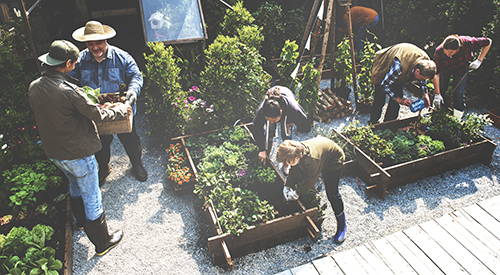
In a true SHTF situation people bring you power. Your community should be like a hive. Hardly worth the trouble of any small group that might wish to steal or worse. You must be able to sustain them or have them sustain themselves but there will be tremendous power in numbers. Big jobs become easier, you can make an area more secure with more people, and you have more brains to put towards a problem.
Of course, its not heaven. With people come people issues like fights, jealousy, and the like. However, good leadership and preparedness can give you the upper hand on things like that.
You must first make an honest list of “survival dependents” or people who will come to depend on you when everything goes to hell!
Trust me, your list is bigger than you think.
Survival Dependents
While it is nice to imagine that the calamity will never cross your threshold, the reality is that many more people depend on you than you think. Chances are, even if people don’t know you’re a prepper, you are the type of person who has it together. You are likely the person people go to for answers.
No matter how strong your OPSEC protocols are if you are a good and solid person, than people will look to you in times of crisis. These might be people you love or just people you know.
Now is the time to sit down and create a real list. You must take off the blinders and truly consider all the people who will depend on you in an SHTF situation. It would be perfect if your list consisted of 4 people but when you break it down you have groups of people to consider.
Immediate Family
Extended Family
Friends
Co Workers
Your group of survival dependents could include people from each of these categories. How they depend on you may vary but this list will help you understand that there are more people than just your immediate family who will turn to you in times of calamity.
Can You Support People?
Of course, the question that comes to mind after you create a list like this is: Do I have enough?
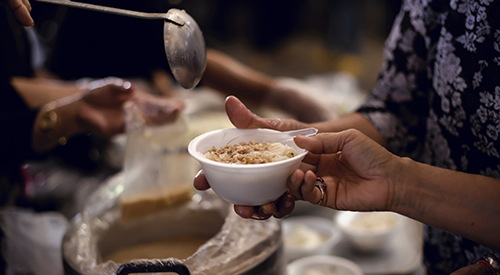
For most people, the answer is no. It can be over burdensome to assume that you can prep for all the people who might be on your list of survival dependents. When these people show up asking for food, though, you need to have something!
Unless you subscribe to the idea that you are going to turn everyone away who comes to your door. If that is your game plan than you better also prepare for some serious backlash. How many fathers with kids can you turn away before one of them says, “No, we are coming in.”
What happens next cannot be good, with lots of harmful outcomes.
This doesn’t mean you should be a pushover and let any old person into your home and feed them.
Tip: When people approach you to ask for something, if they come to your door or see you outside, simply ask them for something first! Open the door and ask for food and medicine: “Oh, I hope you brought some food, we haven’t eaten in a week!”
Put Them to Work Immediately
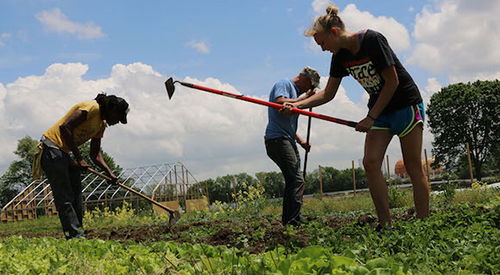
From that list of survival dependents, you will likely choose people who you will bring into the fold. However, don’t let them in free of charge. The best way to handle someone who comes asking for help is to immediately give them some form of work to be done.
This is also a great gauge of the depth of that person. Those who are outraged by the work that needs to be done at “their new home” are people that you can easily weed out. Just make it truly clear up front that there is plenty to do and if they cannot do what is asked, they cannot stay.
By the way, there will be plenty to do! If you manage a household of four and all the sudden it jumps to ten you will have lots of extra work. It is not so much about room but about dishes, laundry, food production, security detail in the neighborhood, general cleaning.
In an off-grid situation, it might be about things like water procurement and sanitizing, renewable energy system maintenance, gardening, canning and everything in between.
There will be a serious list of chores to be done and the last thing you want is a house full of freeloaders laying around all day while you are red in the face.
Using a basic Excel spreadsheet, you will be able to create chore lists TODAY for issues that might come tomorrow. Print a stack of them and save them. They can be filled out by hand when the time comes or if you know the system you could print them with the duties listed.
It’s high time we stop looking at neighbors and friends as threats in the downfall. Many people can see something resembling collapse just on the horizon. Its hard not to look around and wonder how the unprepared will react to a future of scarcity, uncertainty, with up close and personal violence.
If America is facing balkanization or civil war it will be particularly important that you have a secure neighborhood with plenty of able-bodied individuals. Many neighbors will leave for a safer environment and you must be aware of that. However, that might free up homes and living areas for more of your survival dependents.
Your survival dependents are not the burden you once thought. Believe me. While you know the flaws of the people around you, they have two ears, two eyes and a heart that wants to survive. If you can find it in you to lead these people they will provide you with a true survival group that will keep you and yours from being acted upon by anyone with a group larger and better trained than you and your spouse!
Our little prepping universe has been hit with a bunch of newbies, who are either fully on board, or are looking for a reason to do prepper-related kind of things. Many of these new preppers are just looking to act in a way that will help them sleep at night.
Never forget that the average American went from staring into their phones and complaining about their jobs to losing or nearly losing their jobs, being stuck inside a packed home, teaching their children, watching riots and a pandemic from their front porch, and wondering “What comes next!?”.
Many new preppers don’t have the money to put towards prepping, so there is a real struggle to get off the ground in prepping on a tight budget. The good news is, I am here with 30 days of no money preps that really make a difference.x
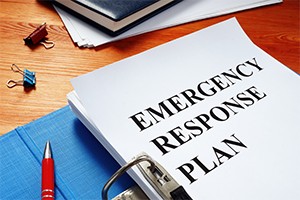
#1. ERP (Emergency Response Plan)
When you start a business, you need to create an ERP or Emergency Response Plan to assure your employees know how to react to a variety of emergencies.
From things like fire drills to active shooters, you need everyone to know where the ERP is and what’s inside of it.
So as long as you have access to a computer, you can start writing an ERP and making a difference. It costs you no money. Written plans are highly underrated in the prepping and survival world. They save lives all the time in the business world. Build an ERP.
#2. Go for a Run
While this might seem simple, going out for a run does a number of things. It gives you some time to think about the nation, yourself, and the world around you.
It also gives you an opportunity to clear your mind and get into the meditative motion of plodding one foot in front of the other. Most importantly, you are training endurance every time you run and trust me, you will need it.
#3. Meetup with Your Neighbors
This doesn’t have to be a prepper meetup. It doesn’t have to be a meetup to discuss how you are going to defend your neighborhood from riots. Of course, we all want to be ready if something like that happens.
Start with a cookout, a picnic, a block party, and the like. Be sure that you can get out and look the people who live around you in the eye, and enjoy spending time with them! From there a deeper relationship will be much more effective.
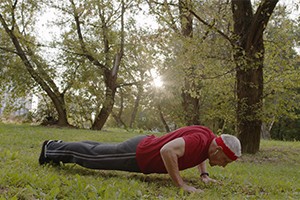
#4. Workout
Your physical fitness is essential to your level of preparedness. Fitness is not a piece of the prepping puzzle, instead, prepping is just a piece of the fitness of the puzzle.
Fitness is a testament to your overall health and without that you have nothing. Take care of yourself, do some pushups, squats, and sit-ups every day.
#5. Wild Edibles
Whether you use a library book, a computer, or a phone app, you can spend a couple of hours in the woods or around your neighborhood learning about and tasting wild edible plants.
#6. Useful Trees
While wild edible plants are great, trees are even better, because they are around all year. After that first frost 90% of your wild edible knowledge is useless. If you understand medicinal and edible trees, you can keep that wild foraging going year-round.
#7. All Your Blades
If you have a stone or a sharpener, you can spend a day simply sharpening all your blades. If you have a chainsaw sharpener and a puck style sharpener, you can head into the shed and sharpen up things like axes and chainsaws.
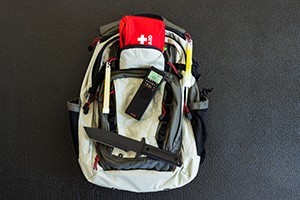
#8. QA Bugout Bags
When was the last time you opened your bugout bag? Do you have any idea how old those granola bars in your bugout bag are?
At least once a year you need to open that bugout bag and take everything out. Lay it across your kitchen floor and have a look at the contents. Modify the contents to what you truly need.
#9. Conduct an Area Study
Popularized by Sam Culper of The Forward Observer, an area study is free to conduct and will explain your area to you in deep detail. It takes time and thought, but you can basically knock the whole thing out without any money. There are some great YouTube videos on how to create your own area study.
This is a task that most people do not want to undertake because you have to find out about resources, crime and even gangs in your area. You might not be thrilled with the results.
#10. Zero Rifles and Firearms
5 million Americans bought firearms in the month of July. That means there are a bunch of people who have guns that aren’t yet zeroed. Are you one of those people?
You can zero a weapon for free, if you have bore sight and a quiet place to focus.
#11. Free Mobile Apps
There is a slew of great preparedness mobile apps. You can organize your preps, learn about bushcraft, or even practice some tactics on a survival game. Don’t deny the benefit of a little survival simulation gaming.
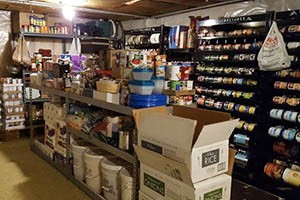
#12. Your Pantry
You haven’t had company over in a long time. People have been hiding from you because masks and riots and inequality and so forth.
When you stare into your pantry, do you see something you’re proud of? Remember, the more organized you are, the more space you have for more preps!
#13. Library
The library is full of free books where you can read about history, prepping, nature, and survival.
If your library is closed, than you could also use the application called “Hoopla”. This allows you to take eBooks and audio books out from your library without going there.
#14. Freecycle for Preps
Check the local classifieds, craigslist, and other similar websites to see if there are local free preps you can pick up.
Gardening tools, firewood and building materials are always great options.
#15. Free Classes
There are lots of free classes online and free classes in your immediate area. One of the best examples of this is the annual first aid courses in your local area.
You can also visit Red Cross to see the free courses they offer.
#16. Make Some Money
You probably have a little foothold on your preparedness knowledge. I am sure you have at least one thing you can teach the people around you.
So, knowing that, you can create a course that you can charge money for, or just teach for free on sites like UDEMY.
These courses also help you fortify your prepping knowledge.
#17. Free books
These things are everywhere! You might have to sacrifice an email, but you can get a ton of free prepping eBooks just by search “free prepping books”.
#18. Meditate
Prepping can drive you completely mad! If you are not careful, a diet of disaster and apocalypse will just destroy you.
One of the best ways to deal with this is to find a quiet place and just run a mantra over and over in your mind. Do it for 5 minutes to start and just try to keep your mind clear of thoughts.
#19. Hike with Your Bugout Bag
A simple walk, ruck, or hike with your bugout bag on is great for fitness and a better understanding of your gear.
#20. Go Fishing
If you have some old fishing gear or new fishing gear, get out and have some fun catching fish.
Remember, every fish you catch is food in a survival situation. Fishing is an underrated survival skill, but it’s one that will really make the difference.
#21. Walk or Drive to Your Bugout Location
It is never a bad idea to take a trip to the old bugout location. Whether you run, walk, or drive there, you can learn so much about your route/routes by simply heading there.
Don’t wait ‘till you have to go in a hurry.
#22. Practice Bandaging a Wound
Make a red dot on your arm or the arm of a family member. This is now a wound that is bleeding profusely. Bandage that wound with your current first aid preps.
What do you need more of, or what do you need to learn?
#23. Tap Water
Storing tap water is just a matter of having some clean empty containers. Store these out of sunlight, as they can grow algae if exposed to light.
#24. Sell
We all have too much stuff! Someone might really enjoy the old thing that you have been holding onto for years. Have a yard sale, or put some items for sale online.
You might be able to make some cash for more preps.
#25. Build a Fire
There is always the option of working on the craft of making fire. A fire is not only a great skill to practice, but setting down by a fire is a great feeling.
#26. Free Checklist
The internet is full of free prepping checklists and they can go a long way in helping you understand some things that might be missing form your preps.
#27. Gather Seeds
If you have a garden out back, spend a day just harvesting seeds from the plants. Now is a great time for this. Collect seeds and store them in an organized fashion for next year’s garden.
#28. Battle Tracking
The next time there is a riot you can sit down, and battle track that riot. You can use things like social media, the Broadcastify app, and other intel sources to follow the riots in an area in real time. Twitter is great for this.
Bring up a map of the area and try and pinpoint the location of riots. Then, using intel, follow the riot in real time and follow the police actions, too.
Mark up your map to show you where the violence, fires, police, firemen and other things like road closures might be. This is a great little learning activity.
#29. Survival Caches
All preppers can benefit from spreading their preps into new areas. Having everything in one place is a tough situation to be in. Lots can go wrong.
You can make a survival cache with scrap PVC and epoxy, and bury some preps in a special place.
#30. Always a Great Option
Camping is always a great option. Your local wildlife management area or public lands are great places to go to and camp for free!
As you can see, there are all kinds of things you can do for free that will bolster your level of preparedness. While money can really help you make great strides in prepping, you don’t need a deep bank account to spend a full month prepping away and preparing for what could come.








 Preppgroup