Interesting- Inside A Secret Government Warehouse Prepping For Societal Collapse

The government recently hired a firm called Gryphon Scientific to analyze how well the stockpile could respond to a range of health disaster scenarios.

The warehouse Greenfieldboyce visited contains 130 shipping containers, but who will be on the receiving end of these shipping containers during an actual emergency?

“While they do have plans for emergencies, and lists of volunteers, they’re volunteers,” said Paul Petersen, director of emergency preparedness for Tennessee. “And they’re not guaranteed to show up in the time of need.”

While the mainstream media propagandists continue to push the lie of a robust recovering economy, the fact is, we are in some serious fiscal trouble. Economies around the world are crashing, countries are drowning in record amounts of debt, and governments continue to pile on new debt like there’s no tomorrow.

What is an Economic Collapse?

Economic collapse, in its simplest definition, means a sudden and severe drop in currency value, leading to a financial crisis. It usually happens when the country’s economic activities are mismanaged or when an unexpected event throws the country into chaos. Some examples of such events are terrorist attacks, natural disasters, political upheaval, severe social unrest, financial bubbles , a collapse in government, and pandemics.

A look at Prior Economic Disasters, Depressions and Market Collapses

Throughout the history of the world, there have been many instances where countries have experienced an economic collapse, leading to severe consequences such as hyperinflation, high unemployment rates, and poverty. In extreme cases, economic collapse can even lead to a societal breakdown, with people experiencing shortages, social unrest, and struggling to survive.

The earliest recorded economic collapse occurred in 176 BC when the Roman Republic experienced a severe financial crisis that eventually led to massive inflation and debasement of the currency. The government’s response to this crisis was to issue more coins with decreased silver content, resulting in worsening hyperinflation and a sharp decline in the purchasing power of its citizens. This eventually led to social unrest and political instability, eroding the strength of the Roman Empire over time.

Another significant economic collapse occurred during the Great Depression of the 1930s, triggered by the stock market crash of 1929. During this period, businesses failed, banks collapsed, and unemployment soared to unprecedented levels worldwide. The depression had far-reaching negative consequences, some of which ultimately led to World War II.

In 1997, the Asian Financial Crisis rocked Southeast Asia, causing widespread economic instability and social unrest. The crisis began with the devaluation of the Thai baht, leading to investors withdrawing their capital from other Southeast Asian countries. This, in turn, led to a sharp decline in the value of their currencies and an economic recession. As a result, millions lost their jobs, and poverty rates rose steeply. Some nations recovered relatively quickly, while others, such as Indonesia, suffered profound economic and political upheaval for several years

The most recent collapse occurred in 2008 when the subprime mortgage crisis shook the global financial markets. The crisis began with predatory lending practices by mortgage lenders, high-risk borrowing by homeowners, and the buying and selling of risky loans between financial institutions. When homeowners began to default on their mortgages, banks and insurance companies suffered huge losses, and trust in the financial system evaporated almost overnight. As a result, governments worldwide were forced to intervene to avoid a total collapse of the financial system.

As history shows, it’s not if but when! Therefore, preparing for an economic collapse is vital to your survival, especially in today’s world, where the global economy is interdependent. Any event, even those in other parts of the world, can have a ripple effect on other countries. This article will provide tips on how to prepare for economic collapse.

Are we heading towards an Economic Collapse?

At some point this debt train is going to come to a screeching halt; when that happens we are going to see panic and chaos like nothing we’ve ever seen before.

As we’ve been covering for some time now, a look at the numbers and data shows we are heading for a potential disaster. From a series of high profile banks going bust to record inflation combined with major supply chain shortages, our economy seems to be heading right off the cliff.

The world, especially the United States, is drowning in debt.

The United States, once the world’s shining example of fiscal security and responsibility, has become shackled by a record amount of debt. We are literally drowning in debt.

Over the next ten years, experts think that debt could balloon to over $50 trillion. While that might seem like an insurmountable amount of debt to recover from, the fact is, we have already surpassed that number many times over.

When factoring in unfunded liabilities like Social Security, Medicare, government pension plans and Obamacare, the true debt number is actually much higher. Estimates put the real number somewhere between $222 trillion to $250 trillion.

But it’s not just the government, people are borrowing at record levels as well.

  • Household debt increased at the fastest pace in 15 years, partially due to huge increases in credit card usage and mortgage balances.
  • Credit card balances rose more than 15% from 2021, the largest annual jump in more than 20 years.
  • Total Consumer Debt is now over $2.36 Trillion, an increase of 7.3 per cent in Q3 2023 compared to last year.

The overall Economic numbers are downright Scary!

  • Silicon Valley Bank Collapse causing fears of market contagion and Bank Runs
  • Stock & crypto markets crash, U.S. debt to soar past $50 trillion within 10 years as Biden to Raise Taxes
  • Commercial Real Estate Collapse Latest Warning Sign to Prepare for Major Economic Troubles
  • Food Shortages: American Food Supply in Real Danger, expected to get worse in 2023
  • US inflation surges as economy becomes top preparedness threat
  • U.S. money supply, which measures safe assets households and businesses can use to make payments, has fallen abruptly since March and is negative on a yearly basis for the first time since 2006.
  • Mortgage payments as a share of income have doubled from 13% to 26%, and the savings rate has plummeted to almost zero.
  • Total household debt increased by 8.5% in 2022 and now stands at a record $16.9 trillion. That’s $2.75 trillion higher than it was pre-pandemic.
  • Sales of commercial mortgage bonds have taken a nose dive, plummeting about 85% year-over-year as commercial real estate investors are bracing for what looks like a wave of defaults throughout the commercial real estate industry.

What can you expect during a major Economic Collapse?

  • A Run on the Banks: One of the first things you will see is a run on the banks. People are going to be panicking, and they will be doing everything they can to get their hands on cash to buy extra supplies.
  • Chaos in the Streets: Once the banks run dry, you will see people turn desperate. The moment they realize the money is gone is the moment you will see widespread chaos sweep throughout the country. Riots, looting, and widespread violence will break out, making self-defense one of your primary concerns.
  • Martial Law: When things start to go bad, I believe you will see the government declare a state of emergency or Martial Law. When this happens you will see things like travel restrictions, mandatory curfews, and the suspension of Constitutional rights.

So what should you do to prepare for an economic collapse?

  • Are you prepared to survive a total economic collapse?
  • If you haven’t already, it’s time to put together a plan of action. The fact is, the writing has been on the wall for some time now, and we probably don’t have much time left.
  • If and when things go bad, and money starts to become scarce, do you have a plan? What if we suffer a complete meltdown and collapse of the economy?

I devoted an entire section to financial preparedness and the coming collapse of the economy in my book, The Ultimate Situational Survival Guide; because I firmly believe it’s one of the most serious threats we face.

The first thing you need to do is Develop a Plan of Action.
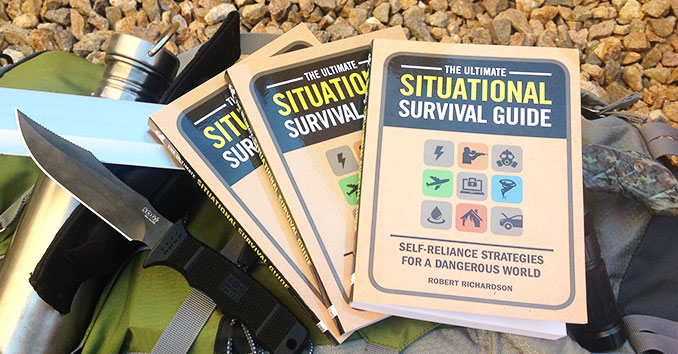
The Ultimate Situational Survival Guide: Self-Reliance Strategies for a Dangerous World

The first step in preparing for an economic collapse is to have a plan. You should have a clear idea of what to do in case of a financial crisis. This plan should include steps you would take to protect yourself and your family.

A good starting point would be to have some emergency savings. These savings should be enough to cover your living expenses for at least six months. This could be in cash, precious metals, or other assets that can hold value during a financial crisis.

Another important aspect of your plan should be to have a source of income not affected by the collapse. This could be through investing in assets that will not lose value during a crisis, such as gold or silver (or good ol beans and bullets!). Alternatively, you could start a side business that provides a steady income stream.

If things go bad, having a plan of action will help increase your chances of surviving the chaos. Check out my list of Essential Preparedness Tips, Skills, and Resources to Prepare for Disasters & Threats.

Start being Smart with your Money
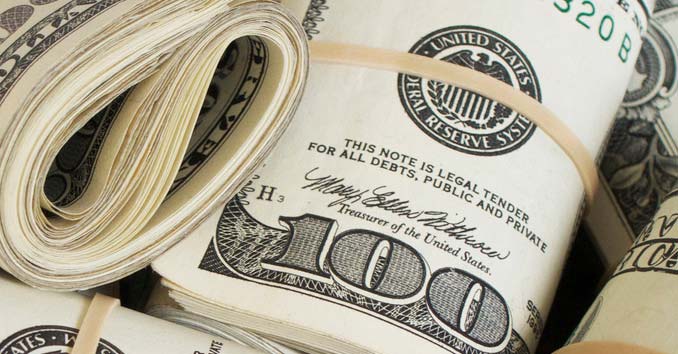
Money

During the 2008 financial collapse, millions of Americans lost their homes, cars and personal possessions because they saddled with debt. Since the so-called COVID pandemic, that trend has begun again with millions of people who now owe more on their property than they are worth, a vehicle repo market that is exploding, and consumer dent that is at record highs.

  • If you can get out of debt, do it now. Start cutting all non-essential expenses, and use that money to pay down your debt. During an economic collapse, the likelihood of losing your home to debt collectors is a very real prospect.
  • Start an Emergency Fund: Just like all areas of preparedness, there are steps you can take to insulate yourself from problems. Having an emergency fund is one way to prepare for financial troubles. It will give you a bit of a cushion during hard times, and can provide you with a fund to buy last minute supplies once things start to go bad.
  • Always have Cash on Hand: Once things start to go bad, there is a very real possibility that the banks may freeze or seize your accounts. Should there be a run on the banks; people are going to be desperate to get their hands on some cash. Even during a total economic collapse, paper currency will still play a major role in how people buy and sell during the initial phases of the crisis – especially if a bank holiday is declared.

Start Prepping for Problems NOW.

Now is the time to really start taking a serious look at your overall level of preparedness. The economy has been teetering on the edge of collapse for quite some time, throw in inflation that has almost doubled the price of staple goods and the growing social unrest that’s sweeping the country and you have yourself a real recipe for disaster.

  • Put together an emergency kit that includes extra food & water, clothing, a portable shelter (tents, tarps, sleeping bags.), and a way to defend yourself.
  • Think about what things are unique to your situation; items like medications, or supplies that you would be hard pressed to live without, should be stockpiled in preparation for economic troubles.
  • For more information on prepping, check out our article on the top ten prepping tips for every SHTF situation. Every one of those tips can help prepare you to deal with an economic crisis.

Start stocking up on Survival Supplies.
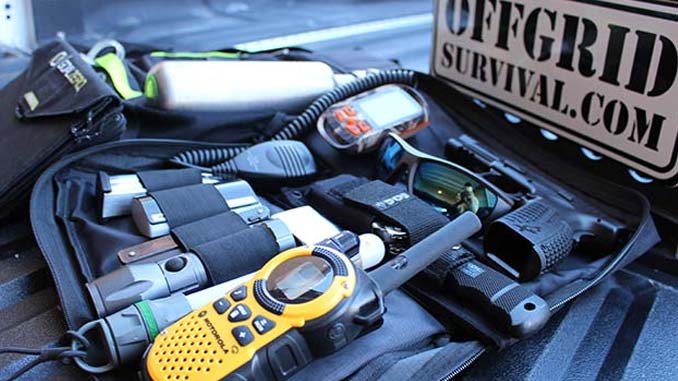
Urban Survival Gear

During an economic collapse, supply chain disruptions and shortages of essential supplies are possible. Therefore, it is essential to stockpile some essential supplies to tide you over during the crisis. Now is the time to buy the things you need! I’m not talking about T.Vs or IPads; but instead, long-term supplies that you will need in order to survive in the future.

  • Start stockpiling food and long-term consumables. During any type of crisis, food, water and long-term consumables are going to be worth their weight in gold. During an economic collapse, you will likely see major supply chain shortages and problems, making these types of supplies one of your most important pre-collapse considerations.
  • Put together a Bug Out Bag: Should this country face an economic collapse, chances are pretty good it will be followed by riots, violence and something much uglier than the initial collapse of the economy. You should have a Bugout bag filled with everything you need to survive a prolonged emergency situation.
  • Keep a good supply of First-Aid & Medical Supplies on Hand. Medical and personal hygiene supplies are going to be hard to come by when things go bad. Make sure you have everything you need to deal with medical emergencies.
  • Some of the critical supplies you should consider stockpiling include food, water, medicine, and toiletries. You should also have a backup power source, such as a generator or solar panels, in case of power outages and infrastructure breakdowns.

Grocery Options that ship right to your Home

  • Amazon Fresh
  • Bulk Emergency Foods
  • Amazon Grocery

Pay Off Debt

One of the biggest challenges during an economic collapse is debt. High levels of debt can be a significant burden during a financial crisis, especially if you lose your source of income.

Therefore, paying off any high-interest debt before a financial crisis hits is essential. This will help reduce your monthly expenses and free up money you can use for other essential things.

If you have a mortgage, it may be wise to consider refinancing to a fixed-rate mortgage, which can provide some stability during the crisis.

Start Stocking up on Survival Knowledge.

Even more important than supplies, is survival knowledge. Knowledge is the key to your survival, and now is the time to get some. During any kind of disaster, including an economic collapse, knowledge is going to be your most powerful ally.

During a crisis, the skills that are in demand may change, and having a wide range of skills can increase your chances of finding employment or starting a new business. Some valuable skills to learn are gardening, carpentry, welding, and plumbing. These skills can help you make repairs or grow your food, saving you money and keeping you self-sufficient during a crisis.

Additionally, learning new skills can also increase your current earning potential, which can help you build your emergency savings or invest in assets that will hold value during a crisis.

  • Start reading books on survival and start collecting information on how to live a more self-reliant lifestyle.
  • Subscribe to our RSS feed to stay up-to-date on all the latest economic threats and preparedness information.
  • Start doing your own Research. I don’t rely on government spun stories, or skillfully crafted press releases; I do my own research and you should too!

Take a serious look at your Self-Defense.
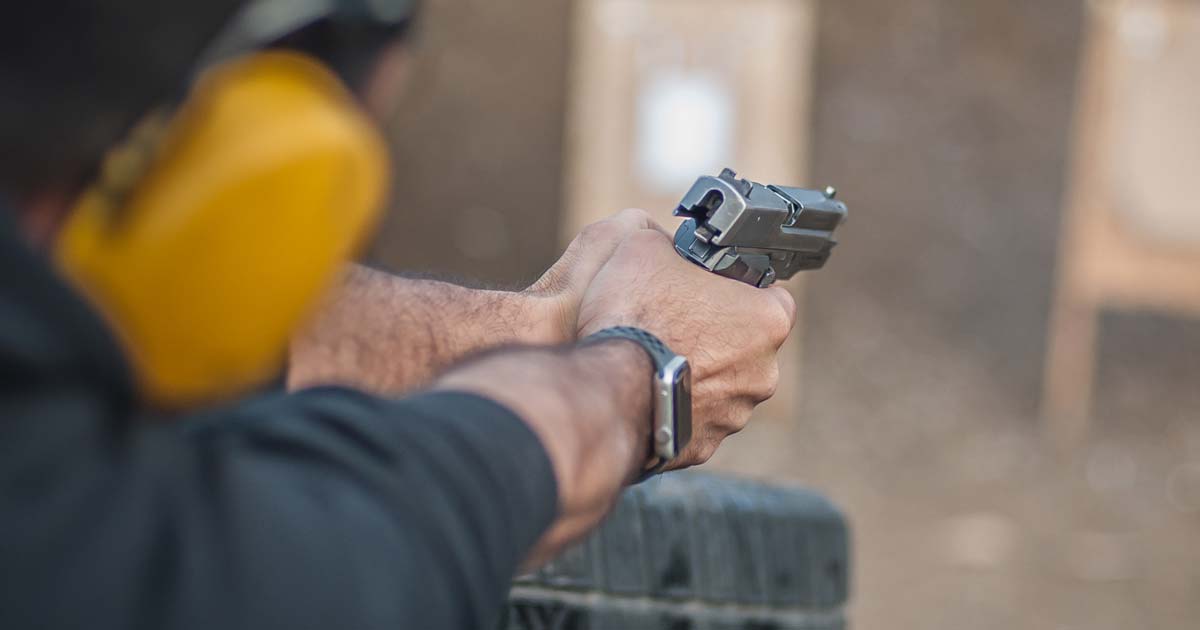
Safe Gun Use

One of the biggest threats you’re going to face during an economic crisis is the threat posed by people. The social unrest and riots we’ve witnessed over the last couple of years are going to pale in comparison to what we’ll see during a full-scale economic collapse.

  • Take a serious look at gun ownership, and learn everything you can about self-defense. When things go bad, you are going to need a way to protect yourself and those you love.
  • Watch for signs of social unrest, and stay alert to what’s going on in your neighborhood and throughout the world.
  • During an economic collapse, problems like home invasions and burglaries are going to become a real problem. Start looking into ways to strengthen your home’s security.

Preparing for an economic collapse can be challenging, but it is essential in today’s uncertain world. By having a plan, diversifying your investments, stockpiling essential supplies, learning new skills, and paying off debt, you can increase your chances of surviving and thriving during a financial crisis.

An economic collapse is a very real threat, one that has far-reaching consequences that you must take seriously. If you haven’t put together a game plan, what are you waiting for?

While nobody here is making any specific predictions, and I certainly can’t tell you that it’s going to happen on this date, in this year; I can tell you that the possibility is very real, and the reality of the situation is our politicians and leaders continue to put policies in place that ensure some very real future problems.

A Cashless Society Is A Controlled Society

While our government currently has no problem with making fiscally irresponsible decisions, when it finally does come around to deciding that “you know what, pennies aren’t worth it” – or any other form of cash for that matter – there will be nobody that will argue against them.- by Aden Tate

The cashless society is almost here and it could lead to chaos and violence. Furthermore, many Americans could soon have no way to pay for necessities like food.

Poor people could have no way to buy food because they have no credit cards or smartphones. To elaborate, Big Retail is planning to get rid of cash registers and cashiers to save money.

In fact, Amazon is already operating 10 Go automated convenience stores that have no cash registers or cashiers. Instead of cash, customers pay with digital wallets such as Apple Pay or Google Pay at Amazon Go. 

Big Retail Wants The Cashless Society

Big Retail wants the cashless society because it reduces expenses. For instance, Amazon does not pay cashiers at their Go stores.

In addition, Amazon needs less security at Go because there is no cash for armed robbers to take. Big Retail can also eliminate the expense of counting, storing, and hauling cash. After all, no safe, armored car, or armed guards are necessary when a store refuses to accept cash.

All in all, most of us are already living in a cashless society. For example, Americans used cash for only 30% of their transactions in 2024, The Federal Reserve estimates.

Additionally, people who do not use cash spend more. In particular, the average cash transaction was under $25 while the average credit card transaction was $67 in 2023, The Federal Reserve calculates. As a result, big retailers are readily embracing the cashless society because it increases their income while lowering their expenses.

We Are Not Prepared For The Cashless Society

Even though the cashless society is nearly here, most of us are still not ready for it.

Notably, the British government has no plan to cope with a cashless economy, Quartz reports. However, cash use is falling faster in the United Kingdom than in other countries. Specifically, the level of cash transactions in the UK could fall to 10% within 15 years.

The number of places where Britons can get cash is dwindling fast. Particularly, 70 bank branches are closing each month in the UK. Likewise, banks remove up to 300 ATMs each month in Britain.

How Cyberwarfare Threatens The Cashless Society

Ultimately, Britons could have no way to get cash if cyberwarfare or an electromagnetic pulse destroys electronic payment systems. So, most of Britain’s population would have no way to buy food after a cyber attack.

Notably, U.S. banks are already preparing for an apocalyptic cyber attack. In fact, bank executives fear a cyber attack could wipe out up to 400 million bank accounts. For this reason, a cyber attack may devastate America’s cashless society.

Desperate mobs could roam cities and the countryside looking for food or gasoline. Furthermore, businesses and the government would shut down if employees are unpaid.

Get Ready For The Cashless Society And Chaos

Everybody needs to prepare for the cashless society because it is coming fast. Moreover, events overseas show that you will have no choice but to go cashless.

For example, most banks and many businesses in Sweden no longer even accept cash. In addition, parking lots and vending machines no longer accept cash in Sweden either.

Meanwhile, the People’s Bank of China (PBOC) plans to punish businesses that refuse to accept cash payments. A PBOC press release warned merchants that it is illegal not to accept cash.

The PBOC is threatening merchants because of complaints about businesses forcing customers to pay electronically, The South China Morning Post states. In detail, the PBOC is China’s central bank and the equivalent of America’s Federal Reserve.

In the final analysis, a cashless society is almost here and everybody must prepare for it regardless of current circumstances.

The use of plastic currency is very common in today’s world. In fact, stores that don’t accept debit and credit cards are becoming anomalies.

However, a little cash stash should always be included in everyone’s everyday carry supplies. There are many reasons why cash money could become important, ranging from purely convenience to absolute necessity.

When might cash matter? Aside from the idea that practicing a cash-only personal finance is a great way to keep from spending more than you can afford, cash can bail you out of sticky situations.

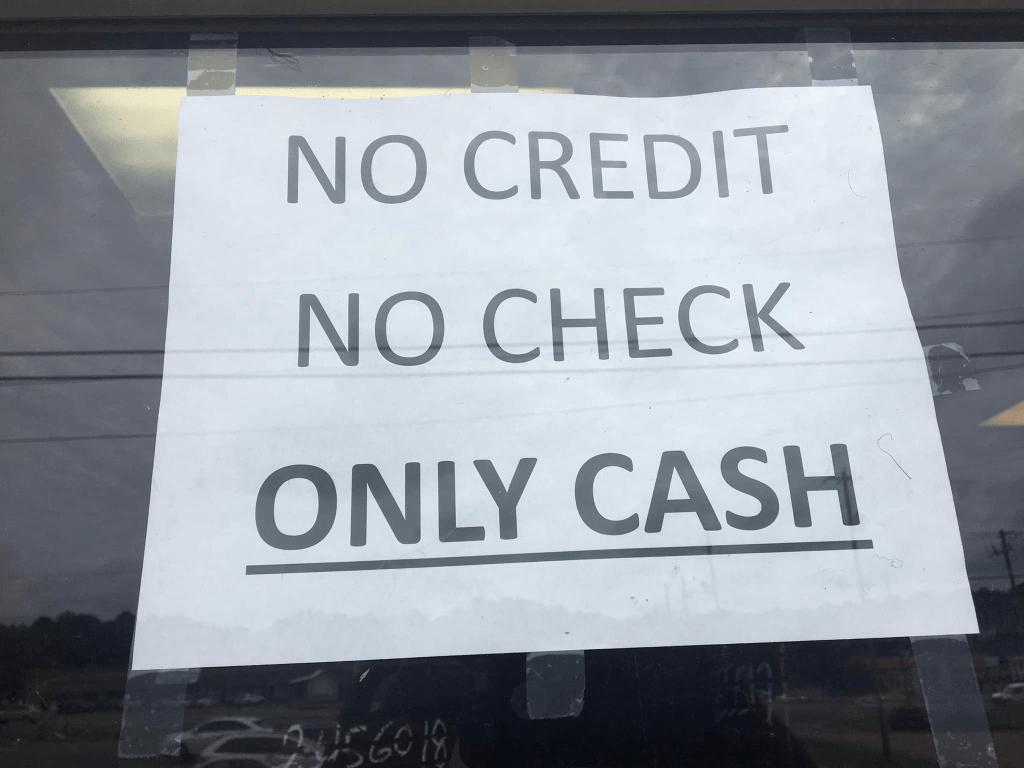
Off-grid establishments still exist. From a remote country gas station to a rustic hiking hostel to a roadside farm stand, you never know when you might need a little cash money to pay for what you want. Encountering a place which lacks the capability to accept plastic payment is still not that uncommon, particularly in rural areas.

Imagine the serendipity of being out for a drive and happening upon a delightful little mom-and-pop diner with the smells of your favorite food wafting from the kitchen—only to discover that they accept cash only and you have none. Sure, you could make the drive to the nearest ATM, some 10 miles of winding country road each way, but you probably would not.

Sometimes even when establishments do accept plastic, it is nice to have a little cash on hand. Paper money can make splitting the check or paying your share of the tip easier, and it is convenient to have a few dollars in your wallet when all you want is a soda or pack of gum.

Bad Stuff Happens

Having cash makes it easier to buy direct from individuals. Transactions such as getting a great deal on a vintage bureau on Craigslist or scooping up a baby stroller at a garage sale are easier with cash for everyone involved. You also might want to avail yourself of a chance to get in on a friend’s bulk purchase by buying just one pair out of a dozen gloves or a small bag of artisan flour out of a 50-pound sack. It also would be a shame to pass up a purchase of fresh delectable produce at a stand beside the road, or to miss an opportunity to donate a few dollars to a good cause because you did not have money handy to do so.

Having cash on hand also can be more than just a matter of convenience. Stuff happens. Stuff like forgetting your purse at a friend’s house—or your wallet in your other jacket pocket—and not realizing it until your gas tank is too low to go back for it. And stuff like searching for a store at midnight when you suddenly realize you are completely out of disposable diapers and finding that the only store open has a broken card machine until the repairperson arrives the next morning. And even stuff like rushing to a meeting and not having cash for a toll highway or parking area and ending up late because of detour.

And those possible situations are just everyday occurrences. If a minor emergency were to happen, the need for cash could become even more important. In the event of something like a power outage, small stores without generators would be able to serve only cash customers. If the precipitating event continued, generators in larger places could eventually fail, as well.

In the event of a major disaster, cash will be vital, at least for a period of time. In a true catastrophe, it is possible that all representative currency could eventually become valueless. But in the interim, having cash could mean the difference between comfort and suffering, and could possibly contribute to your very survival.

The advice to always keep cash on hand is all well and good, but is not easy to do. Probably the biggest barriers to stashing cash are related to how difficult it is to avoid spending the money as fast as you get it. There is no magic bullet, but everyone can do it.

An Easy Way to Do It

As far as pocket money goes, for those little gotchas like emergency gas and unforeseen parking fees and middle-of-the-night baby necessities, it makes sense to keep the stash in your car. One way to do this is to keep a little covered dish—a recycled pint container such as the ones sour cream or cottage cheese come in—in your car. Tuck it away out of sight so thieves cannot see it. Start out by just dropping your coins into it every time you get change in the drive-through or coins back at a toll booth. Add a few bills here and there as you can spare them, never enough so you miss the money but sufficient to add up over time.

If the container-at-your-fingertips idea works for you, great. If, however, you cannot resist frequently dipping into your money dish, try hiding a little money in areas of your car that are less convenient to access. Most cars have places to stow items so that they are not accessible to the driver. Try tucking some money away in the trunk or under the back seat, and when you are faced with the choice of pulling over and digging out a stashed $10 bill versus dipping into your wallet, you will choose the latter.

Once you know you have a solid emergency stash in the back of the car, keep trying to keep a money container within reach. Eventually, you can make it work.

Building up a supply of money at home for true disasters works on the same principle. Start small and move up, with a $5 in a decorative cookie jar and $20 in an empty toothpaste box in the bathroom cabinet and another few bills tucked between the pages of an old book. Choose hiding spots in places you don’t look in often, and in places where would-be thieves may not find, either.

But where does this money come from to begin with if you are in the habit of using exclusively plastic and electronic transactions? You will need to be proactive about it, especially at first. You can get a little cash back every time you use a card at the grocery store, withdraw money from your account at an ATM, or develop a habit of doing more trading in cash.

There is no disputing the fact that we are quickly becoming a cashless society, and I am not suggesting that we can or should resist that trajectory. But I do maintain that everyone needs to have a little cash, on their person, in the car, or at home—and preferably all three—for convenience and emergencies.

What do you think about the idea of a cashless society? Let us know in the comments below.

The CDC Made Plans to Put Americans in ‘Quarantine’ Camps During COVID Pandemic

The agency used our money to develop a blueprint for segregating Americans in camps during the pandemic indefinitely.

Remember during the COVID-19 pandemic when the conspiracy theorists among us said the United States government had plans to put people in quarantine camps? It turns out they were right.

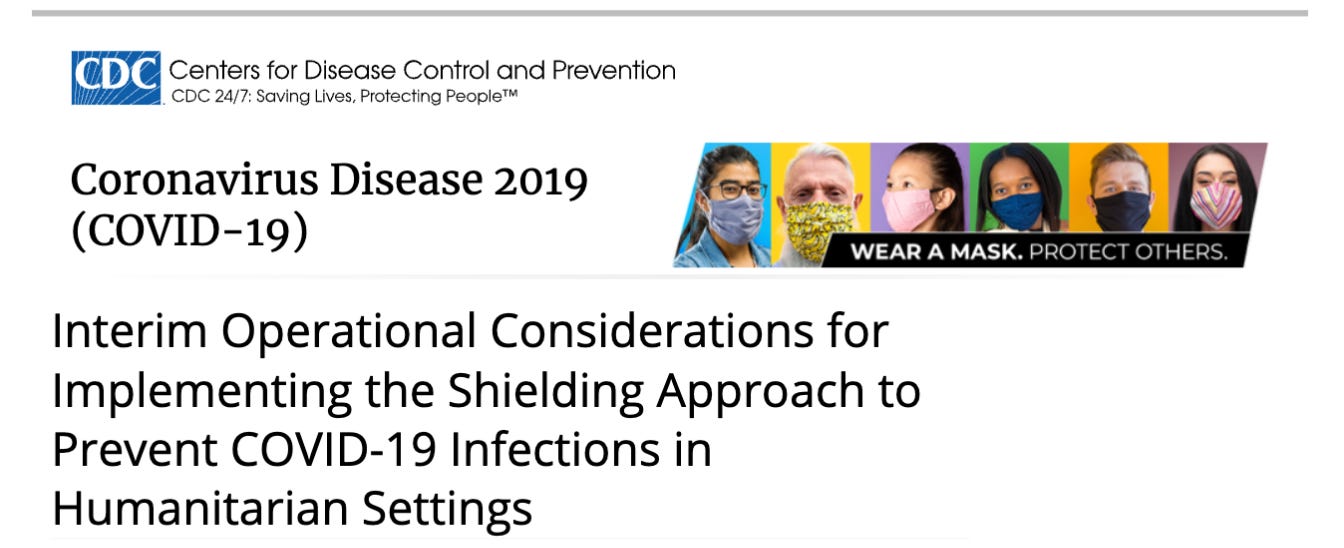
The Centers for Disease Control and Prevention (CDC) went beyond just advocating for masks, lockdowns, and mandatory COVID-19 vaccines during the pandemic. The agency quietly released a plan in July 2020 that sounds like it belongs in some sort of dystopian novel: a blueprint for segregating Americans in camps using taxpayer money.

The “shielding approach” targeted specific populations—especially the elderly and those with underlying health conditions—for relocation to designated “green zones” or camps, with no defined end date.

Titled Interim Operational Considerations for Implementing the Shielding Approach to Prevent COVID-19 Infections in Humanitarian Settings, this controversial proposal went far beyond a typical public health advisory. It outlined specific plans to physically segregate “high-risk” individuals from the general population—a move that’s hard to justify in any free society.

Segregation Camps and Green Zones

According to the document, high-risk individuals would be relocated and forcibly segregated from other Americans in “green zones” established at the household, neighborhood, camp/sector, or community level, depending on the context and setting. These individuals would have minimal contact with family members and other low-risk residents.

  1. Household-Level Isolation: At the smallest scale, high-risk individuals would be isolated in a designated room within their own homes, and low-risk family members would be barred from entering unless absolutely necessary. Family interaction, once taken for granted, would be replaced by protocols, distance, and strict hygiene measures.
  2. Neighborhood-Level Isolation: For groups of high-risk individuals from up to 10 households, the CDC recommended creating shared shelters within a neighborhood. This “neighborhood zone” would act as a bubble, limiting contact with the outside world.
  3. Camp or Sector-Level Isolation: This was the most disturbing tier, suggesting entire camps or zones be set up in schools or other community facilities, where up to 50 high-risk individuals could be moved and isolated for months on end. Family visits? Restricted. Interaction with friends and loved ones? Only if they complied with strict guidelines.

Each zone would be a self-contained world where high-risk individuals were “safeguarded” by keeping them completely separate from the rest of the population. Once inside these zones, they would be effectively cut off from normal social interaction and freedom of movement, locked into a world dictated by government protocols.

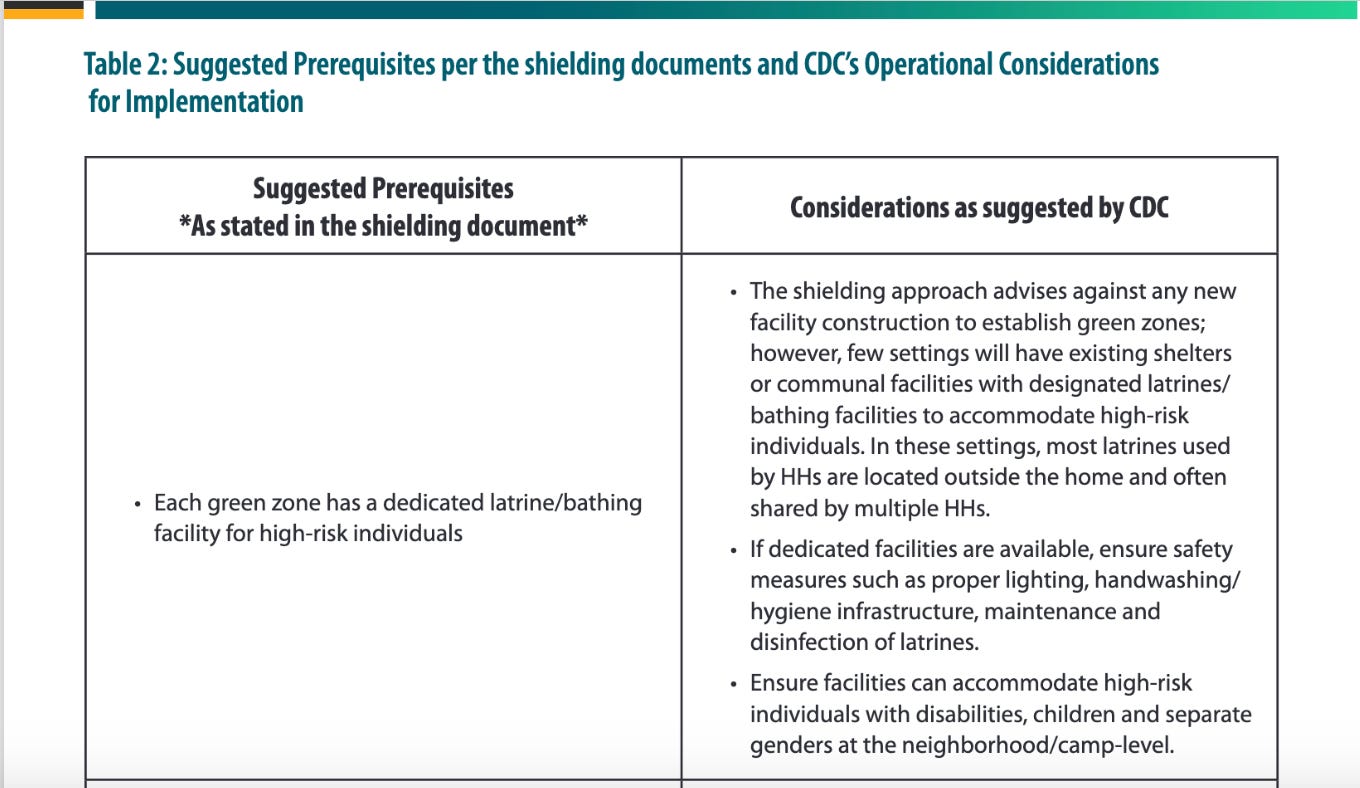
But wait, it gets better. The CDC made suggestions for what each zone should contain. For example, the agency suggested that each green zone have a dedicated “latrine/bathing” facility for high-risk individuals.

No need to wonder where these federal employees got their inspiration for dedicated latrines and showers. Prisoners in German concentration camps during the Holocaust were also segregated and required to use certain latrines and showers in the name of preventing disease.

The CDC also said monitoring protocols would need to be developed and “dedicated staff” would need to monitor each green zone. This is no different than what you would see in a high-security prison.

“Monitoring includes both adherence to protocols and potential adverse effects due to isolation and stigma. It may be necessary to assign someone within the green zone, if feasible, to minimize movement in/out of green zones,” the document states.

Married? No worries. You would be isolated from each other in your own dedicated prison quarantine camp.

People with dementia were not worthy of human interaction at all. Under the CDC’s plan, these individuals and most older people would live out their days alone in isolation, with a sub-par caregiver on standby to help them use their dedicated latrine facility.

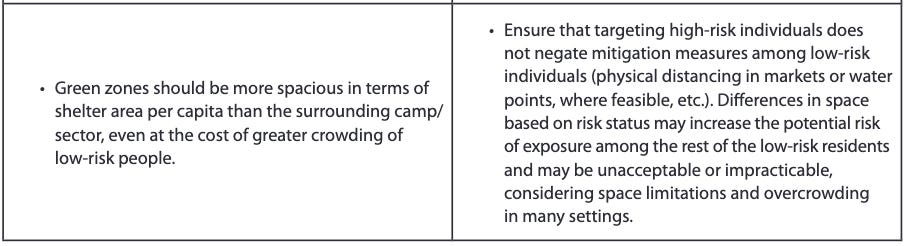
The surrounding camp sector would apparently have “markets,” but you would be required to “physically distance” from anyone you saw, even if you were considered to be lower-risk.

The plan requires “strict adherence.” An individual would not be allowed to come and go or decide when they want to leave. They would literally be confined to this camp with no individual liberties until a “safe and effective” vaccine is developed or the pandemic suddenly disappears. That’s assuming they cut corners and fast-track one in 10 months and not 10 years, everyone pretends it works, and it doesn’t harm you.

Of course, it goes without saying that anyone in the camp would be required to get vaccinated.

Truth & Triage is a reader-supported publication. To receive new posts and support my work, consider becoming a paid subscriber.

The CDC was well aware of the potentially devastating effects of such a plan. In the “mental health” section, the creator(s) of this authoritarian proposal explicitly acknowledge the plan may cause increased stress and anxiety—although they attribute it mostly to fear of infection.

Nonetheless, the author acknowledges the “shielding approach” may have an “important psychological impact” and may cause “significant emotional distress, exacerbate existing mental illness or contribute to anxiety, depression, helplessness, grief, substance abuse, or thoughts of suicide among those who are separated or have been left behind.”

The solution? A dedicated “caregiver” to make sure you don’t kill yourself.

Who Was Behind the CDC’s Plan to Confine Americans?

The CDC’s document does not list a specific author. As a corporate author, it lists the Division of Viral Diseases (DVD) within the National Center for Immunization and Respiratory Diseases (NCIRD) at the CDC, which was led in July 2020 by Dr. Nancy Messonnier.

Messonier is currently the Dean of the UNC Gillings School of Global Public Health at the University of North Carolina (UNC) at Chapel Hill. UNC has been deeply involved in vaccine research and development, particularly concerning COVID-19. Researchers at UNC have collaborated with pharmaceutical companies to conduct clinical trials and develop vaccine candidates.

How ironic.

Government actions, particularly those as intrusive as this, require transparency and accountability. Americans deserve to know who specifically crafted this policy and on what grounds it was deemed necessary. It is highly inappropriate that a leader of a division within the CDC allowed a proposal to be developed with our tax dollars that involved confining Americans like prisoners to the benefit of pharmaceutical companies, and then took a job that benefits vaccine makers.

The CDC might claim that the shielding approach was about protecting high-risk individuals, but the reality is far darker. Isolating people from their families, friends, and communities is not protection—it’s internment. Moreover, the CDC’s own document acknowledged that introducing the virus into these shielded zones could result in rapid transmission among the most vulnerable—a tragic irony for a proposal intended to protect them.

But the ethical concerns go even deeper. The shielding approach didn’t merely suggest isolation; it explicitly mentioned indefinite confinement. While the plan’s authors suggested that the green zones should “meet minimum humanitarian standards,” this language offers little comfort when individuals are essentially prisoners of their health status. This was not a short-term plan; the CDC acknowledged that it could last at least six months and possibly longer.

The proposal did acknowledge that community acceptance would be a hurdle. But let’s be honest: separating and labeling citizens based on their health is segregation.

Once isolated and stigmatized, these “shielded” individuals would face challenges reintegrating into society, if reintegration were even allowed. To “protect” society, the shielding approach risked creating a permanent underclass of people, cut off from the lives they once knew.

The CDC’s Plan Lacks Scientific Evidence

One of the most noteworthy aspects of the CDC’s proposal is its lack of scientific foundation. The document admitted that this strategy had never been tested in a large-scale setting, making the approach speculative at best.

How could the CDC propose such extreme measures without solid data? The answer remains unclear, but the implications are chilling. In its eagerness to contain COVID-19, the CDC was willing to roll out unproven measures that could radically alter lives and at a minimum, strip individuals of their freedom.

The CDC’s acknowledgement of a critical flaw in its own plan—that introducing COVID-19 into green zones would lead to rapid spread, endangering the very people it claimed to protect—highlights an alarming oversight and suggests that the approach was hastily conceived without considering the consequences. Or perhaps, they didn’t care.

The shielding approach strikes at the core of individual rights and liberties. The government cannot confine citizens based on health status. Yet, the CDC’s approach suggests it believed it could. By proposing indefinite isolation for high-risk individuals, the agency flirted with an authoritarian approach to public health, treating freedom as expendable in times of crisis.

Why This Matters in a Free Society

A free society is built on the trust that government will protect, not imprison, its citizens. The shielding approach is a stark reminder that this trust has been abused.

Governments, under the guise of protecting Americans, adopted and proposed heavy-handed policies while using a “health crisis” as a tool for control and an excuse to dismantle basic rights.

The CDC’s shielding approach was more than a flawed public health strategy; it was a blueprint for mass segregation that treated freedom as a dispensable luxury. Policies that so fundamentally threaten our way of life cannot be hidden away in archives.

Americans deserve to know who crafted the shielding approach and why it was even considered in the first place.

Editor’s Note: An earlier version of this post stated that Dr. Lyn Finelli was the director of the NCIRD at the CDC in July 2020. Although Finelli did work at the CDC and went on to take a position with Merck, Dr. Messonier led the NCIRD at the time the proposal was published.

How One Wall Street Giant Is Prepping For “Financial Collapse”

First take a look at one of the most shocking videos in the world! This video actually shows us what the secret of the Trump family is related to their expressive health!!! –FULL VIDEO HERE

Ever wonder if the “super-rich” of Wall St. are preparing for a SHTF collapse?

I promise you they most definitely ARE!

I have very close friends who own multi-million dollar companies and I can tell you that they’re also the most concerned people I know when it comes to what lies ahead for our country.

Maybe it’s because they have “more to lose”?  Or maybe they have their ear to the ground and know something you and I don’t?

The answer is “BOTH”, and…

Here’s How One Wall St. Giant Is Prepping For Financial Collapse (Steal Their 3 Survival Tips Now…)-

Jonathon Johnson, the Board Chairman of Overstock.com (a company with over $1.5 billion in annual revenue and 1,500 employees), gave a talk at a precious metals conference about the company’s insights into where the economy is going and what they’re doing about it.

The No B.S. Truth Straight From The Mouths Of Financial Insiders

Here are some highlights from Johnson’s speech and what you can do to follow their lead on preparing for what lies ahead…

“We are not big fans of Wall Street and we don’t trust them. We foresaw the [2008] financial crisis.  We don’t trust the banks still and we foresee that with QE3, and QE4 and QE ‘N’ that at some point there is going to be ANOTHER significant financial crisis.

We expect that when there is a financial crisis there will be a banking holiday. I don’t know if it will be 2 days, or 2 weeks, or 2 months.”

What That Means For You:

A “banking holiday” is a Presidential Order (passed in 1933) used to completely shut down banks – without warning – to avoid everyone panicking, pulling their money out and causing a complete financial apocalypse.

The entire banking world suddenly goes “black” and you won’t be able to view your balance… withdraw or deposit money… write checks… or even access your bank’s web page.

For how long?

Like Overstock Chairman said, it could be “2 days, or 2 weeks, or 2 MONTHS”!

So what can you do?

Immediately after a collapse and a federal “banking blackout”, cash is still going to be king (for a little while).

But if you don’t have it in your wallet, you’re NOT going to be able to go out and get it from your bank or ATM.

That’s why the super-wealthy always keep a stash of cold, hard cashola at home (in a safe) for emergencies.

If you have a fire-proof gun safe, that will work too (NOT a bank safe deposit box!)… and you should consider moving some of your savings into primarily $1 and $5 bills (stores won’t be able to make change as easily) rather than sitting in a no-interest checking account that you may never get access to once the SHTF.

Just stack those duckies up right next to your bricks of 9mm and get used to paying for groceries and other expenses with cash now as good practice.

Expert: 90% of U.S. Population Could Die if a Pulse Event Hits the Power Grid- See video!

Should You Consider “Alternative Currency”
During A Financial Collapse Meltdown?

Overstock has a very unique look on “money” when preparing for the “death of the dollar”…

“One thing that we do that is fairly unique: we have about $10 million in gold [and silver], mostly the small button-sized coins, that we keep outside of the banking system….  in denominations small enough that we can use for payroll.

We want to be able to keep our employees paid, safe and our site up and running during a financial crisis.”

What That Means For You:

I was late to the game on gold and silver because I found it hard to believe that anyone following a collapse would ever be out there trading.

Then I learned that the life-expectancy of a paper dollar is only 18 months in circulation – which makes gold and silver better for a long-term crisis.

Besides, if mega-banks and corporations are going to be using gold and silver for currency, that’s going to immediately put these small “buttons” into circulation and I think the education level of the average consumer is going to catch up quickly.

You can be sure that stores will begin accepting them in order to stay in business.

When I was in financial planning, we always recommended people take 10% of their weekly paycheck and put it into savings before paying for anything else.

I think that’s a good way to save and I’d split that 10% in half between cash in your safe and silver (and some gold) in small coins from an online bullion outlet.

But a word of warning here…

Don’t go crazy and start sinking all of your hard-earned dough into currency because there’s something even more important (and more valuable) that Overstock is also planning for.

Thinking Outside The Box For A Financial Collapse…

Here’s the continuation of Overstock Chairman’s speech…

“We also happen to have 3 months of food supply for every employee [+ 1 additional family member] to live on during the crisis.”

First of all, how cool is it that a corporation – who sees the writing on the wall that out dollar is about to come crashing down – is preparing to even FEED their 1,500 employees and their families for at least 3 months?

Crazy, right?  (And pretty damn smart!)

What That Means For You:

Overstock understands that when the economy collapses, food resupply lines will be severed and most people will be out of food within a matter of a few short days – as little as 3.

The very best investment you can make right now is in long-term survival food – which is even more valuable than silver and gold coins in an economic crisis.

Grocery stores that haven’t been completely looted or sold out will skyrocket their prices and be forced to work on a “cash-only” basis.

Must watch- This coming war won’t be fought with tanks and infantry like the first two…

Not only will you be able to feed yourself and your family while others are starving, but it will be the most valuable barter tool you’ll be able to use when no one else around you has a single dollar to their name.

But this isn’t something you should wait and slowly save up for.

Overstock already has their food in long-term storage RIGHT NOW because they know that the “death of the dollar” could come at any time and it’s too late to build up your stockpile once the government initiates an “instant shut-down”.

I highly suggest you plan for at least 3 months of “survival food kits” for your entire family right away.

The cheapest (and best) resource I personally use is right here…

I have a full year for my family, but start with at least 3 months if you can.

If you fail to plan, you plan to fail, right?

Take Overstock’s (and other Wall St. insiders’) warnings to heart and follow their lead.

You don’t want to be one of the masses unable to protect those you love.

International Warning Of Societal Disruption Or Collapse.

Environmental problems have contributed to numerous collapses of civilizations in the past. Now, for the first time, a global collapse appears likely. Overpopulation, overconsumption by the rich and poor choices of technologies are major drivers; dramatic cultural change provides the main hope of averting calamity.

This article was created for educational purposes and also, its continuation can help you better understand a social collapse that can hit us at any time!

Could a worldwide collapse of civilization occur? What could bring about it?

A worldwide collapse of civilization could be triggered by what are called existential risks. Existential risks have been studied extensively by Swedish philosopher Nick Bostrom, who created the graphic above of qualitative existential risk categories. Bostrom now runs the Future of Humanity Institute at Oxford University, which specializes in the study of existential risks.

Bostrom defines existential risks as a risk, “…that threatens the premature extinction of Earth-originating intelligent life or the permanent and drastic destruction of its potential for desirable future development…” A notch down from existential risks are global catastrophic risks. Bostrom has edited a collection of essays on Global Catastrophic Risks with Milan Ćirković. They define global catastrophic risks as, “…a risk that might have the potential to inflict serious damage to human well-being on a global scale…”

While I am sympathetic to the other answer to this question given by John Dewar Gleissner, which emphasizes the robustness of civilization and the unlikelihood of complete collapse not followed by recovery, I think it nevertheless a good idea to be fully aware of the existential risks that could bring an end to civilization, even if they are unlikely.

From the table above, with the x axis being severity and the y axis being scope, we can see, in principle, that any event of sufficient severity and scope can escalate into an existential risk. In practice, by contrast, what kinds of events might escalate into existential risks? Following is a list of existential risks, broken down accordingly whether they are anthropogenic (caused by human activity) or non-anthropogenic, as well as distinguishing between short term (within the coming century) and long term (beyond the coming century) risks:

Near-term Anthropogenic Existential Risks (within the coming century)

  • Anthropogenic Climate Change – while anthropogenic climate change may constitute a global catastrophic risk rather than an existential risk for human beings as a species, if the Ross Ice Shelf collapsed into the ocean all the coastal cities in the world would be inundated, posing an existential risk to the world’s largest cities, their ports, and therefore the global trading infrastructure, hence an existential risk to civilization itself.
  • Unintended Consequences of Genetic Technology – GMOs (genetically modified organisms) loose in the biosphere, or weapons of biological warfare, could evolve into an unintended pandemic indistinguishable from a naturally-occurring pandemic. Alternatively, artificial forms of life could multiply out of control, covering the planet in a “green scum” scenario.
  • Stagnation or Civilizational Failure – if industrial-technological civilization stagnates or culminates in a dysfunctional civilization (e.g., global tyranny), the technological innovations forthcoming from a dynamic civilization would cease, and civilization would cease to offer the opportunity to mitigate existential risks, failing to respond to them.

Long-term Anthropogenic Existential Risks (beyond the coming century)

  • Unfriendly AI – also known as the “technological singularity,” in the event of the emergence of “unfriendly” superintelligent AI (artificial intelligence), human beings would have a difficult time defending themselves or justifying their continued existence. Most existential risk researchers are now focused on this as the most important scenario to counter, partly due to recent advances in AI.
  • Gray Goo – nano-scale, self-reproducing mechanisms loose in the biosphere could rapidly reproduce like the mechanistic equivalent of a “weedy” species, covering the planet in a “gray goo” of microscopic machines.
  • War – future wars waged with the technology of a highly advanced civilization present a clear threat of human extinction; also, weapons of mass destruction proliferate over time, so that it only appears to be a matter of time before terrorist entities or apocalyptic movements come into their possession and use them for ideological ends. –

Near-term Non-Anthropogenic Existential Risks (within the coming century)

  • Pandemic – as human population numbers rise, the human population potentially becomes an exploitable resource for any parasitical organism. The longer humanity persists without a major pandemic, the more likely one becomes. (Anthropogenic pandemics are also a possibility.)
  • Solar Flares – solar flares occur routinely and pose little danger, but an especially severe solar flare could overload the global electrical grid and potentially destroy every electronic device on earth, meaning a rapid end to industrial-technological civilization.
  • Ecosystem collapse – whether under pressure of industrial pollution or due to diseases that attack domesticated plants and animals, the effect of ecological collapse of the food production industry or more generally of the biosphere, if it passes a tipping point, could lead to rapid human extinction. There are several examples in history of species, once plentiful, that experienced a sudden and catastrophic decline rapidly followed by extinction. The most famous example of this is the passenger pigeon.

Long-term Non-Anthropogenic Existential Risks (beyond the coming century)

  • Non-anthropogenic Climate Change – in the long history of the earth the climate has varied between global glaciation and steaming swamps; dramatic climate change is a certainty in the long term, and could pose an existential risk to humanity and also to civilization, but climate change of this magnitude usually occurs over geological scales of time, and would not be noticed in the lifetime of a single human being.
  • Massive Vulcanism – mass extinctions preserved in the fossil record suggest that periods of the earth’s history have been punctuated by massive vulcanism (e.g., the Deccan Traps or the Siberian Traps). Massive volcanism is also implicated in climate change. Supervolcanoes denude large areas through pyroclastic flows, cover very large areas with ash, and inject enormous amounts of carbon into the atmosphere, especially if they erupt through a coal deposit. These collected impacts could alter the biosphere so significantly that human beings could no longer survive on Earth.
  • Planetary Collisions – the earth is vulnerable to collision with asteroids and comets; sufficiently large collisions in the past have resulted in mass extinctions. Large impacts become less common over cosmological scales f time, but we cannot rule out the possibility of another event on the scale of the K-Pg impact (which resulted in the extinction of the dinosaurs).

The above list should not be considered complete or exhaustive. There are other existential risks that could be added to it. That should suffice, for the time being, to answer the question in the affirmative that a worldwide collapse of civilization is possible.

In conclusion, I would like to add: Professor Dave is of the opinion that- While nobody here is making any specific predictions, and I certainly can’t tell you that it’s going to happen on this date, in this year; I can tell you that the possibility is very real, and the reality of the situation is our politicians and leaders continue to put policies in place that ensure some very real future problems.

The second public Scholars’ Warning letter appeared in the Independent Newspaper at the close of COP26 and was written about in a number of articles. It also appeared in French newspapers. Over 200 scholars responded within the 24 hours to sign and help the sense-making of journalists and others as the summit closed. If you agree with the sentiment of this latest letter, please share this video of some of the signatories reading it.

By registering their support for a more radical agenda on our climate predicament, including the need to discuss collapse risk, readiness and response, now journalists can find these scholars and bring these ideas to wider attention. 

How Much Emergency Cash Should You Keep at Home?

First take a look at one of the most shocking videos in the world! This video actually shows us what the secret of the Trump family is related to their expressive health!!! –FULL VIDEO HERE

It is the final backup plan for a lot of us in the case of a disaster. A generous supply of cold hard cash to buy our way out of trouble, pick up as many last-minute supplies as possible or to acquire resources that are unavailable to anyone with a credit card in a world where the electricity is out and the internet is down. We frequently talk about having cash for emergencies, but how much cash should you have if the grid goes down? What will you be able to purchase with your doomsday supply and how long would it last in the first place?

Millions of people will rise up in an angry rage… You just have to watch this video urgently!!!

One of our readers made a recommendation the other day to have between $500 and $1000 in cash for your bug out bag and at the time it prompted me to consider again if this amount makes sense. In my personal preparedness plans I have a supply of cash but I am always trying to figure out if what I have is enough or too much. Will it even matter when TEOTWAWKI comes and how can I best use the cash I have to survive?

Why do you need to have cash on hand?

You want to know the time when you will need cash the most? It will be when you can’t get to it. How many of you right now have no cash at all in your wallets or purses? I used to be the same way. I never had cash and relied on the ready availability of cash machines or most often the ability to pay for virtually everything with a debit card. How convenient is it to never have to make change or worry if you have enough cash when with the swipe of a card your bank account funds are at your disposal. This is a great technological advance, but the problem is that this requires two things to be functioning. First, the card readers and ATM machines require electricity. If the electricity is out, neither of these two machines works. The second thing is a network connection. If the network is down, even with electricity the transaction won’t work and you can’t pay for goods or get cash from your bank.

In a disaster, one of the first casualties is electricity. This doesn’t have to be due to some cosmic solar flare that has rendered the grid useless, it could be as destructive and common as a fire, flood, earthquake, tornado or winter storm. It could also be from simple vandalism or perhaps terrorism. A major fiber optic cable was cut in Arizona back in February leaving businesses without the ability to accept payments. When the electricity is out, you aren’t going to be able to access your cash via the normal means so having a supply on hand is going to be a huge advantage for you in the right circumstances.

Even if there is no natural disaster, you are still at the mercy of your bank. What if your bank closes or there is a bank holiday declared because of some economic crisis. In any of these situations, if you are dependent on access to money that is controlled by either technology or physical limitations like a bank office it is wise to have a backup plan should either of those two conditions prevent you from getting cash.

Also watch this video- SALT A SPIRITUAL WEAPON! UNCOVER THE SECRET THAT CAN CHANGE YOUR LIFE

What is cash good for in a crisis?

I think there are two levels to consider when it comes to keeping cash on hand. There is the bug out scenario mentioned above where you would have some “walking around money” to take care of relatively minor needs like food, a hotel or gas. The second is for a longer or more widespread unavailability of funds. Let’s say the economy tanks and the price of everything skyrockets but stores are still open for business. Your bank is one of the casualties, but you had a few thousand dollars of cash stored away that you could use to purchase food, gas and necessary preparedness items for your family. In this scenario, the government is still backing the fiat currency and vendors are still accepting it as a form of payment. For this scenario having a few thousand dollars makes sense.

But what if we have an extreme event where the currency is devalued and is essentially worthless? Your thousands of dollars might only buy you a loaf of bread. Don’t believe it can happen? It did to the Weimar Republic after WWI so it can happen again. That isn’t to say it will, but you should balance how much money you have squirreled away under your mattress with supplies you can purchase now that will last and keep you alive during that same event. My goal is to make sure I have the basics I need to survive at home for several months to a year without needing to spend any cash. This way, if the money is worthless, I still have what my family needs to survive. Watch- The Home Doctor – Practical Medicine for Every Household.

If we have a regional disaster where you can bug out to a safer location, your cash should serve you well. Of course if you are in a safer location, assuming electricity was working your access to bank funds should still be working. If this is truly the end of the world as we know it, how long will that cash you have be worth anything?

How much cash do you need?

So the million dollar question is how much cash should you have if the grid goes down? I always try to plan for the worst case scenario. My rationale is that if I am prepared for the end of the world as we know it, I should be just as prepared for any lesser disaster or crisis I may be faced with. The way I see it is if we do have a disaster, you aren’t going to be using that cash most likely to pay your mortgage, student loans, rent, or your credit card bills. Cash will go to life saving supplies and this will need to be used in the earliest hours of any crisis before all of the goods are gone or the cash is worthless. Once people realize for example that the government has been temporarily destroyed, they aren’t going to want to take your $500 for a tank of gas. They are going to want guns, food or bullets.

I also don’t see you using your cash to buy passage to another country, but that’s just me. I know there is a historical precedent for that, but I am not planning on that being something I realistically attempt with my family. I am also not planning on bribing any officials with cash either. My cash is for last-minute necessities and then it is back into the hopefully safe confines of my home to plan the next steps. For that I have only a couple of thousand dollars in cash stored away. I figure if I need more than that I didn’t plan well. Also, I would rather spend my money on supplies like long-term storable food and equipment than having a large horde of cash. With that amount, I figure I can make one last run if needed or be able to weather any short-term emergency when I can’t access cash.

EXPOSED: Free Power Secrets! Revealed: The century-old device making solar panels obsolete. Embrace efficient, sustainable energy. Open the Gates of Innovation!

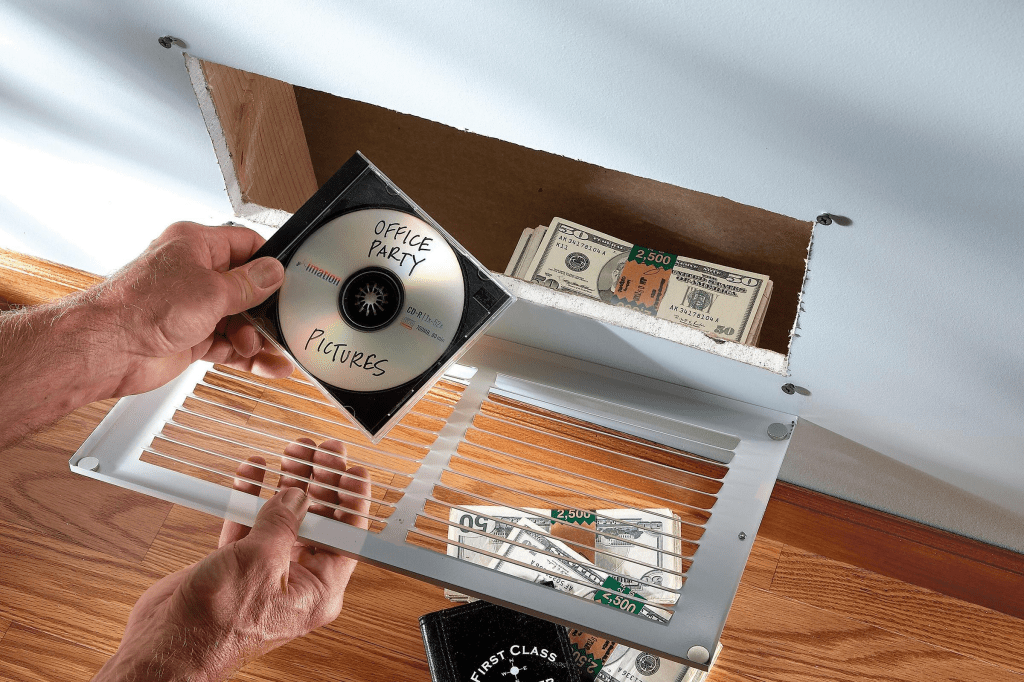
What is the best place to hide cash in your home?

I wrote a post awhile back titled, How to hide your money where the bankers won’t find it that had lots of good ideas for reasonably safe places you could store cash. As I said in that article, you do have risks involved with keeping cash in your house, but I think you have just the same, if not worse risks relying on banks to keep your money safe and give it back when you want it. There are a million places to hide cash, but you can get tricky and buy a fake shaving cream safe to store several hundred dollars in there. Just be careful you don’t throw that away. There are other options like wall clocks with a hidden compartment inside that might be less prone to getting tossed in the trash. Your imagination is really all that is needed for a good hiding place, but I would caution you that you don’t store cash in too many places or you could forget where you hid it. This happened to me when I had hidden some cash behind an item that I ended up giving to my daughter because I thought I didn’t need it anymore. Imagine my surprise when she came into the living room and said, “Dad, I found an envelope with a lot of money in it”. I gave her a twenty for a reward…

What about you? How much cash do you think you need to have on hand and what do you plan on spending it on if the grid goes down?

The Day All The ATMs Ran Out Of Cash!

First take a look at one of the most shocking videos in the world! This video actually shows us what the secret of the Trump family is related to their expressive health!!! –FULL VIDEO HERE

Money plays such an important role in our lives that most of us could not imagine surviving without it. Yet that is exactly what you need to do if you want to prepare for an economic condition called deflation.

Deflation is the term economists use to describe a “general decline in prices, often caused by a reduction in the supply of money or credit.” A good way to think of deflation is as the opposite of inflation. Inflation occurs when there is too much money in circulation, which destroys its value and raises prices. When deflation occurs, there is too little money available, which often causes prices to collapse and the economy to shut down. Here are the eight signs of imminent societal collapse.

In severe cases of deflation there can be no money available at all not — even at the banks. This nightmare actually occurred during the Great Depression of the 1930s, when there were places in the United States where there was no cash available at all. More recently, it has happened in Greece, where ATMs ran out of cash and where banks placed limits on the amount of money that could be withdrawn.

►”Deep State: How to Defeat America’s Greatest Enemy” and see what YOU can do about it!

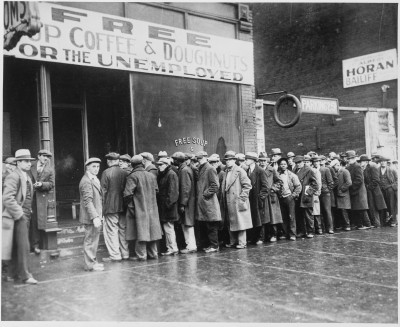
People had no money to pay bills or buy food for their families. Employers had no money to pay employees, customers had no money to buy goods, and many people were reduced to bartering to survive. During the Great Depression, farmers would pay professionals such as mechanics and doctors with food because they had no money and no credit.

The situation got so bad that in some areas of the country, local governments, chambers of commerce and businesses issued their own currencies — the so-called depression scrip. The scrip often took the form of pieces of paper that people used as money because there was no government currency available. The scrip was used to pay workers or buy goods.

At one point during the Great Depression, the money shortage got so severe that the US government considered issuing a national scrip as an alternative to the dollar. That plan was eventually dropped and the government solved the crisis by simply printing more dollars.

Many people have known survivors of the Great Depression who liked to keep large amounts of cash on hand. Others would hoard food and other items. Those people developed that habit because they remembered what life without money was like. The fear of the deflation that occurred in the 1930s haunted them all of their lives.
The frightening reality is that the threat of deflation is still real. Some knowledgeable individuals, such as wealth preservation experts Will and Bill Bonner, believe that a sudden deflation leading to a national or international money shortage is still possible today.

The Bonners, who have studied some of the world’s knowledgeable investors such as George Soros, believe that the next financial crisis will begin with a “violent monetary shock” similar to the one that occurred during the Great Depression. They predict that money could suddenly disappear overnight, causing the economy to come to a grinding halt.

What Happens When Money Vanishes

Historical accounts of the Great Depression show us some of the possible effects of such a violent monetary shock. The damage caused by such a violent deflation can include:

Warning!!! First Signs That U.S. Consumers Are In Very Serious Trouble

The sudden collapse of prices. The Great Depression began with the collapse of stock market prices in 1929. That was preceded by the collapse of agricultural prices in the United States during the 1920s. During that crisis, land prices in rural areas collapsed, causing large numbers of rural banks to fail. When the banks failed, the government liquidated them and their assets, which included lots of foreclosed farmland, an action that further drove prices and made the crisis worse.

soup kitchen

Everything you have — your investments, your home and your possessions — could suddenly lose all of its value. We saw this happen during the mortgage bubble of 2007-2008, when many people found themselves “underwater.” That occurs when the amount a home is mortgaged for exceeds the property’s value.

The collapse in prices during the Great Depression particularly hurt farmers who relied on commodity prices. Newsreels from the early 1930s show farmers dumping grain on the ground and pouring out milk because they could not sell them.

Bank runs and the collapse of financial institutions. A bank run or banking panic occurs when all of a bank’s depositors try to take their money out at once. Bank runs often trigger the collapse of financial institutions, which prompts even more bank runs. Between 1930 and 1933 nearly 10,000 banks failed or were suspended. The panic got so bad that President Franklin D. Roosevelt actually suspended all bank transactions in the US between March 6 and March 10, 1933 to prevent further runs in his so-called “bank holiday.”

FEMA Emergency Alert! Hidden Terrible Situations Exposed- Watch the video below to find out the most shocking details!!!

During the banking crisis of the 1930s, many Americans lost their life savings simply because they were not able to get to the bank fast enough and withdraw their money. Even some wealthy individuals ended up on the streets and in bread lines because they could not get money from the bank.

Massive unemployment. It is a simple and obvious fact that when there is no money, there are no jobs. At the height of the Great Depression in 1933, 24.75 percent of the nation’s labor force, or one in four workers, were unemployed. Around 12.83 million people were out of work at a time when America’s total population was only around 93 million people. That unemployment persisted for years, with 8.1 million Americans still out of work in 1940 in the 11th year of the Great Depression. The unemployment created by the Depression only ended when World War II created “jobs” in the form of the draft and war production.

Hunger and Starvation. Not surprisingly, hunger and in some cases death from starvation can become a problem after deflation. Historians disagree on the number of people who died during the Great Depression.

depression -- storing food -- pinterestDOTcom

Massive expansion of government and its power. In his first 100 days in office in 1933, Roosevelt signed 15 major pieces of legislation, several of which established massive new bureaucracies. During the 1920s there were 553,000 civilian employees of the federal government, but by 1940 the federal government had more than 1 million civilian employees. For the first time in American history, the federal government even tried to set prices for products under the National Recovery Act. The government also told farmers what to grow under the Agricultural Adjustment Act. Those laws were so blatantly unconstitutional that the US Supreme Court struck them down in 1935 and 1936.

Food Confiscation: How to protect your food stores and production from government confiscation- See video!

Increased taxation. When money disappears government gets desperate and imposes more and taxes in an attempt to squeeze more money out of the economy. During the Depression, the maximum income tax rate was raised from 20 percent to 55 percent, gift taxes were increased from .75 percent to 33.5 percent, and new taxes were levied on automobiles, gasoline, telegrams, telephone calls and even checks. By 1934, the United States had the highest tax rates in the world. In 1935 taxes were raised again. Historian Murray Rothbard estimates that the effective tax rate in the United States increased from 16 percent to 29 percent during the Depression.

MUST WATCH THIS VIDEO: Free Power Secrets! Revealed: The century-old device making solar panels obsolete. Embrace efficient, sustainable energy. Open the Gates of Innovation!

Why it Could Be Worse Today

If such an event were to occur in today’s world, it could be far worse than the Great Depression.

People were far more self-sufficient in the 1930s, as large numbers of families lived on farms and grew their own food. Even many Americans who lived in town maintained gardens and chicken coops. In those days people also hunted for meat, canned and preserved their own food and baked their own bread. People also sewed their own clothes and fixed their own cars, which gave them a high level of self-sufficiency.

Today, most Americans rely solely on supermarkets for food, and many families no longer even cook. Few people bother to sew, and most of us do not even change the oil in our cars. If our money were to disappear, we would be as helpless as children.

It’s time that we learn the lessons of the Americans who survived the Great Depression. That lesson was to be as self-sufficient as possible so you can survive, no matter what.

What Is The Best Currency in Times of Disaster or Desperation?

In a prolonged SHTF scenario, even the most prepared people will eventually need some form of currency to purchase the goods or services they need.

You might run out of something; something might break and someone else has the replacement parts you need. Someone in your group might be sick or injured so badly that you need someone else’s skills to help them recover.

During times like this, a sense of community is critical and simply taking what you need by force doesn’t always work. Worse still, it could cost you more in the long run than it’s worth.

In times like this, you need to understand the currency value of things like gold, silver precious metals, and other things you can barter.

Gold

Historically, gold has been a universal standard for currency, valued for its intrinsic worth. It can be a viable currency in a prolonged crisis, especially if there’s hope for recovery. However, not all gold holds the same value.

Gold-plated items and low-karat gold, like 10K to 14K, are often not worth much, especially in a barter situation. High-quality gold, such as 22K or 24K, not only holds significant value but can also be practical for tasks like repairing electronics.

The challenge lies in the average person’s lack of knowledge about the purity of gold, which can complicate negotiations.

Silver

What Will Be the Best Currency in a Crisis

Silver, while not as common in modern jewelry, has a historic precedent as a currency. Silver bars and bullion coins, such as the American Silver Eagle, can retain significant value.

However, the prevalence of low-quality silver and counterfeit coins can make it a less reliable currency.

Silver’s long-term value is contingent on the restoration of normalcy in society, making it less practical in a prolonged crisis compared to other assets.

Bartering

I honestly believe in a prolonged SHTF scenario that bartering will be the best everyday equivalent of currency. Yet this is the sort of thing that requires a deft hand when negotiating. With every transaction you make, you have to consider that there’s also relationship value being built.

If you rake someone over the coals in one barter, they’ll likely want more from you the next time you barter for something you need. In a like-minded community, village, or banded-together neighborhood, you could end up with a bad reputation.

The currency value of specialty items like radios, solar panels and generator parts is going to fluctuate depending on the local need and supply. However, there are some common bartering items that pretty much everyone will need. Thus, making them more like traditional currency.

Antibiotics

Once people realize the danger of infections in a SHTF world, antibiotics will take on a high barter value. However, stability is key, as some antibiotics are only viable for a short time without refrigeration, or you need to source them as a rehydrating powder or pill form to trust their effectiveness.

Consider stocking up on commonly used antibiotics, such as amoxicillin or ciprofloxacin, to meet the needs of your community during challenging times. Since antibiotics are typically not available over the counter.

Non-Perishable Food & MREs

What Will Be the Best Currency in a Crisis

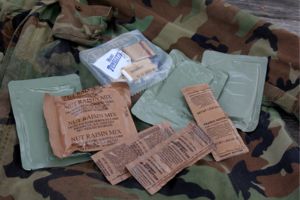
When bartering as a form of currency you can rest assured that everyone in a SHTF situation will see food as being valuable. Canned foods are going to be the new coins in this sort or currency system. A multi-person MRE with something tasty, like dehydrated lasagna or similar comfort foods is going to be the new $20 bill of SHTF currency.

Food is universally essential, and canned goods and single-portion MREs are easy to trade. However, you’ll deplete your supplies and risk others trying to take more once they know you have food.

Chickens and Domestic Animals

The chickens, ducks, dairy goats, and pigs you raise can have currency-like value in a SHTF world. Especially, if you’re breeding them to be able to sell to other people who are struggling with their own food sustainability.

Even cats and dogs will have value in a prolonged SHTF situation. Barn cat kittens will always be in demand in rural areas. The puppies of sporting breed dogs like labs, golden retrievers, and hounds will have enormous value in areas where small game is plentiful.

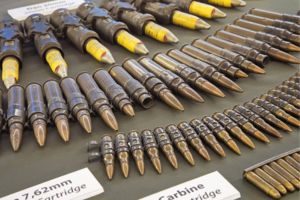
Ammunition & Firearms

Guns and popular types of ammunition are always going to carry a currency-like value when SHTF. Unprepared people without any firearms of their own will likely trade away a lot for even a basic gun like a 22 or a .410 shotgun.

What Will Be the Best Currency in a Crisis

Even people who are well-stocked, but don’t have the means to make their own rounds or shells will also see ammo as being barter-worthy.

The best currency value ammo is going to be things like 9mm, .223/5.56mm,.22 LR, .45 ACP, and 12-gauge shotgun shells.

Of course, the problem with bartering guns and ammo to other people is that now you’re arming them. Thus, increasing their ability to later take from you, and increasing their temptation to do so.

While ammunition and firearms hold significant value, they also come with risks, particularly the potential for conflict or theft. This is where knowledge becomes invaluable. Understanding how to protect your assets and loved ones in such unpredictable times is crucial.

That’s why I recommend the Special Forces Home Defense Academy . It’s more than just basic security; it’s about mastering advanced techniques to safeguard your home and family, taught by the seasoned Green Beret Terry Schappert.

The academy offers practical advice on everything from setting up discreet traps to reinforcing your property with everyday materials. As you consider your options for staying safe and well-prepared, this comprehensive guide could be the crucial element that ensures your readiness in the most challenging situations.

Fuel

Gasoline and diesel fuel will be treated like currency in the early days of a catastrophe. People will need it to run generators, vehicles, and equipment. Unfortunately, without stabilizer additives, these fuels will start to break down after a few months.

However, once someone has been disgruntled by bartering for degraded fuel, they likely won’t trust fuel for trade again in the future.

Fresh Meat

Fresh meat will become a form of barter currency that will have an impressively high value in a SHTF world. Historically, pioneers traded valuable items for fresh meat.

What Will Be the Best Currency in a Crisis

If you’re a proficient hunter or farmer, you could be sitting on a gold mine, especially if you have some way to maintain proper cold storage.

But what happens if the power goes out and you’re left with a freezer full of food? Learn  how what to do with all the frozen food once the power goes out and how to live without refrigeration.

The other advantage of fresh meat as currency is that you can barter with it, and it’s not taking away from your non-perishable stocks.

Skills & Labor

The concept of “Will Work for Food” or anything else of tangible value will also be a very popular means of exchange when SHTF. There are going to be special events and one-off tasks that people will need done. These are too hard to predict when it comes to their negotiable currency value. Yet some skills and labor jobs will be in high demand.

Various skills, such as wood cutting, ice cutting, blacksmithing, and electronics repair, will be in high demand. Firewood will be essential for cooking and heating, but felling trees can be dangerous.

As refrigeration becomes scarce, ice cutting will be crucial for food preservation, requiring a team effort. Blacksmiths can barter their metalworking skills, crafting items like knives and tools, which will be highly valued.

Electronics repair will also be vital in the early stages of a crisis, helping maintain radios, generators, and solar panels, though the demand may decline as technology degrades over time.

The Great Credit Crash- A real Imminent Financial Crisis will Soon be at Our Front Door. (99% of All Americans Will be Financially Devastated)

Coming the most severe financial crisis of our times. A financial crisis so severe 99% of all Americans will be financially devastated. They will in fact be far worse off than those who experienced the Great Depression of the 1930’s. And yet, even though some economists are sounding warnings about the impending financial catastrophe no one is even paying the slightest attention to the earthquake of economic doom. Not one presidential candidate or the media has even bothered to alert the public about a disaster of Titanic proportions unfolding right under our feet. Here are the eight signs of imminent societal collapse.

We have to go back to the time when stocks dropped by more than 12% losing over $3 trillion in value. We are being beguiled into thinking that our financial footing is all well and good when in fact the exact opposite happening. What is happening is our whole financial system is now just a house of cards where just one tiny cross breeze of inflation would send that whole house of cards tumbling down and with it wiping our practically everyone’s financial means of support. To put it more bluntly just imagine waking up and going to get gas for your car. Your credit or debit card will not work because the banks have already frozen your account. And, what little cash you have on hand won’t be enough to even buy a loaf of bread. Scary isn’t it? A real imminent full blown financial crisis will soon be at our front door.

To put this in perspective right now corporate debt is over $30 trillion and counting. American consumers are now holding over $733 billion in credit card debt. They hold over $1 trillion in auto loan debt. This while today student loan debt has reached over $1.4 trillion with more than 12% of these loans are in default or overdue by more than 90 days. All this debt is strangling the life blood of our whole economy.

Compounding this problem is the fact that the economy in the United States has remained flat for over four decades. But wait there is good news if you happen to be in the 1%. Your net worth just keep growing by leaps and bounds. While the 1% dine on caviar and champagne the rest of us eat hot dogs and stale beer. Without a growing economy or having the “Williams Theory of Economic Evolution being fulfilled there is no possible way for the United States to ever be able to pay back all this accumulated debt. Simply put The U.S. economy is withering and dying on that vine of lost opportunities. This, despite the biggest stimulus of new cash, think of all those Qualitative Easing programs the Fed pumped out and the exorbitant amount of and credit available. Yet, we have far fewer real living wage jobs being filled or even being offered today than we did just 15 years ago. Thus, the typical household has even far less income. This while the cost of living keeps increasing. Too many are trapped into a cycle of having to rob Peter to pay Paul just to make it through one more day. There are a lot of people out there who know deep down that something’s not right in America. Could it be that with all this debt increasing every day a great credit crash is inevitable?

Warning!!! First Signs That U.S. Consumers Are In Very Serious Trouble

This is only part of the monumental credit and debt crisis facing the United States. The national debt of this nation has reached a level unprecedented in the history of our nation. The government has to keep borrowing just to keep meeting it’s expenditures. But, with endless wars, and more people now than ever being relied of those meager safety nets just adds to the national debt. Yet, we still have our politicians offering band aid fixes to a monumental hemorrhaging society. With all this debt from our national to consumer debt the immediate problem we face is that there’s not enough real money in our financial system. Between $958 billion to $1.5 trillion changes hands in the U.S. every month. People buy milk, pay babysitters. They pay their mortgages and their taxes. Consumer spending alone is $11.2 trillion annually. But here’s the thing there’s only $1.2 trillion worth of actual dollars – physical money in the entire world. We can’t be sure how much of that is actually here in the U.S. Estimates are that some 50 percent to 75 percent of our money is in overseas bank accounts or held by foreign governments, and a lot of what is left in the states is called “dead money.” It’s stuffed in mattresses and safe-deposit boxes. In fact, the amount of U.S. dollars being hoarded this way that is to say the amount of dead money is now at an all-time high. Corporate America is by far the worst offender in hoarding cash. Think back to those QE1 and 2 bailouts by the fed with borrowed money to the financial sector. Instead of dolling out readily available cash to the public all they did was hoard it an let the public use credit to finance their daily expenditures. It was only recently that banks have put caps on all cash withdrawals. And you can see there really is a cash shortage.

FEMA Emergency Alert! Hidden Terrible Situations Exposed- Watch the video below to find out the most shocking details!!!

Since the 1970s, the credit system in America has grown to become our biggest and our most crucial asset. Credit, not real money, is what people spend. Since 1971, the real money has been taken out of the system. Credit is what we have now. And, every credit dollar has a dark side to it, debt. And there’s more debt outstanding now than twice the value of every single home in America put together, more than three times the value of every single U.S. bank’s assets combined, more than 20 times the trillions of dollars the U.S. government collects in taxes every year. To put this in perspective let’s say you have one physical dollar, the one with George Washington. It doesn’t matter what other people think or what’s happening on Wall Street; it’s yours to spend as you like. But, with credit it is another ball game entirely. It can disappear before you spend it, because at some point all that credit can only exist if people believe they’ll get paid back, that is if they believe there’s enough money in America to pay back all that $60 trillion in outstanding credit. The sad fact there isn’t. Our credit system is insolvent. And when it fails, which it surely will do, it could wipe out more wealth than any other crisis in history.

During the financial crisis of 2008 over $10 trillion vanished. This next crisis will wipe out six times that amount. What we are saying is that our whole financial system will collapse. An economic disaster unparallel in the history of the world. Today, our whole society relies on credit. And, when any one link in the chain of production through distribution in economies is broken the whole credit system will implode. Businesses can’t run. Paychecks don’t go out. This credit crash not only destroys the mechanism that runs our economy, it shuts down our access to our own money. Just imagine what happens as lenders try to redeem $60 trillion worth of credit and there’s only $250 billion to go around. You go to your ATM; you ask for cash, but there isn’t any cash left. Suppose you have a $10,000 line of credit on your card. If the credit system doesn’t work, you might as well be flat broke. Dollars become ultra scarce. Prices skyrocket. Banks go under. In fact, it would only take about three hours for our entire country to shut down. The last time our credit system came to the verge of collapse was in 2008. This next crisis watch out.

To stop this impending disaster will take much more than open mouth rhetoric by our politicians. It starts with educating the public to realize that drastic reforms are urgently needed to stave off a disaster that would wipe out our whole financial and economic system. The implications of not addressing this urgent crisis will have global ramifications that will lead to a world war. A war which in all likelihood would send humanity back into the caves of the Neanderthal. The need is apparent and urgent action is required. And it starts with implementation of National Economic Reform’s Ten Articles of Confederation.

EXPOSED: The Ruling Elites Evil “Control Code” – What Are They Hiding From Us? …

World War 3: According to the Bible, One Out of Three People on the Earth Will Die In This War Of All Wars!

The question is not, “Is there going to be a World War III?” It is in your Bible. There is not a one tenth of one percent chance that it is not going to happen. Another world war is coming, and it will be the biggest world war ever. According to the Bible, one out of three people on the earth will die in this war of all wars! The prophecy is found in Revelation chapter nine, verse 15: “And the four angels were loosed, which were prepared for an hour, and a day, and a month, and a year, for to slay the third part of men.”

The “third part of men” would be over two billion people! Other translations read “one-third of the human race”, “one-third of all the people on earth”, “one-third of humanity”. They all say the same thing. A war is just ahead that will wipe out over two billion human beings!

The War of All Wars

Prior to the 20th Century, there had never been a war with one million fatalities. Then came World War I in 1914, with 8.2 million dead. They called it “The Great War.” With the founding of the League of Nations, we had hoped that this type of carnage would never happen again. Twenty years later, 52 million people died in World War II. As if something had come unhinged in the human soul, we cried out, “How can we ever stop this?” With the founding of the United Nations we had hoped that the solution to world peace was at hand. I have the dreadful assignment of telling you, it is not fixed. There is another war coming. There will neither be 8 million dead nor 52 million dead. This war that is coming will kill 2.2 billion, forty times World War II. It will be the worst war ever.

I can’t tell you exactly when this is going to happen, but the Bible tells us where World War III will originate. The “Sixth Trumpet” prophecy is found in Revelation 9:14-15:

Saying to the sixth angel which had the trumpet, Loose the four angels which are bound in the great river Euphrates. And the four angels were loosed, which were prepared for an hour, and a day, and a month, and a year, for to slay the third part of men.

These angels were bound in the Euphrates River, which flows through Turkey, Syria, and Iraq, and empties into the Persian Gulf. War has been raging up and down the Euphrates River since 2003 when the U.S. invaded Iraq. When they are loosed, these evil angels will carry out their assignment to kill one-third of mankind.

Out of the chaos and destruction, a strong leader will rise to promise peace and security. The Antichrist will step onto the world scene at just the right moment. He will provide firm direction but he will also demand absolute obedience.

Four Major Prophecies

There are four prophetic developments occurring right now that demonstrate how close we are to the Euphrates River War, otherwise known as World War III.

Peace Plan for the Middle East

In Genesis 15:18, God entered into a covenant with Abraham, affirming that the Promised Land would be given to his descendants. The Antichrist, according to Daniel 9: 27 will confirm this covenant with many for seven years. A peace agreement which confirms the covenant will establish Israel’s right to exist in the Holy Land and will mark the beginning of the final seven years to Armageddon. U. S. Secretary of State John Kerry has set the goal of April 29, 2014 to reach just such a peace agreement between Palestinians and Israelis. “A viable two-state solution is the only way this conflict can end,” he said, “and there is not much time to achieve it, and there is no other alternative.”

Halfway through the final seven years, the Antichrist will order the stopping of animal sacrifices on the Temple Mount, which will have been resumed by then. He will then stand in the temple claiming to be God.

Construction of Israel’s Third Temple

II Thessalonians 2:3-4 and Revelation 11:1-2 describe a temple standing on the Temple Mount three and one-half years before Armageddon. Israel has been subsidizing nonprofit organizations that advocate the building of the Third Temple atop Jerusalem’s holiest site. The Temple Institute is dedicated to the vision of the Temple’s rebuilding, and has already recreated several items to be used when services are resumed on the Temple Mount.

Preparing for the Mark of the Beast

Revelation 13:16-17 describes the control system which will be implemented during the reign of the Antichrist. During the Great Tribulation, every person on earth will be coerced into pledging allegiance to the Antichrist. Those who do so will be given a unique identification mark or number permitting them to participate in the world economy. Those who refuse will be denied the “privilege” of buying and selling.

The REAL ID Act mandates that Americans produce federally approved identification upon demand. Although it has repeatedly postponed implementation penalties, the Department of Homeland Security has announced a gradual rollout for enforcing the law, beginning in April, 2014. The Affordable Care Act, often referred to as “Obamacare,” implements a national ID system disguised within a “data hub,” and a “unique patient identifier” to verify eligibility. Concurrently making its way through Congress, as part of an immigration reform bill, is “E-Verify,” a mandated universal biometric ID required for federal approval for employment.

A War that Originates from the Euphrates River

The Euphrates-Tigris basin is shared between Turkey, Syria and Iraq, with Iran comprising parts of the Tigris basin. Since the 1960s, unilateral irrigation plans altering the rivers’ flows, coupled with political tensions between the countries, have strained relations in the basin. Disputes have prevented the three governments from effectively co-managing the basin’s rivers. Although cooperation efforts were renewed in the 2000s, these have yet to result in a formal agreement on managing the basin waters.

The Euphrates-Tigris basin is shared between Turkey, Syria and Iraq, with Iran comprising parts of the Tigris basin. Since the 1960s, unilateral irrigation plans altering the rivers’ flows, coupled with political tensions between the countries, have strained relations in the basin. Disputes have prevented the three governments from effectively co-managing the basin’s rivers. Although cooperation efforts were renewed in the 2000s, these have yet to result in a formal agreement on managing the basin waters.

Iran is one of America’s and Israel’s foremost enemies and the Islamic Republic has become one of the most serious threats to stability in the Middle East. As Iran is rapidly achieving nuclear capability, the region will become far more dangerous as the number of countries engaged in nuclear activities grows. The Deputy Commander of Iran’s Revolutionary Guard has threatened that Tehran is able to “destroy every spot” in Israel. Germany views Iran as a potential threat not just to Israel, but also to European countries.

Entrance Ramp for the Antichrist

“WWIII – Entrance Ramp for the Antichrist” details how this war is going to come out of the Euphrates River area, resulting in the killing of one-third of the human race. It is going to happen and it will affect us, our families, our nation, our world, everything. And it looks like it is coming sooner, rather than later.