8 Industry Experts Pick Their Must-Have SHTF Gun: Our panel of experts answers the age-old question ‘If you could only grab one gun when SHTF, what would it be?’

Our panel of experts answers the age-old question ‘If you could only grab one gun when SHTF, what would it be?’

The question is pretty commonly heard at gun shops, barbecues and shooting ranges. Every shooter knows it, and every shooter thinks about it. What gun would you choose if you could only have one gun? It seems simple, but experts and enthusiasts alike know how difficult it can be.

The question gets a little trickier when we add a caveat: What if it’s during the apocalypse? Now you have to consider ammunition; if you run out of ammo, will you be able to scrounge some up? What about hunting and self-defense?

Answering this question can be difficult, but that’s why we’ve assembled an assortment of industry experts to offer their opinions. On top of learning more about each of these gurus, these answers can also help you formulate your own.

Nick Collier

  • Affiliation: DoubleStar Corp.
  • Position: Senior Executive, DoubleStar, Training Academy Instructor
  • SHTF Gun: AR-15

I’d choose an AR-15 for a SHTF situation. That’s an easy choice. I have had this conversation many times with industry associates as well as family members and friends. With the thousands of variations available, the AR-15 is the best choice. My decision is based on the following: training, reliability, ease of use, size and ammunition.

I have spent ample time training on this firearm. I feel like I would be able to handle the weapon in a variety of situations. Whether I am in a rural setting taking distant shots or a densely populated area, the AR-15 is capable of kill shots in excess of 300 yards, and it’s short enough to maneuver in urban terrain.

The reliability of the AR-15 is only as good as the sum of its parts. When built with quality components, the AR-15 will perform in most any condition, as proven by our military and law enforcement over the years. I adhere to the “buy once, cry once” principal when buying gear. Go ahead and pay for the good stuff and you won’t have to buy it again.

Ease of use is another big factor. Not everyone is a trained firearms enthusiast, so you may encounter situations where you are unable to fire and need to teach someone in your group to return fire or hunt for food. The AR is very basic and easy to use. My 9-year-old son has been shooting one since he was big enough to hold it up, and in my training experience, it doesn’t take much to get the average person up to speed safely.

The size of the AR-15 makes it easy to carry. If you have ever covered a long distance on foot, you know every ounce you are carrying counts. Moving through obstacles also requires a small, compact firearm. Any hunter can tell you that climbing over fallen trees and rough terrain is easier with a smaller, shorter rifle, and the AR-15 can be made short to carry and adjusted for the correct length of pull with collapsible stocks.

The last and maybe biggest factor is ammunition. The AR-15’s standard 5.56mm cartridge is big enough to put down small- to medium-sized targets with well-placed shots. Whether it’s a zombie horde or a whitetail dinner that comes into the scope, the 5.56mm cartridge can handle it. Carrying six to ten 30-round magazines on your plate carrier or in your backpack still leaves room for things like water, food and medical supplies on your trek without adding too much bulk or weight. Other factors include caliber conversions for larger ammunition and parts availability. The AR-15 is the most popular rifle in America, and it should be easy to find ammunition and parts while scavenging. For these reasons, the AR-15 is the ideal SHTF firearm.

Mike Detty

  • Affiliation: Mad Dawg Global Marketing, Inc.
  • Position:President
  • SHTF Gun: AR-15 carbine

Guns are tools, and each of them has been designed to perform a certain job. Unfortunately, an event of apocalyptic proportions can limit our choices, so the selection of just one gun is extremely critical. To me, this means choosing a gun that has a great degree of versatility. My pick would be an AR-15 carbine.

For many years I competed in USPSA competition and considered myself an above- average shooter, and I own many nice, custom 1911 pistols. But I have enough experience behind a carbine to know that no matter how much I practice with my pistol, I will never be able to shoot one as accurately as one of my AR-15 carbines. AR-15s are accurate while the 5.56mm cartridge is light on recoil, making this combination especially effective and easy to shoot for all family members.

Besides the precision of a carbine, there is also the capacity factor. Thirty-round AR magazines are abundantly available at bargain prices. My own home-defense guns all use 40-round Magpul 5.56mm magazines.

Flattop carbines are especially versatile and offer the shooter the ability to use folding backup sights, reflex sights or a scope depending on the task at hand. Free-floating handguards make it easy to attach lights, lasers and other accessories to aid the shooter.

The AR’s modular design also makes it easy to switch uppers—i.e., convert the gun from a short M4-style carbine to a long-range precision rifle with ease. Guns can even be converted to hard-hitting calibers like the .458 SOCOM or inexpensive .22 LR.

The ubiquitous of the AR-15 makes its choice a logical one in a doomsday scenario. Parts, magazines and ammunition should be easier to find with such a popular gun. Unwanted parts or accessories should also make for good trading fodder.

My own choice for home defense is an AR-15 SBR with a 7-inch barrel, a flash suppressor and a red dot reflex sight. In the event of an unimaginable catastrophe where I can only grab one gun before I leave my home, I would feel very well protected with my AR-15!

Mykel Hawke

  • Affiliation: U.S. Army Special Forces veteran, survival instructor, author, star of the Travel Channel’s “Lost Survivors”
  • Position: Founder and Director of SpecOps Adventures and Training
  • SHTF Gun: Scavenger 6 by Ralston Arms

Like any skilled person, I prefer to use the right tool for the task. However, sometimes you have to make do and improvise. As a survival guy, I live with a long machete, large, medium and small knives and a backup. The same principles apply for my weapons; I have sniper rifles, shotguns, AR-15s, pistols. But if I must choose just one weapon, I want the one that will give me the biggest bang for the buck, which means it has the most utility and versatility.

So, for me, the best all-around weapon to carry in a bug-out situation would be the Scavenger 6 by Ralston Arms. Designed by one of the most creative survival inventor/designer guys I’ve ever met, Tim Ralston, it’s a weapon that can shoot 21 different calibers. In a survival situation, you never know what kind of ammo will be available. It’s very likely you’ll sooner or later expend whatever ammo you have stored and you can’t always carry all the ammo with you, but if your weapon will shoot whatever is around, you’re well ahead of the power curve, and in a crisis, that could be the difference between surviving and pushing up daisies.

Jared Hinton

  • Affiliation: Vista Outdoor
  • Position: Communications Coordinator for Firearms & Ammunition
  • SHTF Gun: Savage 11 Hog Hunter

I’m a bolt-action fanatic, and a gunsmith first. Somewhere deep down inside me, I still believe that the autoloading firearm is a passing fad; lever actions, bolts and revolvers are simple mechanical mechanisms that still rise to the top of my list if SHTF. Don’t get me wrong—I play with the AR platform, and I’ve assembled more ARs than I can count. The AR-15 is a great option if you expect a firefight. My primary concern is a simple rifle that anyone can operate and maintain should I become immobilized. Backup iron sights are mandatory. If anything happens to the optic, I can’t be stuck guessing where I am shooting. I need to be able to harvest game while having the ability to stop two-legged varmints. No excess hanging off the gun, waiting to get caught on brush while moving. Simplicity.

I value the ability to make one shot matter, and believe the Savage 11 Hog Hunter rifle in .223 Remington would be tough to beat if things got bad in a hurry. The Model 11 Hog Hunter comes in at 7.25 pounds, so it’s no flyweight, but I’ll take the extra weight of the medium-contour barrel for better off-hand control on target. Pre-threaded for a suppressor, the medium-contour barrel won’t submit to point-of-impact shifts that a sporter-weight barrel will with a suppressor out front. I’d top the rifle with a Weaver Classic 1-3x24mm optic in Weaver rings. Light, simple, reliable and the adjustable LPA sights ensure I can hit what I’m aiming at no matter the situation. With an optic, I can keep the entire package under 10 pounds, which is a reasonable threshold for days on the move.

Moving parts and reciprocating mass are more likely to wear, raising concerns over long-term maintenance. Autoloaders have a tendency to make a person waste ammo with extra trigger pulls. The Hog Hunter is compact, made to be hauled through the stuff no one wants to move through, precisely where I’ll be lurking. The Savage action is extremely strong, and should I come across ammo that is questionable, I know that the chances of the action failing are all but nonexistent. The zero-headspace system of the Savage barrel nut and floating bolt head give me a 100-percent reliable lockup that guarantees maximum accuracy and safety.

By choosing the .223 Remington as my caliber, I can carry a high volume of ammo. I need to pack as much ammo on my person as possible. While we’re at it, make it 69-grain Federal Gold Medal rounds; I need to know I’m hitting exactly where I’m aiming. Federal’s Gold Medal Match ammunition is sufficient to engage targets out to 600 yards while I make evasive maneuvers. It also doesn’t hurt that I have a large stockpile of it cached at the farm. It’s not designed for expansion, so it doesn’t excessively damage rabbits, pheasants and vermin that I may need to eat. I also have a decent supply of Fusion ammo stashed around; the 62-grain bonded bullet is more than sufficient for the biggest Minnesota deer I’ll encounter.

If SHTF, my goal is to avoid a close-range confrontation. I don’t need to eliminate most threats—I just need to slow them down long enough for me to get out of the area. Being discreet is my go-to plan, and getting to and holding our farm ground would be my top priority. The Model 11 Hog Hunter is versatile enough that I could trust my life with it when the going gets tough.

Jason Morton

  • Affiliation: CZ-USA
  • Position: Vice President of Marketing
  • SHTF Gun: CZ Scorpion EVO

If SHTF, I can assume that I’m not expecting a typical self-defense scenario, which our daily-carry pocket dump anticipates in these pre-apocalypse times. Instead I have to assume that we can expect multiple encounters with multiple targets. Since my first choice, air support, isn’t an option, I’m reduced to choosing only one gun.

Whatever I choose has to accomplish three goals: have adequate stopping power against multiple targets, be easy to carry with lots of ammo and, given the likelihood of a target rich environment, be common enough in caliber to have a reasonable expectation of finding more ammo when necessary. The multiple-target expectation means that for me, I need semi-auto capability. It also needs to be maneuverable both indoors and out. I think an SBR is just the ticket here. Assuming there is no government at this point, an SBR won’t require a tax stamp—just a hacksaw.

Caliber-wise, I like the .22 LR because I can carry lots of ammunition with me. Unfortunately, I have to find that ammo first and haven’t had very good luck doing that for several years. I know bunches of people are hoarding it in their basements, but if I try to scavenge it from there, I’m very likely to become one of their targets. Let’s say that the .22 LR won’t work due to ammo availability, and we don’t even need to consider stopping power for this one. The 5.56mm and 9mm calibers are going to be the most commonly encountered rounds. They are close enough to the same overall bullet weight that we can call choosing one over the other a draw. For stopping power though, the 5.56mm  NATO has to get the nod, assuming I can come up with something other than FMJs, but that’s not a guarantee.

The 5.56mm gives me more range over the 9mm, but I’m more concerned with multiple close targets, so a 9mm carbine or submachine gun is probably going to be my go-to gun in this scenario. It’s got plenty of magazine capacity, good stopping power with the defensive loads most commonly found in the caliber, and it generates low recoil. The 9mm is lighter in weight than a 5.56mm carbine and with a folding stock, and it’s easily concealed. Some might accuse me of being a little biased here, but my top pick has to be the CZ Scorpion EVO for my SHTF gear bag. The Scorpion is fast and reliable. Add a red dot and a suppressor and it’s even better.

Sean Murphy

  • Affiliation: Nightforce Optics
  • Position: Marketing Communications Manager
  • SHTF Gun: DEVGRU “RECCE” carbine

In the event of a true SHTF situation, we must accept that our “normal” day isn’t so normal. If I am limited to taking just one firearm to help me solve problems in a SHTF environment, it’s going to be a rifle.

In my eyes, it is hard to beat the all-around qualities of a good AR-15 carbine. My personal favorite for “the one” is a modern interpretation of the DEVGRU “RECCE” carbine. This upgraded AR-15 has a medium-contour, 16-inch, stainless steel, match barrel; a slim, 15-inch handguard; a muzzle device to accept a suppressor; a collapsible buttstock; and a match trigger. When paired with a good optic/ammo combination, you now have a very effective platform to deliver rounds accurately on target at any practical distance.

Topping off the carbine would be a Nightforce 2.5-10X riflescope, attached in a Nightforce Ultralite Unimount. This piece of glass is a perfect all-around optic that enables close/fast firing at low power, and up to 10X power for target indentification and shooting at longer-range targets. Quality ammo with heavy 69- to 77-grain projectiles or a premium- bonded bullet would be fed through the rifle for the best balance of accuracy and maximum terminal effect downrange.

The moderate weight and overall handiness of this package makes it easy for such a combination to accompany me on many trips hunting for deer, ridding fields of prairie dogs, competing in field/action rifle matches and countless trips to the range. The carbine is not too heavy to carry in hand or on a sling and is a good size to stash in a vehicle. I can deliver precision fire out to 600 yards with reliability (and a little farther on good days), but also engage targets at CQB ranges with ease. Other qualities to like about this setup are the plethora of magazines available, light recoil, ease of operation and perhaps most importantly, reliable operation. As higher-level maintenance or repairs became necessary; the parts availability and limited tools required make it an easy task for a competent person to handle.

Additionally, lights, lasers, bipods, night-vision devices and a whole range of other accessories can be added or removed to suit a particular use or environment. Chambered in 5.56mm NATO, this setup can also accommodate nearly any .223/5.56mm ammo one had stashed or had to scrounge.

If things go seriously wrong in my part of the world, my anticipated threat levels are going to go up, and my armament levels will go up to match. While a handgun provides an easy solution to carry all day, the energy on target, effective range, ammunition capacity and modularity of an AR-15 rifle cannot be ignored. My preference for an “accurized” carbine provides a balanced set of features for nearly any use, from hunting to defense or even limited offense if needed. I like having options to deal with problems, and my “RECCE” gun would be the one to grab.

Robin Sharpless

  • Affiliation: Redding Reloading
  • Position: Executive Vice President
  • SHTF Gun: Marlin 1894C

This is a very fun question to answer. It gives insight into both professional and personal preferences. Many will look at personal interest and or a favorite cartridge. Others will think about the sexiest gun to have during this time. For me, I’ll be driven by practicality.

As an avid handloader, my decision will be driven by something that is effective on wild game for food and predators, be they two- or four-legged. But it also must conducive to being handloaded and offer real versatility. Therefore, my choice is a .357 Magnum lever-action rifle, the Marlin 1894C. With its 18-inch barrel, it can generate enough energy to kill a deer, disable an attacker and handle coyotes but is also compact and convenient enough for easy carrying. Mine would sport a peep sight that works very well for my eyes, and the rifle’s overall handling characteristics make it a good choice for instinctive or point shooting when necessary.

From the reloading front, the choice of the .357 Magnum allows for the use of a variety of powders and, most importantly, the ability to simply and easily cast bullets for future use. Hopefully I’ll have a large stock of good projectiles on hand, but if that’s not the case, this caliber is a simple one to cast bullets for, regardless of what that dark future may hold.

Since the .357 Magnum has a straight-walled case, I won’t need to have lube for sizing. It is extremely easy to load for, and long case life is a positive. Additionally, in a future where we may have to scrounge for components. With that in mind, .357 Magnum and .38 Special brass is going to be relatively easy to find. Through creative loading we can create a range of offerings from quiet, low-velocity, low-flash defense loads to heavy-bullet loads capable of taking deer-sized North American game for food. While I would not tackle a grizzly bear, I would have confidence with this rifle on a black bear, which, by the way, could produce lube for my cast bullets if needed, with a heavy bullet and slower powder.

Bill Wilson

  • Affiliation: Wilson Combat
  • Position: President and Founder
  • SHTF Gun: Wilson Combat Tactical Lightweight .308 (rural), Wilson Combat AR9B(urban)

I think there are two different answers to this question based on where I am geographically. If I’m living on my ranch in rural Texas when SHTF and I can only have one firearm for the foreseeable future, my pick would be a lightweight .308 Winchester AR with a 14.7-inch barrel. I’d hopefully also have two additional upper receivers—in 6.5 Creedmoor and .338 Federal—with 18-inch, crowned-muzzle barrels for longer-range defense and more killing power for hunting. I’d really feel pretty naked without a handgun on my side since I carry one 24/7, but the question was one gun, and a .308 Winchester AR would handle most any defensive situation I would likely encounter in rural Texas and still put meat on the table as needed. Also .308 ammunition is pretty common in this neck of the woods—not that I don’t always have plenty on hand!

My setup would be as follows: I’d choose a Wilson Combat Tactical Lightweight .308 with a 14.7-inch barrel and a permanently attached Q-Comp flash suppressor. I’d add a top-quality optic like a Leupold 2-12x42mm VX-6 riflescope as well as a Streamlight TLR-1 HL weapon light and a sturdy Blue Force Gear Vickers two-point sling.

If allowed, my extra 6.5 Creedmoor upper would have a mid-weight, 18-inch, crowned-muzzle barrel and a Leupold 2-12x42mm VX-6 scope. The .338 Federal upper would have a light “Hunter” 18-inch, crowned-muzzle barrel and the same scope.

If I am in a large city on business (I would never live in a city!) when SHTF and I can only have one firearm for the foreseeable future, my answer changes. For this one I’m assuming total society breakdown and chaos in the city. For that, the need for concealed carry is a thing of the past. That being said, I’d go with one of our new AR9B 9mm carbines that uses Beretta 92/M9 magazines, which I normally take with me when I travel. In a true SHTF situation in an urban area, I want to be prepared for multiple assailants at relatively short ranges.

A light and short carbine that is easy to carry and deploy in tight places would be very handy. A 9mm carbine would also allow me to carry a lot of ammunition, and using subsonic loads, it would be almost as quiet as a suppressed 5.56mm. An additional plus would be the very likely chance that eventually I would be able to acquire a 9mm pistol, and ammunition compatibility would be a good thing.

For this setup I’d choose a Wilson Combat AR9B with a fluted, 14.7-inch barrel and a permanently attached Q-Comp flash suppressor. I’d use a Leupold 1-6x24mm VX-6 scope and an Aimpoint CompM4s, both in QD mounts, as well as a Streamlight TLR-1 HL weapon light and a Blue Force Gear Vickers two-point sling.

The First 19 Foods You Should Stockpile For Disaster (A good stockpile of food will go a long way toward helping you survive the aftermath of any disaster or life crisis)

A good stockpile of food will go a long way toward helping you survive the aftermath of any disaster or life crisis, especially when grocery stores are emptied.

In fact, I’d go so far as to say that there are people who are not preppers who nevertheless instinctively know to stockpile food. This really isn’t surprising when you consider that through most of mankind’s history, stockpiling food was essential to survival — specifically surviving the winter months. During those months, wildlife is bedded down trying to stay warm and plants are dormant. If one didn’t have a good stockpile of food, their chances of survival were pretty darn slim.

But knowing to stockpile food and knowing what to stockpile are two different things. The vast majority of what the average American family eats is unsuitable for stockpiling, because it falls into one of three categories:

  • Junk food – Lots of carbs, lots of sugar, lots of salt and lots of chemicals, but not much nutrition.
  • Fresh food – Foods that won’t keep without refrigeration.
  • Frozen food – It will begin to spoil within two days of losing electrical power.

So we need to come up with other foods — foods that will give us a lot of nutrition and also have the ability to be stored for a prolonged period of time. Here are what we consider the 19 most important ones:

1. Beans – This is one of the more common survival foods. Not only are beans plentiful and cheap, but they provide a lot of protein — something that’s hard to find without meat.

2. White rice – The perfect companion to beans. An excellent source of carbohydrates, and it stores well. [Note: Don’t store brown rice, which contains oils and will spoil.]

3. Canned vegetables – A good way of adding micro-nutrients to your survival diet. Canned goods keep well, long past the expiration date on the label.

4. Canned fruit – For something sweet, adding canned fruit allows you a nice change of diet. Being canned, they keep as well as the vegetables do.

5. Canned meats – Of all the ways of preserving meat, canning is the most secure in protecting the meat from decomposition. While it doesn’t typically have as good a flavor as fresh meat, it still provides animal protein at the most reasonable price you’ll find.

6. Honey – As long as you can keep the ants out of it, honey keeps forever. Plus, it is beneficial during cold season.

7. Salt – Nature’s preservative. Most means of preserving foods require the use of salt. In addition, our bodies need to consume salt for survival.

8. Pasta products – Pasta is a great source of carbohydrates, allowing you a lot of variety in your cooing. Besides that, it’s a great comfort food for kids. Who doesn’t like spaghetti?

9. Spaghetti sauce – Obviously, you need this to go with the pasta. But it is also great for hiding the flavor of things your family doesn’t like to eat. Pretty much anything, with spaghetti sauce on it, tastes like Italian food — whether you’re talking about some sort of unusual vegetable or a raccoon that you caught pilfering from your garden.

10. Jerky – While expensive to buy, jerky is pure meat, with only the addition of spices. Its high salt content allows it to store well, making it a great survival food. It can be reconstituted by adding it to soups and allowing it to cook.

11. Peanut butter – Another great source of protein and another great comfort food, especially for the kiddies. It might be a good idea to stockpile some jelly to go with it.

12. Wheat flour – For baking, especially baking bread. Bread is an important source of carbohydrates for most Americans. Flour also allows you to shake up the diet with the occasional batch of cookies or a cake.

13. Baking powder & baking soda – Also for making the bread, cookies or cakes.

14. Bouillon – Otherwise known as “soup starter,” this allows you to make the broth without having to boil bones on the stove for hours. Soups will probably be an important part of anyone’s diet in a survival situation, as they allow you to eat almost anything. Just throw it together in a pot and you’ve got soup.

15. Water – We don’t want to forget to stockpile a good supply of water. You’ll go through much more than you expect. Experts recommend a minimum of one gallon per person per day, but remember: That’s just for drinking.

16. Whole-wheat –Crackers are a good replacement for bread and make a fine substitute when making sandwiches. Due to their higher fat content, whole-wheat or whole-grain crackers have a shorter shelf life than their plain counterparts (check the box for expiration dates), but the extra fiber pays off when you’re particularly hungry. Consider vacuum-packing your crackers to prolong their freshness.

17. Nuts and trail mixes – Stock up on these high-energy foods—they’re healthful and convenient for snacking. Look for vacuum-packed containers, which prevent the nuts from oxidizing and losing their freshness.

18. Powdered milk –Almost all dairy products require refrigeration, so stock this substitute for an excellent source of calcium and vitamin D when fresh milk isn’t an option.

19.Multivitamins –Supplements will help replace the nutrients you would have consumed on a normal diet.

While this doesn’t constitute a complete list of every type of food that you should stockpile, it’s a good starting point. You’ll want more variety than this, but in reality, your family can survive for quite a while with just the 15 things on this list.

As your stockpile grows, add variety to it. One way of doing that is to create a three-week menu, with the idea of repeating that menu over and over. If you have everything you need to cook everything on that menu, you’ll have a fair assortment of food, and enough so that your family shouldn’t grow tired of it.

The First 19 Foods You Should Stockpile For Disaster

A good stockpile of food will go a long way toward helping you survive the aftermath of any disaster or life crisis, especially when grocery stores are emptied.

In fact, I’d go so far as to say that there are people who are not preppers who nevertheless instinctively know to stockpile food. This really isn’t surprising when you consider that through most of mankind’s history, stockpiling food was essential to survival — specifically surviving the winter months. During those months, wildlife is bedded down trying to stay warm and plants are dormant. If one didn’t have a good stockpile of food, their chances of survival were pretty darn slim.

Preparedness Hacks: Once a nuke is heading your way, you might think that there isn’t much left to do, but you would be wrong!

Because we will show you America’s natural nuclear bunkers that are also EMP proof. When the sirens start wailing, all you need to do is pick the closest one to your home, where you can take cover before it hits.

But knowing to stockpile food and knowing what to stockpile are two different things. The vast majority of what the average American family eats is unsuitable for stockpiling, because it falls into one of three categories:

  • Junk food – Lots of carbs, lots of sugar, lots of salt and lots of chemicals, but not much nutrition.
  • Fresh food – Foods that won’t keep without refrigeration.
  • Frozen food – It will begin to spoil within two days of losing electrical power.

So we need to come up with other foods — foods that will give us a lot of nutrition and also have the ability to be stored for a prolonged period of time. Here are what we consider the 19 most important ones:

1. Beans – This is one of the more common survival foods. Not only are beans plentiful and cheap, but they provide a lot of protein — something that’s hard to find without meat.

Here are 23 survival uses for honey that you didn’t knowabout.

2. White rice – The perfect companion to beans. An excellent source of carbohydrates, and it stores well. [Note: Don’t store brown rice, which contains oils and will spoil.]

3. Canned vegetables – A good way of adding micro-nutrients to your survival diet. Canned goods keep well, long past the expiration date on the label.

4. Canned fruit – For something sweet, adding canned fruit allows you a nice change of diet. Being canned, they keep as well as the vegetables do.

5. Canned meats – Of all the ways of preserving meat, canning is the most secure in protecting the meat from decomposition. While it doesn’t typically have as good a flavor as fresh meat, it still provides animal protein at the most reasonable price you’ll find.

6. Honey – As long as you can keep the ants out of it, honey keeps forever. Plus, it is beneficial during cold season.

7. Salt – Nature’s preservative. Most means of preserving foods require the use of salt. In addition, our bodies need to consume salt for survival.

8. Pasta products – Pasta is a great source of carbohydrates, allowing you a lot of variety in your cooing. Besides that, it’s a great comfort food for kids. Who doesn’t like spaghetti?

9. Spaghetti sauce – Obviously, you need this to go with the pasta. But it is also great for hiding the flavor of things your family doesn’t like to eat. Pretty much anything, with spaghetti sauce on it, tastes like Italian food — whether you’re talking about some sort of unusual vegetable or a raccoon that you caught pilfering from your garden.

New Survival Energy Product Makes Every Window A Powerful Solar Charger

10. Jerky – While expensive to buy, jerky is pure meat, with only the addition of spices. Its high salt content allows it to store well, making it a great survival food. It can be reconstituted by adding it to soups and allowing it to cook.

11. Peanut butter – Another great source of protein and another great comfort food, especially for the kiddies. It might be a good idea to stockpile some jelly to go with it.

12. Wheat flour – For baking, especially baking bread. Bread is an important source of carbohydrates for most Americans. Flour also allows you to shake up the diet with the occasional batch of cookies or a cake.

13. Baking powder & baking soda – Also for making the bread, cookies or cakes.

14. Bouillon – Otherwise known as “soup starter,” this allows you to make the broth without having to boil bones on the stove for hours. Soups will probably be an important part of anyone’s diet in a survival situation, as they allow you to eat almost anything. Just throw it together in a pot and you’ve got soup.

15. Water – We don’t want to forget to stockpile a good supply of water. You’ll go through much more than you expect. Experts recommend a minimum of one gallon per person per day, but remember: That’s just for drinking.

16. Whole-wheat –Crackers are a good replacement for bread and make a fine substitute when making sandwiches. Due to their higher fat content, whole-wheat or whole-grain crackers have a shorter shelf life than their plain counterparts (check the box for expiration dates), but the extra fiber pays off when you’re particularly hungry. Consider vacuum-packing your crackers to prolong their freshness.

17. Nuts and trail mixes – Stock up on these high-energy foods—they’re healthful and convenient for snacking. Look for vacuum-packed containers, which prevent the nuts from oxidizing and losing their freshness.

18. Powdered milk –Almost all dairy products require refrigeration, so stock this substitute for an excellent source of calcium and vitamin D when fresh milk isn’t an option.

19.Multivitamins –Supplements will help replace the nutrients you would have consumed on a normal diet.

While this doesn’t constitute a complete list of every type of food that you should stockpile, it’s a good starting point. You’ll want more variety than this, but in reality, your family can survive for quite a while with just the 15 things on this list.

As your stockpile grows, add variety to it. One way of doing that is to create a three-week menu, with the idea of repeating that menu over and over. If you have everything you need to cook everything on that menu, you’ll have a fair assortment of food, and enough so that your family shouldn’t grow tired of it.

During a SHTF situation, pain could become an annoyance for some, but unbearable for others.

If doctors are scarce and medicine becomes even scarcer, this one little weed, found all over North America and similar to morphine, could be a saving grace.

How The State Will Strip You Of Your Rights When SHTF

Dealing with this subject has been quite difficult for me. Both the concept of the state stripping you of everything and the SHTF concept have as many backgrounds as diverse interpretations, so trying to approach this from a single point of view is a complicated task.

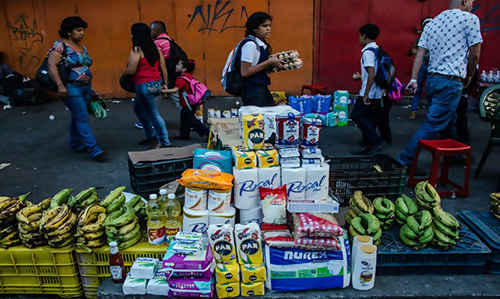
In my country, Venezuela, after 20 years of “revolution,” we have bottomed out and learned to live in situations we never imagined (so much so that I was able to write an article on survival techniques I never imagined myself using on daily basis).

How the State Will Strip You off Everything When the SHTF

It’s not that the governments before Hugo Chavez were much better. But there was a much more stable political and economic situation with access to the international market.In 1999, when Chávez’s government was instated, oil prices were the highest in Venezuela’s history. The newly born Communist policy in the country was hardly felt and had very few repercussions on the professional citizens who lived on a monthly salary.

During a SHTF situation, pain could become an annoyance for some, but unbearable for others.

If doctors are scarce and medicine becomes even scarcer, this one little weed, found all over North America and similar to morphine, could be a saving grace.

That’s probably why those first few years didn’t really feel like something was taken away from us. In addition, the newly elected president had a 60% popular approval rating and promised endless opportunities for the neediest people.

One of the first economic policies was the implementation of exchange control, currently in effect. Any operation with foreign currency was managed by the state. Later came the control of the prices of basic products, which caused the disappearance of those items and initiated a black market that is also very much in force to this day.The real problem began in 2004 with the accelerated decrease in oil prices that translated into a lower income for the government. Remember that we are talking about an oil-reliant country.

The decay was soon seen in many aspects. There was no longer maintenance on public roads, and public services failed often until reaching the point of constant failures of electric service, even for days.

The public health situation is also getting worse and worse. As a health professional, I have seen this deterioration for the last 10 years.

I am an oncologic breast surgeon. In Venezuela, breast cancer is the main cause of death from cancer in women. However, in the hospital where I work, the most important hospital in Caracas, there are no basic services for this issue. No chemotherapy, the radiotherapy equipment has been inoperative since 2015, and surgical procedures are suspended every week.

Experts predict that an EMP strike that wipes out electricity across the nation would ultimately lead to the demise of up to 90% of the population. However, this figure begs an important question: if we were able to live thousands of years without even the concept of electricity, why would we suddenly all die without it?

For me, as a doctor, it is frustrating not to be able to help my patients in any way. Just last week two breast cancer patients who were going to the operating room were suspended for the fourth time in a row. This time the anesthesia machine was failing.

The purchasing power of the Venezuelan citizen also decreased. It seemed to have happened from one day to the next, but if you look at the political situation since 1988, the decline took a long time; all that was left was to hit rock bottom.

Finding ourselves in extreme situations makes our defense system act in a primitive way. This means activating the fight or flight response at any time within any context—and yes, the state takes advantage of that.

The state will rip you off, but it doesn’t happen all of a sudden. There are a lot of logistics; it takes a long time to develop the kind of policy that makes citizens totally dependent on the state.

You start by losing something unimportant, like some kind of monetary bonus now given to you as government-run grocery store credits, and you end up losing your freedom and all kinds of rights, including freedom of speech and protest, but these issues are so extensive that they require an article of their own to explain them properly.

The state has taken charge, with great success I must say, and you are now living in fear of the so-called public authorities, meaning police and military police, since they serve as pro-government forces of repression.

Many of us have lost the incentive to go out and protest. We did it for more than 10 years. However, I have seen the evolution of the manifestations before and now.

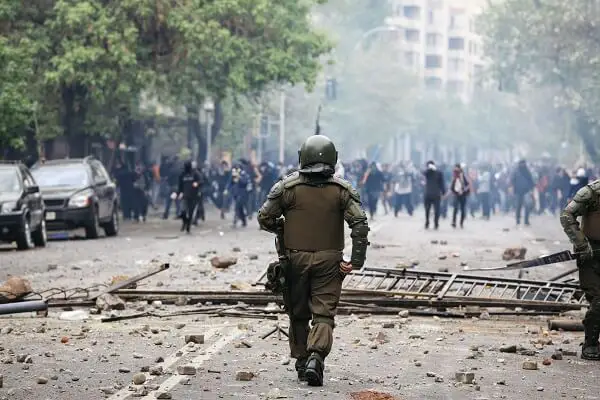
I remember 2003 when repression was minimal, almost non-existent. Today many friends who still have the strength to continue have gotten gas masks in order to defend themselves from the hundreds of tear gas grenades used by the authorities that should be defending people.

In any public protest, savage repression is a constant. That violence is what we Venezuelans have become used to.When there is no public or social security, when the devaluation of the currency is occurring on a daily basis, and when you don’t know if the bakery on the corner is going to be broken into tomorrow, at that moment, the debacle has already occurred.

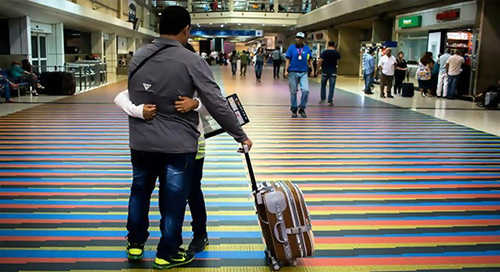
Defending oneself from these kinds of problems is as difficult as trying to explain them. Many have chosen to leave and seek a future in other countries. That way the state even strips you of your own country by causing you to become self-exiled.

I don’t blame them. We all have more than one family member or close friend who has been kidnapped or stolen from violently, and sadly, all we can say is “You should be thankful you weren’t killed”.

Personal security becomes a problem of epic proportions, to the extent that going out on the street is considered a risky activity—a risk to which, unfortunately, you have to get used to in order to live a normal life.Living in that state of continuous stress in which your rights are violated, in cities where, despite paying high taxes, everything seems to be in ruins, is part of that hopelessness that the state achieves in the individual.

Living in a place where a good monthly salary fora top executive, for example, does not reach $100 a month, is not easy, especially taking into consideration that a basic shopping list for a family of four can cost up to $140 monthly.

So the mismanagement of incompetent and corrupt civil servants results in the deep separation of three social classes: extreme poverty, which represents more than 80% of the population and is totally dependent on the government; the working middle class, which manages to subsist through one or two basic incomes plus the economic help of family members abroad; and those who do business with the government and can live in a very comfortable, ideal world that has nothing to do with reality.

Of course, there are exceptions to this, and some people have high incomes without being involved in dubious businesses.

It is sad to see how fourth-level professionals, trained in the country, must leave in order to provide for their families.

I know it is not a unique situation in the world—it has happened and will continue to happen—but it is very different to read about it than to see it sitting in the front row or even being the leading character.

Nowadays it is the common denominator, and more and more qualified professionals and technicians step into the international airport in search of a better quality of life.That’s why there is a whole generation that has no kind of roots in their country and only waits for the opportunity to leave.

I think the worst part of all this is the desolation sown in all of us. It seems to be an endless story, with the political disqualification of opposition leaders, political prisoners, and many more vexations.

Writing all this is not easy, but it makes me reflect. It is an exercise in introspection. Without a doubt, the state strips you of everything in its eagerness to stay in charge. That’s the way they do it.

There comes a point at which the only thing in your mind is to know if you will return home alive. Everything else is secondary. At that point, the state has already massacred you internally. You can never be the same again. I’m sure I am not.

Even if you are a person who is not involved in politics, an “apolitical” citizen, in this state of anarchy, you have to fix your position.

As Desmond Tutu said, “If you are neutral in situations of injustice, you have chosen the side of the oppressor.”

Preparedness Hacks: Once a nuke is heading your way, you might think that there isn’t much left to do, but you would be wrong!

Because we will show you America’s natural nuclear bunkers that are also EMP proof. When the sirens start wailing, all you need to do is pick the closest one to your home, where you can take cover before it hits.

10 Scary Things That Would Happen If The Grid Went Down

You may have already read or seen a variety of articles about what would happen if the grid went down or how 90% of people would die. You may also think that many of those articles are far-fetched and designed to instill fear in readers rather than seriously discuss the issue.

If that’s the case for you, then you may think the same about this article based on the title alone. But the purpose of this article is not to scare you or to spread so-called ‘doom and gloom,’ but rather to educate you on what very well could happen if the grid really went down and stayed down.

If and when the grid goes down, it’s not going to be like a normal power outage. Not even close. A true grid-down situation would last much longer, perhaps weeks or months, and during that time, a lot of things are going to happen that you never would have imagined.

Here are ten scary things that would happen if the grid went down. Hopefully, this will remind you of how fragile our society actually is and inspire you to start preparing if you haven’t already.

1. No More Supply Trucks

When the supply trucks stop, no stores and restaurants are going to get resupplied. It’s not that it matters much anyway, because those stores are going to be looted and then abandoned afterward anyway.

This will guarantee that within a few short hours of the grid going down, life will already change dramatically because you will no longer be able to resupply yourself with the things that you need. Suddenly, you’ll be wondering why you hadn’t stocked up like you knew you should have been doing all along.

If you haven’t already, consider reading our beginner’s guide to emergency food storage.

2. All The Stores Would Close

As was just mentioned, without the resupply trucks, stores and restaurants are most certainly going to be shut down. The only real question is, when will looting occur?

In some places, you can fully expect looting and rioting to occur within just a few hours of the grid going down, and perhaps even sooner than that. People are going to freak out, and everyone will recognize that it may be their last chance to get resupplied.

Once some people start looting, many more will join in just for the heck of it, and that’s not an exaggeration. Mobs and looters and raiding parties will form quickly and the general breakdown of society around you will be rapid. One moment things will be as they always were, and in the next everything will be a war zone.

If this happens, you’ll need to avoid the riots and get home fast.

Riots and Police

3. Schools Would Be Shut Down

Schools will be shut down, even though you can also guarantee they will hold onto any students in session during the early stages of the grid down situation. It’s incredibly unlikely that school administrators and educators will simply release children into the chaos, making it the responsibility of the parents to show up and retrieve their kids in schools.

4. Commerce Would Cease

This is one that you’re going to want to think about. A grid down situation is seriously going to lead to a complete and utter breakdown of commerce as we know it. Banks will no longer be open, ATM’s won’t work, and debit and credit cards will no longer be of any use.

Will you still be able to use cash? Possibly. At the very least, you’ll be able to use it in the early hours of the disaster before things get really bad. You can head on down to your local store and buy as much stuff as you can get if you know things are about to head south.

Beyond that though, it’s difficult seeing cash being of much use for anything. The reason is simple: it has no value other than what people attach to it, and it’s not something we can use to stay alive. In the event of hyperinflation, where the individual dollar will lose value rapidly, it will be of literally no use at all other than as an alternative to Kleenex or toilet paper.

The only type of real commerce that will be going on after then will be bartering, or where people exchange certain goods that we need to survive for other goods. For example, you may be able to trade a box of ammo for several rolls of toilet paper (both of those things are going to be in very high demand following a major disaster).

5. Gasoline Would Be Gone

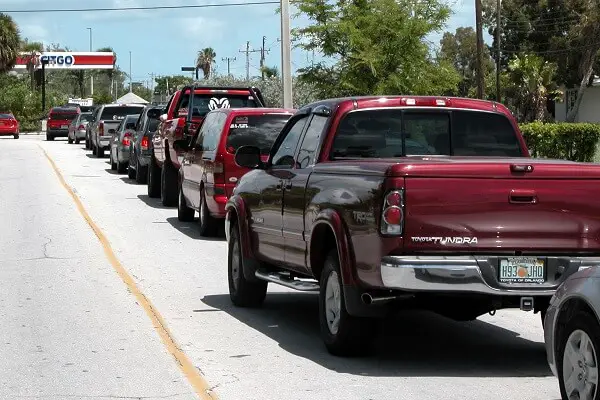
This is a big one. Gasoline is going to become one of the most precious commodities once people are unable to get any more of it at gas stations.

Everything from cars to motorcycles to ATVs to generators all run on gasoline. We’ve all seen post-apocalyptic movies and TV shows where literally thousands of cars are lying uselessly abandoned by the side of the road. Well, that really won’t be all too far from reality.

In short, once the gasoline supply runs out, we’ll lose everything that runs on gasoline. The only gasoline we’ll have left is what you have stored and what you will be able to barter from other people (and you can guarantee that it’s going to command a very high price).

Long Line At Gas Station

6. Cell Service Would Stop

Your phone may still work after a grid down, but it’s honestly not going to do you much good if you aren’t able to use it to access cell service or the internet.

It’s one reason why investing in other communication devices will be so important, such as a HAM radio or a CB radio.

Once the Internet and cell service goes down, communication, as we know it in general, is going to get very different (and not at all easier).

7. Post Offices Would Close

You can say goodbye to ordering products from Amazon or sending or receiving mail from people when the grid goes down. This will greatly impact the way that we communicate with people long distance as well.

8. Air Conditioning Won’t Work

Is a lack of air conditioning life-threatening by any means? It depends. In the middle of summer, it very well could be if you don’t take steps to keep yourself cool without AC. At the very least it will be very uncomfortable. And it’s not just air conditioning you won’t have anymore…

9. Heaters Wouldn’t Work

Just as the summer months are going to get really uncomfortable due to the lack of air conditioning, so will the freezing cold winter months due to the lack of heat.

In fact, the lack of heat is going to be a far worse problem than the lack of air conditioning and really could be life-threatening if it ever gets particularly cold outside.

This is why you’re going to want to stock up on as much firewood, propane bottles for heaters, and candles as you can. The firewood will be good if you have a firewood stove inside your home, but even if you lack the stove, you can still use it for getting a small and controllable fire outside.

Meanwhile, propane-run heaters will also be good to stock up on and cost less than five dollars each on average, and you can even use candles for warmth and light as well. Finally, be sure to invest in plenty of warm blankets and sleeping bags to go with it.

10. No More Running Water

This is another big one. You won’t be able to run the dishwasher or the washing machine anymore, nor would you be able to take a shower, run the bath, water your plants, or even fill up a sink.

This is why when you stockpile water, you need to stockpile both drinking and cleaning/personal hygiene water. The recommended amount will be at least one gallon of water per person per day. One half of that gallon will be for drinking, and the other half will be for cleaning and personal hygiene.

Water filters and purification tablets will also be immensely important because when you do manage to procure more water for drinking purposes from other sources, it may not be safe to drink. Drinking unsafe water can oftentimes be more unsafe than not drinking any water at all, which will make a water filter device even more important and critical to own.

9 Deadly Infections People Will Get After The SHTF

There are plenty of threats that people associate with a major disaster. Infection, however, is rarely one of the first threats to come to mind. Nevertheless, it is one of the most dangerous. In the absence of modern medicine and modern conveniences, deadly infections will run rampant, potentially killing millions of people.

Below is a list of the most common deadly infections you are likely to contend with after the SHTF, as well as how to treat them. If you are squeamish, then be warned that the lists of symptoms below could put some disgusting images in your head, but this information is very important considering how many people are likely to die from infections in an SHTF scenario.

In this video, i will unearth a long-forgotten secret that helped our ancestors survive famines, wars, economic crisis, diseases, droughts and anything else life trew at them.
So pay chose attention because this video will change your life forever for the good!

1. Dysentery

Dysentery is a colon infection that can be caused by a number of things including bacteria, parasites, viruses, and even protozoa.

Symptoms of dysentery include severe diarrhea, bloody stool, abdominal pain, and fever. The infection is spread mostly through the consumption of contaminated food or water, though it can also be spread by coming into contact with someone who has the infection.

If you come down with dysentery, your first and foremost goal should be to stay hydrated. Diarrhea alone kills countless people each year because of the dehydration it causes, meaning it’s essential that you drink plenty of fluids, not only to flush out the infection but also to avoid dehydration.

You’ll also want to take antibiotics and/or diarrhea pills if you have them. To prevent coming down with dysentery, be sure to boil your drinking water and only eat food from trusted sources.

2. Cholera

Like dysentery, cholera is a gastral infection that is contracted by drinking contaminated water. Rather than infecting the colon, though, cholera is an infection of the small intestine.

The symptoms of cholera include severe diarrhea that is clear/white in color and vomiting clear fluid. As with dysentery, the biggest threat of cholera is the dehydration and electrolyte imbalance caused by fluid loss through vomiting and diarrhea. If left untreated, about half of individuals who come down with cholera will die from the infection.

If you are experiencing the symptoms of cholera, be sure to stay hydrated and take antibiotics and diarrhea pills. To avoid cholera, boil or otherwise purify all the water you drink and only eat from food sources that you trust.

3. Norovirus

Norovirus is a highly contagious gastral infection that can be spread through the air as well as through the consumption of contaminated food and water.

Symptoms of norovirus include nausea, vomiting, watery diarrhea, and abdominal pain. There is no vaccine or proven treatment for norovirus, and the recommended treatment is simply supportive care such as resting and drinking plenty of fluids.

To avoid norovirus, be sure to purify your water and eat only trusted food sources, though given how contagious this infection is, it can be difficult to avoid even if these measures are taken.

4. Pneumonia

Pneumonia is a respiratory infection that can be brought on by a number of bacteria, viruses, and fungi. In most cases, the diseases that could lead to pneumonia are treated and eliminated before pneumonia ever has a chance to take hold. If left untreated, though, non-fatal colds and cases of flu can quickly turn into fatal pneumonia.

Symptoms of pneumonia include sharp chest pain, wheezing, difficulty breathing, fever, and chills. If the lungs fill up with too much fluid due to pneumonia, the infection could be fatal.

If you come down with pneumonia, it is best treated with a combination of antibiotics as well as oxygen in order to make up for the reduced amount of air you are able to inhale. The best treatment for pneumonia, however, is prevention.

Treat every cold and flu seriously no matter how minor it may seem and do your best to knock it out before it is able to transition into a case of pneumonia.

Preparedness Hacks: Once a nuke is heading your way, you might think that there isn’t much left to do, but you would be wrong!

Because we will show you America’s natural nuclear bunkers that are also EMP proof. When the sirens start wailing, all you need to do is pick the closest one to your home, where you can take cover before it hits.

5. Tetanus

In the developed world, tetanus is quite uncommon. Being punctured by a rusty metal object certainly isn’t an everyday occurrence, and even if you do suffer an injury that makes tetanus a concern, tetanus vaccines are readily available.

However, in a disaster scenario where the likelihood of an unsanitary injury is much higher and access to the vaccine is no longer an option, tetanus becomes a much more serious concern.

Symptoms of tetanus include difficulty swallowing, stiffness in the neck and jaw, fever, high blood pressure, and sweating. If untreated, tetanus can make it extremely difficult to breathe, eventually leading to death.

In the absence of a tetanus vaccine, antibiotics can be used to treat tetanus with varying degrees of effectiveness. The best way to treat tetanus, though, in the absence of a vaccine is to try and prevent it by thoroughly cleaning any wound with alcohol or another antiseptic and covering it with a bandage.

6. Tuberculosis

Thanks to modern medicine, tuberculosis cases are extraordinarily rare in developed countries. In the developing world, though, tuberculosis is still a common and dangerous killer. Should a major disaster set the country back to a third-world state, tuberculosis could make a frightening comeback.

Symptoms of tuberculosis include blood-tinged coughing, night sweats, fever, and weight loss. Compared to most deadly diseases, though, the symptoms of tuberculosis can appear minor at first, making them hard to spot. Tuberculosis is a slow killer, but it is an efficient one nevertheless.

In the absence of modern medicine, there is no proven treatment for tuberculosis. Unless the right antibiotics are administered at the right times on the right schedule, the infection will develop an antibiotic resistance and become impossible to cure. This makes avoiding tuberculosis the best course of action in an SHTF scenario.

Take precautions when you’re around other people, especially if they are exhibiting signs of tuberculosis such as a bloody cough.

7. E.Coli

Many efforts have been taken within the agricultural industry and water sanitation industry to prevent the spread of the deadly bacteria E.coli. In a scenario where people begin to get their food and water from less trustworthy sources, though, E.coli infection becomes a major concern.

Symptoms of E.coli infection include nausea, vomiting, stomach cramps, bloody diarrhea, and a fever in excess of 100 degrees Fahrenheit. Thankfully, E.coli infections can often be treated with only home care, making this one of the more survivable diseases that you are likely to encounter in a disaster scenario. Plenty of fluids and bed rest is most likely all it will take to ride out the infection.

To prevent coming down with an E.coli infection in the first place, boil or otherwise purify your water and try to only eat food from trusted sources.

8. Measles

Modern medicine has almost wiped out the threat of measles entirely, and the World Health Organization projects that the disease could be eliminated completely by as early as 2020. Should a major setback come between now and then, measles would be poised for a deadly comeback.

Measles is highly contagious, meaning that all it would take for an outbreak is a few infected individuals in a world where measles vaccines are no longer prevalent.

Symptoms of measles include pain in the muscles, a skin rash, fever, sore throat, and a cough. Measles can also lead to blindness, encephalitis, and fatal respiratory infections. Short of preventing measles with a vaccine, there is no proven treatment for the infection. Fever reducers and vitamin A can be used to reduce its symptoms, though.

The best course of action for avoiding measles in the event of an outbreak is to follow good hygiene practices and avoid anyone with a skin rash resembling that caused by measles.

9. Flu

Even today and even in modern countries, the flu is incredibly common. What sets this infection apart and makes it so difficult to prevent is the rate at which it mutates. Every year, a new flu vaccine must be developed in order to prevent the latest mutation, and even then there is a lot of guesswork involved in regards to which form the virus will take.

There are two factors, however, that make the flu much more of a concern in an SHTF scenario: lack of vaccines and lack of treatment. In a scenario where the healthcare community is unable to develop a vaccine for the flu’s latest mutation, flu outbreaks are likely to become much more common. If left untreated, the flu can be fatal – especially in the elderly and the young.

Symptoms of the flu include aching muscles, chills, fever, sweating, and congestion.

All of this is bad enough, but it also assumes that the flu will take a form similar to the form it takes each year. The reality is, there are much more serious forms that the flu can take. In 1918, the Spanish flu infected an estimated 500 million people – one-third of the world’s population – and killed an estimated 50 million of those that it infected.

There is another strain of flu, though, that could dwarf the lethality of the Spanish flu – avian flu. The mortality rate of avian flu sits at a terrifying 60% – and that’s with modern medicine and appropriate treatment.

The only thing keeping avian flu from being a world-ending threat is the fact that it is very difficult to spread. However, a few mutations could change that in a matter of years.

Suffice it to say that the flu will be a major concern in an SHTF scenario, even if it is in its common, easily treatable form. If, however, we are hit with a pandemic of a flu strain such as avian flu in a world already crippled by another disaster, the results could easily be apocalyptic.

All of this should remind you how crucial it is to purify water and keep yourself clean when the SHTF. Here are some resources to help you:

17341 hard working Americans are now living a better life, with a lot more money in their pockets…

The solar penels …it will help you slash an excess of 70% off your power bill overnight…

To build your own solar panel almost for free, you’ll need to watch this video below

30 Survival Skills Modern People Have Forgotten

Every generation is skilled at using the technology of its era. For example, people today are very good at driving cars, using smartphones, setting up home entertainment systems, and so forth. The problem is, if the end of the world as we know it ever happens, all those skills will be useless. The skills of our forefathers, on the other hand, will never be useless.

Below, we’ll take a look at 30 survival skills from our past that have mostly been forgotten today. If you want to be able to survive in a world where relying on technology isn’t an option, these skills are certainly worth learning.

In this video, i will unearth a long-forgotten secret that helped our ancestors survive famines, wars, economic crisis, diseases, droughts and anything else life trew at them.
So pay chose attention because this video will change your life forever for the good!

Note: For each skill, I included links to resources where you can learn how to develop that skill.

1. Hand Washing Clothes

These days, almost everyone owns a washer and dryer, and those who don’t are able to rely on a visit to the laundromat. Washing clothes without these conveniences, though, is a forgotten skill.

2. Marksmanship

Being able to accurately fire a gun is a skill that takes dedication and practice. At one time, it was an essential skill for survival. Today, though, few people know their way around a firearm.

3. Navigating Without a GPS

GPS’s have made navigation incredibly easy. But now that almost everyone has a powerful GPS in their pocket at all times, not many people know how to navigate without one.

4. Building a Fire

Building a fire isn’t as easy as they make it look in the movies. Even with the right tools and ideal conditions, getting a fire started can sometimes be a challenge – and it’s a skill that few people today have acquired.

5. Hunting

Prey animals have spent their entire lives avoiding predators, and they are very talented at it – which makes hunting a real challenge. In an era where fresh meat is always a trip to the supermarket away, hunting has become a forgotten skill.

6. Fishing

Fishing may be a slightly easier skill to acquire than hunting, but it still requires a lot of learning and practice. Without the right gear and strategy, fish can be very difficult to catch.

7. Purifying Water

Constant access to clean, pure drinking water is a very modern convenience. In the past, though, knowing how to purify water was essential for survival.

8. Preserving Food

Thanks to our abundant supply of food as well as the invention of freezers and refrigerators, knowing how to preserve food is no longer a necessity. Without these modern-day conveniences, though, food preservation is essential for survival.

9. Tying Knots

Everyone knows how to tie a knot in a string, but few people these days are able to tie a wide range of more-complicated knots.

Experts predict that an EMP strike that wipes out electricity across the nation would ultimately lead to the demise of up to 90% of the population. However, this figure begs an important question: if we were able to live thousands of years without even the concept of electricity, why would we suddenly all die without it?

10. Raising Animals

Outside of farmers, few people raise their own animals these days. However, animal husbandry still remains a very useful skill to know.

11. Sewing

Sewing used to be a skill that almost all women and even many men were taught at an early age. Today, though, few people know even the simplest sewing methods.

12. Cooking from Scratch

Putting together meals is now easier than it has ever been in the past, but this also means that most people have forgotten the skills necessary to cook at a tasty, healthy meal from scratch.

13. Predicting the Weather

Today, figuring out what the weather is going to be like is as easy as turning on the television or pulling up an app on your phone. In the past, though, being able to predict the weather without these modern conveniences was essential for survival.

14. Self Defense

There was a time when it was common for fathers to teach their sons how to defend themselves. Today, self-defense is an important skill for men and women alike, but it is certainly less common for people to know.

15. Butchering An Animal

Even if you know how to raise your own animals for meat, you’ll also need to know how to butcher them. This is a more complicated process than many people realize and it’s a skill that must be acquired. (Here are 23 survival uses for honey that you didn’t know about.)

16. Using Cloth Diapers

Before the days of disposable diapers, cloth diapers were all that was available. If the day comes when you can no longer purchase disposable diapers, learning how to use cloth diapers is going to be a necessity.

17. Gardening

Our abundance of food and the ease in which we are able to acquire it has eliminated the need for many skills, including gardening. As far as survival skills go, though, gardening is one of the most important.

18. Keeping Yourself Entertained

We have so many sources of entertainment and distraction these days that not many people are comfortable entertaining themselves without outside stimulation. In a world without electronics, knowing how to keep yourself entertained is very useful.

19. Mechanic Work

Though we are very reliant on mechanical things, not many people know how to work on them without the help of a professional. At one time, though, most everyone knew how to repair their own cars, motorcycles, and other mechanical products.

20. Bartering

We aren’t used to having to barter for the things we buy today, but bartering used to be a way of life. It’s an important skill to know should we ever have to go back to purchasing things locally rather than buying them from a nationwide chain.

21. First Aid

Thanks to the convenience of modern medicine, few people have to worry about treating their own wounds. Nevertheless, first aid remains one of the most valuable forgotten skills that a person can learn.

22. Keeping Warm

Not many people today have to worry about dying of hypothermia. But in the past, knowing how to keep warm – both inside and outside the home – was essential for survival.

23. Making Do With What You Have

We live in an era of excess. If we ever return to a time when life isn’t so full of plenty and abundance, many people will struggle to adapt.

24. Making Cleaning Products

People didn’t used to purchase pre-made cleaning products from the store. Instead, they made their own cleaning products with the raw materials that were available at the time.

25. Home Maintenance

In the past, when something broke down in the home, people would fix it themselves. Today, however, the skills of home maintenance are only known by a select few.

26. Building a Shelter

Knowing how to build an effective shelter is key to wilderness survival. During the times where people would travel out into the woods without the convenience of a portable tent, knowing how to build a shelter was a vital skill.

27. Driving a Vehicle With a Manual Transmission

Automatic transmissions haven’t always been around, and there was a time when everyone drove a manual. Today, the ability to drive a vehicle with a manual transmission is becoming increasingly less common.

28. Locating a Campsite

Not every spot in the woods is suited for a campsite, and choosing the right spot to set up camp is a skill in and of itself.

29. Avoiding Panic

We live very comfortable lives compared to the lives of our ancestors, which means that most people today are a lot more likely to panic when things take a turn for the worse.

30. Repurposing Items

Throwing things away used to be unheard of. Instead, people would repurpose old items and find new ways to make use of them.

Conclusion

Even mastering just a few of these skills will put you leagues ahead of the average person, thus giving you a much greater chance of survival after a disaster. Pick one that interests you the most and start practicing. Once you get a little burnt out on it, move on to a different skill. Just be sure to get back to the first one later. With this list of survival skills, you’ll never be bored again!

Preparedness Hacks: Once a nuke is heading your way, you might think that there isn’t much left to do, but you would be wrong!

Because we will show you America’s natural nuclear bunkers that are also EMP proof. When the sirens start wailing, all you need to do is pick the closest one to your home, where you can take cover before it hits.

The Crazy Gardening Trick That Gives You 10 Times More Potatoes

Americans love potatoes, eating about 125 pounds, per person, per year. Although potatoes are easy to grow, many off-gridders on small plots of land avoid them because traditional growing techniques take up a lot of space. However, by using the caging technique, you can get a high yield in a small space.

Caging refers to the practice of using a wire cage, wooden box, barrel, or any other device designed to grow potatoes vertically. By using this practice, potato yield can be increased by anywhere from two to 10 times using the same area of garden.

In this video, i will unearth a long-forgotten secret that helped our ancestors survive famines, wars, economic crisis, diseases, droughts and anything else life trew at them.
So pay chose attention because this video will change your life forever for the good!

Here’s how caging works:

1. The container

Select the container, or cage, for your crop. It should be 18 inches by 18 inches or larger, with room for 1 to 4 feet high of soil. On my homestead, I use either a 4-foot-square or 5-foot-square raised bed, constructed of wood, which is 16 inches high. There are also commercially available cages designed for growing potatoes vertically, but instead of spending your hard-earned money, I’m sure your off-grid homestead has materials available for constructing one.

2. The soil

Before planting, set aside enough soil to fill the container. For potatoes, a slightly acidic soil that drains well is ideal. I like to use a mix of peat moss, native soil, compost and vermiculite.

3. Planting

Fill the cage with 6 to 8 inches of soil. Plant the seed pieces 3 to 4 inches deep. Let the potatoes sprout and grow to a height of 8 inches or so. The photo above is from my 5-foot by 5-foot potato cage for this year, where I have Yukon Gem potatoes that have grown 6 to 8 inches high.

4. Fill up the Cage

Once the potato plants are about 8 inches tall, like in the photo above, it’s time to partially bury the plants. Take some of the soil you’ve set aside and gently bury the plants about a third of the way.

I just did that in my garden. The photo here shows the potato plants after they’ve been partially buried the first time.

Continue the process of letting the vines grow higher, and then partially burying them, until your cage is full. Take care not to ever bury the plants by more than one-third to a half, and make sure there is adequate moisture.

Experts predict that an EMP strike that wipes out electricity across the nation would ultimately lead to the demise of up to 90% of the population. However, this figure begs an important question: if we were able to live thousands of years without even the concept of electricity, why would we suddenly all die without it?

Tips for Maximizing Success

Successful potato growing begins by selecting the right cultivar for your climate, and growing vertically is no exception. Potatoes originated in the cooler high altitudes of South America, and thrived for centuries in the cool weather of northern Europe and Ireland. So if you live in an area where the summers get hot like I do, choose a variety that has been developed for heat resistance. These include Butterfinger, Defender and Yukon Gem types.

The reason caging works is that some varieties of potatoes will continue to form tubers from parts of the vine that have been recently buried. However, not all potatoes varieties are created equal — some excel at this and some don’t. So for growing vertically, consider those types listed above, as well as All Blue, Carola, Dark Red Norland, German Butterball, Yellow Finn and Fingerling potatoes.

Final Thoughts

Potatoes should be grown on every off-gridder’s garden. They give great yields, provide lots of needed carbohydrates for the hard-working family members, and store for months without electricity. If you’ve shied away from growing them because of traditional space requirements, try caging today.

17341 hard working Americans are now living a better life, with a lot more money in their pockets…

The solar penels …it will help you slash an excess of 70% off your power bill overnight…

To build your own solar panel almost for free, you’ll need to watch this video below

How To Make A Mini Root Cellar In Your Backyard In Less Than Two Hours

Once upon a time, root cellars were the only way people had to preserve their food. These wonderful cold-storage areas became less common when refrigerators became affordable. Houses were no longer automatically built with a root cellar beneath them or nearby.

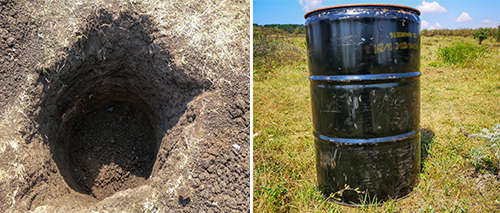
A root cellar is still a great way to store fruits and vegetables though, especially when you need to store more than you have room for indoors. They will also keep fruit and vegetables fresh without electricity. If your house doesn’t have one you can still take advantage of “nature’s ice box.” All it takes is a shovel, a little elbow grease, and a barrel.

The Lost Ways – Pemmican Tutorial Guide

The Lost Ways website has an awesome step-by-step how to make Pemmican video. While having a written guide is important and helpful to a lot of people, watching a video guide is even better.

They cover a few things I did not and demonstrate how to make your own pemmican.

This video is an excellent pemmican making resource.

Building your own modern mini root cellar will only take a few hours. You will need the following:

  • Shovel
  • Barrel (galvanized steel or plastic)
  • Drill and screws or hammer and nails
  • Straw
  • Rocks
  • Plywood
How To Make A Mini Root Cellar In Your Backyard In Less Than Two Hours

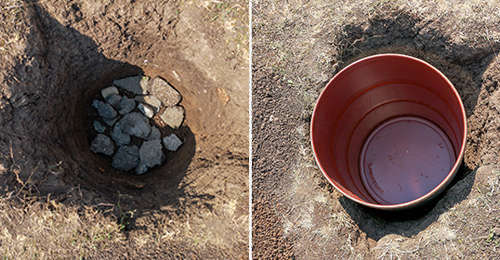
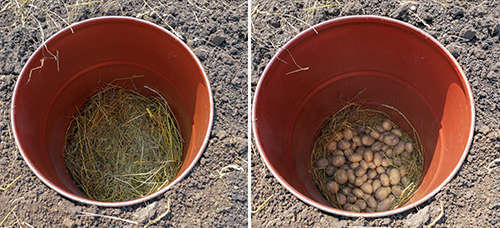
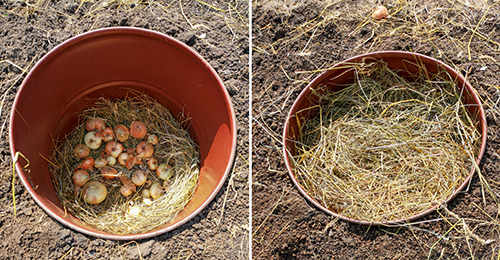
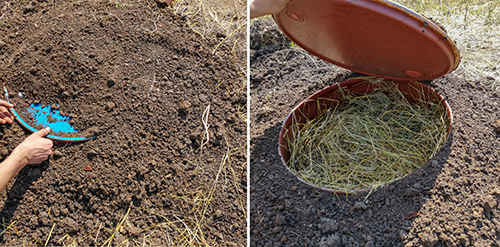
First you will have to dig a hole in the ground, taking into consideration the dimensions of the barrel and the rocks you’ll put underneath it. After you dig the hole, make sure the top of the barrel is at the freeze line or below.Place the barrel in the hole. Add your fruits and vegetables, put straw between them like you can see in the pictures, and then close the lid.

How To Make A Mini Root Cellar In Your Backyard In Less Than Two Hours

Do not use the same root cellar for both fruits and vegetables. They should not be stored together within the same barrel, even if they are separated with straw. Fruits give off ethylene, which will cause vegetables to ripen and rot. It also causes potatoes to sprout.Here you have a list of vegetables that store well together within the same barrel at 32—40°F (0—4°C) at 90—95% humidity. You can also find the length of time they can be stored for:

  • Beets: 3—5 months
  • Brussels sprouts: 3—5 weeks
  • Cabbage: 3—4 months
  • Carrots: 4—6 months
  • Cauliflower: 2—4 weeks
  • Celery: 2—3 months
  • Endive: 2—3 weeks
  • Kale: 10—14 days
  • Leeks: 1—3 months

Do not store damaged vegetables, but do leave them dirty. Just brush off most of the dirt. Do not rinse them or wash them. Use any damaged fruits and vegetables right away. Bacteria and fungus will quickly take hold on bruised or cut produce. (Here are 23 survival uses for honey that you didn’t know about.)

How To Make A Mini Root Cellar In Your Backyard In Less Than Two Hours

Store onions in a cool, dry root cellar with temperatures of 32—35°F (0—1°C) and 60—70% humidity after you shock them. Shock them by bending or snapping the green stems one month before harvest. You can store peas with onions.Regular potatoes and sweet potatoes need to be stored separately. Regular potatoes should be kept at 38—40°F (3—4°C) and 80—90% humidity. Sweet potatoes should be kept at 50—55°F (10—13°C) with 80—90% humidity.

Dried beans need to be kept cool and dry, at temperatures between 32—50°F (0—10°C) 60—70% humidity.

Pumpkins and squash can be stored together in a warm, dry root cellar. Temperatures should be kept between 50—55°F (10—13°C) with 60—75% humidity.

How To Make A Mini Root Cellar In Your Backyard In Less Than Two Hours

Store apples and pears in a cold, moist root cellar with temperatures of 32—40°F (0—4° C) in 80—90% humidity.If you notice your fruits or vegetables beginning to shrivel, the humidity level is too low. Try misting the layers of straw with a little water to increase moisture levels. If there is a little condensation or moisture on the fruits or vegetables, you will need to reduce the humidity in the root cellar. Replace the straw with fresh, dry straw, and make sure there isn’t standing water beneath the barrel. You may have to move the barrel if there is standing water in the hole.

After you add all your vegetables, just put the barrel’s cap back in place. Then add some soil over the top of it.

Preparedness Hacks: Once a nuke is heading your way, you might think that there isn’t much left to do, but you would be wrong!

Because we will show you America’s natural nuclear bunkers that are also EMP proof. When the sirens start wailing, all you need to do is pick the closest one to your home, where you can take cover before it hits.

The Long-Lasting, 3-Ingredient Survival Food The Pioneers Ate

While working cattle at my in-laws’ ranch recently I caught myself dreaming about the past, running through a checklist of things I take for granted that George – the ranch’s founder who grew up in the 1930s — never had the chance to enjoy as a kid in his small house.

The one thing I kept circling back to was food. I thought about my refrigerator at home, packed with juices, meat, cheese, fruit and everything else the average fridge contains. I imagined how my diet would change if one day somebody disconnected the fridge for good. Not only would it cause some storage problems, but it would drastically alter what foods I actually ate.

The Lost Ways – Pemmican Tutorial Guide

The Lost Ways website has an awesome step-by-step how to make Pemmican video. While having a written guide is important and helpful to a lot of people, watching a video guide is even better.

They cover a few things I did not and demonstrate how to make your own pemmican.

This video is an excellent pemmican making resource.

These dilemmas were an everyday reality for people of George’s day. Folks today often cite canning as the way our ancestors preserved food. It is true the generations of the late 19th and entire 20th century put excess food away by canning. But canning has only been around for a little over 200 years. How did people preserve food prior to that?

The answer is through a variety of methods. Many foods were dehydrated or salted to extend their shelf life. One food that people, especially explorers, found especially useful was hardtack. It seemingly lasted forever.

The Long-Lasting, 3-Ingredient Survival Food The Pioneers Ate

Hardtack refers to a type of biscuit or cracker that can last an extraordinary length of time. This bread is made with very little water, no yeast, and will keep in storage for years if kept dry. Hardtack’s ability to stay in storage for years without spoiling or molding was probably its greatest attribute. It is also lightweight, nearly indestructible, and contains an abundance of carbohydrates which makes it ideal for a person on the move. (Here are 23 survival uses for honey that you didn’t know about.)

Hardtack is one of the oldest known foods we have. If you sit down and enjoy a piece, you’ll be sharing the same cuisine feasted on by Roman legionaries, Egyptian sailors and crusaders — just to name a few. Known around the world by different names, the title of “hardtack” became well-used by the early 1800s. Patriot fighters during the Revolutionary War, pioneers and frontiersmen such as Daniel Boone, and mountain men like Jim Bridger and Jedediah Smith would have known the unyielding strength of a hardtack biscuit. In fact, the food was so common to the mountain men they simply referred to it as a “biscuit” rather than differentiating between it and the softer textured bread we know today. In the past, hardtack was generally enjoyed after dipping it in coffee or soup to moisten and soften the bread. In many circumstances I’m sure they were happy to have something to eat.

Making hardtack is extremely easy and only takes a few minutes. If you’ve ever thought about making hardtack, want to get a better feel for what table fare in the past would have been like, or are intrigued by foods that can last indefinitely, give this recipe a try.

Recipe

This recipe is one I got my hands on after browsing the book Wildwood Wisdom by Ellsworth Jaeger. Jaeger was a very experienced woodsman who put the book together after a life spent learning skills we would dub today as bushcraft. His four ingredients are as follows:

  • 5 cups flour
  • 1 teaspoon salt
  • 1 teaspoon sugar
  • Water
The Long-Lasting, 3-Ingredient Survival Food The Pioneers Ate

In the book the entire recipe reads as such:

Mix the dry ingredients, and then add just enough water to make a stiff dough. Roll out the dough to about ¼-inch thickness and cut it into sections. Bake them in a greased pan until the hardtack is bone-dry.

That is the entire recipe for making hardtack. Jaeger doesn’t divulge cooking time in his recipe, but I can attest it will take around 1 hour and 10 minutes to cook at 375 degrees Fahrenheit. If you have your oven preheated, it will help. Simply put the rolled and cut dough into the oven for 35 minutes. After 35 minutes, you can flip the pieces for another 35 minutes. When you pull it out of the oven, you’ll likely be surprised how incredibly hard this stuff is. If you choose to use this recipe, there is one thing to note. The sugar in the recipe should be considered an optional ingredient. By adding sugar to the mix, you decrease the shelf life of the product, since sugar does not store as well. If you leave out the sugar, then you are left with three ingredients:

  • 5 cups flour
  • 1 teaspoon salt
  • Water

I’m not entirely sure why Jaeger included sugar in this recipe, other than it was probably a recipe he had personally used before. Anyone looking to preserve their hardtack for an extremely long time should avoid using sugar.

Hardtack is a food everyone interested in history, camping or survival should know how to make. It is extremely simple and only takes a few minutes of preparation. Once you have made a batch, it can keep for years at a time and provide you with the energy you need to keep moving forward. It also can offer a glimpse into the lives of those shadowy figures who came before us and struggled to build the world we know today. I’d encourage you to take a few minutes to prepare yourself some of the indestructible camp bread known as hardtack.

Preparedness Hacks: Once a nuke is heading your way, you might think that there isn’t much left to do, but you would be wrong!

Because we will show you America’s natural nuclear bunkers that are also EMP proof. When the sirens start wailing, all you need to do is pick the closest one to your home, where you can take cover before it hits.