I am a retired Army Senior NCO, Retired Master Peace Officer, drug interdiction officer and for the last 4 years, a military-contracted counter explosive canine handler in Afghanistan and Iraq.
My job depended on finding things people did not what found. I have literally searched, and taken apart thousands of vehicles in my career.
This article is about where to hide your stuff in the vehicle. Since carrying a weapon in your vehicle is legal in most of the USA, this article is geared more to hiding your weapons from those uninvited looters and scavengers who are inevitably going to come around in a social/government breakdown situation. Yes, I’m talking about the proverbial SHTF times.
So, let us set some ground rules. We are going to talk about two types of vehicles, handguns and long guns, as well as ammo. These are no concealment techniques that let you get to your firearms at a moment’s notice. This is about hidden storage that others, unless very skilled, will not find. This is for storage.
Imagine the following scenario: your vehicle is broken down and you have to leave it for a period of time as you need to find, tools, parts, or fuel. You can’t reasonably carry everything, so you are counting on your hidden cache of weapons to still be there upon your return. Or, your vehicle is parked outside, the looters and scavengers come through the area and ransack every vehicle on the block taking what they can easily steal. You don’t want them to find your stuff that was hidden. This is what this article is about. That being said, let’s get to it.
Sedan
The modern sedan has plenty of places to hide weapons. I will start with the accessible places inside the vehicle.
Under the center console. The center console is held to the floor in most sedans by a series of plastic clips or a few Phillip’s screws. Remove those and the console lifts up exposing a compartment that will house a rather large pistol and a couple boxes of ammo.
Seat Backs. The modern car has bucket seats. The back of the seats has a cover that simply snaps onto the seat and covers the springs. This area will conceal a pistol, ammo, and a short barrel long gun like an MP5 or Uzi. Snap the seat back in place and no one will know it is there. This is also very fast to access if needed. No tools required.
Under seats. I’m not talking about just on the floor under the seat. What we are talking about here is attached to the underside of the seat by tape, zip ties or something else. This keeps it out of sight if someone looks under the seat but it is still there if you just know where to look.
Other examples:
Inside door panels.You can hide a shotgun with a folding stock or a short rifle here. Clips and a couple of screws hold the door panels in place. You could remove the screws and leave them out but a sharp eye will notice something is amiss. My advice is to always put everything back the way it was so there will be no “giveaways” that there could be something behind the panel that is worth hiding.
Behind the radio. The radio will have four holes in the corners. Look at yours and you will see them. Most folks don’t realize all you have to do is insert metal rods, about the size of a wire coat hanger in these holes and the entire stereo slides out, leaving a very large cavity to hide weapons and ammo behind.
Now for the outside of the vehicle
Outside. The bumpers, front and rear have cavities under them that will hold a shotgun or rifle. Duct tape is a wonderful thing and you will be using it.
Open the hood. Inside the fender wells, you will see several places to hide your firearms. Inside the air cleaner box is a good place for a pistol.
In the trunk.I don’t really suggest this area as it is very easy to detect but in a pinch, it may do. Pull the carpet away from the sides of the trunk. It will be attached to a cardboard backing. Place your weapons behind this, in the cavity that is in the lower part of the rear fender, and replace the trunk lining. If you have done this carefully, it will be undetectable to the untrained eye. I also suggest throwing some old rags or a little dirt in the area to make it look as if it has not been disturbed.
Other examples:
SUV or Truck
You have many more places to work with here. Count all of the same places mentioned for the inside of the sedan above. Those hiding places are common to just about all vehicles.
Starting at the front
The Front Bumper.Under the front bumper is a very large area to store weapons. Tape them in a secure place. You can hide a lot of stuff here.
Front Fenders.From under the hood you have access to a very large area to place a rifle bag full of goodies. It will fit in behind the fender well and be very hard to see without knowing it is there.
Air Box System. This is a common place for pistols and ammo. Placing a weapon here will not affect the operation of the vehicle.
Under the vehicle. The modern SUV/Truck frame is an I Beam type structure. This is a natural shelf for all sorts of things. A few large black Zip Ties will hold a rifle, shotgun, and a lot more. These will not be visible from just bending down and looking under the vehicle. A person would have to get under the vehicle and really look for them to find your hidden arsenal.
Roof. The roof of all modern SUVs and Trucks is actually hollow. Remove the third stop light that is at the top and rear of the cab. Pull that out and you will see a vast area to hide magazines, ammo, and other items. The way to do this is to tape a string to each item with duct tape and string them together. Replace the stop light after you have hidden your items in the roof section. Make sure you tape the end of the string to the back of the light or to an area that is concealed but you can reach again. Then to retrieve, all you do is take out the light, pull the string and the items come out one after another.
Tailgate. This is hollow. The inside can be accessed through the latch assembly OR by splitting the tailgate by removing the screws and bolts that hold it together. I have seen tailgates that were split and then resealed with silicone. To open you just cut the silicone with a razor-blade and pull the two halves apart. Not all tailgates are the same, so you may have to adapt to your situation.
Rear Bumper. Like the front of the truck, there is a vast amount of storage space.
Spare Tires. Placing something inside a tire is a real pain in the rear, but hiding an item on top of the tire is easy. Lower the spare tire; most are cranked down to the ground with the jack handle. Once on the ground you can place your items inside the rim and crank the tire back into place. This is a simple and readily available storage area.
Depending on your ingenuity, time you want to spend, if you want to modify the vehicle or not, it is not hard to make your vehicle a rolling arsenal and no one would ever suspect was holding weapons and ammo in every corner.
End thoughts
If you really feel this may be something that you have to deal with, I suggest throwing your roving horde of scavengers off the trail. If you have to abandon your vehicle and you are pretty sure it will get at least looked at, give them something to go after. Leave a useless (as in not functioning) pistol or something in plain sight. Let them take that and stop searching. Basically, throw them a bone. The whole point about concealing your weapons so that the looters won’t find them is just that: concealment. Make sure you leave no signs, no pointers that say “Hey, Look Here!”. Do this and when you return to your vehicle from something as simple as a walk into the woods to take care of bodily functions, you can rest assure when you get back your stuff with be safe and secure.
As coronavirus spreads in Latin America, indigenous peoples find themselves at imminent risk of annihilation should the pandemic break out in their communities. The Coordinator of Indigenous Organisations of the Amazon Basin (COICA) has written to the governments of countries which share the Amazon rainforest to enforce control on movement in and out of the indigenous territories, to help prevent a possible contagion.
However, the virus spread is not the only danger for indigenous communities. In Colombia, unknown assailants killed two indigenous people and wounded two others. All victims were in their home observing quarantine. Far-right paramilitaries are suspected to have carried out the attack, with full impunity from the Colombian government due to its reluctance to investigate criminal activity and the targeting of the indigenous populations on their lands.
Indigenous representatives have asked the government to implement a ceasefire to regulate the precarious political situation. Failure to regulate hostilities would exacerbate the already violent conditions under which indigenous communities live, especially with the virus threat looming.
In Ecuador, the Confederation of Indigenous Nationalities of the Ecuadorean Amazon (CONFENAIE) closed access to the rainforest for non-indigenous people and companies, demanding a complete halt to industrial activity as a means to prevent the coronavirus from reaching their communities. Two cases of coronavirus – both tourists who visited the forest – have been confirmed, thus raising the alarm and a possible threat of extinction for indigenous people in the area.
Across Latin America, indigenous populations are emulating Ecuador’s approach, with communities taking the initiative to protect themselves by blocking access to their lands and staying on their territory. The action taken by indigenous communities is a form of resistance which governments have criminalised in the past within the context of multinational companies’ exploitation of land and natural resources. For indigenous communities, the current protection for their own well-being to prevent a coronavirus outbreak is also the means through which a statement can be made about land ownership which, in Brazil and Chile for example, will be in direct confrontation with the governments’ plans for industrialisation of the Amazon and the Araucania, respectively.
Brazil’s President Jair Bolsonaro has taken the coronavirus spread lightly, prioritising profit over health and refusing to set strict quarantine rules. The poor are suffering the most, rationalised the president who has squandered Brazil to neoliberal profits. Bolsonaro has also threatened to fire Health Minister Luis Henrique Mendetta after the latter emphasised the importance of quarantine and refused the president’s rhetoric that coronavirus could be treated with medication used for malaria.
Refuting pandemic evidence constitutes additional dangers to indigenous communities in Brazil’s Amazon. An indigenous woman from the Kokama tribe in Brazil’s Amazon has contracted the coronavirus, raising fears of the spread among the communities. If industries – notably mining and agribusiness companies – disregard quarantine which the president himself is not taking seriously, both the risk of contamination and the risk of violence against indigenous people will be heightened. Undoubtedly, the communities will be on alert for any disruption that could jeopardise their communities’ health. However, with the government offering no protection, it is possible that there will be an escalation of violence committed with complete impunity from the government.
The danger for indigenous communities and environmental activists is unlikely to drop in the coming months. Colombia is one example of exploiting the coronavirus pandemic to target indigenous people. For right-wing governments in the region, the pandemic presents an opportunity to combine two deadly weapons – a virus and state impunity – to criminalise and target indigenous communities and their activism. Always elusive, governments’ accountability in this period is likely to become even more inaccessible through state and multinational violence cooperation, if there is no complete cessation of incursions into indigenous terrain.
This question has caused more panic than any other, since the beginning of the outbreak. We have heard everything from 3 months to 2 years.
Our president spat out ’18 months’ at a press conference. Of course, we have no idea what any of that means.
The question people really want to be answered is, ‘how long will it be till things go back to normal.’
No one knows. So, we must prepare and plan to have food for months whether the supermarket has some food or no food. We are preppers.
This is what we do. However, when you start making big plans like adding 6 months of food storage to your plan there are some things to consider.
Preference
I am going to tell you about caloric intake equations, nutritional balance, and foods that store well. Remember, your food storage plan is YOURS and it should be built around preference. One of the things I lean on heavily in my own preparedness plan is oatmeal.
It’s a multipurpose food and a highly nutritious complex carbohydrate breakfast that is great for feeding the body. It can be made delicious with a sprinkle of sugar and cinnamon. If you hate oatmeal than don’t store it!
You and your family should be storing the food you like to eat above all else. This is food storage lesson #1.
When I first started prepping, in 2011, I found tons of blogs telling me about the importance of hard red wheat. Everyone needed buckets of hard red wheat! If you didn’t have it, you were unprepared for the coming collapse.
I had never used hard red wheat before, nor did I have a grinder at the time. I bought a Super pail anyway because I was influenced by fear and by others who proclaimed its necessity.
Mind your preference when it comes to food storage.
My Top Food Storage Picks
These food storage items are my preference and I chose most of them because they are multipurpose and provide my family with a variety of nutrients. These are also supplemented by gardening though we calculate for needed calories without the garden.
The garden is caloric and nutritional bonus.
Rice
Beans
Eggs
Oatmeal
Cornmeal
Flour
Sugar
Salt
Oil
Calculating 6 Months of Food Storage
Let’s start with the basics. We should first calculate how many calories we are going to need, in total, to feed our families for 6 months. That is the most important step in this process. If we are unsure about the total calories needed, we will vastly underprepare because 6 months of food is A LOT!
The RDA is 2000 calories per person per day. Preppers could argue for 2500 to 3000 because of a greater workload in SHTF. Then again, you might want to take a rationing mindset and prepare for 1500 calories per person per day.
Preference
We are going to look at these equations based on a 2000 calorie diet just to keep it easy.
2000 calories per day X the number of people in your home. This will give you your daily caloric needs.
8000 calories per day for a family of 4 X 31 days in a month gives you 248,000 calories per month
For 6 months you are looking at 1,488,000 calories for 6 months if you are feeding a family of four with 2000 calories per day.
Nutritional Balance
Of course, things are a little more complicated than just stacking up calories to the roof. Have you ever heard of rabbit starvation? It can happen to people who don’t get enough fat in their diet from eating very lean rabbits only.
Rabbits are a great protein source, but you need other things to eat alongside them.
Your food storage will need to include things like fats and proteins in the right amounts to assure you have the proper nutritional balance. So, what does that look like? I am going to give you some figures for this nutritional balance. These numbers are for an active person. A sedentary lifestyle will require less.
Protein – A good average for protein intake is going to be around 80 grams. You will need less if you are a small person and as much as 100 grams or more if you are a big active person.
Carbs – The best balance for healthy carb intake is right around 100-150 grams per day. However, in a survival situation you might up that to deal with the rigors or simply to cope with the serious stress of it all. You might also be eating more carbs because that is what you have stored up.
Fats – I often wonder how many people put their bodies through utter hell by cutting all the fat out of their diet in the 90s. Fat is incredibly beneficial to your diet. You want about 400 calories per day from fat. Based on a 2000 calorie per day diet you are going to want around 55 to 80 grams of fat.
A great ration to remember is 30:30:40 and that is 30% fat/30% protein/ 40% carbs. Of course, this will be adjusted if you are dealing with some sort of carb excluding diet. However, for planning and prepping purposes keep this in your back pocket.
Learning to Cook
One of the core skills that all preppers should practice is cooking from scratch. When you look at the list of ingredients above you should be looking at a world of possibilities. You can make all sorts of bread, pastries, tortillas, tostadas and full meals with just those ingredients above.
I see that list as unlimited potential because I spent years making foods with those ingredients. Now is the time for you to become proficient with the mixing bowl and in front of the oven.
We all have at least one complaint about isolation. If you are feeling bored spend some time baking something new. Cook a big pot of beans and see how they turn out. We store a lot of rice and beans but most of America eats beans out of a can.
Tactical training is cool, bushcraft skills get respect but food production and cooking have been the driving force behind all-conquering armies and civilizations throughout all of history.
6 months of long-term food storage is a pretty decent goal for any prepper. It’s very rare that we face a catastrophe that cuts us off the food supply for more than 3 months let alone 6 months. Of course, there is always the threat of that one event that changes the world forever.
Still, in a situation like that, you are eating off food storage while you set up your own inputs for food production. If the whole world goes offline you won’t be sitting around waiting for Walmart to open back up. You will either be hunting, farming, homesteading or some amalgamation.
Since I started prepping there are a handful of preps that truly help me rest at night. Food storage is one of those preps. Having extra food on hand for hard times is one of those things that I would have done even earlier if I knew how good it would feel to have that prong of my preparedness plan sharpened up.
What would you say is the number one threat to lead to an end-of-the-world-like scenario? A terrorist attack? An EMP strike? A natural disaster? An economic collapse?
All of these are possibilities, but in each one, a thick population density will make it far worse. There’s no denying that people panic when a crisis occurs, and that panic is only multiplied when more people are living closely to one another.
More people will be killed in a shorter period of time in the major cities, the roads will be clogged as people and families try to escape, and furthermore, just look at the other threats that we listed first. Many of them are directly connected to population density.
If an economic collapse were to occur, then urbanized cities would be simply unable to rebuild their economies as fast as more rural areas (with coal mining, logging, farmer’s markets, etc.) could.
This guide below can help you in a survival situation
If society collapses, you can bet that the foods the pioneers ate will become dietary staples
There are other factors that make certain areas in America unsafe and unsuitable for outlasting an apocalypse:
Strong natural disaster risks
A weak economy
High crime rates
Strict gun laws
A high cost of living
High taxes
Heavy traffic
Unfertile land for growing crops
Close proximity to nuclear/chemical power plants
Low populations of wild game and edible plants
Limited fresh water
In this story, we’re going to list out the five very worst retreat areas in the United States. These are the areas where you will definitely not want to be when disaster strikes, and if you live in or near any of these areas now, you may want to consider moving or have an alternate plan:
1. East Coast
Many survival and disaster experts agree that the East and West Coasts together are among the worst locations to survive a long-term disaster in the United States. This is because both meet the “unsafe factors” we just outlined. High population density? Check. High cost of living? Check. Strict Gun Laws? For the Northeastern states, check. High crime rate? In many cities, yes. High taxes and regulations? In the Northeastern states yes. Heavy traffic? Check. Threat of natural disaster, namely hurricanes? Check. Low populations of wild game and edible plants? Check. Potential enemy nuclear targets? For the major cities, definitely.
As a general rule of thumb, avoid anywhere along the East Coast if you can. It’s simply not a safe place if you want to survive a disaster. If you do live on or near the East Coast, fall back to retreat areas in the Appalachian Mountains or northern New England, like New Hampshire or Maine, when worst comes to worst.
2. West Coast
Many of our concerns expressed with the East Coast apply to the West Coast as well. The largest state along the West Coast, California, is already an economic disaster and thus not somewhere you would want to be in an economic collapse. Washington and Oregon are both, by far, better off economic-wise, but they still have their problems with high taxes, tough regulations and large government spending. The major cities of San Diego, Los Angeles, San Francisco and Seattle have extremely high population densities and are potential terrorist/nuclear targets.
In addition, the West Coast lies along the Ring of Fire, which adds earthquakes to the list of natural disaster risks to worry about. If you don’t think earthquakes are that big of a deal, well, just look at what happened to Japan in 2011. Plus, in Washington, you have volcanoes. All in all, both the East and West Coasts are dangerous hotspots in an apocalyptic-type scenario and are not recommended.
3. Florida
Florida, in general, is not somewhere you will want to be during a disaster. Not to mention the ever looming threat of hurricanes in the state, Florida also endures a high crime rate, a collapsed housing market and high costs of living, a very dense population, and the fact that much of the state is actually below sea level (the parts of the state that are higher aren’t above it by much).
There’s no denying that Florida has nice weather, which is why many people move there in the first place, but its negatives far outweigh its positives to the point that it’s one of the worst retreat locations you could be in for outlasting a long-term disaster.
4. Alaska
Woah, woah, wait, Alaska? The so-called “last frontier” in America is one of the worst places to survive an apocalypse? First of all, Alaska does have a few positives (not to mention the beauty of its geography) that would make it an initially attractive place to live for someone who wants to be in a safe region from a major disaster. It is true that Alaska has the lowest population density of all 50 states, along with low tax rates. It also has a great abundance of rivers, lakes, wildlife and edible plants.
But when we come to economics, Alaska is practically cut off from the rest of the United States. A lot of the supplies that Alaskans rely on are either flown or shipped into the state. In a disaster scenario, these planes and ships will likely no longer be making shipments, greatly limiting available resources. Furthermore, those who live more inland in Alaska will be extremely limited in what they can do with commerce.
Remember when we noted that the West Coast of the USA is prone to earthquakes due to being situated along the Ring of Fire? Well, so is Alaska. There’s also very limited transportation to get oil from the North Slope to where it needs to go, and much of the fuel that Alaskans use is already brought in from the Lower 48 states. The winters in Alaska can also be quite cold and brutal.
Alaska may seem like the prepper’s haven, but on closer inspection it becomes apparent that you’re going to have a much tougher time surviving there than you would think. This is one place you may want to avoid, unless you know how to live 100 percent off the grid.
5. Hawaii
Like Florida, Hawaii may be a great place to vacation, but it’s an utterly terrible location to be in during an apocalyptic scenario. Most of Hawaii’s resources, as with Alaska, are shipped in. This includes food and fuel. That’s on top of a very high cost of living in the state coupled with generally poor farming soil.
Gun laws are very strict in the state, and there are many military bases on the islands that could be the targets of enemy attacks. Let’s also not forget one more thing: Should a big enough natural disaster ever happen to Hawaii, how will you escape? After all, it’s a series of islands in the middle of the Pacific Ocean. Unless you have access to a plane or a ship, you may be toast.
Every region in the US certainly has its pros and cons, but these are the areas where the cons outweigh the positives the most.
A good stockpile of food will go a long way toward helping you survive the aftermath of any disaster or life crisis, especially when grocery stores are emptied.
In fact, I’d go so far as to say that there are people who are not preppers who nevertheless instinctively know to stockpile food. This really isn’t surprising when you consider that through most of mankind’s history, stockpiling food was essential to survival — specifically surviving the winter months. During those months, wildlife is bedded down trying to stay warm and plants are dormant. If one didn’t have a good stockpile of food, their chances of survival were pretty darn slim.
But knowing to stockpile food and knowing what to stockpile are two different things. The vast majority of what the average American family eats is unsuitable for stockpiling, because it falls into one of three categories:
Junk food – Lots of carbs, lots of sugar, lots of salt and lots of chemicals, but not much nutrition.
Fresh food – Foods that won’t keep without refrigeration.
Frozen food – It will begin to spoil within two days of losing electrical power.
So we need to come up with other foods — foods that will give us a lot of nutrition and also have the ability to be stored for a prolonged period of time. Here are what we consider the 19 most important ones:
1. Beans – This is one of the more common survival foods. Not only are beans plentiful and cheap, but they provide a lot of protein — something that’s hard to find without meat.
2. White rice – The perfect companion to beans. An excellent source of carbohydrates, and it stores well. [Note: Don’t store brown rice, which contains oils and will spoil.]
3. Canned vegetables – A good way of adding micro-nutrients to your survival diet. Canned goods keep well, long past the expiration date on the label.
4. Canned fruit – For something sweet, adding canned fruit allows you a nice change of diet. Being canned, they keep as well as the vegetables do.
5. Canned meats – Of all the ways of preserving meat, canning is the most secure in protecting the meat from decomposition. While it doesn’t typically have as good a flavor as fresh meat, it still provides animal protein at the most reasonable price you’ll find.
6. Honey – As long as you can keep the ants out of it, honey keeps forever. Plus, it is beneficial during cold season.
7. Salt – Nature’s preservative. Most means of preserving foods require the use of salt. In addition, our bodies need to consume salt for survival.
8. Pasta products – Pasta is a great source of carbohydrates, allowing you a lot of variety in your cooing. Besides that, it’s a great comfort food for kids. Who doesn’t like spaghetti?
9. Spaghetti sauce – Obviously, you need this to go with the pasta. But it is also great for hiding the flavor of things your family doesn’t like to eat. Pretty much anything, with spaghetti sauce on it, tastes like Italian food — whether you’re talking about some sort of unusual vegetable or a raccoon that you caught pilfering from your garden.
10. Jerky – While expensive to buy, jerky is pure meat, with only the addition of spices. Its high salt content allows it to store well, making it a great survival food. It can be reconstituted by adding it to soups and allowing it to cook.
11. Peanut butter – Another great source of protein and another great comfort food, especially for the kiddies. It might be a good idea to stockpile some jelly to go with it.
12. Wheat flour – For baking, especially baking bread. Bread is an important source of carbohydrates for most Americans. Flour also allows you to shake up the diet with the occasional batch of cookies or a cake.
13. Baking powder & baking soda – Also for making the bread, cookies or cakes.
14. Bouillon – Otherwise known as “soup starter,” this allows you to make the broth without having to boil bones on the stove for hours. Soups will probably be an important part of anyone’s diet in a survival situation, as they allow you to eat almost anything. Just throw it together in a pot and you’ve got soup.
15. Water – We don’t want to forget to stockpile a good supply of water. You’ll go through much more than you expect. Experts recommend a minimum of one gallon per person per day, but remember: That’s just for drinking.
16.Whole-wheat –Crackers are a good replacement for bread and make a fine substitute when making sandwiches. Due to their higher fat content, whole-wheat or whole-grain crackers have a shorter shelf life than their plain counterparts (check the box for expiration dates), but the extra fiber pays off when you’re particularly hungry. Consider vacuum-packing your crackers to prolong their freshness.
17. Nuts and trail mixes – Stock up on these high-energy foods—they’re healthful and convenient for snacking. Look for vacuum-packed containers, which prevent the nuts from oxidizing and losing their freshness.
18. Powdered milk –Almost all dairy products require refrigeration, so stock this substitute for an excellent source of calcium and vitamin D when fresh milk isn’t an option.
19.Multivitamins –Supplements will help replace the nutrients you would have consumed on a normal diet.
While this doesn’t constitute a complete list of every type of food that you should stockpile, it’s a good starting point. You’ll want more variety than this, but in reality, your family can survive for quite a while with just the 15 things on this list.
As your stockpile grows, add variety to it. One way of doing that is to create a three-week menu, with the idea of repeating that menu over and over. If you have everything you need to cook everything on that menu, you’ll have a fair assortment of food, and enough so that your family shouldn’t grow tired of it.
Our panel of experts answers the age-old question ‘If you could only grab one gun when SHTF, what would it be?’
The question is pretty commonly heard at gun shops, barbecues and shooting ranges. Every shooter knows it, and every shooter thinks about it. What gun would you choose if you could only have one gun? It seems simple, but experts and enthusiasts alike know how difficult it can be.
The question gets a little trickier when we add a caveat: What if it’s during the apocalypse? Now you have to consider ammunition; if you run out of ammo, will you be able to scrounge some up? What about hunting and self-defense?
Answering this question can be difficult, but that’s why we’ve assembled an assortment of industry experts to offer their opinions. On top of learning more about each of these gurus, these answers can also help you formulate your own.
Nick Collier
Affiliation: DoubleStar Corp.
Position: Senior Executive, DoubleStar, Training Academy Instructor
SHTF Gun: AR-15
I’d choose an AR-15 for a SHTF situation. That’s an easy choice. I have had this conversation many times with industry associates as well as family members and friends. With the thousands of variations available, the AR-15 is the best choice. My decision is based on the following: training, reliability, ease of use, size and ammunition.
I have spent ample time training on this firearm. I feel like I would be able to handle the weapon in a variety of situations. Whether I am in a rural setting taking distant shots or a densely populated area, the AR-15 is capable of kill shots in excess of 300 yards, and it’s short enough to maneuver in urban terrain.
The reliability of the AR-15 is only as good as the sum of its parts. When built with quality components, the AR-15 will perform in most any condition, as proven by our military and law enforcement over the years. I adhere to the “buy once, cry once” principal when buying gear. Go ahead and pay for the good stuff and you won’t have to buy it again.
Ease of use is another big factor. Not everyone is a trained firearms enthusiast, so you may encounter situations where you are unable to fire and need to teach someone in your group to return fire or hunt for food. The AR is very basic and easy to use. My 9-year-old son has been shooting one since he was big enough to hold it up, and in my training experience, it doesn’t take much to get the average person up to speed safely.
The size of the AR-15 makes it easy to carry. If you have ever covered a long distance on foot, you know every ounce you are carrying counts. Moving through obstacles also requires a small, compact firearm. Any hunter can tell you that climbing over fallen trees and rough terrain is easier with a smaller, shorter rifle, and the AR-15 can be made short to carry and adjusted for the correct length of pull with collapsible stocks.
The last and maybe biggest factor is ammunition. The AR-15’s standard 5.56mm cartridge is big enough to put down small- to medium-sized targets with well-placed shots. Whether it’s a zombie horde or a whitetail dinner that comes into the scope, the 5.56mm cartridge can handle it. Carrying six to ten 30-round magazines on your plate carrier or in your backpack still leaves room for things like water, food and medical supplies on your trek without adding too much bulk or weight. Other factors include caliber conversions for larger ammunition and parts availability. The AR-15 is the most popular rifle in America, and it should be easy to find ammunition and parts while scavenging. For these reasons, the AR-15 is the ideal SHTF firearm.
Mike Detty
Affiliation: Mad Dawg Global Marketing, Inc.
Position:President
SHTF Gun: AR-15 carbine
Guns are tools, and each of them has been designed to perform a certain job. Unfortunately, an event of apocalyptic proportions can limit our choices, so the selection of just one gun is extremely critical. To me, this means choosing a gun that has a great degree of versatility. My pick would be an AR-15 carbine.
For many years I competed in USPSA competition and considered myself an above- average shooter, and I own many nice, custom 1911 pistols. But I have enough experience behind a carbine to know that no matter how much I practice with my pistol, I will never be able to shoot one as accurately as one of my AR-15 carbines. AR-15s are accurate while the 5.56mm cartridge is light on recoil, making this combination especially effective and easy to shoot for all family members.
Besides the precision of a carbine, there is also the capacity factor. Thirty-round AR magazines are abundantly available at bargain prices. My own home-defense guns all use 40-round Magpul 5.56mm magazines.
Flattop carbines are especially versatile and offer the shooter the ability to use folding backup sights, reflex sights or a scope depending on the task at hand. Free-floating handguards make it easy to attach lights, lasers and other accessories to aid the shooter.
The AR’s modular design also makes it easy to switch uppers—i.e., convert the gun from a short M4-style carbine to a long-range precision rifle with ease. Guns can even be converted to hard-hitting calibers like the .458 SOCOM or inexpensive .22 LR.
The ubiquitous of the AR-15 makes its choice a logical one in a doomsday scenario. Parts, magazines and ammunition should be easier to find with such a popular gun. Unwanted parts or accessories should also make for good trading fodder.
My own choice for home defense is an AR-15 SBR with a 7-inch barrel, a flash suppressor and a red dot reflex sight. In the event of an unimaginable catastrophe where I can only grab one gun before I leave my home, I would feel very well protected with my AR-15!
Mykel Hawke
Affiliation: U.S. Army Special Forces veteran, survival instructor, author, star of the Travel Channel’s “Lost Survivors”
Position: Founder and Director of SpecOps Adventures and Training
SHTF Gun: Scavenger 6 by Ralston Arms
Like any skilled person, I prefer to use the right tool for the task. However, sometimes you have to make do and improvise. As a survival guy, I live with a long machete, large, medium and small knives and a backup. The same principles apply for my weapons; I have sniper rifles, shotguns, AR-15s, pistols. But if I must choose just one weapon, I want the one that will give me the biggest bang for the buck, which means it has the most utility and versatility.
So, for me, the best all-around weapon to carry in a bug-out situation would be the Scavenger 6 by Ralston Arms. Designed by one of the most creative survival inventor/designer guys I’ve ever met, Tim Ralston, it’s a weapon that can shoot 21 different calibers. In a survival situation, you never know what kind of ammo will be available. It’s very likely you’ll sooner or later expend whatever ammo you have stored and you can’t always carry all the ammo with you, but if your weapon will shoot whatever is around, you’re well ahead of the power curve, and in a crisis, that could be the difference between surviving and pushing up daisies.
Jared Hinton
Affiliation: Vista Outdoor
Position: Communications Coordinator for Firearms & Ammunition
SHTF Gun: Savage 11 Hog Hunter
I’m a bolt-action fanatic, and a gunsmith first. Somewhere deep down inside me, I still believe that the autoloading firearm is a passing fad; lever actions, bolts and revolvers are simple mechanical mechanisms that still rise to the top of my list if SHTF. Don’t get me wrong—I play with the AR platform, and I’ve assembled more ARs than I can count. The AR-15 is a great option if you expect a firefight. My primary concern is a simple rifle that anyone can operate and maintain should I become immobilized. Backup iron sights are mandatory. If anything happens to the optic, I can’t be stuck guessing where I am shooting. I need to be able to harvest game while having the ability to stop two-legged varmints. No excess hanging off the gun, waiting to get caught on brush while moving. Simplicity.
I value the ability to make one shot matter, and believe the Savage 11 Hog Hunter rifle in .223 Remington would be tough to beat if things got bad in a hurry. The Model 11 Hog Hunter comes in at 7.25 pounds, so it’s no flyweight, but I’ll take the extra weight of the medium-contour barrel for better off-hand control on target. Pre-threaded for a suppressor, the medium-contour barrel won’t submit to point-of-impact shifts that a sporter-weight barrel will with a suppressor out front. I’d top the rifle with a Weaver Classic 1-3x24mm optic in Weaver rings. Light, simple, reliable and the adjustable LPA sights ensure I can hit what I’m aiming at no matter the situation. With an optic, I can keep the entire package under 10 pounds, which is a reasonable threshold for days on the move.
Moving parts and reciprocating mass are more likely to wear, raising concerns over long-term maintenance. Autoloaders have a tendency to make a person waste ammo with extra trigger pulls. The Hog Hunter is compact, made to be hauled through the stuff no one wants to move through, precisely where I’ll be lurking. The Savage action is extremely strong, and should I come across ammo that is questionable, I know that the chances of the action failing are all but nonexistent. The zero-headspace system of the Savage barrel nut and floating bolt head give me a 100-percent reliable lockup that guarantees maximum accuracy and safety.
By choosing the .223 Remington as my caliber, I can carry a high volume of ammo. I need to pack as much ammo on my person as possible. While we’re at it, make it 69-grain Federal Gold Medal rounds; I need to know I’m hitting exactly where I’m aiming. Federal’s Gold Medal Match ammunition is sufficient to engage targets out to 600 yards while I make evasive maneuvers. It also doesn’t hurt that I have a large stockpile of it cached at the farm. It’s not designed for expansion, so it doesn’t excessively damage rabbits, pheasants and vermin that I may need to eat. I also have a decent supply of Fusion ammo stashed around; the 62-grain bonded bullet is more than sufficient for the biggest Minnesota deer I’ll encounter.
If SHTF, my goal is to avoid a close-range confrontation. I don’t need to eliminate most threats—I just need to slow them down long enough for me to get out of the area. Being discreet is my go-to plan, and getting to and holding our farm ground would be my top priority. The Model 11 Hog Hunter is versatile enough that I could trust my life with it when the going gets tough.
Jason Morton
Affiliation: CZ-USA
Position: Vice President of Marketing
SHTF Gun: CZ Scorpion EVO
If SHTF, I can assume that I’m not expecting a typical self-defense scenario, which our daily-carry pocket dump anticipates in these pre-apocalypse times. Instead I have to assume that we can expect multiple encounters with multiple targets. Since my first choice, air support, isn’t an option, I’m reduced to choosing only one gun.
Whatever I choose has to accomplish three goals: have adequate stopping power against multiple targets, be easy to carry with lots of ammo and, given the likelihood of a target rich environment, be common enough in caliber to have a reasonable expectation of finding more ammo when necessary. The multiple-target expectation means that for me, I need semi-auto capability. It also needs to be maneuverable both indoors and out. I think an SBR is just the ticket here. Assuming there is no government at this point, an SBR won’t require a tax stamp—just a hacksaw.
Caliber-wise, I like the .22 LR because I can carry lots of ammunition with me. Unfortunately, I have to find that ammo first and haven’t had very good luck doing that for several years. I know bunches of people are hoarding it in their basements, but if I try to scavenge it from there, I’m very likely to become one of their targets. Let’s say that the .22 LR won’t work due to ammo availability, and we don’t even need to consider stopping power for this one. The 5.56mm and 9mm calibers are going to be the most commonly encountered rounds. They are close enough to the same overall bullet weight that we can call choosing one over the other a draw. For stopping power though, the 5.56mm NATO has to get the nod, assuming I can come up with something other than FMJs, but that’s not a guarantee.
The 5.56mm gives me more range over the 9mm, but I’m more concerned with multiple close targets, so a 9mm carbine or submachine gun is probably going to be my go-to gun in this scenario. It’s got plenty of magazine capacity, good stopping power with the defensive loads most commonly found in the caliber, and it generates low recoil. The 9mm is lighter in weight than a 5.56mm carbine and with a folding stock, and it’s easily concealed. Some might accuse me of being a little biased here, but my top pick has to be the CZ Scorpion EVO for my SHTF gear bag. The Scorpion is fast and reliable. Add a red dot and a suppressor and it’s even better.
Sean Murphy
Affiliation: Nightforce Optics
Position: Marketing Communications Manager
SHTF Gun: DEVGRU “RECCE” carbine
In the event of a true SHTF situation, we must accept that our “normal” day isn’t so normal. If I am limited to taking just one firearm to help me solve problems in a SHTF environment, it’s going to be a rifle.
In my eyes, it is hard to beat the all-around qualities of a good AR-15 carbine. My personal favorite for “the one” is a modern interpretation of the DEVGRU “RECCE” carbine. This upgraded AR-15 has a medium-contour, 16-inch, stainless steel, match barrel; a slim, 15-inch handguard; a muzzle device to accept a suppressor; a collapsible buttstock; and a match trigger. When paired with a good optic/ammo combination, you now have a very effective platform to deliver rounds accurately on target at any practical distance.
Topping off the carbine would be a Nightforce 2.5-10X riflescope, attached in a Nightforce Ultralite Unimount. This piece of glass is a perfect all-around optic that enables close/fast firing at low power, and up to 10X power for target indentification and shooting at longer-range targets. Quality ammo with heavy 69- to 77-grain projectiles or a premium- bonded bullet would be fed through the rifle for the best balance of accuracy and maximum terminal effect downrange.
The moderate weight and overall handiness of this package makes it easy for such a combination to accompany me on many trips hunting for deer, ridding fields of prairie dogs, competing in field/action rifle matches and countless trips to the range. The carbine is not too heavy to carry in hand or on a sling and is a good size to stash in a vehicle. I can deliver precision fire out to 600 yards with reliability (and a little farther on good days), but also engage targets at CQB ranges with ease. Other qualities to like about this setup are the plethora of magazines available, light recoil, ease of operation and perhaps most importantly, reliable operation. As higher-level maintenance or repairs became necessary; the parts availability and limited tools required make it an easy task for a competent person to handle.
Additionally, lights, lasers, bipods, night-vision devices and a whole range of other accessories can be added or removed to suit a particular use or environment. Chambered in 5.56mm NATO, this setup can also accommodate nearly any .223/5.56mm ammo one had stashed or had to scrounge.
If things go seriously wrong in my part of the world, my anticipated threat levels are going to go up, and my armament levels will go up to match. While a handgun provides an easy solution to carry all day, the energy on target, effective range, ammunition capacity and modularity of an AR-15 rifle cannot be ignored. My preference for an “accurized” carbine provides a balanced set of features for nearly any use, from hunting to defense or even limited offense if needed. I like having options to deal with problems, and my “RECCE” gun would be the one to grab.
Robin Sharpless
Affiliation: Redding Reloading
Position: Executive Vice President
SHTF Gun: Marlin 1894C
This is a very fun question to answer. It gives insight into both professional and personal preferences. Many will look at personal interest and or a favorite cartridge. Others will think about the sexiest gun to have during this time. For me, I’ll be driven by practicality.
As an avid handloader, my decision will be driven by something that is effective on wild game for food and predators, be they two- or four-legged. But it also must conducive to being handloaded and offer real versatility. Therefore, my choice is a .357 Magnum lever-action rifle, the Marlin 1894C. With its 18-inch barrel, it can generate enough energy to kill a deer, disable an attacker and handle coyotes but is also compact and convenient enough for easy carrying. Mine would sport a peep sight that works very well for my eyes, and the rifle’s overall handling characteristics make it a good choice for instinctive or point shooting when necessary.
From the reloading front, the choice of the .357 Magnum allows for the use of a variety of powders and, most importantly, the ability to simply and easily cast bullets for future use. Hopefully I’ll have a large stock of good projectiles on hand, but if that’s not the case, this caliber is a simple one to cast bullets for, regardless of what that dark future may hold.
Since the .357 Magnum has a straight-walled case, I won’t need to have lube for sizing. It is extremely easy to load for, and long case life is a positive. Additionally, in a future where we may have to scrounge for components. With that in mind, .357 Magnum and .38 Special brass is going to be relatively easy to find. Through creative loading we can create a range of offerings from quiet, low-velocity, low-flash defense loads to heavy-bullet loads capable of taking deer-sized North American game for food. While I would not tackle a grizzly bear, I would have confidence with this rifle on a black bear, which, by the way, could produce lube for my cast bullets if needed, with a heavy bullet and slower powder.
Bill Wilson
Affiliation: Wilson Combat
Position: President and Founder
SHTF Gun: Wilson Combat Tactical Lightweight .308 (rural), Wilson Combat AR9B(urban)
I think there are two different answers to this question based on where I am geographically. If I’m living on my ranch in rural Texas when SHTF and I can only have one firearm for the foreseeable future, my pick would be a lightweight .308 Winchester AR with a 14.7-inch barrel. I’d hopefully also have two additional upper receivers—in 6.5 Creedmoor and .338 Federal—with 18-inch, crowned-muzzle barrels for longer-range defense and more killing power for hunting. I’d really feel pretty naked without a handgun on my side since I carry one 24/7, but the question was one gun, and a .308 Winchester AR would handle most any defensive situation I would likely encounter in rural Texas and still put meat on the table as needed. Also .308 ammunition is pretty common in this neck of the woods—not that I don’t always have plenty on hand!
My setup would be as follows: I’d choose a Wilson Combat Tactical Lightweight .308 with a 14.7-inch barrel and a permanently attached Q-Comp flash suppressor. I’d add a top-quality optic like a Leupold 2-12x42mm VX-6 riflescope as well as a Streamlight TLR-1 HL weapon light and a sturdy Blue Force Gear Vickers two-point sling.
If allowed, my extra 6.5 Creedmoor upper would have a mid-weight, 18-inch, crowned-muzzle barrel and a Leupold 2-12x42mm VX-6 scope. The .338 Federal upper would have a light “Hunter” 18-inch, crowned-muzzle barrel and the same scope.
If I am in a large city on business (I would never live in a city!) when SHTF and I can only have one firearm for the foreseeable future, my answer changes. For this one I’m assuming total society breakdown and chaos in the city. For that, the need for concealed carry is a thing of the past. That being said, I’d go with one of our new AR9B 9mm carbines that uses Beretta 92/M9 magazines, which I normally take with me when I travel. In a true SHTF situation in an urban area, I want to be prepared for multiple assailants at relatively short ranges.
A light and short carbine that is easy to carry and deploy in tight places would be very handy. A 9mm carbine would also allow me to carry a lot of ammunition, and using subsonic loads, it would be almost as quiet as a suppressed 5.56mm. An additional plus would be the very likely chance that eventually I would be able to acquire a 9mm pistol, and ammunition compatibility would be a good thing.
For this setup I’d choose a Wilson Combat AR9B with a fluted, 14.7-inch barrel and a permanently attached Q-Comp flash suppressor. I’d use a Leupold 1-6x24mm VX-6 scope and an Aimpoint CompM4s, both in QD mounts, as well as a Streamlight TLR-1 HL weapon light and a Blue Force Gear Vickers two-point sling.
A good stockpile of food will go a long way toward helping you survive the aftermath of any disaster or life crisis, especially when grocery stores are emptied.
In fact, I’d go so far as to say that there are people who are not preppers who nevertheless instinctively know to stockpile food. This really isn’t surprising when you consider that through most of mankind’s history, stockpiling food was essential to survival — specifically surviving the winter months. During those months, wildlife is bedded down trying to stay warm and plants are dormant. If one didn’t have a good stockpile of food, their chances of survival were pretty darn slim.
But knowing to stockpile food and knowing what to stockpile are two different things. The vast majority of what the average American family eats is unsuitable for stockpiling, because it falls into one of three categories:
Junk food – Lots of carbs, lots of sugar, lots of salt and lots of chemicals, but not much nutrition.
Fresh food – Foods that won’t keep without refrigeration.
Frozen food – It will begin to spoil within two days of losing electrical power.
So we need to come up with other foods — foods that will give us a lot of nutrition and also have the ability to be stored for a prolonged period of time. Here are what we consider the 19 most important ones:
1. Beans – This is one of the more common survival foods. Not only are beans plentiful and cheap, but they provide a lot of protein — something that’s hard to find without meat.
2. White rice – The perfect companion to beans. An excellent source of carbohydrates, and it stores well. [Note: Don’t store brown rice, which contains oils and will spoil.]
3. Canned vegetables – A good way of adding micro-nutrients to your survival diet. Canned goods keep well, long past the expiration date on the label.
4. Canned fruit – For something sweet, adding canned fruit allows you a nice change of diet. Being canned, they keep as well as the vegetables do.
5. Canned meats – Of all the ways of preserving meat, canning is the most secure in protecting the meat from decomposition. While it doesn’t typically have as good a flavor as fresh meat, it still provides animal protein at the most reasonable price you’ll find.
6. Honey – As long as you can keep the ants out of it, honey keeps forever. Plus, it is beneficial during cold season.
7. Salt – Nature’s preservative. Most means of preserving foods require the use of salt. In addition, our bodies need to consume salt for survival.
8. Pasta products – Pasta is a great source of carbohydrates, allowing you a lot of variety in your cooing. Besides that, it’s a great comfort food for kids. Who doesn’t like spaghetti?
9. Spaghetti sauce – Obviously, you need this to go with the pasta. But it is also great for hiding the flavor of things your family doesn’t like to eat. Pretty much anything, with spaghetti sauce on it, tastes like Italian food — whether you’re talking about some sort of unusual vegetable or a raccoon that you caught pilfering from your garden.
10. Jerky – While expensive to buy, jerky is pure meat, with only the addition of spices. Its high salt content allows it to store well, making it a great survival food. It can be reconstituted by adding it to soups and allowing it to cook.
11. Peanut butter – Another great source of protein and another great comfort food, especially for the kiddies. It might be a good idea to stockpile some jelly to go with it.
12. Wheat flour – For baking, especially baking bread. Bread is an important source of carbohydrates for most Americans. Flour also allows you to shake up the diet with the occasional batch of cookies or a cake.
13. Baking powder & baking soda – Also for making the bread, cookies or cakes.
14. Bouillon – Otherwise known as “soup starter,” this allows you to make the broth without having to boil bones on the stove for hours. Soups will probably be an important part of anyone’s diet in a survival situation, as they allow you to eat almost anything. Just throw it together in a pot and you’ve got soup.
15. Water – We don’t want to forget to stockpile a good supply of water. You’ll go through much more than you expect. Experts recommend a minimum of one gallon per person per day, but remember: That’s just for drinking.
16.Whole-wheat –Crackers are a good replacement for bread and make a fine substitute when making sandwiches. Due to their higher fat content, whole-wheat or whole-grain crackers have a shorter shelf life than their plain counterparts (check the box for expiration dates), but the extra fiber pays off when you’re particularly hungry. Consider vacuum-packing your crackers to prolong their freshness.
17. Nuts and trail mixes – Stock up on these high-energy foods—they’re healthful and convenient for snacking. Look for vacuum-packed containers, which prevent the nuts from oxidizing and losing their freshness.
18. Powdered milk –Almost all dairy products require refrigeration, so stock this substitute for an excellent source of calcium and vitamin D when fresh milk isn’t an option.
19.Multivitamins –Supplements will help replace the nutrients you would have consumed on a normal diet.
While this doesn’t constitute a complete list of every type of food that you should stockpile, it’s a good starting point. You’ll want more variety than this, but in reality, your family can survive for quite a while with just the 15 things on this list.
As your stockpile grows, add variety to it. One way of doing that is to create a three-week menu, with the idea of repeating that menu over and over. If you have everything you need to cook everything on that menu, you’ll have a fair assortment of food, and enough so that your family shouldn’t grow tired of it.
A good stockpile of food will go a long way toward helping you survive the aftermath of any disaster or life crisis, especially when grocery stores are emptied.
In fact, I’d go so far as to say that there are people who are not preppers who nevertheless instinctively know to stockpile food. This really isn’t surprising when you consider that through most of mankind’s history, stockpiling food was essential to survival — specifically surviving the winter months. During those months, wildlife is bedded down trying to stay warm and plants are dormant. If one didn’t have a good stockpile of food, their chances of survival were pretty darn slim.
Preparedness Hacks: Once a nuke is heading your way, you might think that there isn’t much left to do, but you would be wrong!
But knowing to stockpile food and knowing what to stockpile are two different things. The vast majority of what the average American family eats is unsuitable for stockpiling, because it falls into one of three categories:
Junk food – Lots of carbs, lots of sugar, lots of salt and lots of chemicals, but not much nutrition.
Fresh food – Foods that won’t keep without refrigeration.
Frozen food – It will begin to spoil within two days of losing electrical power.
So we need to come up with other foods — foods that will give us a lot of nutrition and also have the ability to be stored for a prolonged period of time. Here are what we consider the 19 most important ones:
1. Beans – This is one of the more common survival foods. Not only are beans plentiful and cheap, but they provide a lot of protein — something that’s hard to find without meat.
2. White rice – The perfect companion to beans. An excellent source of carbohydrates, and it stores well. [Note: Don’t store brown rice, which contains oils and will spoil.]
3. Canned vegetables – A good way of adding micro-nutrients to your survival diet. Canned goods keep well, long past the expiration date on the label.
4. Canned fruit – For something sweet, adding canned fruit allows you a nice change of diet. Being canned, they keep as well as the vegetables do.
5. Canned meats – Of all the ways of preserving meat, canning is the most secure in protecting the meat from decomposition. While it doesn’t typically have as good a flavor as fresh meat, it still provides animal protein at the most reasonable price you’ll find.
6. Honey – As long as you can keep the ants out of it, honey keeps forever. Plus, it is beneficial during cold season.
7. Salt – Nature’s preservative. Most means of preserving foods require the use of salt. In addition, our bodies need to consume salt for survival.
8. Pasta products – Pasta is a great source of carbohydrates, allowing you a lot of variety in your cooing. Besides that, it’s a great comfort food for kids. Who doesn’t like spaghetti?
9. Spaghetti sauce – Obviously, you need this to go with the pasta. But it is also great for hiding the flavor of things your family doesn’t like to eat. Pretty much anything, with spaghetti sauce on it, tastes like Italian food — whether you’re talking about some sort of unusual vegetable or a raccoon that you caught pilfering from your garden.
10. Jerky – While expensive to buy, jerky is pure meat, with only the addition of spices. Its high salt content allows it to store well, making it a great survival food. It can be reconstituted by adding it to soups and allowing it to cook.
11. Peanut butter – Another great source of protein and another great comfort food, especially for the kiddies. It might be a good idea to stockpile some jelly to go with it.
12. Wheat flour – For baking, especially baking bread. Bread is an important source of carbohydrates for most Americans. Flour also allows you to shake up the diet with the occasional batch of cookies or a cake.
13. Baking powder & baking soda – Also for making the bread, cookies or cakes.
14. Bouillon – Otherwise known as “soup starter,” this allows you to make the broth without having to boil bones on the stove for hours. Soups will probably be an important part of anyone’s diet in a survival situation, as they allow you to eat almost anything. Just throw it together in a pot and you’ve got soup.
15. Water – We don’t want to forget to stockpile a good supply of water. You’ll go through much more than you expect. Experts recommend a minimum of one gallon per person per day, but remember: That’s just for drinking.
16.Whole-wheat –Crackers are a good replacement for bread and make a fine substitute when making sandwiches. Due to their higher fat content, whole-wheat or whole-grain crackers have a shorter shelf life than their plain counterparts (check the box for expiration dates), but the extra fiber pays off when you’re particularly hungry. Consider vacuum-packing your crackers to prolong their freshness.
17. Nuts and trail mixes – Stock up on these high-energy foods—they’re healthful and convenient for snacking. Look for vacuum-packed containers, which prevent the nuts from oxidizing and losing their freshness.
18. Powdered milk –Almost all dairy products require refrigeration, so stock this substitute for an excellent source of calcium and vitamin D when fresh milk isn’t an option.
19.Multivitamins –Supplements will help replace the nutrients you would have consumed on a normal diet.
While this doesn’t constitute a complete list of every type of food that you should stockpile, it’s a good starting point. You’ll want more variety than this, but in reality, your family can survive for quite a while with just the 15 things on this list.
As your stockpile grows, add variety to it. One way of doing that is to create a three-week menu, with the idea of repeating that menu over and over. If you have everything you need to cook everything on that menu, you’ll have a fair assortment of food, and enough so that your family shouldn’t grow tired of it.
During a SHTF situation, pain could become an annoyance for some, but unbearable for others.
If doctors are scarce and medicine becomes even scarcer, this one little weed, found all over North America and similar to morphine, could be a saving grace.
Dealing with this subject has been quite difficult for me. Both the concept of the state stripping you of everything and the SHTF concept have as many backgrounds as diverse interpretations, so trying to approach this from a single point of view is a complicated task.
In my country, Venezuela, after 20 years of “revolution,” we have bottomed out and learned to live in situations we never imagined (so much so that I was able to write an article on survival techniques I never imagined myself using on daily basis).
It’s not that the governments before Hugo Chavez were much better. But there was a much more stable political and economic situation with access to the international market.In 1999, when Chávez’s government was instated, oil prices were the highest in Venezuela’s history. The newly born Communist policy in the country was hardly felt and had very few repercussions on the professional citizens who lived on a monthly salary.
During a SHTF situation, pain could become an annoyance for some, but unbearable for others.
If doctors are scarce and medicine becomes even scarcer, this one little weed, found all over North America and similar to morphine, could be a saving grace.
That’s probably why those first few years didn’t really feel like something was taken away from us. In addition, the newly elected president had a 60% popular approval rating and promised endless opportunities for the neediest people.
One of the first economic policies was the implementation of exchange control, currently in effect. Any operation with foreign currency was managed by the state. Later came the control of the prices of basic products, which caused the disappearance of those items and initiated a black market that is also very much in force to this day.The real problem began in 2004 with the accelerated decrease in oil prices that translated into a lower income for the government. Remember that we are talking about an oil-reliant country.
The decay was soon seen in many aspects. There was no longer maintenance on public roads, and public services failed often until reaching the point of constant failures of electric service, even for days.
The public health situation is also getting worse and worse. As a health professional, I have seen this deterioration for the last 10 years.
I am an oncologic breast surgeon. In Venezuela, breast cancer is the main cause of death from cancer in women. However, in the hospital where I work, the most important hospital in Caracas, there are no basic services for this issue. No chemotherapy, the radiotherapy equipment has been inoperative since 2015, and surgical procedures are suspended every week.
For me, as a doctor, it is frustrating not to be able to help my patients in any way. Just last week two breast cancer patients who were going to the operating room were suspended for the fourth time in a row. This time the anesthesia machine was failing.
The purchasing power of the Venezuelan citizen also decreased. It seemed to have happened from one day to the next, but if you look at the political situation since 1988, the decline took a long time; all that was left was to hit rock bottom.
Finding ourselves in extreme situations makes our defense system act in a primitive way. This means activating the fight or flight response at any time within any context—and yes, the state takes advantage of that.
The state will rip you off, but it doesn’t happen all of a sudden. There are a lot of logistics; it takes a long time to develop the kind of policy that makes citizens totally dependent on the state.
You start by losing something unimportant, like some kind of monetary bonus now given to you as government-run grocery store credits, and you end up losing your freedom and all kinds of rights, including freedom of speech and protest, but these issues are so extensive that they require an article of their own to explain them properly.
The state has taken charge, with great success I must say, and you are now living in fear of the so-called public authorities, meaning police and military police, since they serve as pro-government forces of repression.
Many of us have lost the incentive to go out and protest. We did it for more than 10 years. However, I have seen the evolution of the manifestations before and now.
I remember 2003 when repression was minimal, almost non-existent. Today many friends who still have the strength to continue have gotten gas masks in order to defend themselves from the hundreds of tear gas grenades used by the authorities that should be defending people.
In any public protest, savage repression is a constant. That violence is what we Venezuelans have become used to.When there is no public or social security, when the devaluation of the currency is occurring on a daily basis, and when you don’t know if the bakery on the corner is going to be broken into tomorrow, at that moment, the debacle has already occurred.
Defending oneself from these kinds of problems is as difficult as trying to explain them. Many have chosen to leave and seek a future in other countries. That way the state even strips you of your own country by causing you to become self-exiled.
I don’t blame them. We all have more than one family member or close friend who has been kidnapped or stolen from violently, and sadly, all we can say is “You should be thankful you weren’t killed”.
Personal security becomes a problem of epic proportions, to the extent that going out on the street is considered a risky activity—a risk to which, unfortunately, you have to get used to in order to live a normal life.Living in that state of continuous stress in which your rights are violated, in cities where, despite paying high taxes, everything seems to be in ruins, is part of that hopelessness that the state achieves in the individual.
Living in a place where a good monthly salary fora top executive, for example, does not reach $100 a month, is not easy, especially taking into consideration that a basic shopping list for a family of four can cost up to $140 monthly.
So the mismanagement of incompetent and corrupt civil servants results in the deep separation of three social classes: extreme poverty, which represents more than 80% of the population and is totally dependent on the government; the working middle class, which manages to subsist through one or two basic incomes plus the economic help of family members abroad; and those who do business with the government and can live in a very comfortable, ideal world that has nothing to do with reality.
Of course, there are exceptions to this, and some people have high incomes without being involved in dubious businesses.
It is sad to see how fourth-level professionals, trained in the country, must leave in order to provide for their families.
I know it is not a unique situation in the world—it has happened and will continue to happen—but it is very different to read about it than to see it sitting in the front row or even being the leading character.
Nowadays it is the common denominator, and more and more qualified professionals and technicians step into the international airport in search of a better quality of life.That’s why there is a whole generation that has no kind of roots in their country and only waits for the opportunity to leave.
I think the worst part of all this is the desolation sown in all of us. It seems to be an endless story, with the political disqualification of opposition leaders, political prisoners, and many more vexations.
Writing all this is not easy, but it makes me reflect. It is an exercise in introspection. Without a doubt, the state strips you of everything in its eagerness to stay in charge. That’s the way they do it.
There comes a point at which the only thing in your mind is to know if you will return home alive. Everything else is secondary. At that point, the state has already massacred you internally. You can never be the same again. I’m sure I am not.
Even if you are a person who is not involved in politics, an “apolitical” citizen, in this state of anarchy, you have to fix your position.
As Desmond Tutu said, “If you are neutral in situations of injustice, you have chosen the side of the oppressor.”
Preparedness Hacks: Once a nuke is heading your way, you might think that there isn’t much left to do, but you would be wrong!
You may have already read or seen a variety of articles about what would happen if the grid went down or how 90% of people would die. You may also think that many of those articles are far-fetched and designed to instill fear in readers rather than seriously discuss the issue.
If that’s the case for you, then you may think the same about this article based on the title alone. But the purpose of this article is not to scare you or to spread so-called ‘doom and gloom,’ but rather to educate you on what very well could happen if the grid really went down and stayed down.
If and when the grid goes down, it’s not going to be like a normal power outage. Not even close. A true grid-down situation would last much longer, perhaps weeks or months, and during that time, a lot of things are going to happen that you never would have imagined.
Here are ten scary things that would happen if the grid went down. Hopefully, this will remind you of how fragile our society actually is and inspire you to start preparing if you haven’t already.
1. No More Supply Trucks
When the supply trucks stop, no stores and restaurants are going to get resupplied. It’s not that it matters much anyway, because those stores are going to be looted and then abandoned afterward anyway.
This will guarantee that within a few short hours of the grid going down, life will already change dramatically because you will no longer be able to resupply yourself with the things that you need. Suddenly, you’ll be wondering why you hadn’t stocked up like you knew you should have been doing all along.
If you haven’t already, consider reading our beginner’s guide to emergency food storage.
2. All The Stores Would Close
As was just mentioned, without the resupply trucks, stores and restaurants are most certainly going to be shut down. The only real question is, when will looting occur?
In some places, you can fully expect looting and rioting to occur within just a few hours of the grid going down, and perhaps even sooner than that. People are going to freak out, and everyone will recognize that it may be their last chance to get resupplied.
Once some people start looting, many more will join in just for the heck of it, and that’s not an exaggeration. Mobs and looters and raiding parties will form quickly and the general breakdown of society around you will be rapid. One moment things will be as they always were, and in the next everything will be a war zone.
If this happens, you’ll need to avoid the riots and get home fast.
3. Schools Would Be Shut Down
Schools will be shut down, even though you can also guarantee they will hold onto any students in session during the early stages of the grid down situation. It’s incredibly unlikely that school administrators and educators will simply release children into the chaos, making it the responsibility of the parents to show up and retrieve their kids in schools.
4. Commerce Would Cease
This is one that you’re going to want to think about. A grid down situation is seriously going to lead to a complete and utter breakdown of commerce as we know it. Banks will no longer be open, ATM’s won’t work, and debit and credit cards will no longer be of any use.
Will you still be able to use cash? Possibly. At the very least, you’ll be able to use it in the early hours of the disaster before things get really bad. You can head on down to your local store and buy as much stuff as you can get if you know things are about to head south.
Beyond that though, it’s difficult seeing cash being of much use for anything. The reason is simple: it has no value other than what people attach to it, and it’s not something we can use to stay alive. In the event of hyperinflation, where the individual dollar will lose value rapidly, it will be of literally no use at all other than as an alternative to Kleenex or toilet paper.
The only type of real commerce that will be going on after then will be bartering, or where people exchange certain goods that we need to survive for other goods. For example, you may be able to trade a box of ammo for several rolls of toilet paper (both of those things are going to be in very high demand following a major disaster).
5. Gasoline Would Be Gone
This is a big one. Gasoline is going to become one of the most precious commodities once people are unable to get any more of it at gas stations.
Everything from cars to motorcycles to ATVs to generators all run on gasoline. We’ve all seen post-apocalyptic movies and TV shows where literally thousands of cars are lying uselessly abandoned by the side of the road. Well, that really won’t be all too far from reality.
In short, once the gasoline supply runs out, we’ll lose everything that runs on gasoline. The only gasoline we’ll have left is what you have stored and what you will be able to barter from other people (and you can guarantee that it’s going to command a very high price).
6. Cell Service Would Stop
Your phone may still work after a grid down, but it’s honestly not going to do you much good if you aren’t able to use it to access cell service or the internet.
It’s one reason why investing in other communication devices will be so important, such as a HAM radio or a CB radio.
Once the Internet and cell service goes down, communication, as we know it in general, is going to get very different (and not at all easier).
7. Post Offices Would Close
You can say goodbye to ordering products from Amazon or sending or receiving mail from people when the grid goes down. This will greatly impact the way that we communicate with people long distance as well.
8. Air Conditioning Won’t Work
Is a lack of air conditioning life-threatening by any means? It depends. In the middle of summer, it very well could be if you don’t take steps to keep yourself cool without AC. At the very least it will be very uncomfortable. And it’s not just air conditioning you won’t have anymore…
9. Heaters Wouldn’t Work
Just as the summer months are going to get really uncomfortable due to the lack of air conditioning, so will the freezing cold winter months due to the lack of heat.
In fact, the lack of heat is going to be a far worse problem than the lack of air conditioning and really could be life-threatening if it ever gets particularly cold outside.
This is why you’re going to want to stock up on as much firewood, propane bottles for heaters, and candles as you can. The firewood will be good if you have a firewood stove inside your home, but even if you lack the stove, you can still use it for getting a small and controllable fire outside.
Meanwhile, propane-run heaters will also be good to stock up on and cost less than five dollars each on average, and you can even use candles for warmth and light as well. Finally, be sure to invest in plenty of warm blankets and sleeping bags to go with it.
10. No More Running Water
This is another big one. You won’t be able to run the dishwasher or the washing machine anymore, nor would you be able to take a shower, run the bath, water your plants, or even fill up a sink.
This is why when you stockpile water, you need to stockpile both drinking and cleaning/personal hygiene water. The recommended amount will be at least one gallon of water per person per day. One half of that gallon will be for drinking, and the other half will be for cleaning and personal hygiene.
Water filters and purification tablets will also be immensely important because when you do manage to procure more water for drinking purposes from other sources, it may not be safe to drink. Drinking unsafe water can oftentimes be more unsafe than not drinking any water at all, which will make a water filter device even more important and critical to own.

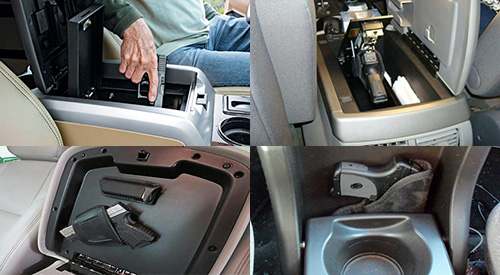
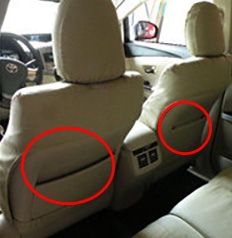
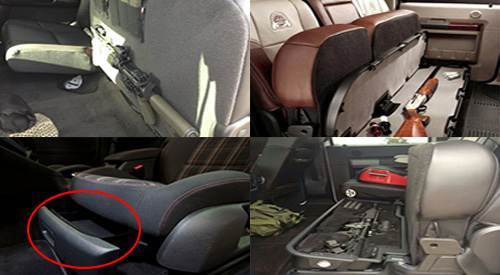
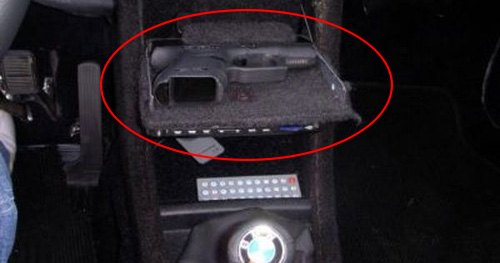
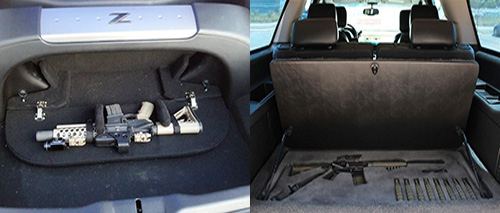
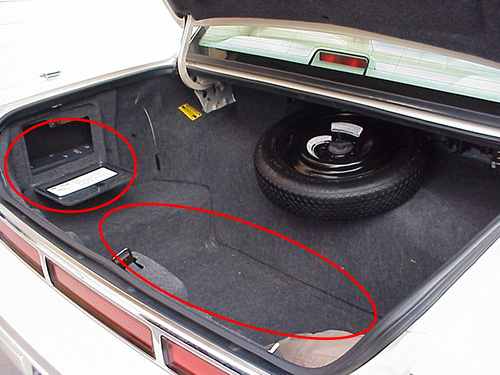
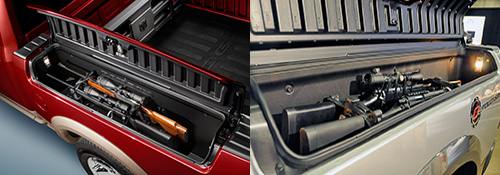



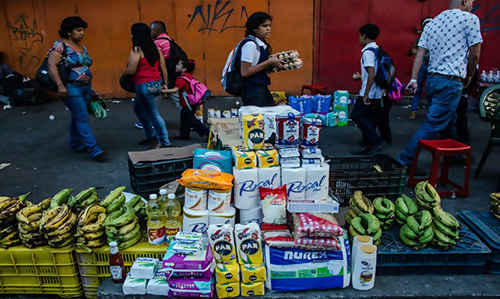
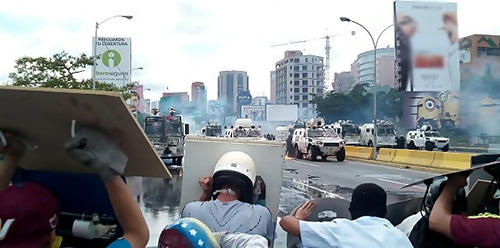
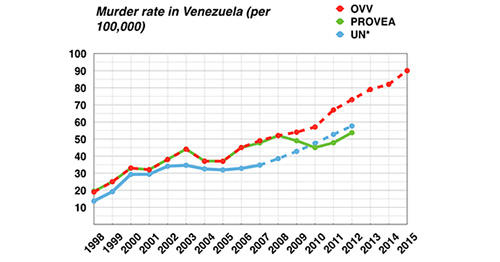
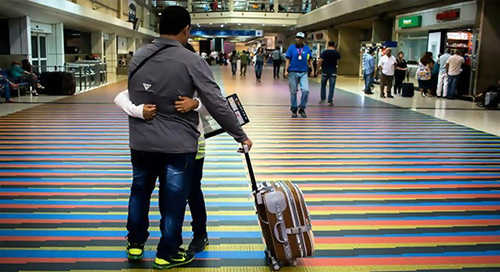

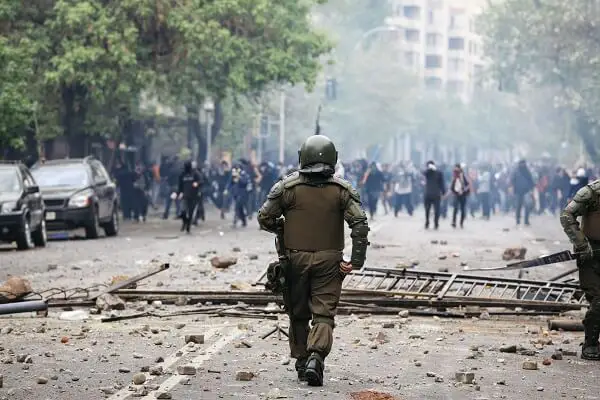
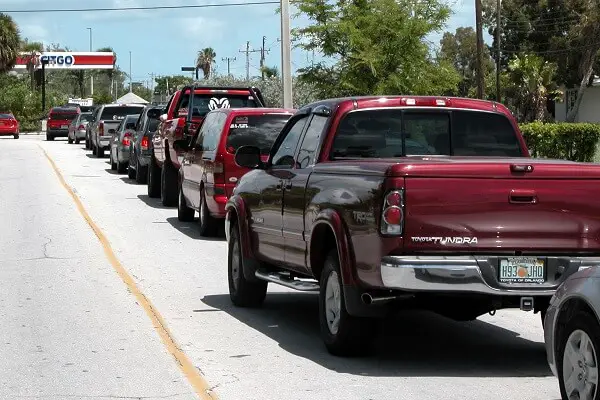
 Preppgroup