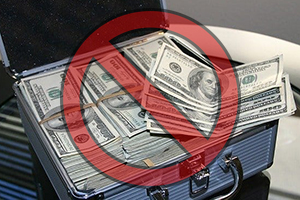
It is the final backup plan for a lot of us in the case of a disaster. A generous supply of cold hard cash to buy our way out of trouble, pick up as many last-minute supplies as possible or to acquire resources that are unavailable to anyone with a credit card in a world where the electricity is out and the internet is down. We frequently talk about having cash for emergencies, but how much cash should you have if the grid goes down? What will you be able to purchase with your doomsday supply and how long would it last in the first place?
One of our readers made a recommendation the other day to have between $500 and $1000 in cash for your bug out bag and at the time it prompted me to consider again if this amount makes sense. In my personal preparedness plans I have a supply of cash but I am always trying to figure out if what I have is enough or too much. Will it even matter when TEOTWAWKI comes and how can I best use the cash I have to survive?
Why do you need to have cash on hand?
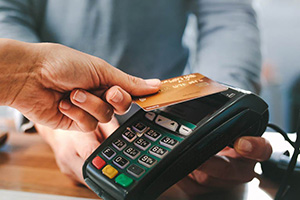
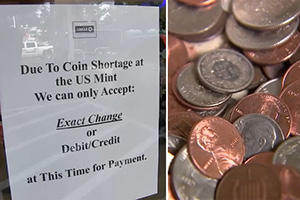
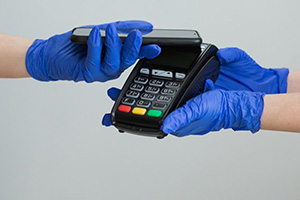
You want to know the time when you will need cash the most? It will be when you can’t get to it. How many of you right now have no cash at all in your wallets or purses? I used to be the same way. I never had cash and relied on the ready availability of cash machines or most often the ability to pay for virtually everything with a debit card. How convenient is it to never have to make change or worry if you have enough cash when with the swipe of a card your bank account funds are at your disposal. This is a great technological advance, but the problem is that this requires two things to be functioning. First, the card readers and ATM machines require electricity. If the electricity is out, neither of these two machines works. The second thing is a network connection. If the network is down, even with electricity the transaction won’t work and you can’t pay for goods or get cash from your bank.
In a disaster, one of the first casualties is electricity. This doesn’t have to be due to some cosmic solar flare that has rendered the grid useless, it could be as destructive and common as a fire, flood, earthquake, tornado or winter storm. It could also be from simple vandalism or perhaps terrorism. A major fiber optic cable was cut in Arizona back in February leaving businesses without the ability to accept payments. When the electricity is out, you aren’t going to be able to access your cash via the normal means so having a supply on hand is going to be a huge advantage for you in the right circumstances.
Even if there is no natural disaster, you are still at the mercy of your bank. What if your bank closes or there is a bank holiday declared because of some economic crisis. In any of these situations, if you are dependent on access to money that is controlled by either technology or physical limitations like a bank office it is wise to have a backup plan should either of those two conditions prevent you from getting cash.
What is cash good for in a crisis?
I think there are two levels to consider when it comes to keeping cash on hand. There is the bug out scenario mentioned above where you would have some “walking around money” to take care of relatively minor needs like food, a hotel or gas. The second is for a longer or more widespread unavailability of funds. Let’s say the economy tanks and the price of everything skyrockets but stores are still open for business. Your bank is one of the casualties, but you had a few thousand dollars of cash stored away that you could use to purchase food, gas and necessary preparedness items for your family. In this scenario, the government is still backing the fiat currency and vendors are still accepting it as a form of payment. For this scenario having a few thousand dollars makes sense.
But what if we have an extreme event where the currency is devalued and is essentially worthless? Your thousands of dollars might only buy you a loaf of bread. Don’t believe it can happen? It did to the Weimar Republic after WWI so it can happen again. That isn’t to say it will, but you should balance how much money you have squirreled away under your mattress with supplies you can purchase now that will last and keep you alive during that same event. My goal is to make sure I have the basics I need to survive at home for several months to a year without needing to spend any cash. This way, if the money is worthless, I still have what my family needs to survive.
If we have a regional disaster where you can bug out to a safer location, your cash should serve you well. Of course if you are in a safer location, assuming electricity was working your access to bank funds should still be working. If this is truly the end of the world as we know it, how long will that cash you have be worth anything?
It is surprisingly simple to disrupt all credit and debit transactions. Do you have cash instead?
How much cash do you need?
So the million dollar question is how much cash should you have if the grid goes down? I always try to plan for the worst case scenario. My rationale is that if I am prepared for the end of the world as we know it, I should be just as prepared for any lesser disaster or crisis I may be faced with. The way I see it is if we do have a disaster, you aren’t going to be using that cash most likely to pay your mortgage, student loans, rent, or your credit card bills. Cash will go to life saving supplies and this will need to be used in the earliest hours of any crisis before all of the goods are gone or the cash is worthless. Once people realize for example that the government has been temporarily destroyed, they aren’t going to want to take your $500 for a tank of gas. They are going to want guns, food or bullets.
I also don’t see you using your cash to buy passage to another country, but that’s just me. I know there is a historical precedent for that, but I am not planning on that being something I realistically attempt with my family. I am also not planning on bribing any officials with cash either. My cash is for last-minute necessities and then it is back into the hopefully safe confines of my home to plan the next steps. For that I have only a couple of thousand dollars in cash stored away. I figure if I need more than that I didn’t plan well. Also, I would rather spend my money on supplies like long-term storable food and equipment than having a large horde of cash. With that amount, I figure I can make one last run if needed or be able to weather any short-term emergency when I can’t access cash.
What is the best place to hide cash in your home?
I wrote a post awhile back titled, How to hide your money where the bankers won’t find it that had lots of good ideas for reasonably safe places you could store cash. As I said in that article, you do have risks involved with keeping cash in your house, but I think you have just the same, if not worse risks relying on banks to keep your money safe and give it back when you want it. There are a million places to hide cash, but you can get tricky and buy a fake shaving cream safe to store several hundred dollars in there. Just be careful you don’t throw that away. There are other options like wall clocks with a hidden compartment inside that might be less prone to getting tossed in the trash. Your imagination is really all that is needed for a good hiding place, but I would caution you that you don’t store cash in too many places or you could forget where you hid it. This happened to me when I had hidden some cash behind an item that I ended up giving to my daughter because I thought I didn’t need it anymore. Imagine my surprise when she came into the living room and said, “Dad, I found an envelope with a lot of money in it”. I gave her a twenty for a reward…
What about you? How much cash do you think you need to have on hand and what do you plan on spending it on if the grid goes down?
I want to present you one of the most interesting sites, where you will see new articles daily! www.321gold.com
Satanic ritual abuse (SRA) is a stark reality for some children who are born into Illuminati bloodline families, or military families, or families with connections to mind control, or families with connections to the New World Order manipulators running the world today. Satanic ritual abuse seems to run in families, with each generation passing it along to the next.
Psychologists have known for a long time that every perpetrator is also a victim; what makes someone into a purveyor of aggression or violence is normally a deep wounding or trauma they experienced in the past. Satanic ritual abuse is also carried out against children who are kidnapped, then molded into slaves through the trauma of the abuse.
As sad and horrific as this subject is, it is central to an understanding of the worldwide conspiracy and the New World Order. What binds these criminal NWO manipulators together the most is not race, religion or family ties, but an adherence to Satanism, a willingness to invoke dark forces in ritual and an allowance to let those dark forces control their thoughts and actions – which results in all the pedophilia, war, manipulation and deception we see around us.
The Late Former FBI Chief Ted Gunderson Exposed Much Satanic Ritual Abuse
Ted Gunderson, who died in 2011, had a 27-year FBI career and claims he was in charge of 14 million people at one point. He began to investigate Satanic ritual abuse after he stumbled upon it in various cases. With decades of thorough investigation, Gunderson concluded that the world was ruled by a Satanic cult forming a powerful network and operating an international child trafficking and pedophilia ring. This included selling children into slavery and flying them to Washington DC to be used in sex orgies by politicians. With upwards of 100,000 kids missing every year in the US, Gunderson stated that the FBI was fully complicit in the coverup. On many occasions Gunderson stressed that this cult was composed of people of many professions – judges, athletes, law enforcement, celebrities, politicians, lawyers and more.
In many presentations such as this one, Gunderson presents proof of Satanic ritual abuse, including animal bones and satanic symbols in the dirt, and human sacrifice. The truth is that Satanists get a dark “high” from drinking the blood of their tortured victims, which contains emotional neurochemicals released into the blood at the time of their death. Former Satanic insiders such as Zachary King have also stated that these black magicians love raping young children because they can “steal their energy” during ritual sex. Some former mind control victims like Cathy O’Brien have even bravely stepped forward to publicly show the unspeakable horror of what they went through (vaginal mutilation at the hands of Satanist, psychological warfare specialist and NSA agent Michael Aquino). This is a ghastly topic, but if we want to stop it, we need to accept the reality that it operates all over the US and the world as an organized conspiracy.
The Story of Satanic Ritual Abuse Survivor Kathy Collins
There are many Satanic ritual abuse and mind control survivors who have come forward to tell their story, such as Brice Taylor, Cisco Wheeler, Arizona Wilder, Svali and Cathy O’Brien, to name just a few. However, the purpose of this article is to show that, although Satanic ritual abuse is a very real phenomenon, it can be healed. For proof of this, we turn to Kathy Collins, who was interviewed by Bill Ryan (Project Avalon) a few months ago.
What makes Kathy’s story so remarkable is that she underwent horrible experiences that would cause massive trauma in almost anyone. This included being brought, as a child, into Project Monarch, a sub-project of the MK Ultra CIA mind control program. She was also brought to places like Bohemian Grove. At a young age, Kathy was carted away in potato sacks by her father, went through a Satanic initiation ritual at age 3 (being forced to drink blood), suffered sexual abuse (from both men and women), was made into child prostitute and was experimented upon with drugs, electroshock and strobe lights. She recalls being at Bohemian Grove at age 5, tied naked to a stone altar, surrounded by 3 hooded figures who were trying to steal her soul but who were saying “we can’t break her”. Kathy was forced to watch a child sacrifice at Bohemian Grove, and in the end, only got out of the mind control and abuse because her father died.
(Incidentally, Kathy also recalls being hunted like an animal at Bohemian Grove. Cathy O’Brien has also alluded to this. Both were given a short amount of time to run and hide before being followed by huntsmen with guns. It seems that the 1924 story entitled The Most Dangerous Game was not fiction.)
Healing the Deep Trauma and Pain from Satanic Ritual Abuse
So how on earth did Kathy manage to heal herself after going through such harrowing ordeals? She realized she was thinking, identifying and acting like a victim. Although this is natural, it is an energetic truth of life that we create the kind of reality that we broadcast out to the Universe. Often we re-create the familiar. Identifying as a victim means subconsciously recreating trauma, even though we don’t consciously want to. This is because trauma victims have learnt to create serotonin through trauma and drama, and we need serotonin to live. For Kathy, the path to healing was to learn how to get serotonin in ways which were not traumatic (in her case sunsets and butterflies).
Kathy emphasizes that healing trauma is not about getting to a particular place. It is not goal-oriented or linear. Evolution is cyclical. Instead of being impatient to achieve “full healing”, whatever you define that as, she recommends that you learn techniques to deal with suppressed memories as they arise. For Kathy, it’s about mastering the moment, mastering your reaction as old memories arise, making pain a friend, seeing it as a messenger and attempting to understand what it is trying to tell you. Denying it only makes it continue. Also, for healing, a sense of humor is essential. There are many people who have healed serious disease like cancer through laughter. Additionally, it’s about listening to your body, which may feel something (e.g. fear or pain) before the mind knows it; in this way the body can teach the mind.
Ultimately, Kathy explains, a shift will happen when you take responsibility for your own actions. Transformation occurs when you move into forgiveness, i.e. looking back at the past without any judgement attached to it. You will always remember what happened – but you may be able to do so in a more detached manner, without any emotional charge attached to the memory. After many years of working through the issues, Kathy has actually gotten to the point where she sees the abuse as a gift. Why? Because it enabled her to grow, and to know how truly powerful and divine she was – and how truly powerful and divine everyone is. In this way, the scenario is like the comic story of a superhero who needed a challenge or a bad guy to know how strong and courageous he or she was.
There is no more empowering way to face the entire New World Order conspiracy than to see it as a challenge to prompt all of us into becoming better people.
Kathy’s Story is a Message of Hope for All Victims of Abuse
Kathy’s story is an inspiration not just for those who recovering from mind control, or coming out of Satanic ritual abuse, but for all victims of abuse, and for everyone who has suffered some degree of trauma. If you think about it, there’s probably not a single person alive on the face of the earth who has not felt like they have lost part of their soul, enthusiasm or creativity due some past emotional hurt, wound or trauma. We’ve all been through situations that have dimmed our spirit’s brightness. Indeed, most of us have been carrying it around for decades without ever managing to heal it.
The truth is that it is possible to reclaim your full humanity even if you have been through dark trauma. We can make our past into pain or power, depending on what we choose in the present. If you are a Satanic ritual abuse victim, you are not alone; there are many people out there who have gone through it and who can help you with it, if you reach out to them.
I want to present you one of the most interesting sites, where you will see new articles daily! www.321gold.com
According to heritage.org– The Soviet Union fell in 1991, and with it fell the shadow of global communism. But while Americans breathed a collective sigh of relief at the thought of communism’s demise, a new conspiracy developed at home. Hiding behind a veil of “progressivism,” today’s communists have infiltrated many of the institutions that Americans cherish and use their newfound power to control and regulate the actions of everyday Americans.
Communism is frequently used as a synonym for socialism and the exact differences between the two are heavily debated. One difference is that communism provides everyone in the country with an equal share, rather than the equitable share promised by socialism. Communism is commonly summarized by the Karl Marx slogan, “From each according to his ability, to each according to his needs,” and was believed by Marx to be the step beyond socialism. Individual private ownership is illegal in most communist countries.
I once had a favorite meme I would push out as kind of a tongue-in-cheek that said “When exposing a crime is treated as committing a crime, you are ruled by criminals”. Seemed pretty funny at the time.
Today, not so funny. In fact, what we are experiencing is very real.
Let’s take a look at the definition of tyranny according to legaldictionary.net:
An oppressive or severe form of government
An unrestrained use of authority or power
A state ruled by, or government of, an absolute ruler
Excessive severity
Cruel and unfair treatment by someone in authority
What we lack in the world, not just the United States, is a system of checks and balances. Governments are out of control as they care very little about the laws they have established unless it relates to you the citizen, and they certainly give complete disregard for the voting system as we are finding out they have been manipulating the outcomes to meet their agenda for quite some time.
Our rights to free speech are all but gone and our ability to assemble peacefully is now seen as extremism. Think about it for a minute, when Patriots assemble to voice their concern, they have to worry that either the assembly will be infiltrated by people seeking to create a negative image of them, or those same people causing violence, thus putting Patriots front and center as targets by their own government.
By now, if you haven’t been vaccinated for Covid, then you know that the vaccine is much more dangerous than the virus. In fact, if you know anything about anything they put in vaccines today, then you know that Covid was just an excuse for ushering in communism in America, and a depopulation scheme that’s got 150 million people set up like bowling pins, getting ready for the “big knockdown.”
Most important to realize, and it’s not too late for the unvaccinated, is that the spread of fear of Covid was needed to establish government authority initially, that way they could further violate our constitutional rights and order us around — to wear masks all day, social distance, shut down our businesses and only buy products from huge corporations that fund the fake war on Covid-19.
It’s a fake war, and “they” (Democrats, CCP and Globalists running DC) want your support.
You see, governments all prefer populace support for a war, whether it’s a kinetic war, a fake war on “terror,” or a fake war against a “killer virus.” The irony of it all is that this time the enemy isn’t foreign at all; in fact, it’s every American.
There’s always a cover for the real insidious agenda. There has to be for everyone to buy in. Of course, 9/11 was cover for Halliburton’s embezzling of $5 billion and the constitution-and-privacy-crippling Patriot Act. The War in Afghanistan was cover for the US takeover of the opium trade for the heroin-based epidemic of highly-addictive, health-destroying prescription painkillers.
Now, Covid-19 and the Delta Variant are cover for a communist takeover of America and the depopulation/ sterilization campaign that can wipe out at least 50 percent of the US populace with one “booster” shot. Call it the “kill switch.”
10 Steps to Tyranny
Create a new human disease (virus) that kills off the weak and immune-compromised (complete).
Spread Covid-19 around the planet (complete).
Create “vaccines” for that virus that cause blood clots and life-threatening myocarditis (complete).
Spread so much fear about Covid that at least 70 percent of the planet (or at least the USA) gets inoculated (only at 50 percent now).
Spread fear-mongering propaganda of a new “variant” (called Delta) that’s even “more deadly” and “more contagious” than the original virus (just begun).
Blame all vaccine injuries and deaths on the new “Delta Variant” (just beginning).
Require every vaccinated person to get their “Delta Variant” inoculation, which either instructs the recipient’s cells to produce billions of toxic protein prions that drive the patient insane and cause heart failure, or the vaccine contains the ultimate “payload” of virus-mimicking pathogenic proteins that overdose the recipients’ immune systems, killing them.
A new mass event “occurs” that cripples all communication between the populace, and the Chinese Communists start “herding” in from our southern border.
Another mass shooting event “occurs” that’s made to look like a Trump supporter who is “anti-vaccine” and right-wing extreme.
All guns are confiscated from all remaining, unvaccinated Americans and the Republic is lost.
Communism and depopulation in America come under the guise of being “patriotic” and accepting your own vax-termination out of fear of Covid-19 and its variants
Getting vaccinated to death is considered “patriotic” because the country is being run by communists right now, who want to eliminate at least 3/4ths of Americans using domestic bio-terrorism (deadly vaccines) and move a billion Chinese here from China.
Just as Hitler used propaganda to sell his motives as helpful for society and Germany’s economy, the CDC and CCP are “selling” everyone on vaccines, masks, social distancing and lockdowns, in an effort to end America as we know it. That’s why Joe Biden just told everybody that Americans getting vaccinated is the most patriotic thing you can do.
The forces are mounting that will eventually overwhelm most Americans and send their standard of living to unknown depths. Americans that have only known the post WWII prosperity are ill equipped and educated to deal with depression level living. Easy credit and instant gratification have created a nation of whining, self absorbed, entitlement minded people with no moral or mental toughness.
Doug Casey believes we are headed for what he calls a super depression created by the ending of a debt super cycle. The bigger the debt cycle the bigger the depression that follows. That’s how reality works and most people are not prepared for reality.
When this depression, which has already started, gets momentum, it will overwhelm the plans of a society that is expecting to get things like social security, pensions and payouts from retirement plans they have paid into for many years. All of those things will disappear almost overnight and leave society gasping and stupefied over what to do. Their reactions will be to yell and scream and try to identify who to blame but the only person they should blame is the one in the mirror.
Many very smart people have raised the alarm and done their best to warn the sleeping public, but those slumbering masses have ignored the warnings and hit the snooze button one more time. The masses do not understand economics, do not want to understand economics and they will pay dearly for that ignorance in the coming days.
When the real unemployment rate becomes common knowledge as it increases substantially, people will be left to survive on what resources they have saved up outside the banking system that cannot be stolen by the politicians and bankers. That is a key point here. The assets you have outside the system that cannot be stolen from you with a few key strokes on some computer.
Those hoping for some miraculous event that will send the U.S. back to the days of manufacturing might and jobs for all will never see it happen. Those days are gone. The west line theory tells us our economy will slow down and become more modest as the shipping center of the world moves west to the next powerhouse region which is Asia. This is what history teaches us.
When people suddenly wake up one morning and they have no job, their retirement is gone and they need to care for their family, what will they do? When government services have collapsed and they suddenly realize they are now living in a third world country with few government services, what will they do? When the banks are closed and only a select few connected people have any type of money or access to goods, what will they do?
This is the reality that many people will face in the future and they have no idea how bad it can get. They refuse to contemplate the harsh reality they will be living in and take steps to mitigate the effects. To do so would be to acknowledge it could happen and they are taking personal responsibility. Personal responsibility is a dirty phrase in today’s entitlement society. To see some of the effects one only has to look at the collapse of society in Venezuela today to see what awaits.
When it happens it will all fall back to you to take responsibility for your family and take care of them for the duration. To do that you need to plan now for that eventuality and build up the resources you will need to provide food, shelter, clothing and security when the system fails to do it for you. You need to be Noah on his ark not the people watching as he floated away.
Having resources stored up is a must but it may not get you all the way through if the situation lasts for many years. That is why you need some type of plan to replace those resources as time goes by and have some way to generate some type of income or at least items to trade. Usable goods are for the short term and things like gold ,silver and production equipment are for the long term to help you get through the crisis with the least amount of pain.
Even with proper planning the days ahead will not be easy as the standard of living of society will fall substantially to levels only seen in failed third world countries or old pictures. The assets actually owned by people today is very small compared to how they live. They will default on their home loan, their car loan, and their credit card debt leaving them with very few real possessions and few ways to move what they have left even if they have some place to go. Ultimately these people will become the new serfs to the wealthy class that will take possession of anything of value. Feudalism will once again rule.
The lack of planning by society will make this a reality if it is allowed. What will you do when everything you have worked a lifetime for is suddenly taken away? Do you have a plan to keep what you have? Do you have a plan to make money when you cannot find a job? Do you have a way to take care of your family until things stabilize? Do you have a home you will not lose if the whole system breaks down? What will you do if electricity or fuel is too expensive to buy or not available to the general population? These are the questions you should be asking yourself now and you better have a good answer because your family will be asking them when the greater depression sets in.
I want to present you one of the most interesting sites, where you will see new articles daily! www.321gold.com
Again this morning I find it difficult to sit down and pound out a few words when everything old is new again, it all has been said so many times. Looking at the news I find everything’s coming up roses, this translates into smooth sailing ahead. Markets were up, deals had been made, and problems were solved! Rather than writing something new, I simply have chosen to reprint an April 2019 piece titled; Waking Up To A World Done Saved!
Other than the fact that the evil government has returned to wreak havoc upon the world, China is on the cusp of collapse, the EU is in turmoil, and nuclear war could be unleashed upon us at any time, all is well. Oh, happy days are here again, what could go wrong? Below is the reprinted article.
April 12, 2019
Waking Up To A World Done Saved!
This morning I woke up to a “World Done Saved!” This translates into smooth sailing ahead. Markets were up, deals had been made, and problems solved! In such a situation only the most cynical among us would have reason to doubt all is well. I just read it, so it must be true! As a matter of fact, I would not be surprised if April 12th becomes a day that will be heralded as a turning point for all of eternity. Here are just a few of the stories that add substance to my claim. Jumping off the page were the following reasons to rejoice and no reason for concern.
The terrible, possibly one of the worst people to ever have lived, according to America’s security apparatus, Julian Assange has been taken into custody. Assange the head and founder of Wikileaks is responsible for leaking government secrets. He is guilty of informing the world that America’s government has purposely been lying to its citizens. Halting such leaks is key to the government being able to continue acting for “the greater good.”
A company just announced it has successfully tested an integral component of its Synergetic Air-Breathing Rocket Engine (SABRE). This could clear the path for commercial hypersonic flight in the next decade, read the press release. Slap this baby on the wings of an airliner and we could travel at Mach 5 or even faster. This would allow us to travel from New York to London in just one hour. Adding to this good news, Reaction Engines responsible for this breakthrough is located in the Denver area. Being centrally located everyone can get to it, whereas, if it was located on one of the coasts it would be more difficult for buyers of their product to reach them.
Also, overnight, a sharp rebound in Chinese trade data coupled with a surge in Chinese credit bolstered risk assets across the board. This underpinned “signs of resilience” in the global economy, and acted as a catalyst that caused the S&P futures to rally back above 2,900, their highest level since September 2018. This rebound in March exports is considered proof of its economic recovery. The PBOC also reported new yuan loans of 1.69 trillion, far above the 1.25 trillion estimate, while total aggregate financing in March soared higher at 2.86t yuan. This smashed the 1.85t yuan estimate and was more than four times the February 703BN yuan increase. This translates into proof that China once again is doing everything in its power to flood the economy with new credit reversing concerns from the sharp February TSF drop.
Saving the best for last, the Asian Times reports the European Union and China managed to come up with an important joint statement. It outlined agreement on three quite sensitive fronts and paves the way, in theory, that a complex, wide-ranging EU-China investment deal may be signed “by the end of next year. The statement was signed by Chinese Premier Li Keqiang, European Commission President Jean-Claude Juncker, and the head of the European Council, Donald Tusk. It is already being described as “the real deal” and a departure from antics such as the endless Brexit soap opera.
In the article the writer notes, that the joint statement reads in fact like a rose garden: “The high level of ambition will be reflected in substantially improved market access [and] the elimination of discriminatory requirements and practices affecting foreign investors.” Better yet, there were no accusations of “unfair” trade hurled at Beijing. It appears that Brussels and Beijing seem to be finally engaging in building some sort of synergy between the One Belt One Road Initiative and something only Eurocrats know actually exists but is outlined in the EU Connecting Europe and Asia project report.
The only real negative to all this great news is that the devil is in the details. This is where you find nothing is really different and in many cases, close inspection reveals that the motivation behind the headlines indicates trouble ahead. As for the examples above, should we celebrate the deep state’s victory over Wikileaks an international non-profit organization that publishes secret information, news leaks, and classified media provided by anonymous sources? Do we really think the world will change overnight because jets travel faster? Is this unfinished deal with a deteriorating Europe and a desperate China really going to benefit anyone but the Chinese? It may be best not to ask too many questions or your enthusiasm may rapidly wane.
I want to present you one of the most interesting sites, where you will see new articles daily! www.321gold.com
The 2008 economic crisis, often referred to as the Global Financial Crisis, was a significant financial downturn that had widespread effects on economies around the world. Below are the primary causes and consequences.
Causes:
Vast amounts of money were invested in real estate assets or loans after the 1997 Asian financial crisis (which led to foreign inflows) and the burst of the dotcom bubble in 2000-2002 (which led to Fed target rate cuts); let’s stick to safe yield-generating investments!
Real estate prices began to increase at a fast pace (1997-2006), thus attracting more and more speculation; after all, land is fixed and population is growing so prices can only go up, right? plus look at all the money Joe next door made flipping land in Florida: if he can do it, so can I!
Loans were made on aggressive terms (>100% LTV, adjustable rate mortgages with low initial payments and subsequent step-ups) to unworthy borrowers (insufficent cash flows) as mortgage lenders competed for market share; after all, real estate prices keep increasing so the borrowers will be able to refinance their loans down the line, right? Plus, as long as I’m getting my commission and can distribute the mortgage loan to someone else, who cares right?
These loans were often bought by investment banks and sold (by the hundreds) to special purpose vehicles financed with borrowed money (90% LTV), the latter being insured against defaults by insurance companies (via credit default swaps) and vetted by rating agencies (who gave their AAA blessing to senior tranches); after all, not all the loans will default at the same time so we are protected by diversification, right?
Once there were no one else to turn to, prices started to decline (Q2-2006)
Borrowers began to have difficulties paying the step-up rates and ultimately defaulted, their property was foreclosed and put for sale, which compressed asset prices and caused more defaults; hang on, I though real estate prices could only go up?
With so much vacant property for sale, the construction industry nosedived (2006-2010); ouch
Financial institutions who issued, bought (often with borrowed money) or insured these loans went into trouble and some went bust because their peers would not lend them to refinance their own liabilities; hang on, weren’t these loans supposed to be diversified? weren’t insurers supposed to insure us against defaults? aren’t banks supposed to be supervised?
The Fed had to step in as a lender of last resort and some companies were but nationalized; really?
The credit market froze, consumers and corporations started to panic and cut on their spending and hiring plans, which caused GDP to decrease, unemployment to increase (2007-09) and the stock market to collapse (-50% from its peak in 2007 to its trough in 2009); this is starting to sound like 1929 all over again…
Unemployment benefits skyrocketed, causing budget deficits and public debt/GDP to soar, so much so that rating agencies and investors became worried, and many sovereign issuers lost their golden AAA status; hang on, isthis even possible? aren’t sovereign bonds supposed to be “risk-free”?
And so on and so forth, until things started to stabilize again following massive government and central bank intervention (until the next crisis that is…)
Consequences:
Economic Recession: – The crisis triggered a severe global recession, leading to significant contractions in economic activity, high unemployment rates, and reduced consumer spending.
Bank Failures: – Major financial institutions, such as Lehman Brothers, collapsed or required government bailouts. This led to a loss of confidence in the banking system.
Government Intervention: – Governments worldwide implemented stimulus packages and bailout programs to stabilize their economies, including the Troubled Asset Relief Program (TARP) in the U.S.
Long-Term Unemployment: – The recession caused long-lasting job losses, with many individuals facing extended periods of unemployment and underemployment.
Public Debt: – Increased government spending to combat the recession led to higher public debt levels in many countries.
Regulatory Reforms: – In the aftermath, significant regulatory reforms were enacted, such as the Dodd-Frank Act in the U.S., aimed at increasing oversight of financial institutions and preventing future crises.
Social Impact: – The crisis exacerbated income inequality and led to increased public discontent, contributing to political movements and changes in leadership in various countries.
Shift in Economic Power: – The crisis marked a shift in economic power dynamics, with emerging economies like China gaining influence while developed economies struggled to recover.
The 2008 economic crisis had profound and lasting effects on the global economy, shaping financial regulations and economic policies for years to come.
I want to present you one of the most interesting sites, where you will see new articles daily! www.321gold.com
Just as happened with the opening of the dams in Valencia (Spain), which official authorities continue to attribute solely to weather conditions without offering a complete explanation, the same situation is now repeating itself in the face of the widespread blackout in Spain, Portugal, and southern France. New data is emerging, but, as usual, more doubts than certainties prevail.
We begin with the news that in 2021, the Austrian government warned of the possibility of a major blackout that could affect Europe in the next five years. Austrian Defense Minister Klaudia Tanner was the one who publicly warned about this threat, stressing the importance of taking preventive measures in the face of a potential energy crisis.
The video below will shock you because you will be among the first to watching this secret!
It was in October 2021 that the Austrian government issued a warning that, at the time, went unheeded by most in Europe (supposedly). However, today, in light of recent events, that warning seems like an eerie and chilling omen. Under the slogan “Blackout: What to do if everything shuts down?“, the Austrian Ministry of Defense distributed leaflets, organized national drills, and posted official videos on YouTube instructing the population on how to survive a massive energy collapse. Minister Claudia Tanner was clear: “Blackout is not a possibility, it is a certainty,” she stated, while General Robert Bridger warned of “an event that would paralyze cities and destroy the digital economy.“
Official video of the Austrian government
But what motivated Austria, a country with no obvious energy crisis at the time, to mobilize its army and civil society? Experts pointed to four critical factors: dependence on Russian gas, the increase in cyberattacks on infrastructure, the vulnerability of power grids due to reliance on intermittent renewable energy, and a lack of investment in maintenance. However, behind these technical reasons, many suspect a darker plan, and that what happened could only be a test or warning of what is to come.
On the other hand, there is a TikTok video published on April 15, 2025, in which he predicts a “partial global blackout” that would occur on April 28, 2025, stating that it would be “the beginning of a real blackout” with bank failures, social media outages, and urban chaos. The message, shared millions of times, included a reference to a forgotten episode of The Simpsons where Homer receives a message on his television: “Shutting down humanity.” We know this cartoon series is part of the system; it’s not just a coincidence, but functions as a tool that offers clues and snippets of what’s planned to happen, akin to Predictive Programming.
Finally, we have news of a strange text message that Catalan mayors (Spain) received warning of a power outage hours before the major blackout. On the night of Sunday, April 27, at 10:38 p.m., the mayor of Vilaplana, Josep Bigorra, received a message saying: “We are working to restore the power supply as soon as possible.” Minutes later, the mayor checked the E-Distribución website for “outage” symbols in places like Reus, the capital of Baix Camp. But nothing happened; the grid remained stable. “There wasn’t a single outage,” says Bigorra, who shared the text message on social media, puzzled. Was it a computer error? A false alarm? Or, as subsequent events suggest, a chilling warning of what was to come?
This message, however, was no exception. Other mayors in the region reported similar receipts, all at the same time and with the same contradiction: warnings of nonexistent outages.
The video below will shock you because you will be among the first to find out the truth!
Fourteen hours later, at 12:33 on Monday, April 28, Spain was completely blacked out, in an unprecedented event. A second text message arrived in Bigorra with a disturbing explanation: “Due to a national zero (sic), the power supply has been lost. We are awaiting instructions from Red Eléctrica Española (REE).“
The term “national zero” lacks a recognized technical definition. A typo? A cipher? While the Spanish government blames an “unprecedented incident,” official responses are brief. Prime Minister Pedro Sánchez announced “open lines of investigation,” but no one explains why the alarm systems failed, or why it took some municipalities more than 24 hours to restore power. The coincidence between the premonitory text message and the massive blackout has generated a flurry of theories. Independent experts point out that the messages could be part of an internal emergency protocol at E-Distribución, designed to prepare authorities before a scheduled outage. But what does a “national zero” have to do with an unannounced blackout? Could the text message have been an unauthorized leak from a compromised system? The words “national zero” evoke scenarios from military drills, such as those described in declassified NATO documents.
Questions Officials Fail to Answer:
Why did E-Distribución send false alerts hours before the collapse?
What does the term “national zero” mean?
Why did the Iberian electricity system, designed to withstand isolated failures, collapse completely?
Are there internal records that prove a structural failure prior to the blackout?
While authorities persist in their attempt to clarify the facts, citizens remain in uncertainty facing an enigma that seems to have overtones of a cover-up. The text message, far from being a simple error, could represent the tip of the iceberg of secret plans.
Recently, after the blackout in Spain, Austrian army spokesman Michael Bauer recalled on his X (formerly Twitter) profile the October 2021 article that warned about this possibility: “If no one is prepared, the State has to take care of everything. If we all prepare at home, we help everyone.” Bauer stated that the Austrian Army has been preparing for an extreme scenario for years: a massive collapse of power grids in Europe that could last for days.
Crisis prevention expert Herbert Saurugg, initiator of the “Suddenly, a Blackout!” initiative, expressed that “it’s time to take this issue seriously.” Saurugg insisted that the population must be prepared to help themselves in emergencies, recommending that everyone have enough water, canned food, medicine, flashlights, and other supplies to survive for about two weeks.
Furthermore, the German government has also addressed this issue, holding a day dedicated to disaster relief under the motto “Blackout: What to do if nothing works?” The importance of public awareness and information has been emphasized.
The preparedness recommendations from both Austrian and German authorities for a possible large-scale blackout are detailed and include:
Stockpile resources: Fuel, candles, flashlights and (charged) batteries, canned goods, pasta, nuts, milk, and drinking water. In the first moments of the blackout, take the opportunity to collect running water before the supply is interrupted.
Prepare for the cold: Since many heaters are electric, it is advisable to have blankets, sleeping bags, and warm clothing, and consider sheltering with friends or neighbors in better-insulated homes, or going to aid stations set up by the authorities.
Cash: Have enough to sustain the family for at least 5 days, as ATMs and cards would be useless.
Personal emergency kit: Each family member should have a backpack prepared for 5 days with clothing, first aid supplies, hygiene items, a can opener, a battery-powered radio, a flashlight, and a cell phone with a charger for when the power returns.
Establish support networks: Arrange meeting points with family and friends, and lay the foundations for a neighborhood cooperation network.
But there’s more: in February 2025, the European Commission launched a campaign titled “Prepare for the Unpredictable,” recommending that citizens create “survival kits” with water, non-perishable food, hand-cranked radios, and batteries. Is this a preventative campaign… or a preparation for something already planned?
Convenience Store Owner Threatens Man At Gunpoint After Hitting His 5th Lottery Winner In 3 Months
The beginning of something bigger?
The possibility of a global blackout, which would leave humanity without electricity or internet, has gained relevance following the recent blackouts in Southern Europe and the collapse of social media platforms such as Facebook, Instagram, and WhatsApp a month ago. These events generated fear and increased talk of a possible “blackout.” Some interpretations suggest that behind this energy crisis there may be a strategy by certain powerful groups to financially control the world.
Based on all this new data, I wonder why there has been so much interest in this topic recently, when it was largely ignored during the 20th century? Is this a simulation designed to evaluate the results in preparation for a global event, similar to the one carried out at Cyberpolygon? Could it also be considered an additional step in the implementation of the 2030 Agenda?
While authorities insist the incidents are accidental, the pattern is clear: official warnings, viral predictions, institutional responses, and a global narrative of “resilience.” Coincidence? But in an age where energy is power, those who control the grid… control the world.
The most shocking video can be found below:
I want to present you one of the most interesting sites, where you will see new articles daily! www.321gold.com
The prospect of a recession can be tremendously upsetting for many people. In fact, it’s been over more years since Americans endured one of the worst recessions in history: the Great Recession of 2008, brought on by the housing market’s collapse.
A recession is a prolonged era of several months to years during which a country or region suffers from a weak economy, high inflation, and lowered purchasing power of consumers.
In financial terms, a country is going through an economic recession when the GDP (gross domestic product) is low, the unemployment rate is high, retail sales decline, and the manufacturing metrics fluctuate for an extended period.
What Causes Recessions?
There are clear and ambiguous causes of a recession. Numerous economists would differ over particular recession reasons and come up with explanations for why they might happen.
There are a few traits that most recessions frequently share, even though no two recessions are the same.
Recessions can have a variety of causes, such as:
Excessive debt
Stock market crash
High deflation
Technological change
High Inflation
Asset bubbles bursting
Sudden economic shock
Post-war slowdown
What Happens During A Recession?
Everyone can experience anxiety during recessions, especially when millions of people may lose their jobs as unemployment rates grow throughout the economy’s various sectors.
It may have a snowball effect, making things worse before they get better for the economy.
You can anticipate the following items during a recession:
Rising Unemployment
An increase in unemployment rates is one of the first things to happen during a recession. It is because firms frequently have to reduce spending during recessions, and hiring staff is sometimes one of the first costs.
Government Debt Rises
As the government works to stabilize the economy with stimulus packages and aid, government debt rises as businesses lay off employees and those employees apply for unemployment benefits.
Less Spending
Losing a job has an impact on an employee’s income. Consumers are less likely to spend when they have little or no pay, which harms businesses and stocks by reducing the amount of money entering the economy.
Assets Lose Value
Many assets, particularly stocks and homes, have the potential to depreciate, which might cause investors and homebuyers to lose money or possibly go bankrupt.
How Does The Recession Affect The Citizens?
As unemployment rates climb during a recession, you can lose your job.
Because more individuals are unemployed, it becomes much tougher to obtain a new job, and you are more at risk of losing the existing one. Those with their jobs intact may experience reduced salaries and/or benefits.
They are not even in a position to negotiate for a pay rate increment.
During a recession, you may even suffer from heavy losses in your stocks, bonds, real estate, and other forms of investments. That, in turn, lowers your savings and disrupts your retirement plans.
Even worse, you can risk losing your home and other possessions if you cannot pay your expenses due to losing your work.
In a recession, business owners experience lower sales and sometimes even bankruptcy. The government finds it challenging to keep everyone solvent amid a severe downturn.
What Are The Signs Of Economic Recession?
Recessions don’t necessarily follow a pattern. However, some indicators can predict a recession.
Knowing these indications can even help you understand how to prepare for a downturn so you aren’t stuck fighting to make ends meet when the economy drops.
Check out the top recession warning indicators listed below:
Rising Unemployment Rate
Typically, an increasing unemployment rate is an indication of an impending recession.
High unemployment rates will cause consumers to steadily lose purchasing power, which will finally cause demand to decline.
Declining Property Sales
In a healthy economy, consumer spending—including the sale of real estate—is frequently high. However, the rate of property sales declines during an ongoing economic fall—in fact, it serves as a telltale warning sign of financial instability.
Inverted Yield Curve
It measures the correlation between the short-term interest rates and long-term fixed income rates per the US Treasury.
An inverted yield curve indicates an impending economic recession when the interest rates on short-term securities are higher than those on long-term deposits.
Poor Stock Performance
Because of the stock market’s tremendous volatility and the fact that declines are not uncommon, it’s not always a reliable signal of a recession.
A prolonged bear market, however, might trigger a recession if low stock performance persists for a long time.
Increased Inflation
Inflation can signify that demand increases because of rising wages and a strong labor force.
On the other hand, high inflation causes people to minimally invest in goods and services due to weakened purchasing power, bringing down the demand in this sector.
Increase In Credit Card Debt Defaults
Spending by consumers stimulates the economy.
However, while using credit cards, consumers risk getting into debt if interest rates are high, which increases the likelihood of defaults and bankruptcies. A recession may start when this occurs.
Consumers’ Loss Of Trust
Without consumers, the economy would collapse. The economy’s main driver is the consumer. They may be more likely to spend less when they lose confidence in the economy because they are under financial strain. A slowdown in consumer expenditure may indicate a potential recession.
The Bottom Line
Recessions can cause turbulent periods of uncertainty and dread. Navigating a recession can be difficult for consumers and businesses due to higher unemployment rates, company closures, and decreased consumer confidence in the market.
With this knowledge, you may create a strategy to weather the effects of the most recent recession and upcoming ones to maintain the health of your finances.
Some advice includes reducing wasteful spending, preserving your own food, repurposing old items and building an emergency fund to help you overcome times of financial difficulty.
I want to present you one of the most interesting sites, where you will see new articles daily! www.321gold.com
Recent world crises and the resultant weakening of the global economy has left many fearing the worst. There is talk of a global recession, or worse yet, a complete collapse of the economy.
While it is impossible to say whether such a severe economic downturn is upon us, understanding how to survive a potential economic collapse (whether now or in the future) could save you and your family when the times get tough.
WHAT IS AN ECONOMIC COLLAPSE?
An economic collapse is defined as a severe breakdown of the economy at a national, regional, or territorial level. It is a broad term used to describe bad economic conditions that are not part of the ordinary business cycle of expansion and contraction.
An economic collapse usually signals the start of a significant economic contraction, recession, or depression, which can last months or even many years.
All Americans Will Lose Their Home, Income And Power By May 27, 2025
Watch the video below!
WHAT CAUSES AN ECONOMIC COLLAPSE?
There are various events and circumstances that can trigger an economic collapse, which makes it difficult to attribute it to a single cause. An economic collapse can happen suddenly as a result of an unexpected crisis such as the onset of a war, natural disaster, political unrest, and various other events.
It can also be the culmination of a series of events or ongoing circumstances which signal a weakening and fragility of the economy.
WHAT ARE THE RESULTS OF AN ECONOMIC COLLAPSE?
The results of an economic collapse are equally difficult to predict, as the ripple effects of a severe economic downturn are widespread and impossible to accurately track. Some general and obvious results of an economic collapse are:
A rise in job loss and unemployment.
Loss of value of investment markets which results in the average investor losing significant value in their portfolio.
Slowing of production, and therefore less new innovation, fewer startups, and so forth.
A potential hyperinflationary environment in extreme cases where the cost of basic items increases dramatically.
An increase in poverty which can also lead to crime, civil unrest, and various other social issues.
Widespread business failures leading to shutting down of companies and laying off of staff.
HOW TO PREPARE FOR AN ECONOMIC COLLAPSE
Preparation is key in order to successfully survive an economic collapse. It is important to not become too complacent when the good times are rolling, as you never know when the situation may change for the worse.
Convenience Store Owner Threatens Man At Gunpoint After Hitting His 5th Lottery Winner In 3 Months
Follow these practical guidelines to ensure you are well prepared :
1. KEEP AN EMERGENCY FUND
Having liquid cash safely deposited in a savings account with your bank can be a lifesaver in times of economic crisis. First of it all, it will retain its value while market linked assets such as equities deteriorate.
Secondly, it will provide you with the best liquidity so that you can quickly access your money during a time of extreme need. It is recommended to keep at least 3 – 6 months’ worth of expenses in an emergency fund.
2. BECOME DEBT FREE
The additional pressure of carrying debt if there is an economic collapse can put you in an extremely difficult situation. You should start working towards becoming debt free today.
This will reduce your monthly expenditure and will keep you from landing up in a precarious position should you lose your job in the future. Begin by paying off your highest interest debt such as credit cards and other short-term loans, and then move onto lower interest debts such as house mortgages.
3. CREATE ADDITIONAL INCOME SOURCES
The risk of losing your primary job is elevated during an economic recession or collapse. You can mitigate the negative consequences of this by creating additional sources of income now before the bad times are afoot.
We live in an age of boundless opportunities to make money on the side remotely. You can start your own web business or do freelance consulting work.
Even if you have a great job, it is well worth diversifying your income sources and establishing other ways to sustain yourself. Even a few hundred dollars a month can make a big difference in a time of need.
4. REDUCE UNNECESSARY SPENDING
Most people tend to spend recklessly when times are good and then suddenly try to adjust when there is a downturn or they lose their job. This is a big mistake for two reasons:
Firstly, if you make overspending a habit in your regular life, it becomes extremely difficult to adjust your spending habits when you need to do so. If you practice living with less even during the good times, it will be much easier during a financial squeeze.
Secondly, wasting unnecessary money on a regular basis means you have less to put into savings each month. We spoke about the importance of having an emergency fund, and living off less now can help you keep that fund growing for when the rainy day comes.
5. MAINTAIN A DIVERSIFIED INVESTMENT PORTFOLIO
Entire markets and industries can deteriorate during an economic collapse, while others might be more protected. Maintaining a diversified investment portfolio will ensure that you are not overexposed to one specific asset class, sector of the economy, or graphical region.
While your overall asset value might still decline significantly, you will be more protected from the risk of complete financial ruin if you keep your eggs in different baskets.
6. STOCKPILE FOOD AND OTHER SUPPLIES
During severe economic collapses, like the one experienced by Venezuela in current times, or the Great Depression of the 1930s, even things like basic food and other supplies can be in shortage.
Even if supplies are available, a hyperinflationary environment can make basic necessities completely unaffordable. It is always a good idea to keep a stockpile of food and other essential supplies (e.g., medicines, toiletries, paper supplies, tools, etc.) that can last you more than a year in tough times. This may also protect you from other crises such as natural disasters, war, etc.
One step further is to learn to grow your own food. If you have a small garden in which you could plant a few crops, start learning how to prepare the soil and grow some basic fruit and vegetables. Not only will it make you less reliant on a potentially failing economic system, but will be an extremely rewarding process too.
Watch this video below to find out the great secrets hidden by the government.
7. LEARN BASIC SKILLS
Basic DIY skills are invaluable during an economic crisis. Instead of paying someone to repair your car or fix your house, you can do it yourself for free. You could even earn some additional income by providing these services to others. Examples of basic skills that can save you money and bring great fulfilment during difficult times include things like:
Baking bread and making other foot items from scratch (e.g., pickles, jams, fermented vegetables, yoghurt, etc.)
Growing your own vegetables and herbs
Sewing
First aid and caring for a sick child
Mechanic work such as fixing cars, motorbikes, bicycles, etc.
Building and repairing household items such as furniture and shelves
Basic electrical and plumbing work
8. ESTABLISH STRONG CONNECTIONS
One of your most valuable resources are the people who are close to you. When times are difficult, it is important to work together with close friends and family to overcome the challenges.
You will have a much better chance of making it through compared to trying to tough it out alone. Start building strong relationships with those who are close to you, like neighbours, friends, and family. Having the mutual understanding that you can depend on each other in difficult times is a great comfort.
You can also practice the habit of mutual exchange (i.e., bartering), where you offer your skills in exchange for something that the other can give. This can help you circumvent the traditional economy and help you move more towards the “sharing economy”. This also reminds us of the importance of learning as many basic skills as possible, so that you may help others in need and receive their support in kind.
Hopefully you will be well prepared to deal with an economic collapse when it comes having followed the above steps. However, it is impossible to perfectly predict how a collapse in the economy will play out, and you will need to deal with the situation that is presented to you at the time. Here are a few additional steps you may need to take when you are actually faced with an economic collapse:
1. DISCUSS THE SITUATION WITH YOUR HOUSEHOLD
The very first thing you should do is sit down with the members of your household and discuss the situation with them. Go over your finances together and work together to come up with a plan of how you will navigate these difficult times together.
It is important that you are all on the same page, but also to know that everyone has their own approach and attitude to dealing with money. How you resolve these differences and work together will have a big impact on your ability to deal with the challenging times, and strengthen your relationships in the process.
2. FURTHER REDUCE EXPENSES AS NEEDED
In preparation for a recession, you would have practiced living off less. When you are faced with an actual economic collapse, you may have to further adjust your spending habits to be able to cover your monthly expenses. In most cases, it is quite possible to maintain a good quality of life while cutting out unnecessary expenditures. Start by cutting out spending on all the things which are not necessary for you to live on, and finding ways to reduce the costs of the things you do need. Some ways that you may be able to reduce your spending include:
Cut out discretionary spending (i.e., stop buying things you can do without) like luxury items, new clothes that you don’t need, new gadgets, etc.)
Reduce transportation costs by carpooling, using public transport, walking or cycling, etc.
Reduce housing costs by moving to a cheaper area, subletting out part of your house, or even moving in with family until your financial situation improves.
Reduce food costs by cooking at home instead of going out to eat. Also refrain from buying too many luxury food items that you don’t really need and instead buy simple, healthy food.
3. GET MUTUAL SUPPORT FROM FRIENDS AND FAMILY
We spoke about the importance of building strong relationships when preparing for an economic collapse. Well, here is the time to lean on the solid bonds you have created by not being afraid to ask for support. You should also help and share your skills and resources with others who are in need.
4. PROTECT YOUR HOME AND FAMILY
Extreme economic collapses and recessions can lead to social degradation such as more violent crime, petty theft, scams, and so on. This has been clearly demonstrated in Venezuela and is one of the reasons why so many citizens have fled the country. You may need to take action to safeguard your home and protect your family from criminals and other dangers during a severe recession.
5. KEEP EARNING
If at all possible, make sure to keep the money flowing in. If you have a job, go the extra mile to prove that you are a valuable employee. You should be seen as the last person to be laid off in your employer’s eyes.
First 5 Places In America You Don’t Want to be When Society Collapses!
In the meantime, keep networking and working on generating alternative income streams so that you are not left stranded without any income if your employer does need to shut down.
6. DON’T STOP ENJOYING LIFE
Finally, and most importantly, don’t allow yourself to be ruled by fear and sadness. There is no reason to stop enjoying and appreciating life just because you are faced with economic difficulties.
Be grateful for the things you do still have and keep having fun in the ways you can with those you hold dear. You should try to see the situation as a challenge on your creativity and flexibility, and encourage friends and family to come up with inventive ways to have fun without spending money all the time.
Of all the disasters which can face a society, an economic collapse is one of the most challenging to deal with. Due to its nebulous nature and widespread impacts, it is very difficult to escape its effects. Being adequately prepared to deal with a sever economic downturn before it arises, and knowing how to respond when you are faced with it, is vital in order to make it through intact.
You will probably have to accept that you will be impacted one way or another, but the severity can be greatly reduced with the right approach. Most important of all is to continue living with joy and hope in the midst of the difficult times, and not get sucked into needless fear and anxiety.
The government recently hired a firm called Gryphon Scientific to analyze how well the stockpile could respond to a range of health disaster scenarios.
The warehouse Greenfieldboyce visited contains 130 shipping containers, but who will be on the receiving end of these shipping containers during an actual emergency?
“While they do have plans for emergencies, and lists of volunteers, they’re volunteers,” said Paul Petersen, director of emergency preparedness for Tennessee. “And they’re not guaranteed to show up in the time of need.”
While the mainstream media propagandists continue to push the lie of a robust recovering economy, the fact is, we are in some serious fiscal trouble. Economies around the world are crashing, countries are drowning in record amounts of debt, and governments continue to pile on new debt like there’s no tomorrow.
What is an Economic Collapse?
Economic collapse, in its simplest definition, means a sudden and severe drop in currency value, leading to a financial crisis. It usually happens when the country’s economic activities are mismanaged or when an unexpected event throws the country into chaos. Some examples of such events are terrorist attacks, natural disasters, political upheaval, severe social unrest, financial bubbles , a collapse in government, and pandemics.
A look at Prior Economic Disasters, Depressions and Market Collapses
Throughout the history of the world, there have been many instances where countries have experienced an economic collapse, leading to severe consequences such as hyperinflation, high unemployment rates, and poverty. In extreme cases, economic collapse can even lead to a societal breakdown, with people experiencing shortages, social unrest, and struggling to survive.
The earliest recorded economic collapse occurred in 176 BC when the Roman Republic experienced a severe financial crisis that eventually led to massive inflation and debasement of the currency. The government’s response to this crisis was to issue more coins with decreased silver content, resulting in worsening hyperinflation and a sharp decline in the purchasing power of its citizens. This eventually led to social unrest and political instability, eroding the strength of the Roman Empire over time.
Another significant economic collapse occurred during the Great Depression of the 1930s, triggered by the stock market crash of 1929. During this period, businesses failed, banks collapsed, and unemployment soared to unprecedented levels worldwide. The depression had far-reaching negative consequences, some of which ultimately led to World War II.
In 1997, the Asian Financial Crisis rocked Southeast Asia, causing widespread economic instability and social unrest. The crisis began with the devaluation of the Thai baht, leading to investors withdrawing their capital from other Southeast Asian countries. This, in turn, led to a sharp decline in the value of their currencies and an economic recession. As a result, millions lost their jobs, and poverty rates rose steeply. Some nations recovered relatively quickly, while others, such as Indonesia, suffered profound economic and political upheaval for several years
The most recent collapse occurred in 2008 when the subprime mortgage crisis shook the global financial markets. The crisis began with predatory lending practices by mortgage lenders, high-risk borrowing by homeowners, and the buying and selling of risky loans between financial institutions. When homeowners began to default on their mortgages, banks and insurance companies suffered huge losses, and trust in the financial system evaporated almost overnight. As a result, governments worldwide were forced to intervene to avoid a total collapse of the financial system.
As history shows, it’s not if but when! Therefore, preparing for an economic collapse is vital to your survival, especially in today’s world, where the global economy is interdependent. Any event, even those in other parts of the world, can have a ripple effect on other countries. This article will provide tips on how to prepare for economic collapse.
Are we heading towards an Economic Collapse?
At some point this debt train is going to come to a screeching halt; when that happens we are going to see panic and chaos like nothing we’ve ever seen before.
As we’ve been covering for some time now, a look at the numbers and data shows we are heading for a potential disaster. From a series of high profile banks going bust to record inflation combined with major supply chain shortages, our economy seems to be heading right off the cliff.
The world, especially the United States, is drowning in debt.
The United States, once the world’s shining example of fiscal security and responsibility, has become shackled by a record amount of debt. We are literally drowning in debt.
Over the next ten years, experts think that debt could balloon to over $50 trillion. While that might seem like an insurmountable amount of debt to recover from, the fact is, we have already surpassed that number many times over.
When factoring in unfunded liabilities like Social Security, Medicare, government pension plans and Obamacare, the true debt number is actually much higher. Estimates put the real number somewhere between $222 trillion to $250 trillion.
But it’s not just the government, people are borrowing at record levels as well.
Household debt increased at the fastest pace in 15 years, partially due to huge increases in credit card usage and mortgage balances.
Credit card balances rose more than 15% from 2021, the largest annual jump in more than 20 years.
Total Consumer Debt is now over $2.36 Trillion, an increase of 7.3 per cent in Q3 2023 compared to last year.
The overall Economic numbers are downright Scary!
Silicon Valley Bank Collapse causing fears of market contagion and Bank Runs
Stock & crypto markets crash, U.S. debt to soar past $50 trillion within 10 years as Biden to Raise Taxes
Commercial Real Estate Collapse Latest Warning Sign to Prepare for Major Economic Troubles
Food Shortages: American Food Supply in Real Danger, expected to get worse in 2023
US inflation surges as economy becomes top preparedness threat
U.S. money supply, which measures safe assets households and businesses can use to make payments, has fallen abruptly since March and is negative on a yearly basis for the first time since 2006.
Mortgage payments as a share of income have doubled from 13% to 26%, and the savings rate has plummeted to almost zero.
Total household debt increased by 8.5% in 2022 and now stands at a record $16.9 trillion. That’s $2.75 trillion higher than it was pre-pandemic.
Sales of commercial mortgage bonds have taken a nose dive, plummeting about 85% year-over-year as commercial real estate investors are bracing for what looks like a wave of defaults throughout the commercial real estate industry.
What can you expect during a major Economic Collapse?
A Run on the Banks: One of the first things you will see is a run on the banks. People are going to be panicking, and they will be doing everything they can to get their hands on cash to buy extra supplies.
Chaos in the Streets: Once the banks run dry, you will see people turn desperate. The moment they realize the money is gone is the moment you will see widespread chaos sweep throughout the country. Riots, looting, and widespread violence will break out, making self-defense one of your primary concerns.
Martial Law: When things start to go bad, I believe you will see the government declare a state of emergency or Martial Law. When this happens you will see things like travel restrictions, mandatory curfews, and the suspension of Constitutional rights.
So what should you do to prepare for an economic collapse?
Are you prepared to survive a total economic collapse?
If you haven’t already, it’s time to put together a plan of action. The fact is, the writing has been on the wall for some time now, and we probably don’t have much time left.
If and when things go bad, and money starts to become scarce, do you have a plan? What if we suffer a complete meltdown and collapse of the economy?
I devoted an entire section to financial preparedness and the coming collapse of the economy in my book, The Ultimate Situational Survival Guide; because I firmly believe it’s one of the most serious threats we face.
The first thing you need to do is Develop a Plan of Action.
The first step in preparing for an economic collapse is to have a plan. You should have a clear idea of what to do in case of a financial crisis. This plan should include steps you would take to protect yourself and your family.
A good starting point would be to have some emergency savings. These savings should be enough to cover your living expenses for at least six months. This could be in cash, precious metals, or other assets that can hold value during a financial crisis.
Another important aspect of your plan should be to have a source of income not affected by the collapse. This could be through investing in assets that will not lose value during a crisis, such as gold or silver (or good ol beans and bullets!). Alternatively, you could start a side business that provides a steady income stream.
If things go bad, having a plan of action will help increase your chances of surviving the chaos. Check out my list of Essential Preparedness Tips, Skills, and Resources to Prepare for Disasters & Threats.
Start being Smart with your Money
During the 2008 financial collapse, millions of Americans lost their homes, cars and personal possessions because they saddled with debt. Since the so-called COVID pandemic, that trend has begun again with millions of people who now owe more on their property than they are worth, a vehicle repo market that is exploding, and consumer dent that is at record highs.
If you can get out of debt, do it now. Start cutting all non-essential expenses, and use that money to pay down your debt. During an economic collapse, the likelihood of losing your home to debt collectors is a very real prospect.
Start an Emergency Fund: Just like all areas of preparedness, there are steps you can take to insulate yourself from problems. Having an emergency fund is one way to prepare for financial troubles. It will give you a bit of a cushion during hard times, and can provide you with a fund to buy last minute supplies once things start to go bad.
Always have Cash on Hand: Once things start to go bad, there is a very real possibility that the banks may freeze or seize your accounts. Should there be a run on the banks; people are going to be desperate to get their hands on some cash. Even during a total economic collapse, paper currency will still play a major role in how people buy and sell during the initial phases of the crisis – especially if a bank holiday is declared.

Start Prepping for Problems NOW.
Now is the time to really start taking a serious look at your overall level of preparedness. The economy has been teetering on the edge of collapse for quite some time, throw in inflation that has almost doubled the price of staple goods and the growing social unrest that’s sweeping the country and you have yourself a real recipe for disaster.
Put together an emergency kit that includes extra food & water, clothing, a portable shelter (tents, tarps, sleeping bags.), and a way to defend yourself.
Think about what things are unique to your situation; items like medications, or supplies that you would be hard pressed to live without, should be stockpiled in preparation for economic troubles.
For more information on prepping, check out our article on the top ten prepping tips for every SHTF situation. Every one of those tips can help prepare you to deal with an economic crisis.
Start stocking up on Survival Supplies.
During an economic collapse, supply chain disruptions and shortages of essential supplies are possible. Therefore, it is essential to stockpile some essential supplies to tide you over during the crisis. Now is the time to buy the things you need! I’m not talking about T.Vs or IPads; but instead, long-term supplies that you will need in order to survive in the future.
Start stockpiling food and long-term consumables. During any type of crisis, food, water and long-term consumables are going to be worth their weight in gold. During an economic collapse, you will likely see major supply chain shortages and problems, making these types of supplies one of your most important pre-collapse considerations.

Put together a Bug Out Bag: Should this country face an economic collapse, chances are pretty good it will be followed by riots, violence and something much uglier than the initial collapse of the economy. You should have a Bugout bag filled with everything you need to survive a prolonged emergency situation.
Keep a good supply of First-Aid & Medical Supplies on Hand. Medical and personal hygiene supplies are going to be hard to come by when things go bad. Make sure you have everything you need to deal with medical emergencies.
Some of the critical supplies you should consider stockpiling include food, water, medicine, and toiletries. You should also have a backup power source, such as a generator or solar panels, in case of power outages and infrastructure breakdowns.
Grocery Options that ship right to your Home:
Amazon Fresh
Bulk Emergency Foods
Amazon Grocery
Pay Off Debt
One of the biggest challenges during an economic collapse is debt. High levels of debt can be a significant burden during a financial crisis, especially if you lose your source of income.
Therefore, paying off any high-interest debt before a financial crisis hits is essential. This will help reduce your monthly expenses and free up money you can use for other essential things.
If you have a mortgage, it may be wise to consider refinancing to a fixed-rate mortgage, which can provide some stability during the crisis.
Start Stocking up on Survival Knowledge.
Even more important than supplies, is survival knowledge. Knowledge is the key to your survival, and now is the time to get some. During any kind of disaster, including an economic collapse, knowledge is going to be your most powerful ally.
During a crisis, the skills that are in demand may change, and having a wide range of skills can increase your chances of finding employment or starting a new business. Some valuable skills to learn are gardening, carpentry, welding, and plumbing. These skills can help you make repairs or grow your food, saving you money and keeping you self-sufficient during a crisis.
Additionally, learning new skills can also increase your current earning potential, which can help you build your emergency savings or invest in assets that will hold value during a crisis.
Start reading books on survival and start collecting information on how to live a more self-reliant lifestyle.
Subscribe to our RSS feed to stay up-to-date on all the latest economic threats and preparedness information.
Start doing your own Research. I don’t rely on government spun stories, or skillfully crafted press releases; I do my own research and you should too!
Take a serious look at your Self-Defense.
One of the biggest threats you’re going to face during an economic crisis is the threat posed by people. The social unrest and riots we’ve witnessed over the last couple of years are going to pale in comparison to what we’ll see during a full-scale economic collapse.
Take a serious look at gun ownership, and learn everything you can about self-defense. When things go bad, you are going to need a way to protect yourself and those you love.
Watch for signs of social unrest, and stay alert to what’s going on in your neighborhood and throughout the world.
During an economic collapse, problems like home invasions and burglaries are going to become a real problem. Start looking into ways to strengthen your home’s security.
Preparing for an economic collapse can be challenging, but it is essential in today’s uncertain world. By having a plan, diversifying your investments, stockpiling essential supplies, learning new skills, and paying off debt, you can increase your chances of surviving and thriving during a financial crisis.
An economic collapse is a very real threat, one that has far-reaching consequences that you must take seriously. If you haven’t put together a game plan, what are you waiting for?
While nobody here is making any specific predictions, and I certainly can’t tell you that it’s going to happen on this date, in this year; I can tell you that the possibility is very real, and the reality of the situation is our politicians and leaders continue to put policies in place that ensure some very real future problems.