30 Survival Skills Modern People Have Forgotten

Every generation is skilled at using the technology of its era. For example, people today are very good at driving cars, using smartphones, setting up home entertainment systems, and so forth. The problem is, if the end of the world as we know it ever happens, all those skills will be useless. The skills of our forefathers, on the other hand, will never be useless.

Below, we’ll take a look at 30 survival skills from our past that have mostly been forgotten today. If you want to be able to survive in a world where relying on technology isn’t an option, these skills are certainly worth learning.

In this video, i will unearth a long-forgotten secret that helped our ancestors survive famines, wars, economic crisis, diseases, droughts and anything else life trew at them.
So pay chose attention because this video will change your life forever for the good!

Note: For each skill, I included links to resources where you can learn how to develop that skill.

1. Hand Washing Clothes

These days, almost everyone owns a washer and dryer, and those who don’t are able to rely on a visit to the laundromat. Washing clothes without these conveniences, though, is a forgotten skill.

2. Marksmanship

Being able to accurately fire a gun is a skill that takes dedication and practice. At one time, it was an essential skill for survival. Today, though, few people know their way around a firearm.

3. Navigating Without a GPS

GPS’s have made navigation incredibly easy. But now that almost everyone has a powerful GPS in their pocket at all times, not many people know how to navigate without one.

4. Building a Fire

Building a fire isn’t as easy as they make it look in the movies. Even with the right tools and ideal conditions, getting a fire started can sometimes be a challenge – and it’s a skill that few people today have acquired.

5. Hunting

Prey animals have spent their entire lives avoiding predators, and they are very talented at it – which makes hunting a real challenge. In an era where fresh meat is always a trip to the supermarket away, hunting has become a forgotten skill.

6. Fishing

Fishing may be a slightly easier skill to acquire than hunting, but it still requires a lot of learning and practice. Without the right gear and strategy, fish can be very difficult to catch.

7. Purifying Water

Constant access to clean, pure drinking water is a very modern convenience. In the past, though, knowing how to purify water was essential for survival.

8. Preserving Food

Thanks to our abundant supply of food as well as the invention of freezers and refrigerators, knowing how to preserve food is no longer a necessity. Without these modern-day conveniences, though, food preservation is essential for survival.

9. Tying Knots

Everyone knows how to tie a knot in a string, but few people these days are able to tie a wide range of more-complicated knots.

Experts predict that an EMP strike that wipes out electricity across the nation would ultimately lead to the demise of up to 90% of the population. However, this figure begs an important question: if we were able to live thousands of years without even the concept of electricity, why would we suddenly all die without it?

10. Raising Animals

Outside of farmers, few people raise their own animals these days. However, animal husbandry still remains a very useful skill to know.

11. Sewing

Sewing used to be a skill that almost all women and even many men were taught at an early age. Today, though, few people know even the simplest sewing methods.

12. Cooking from Scratch

Putting together meals is now easier than it has ever been in the past, but this also means that most people have forgotten the skills necessary to cook at a tasty, healthy meal from scratch.

13. Predicting the Weather

Today, figuring out what the weather is going to be like is as easy as turning on the television or pulling up an app on your phone. In the past, though, being able to predict the weather without these modern conveniences was essential for survival.

14. Self Defense

There was a time when it was common for fathers to teach their sons how to defend themselves. Today, self-defense is an important skill for men and women alike, but it is certainly less common for people to know.

15. Butchering An Animal

Even if you know how to raise your own animals for meat, you’ll also need to know how to butcher them. This is a more complicated process than many people realize and it’s a skill that must be acquired. (Here are 23 survival uses for honey that you didn’t know about.)

16. Using Cloth Diapers

Before the days of disposable diapers, cloth diapers were all that was available. If the day comes when you can no longer purchase disposable diapers, learning how to use cloth diapers is going to be a necessity.

17. Gardening

Our abundance of food and the ease in which we are able to acquire it has eliminated the need for many skills, including gardening. As far as survival skills go, though, gardening is one of the most important.

18. Keeping Yourself Entertained

We have so many sources of entertainment and distraction these days that not many people are comfortable entertaining themselves without outside stimulation. In a world without electronics, knowing how to keep yourself entertained is very useful.

19. Mechanic Work

Though we are very reliant on mechanical things, not many people know how to work on them without the help of a professional. At one time, though, most everyone knew how to repair their own cars, motorcycles, and other mechanical products.

20. Bartering

We aren’t used to having to barter for the things we buy today, but bartering used to be a way of life. It’s an important skill to know should we ever have to go back to purchasing things locally rather than buying them from a nationwide chain.

21. First Aid

Thanks to the convenience of modern medicine, few people have to worry about treating their own wounds. Nevertheless, first aid remains one of the most valuable forgotten skills that a person can learn.

22. Keeping Warm

Not many people today have to worry about dying of hypothermia. But in the past, knowing how to keep warm – both inside and outside the home – was essential for survival.

23. Making Do With What You Have

We live in an era of excess. If we ever return to a time when life isn’t so full of plenty and abundance, many people will struggle to adapt.

24. Making Cleaning Products

People didn’t used to purchase pre-made cleaning products from the store. Instead, they made their own cleaning products with the raw materials that were available at the time.

25. Home Maintenance

In the past, when something broke down in the home, people would fix it themselves. Today, however, the skills of home maintenance are only known by a select few.

26. Building a Shelter

Knowing how to build an effective shelter is key to wilderness survival. During the times where people would travel out into the woods without the convenience of a portable tent, knowing how to build a shelter was a vital skill.

27. Driving a Vehicle With a Manual Transmission

Automatic transmissions haven’t always been around, and there was a time when everyone drove a manual. Today, the ability to drive a vehicle with a manual transmission is becoming increasingly less common.

28. Locating a Campsite

Not every spot in the woods is suited for a campsite, and choosing the right spot to set up camp is a skill in and of itself.

29. Avoiding Panic

We live very comfortable lives compared to the lives of our ancestors, which means that most people today are a lot more likely to panic when things take a turn for the worse.

30. Repurposing Items

Throwing things away used to be unheard of. Instead, people would repurpose old items and find new ways to make use of them.

Conclusion

Even mastering just a few of these skills will put you leagues ahead of the average person, thus giving you a much greater chance of survival after a disaster. Pick one that interests you the most and start practicing. Once you get a little burnt out on it, move on to a different skill. Just be sure to get back to the first one later. With this list of survival skills, you’ll never be bored again!

Preparedness Hacks: Once a nuke is heading your way, you might think that there isn’t much left to do, but you would be wrong!

Because we will show you America’s natural nuclear bunkers that are also EMP proof. When the sirens start wailing, all you need to do is pick the closest one to your home, where you can take cover before it hits.

The Crazy Gardening Trick That Gives You 10 Times More Potatoes

Americans love potatoes, eating about 125 pounds, per person, per year. Although potatoes are easy to grow, many off-gridders on small plots of land avoid them because traditional growing techniques take up a lot of space. However, by using the caging technique, you can get a high yield in a small space.

Caging refers to the practice of using a wire cage, wooden box, barrel, or any other device designed to grow potatoes vertically. By using this practice, potato yield can be increased by anywhere from two to 10 times using the same area of garden.

In this video, i will unearth a long-forgotten secret that helped our ancestors survive famines, wars, economic crisis, diseases, droughts and anything else life trew at them.
So pay chose attention because this video will change your life forever for the good!

Here’s how caging works:

1. The container

Select the container, or cage, for your crop. It should be 18 inches by 18 inches or larger, with room for 1 to 4 feet high of soil. On my homestead, I use either a 4-foot-square or 5-foot-square raised bed, constructed of wood, which is 16 inches high. There are also commercially available cages designed for growing potatoes vertically, but instead of spending your hard-earned money, I’m sure your off-grid homestead has materials available for constructing one.

2. The soil

Before planting, set aside enough soil to fill the container. For potatoes, a slightly acidic soil that drains well is ideal. I like to use a mix of peat moss, native soil, compost and vermiculite.

3. Planting

Fill the cage with 6 to 8 inches of soil. Plant the seed pieces 3 to 4 inches deep. Let the potatoes sprout and grow to a height of 8 inches or so. The photo above is from my 5-foot by 5-foot potato cage for this year, where I have Yukon Gem potatoes that have grown 6 to 8 inches high.

4. Fill up the Cage

Once the potato plants are about 8 inches tall, like in the photo above, it’s time to partially bury the plants. Take some of the soil you’ve set aside and gently bury the plants about a third of the way.

I just did that in my garden. The photo here shows the potato plants after they’ve been partially buried the first time.

Continue the process of letting the vines grow higher, and then partially burying them, until your cage is full. Take care not to ever bury the plants by more than one-third to a half, and make sure there is adequate moisture.

Experts predict that an EMP strike that wipes out electricity across the nation would ultimately lead to the demise of up to 90% of the population. However, this figure begs an important question: if we were able to live thousands of years without even the concept of electricity, why would we suddenly all die without it?

Tips for Maximizing Success

Successful potato growing begins by selecting the right cultivar for your climate, and growing vertically is no exception. Potatoes originated in the cooler high altitudes of South America, and thrived for centuries in the cool weather of northern Europe and Ireland. So if you live in an area where the summers get hot like I do, choose a variety that has been developed for heat resistance. These include Butterfinger, Defender and Yukon Gem types.

The reason caging works is that some varieties of potatoes will continue to form tubers from parts of the vine that have been recently buried. However, not all potatoes varieties are created equal — some excel at this and some don’t. So for growing vertically, consider those types listed above, as well as All Blue, Carola, Dark Red Norland, German Butterball, Yellow Finn and Fingerling potatoes.

Final Thoughts

Potatoes should be grown on every off-gridder’s garden. They give great yields, provide lots of needed carbohydrates for the hard-working family members, and store for months without electricity. If you’ve shied away from growing them because of traditional space requirements, try caging today.

17341 hard working Americans are now living a better life, with a lot more money in their pockets…

The solar penels …it will help you slash an excess of 70% off your power bill overnight…

To build your own solar panel almost for free, you’ll need to watch this video below

How To Make A Mini Root Cellar In Your Backyard In Less Than Two Hours

Once upon a time, root cellars were the only way people had to preserve their food. These wonderful cold-storage areas became less common when refrigerators became affordable. Houses were no longer automatically built with a root cellar beneath them or nearby.

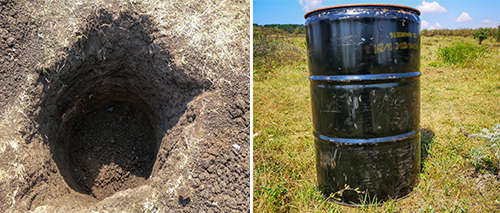
A root cellar is still a great way to store fruits and vegetables though, especially when you need to store more than you have room for indoors. They will also keep fruit and vegetables fresh without electricity. If your house doesn’t have one you can still take advantage of “nature’s ice box.” All it takes is a shovel, a little elbow grease, and a barrel.

The Lost Ways – Pemmican Tutorial Guide

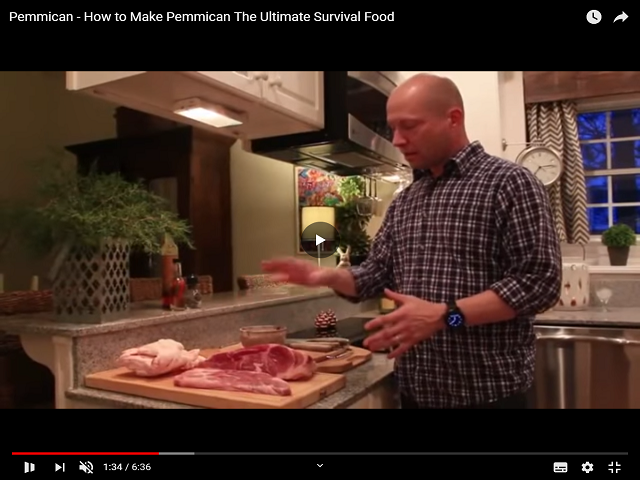
The Lost Ways website has an awesome step-by-step how to make Pemmican video. While having a written guide is important and helpful to a lot of people, watching a video guide is even better.

They cover a few things I did not and demonstrate how to make your own pemmican.

This video is an excellent pemmican making resource.

Building your own modern mini root cellar will only take a few hours. You will need the following:

  • Shovel
  • Barrel (galvanized steel or plastic)
  • Drill and screws or hammer and nails
  • Straw
  • Rocks
  • Plywood
How To Make A Mini Root Cellar In Your Backyard In Less Than Two Hours

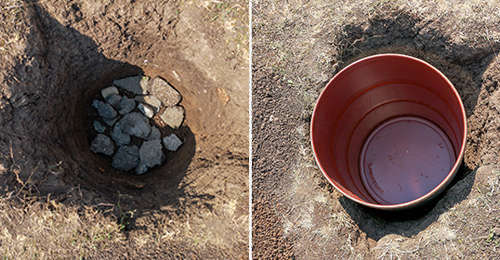
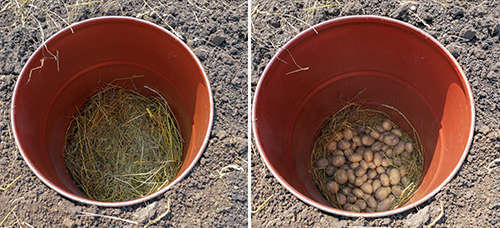
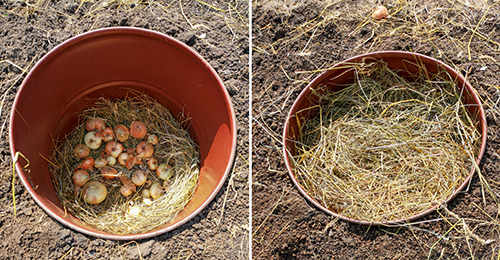
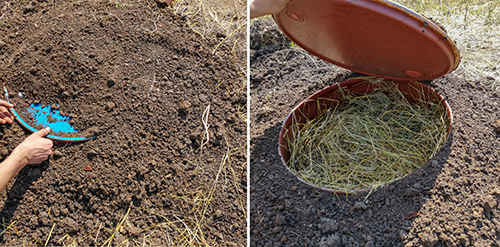
First you will have to dig a hole in the ground, taking into consideration the dimensions of the barrel and the rocks you’ll put underneath it. After you dig the hole, make sure the top of the barrel is at the freeze line or below.Place the barrel in the hole. Add your fruits and vegetables, put straw between them like you can see in the pictures, and then close the lid.

How To Make A Mini Root Cellar In Your Backyard In Less Than Two Hours

Do not use the same root cellar for both fruits and vegetables. They should not be stored together within the same barrel, even if they are separated with straw. Fruits give off ethylene, which will cause vegetables to ripen and rot. It also causes potatoes to sprout.Here you have a list of vegetables that store well together within the same barrel at 32—40°F (0—4°C) at 90—95% humidity. You can also find the length of time they can be stored for:

  • Beets: 3—5 months
  • Brussels sprouts: 3—5 weeks
  • Cabbage: 3—4 months
  • Carrots: 4—6 months
  • Cauliflower: 2—4 weeks
  • Celery: 2—3 months
  • Endive: 2—3 weeks
  • Kale: 10—14 days
  • Leeks: 1—3 months

Do not store damaged vegetables, but do leave them dirty. Just brush off most of the dirt. Do not rinse them or wash them. Use any damaged fruits and vegetables right away. Bacteria and fungus will quickly take hold on bruised or cut produce. (Here are 23 survival uses for honey that you didn’t know about.)

How To Make A Mini Root Cellar In Your Backyard In Less Than Two Hours

Store onions in a cool, dry root cellar with temperatures of 32—35°F (0—1°C) and 60—70% humidity after you shock them. Shock them by bending or snapping the green stems one month before harvest. You can store peas with onions.Regular potatoes and sweet potatoes need to be stored separately. Regular potatoes should be kept at 38—40°F (3—4°C) and 80—90% humidity. Sweet potatoes should be kept at 50—55°F (10—13°C) with 80—90% humidity.

Dried beans need to be kept cool and dry, at temperatures between 32—50°F (0—10°C) 60—70% humidity.

Pumpkins and squash can be stored together in a warm, dry root cellar. Temperatures should be kept between 50—55°F (10—13°C) with 60—75% humidity.

How To Make A Mini Root Cellar In Your Backyard In Less Than Two Hours

Store apples and pears in a cold, moist root cellar with temperatures of 32—40°F (0—4° C) in 80—90% humidity.If you notice your fruits or vegetables beginning to shrivel, the humidity level is too low. Try misting the layers of straw with a little water to increase moisture levels. If there is a little condensation or moisture on the fruits or vegetables, you will need to reduce the humidity in the root cellar. Replace the straw with fresh, dry straw, and make sure there isn’t standing water beneath the barrel. You may have to move the barrel if there is standing water in the hole.

After you add all your vegetables, just put the barrel’s cap back in place. Then add some soil over the top of it.

Preparedness Hacks: Once a nuke is heading your way, you might think that there isn’t much left to do, but you would be wrong!

Because we will show you America’s natural nuclear bunkers that are also EMP proof. When the sirens start wailing, all you need to do is pick the closest one to your home, where you can take cover before it hits.

How To Make Pemmican: A Survival Superfood That Can Last 50 Years

Packed with calories and nutrition and able to be packed and stored for long periods, pemmican is often called the ultimate survival food.

Created by Native Americans and adopted by European explorers of the New World, pemmican is a concentrated blend of fat and protein from lean, dried meat. The word “pemmican” is derived from the Cree root word “pimi” for “fat” or “grease.” Traditionally, the meats used in pemmican included bison, moose, deer and elk.  Beef can be used as well.

The secret to pemmican’s long shelf life is in properly rendering the fat from the meat. The pemmican can be stored in airtight containers without refrigeration in a cool, dark and dry place. If made and stored property, it can last for years or even decades. There are reports of some pemmican lasting 50 or more years.

The Lost Ways – Pemmican Tutorial Guide


The Lost Ways website has an awesome step-by-step how to make Pemmican video. While having a written guide is important and helpful to a lot of people, watching a video guide is even better.

They cover a few things I did not and demonstrate how to make your own pemmican.

This video is an excellent pemmican making resource.

Let’s look at the steps to making pemmican.

1. Dry the meat. Cut off all the fat, and then slice the meat as thinly as possible before placing it on a drying rack in full sunlight. Another option is to place the meat directly on your oven rack with the oven temperature at its lowest setting. The meat needs to be dry enough that it cracks when you try to bend it. Adding salt will extend the shelf life. The more salt you add, the longer it will last.

2. Grind the meat. Now you need to grind the meat until it is powder form. If you do not have a food processor, mince the meat and then grind it in the blender. If you are in a survival situation, chop the meat into small bits and then crush it into a powder.

3. Render the fat. Now heat the fat in a crockpot, in the oven or on the stove. Use a low setting for several hours, and be sure to stir the fat occasionally until it has stopped bubbling. Then pour it through a mesh strainer to filter out any pieces.

4. Mix the meat with any dry extras. If you are using any nuts or dried fruit, such as raisins, dried cherries or cranberries, mix it with the dried meat in a large bowl (leaving room for the fat). Note: These extras reduce the shelf life.

5. Add the fat. Next, add one part of fat per every two parts of the dried meat mixture (add more fat if needed). Slowly pour the hot liquefied fat into the meat mixture and stir well.

6. Add any wet extras. If you are adding wet ingredients such as honey, maple syrup or peanut butter, mix them in now. If the mixture seems too wet, you can add a little almond meal to get it to your desired consistency. You also may add salt to taste if you like. Note: These extras will reduce the shelf life.

(Here are 23 survival uses for honey that you didn’t know about.)

7. Form the pemmican. A popular method is to spread the mixture into a casserole dish. Let it get firm before cutting it into squares or bar sizes. If you prefer, you can form the mixture into balls.

8. Store the pemmican. Once cut, place it into airtight containers and store them in a cool, dark and dry place. You also store your pemmican in zippered bags in your freezer.

There are many varieties of pemmican, but they all use the basic instructions. Many other recipes begin with a 1:1:1 ratio of basic ingredients such as:

1 cup of dried meat

1 cup of dried fruit or berries

1 cup of melted animal fat

Pemmican is surprisingly filling and can supply energy for hours.

You can experiment to find the recipe that works well for you. Label the pemmican you make with the ingredients and proportions you used, so you will know what combinations work well and how you might want to tweak a certain recipe a little in the future.

Preparedness Hacks: Once a nuke is heading your way, you might think that there isn’t much left to do, but you would be wrong!

Because we will show you America’s natural nuclear bunkers that are also EMP proof. When the sirens start wailing, all you need to do is pick the closest one to your home, where you can take cover before it hits.

24 Lost Survival Tips from 100 Years Ago – with Illustrations

When we’ll have no running water, no hyperactive emergency services, no electricity… we are going to turn back to what people did 100 years ago. Here you’ll find some “little” survival tricks popular in the early 1900’s and (some of them) useful even today.

100 years ago Gallaher Ltd printed a short “How-To” series, with clever hints for emergency situations. The cards were distributed with packs of cigarettes. All the pictures bellow are part of the George Arents Collection, The New York Public Library. Please enjoy the article.

1. How to Extract a Splinter

6

Take a wide mouthed bottle and fill it with hot water nearly to the brim. Now press the affected hand or foot tightly against the mouth of the bottle.

This will then cause a suction and pull the flesh down. The suction plus the steam will help pull out the splinter.


2. How to Make an Emergency Water Filter

A handy and efficient water filter can be made out of an ordinary bucket.

First make a hole at the bottom of the bucket.

Instructions: “The water percolates through the layers of fine and coarse sand, and clean picked gravel and stones, with which the pail is filled, filtering through to the bottom in a clear state.”

One of the best layers you should add to this bucket is one made of charcoal.

In this video, i will unearth a long-forgotten secret that helped our ancestors survive famines, wars, economic crisis, diseases, droughts and anything else life trew at them.
So pay chose attention because this video will change your life forever for the good!


3. How to Engrave on a Knife

2

This method was widely used during the Middle Ages and all the engravings in swords or armors. Here are some armors engraved using this traditional way.

Instructions: “The steel to be worked upon should be covered completely with a coating of beeswax. The lettering or design to be engraved can then be drawn with the point of a clean quill pen. This lays bare the metal. A strong solution of sulphate of iron should then be repeatedly poured over the exposed surface for about ten minutes. The more prolonged the action of the sulphate the deeper will the steel be engraved.”


4. How to Make a Fire Extinguisher

Although is good to know, probably none of us will make these old fashion extinguishers since is much easier to buy one. And because the new ones are more effective (I guess) and definitely safer.

Dissolve one pound of salt and half a pound of salt-ammoniac into two quarts of water. Then bottle the liquid in thin glass bottles holding about a quart each.

Should a fire break out, dash one or more bottles into the flames, and any serious outbreak will probably be averted.


5. How to Purify Water in a Cistern

1

Easy! Stir in a tablespoon of powdered alum.

After 30 minutes the alum cause the particles and the bacteria to bound together and cause them to drop to the bottom leaving a clear purified water.

A tablespoon or half an ounce of alum will purify from sixteen to twenty gallons of water.


6. How to Treat an Animal Bite

First tight a ligature round the limb above the wound. This will stop a little bit the bleeding and it will give you a better visibility to evaluate the wound.

The next advice given back then was: “Thoroughly cleanse the wound and if there is any suspicion of madness in the attacking animal the place should be well sucked and cauterized with luna caustic, or a white hot iron, after cutting away the surrounding flesh with a sharp clean knife.”

The advice was really good for that time, when there were no vaccines. And even today doctors recommend thoroughly washing the wound as soon as possible with soap and water for approximately five minutes (to reduce the number of rabies particles). Povidone iodine or alcohol is then recommended to reduce the virus further. When SHTF and we’ll no longer be able to access vaccines this is your only option available.

(Here are 23 survival uses for honey that you didn’t know about.)


7. How to Detect Escaping Gas

Gas leaks can be caused by faulty appliances, or by those that have been incorrectly installed or poorly maintained.

Some of us don’t even use gas anymore (like me) or some may have gas detectors, but either way, after an earthquake, or a hurricane or a tornado there will always be gas leaks.

This 100 years old method is risk free and quite reliable.

“Paint strong soap solution on the suspected length of pipe and the gas will then cause bubbles at the escaping point, which can be dealt with at once.”


8. How to Light a Match in the Wind

10

Instructions: “The familiar difficulty of lighting a match in the wind can be to a great extent overcome if thin shavings are first cut on the match towards its striking end, as shown in the picture.

On lighting the match, the curled strips catch fire at once; the flame is stronger and has a better chance.”


9. How to Find a Lost Trail

If a trail is lost, there isn’t much to do but to search for it.

A very good way to do that is to mark the last foot-print or sign you notice as the center of the circle and go round it at a distance of anything from 30 to 100 yards.

The trail should be discovered somewhere crossing the circular track you are following.


10. How to Cure Chilblains

“A simple and homely remedy, which immediately relieves the irritation and pain caused by chilblains, is salt and fresh apple juice.

The affected parts are rubbed gently with a slice of apple dipped in common salt. A good juicy apple should be used.”

Preparedness Hacks: Once a nuke is heading your way, you might think that there isn’t much left to do, but you would be wrong!

Because we will show you America’s natural nuclear bunkers that are also EMP proof. When the sirens start wailing, all you need to do is pick the closest one to your home, where you can take cover before it hits.


11. How to Secure Loose Hammers and Axe Heads

12

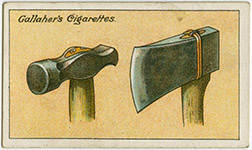
After wedging the handle of hammer as tight as possible, drill two holes at the end of wood and drive in two large screws.

An axe-head can be secured by boring a hole through the haft just bellow head and wiring through the hole and over top.

The wire should be twisted and staple driven into a hold position.


12. How to Tell the Points of the Compass with a Watch

compass

Take the watch of your hand. Point the hour hand at the sun and then lay a piece of wire or a blade of grass crosswise between the hour hand and the figure twelve.

The end of the wire between the twelve and the hour hand points south.


13. A Simple Cure for Catarrh

13

Treatment for catarrh may not be necessary because it often disappears within a few days, after your body has fought off the infection. But in some cases it doesn’t go away and it can be a health problem, especially for the underfed. In food crisis when people are poorly fed, these low-risk diseases kill more people than starvation itself.

Instructions: “Take a pinch of ordinary table salt up the nostrils, just as you would a pinch of snuff.

Then gargle the mouth and throat with warm water, being careful not to swallow it.

Do this each morning before breakfast.”


14. Three Useful Knots

15

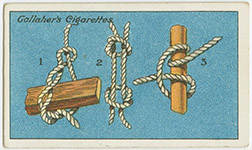
No. 1 is the Timber Hitch, which is especially useful in lifting all kinds of heavy work, such as huge beams.

No. 2, the Fisherman’s Knot, shows a good method of joining two ropes tightly together.

No. 3 is the famous Clove Hitch, which becomes tighter the harder it is pulled.


15. How to Bandage a Foot

A traditional method used to make the inflammation heal faster (especially for sprain ankles) was to place a leaf of cabbage between the bandage and the ankle.

In the picture: “Rest injured foot on operator’s knee on a clear towel.

Commence bandaging in manner shown by the lower diagram, the bandage being bound over and round the back of foot in spiral fashion, and eventually fixed by means of a safety pin, just beneath ankle, as shown in upper illustration.”


16. How to Make Roller Bandages

17

Instructions: “A roller bandage must be rolled evenly and tightly, so in the absence of a machine a chair will serve this purpose.

The picture illustrates procedure. Whilst one person carefully rolls another pulls tight opposite end of the bandage, and at the same time sees that no folds or creases are allowed to form.”


17. How to Fell a Tree

Having decided which side you wish the tree to fall, cut alternatively a downward and inward cut as you can see in the picture – in this order.

When about half through, proceed to cut the other side a few inches higher, and finally pull tree down with the help of a rope.

In a survival situation (and not only) you can use trees for their nutritious sap.


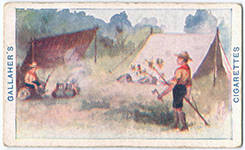
18. How to Build a Simple Shelter

22

Instructions: “A simple shelter can be made by driving two forked sticks into the ground and connecting these by a pole resting on them.

Branches are then laid resting on the pole. The right angle should be around 45 degrees, and the screen fitted up with smaller branches, ferns, etc.”


19. How to Make a Water Fountain for Chickens

Instructions: “A simple water fountain, ensuring a supply of fresh water for the chickens, can be made from a pint wine bottle, supported by wire loops to a wooden upright as shown.

The bottle is inverted over an earthenware pan, with the mouth of the bottle about half an inch above the bottom of pan.”

I see that now there are even some “rodent resistant chicken feeders” which can be used together with the water fountain if you leave for 2-3 days.


20. How to Remove Foreign Particles from the Eye

7

Few things are more irritating than having something in the eye.

“Drop sweet or castor oil into the corner of the eye. Picture shows a ready method of allowing drop of oil to fall into eye from the poim of a paint brush.”

If the particle is of mortar or lime, bathe eye with weak vinegar and water.


21. How to Make a Chair to Cross a Stream

If your group has one or more people who cannot (maybe there are wounded) or don’t know how to swim, you might want to find a simple solution to help him cross a river. If there are nearby trees – and usually near rivers there are – all you need is a rope.

Fasten a strong rope to a tree and let somebody (who can swim) go across the stream and fasten the other end to a tree on an opposite bank.

Use another rope to improvise a chair fastening it into a running loop. “By means of a light rope fastened to the middle of (the) chair and held by someone at each end, those unable to swim are safely passed over.”


22. Keeping Plants Watered While Away on Holiday

There are many simple and cheap DIY tricks to keep your green friends properly hydrated so that you don’t return home to a house full of wilting and yellowing plants.

A traditional method is to fill a large bucket with water, and place it a little above the level of the plants.

You can group round or near as many plants as you want. Place one end of a strand of wool in the bucket and the other one to the plant.

You can place as many yarns as you want.


23. Rescue from Fire

24

If it is necessary to enter a burning house in a search of unconscious persons, or to save a family member, first place a wet bandage over your nose and mouth and crawl in on all fours. You do this because the only Oxigen you may find is on close to the floor. (and the visibility is better)

Place a rope around his ankles. The other end of the rope around your chest or shoulders.

Then turn your back on him and drag him out. (you’re going on all fours with rope underneath)


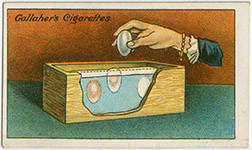
24. How to Preserve Eggs

14

Preserve only eggs that are newly laid. Bury them in a box of salt.

This traditional way of keeping eggs has been almost forgotten. The eggs last about an year when they are totally buried in the salt. No air whatever must be allowed to get at the shells.

This way you’ll have eggs and salt for survival.


25. How to Treat Sprains

Elevate the injured joint and wrap in cloths wrung out in cold water. The picture shows how to keep the cloths constantly wet without having to change them.

Place a jug of water higher than the injured limb and a strip of linen with one end in the jug and the other end resting upon the wrapping of sprained joint.

The water will pass from the jug to compress keeping it constantly wet and cold.

The SHTF we all prep for is what folks 150 years ago called daily life. A hundred years ago people knew how to do a lot of things – that we now take for granted. Learning how to do stuff on your own is one of the most important things that one can do to prepare… And in time of crisis you need to be able to support and sustain your family without much outside aid.

Solar energy is a renewable source of energy with has many benefits.

The best thing is that you’ll save money on you electric bill.

To build your own solar panel almost for free, you’ll need to watch this video

40 Bizarre Home Remedies Our Grandparents Taught Us That Actually Work

These days, it has become all too common for people to reach for a pill bottle or call the doctor anytime something goes wrong, or even for the smallest scrape. The simple, wacky home remedies of our grandparents, those weird concoctions formed from everyday household goods, are often mocked by today’s medical establishment. But surprisingly, the truth is that our grandparents actually knew a lot more about the world than we give them credit for, and many of these old-fashioned folk remedies actually work. Not just that, but many of them work better than the synthetic pharmaceuticals that so many people stuff their bodies with today.

In this video, i will unearth a long-forgotten secret that helped our ancestors survive famines, wars, economic crisis, diseases, droughts and anything else life trew at them.
So pay chose attention because this video will change your life forever for the good!

Here are 40 weird, wacky, but shockingly effective home remedies that still work today, and would make grandma proud.

1. Use Garlic and Olive Oil for Athlete’s Foot

Everyone knows about the many health benefits of garlic, but did you know that it can fix your athlete’s foot problem in a jiffy? Just mince some garlic cloves, mix them with natural olive oil, and then use bit of cotton to rub this mixture onto the affected area between the toes.

2. Potato Slices for Headaches

Headaches and/or migraines can ruin even the best day, but there is a weird natural solution that works: potato slices. Just cut a few slices from a raw potato, soak them in a very thin cloth, and apply them to your forehead or directly to the temples.

3. Ease Cuticle Infections with Vinegar

Done too much manicuring? Cuticles all torn up and infected? Make a glass of vinegar and warm water, then put your fingers in it for about 15 minutes. Repeat this procedure once a day or so until the infection fades away.

4. Use Vinegar to Cure Swimmer’s Ear

There’s nothing that ruins a good day at the beach like coming home with swimmer’s ear. But when your grandparents told you to drop some vinegar in your ears, they weren’t kidding. The acidic properties of vinegar can kill off that awful swimmer’s ear bacteria, leaving you feeling like yourself again. Just take out some white vinegar, dilute it with distilled water, and put three drops into the problematic ear, three times a day, until the problem fades. (Here are 23 survival uses for honey that you didn’t know about.)

5. Olive Oil for Eczema

Feeling itchy already? Eczema can make anyone grow crazy. But olive oil, which is full of antioxidants and often used as an ingredient in professional skin creams, isn’t just good for athlete’s foot: it can ease the symptoms of eczema as well. Simply rub some olive oil onto the eczema-affected areas of your skin, and it should help quite a bit. Moreover, olive oil is named in the Bible as a cure-all remedy.

6. Fix Hiccups with a Spoonful of Sugar

Yes, seriously. The legends are true. Don’t get too overzealous with it, because diabetes isn’t something to mess around with, but this old-fashioned trick will halt the hiccups in their tracks. The reason why is because the behavior we call “hiccups” are actually just spasms of your diaphragm, so having a spoon of dry sugar will throw off the nerve muscles and cure their agitation.

7. Get rid of warts with duct tape

It sounds crazy, but it works. Instead of going to all the work to get your warts frozen off, just covered them with duct tape. After cleaning a wart off, just apply a strip of the tape to the affected area, and then keep it there for three days. After that, remove, rub the wart area with a pumice stone, and then apply new tape.  Continue this process every three days until the wart goes the way of the dinosaurs.

8. Treat Acne with Coconut Oil

Coconut oil might seem like the cool new kid on the block, but it’s actually an old-timer that’s been around since the 1800s. In addition to many other uses, coconut oil is an effective treatment for acne, since its antibiotic properties prevent further breakouts. Just apply coconut oil to the skin, maybe mixing it with a little raw honey.

9. Have a Little Yogurt for That Bad Breath

Bad breath, officially known as halitosis, is a terrible thing to live with. But the cure for it is right there in your fridge: yogurt. At least two servings a day of this probiotic wonder, ideally a plain brand with no sugar, changes the landscape of your tongue so that it won’t breed any more the bad bacteria that produces that distinctive stink.

10. Deal with bug bites by using toothpaste

Well, not technically the toothpaste itself, but rather, the peppermint oil inside the toothpaste: if you have the pure peppermint oil itself, that’s even more effective. Either way, applying peppermint oil to a bug bite—even if it’s just through dabbing on a little toothpaste – will immediately reduce the raw itchiness we all know too well.

11. Use Licorice to Eliminate Corns

Yes, licorice, everyone’s least favorite candy. But the one thing worse than licorice is having a corn on your toe. If you soak some licorice with oil, apply it all to the affected area, then wrap it tight under plastic wrap (and maybe a sock) for 6-8 hours—for instance, overnight—this will cause the licorice to soften the corn.

12. Ease Your Hangover with Apple Cider Vinegar

Drinking might be fun, but hangovers aren’t fun for anyone. But when you used to see grandpa downing a shot of apple cider vinegar after a night with his buddies, he knew what he was doing. Apple cider vinegar balances the pH levels in your stomach after a little too much alcohol throws it off. Just gulp down a teaspoon of this vinegar, or a small shot-glass. If you can’t take it straight, dilute it with some water.

Preparedness Hacks: Once a nuke is heading your way, you might think that there isn’t much left to do, but you would be wrong!

Because we will show you America’s natural nuclear bunkers that are also EMP proof. When the sirens start wailing, all you need to do is pick the closest one to your home, where you can take cover before it hits.

13. Constipation with beets

The human body needs to eliminate waste, and when it gets all bunched up, major discomfort ensues. One home solution you may have heard from your grandparents was to eat some fresh-steamed beets, then drink the water they were steamed in. This should clear out your colon like magic. Just be warned that when you do go, your stools or urine may be bright red: nothing to worry about, just the natural dye of the beets.

14. Vodka for stinky feet

Having trouble with foot odor? Get some vodka. No, we’re not suggesting that you get drunk and avoid the problem. The key is that alcoholic is an antiseptic, which means it eliminates the fungus that causes foot odor, and dries your feet out. Just soak a thin cloth in some vodka, swipe your foot down, and feel the smell go away.

15. Mix Cumin, Honey, Cinnamon and Ginger for Diarrhea

A bad case of the runs can keep you up all night. Instead of taking drugs that will simply constipate you, thereby causing more stomach pains, a better natural remedy is to combine a teaspoon of cumin, and the same portion of honey, cinnamon, and ginger into a paste that you can drink.

16. Lemons for an Earache

Pain in the ears can be soothed by the application of freshly-squeezed lemons. Just squeeze a lemon onto a Q-tip, and delicately rub this just inside the ear to restore pH balance.

17. Stinging Nettle for Hair Loss

You can’t force hair to regrow once it’s already gone, but you can slow down the rate of hair loss through the use of stinging nettle, an herb often used for tea. Drinking stinging nettle tea a few times a day should help, and you can also massage stinging nettle itself in your scalp.

18. Cure Nausea with Olives

Whether it’s from motion sickness or an unpleasant sight, the familiar (but unpleasant) side effects associated with nausea can be cured by eating olives, due to the tannin inside them.

19. Potatoes for Spider Bites

If a spider managed to sink its teeth into you, ease the itching and swelling by shredding a potato, wrapping the pieces in cloth, and applying to the bite area. Note, this is a treatment for symptoms of a regular, non-deadly bite: if the bite comes from a more deadly spider, such as a black widow, seek immediate medical attention.

20. Raw Honey for Chapped Lips

Don’t ever waste your money on Chapstick again. Much has been said about the healing properties of raw, organic honey, but if your lips are chapped, you can simply apply honey to the affected area—rub it on, just as you would Chapstick—and it will do the job nicely, and taste better to boot. Just make sure the honey is both raw and organic.

21. Garlic for Allergies

For a more natural antihistamine when your nasal allergies act up, eat lots of garlic, whether it’s straight bulbs or slices on crackers. Garlic contains a lot of the antioxidant quercetin, which eases allergy symptoms. If there’s no garlic in the pantry, onions work as well.

22. Buttermilk and Ginger for Diarrhea

If you don’t have cumin on hand, another weird-but-effective home remedy for diarrhea is to mix half of a teaspoon of dry ginger into a cup of buttermilk, and drink it.

23. Treat Styes with Potatoes

If you haven’t noticed, potatoes are a lot more powerful than people realize. If you get a stye on your eye, just grate a potato, wrap the gratings in a cloth, and press to the affected area to ease inflammation.

24. Avoid Mosquitoes with Garlic

If you don’t want to get eaten alive with mosquitoes, enjoy a garlic-rich diet, because mosquitoes are totally repelled by garlic. For further protection, rub garlic oil on your skin. If it’s already too late, you can also ease the stinging of the bites with garlic as well.

25. Yams for Menopause

To up your dosage of vitamin A, lower your cholesterol, and add more antioxidants to your diet, start incorporating yams—real yams, not sweet potatoes—into your regular daily diet. This will help with common menopause symptoms.

26. Apples Help the Bowels

Apples are high in pectin, a naturally occurring fiber that both bulks up and softens stools. This means that apples are an effective treatment for both diarrhea andconstipation. Just make sure to eat the skin too, which contains valuable ursolic acid.

27. Banana Peel for Poison Ivy

While bananas won’t prevent you from getting the allergic rash that 85% of the population contracts from touching poison ivy, they can help. Rub the inside of a banana peel against poison ivy rash for relief from the pain and itchiness.

28. Honey for Acid Reflux

As soon as the symptoms of acid reflux begin affecting you, swallow three spoons of honey, and it should help you achieve better digestion.

29. Blackstrap molasses for Constipation

If you suffer from frequent constipation, try injecting a little blackstrap molasses into your diet, whether as a coffee additive or an extra ingredient in cookies. This molasses should ease constipation, but be careful not to over-indulge, because too much molasses will increase constipation.

30. Pine Syrup for Sore Throats

You know what helps a sore throat? Pine needles. Yes, really. To make pine syrup, collect a cup of freshly-washed pine needles, and thoroughly blend them. Meanwhile, boil water, corn syrup, and a bit of salt, mix this with the needles, then steep for a few hours. Keep this syrup in the refrigerator for at least a month, then keep it on hand forever to treat sore throats.

31. DIY Cough Syrup

If you want to make a good cough syrup from the ingredients of your pantry, mix together ¼ teaspoon ground ginger, 1 tablespoon of apple cider vinegar, ¼ teaspoon cayenne pepper, 1 tablespoon of honey, and a few spoons of water. Mix it all together, and have 1-3 teaspoons to ease coughing symptoms.

32. Garlic for toothache

Nothing will keep you up at night like a bad cavity or an exposed nerve. While garlic won’t cure the underlying issue, chewing on garlic at night, particularly chewing whole cloves in the affected area, will ease pain tremendously.

33. Put on Wet Socks to Treat a Cold

Hear us out for a minute. To treat the symptoms of a common cold, begin by soaking your feet in hot water for at least three minutes – or just taking a bath. Meanwhile, soak a pair of your socks in ice water. Put the socks on your feet, cover them up with a pair of wool socks, and then go to bed. As you sleep with these horribly cold feet, the blood vessels will constrict, pushing nutrients up into your body to push out the infection.

34. Fix Dry Skin

To soften dry skin, break down two bananas and mix them with a bit of honey. Apply this paste to the skin, let it sit for about 20 minutes, and then wash it off, and your skin should feel softer.

35. Teabags for Burns

Get a cool-temperature, wet teabag, of any tea, and place it directly on the burned area. This won’t fix the burn, but it will relieve the pain almost immediately.

36. Oil Pulling

This might have become a trend recently, but it’s actually an old practice that our grandparents learned from their grandparents. Basically, enhance your dental routine by taking a spoonful of coconut oil – though other oils work as well – and swishing it in your mouth for five minutes a day, specifically pulling it through the teeth, and then spit it out into the toilet. The oil will “pull” all of the toxins out of the mouth, allowing you to spit them out in one go. When used in addition to standard brushing and flossing, oil pulling will help digestion, reduce gingivitis, prevent receding gums, get rid of bad breath, strengthen teeth, and much, much more.

37. Help Eczema with an Oatmeal Bath

If the horrendous itchiness of eczema still has you down, you can hugely reduce the itchiness by following your grandmother’s old advice taking a bath of oatmeal. There’s a reason that so many lotions and pharmaceutical eczema treatments contain oatmeal as an ingredient: it really works! For a home solution, just make a bath for yourself, fill it with colloidal oatmeal, and then soak for a while.

38. Stop Your Snoring

Is your snoring annoying your wife or husband? Try drinking a glass of warm milk with a teaspoon of turmeric powder added to it before bed, and hear your partner’s relief.

39. Basil Leaves and Ginger for Fever

Fevers are the body’s way of pushing out an infection, but when it’s time to cut back on the heat, here’s a home solution. Crush some ginger and basil leaves together into  paste, then add a teaspoon of honey. Squeeze out the liquid, and then take a drink ever four hours or so.

40. Soak Golden Raisins in Gin for Arthritis

If there’s one thing that afflicted so many of our grandparents, it was the terrible swelling pains of arthritis. But they had a home remedy that still works today. Get some golden raisins, soak them in gin, and let it sit overnight until all of the gin has been soaked up. After this is done, eat about ten raisins a day. While this won’t fix the underlying problems of arthritis, it will greatly ease the symptoms.

Solar energy is a renewable source of energy with has many benefits.

The best thing is that you’ll save money on you electric bill.

To build your own solar panel almost for free, you’ll need to watch this video