Trade tensions between the U.S. and Canada can create widespread disruptions across global supply chains due to their deeply integrated economies and influence on international trade networks. Here’s how:
1. Disruptions in Key Industries
Since the U.S. and Canada are among the largest trading partners in the world, disruptions between them affect major global industries, including:
a. Automotive Industry
Issue: Tariffs on steel and aluminum affect car manufacturing costs.
Global Impact: Higher vehicle production costs for manufacturers in Mexico, Europe, and Asia who rely on North American auto parts. Delays in cross-border part shipments slow production at major automakers like Ford, GM, and Toyota.
Issue: U.S. restrictions on Canadian oil exports and critical minerals.
Global Impact: Increased energy prices in global markets, affecting major energy consumers like China, India, and Europe. Reduced supply of critical minerals (lithium, cobalt, nickel) used in EV batteries, impacting the global shift to renewable energy.
c. Agriculture & Food Supply Chains
Issue: Retaliatory tariffs on dairy, beef, and grain exports.
Global Impact: Higher food prices in regions that rely on U.S. and Canadian food exports, such as Asia, the Middle East, and Latin America. Disruptions in global wheat and soybean markets due to supply chain bottlenecks.
2. Trade Diversion to Other Markets
When tensions rise between the U.S. and Canada, businesses seek alternative trade partners, which reshapes global supply chains:
Canada increases exports to Europe and Asia through trade deals like CETA (EU) and CPTPP (Pacific nations).
The U.S. strengthens trade with Mexico and South American countries to replace Canadian imports.
Asian and European suppliers gain market share in North America as businesses seek alternatives to disrupted U.S.-Canada trade.
3. Higher Costs & Delays for Global Companies
Border delays: Increased customs inspections lead to longer shipping times.
Supply chain uncertainty: Businesses hesitate to invest in cross-border operations due to unpredictable policies.
4. Geopolitical & Economic Consequences
Strengthened China & EU Trade Relations: If North American trade slows, China and the EU benefit by increasing exports to both Canada and the U.S.
Impact on Global Manufacturing: Factories worldwide experience raw material shortages and price hikes, increasing costs for industries like electronics, aviation, and pharmaceuticals.
Conclusion
U.S.-Canada trade tensions extend far beyond North America, affecting global industries, supply chain costs, and economic stability. Countries and businesses worldwide must adapt to shifting trade policies, diversify suppliers, and explore alternative trade agreements to mitigate these disruptions.
Even some of our brightest scientific minds are projecting that there is absolutely no positive future for our civilization if we stay on our current course. Perhaps one of the reasons why our society has become so obsessed with short-term results is because most of us can’t bear to think about the long-term consequences of our actions. I have a website that focuses on “economic collapse”, but it isn’t just the economy that is headed for catastrophe. Virtually every aspect of our society is coming apart at the seams all around us, and the era that we are moving into will be more nightmarish than most people would dare to imagine. But our political leaders continue to insist that everything is going to work out just fine somehow, and most people choose to believe them.
This week, an old MIT study from 1972 that projected that our civilization will collapse at some point during the 21st century made headlines on several major news sites…
In 1972, a team of MIT scientists got together to study the risks of civilizational collapse. Their system dynamics model published by the Club of Rome identified impending ‘limits to growth’ (LtG) that meant industrial civilization was on track to collapse sometime within the 21st century, due to overexploitation of planetary resources.
In particular, the study identified a period of time “around 2040” when societal collapse would be very likely…
The study was published in the Yale Journal of Industrial Ecology in November 2020 and is available on the KPMG website. It concludes that the current business-as-usual trajectory of global civilization is heading toward the terminal decline of economic growth within the coming decade—and at worst, could trigger societal collapse by around 2040.
Of course events are not going to transpire exactly as they foresaw, but as far as the big picture is concerned they were right on the money.
Our society is now in the process of collapsing all around us, and you can see evidence of this everywhere that you look.
The most shocking videos in the world!
This week, civil unrest is causing widespread chaos in the streets in Cuba, South Africa, Beirut and Paris. We have entered a period of time when it seems like people are perpetually angry, and the wild scenes that are playing out around the globe are absolutely shocking.
Here in the United States, we are in the midst of a crazy crime wave. Murder rates in our major cities rose by an average of 30 percent in 2020, and they are up another 24 percent so far in 2021. Extreme violence has become a way of life in many of our largest metropolitan areas, and this is particularly true in the city of Chicago…
A Chicago rapper died after suffering as many as 64 bullet wounds to his head and other parts of his body in what police are calling an ambush shooting just as he was released from jail.
Londre Sylvester, 31, who is known by his stage name KTS Dre, was one of three people who were shot just outside Cook County Jail in the Little Village section of Chicago on Saturday.
Chicago police seem powerless to stop the endless violence, but of course the same could be said about many other police departments around the country.
The streets of our biggest cities are becoming war zones, and what we have experienced so far is just the beginning.
Meanwhile, we are dealing with the worst epidemic of illegal drugs in our history. If you can believe it, drug overdose deaths were up nearly 30 percent last year…
Drug-overdose deaths in the U.S. surged nearly 30% in 2020, the tragic result of a deadlier supply and the destabilizing effects of the Covid-19 pandemic, according to preliminary federal data and public health officials.
The estimated 93,331 deaths from drug overdoses last year, a record high, represent the sharpest annual increase in at least three decades, and compare with an estimated toll of 72,151 deaths in 2019, according to provisional overdose-drug data released Wednesday by the Centers for Disease Control and Prevention.
Drug overdose deaths were already at an all-time high coming into 2020.
So for the number of deaths to rise 30 percent above that level in just one year is really, really tragic.
At the same time, our system of public education continues to rapidly deteriorate.
Earlier today, I was shocked to learn that 41 percent of all high school students in Baltimore have a grade point average that is below 1.0…
Project Baltimore obtained a chart assembled by Baltimore City Schools. The chart shows the average GPA for every high school grade in the city – freshman through senior. In the first three quarters of this past school year, according to the chart, 41% of all Baltimore City high school students, earned below a 1.0 grade point average. In other words, nearly half of the 20,500 public high school students in Baltimore earned less than a D average.
“It’s heartbreaking,” said Patterson. “If almost half of our kids are failing, what options do they have after high school? This is really disheartening. It’s sad to see this.”
I don’t just want to single out Baltimore, because that isn’t fair.
All across this once great country of ours, public schools are completely and utterly failing our kids. The vast majority of our high school graduates cannot read, write or speak coherently, and that simply should not be happening in the wealthiest nation on the entire planet.
Switching gears, authorities up in Canada are dealing with a different form of social decay. For years, I have been warning that Christians in the western world would soon face the same sort of extreme persecution that Christians in other parts of the globe are forced to endure, and now it is starting to happen.
In recent weeks, individuals that are apparently motivated by a deep hatred for Christians have been setting churches on fire all over Canada…
Terrorists are attacking and burning down churches across Canada with impunity.
It’s a reality most Canadians only thought possible for Middle Eastern countries like Syria, where ISIS has bombarded and razed dozens of Christian heritage sites in the name of Islam.
We haven’t seen anything quite like this before. According to Keean Bexte, a total of 45 Canadian churches have been burned just since the beginning of June…
The Counter Signal has kept a close eye on these terrorist attacks, reporting on the scene just hours after a fire in a refugee church.
Our information shows that since June, there have been 45 attacks on Christian and mainly Roman Catholic congregations. Of those, 17 of them have been scorched or burnt to a crisp in suspicious circumstances.
The corporate media should accept responsibility for their role in provoking these attacks.
For years, the corporate media has been relentlessly demonizing conservative Christians, and churches are the most visible symbols of conservative Christian culture in our society.
As the corporate media continues to blame conservative Christians for society’s ills, it is inevitable that there will be more attacks on churches in the future.
But of course there will be more violence everywhere around us as our society continues to steadily unravel.
I have never seen as much anger, frustration and hate as I am seeing right now, and there is no future for a society in which virtually everyone is filled with rage.
The years ahead are going to be extremely chaotic, and I would suggest that you plan accordingly.
Meds FEMA Will Take From You in a Crisis- It Is Highly Likely That FEMA Would Have to Use That Authority In The Wake Of Pretty Much Any Major Disaster
I want to present you one of the most interesting sites, where you will see new articles daily! www.321gold.com
This article was first published in 2024 but recently updated.
In the history of the world, nations and even empires have risen, then declined and were lost to time, leaving only artifacts behind for archaeologists to piece together what happened. From our vantage point, it’s easier to see what happened, the slow decline in so many areas that finally led to a collapse. Fortunately, we understand today many of the factors that have to be in place. Unfortunately, even knowing these signs of decline may not be enough to slow or stop the momentum of your nation’s collapse. In this video, we will lay out the eight signs of imminent collapse. You may recognize one or all eight in your country’s recent history. Having them all doesn’t guarantee that a collapse is inevitable, but it makes it more probable, especially if you have them all to a high degree.
Financial Decay
One of the most visible outward expressions of a collapse is the bottom falling out of the financial system. From double, triple, or higher-digit inflation pricing people out of basic necessities to dramatic market declines evaporating a lifetime’s accumulated wealth instantly, economic collapse can aggravate other conditions that can domino into a full-on failure. Many market collapses actually have a long build-up. The housing bubble, the commercial real estate bubble, trade wars, and the loss of faith over time in a single fiat currency all happen slowly over the years and then reach a tipping point. In some cases, the ultra-wealthy cheer on the decline in some ways as they profit off selling short and feel that they can maintain profits by shifting their money to other assets or more stable countries. However, that doesn’t always work as assets are often frozen, withdrawal limits are established, or the currency becomes so devalued that it doesn’t retain any fluidity. Nobody wants it nor transacts in it anymore.
The most shocking videos in the world!
The financial decay is often preceded by a growing income gap, enormous corporate profits at the same time everyday consumer goods become luxury items for the masses, and wages that fail to keep pace with the nation’s prior growth. Economic inequities breed resentment in the citizens, resulting in high crime, fraud, and eventually protests, looting, rioting, and even revolutions like the French Revolution. You may recognize several of these indicators of financial decay in your nation. While it’s not a guarantee of a coming collapse, you must continue to monitor. Your insulation from it starts with recession-proofing your life. Still, it continues with increasing your skills and abilities to sustain yourself independent of the commerce system, like growing your food instead of expecting to purchase it at the grocery store after having traveled 5,000 miles from where it was grown.
Agricultural Decline
The rise of agriculture also gave rise to cities, states, and nations. Without harnessing nature in agricultural practices, thereby increasing yield and concentration of food sources, nations would have never formed out of nomadic, hunter-gatherer groups. While weather patterns may be perfect for agriculture in a particular area for several centuries, they can change. The lack of floods in the Nile contributed to a dramatic decline in food production in the 13th century. Excessive rain in 14th-century Britain caused massive crop failures that resulted in massive food shortages. The Irish Potato Famine, also known as the Great Hunger, began in 1845 when a mold caused a destructive plant disease that spread rapidly throughout Ireland. While the Egyptians, British, and Irish survived the downturn, they all suffered through what can only be described as a period of collapse.
I often point out that while some plants have thousands of varieties, societies tend to gravitate to the most prolific single cultivar. They then also open themselves up to large-scale crop failure when disease or blight strikes that monoculture. There are 1,000 different types of bananas worldwide, but we only mass-produce one variety- the Cavendish. What happens when the Cavendish succumbs to a plant fungus that the Blue Java banana has resilience against?
Sometimes agricultural decline isn’t a result of weather or blight but merely a result of economics. As the Great Depression took hold in the United States in the late 1920s, many farmers saw their milk prices drop, and by 1933, prices were less than half what they had been just three years prior. Farmers reacted with milk strikes, and the protests often turned violent. Raiding parties stopped trains laden with milk and dumped it into the ground. A cheese factory was attacked, and the angry mob poured kerosene on 600 pounds of cheese. An even more extreme impact on agriculture can be war. From scorched earth to land left fallow as wars rage to starvation of the masses and even cannibalism, a more significant societal collapse could be imminent when agricultural output is threatened or in decline.
Health Decline
The health of a nation can also be measured by the health of its people. There are obvious factors like plague, disease, wars, and pandemics, but more subtle indicators like lifestyle and environmentally induced illnesses exist. From lead pipes used in Rome to cancer-causing pesticides to industrial, even nuclear waste, there are several environmental factors that lead to medical issues that sap a nation’s resources and workforce. There are also lifestyle choices that can contribute to a more significant decline in overall health. Refined sugars, preservatives, highly processed foods, smoking, excessive alcohol consumption, and all those other things we now know have to be taken in moderation or not at all lead to health issues like obesity, diabetes, fatty liver, cancer, high blood pressure, and the list goes on from there.
Increased health issues overburden the established medical care system. Diseases, famines, and wars can completely obliterate any national healthcare system. As people turn to blame the established government for their problems, they can sometimes riot against the established order and plunge their nation deeper into a spiraling decline.
Decline in Birth Rate
A decline in the birth rate indicates a nation’s decline. While environmental and social factors can impact fertility and fertilization rates, it is more indicative of a general lack of faith in the future. The future may appear too uncertain, chaotic, or rife with conflict that raising a child is just too difficult. Or, the future’s financial prospects are so dismal, and the current economic situation would only result in poverty for anyone trying to raise a family. Birth rate and fertility rate are helpful in analyzing and understanding a nation’s replacement rate. Populations that increase can put a strain on economies and infrastructure. Populations that don’t replenish themselves can experience slowed services, a decline in transactions and commerce, or even be left unable to defend themselves from foreign adversaries.
Birth rates are falling in the U.S. after experiencing a high with the Baby Boom in the mid-20th century and a low from the Baby Bust in the 1970s, birth rates were relatively stable for nearly 50 years. That all changed with the Great Recession, from 2007-2009. Birth rates have declined sharply since then. Russia’s birth rate has declined since 1994, just after the official fall of the Soviet Union. Obviously, there is a correlation between societal collapse and birthrate in Russia’s history. China reported in January that its population had fallen for the first time in 60 years. In 2022, there were just 6.77 births per 1,000 people in China. India’s General Fertility Rate has declined by 20% over the past decade. Japan’s birthrate is so dire that the Prime Minister warned, “Japan is on the verge of whether we can continue to function as a society.” With all these superpowers and super economies experiencing declining birth rates, they cannot replenish their aging populations and maintain their traditional systems. This can contribute to a more significant societal collapse.
Misinformation & Rumor As Fact
There are signs of decline that are less obvious than a financial collapse, unhealthy people, and declining birthrates. Sometimes it’s what you know, don’t know, or think you know that can destroy a population. During the First Inquisition, created by religious courts to combat heresy and witchcraft, Pope Gregory IX ordered the witch’s familial animal, the cat, especially black cats, to be burned and killed with the witch. Hundreds of thousands of cats were killed, leading to the rapid proliferation of rodents, particularly a bacterium carried by rats. That bacterium was ultimately the source of the Black Plague. From prescribing opiates for crying babies to sanitized tapeworms to lose weight, it’s often the misinformation informing medical practices that can cause death rates to go up in society.
Rumors that lack substantiating facts can also erode accepted norms that cement stability in culture. When one class or group of people labels another an enemy or dehumanizes the other, and rumors and stories, and a whole narrative spring up to support that contempt, a society loses its unified sense of forward progress and erodes from within. Misinformation and assumptions about race, ethnicity, religion, politics, caste systems, and even governing philosophies between rural and urban areas can all foment contempt among people. When people act upon or react to this misinformation, false narratives, and pseudo-facts, societies move from a desire for unity to a culture of discord.
While these society-altering flare-ups have led from the extremes of concentration camps to minor confrontations in communities, we collectively live now in a time where complete false narratives can be established and erroneously supported through word-of-mouth, the internet, doctored images and photos, deep fakes, and even Artificial Intelligence. Often, you can see governance based on misinformation or an assumed interpretation of data and information. Often you see a dismissal of data and facts because it conflicts with the more extreme narrative. Even state-sponsored propagandists, internet trolls, and sensationalist pundit entertainers profit from spreading controversial misinformation. All of it signifies a lack of cohesive unity in a society, which is a sign of a possible more significant collapse in the future.
Infighting
By extension of the misinformation and rumors, the next sign of imminent collapse is uncontrolled infighting. Scapegoats are sought for failures ranging from the response to natural or industrial disasters to inflation and financial market collapses. One group elevates itself and blames the other. Looking even casually at parliaments and congresses worldwide, you can see this play out in real time. If you look at the struggles of the oppressed or have-nots and the ruling classes and wealthy elite, history is littered with examples of infighting. That fierce infighting, inflamed rhetoric, and scapegoating often translate to the neighborhood level. Eventually, people don’t trust their own neighbors, family, or friends. Distrust is the first stage of infighting.
Typically, both parties claim and play the role of victim and aggressor. There is a rise in conflicts and expressive exchanges. The opposing side is seen as the enemy. Often dehumanization labels are ascribed to the opposition. Eventually, neither the government nor neighbors can work together for the greater good of society. With no forward progress or planning and absent the feeling that we are all in this together, society erodes from within and is one step closer to collapse.
Enemies Foreign & Domestic
Even as the enemies within are formed anew, the enemies of other nations continue. Right now, there is a rising and outward expression of disdain for heavy-handed Western diplomacy. Europe and America are seen as imperialistic forces that have for too long reigned over and dictated the policies of other countries. Russia, China, Iran, and many others condemn the tactics of the US even as they deploy autocratic, harsh, and heavy-handed tactics of their own, dominate and invade smaller nations, and commit human rights violations. In the big picture, neither side is right. They simply try to bend the world to support them while profiting from the resources. These differing philosophies label each other enemies. They seek to dismantle and deconstruct the other. Wars are fought from nation to nation, and civil wars are fought within nations.
This gives rise to proxy wars, wars, invasions, cyberattacks, state-sponsored terrorism, sabotage, and conflicts that range from the battlefield to the boardroom. When a country erodes from the other warning signs mentioned, it is more vulnerable to foreign and domestic enemies. Russia and its predecessor culture by geography have been involved in 185 wars and armed conflicts that range from the Mongol Invasion to the War in Ukraine. America has been engaged in conflicts ranging from the Bay of Pigs to the Contras to World Wars, a Civil War, and even a Revolutionary War that created the country. Every society and nation has a history of armed conflict fighting enemies from within and without. For each overt and extreme conflict we can see, there are thousands of more minor and unnoticed wars being waged. All combined, they erode the structure and peaceful state of a unified society, and as they pick up momentum and intensity, they may also indicate an imminent future collapse.
This final push of foreign and domestic enemies facilitates all collapses. Foreign influences have always been there, but in a global market with instantaneous communications, enemies can attack from computer screens thousands of miles away from computer screens. Domestic vigilantes and those emboldened by a “cause” or purpose-driven philosophy, dogma, or idealogy like accelerationism or anarchy actually seek to hasten the downfall of order by attacking others or infrastructure. Foreign and domestic enemies come in many forms and are always lurking in the wings to give that final push into societal collapse.
Resource Depletion
One of the most significant indicators of an imminent collapse is resource depletion. When a river changes course or runs dry, when wells and aquifers are depleted, and when energy can’t be produced to control the extremes of hot and cold weather, life in some areas becomes untenable. Forced migrations, immigration, and emigration create imbalances and competition for resources that may not have existed before.
We collectively live in an agrarian society like we are still nomads, often using the last of every bit of local resources without considering replenishing those resources. When we run out, instead of moving on like our nomadic ancestors, we take from some other region where we care even less about replenishment or conservation, or reduced consumption. Any resource imbalances from water to food to raw materials can only be compensated for for just so long. Eventually, society is so far removed from something like growing its own food that when the delivery system fails for long enough, the people starve, and society fails. Watch for signs of resource depletion from drought restrictions to poisoned water from crop failures to fossil fuel prices rising. All of these are indicators of resource mismanagement, if not also a sign of a future possible collapse.
You likely see one or all of those signs of an imminent collapse in the country you live in right now. That doesn’t mean collapse will happen overnight. Based upon the intensity and frequency of these eight signs, you may just see a gradual decline from your nation’s pinnacle of perceived greatness. Societies change, and the past is often longed for as “the good old days,” though it was a different time with different thinking, problems, solutions, and resources. There is still a city called Rome, though the Roman Empire has long ago receded to the pages of history books. It could be that your nation has seen its pinnacles, and the eight signs of imminent collapse are picking up overwhelming speed. You can still weather that coming storm.
When you endeavor to prep, learn skills, grow your food, source food and water locally, learn to become more self-sufficient, and lessen your dependence upon national and global supply chains and governance, you take back control of your world. Be sure to check out our playlist on gardening and water harvesting which I’ll post at the end of the video. Don’t look to others for help or to assign blame when you control how much you will feel the rise or fall of your society. That’s not to say these conflicts won’t appear at your doorstep. They might. Your ability to survive them, however, is greatly enhanced. When you lessen your dependence on external systems that are genuinely beyond your control and focus on the things you can control in your own environment and life, the rise and fall of nations are less impactful on your day-to-day. You will still feel the effects but will be better equipped to survive them.
Gone Viral! The most shocking videos in the world… 7 Hidden Signs That Martial Law Will Be Declared
Many of these signs point to an increased risk of the government preparing to declare martial law.
The video below will shock you because you will be among the first to watching this secret!
I want to present you one of the most interesting sites, where you will see new articles daily! www.321gold.com
Here’s the situation: some people want your stuff, or they just plain out want to kill you. Whatever the cause of the escalation might be, all you’ve got is a gun lying on the ground next to you. What shooting techniques and tactics would you use and how would you survive a gun fight?
So first, you’ve picked up the gun, pulled out the magazine and checked how many rounds you’ve got spare. This is all while rounds are flying over your head and bouncing off things around you. But they’re not hitting you because you’ve already ducked behind cover to figure out your tactics right?
Let’s just say that if there were a group of people firing at me, my first thought would be to get out of there as quickly as possible, regroup with some gun-savvy would-be John Wick volunteers and come back. One big tip that might help, in a gunfight, 3 on 1 is better than 1 on 3. So work with those odds and round up some friends who would be worthy of a gun fight and are up to scratch with these 14 things to remember to survive a shootout.
Watch this video below to find out the great secrets hidden by the government.
1. Have yourself a merry little sidearm pistol
Weapon fires weapon stops. This is a thing they teach to soldiers in initial weapons training. They teach this because guns are not like a weapon in Call of Duty, in a real gun battle they stop. You could fire one shot and the weapon might not automatically reload because you have a chunky piece of metal 5.56 jacket jammed in your ejection port.
Now while any good shooter might pull out the magazine, cock the weapon and give the gun a right old nudge and shake just to free up the jam, you’re not going to do that. In an immediate jam, you are going to sling that weapon (everyone should have a good adjustable sling) and whip out your pistol to keep firing.
You might have seen John Wick make his way through a soiree of larger weapons before working his way down to his pistol range, that’s because when you’re in the heat of a shootout, using your next loaded weapon is quicker than fixing a jammed gun, or doing a magazine change.
That pistol is your merry little backup present when the first one wasn’t good enough. It is loaded and ready to dump out the 15-30 rounds you might be carrying in your glock magazine.
In this case, you’d probably use this secondary weapon to work your way through a pistol fight while you find cover and get your boomstick back into the game.
For a demonstration on the quick sling of the primary to secondary weapon, we can look no further than to the training given to Keanu Reaves to become John Wick by Taran Tactical for this one:
2. Know where your ejection port is
While we all love the John Wick films and other great shooting movies, those films aren’t always that accurate. Especially when it comes to bullet casings. Every weapon has an ejection port. Out of that comes the bit of bullet that never leaves the barrel of a gun. It’s called a casing and it is damn hot.
The first reason you should know where your ejection port is would be in the case above where your weapon jams up. Most of the time it’s going to be a bullet that hasn’t been struck properly and has not fed into the gun correctly, you will see this stuff up in the ejection port. It is about this time that if you are only carrying one gun, you should know how to fix a weapon jam pretty quick.
The second reason, and one quickly learned by shooting beginners, is that some weapons have ejection ports that can fire hot bullet casings onto your skin causing a nice little bullet tattoo to be burnt into your skin. Generally, the ejection port is on the right side of the weapon, so when your would-be volunteer buddies in the gun fight are on your left you are going to get sprayed with burning hot bullet casings.
What should you do about this? Suck it up. They’re on your side and you’ve got bullets coming at you. But if you’re like this lady with a bullet casing down the top, you’re probably going to be burning.
3. I shoot, you run
If you are not shooting you should be running. Tell your buddies in the gun fight the same thing. Try to synchronize it. If you are retreating, one person shoots while the other runs, repeat this until you are in your abandoned building, bunker hideout.
This works the other way, in the attack. If you have sized the enemy as being reasonable for your capacity and you decide to attack, shoot in their direction while your buddy runs. Let’s hope he is smart enough to figure out he should do the same.
The process of your buddy shooting while you run is called ‘covering’. This is why you hear that great term, covering fire.
This gunfighting technique also referred to as ‘fire and movement’ and if you’ve been in the military you’d cringe just hearing these words as that is a lot of the combat practice in the field which turns to elements in urban training.
When you are making those shots, sure, rounds placed near an enemy’s position is going to keep them pinned behind cover, but make sure you control your breathing, which in turn helps with your aim. The military uses a method called Box Breathing for this. Learn it and use it as it is a great way to de-stress and take control of any given situation.
WARNING: Watching The Following Video Will Give You Access To Knowledge The Government Does NOT Want You To Know About
4. Keep your eyes on three things at the same time
While you are ducking, diving, and firing well-aimed shoots in your gunfight survival, there are three other things (I know, it’s a lot) that you should be paying attention to: the guys shooting at you, your buddy, and possible cover. These three things are the only things you should be looking at. You should be watching where your enemy is, where you last saw them or where they sound like they are shooting from. You should be watching this because when your buddy is moving, this is where you are shooting.
You should be watching your buddy and listening out for his gun. If he is shooting, you move, if you don’t hear any shots from him, that probably means his weapon is jammed or he is just plain useless. In some cases that uselessness can also cause a jam – be warned.
On top of this, you should always be looking for the next place you are going to move to. If you are in a retreat, this is basically putting solid things behind you, if you are attacking, this is stuff in front of you. Always be looking for covering spots. Why? Because the next point is why.
5. I’m up, he sees me, I’m down
This is what you say when you run. As soon as you take your first step you should say to yourself: “I’m up, he sees me, I’m down”. This is enough time to move, and not allow your enemy to take a steady aim and kill you. If you run longer than this, anyone with a sense of aim can take a quick sighting and put some metal your way and possibly land a hit. So don’t let it happen.
When the phrase says ‘down’ this doesn’t just refer to dropping to the ground, it is whatever you deem a safe place to fire from. If it is a wall or over the front of a car, use it as cover and shoot while your buddy moves.
Gone Viral! The most shocking videos in the world… The US is Facing The BIGGEST Threat Of The Century
The video below will shock you because you will be among the first to watching this secret!
You can see how these guys from Polenar Tactical work in unison to provide covering fire for their buddy running. Eventually, this would get you close enough to the enemy to grenade them, or get closer to get your buddy in a flank.
This phrase is something that is regularly repeated in initial combat training for a lot of the world’s forces. It is taught for the reason which is to keep you alive. But this will fail you if you don’t adhere to the next part, which is once you are down, move for an extra few meters. Why? Next point.
6. Don’t be a rabbit
Ever seen a rabbit in the grass? It bends down to eat, pops its head back up and bends down again. You give your friend a nudge in the arm and say “check out two meters left of that tree, there’s a rabbit”. And before you know it, the rabbit has popped his little head up in the exact same spot. Boom, if you were the rabbit you would be dead. The same will happen in a real gun fight.
In a shootout, if you see someone running you are going to aim at their last seen place and wait until they pop out to shoot them. So with the principle mentioned before, once you leave the visibility of your enemy whether it be behind a car, wall… or whatever, move and crawl a few meters before popping up to shoot. Make sure that movement is lateral to the enemy. Think of it as getting out of the X.
In an urban environment, this can only work so well as you might be behind a car or a single-spaced object with very little crawl distance. Make do with what you can but remember the idea of the rabbit popping up in the same place.
7. Be aggressive and quick
Let’s think about some animals at the top of the food chain. All of the ones that I can think of are aggressive and quick in their attack and you should be too despite whether you are attacking or retreating. Why? When you are covering fire you only have a certain amount of bullets to do so (You are hoping that we picked up a gun with a full mag when we found it at the start).
Taking a gun fight slow and steady will result in getting shot. Bullets move fast and you need to as well. If you are ever unfortuante enough to find yourself in the midst of a real gun fight the number one rule is to be aggressive, confident and quick.
Part of being aggressive is also being on the offensive. When it comes to surviving a gun fight, when you maintain the offensive with your buddy (hopefully more than one) you are overwhelming your enemy with so much precise force that they cannot handle the pressure and start making mistakes and panic. This puts you in control and control is the key to winning.
8. Plan like it’s the last thing you ever do
Yes, it could be the last thing you ever do. Getting shot is no field trip and it can result in a massive loss of blood and death. So what are you going to do? Well, you should already have your answer for that. Plan, plan, plan.
It could be anything from attacking with your buddy up until you can run a flank, or it could be to sit and fire a few shots in the enemy’s direction to probe and find out what sort of guns they have (let’s hope for your sake they don’t have mounted heavy belt-fed weapons). Whatever you do, have a plan and a backup one if that fails.
When it comes to gun fights, there are a huge amount of tactics that can be employed, they all depend largely on the area where you are fighting, such as urban gun fights in buildings, apartments and tight streets, or in the wilderness in forests, jungles or wide open planes. All of these have their setbacks, exposure points, and weaknesses. The only way to win a fight is to think logically and exploit those weaknesses against the other team.
I recently wrote a post about a tactical way of thinking using situational awareness. The theory of the OODA loop was developed by a military tactician and is something you should use to diagnose, dissect and win your gun fight. The OODA loop is explained in-depth in the post on situational awareness but for an overview, it stands for:
Observe your enemy
Orientate how they are acting and what you can do to counter and win that action
Make a Decision on the best course of action to take
Carry out the Action.
The loop then continues back into the observation phase.
9. Be fit for a gunfight
By this, we don’t mean you should start doing pushups in the middle of a two-way range. This is a preparatory thing and is a big part of prepping for when the sh-t hits the fan. Fitness is important in a gun fight for three main reasons:
It keeps you confident with a level-head and tactical thinking mindset
It gets you from point A to B quickly and efficiently
It allows you to make a steady aim after just sprinting for your life
If you are not fit, get started by working with high-impact interval training.
10. Get creative when looking for cover
Cover isn’t just a place to hide, it’s also a place to shoot rounds from to try and land a hit on your enemy as well as to suppress the enemy for your buddy to gain some ground. Part of this involves the flexibility and creativity that many special forces soldiers use in their field office. Chances are your gun fight is going to be in an urban environment which means you are going to have vehicles, houses, fences, garden hedges, windows and anything else at your disposal. Whatever you have got, use it.
Navy SEAL Rich Graham teaches various methods like this at his Tactical Carbine course. While this video was intentionally about muzzle awareness from a concealed position, you can see how he uses the tray of a truck as a covered firing position.
Remember that whichever position you find to fire from, make sure you can build a solid firing position to aim, control your breath and control your weapon so that you can make more accurate shots. These are simple military marksmanship principles and greatly improve your aim ability to end a firefight with a well-placed shot when coupled with breathing exercises taught to soldiers. For those that find they need to take time to line a good shot on the range, there are courses developed online such as the Spec Ops Shooting Course that teaches you how to shoot faster while still maintaining the same accuracy. When it comes down to it, shooting quick, and accurate is the most important shooting technique you can ever master.
11. Bring a knife to a gun fight
You have probably heard something along the lines of “don’t bring a knife to a gunfight”, but that is completely wrong. A knife is a piece of equipment every tactical gun fighter should have on their kit for a number of reasons. One of them is that a knife something you can grab in close combat when everything else fails.
Remember how we said you should have a merry little sidearm? What if you have spent all of that ammunition getting to the enemy and it comes down to a test of strength between the two of you? No, that’s not going to happen. You’ve got a fixed-blade knife ready to use in combat.
What type of knife should you be using? That’s up to you, but as far as cool gear goes, you can’t go past the legendary US Marine Ka-Bar knife.
12. If you are entering a gunfight in a car, shoot, then get out and shoot some more
Crime of the Century! Big Pharma Doesn’t Want You to Know About Alternative: This “Egg Yolk Trick” Egg ShellErases Nerve Pain in 7 Days – Exterminates These Termite Cells
Cars are bullet magnets, and you are pretty well exposed if you are sitting in it (unless of course, you are in the US President’s Beast), so you are going to need to get out of that thing quickly. But while you are getting out, you could be sprayed with metal.
To leave a car in a gun fight (assuming it has stopped) you should:
Fire some shots at whoever is shooting at you (this will divert their attention from shooting you to ducking)
Open the door and hold it open with your foot (some doors have a kickback)
Lead with your gun out the door aiming at the enemy and fire shots while leaving the car
Position yourself so that the vehicle is in between yourself and the enemy
Here is a demonstration on executing a quick departure from a car under fire from Tactical Rifleman:
13. Don’t forget your chest rig
Okay, so if you are in a gun fight, chances are you were probably looking for one and did not run away at the first sign of a shot. This means you are a hardened individual ready to eat lead, shoot with precision, advance towards an enemy and make them quiver with fear from your dominant fighting skills.
All of this means you probably already have something like a Condor Recon Chest Rig and the sweet sidearm carrier the Condor Tornado Tactical Leg Holster. You are a dangerous gunfighter by the looks of it. And with this gear you can carry more magazines, have the smaller working space between the quick draw of your magazines to the loading port of your rifle and handgun and you can also fasten the previously mentioned US Marine Ka-Bar knife to the molle on the rig.
If you are are anything of a military buff, you have probably heard of the film Lone Survivor, the film adaptation of the amazing story of war hero Marcus Luttrel. The film’s immensely real adaptation of military tactics, weapons drills, and equipment was very real. In saying that, the specialist Rhodesian Recon Vest (RRV) chest rig the character wore in that film is also a very popular option for many military professionals and security workers.
14. Don’t get in one, but if you have to, win.
Remember how we mentioned the OODA loop in Number 8? Well if you can see an opportunity to de-escalate an issue then take it. Peace is a much better approach for all parties than exchanging fast and hot bullets.
If there is a peaceful option to take, then take it. But if there isn’t then god speed.
In writing this article, I also encourage anyone who is interested in weapons, in general, to promote gun safety to anyone you know who is about to touch a weapon otherwise you might end up being injured by one of these unsafe people. While this post might sound light, guns are no joke and are meant to be taken very serious when working with and around them.
I hope you enjoyed this post. Give it a share with the buddies you would expect to back you up in a fight!
Important below:
Today I’d like to share with you a “3-second survival hack” you can use to skyrocket your chances of protecting your loved ones during ANY crisis.
First take a look at one of the most shocking videos in the world! This video actually shows us what the secret of the Trump family is related to their expressive health!!! –FULL VIDEO HERE
The subject of the dollar’s strength and its ability to remain the world’s reserve currency has been a subject of much debate. When thinking about the dollar it is important to note two things, first, it is often described as the cleanest dirty shirt in the closet. This simply means all other fiat currencies are worse or have more problems. Second is that there are more dollars outside the US than inside it, these are referred to as eurodollars.
The most shocking videos in the world!
The term “eurodollar” refers to unsecured U.S. dollar-denominated deposits at foreign banks or overseas branches of American banks. These dollars that are held outside the United States, are not subject to regulation by the Federal Reserve Board or regulations relating to reserve requirements.
In short, despite the name, eurodollars have nothing to do with the European Union or the euro currency. The name, a post-World War II moniker simply refers to the massive use of dollars in the global financial system outside of the United States. This means much of the debt in the world is based and must be repaid in dollars. The eurodollar plays strongly into what is happening across the world.
This is why global strategist Michael Every of Rabobank takes the stand the dollar is going “nowhere” or to clarify, it is solidly entrenched for now. He claims there may be ten times more dollars floating around outside of America than inside and much of the global offshore debt is owed in dollars.
The kicker here is that a trade war and tariffs have the potential to result in fewer exports to America. This translates into less dollars for those in other countries to pay back this debt. Logically this means a stronger dollar outside of America as creditors are forced to pay more for dollars needed to pay back existing obligations. It also sets up a potential liquidity squeeze for those finding themselves owing dollar-denominated loans. The eurodollar market is key to Brent Johnson’s Milkshake Theory of a stronger dollar in the future.
He makes a strong case that the current forces flowing around us are a game changer. He also addresses the future of the bond market and U.S. dollar dominance. This has major implications for investors navigating the macrogeopolitical and economic news coming out every day.
As a Global Strategist, Every puts forth an expansive and thought-provoking conversation on the tectonic shifts shaping our world. This includes the collapse of the architecture based on a US-protected world. He makes it clear that the post-WWII order is changing, due to what he calls the rise of economic statecraft.
This is all happening at a time when we are witnessing the emergence of a multi-polar world and Europe is turning toward a Kenseane expansion of economic growth based on building a strong military complex. This is rooted in the questionable notion that Russia is about to attack and Europe must defend itself. Whether such a static can halt the decline of the Eurozone is questionable.
This approach by warmongers is also not conducive or reassuring to those wishing to achieve peace in Ukraine. The recent decline in the dollar may be overdone and the result of a combination of factors. Consider the possibility that the dollar’s recent fall is the result of a blatant anti-Trump attack by the Eurozone and UK to destroy America’s dominant global position in an effort to reestablish them as world powers. This includes dumping US Treasurys and pulling money back across the pond.
Uncertainty has been the word of the month, clearly, thereis good reason to be cautious and move forward with a “buyer beware” attitude before listening or taking to heart any of theopinions being floated about by all the experts. In all honesty, there is little consensus on anything. A big part of Every’s reasoning is based on the idea reality is rapidly changing and not everyone has updated their stand.
Important below:
Today I’d like to share with you a “3-second survival hack” you can use to skyrocket your chances of protecting your loved ones during ANY crisis.
For a long time; I along with countless others who are better informed than me have wondered at the strange nature of our governments actions upon the citizens they are supposed to represent and protect. If one didn’t know any better, it would seem that rather than being constituted to fight for the rights of their fellow countrymen, there has been an increasing shift at all levels of government that puts the needs, concerns and priorities of it citizens beneath government’s own – almost to the point of outright animosity. Rather than providing for “the common defense”, it increasingly feels to me like our government at all levels views us citizens as their enemy.
If this is true in any measure, why would that be the case? What purpose would driving public opinion down and fostering anger serve a government that ostensibly is only in power or control at the will of the people? There are a million theories I have heard espoused in prepper blogs and on the comments of survival forums, but the only thing that makes sense to me is that this is not accidental. This is not just the offshoots of our decaying culture where respect is a victim thrown in the gutter long ago. This is not a generational shift that speaks to our increasing lack of values. I believe the rising conflict and confrontation is all being done with a specific goal in mind. The goal of government agency abuses and apparent lack of remorse or responsibility to their citizens is to drive an agenda that foresees a world much differently than what we have now. I believe that on some level, our government is willingly complicit. Could it be that it is the people we elected, who say they are protecting us are, who we actually have most to fear from? Is our government building the terrorists they need in order to enact the changes they want in our country.
You have to have a bad guy
Many of you will read that paragraph above and naturally go with the conspiracy theory angle. I understand how simple that conclusion would be, but I don’t have grand answers, blueprints or reasons. I only have observations that I will list below. I don’t know the specifics, but I do think I have a lot of anecdotal evidence that when viewed together paints a picture. Answering the question of who painted that picture or why they painted it in the first place isn’t the purpose of this article, but I do hope to outline a trend. For many of you this is nothing new, but for some I hope that I can phrase this argument in a way that will at a minimum make you consider the changes our country has undergone and to question if possibly there isn’t something more worth investigating.
We have to have a bad guy to hate, to relinquish our freedoms to and fear for our lives.
Everyone who has ever seen a movie or read a book knows that you must have a bad guy. There has to be some conflict that your hero can rise above. This bad guy can come from anywhere, have any motivation and they simply just need to be the person your hero struggles against. In this struggle, if the author has done a good job of developing the story and making your hero loveable, you will cheer on the hero and start to hate the bad guy. Maybe hate is too strong in all cases, but you have a clear allegiance to the hero and willingly believe all manner of situations as long as those eventually put your hero in the winning spot.
I maintain that national politics behave in a similar fashion, at least in our country even if I am making this overly simplistic. Our government is the hero to our country, national pride is easy to come by and chants of “USA, USA” are almost comical now. But like any good story, our hero needs a bad guy to fight against in order for this to work. This bad guy has taken on many forms in the past. The Indians, British, The Southern States, Germany, Japan and Russia, Cuba, Drugs, Russia again, Poverty, Iran, Iraq, Sugar, Al Qaeda, ISIS and more recently returning veterans and gun owners. At various times we have always had someone we needed to fight but have you ever questioned why that is?
It seems logical in war-time situations that when an aggressor comes to your land they must be fought off. This has morphed via treaties into extending our military to protect the interests of our friends and some would say our own national interests in the form of natural resources. I can understand almost all of those situations even when I don’t agree with them.
What I can never understand, absent some ulterior motive, and this is the thought that prompted me to write this article, is when the enemy becomes the citizens of our country. Don’t you have to wonder what the goal is when our government with its national security apparatus and all of the other forces a nation of our size can mobilize, is identifying its own citizens as targets for scrutiny? The following are just a few examples of this trend.
Labeling returning veterans as domestic terrorists – In 2009 a report from DHS was leaked via the Washington times, which you can read here naming returning veterans, gun owners and people who are opposed to abortion or illegal immigration as right-wing extremists – essentially equating them with terrorists. Police and government agencies are now often war gaming scenarios where the disturbance is caused by “sovereign citizens” or people opposed to the government and to make things interesting, gun confiscations are practiced.
Military exercises in Civilian areas – Operation Jade Helm is a multi-state training exercise that has a lot of implications that can be viewed as being war-gamed for potential use in the U.S. 1200 military special operations forces will be working to operate undetected among civilian populations. There are some reports that these exercises are preparations for martial law, which isn’t completely ridiculous when you consider that Texas and Utah, both large populations of gun owners and veterans are listed as “Hostile” in the exercise materials.
Denying Veterans medical treatment – What better way to both ensure that your veterans are simultaneously angry and less able to resist you than by denying their prompt medical treatment after they return wounded from serving the same country who now labels them as a potential threat.
Stifling of protests and dissent – Our Constitution guarantees our freedom of speech and the right to lawfully assemble, but these rights are increasingly under attack and marginalized. From high-profile cases like the Bundy ranch standoff where a cordoned area was set aside for protests (free speech as long as you do it where we say) to the FCC controlling the internet. Our freedoms are being taken away and you must ask why.
Ignoring the wishes of voters – This is probably the most in your face example of how our government is directly working in ways contradictory to our wishes and it begs the question why anyone would do something so seemingly counter intuitive to a politician’s survival instincts. From Immigration Amnesty that is overwhelmingly opposed by Americans to NSA spying and legislation that increases debts to continuing risky practices that got us into massive debt in the first place. Our government has shown repeatedly that they do not care what you want. The only logical conclusion is they do not care if you are happy with what they are doing – they want you angry.
Propaganda: information, especially of a biased or misleading nature, used to promote or publicize a particular political cause or point of view.
Staging or Facilitating acts of terror – Terrorism is the great big boogie man, but is it really terrorism if your own government is creating the terror? A 214 page report called Illusion of Justice: Human Rights Abuses in US Terrorism Prosecutions found that many of the most recent “terror” attacks would not have even been possible if it weren’t for direct FBI involvement. In many cases, FBI agents provided explosives and guided patsy’s to actions they could not and possibly would not have committed themselves without provocation. The thrown away part of all of these stories is that the FBI foiled the attempt… that they created in the first place. Why is our government creating terrorists or putting explosives (designed not to work naturally) in the hands of lunatics? Is it to scare us or to keep the fear of terrorism fresh in our minds with the hopes that we ignore the whole FBI sponsored angle of these events?
Arming and Supporting the forces who want our destruction – First we were told Al Qaeda was the bad guy, then we sent arms and money to “moderate” Al Qaeda terrorists in Syria to overthrow the government of Assad. Does anyone else see a problem with this? Why are we supposed to believe that the evil Al Qaeda is now our friend? Even if this is a necessary evil as some would say; it’s still evil.
Massive Purchases of Ammunition – Do you want to create a frenzy and start rumors that you are going to war against the public? Buy 1.6 Billion rounds of hollow point ammo. If that isn’t enough buy targets showing pregnant women, children and old men. That will surely get people riled up for no logical reason.
Promoting Police Abuses – There has been a ton of news recently about police officer abuses. I don’t condone any abuse by police officers and believe it must be stopped, but if you step back and ask yourself why this is all coming out now a different picture emerges. I don’t believe that the issue is completely related to something as simple as there being more abuse caught on camera. I think this is promoted and stirred up in combination with racial overtones in order to pave the way for a Federal (Military) police force. George Soros gave millions to support the protests in Ferguson so this exposure and outrage isn’t genuinely organic. If not that, then at least showing a scene of police violence every night in the news will get the public agitated, make them less trustful of police and in the long run ensure a confrontation at some point.
What’s the Point?
The point I have arrived at personally is that each of these various items are happening in tandem with a pronounced increase in the perceived hostility of our government towards the citizens. I for one think it is being done intentionally. Our hero needs a new bad guy and that bad guy apparently is you and me fellow citizens. We are being pushed and prodded with civil actions, economic actions and policy with the hopes that we get upset and that simmering anger will eventually need to be dealt with on the government’s terms. Our government is preparing for us by military civil disturbance training and creating laws that deal with suspending all rights in the course of public emergencies so is this so far out of the realm of possibility?
Outside of us all sitting down and having a Kumbaya moment, I don’t know what we can do. I think that if we do nothing the freedoms we used to have will be taken away eventually. If we resist they are going to be taken away violently. We are on a trajectory in this country that ends in violence I fear and that is one aspect that drives my prepping plans.
I want to view the world from the political as well as the natural disaster side so I am not blindsided by events with my local, state or national representatives. I don’t think I am going to stand up to a military force by myself but I also don’t believe I am powerless. I personally believe we all need to watch closely for the safety of our families and to be able to act as quickly as possible. Just like natural disasters, there have always been government disasters. Governments that started as a vision of Freedom, equality, justice and prosperity that grew tyrannical, genocidal and evil. There is nothing in our Constitution that seems to be preventing that from happening again.
I want to present you one of the most interesting sites, where you will see new articles daily! www.321gold.com
According to- money.usnews.com: The U.S. economy was on relatively solid footing heading into 2025, but a ramping trade war and aggressive government layoffs have shaken up the economic outlook.
The Federal Open Market Committee (FOMC)’s latest long-term economic projections from March still suggest a soft landing for the U.S. economy that includes slowing gross domestic product growth but no recession. However, the Donald Trump administration and its Department of Government Efficiency (DOGE) have implemented bold and controversial policy measures, making the next several months a critical period for the economy. Labor market conditions have remained resilient so far, but a growing number of economists are anticipating negative U.S. GDP growth in the first quarter. The Federal Reserve has also paused its interest rate cuts and is facing a difficult balancing act in 2025.
With past prolonged financial crises as a bellwether, we decided to take a closer look at some of the terrifying truths arising from a long-term economic crisis.
Chronic Unemployment
Prolonged high unemployment is common during a prolonged economic crisis. This leaves a lot of families struggling to make ends meet and having to make drastic cutbacks. This hurts a lot of other sectors, including housing, consumer goods, and transportation.
Eventually, unemployment benefits run out. Families start losing their homes. This causes economic ripples that worsen other aspects of the financial crisis.
What You Can Do
It’s hard to keep yourself from ever losing your job in a long-term economic crisis. Setting aside three months’ worth of savings is a wise safety net if you do end up unemployed.
Riots and Civil Unrest Become Common
When all the ingredients of a prolonged economic downturn stew together long enough, it creates a powder keg for civil unrest.
People who are desperate and frustrated with the government’s response can be easily triggered. Once a riot starts it can spread far beyond the original area.
People use the protests to loot stores, small businesses, and sometimes even homes.
What You Can Do
If you own a small business, bars on windows and roll-up doors reduce the risks of looting, and help you control access. You also need to take home security to the max with bars on windows and heavy-duty steel doors with reinforced jams.
In times of civil unrest, cities can quickly become dangerous. When that happens, escaping to the wilderness might be your safest bet. But survival out there is about more than just basics; it requires mastering long-term skills.
Government Austerity Will Go Too Far
Governments use austerity measures to weather a prolonged recession. This increases taxes and decreases spending can be modestly effective for several months.
Chronic inflation and unemployment eventually get to a point where austerity measures only add fuel to the fire. Any money borrowed and added to the national debt will also add to soaring inflation as austerity measures start to fail.
What You Can Do
Setting up smart tax shelters in advance will help you keep access to your money in the long term.
Health savings accounts, retirement IRAs, and municipal bonds make the most sense in these times.
Worsening Supply Chain Issues
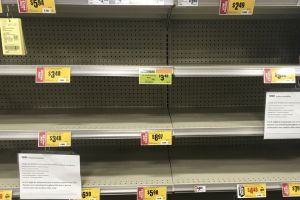
Minor supply chain issues due to the cost of labor, materials, and transportation infrastructure issues are common during most economic downturns. Yet as an economic crisis draws on, there’s a tipping point where it becomes nearly impossible to get goods at a reasonable time and price.
Meanwhile demand for many consumer goods and luxury items continues to dwindle. While the cost of transporting those goods from nations like China becomes increasingly cost-prohibitive.
Eventually, overseas manufacturers will pull the plug on exporting goods. Focusing on their domestic markets to stay afloat. This will lead to massive shortages and/or massive delays in getting consumer goods.
What You Can Do
Take inventory of your essential devices and equipment. You need to be brutally honest in determining the things you need. Then make sure you have a duplicate or parts to repair it.
Most consumer devices aren’t truly essential. In time, you’ll eventually figure out how to replicate them in other ways.
It’s essentials like winter jackets, heaters, flashlights, batteries, and automotive parts that you need to have in stock. It’s these things that will maximize your self-reliance when you need it most!
Failure of Banks and Insurance Corporations
Modern banks have far less liquid capital than they’re worth. During a long-term economic crisis, there will be an inevitable “Run on the Banks” that will cause financial institutions to become insolvent.
This was a serious problem during the Great Depression that only made the problem worse.
When FDR took office, he declared a 4 day bank holiday to restore confidence in the financial system. In 2008 the FDIC rescued several banks and even seized Washington Mutual Bank.
This gives the impression that the Federal Government has the banking system covered for short, and even mid-term bank failures. Yet the financial landscape becomes a slippery slope as a long-term financial crisis drags on. There’s a limit to what the FDIC, US Federal Government, and world banks can do.
What You Can Do
Capping money you have invested in a single ban under the $250,000 FDIC limit is wise during a long-term economic crisis. You should also spread your savings throughout multiple banks just in case one fails.
Keep at least 3 months of income stashed in a safe at home. Keeping barter-worthy items such as excess ammunition, MREs and even fuel could also be wise. If multiple banks fail, the bartering might have more value than money.
Food Supply Insecurity
A prolonged economic crisis will drive up fuel costs while simultaneously impacting farm subsidies. Along with inflation the cost to grow, harvest, and transport food can get insanely high.
Many low-priced staples like milk become prohibitively unprofitable for producers.
During the Great Depression, the price of milk was so low farmers poured it out to try to drive prices higher.
Today the Federal Government provides subsidies to dairy farmers to keep them afloat and control food production costs. Yet these subsidies can evaporate as austerity measures start to fail.
At some point, there’ll be a sharp spike in food prices becomes. When luxury foods like Brussels sprouts, and olive oil, start suddenly going up, staples like eggs, flour, sugar, and bread surge shortly after.
What You Can Do
A staple collection of dry goods, along with a big garden will help you stay self-sufficient. Even when grocery store costs start to skyrocket, you’ll still be able to feed everyone under your roof.
Keeping backyard chickens, dairy goats, and maybe even a few pigs will help. Being able to do things like grow your vegetables and bake your bread also means you have more money available to buy the things you can’t produce yourself.
Government Fails to Respond to Natural Disasters
A prolonged economic crisis can get to the point that the government simply doesn’t have the means to provide aid during a natural disaster. A hurricane, flood, or earthquake affects your area, with little response from government relief organizations.
Even a serious tornado, ice storm, or drought can have its aftereffects magnified during a major financial crisis. Understaffed first responders will struggle to handle tasks that normally would be handled by FEMA.
Utility companies will struggle to restore power and water. There’s also likely to be a food crisis when shipping infrastructure is compromised, and stores don’t have the electricity to maintain refrigeration.
What You Can Do
Be fully informed about the potential natural disasters that can affect your area. Then make a disaster survival plan with fallback contingencies.
This should include a plan for bugging in with a generator and your freshwater supplies. You should also have clear criteria for when it’s time to evacuate or move to a bug-out location.
Consider establishing a plan that coordinates with your neighbors. Helping them understand what they can do to be more self-sufficient reduces the chances of them needing your support in a natural disaster or pool supplies in a dire time!
I want to present you one of the most interesting sites, where you will see new articles daily! www.321gold.com
Predicting the collapse of a country is like reading between the lines of history, economics, and politics. Some nations, however, are walking on thin ice, where even a small additional burden could lead to their downfall. In this article, we’ll explore 10 countries facing severe risks that could put them on the brink of collapse by 2027. Some of these might surprise you.
1. Lebanon: A country where nothing works anymore Once hailed as the “Switzerland of the Middle East,” Lebanon is now in absolute economic chaos. Hyperinflation, currency collapse, and political corruption have brought the state to its knees. Ordinary citizens struggle to secure basic needs like food and fuel. Can Lebanon still be saved, or will it follow the fate of nations that fragmented into smaller entities?
2. Afghanistan: Taliban isolation and hunger Since the Taliban regained power, Afghanistan has plunged into international isolation. Its economy is collapsing, people are starving, and humanitarian organizations cannot meet the overwhelming needs. If the situation doesn’t improve, the state risks fragmentation into territories controlled by armed factions.
3. Haiti: From freedom to a nation ruled by gangs Haiti has been grappling with a crisis for years. With no functioning government, armed gangs dominate cities. Add to that natural disasters like earthquakes and hurricanes, and you have a recipe for complete collapse. Can Haiti ever rise again?
4. Sudan: A nation in perpetual conflict Sudan’s civil war between the army and militias is spiraling into catastrophe. Thousands are dead, millions are displaced, and famine looms large. If the conflict continues, Sudan could disintegrate into smaller regions controlled by local warlords.
5. Venezuela: From riches to rags Home to some of the world’s largest oil reserves, Venezuela has been in freefall for years. Hyperinflation, food shortages, and mass emigration have devastated the nation. Could Nicolás Maduro’s regime fall, or will Venezuela remain stuck in this “frozen collapse” for decades?
6. Myanmar: A coup that crushed hope The 2021 military coup plunged Myanmar into chaos. Protests, uprisings, and ethnic conflicts have become the norm. If the military junta doesn’t relinquish power, the country risks breaking into warring regions.
7. Yemen: A nation where survival is a battle Yemen is the epitome of disaster. Its civil war between Houthi rebels and the internationally recognized government has raged for years. Millions suffer from hunger and disease. If the conflict isn’t resolved, Yemen could vanish as a functioning state altogether.
8. North Korea: Behind the curtain of isolation Kim Jong Un’s regime appears solid, but what if it isn’t? Economic sanctions, famine, and a possible power struggle after his death could lead to an unexpected collapse. If that happens, the chaos could be unimaginable.
9. Pakistan: Battling economic and political storms Pakistan is grappling with an economic crisis deepened by debts and political instability. Extremism, corruption, and worsening relations with neighbors could weaken the country to the point of losing control over its regions.
10. Somalia: A collapse that never ended Somalia has been a failed state for decades. The terrorist group Al-Shabaab still controls large swathes of territory, while the central government remains weak. Without minimal international support, total disintegration seems inevitable.
Why Do Countries Most Of Time Collapse? Normally, the collapse of a state is always the result of a combination of factors:
Economic instability: Hyperinflation, overwhelming debts, or resource shortages.
Political corruption: Weak governments unable to address crises.
Civil conflicts: Wars, ethnic tensions, or regional uprisings.
Climate change: Worsening conditions, natural disasters, and resource depletion.
International isolation: Sanctions or loss of foreign support.
Can Any of These Countries Be Saved? History shows us that even nations on the brink of collapse can change course with the right leadership, international assistance, or societal unity. While rescue is possible, these cases will require far more than just hope.
Which other countries do you think are at risk? Let’s discuss.
Beyond the most vulnerable states, there are also numerous other countries that could face significant challenges if their situations do not improve.
Here’s a broader look at nations where trouble may deepen:
Sri Lanka – Still recovering from its 2022 financial collapse, with inflation and mounting debts remaining major hurdles.
Ethiopia – The Tigray conflict has eased, but ethnic tensions and economic woes could destabilize the country again.
Libya – Political and military division between the east and west prevents the country from restoring order.
Belarus – Lukashenko’s regime relies heavily on Russia, but domestic protests and international isolation are increasing the pressure.
Iran – Sanctions, domestic unrest, and regional tensions could severely threaten the regime’s stability.
Zimbabwe – Chronic corruption, hyperinflation, and authoritarian governance undermine hope for improving living conditions.
Nigeria – Boko Haram violence, economic inequality, and corruption destabilize Africa’s most populous nation.
Democratic Republic of Congo – Ongoing conflicts and mismanagement of natural resources deepen poverty and unrest.
Bangladesh – Climate change and political unrest could pose major risks to this densely populated country.
Eritrea – One of the world’s most closed-off nations, facing poverty, repression, and isolation.
Kazakhstan – Political unrest and tensions with neighbours could affect the stability of this oil-rich country.
Tunisia – Democratic gains are threatened by political crises and economic struggles.
Armenia – Tensions with Azerbaijan over Nagorno-Karabakh continue to jeopardize regional peace.
Papua New Guinea – Violence, poverty, and corruption hinder the country’s potential for economic growth.
Mali – Terrorist attacks and military coups threaten the future of this West African nation.
Honduras – Criminal gangs and corruption create unbearable conditions for its citizens.
Colombia – Despite peace agreements with FARC, violence remains an issue, with new drug cartels gaining strength.
El Salvador – President Bukele faces accusations of authoritarianism, while gang violence remains a constant threat.
Mozambique – Islamic insurgencies in the north and widespread poverty destabilize this country.
Bosnia and Herzegovina – Ethnic tensions and weak political leadership risk undermining the fragile peace.
These countries may not necessarily collapse, but they face serious challenges that could affect their future.
What other nations do you think are at risk? Let’s discuss!
I want to present you one of the most interesting sites, where you will see new articles daily! www.321gold.com
Back in 1949 the world was still recovering from World War II. The Korean War wouldn’t start for another year, but George Orwell was already focused on the dangers of communism and the totalitarianist government it builds. World War II was started by totalitarian governments; but worse than that was how such governments treat the citizens living under their control.
In his book 1984, the government, encapsulated in the persona of “Big Brother,” knew everything about everyone; where they were, what they were doing and even what they were thinking much of the time. This was used to keep control of people to an extreme that even the now defunct Soviet Union couldn’t reach. Yet with modern technology, the reality of such a government could very well be forming around us and we don’t even see it happening.
As we know, the government is actively spying on every one of us. That’s the essence of Edward Snowden’s message, since he left the employ of the NSA. While that spying is intended to help prevent terrorism, we’ve seen some in government be awfully free in their use of that term. One can quickly find themselves labeled as a terrorist if the political winds blow the wrong way.
On top of the NSA, big tech is in cahoots with government in a number of ways, most especially with providing information to law enforcement officers, as they seek to solve crimes. But that same information which is being used for the good of tracking down and convicting criminals can very well be used against the rest of us. After all, any of us can become an instant felon, simply by Congress passing a law making something that has been legal, suddenly illegal.
An excellent case in point is the current push by Democrats to restrict our Second Amendment rights. Should they do that, then millions of law-abiding citizens will suddenly be faced with the option of turning in valuable firearms or hiding them from the government. Will the government hunt down those who haven’t turned in their guns, using the same tools they are currently using to track down criminals? Only time will tell.
So, what can we do to keep the government from having an idea where we are and what we are doing? To start with, we need to understand that the government has multiple means of tracking us, not just one or two. That means we’re going to have to defeat them all, if we expect to protect ourselves from electronic spying.
Here are a few places to start.
Use a Burner Phone
The easiest way for the government to track any of us is through our smartphone. We really don’t have a handle on everything that our phones are doing in the background, while we’re not looking.
Yet there’s nearly constant communication between our phones and the local cell phone tower.
It’s clear that the communications we have through our phones is readily available to the NSA and others.
You can even pay online services to do a little spying on family members, seeing their text messages, who they’ve talked to, what they’ve looked at online and where they’ve been. If you and I can do this, then you can be sure the government can do more.
Convenience Store Owner Threatens Man At Gunpoint After Hitting His 5th Lottery Winner In 3 Months
Shut Off GPS Tracking
One of the most common ways our phones help the government keep track of us is through the phone’s GPS. Google and Apple keep track of our every move through that part of the phone.
If you go to Google Maps and click on your timeline in the menu, it will show you everywhere you’ve been, for the last several years.
This feature alone could put you in danger if you just happen to be in the same place that a crime was committed. While that alone wouldn’t be enough to convict you; it would be enough to make you a suspect.
And that’s just one example of how the GPs could be used against you. What if they want to track you down because it has been reported that you said something against the government; they’d have no trouble tracking you down.
Clean Out Internet Browsing Activity and Cookies
One of the big ways that companies use the internet to keep tabs on us is through our browsing history and the cookies downloaded to our computers by the various websites we visit.
A lot can be learned about who we are and what we do by looking at that. That’s why major corporations invest so much in data mining, looking for people to buy their products.
Haven’t you seen how you can look at something online, then find advertisements for the same sort of product showing up in your Facebook feed and just about any online article you read?
That information is also admissible in court as a means of defining your character. Government prosecutors could build a totally false narrative about you as a terrorist or planning mass murder, backed up by no more than the websites you have visited. Simple curiosity can and will be used against you, perhaps even in a court of law.
Get Rid of Alexa, Siri, and other Voice-recognition Assistants
One of the key elements of Orwell’s imaginary society in 1984 was that the government was tracking what everyone was doing through their television sets.
Yet today, rather than the government having to hide that capability in our TV sets, we buy devices and use them in our homes.
Those devices track everything we do, listening in on our conversations, so that they can “serve us” better.
Employees of those companies have come forth, confessing how employees at big tech companies listen in on people’s private lives.
If they’re doing it, then the government has access to it too. Remember, everything that device does goes over the internet and the NSA is tapped into that thoroughly.
Create Alternative e-Mail Accounts for Memberships
Our online identity is largely tied into our e-mail account.
Pretty much everything you sign up for, from buying dog food to looking at different sites, involves creating an account using that e-mail address. That online presence can lead government agents to look into all areas of your online existence.
The solution is to create multiple ‘personas,’ utilizing them for different things.
In order to do this, you’re going to have to provide false information at some point, as pretty much all e-mail services try to verify that you’re a real person and that you’re who you say you are.
Create Site-specific Passwords
Passwords are the bane of modern existence, with more and more websites requiring a membership and password for access. Even those that don’t are likely to require you setting up an account to buy anything.
The information attached to that account Is just one more source for the government to look at.
Most of us pick a password and use it for as much as we can. The problem with that is that once someone figures out your password, they can try it on a variety of different platforms, trying to access your account and see what you’ve been doing.
Four different products, bought from different vendors, could easily become the parts of a bomb in some investigator’s imagination.
Avoid JavaScript
JavaScript abounds throughout the internet, having been created to make it possible for web pages to be interactive.
Unfortunately, it’s full of security holes, having been created many of the more modern modes of hacking were invented. Today, breaking into JavaScript is considered small potatoes by hackers.
Keep in mind that the government employs hackers too; they’re called “white hat hackers,” and while that term was originally coined in regards to people who were trained in hacking in order to play the “red team” in online security simulations, it’s used for any hacker who does their work as part of “legitimate” business.
Of course, as far as the government is concerned, anything they do is legitimate, regardless of what the law says.
Encrypt e-Mail
We’ve already discussed how the NSA is recording and reading every bit of communications that flows across the internet. That includes your e-mail. They know if you’re making an inquiry about buying a new home, having an online affair or discussing business secrets.
According to Snowden, some of those government employees are looking over people’s shoulders, watching their lives as if it were a live soap opera.
The world’s best code breakers work for the NSA and the majority of the world’s supercomputers are housed in their facilities. So the idea that they can’t break into an encrypted e-mail is ridiculous. Nevertheless, encrypting still makes it harder, meaning that they’d have to have a pretty good reason to bother.
While not perfect, encrypting your e-mail at least protects you from casual view.
Avoid Online, Credit Card and Debit Card Purchases
Probably one of the earliest ways that law enforcement used the benefits of the internet to solve crimes is through tracking credit card use. We’ve all seen cop shows where they tracked a suspect by looking at where they were using their credit card. That’s child’s play for the government today.
Of course, the government isn’t the only one tracking our online purchases, although I don’t think that companies have the ability to get into the records of our credit and debit card usage like the government can.
Either way, it can provide the government with a lot of information that you might not want them to know. Better to use cash and keep your transactions anonymous.
If you’ve got to buy things online, then use prepaid Visa and MasterCard gift cards, not associated with any bank account you have.
You can buy these easily at the checkout in many major stores, in denominations up to $500. That makes it possible to make a lot of purchase anonymously.
Then have the item shipped to an address that can’t be readily traced to you, like a PO box that you rented using a false address.
Don’t Fill Out Profile Data
One of the easiest ways for the government, criminals, companies and just about anyone else has of getting information about any of us is through our online profiles.
Social media has encourages people to live an open life, with everything about them becoming common knowledge. But that information can become dangerous if it gets into the wrong hands.
Save that information, so that you can give it to who you want to, rather than whoever wants it.
While it might not be quite as “neighborly” in the online community, holding that information back could help protect you from the government or from criminals.
One Final Thought
Doing the things I’ve mentioned in this article are likely to have unintended consequences. That is, they’re likely to make you look suspicious to anyone investigating you.
But then, if you haven’t done anything wrong, it really doesn’t matter how suspicious they think you look. They still have to find evidence, not suspicion, in order to take any action against you.
Your ready answer to this suspicion should be that you are protecting yourself from criminals. Even government agencies recommend taking precautions for that reason, so by stating that, you’re throwing the onus back on them. If they don’t like that, it’s just too bad.
WARNING: Watching The Following Video Will Give You Access To Knowledge The Government Does NOT Want You To Know About
by Rich M, From- askaprepper.com
I want to present you one of the most interesting sites, where you will see new articles daily! www.321gold.com
With every market pullback as of late, we are forced to wonder if this is the beginning of the end. Have we entered the period that may someday be referred to as “The Great Reset”? This is the period where after decades of modern monetary theory the world reverts back to the tried and true. Over the years the valuations of many stocks and commodities have gotten out of hand driven higher by financial forces unleashed by monetary policy that has expanded both credit and debt to a level that a decade ago many economists would never have imagined. I want to make it clear this has become a worldwide problem. With all the distortions from things like computer driven trading, dishonest economic data, and stock buybacks it is only logical that at some point in time reality would re-enter the picture and set things right.
This reset can develop in several ways and it will be interesting to watch how this unfolds and the market unravels. What will ultimately be declared the driving force behind its demise will be equally fascinating. During the bull market of the last seven years, it seemed that even bad news was good news in that markets would rally and rise indiscriminately. It often appeared that any indication things were not well was interpreted as proof the Fed and central banks across the world would soon step in to add a little fuel and give the economy a badly needed kick.When it comes to a falling market, however, the market can fall like a stone or in the case of a “realizing market” slowly grind its way downward. The slowly downward and bone grinding action of a realizing market tends to go on forever and a day with no respite.
Most investors have divided into two distinct camps over the last few years with the bears thinking the bulls are delusional and the bulls thinking those constantly heraldingthe coming gloom and doom should pack it up and head home. Of course, each camp has fringe factions that vary in the degree of their convictions. Mega bulls continually point to the upside and how those not in the market will miss great opportunities, while mega bears preach caution, advise risk aversion, and warn of the coming financial Armageddon. It is easy to rationalize why those in power cannot afford to let financial markets to collapse, however, preventing such things is easier said than done. History is filled with examples where greed has guided investors down the path to Bubbleville and always they are encouraged to follow because they are told: “this time it is different.” Sadly, again time will show that it’s not different at all.
Often investor psychology and the behavior they display is based on recent trading patterns. In this case, many investors will react and “buy the dip”. For years this reaction to each pullback has worked and garnered huge profits for many investors, but this trading strategy has the potential to cause them a fair amount of pain. Bulls trying to buy pullbacks and pick market bottoms time after time may soon find that more downside action exists. Ironically more than once I have heard a person talk about how they plan to short this market when it tops, but the fact is they won’t. It is very hard to pick a market top, but if anything they will probably assume the role of buying into a falling market and getting sucked into the vortex well before the fall has stopped.
The term “capitulation” which in market terms means to surrender or give up is often used to mark a top or bottom in markets. It is often important to ask not only who is capitulating, but why. Over the last several years it has been the bears and those who saw every morning a market ready to collapse under its own weight that have ended their day in tears. It is also these same bears with their tightly placed stop-loss orders that have paved much of the path this market has made to higher and higher levels. It will be interesting to see just how many of these beaten up souls still have enough fight inside to ride the markets lower when their time to shine does occur.
If you are bullish and see higher markets ahead even though this move is long in the toothby historical standards it is important to question not only where growth will come from, but also it’s quality. Throughout history, the world has witnessed and undergone many resets. The coming adjustment will come and it will most likely be ugly and often volatile. Market crashes generally are the result of panic and so far what we have seen is more on the level of “minor concern” resulting in a chorus of cries to buy the dip. It is only after the market blows through several key support levels and starts making what some people view as crazy new lows that panic will set in, and by that time it will be too late to escape the carnage.
Convenience Store Owner Threatens Man At Gunpoint After Hitting His 5th Lottery Winner In 3 Months
I want to present you one of the most interesting sites, where you will see new articles daily! www.321gold.com