Gone Viral!All Americans Will Lose Their Home, Income And Power By March 20, 2025- See video!
Have you ever wondered what makes a person snap? What causes a normal, quiet, everyday citizen, loving mother, or doting father to lose it all and fight like a caged animal? What can cause a small village to rise up and rebel against an oppressive police force and start killing them? What is the switch that gets flipped that causes a city to pour two million people into the streets, chanting and demanding to be heard by their government?
Lately it feels more and more as though we are on standing on the edge of some yawning precipice peering over the crest into darkness. What is more troubling to me is that we have been down this path before. The sense of unease is almost palpable to me sometimes; it is more evident if you are paying attention. If you are able to eliminate the white noise of the world for a minute; hit the pause button on the playlist of daily life for a while and look around, listen, you may start to recognize that you too are caught up in events that will soon change all our lives.
For several years I have felt an unsettling sense that we need to be prepared, that life is going to throw us a big, fat, greasy curve ball soon and we better not be caught napping. To try and proactively address that warning voice I started planning and taking steps to prepare my family to be able to weather events in the future. I am certainly not alone in this concern as you can easily see by the tremendous growth of the prepper movement. In the spectrum of probable events, there are a lot of potential scenarios. Natural disasters and emergencies occur every day all over the world, but you have to broaden your gaze and look to current events and history as well. One of the things that I think is a valid potential event to consider is a collapse of our way of life which leads to an authoritarian oppressive government.
Are we reaching a tipping point?
SS soldiers guarding the column of captive Jews in the Warsaw ghetto.
We have seen in recent events, by now almost too numerous to mention, the effects of a rising frustration with the way things are. It isn’t necessary to go into all of the individual reasons, but as a society there are more and more outpourings of frustration on a global scale. There are increasingly tightening restrictions against people. There is a manipulation of markets and the economy. There is a great increase in the loss of freedom and there is a more open antagonism and almost outright animosity by Government towards their people.
Related: Martial Law, Civil War is Coming to America Just Like The Days of Hitler
Governments exist either because they have come to power through force and violence or they have been elected and given power by the people. The force and violence crowd usually have their roots in the military and we like to call them Dictators. There have been a ton of them throughout history; Hitler, Stalin, Mao, Kim Jong iL and now his son, Saddam, Gaddafi, the list goes on and on. Dictators don’t care about the people and usually kill anyone who gets in their way. It is a fact that government has killed more people than any other cause, disease or reason.
The other side of the coin is what is usually called Democracies. I am lumping a lot of governments in here I know, but the democracies are usually elected and formed with the consent of the people with the noble goal of securing rights or protecting the people over whom they govern. Almost without fail however, Democratic Governments eventually do not want to answer to the people and at some point they most certainly will not be told what to do by the people to the point of ignoring the will of the people (for the people’s own good of course). Now these governments that are supposed to secure the liberties of their people are becoming more openly hostile to the same people they have sworn to defend. Funnily enough the democratically elected governments now seem to want to hang on to power with the same methods of force and violence as dictators. How else can you explain arming themselves with ammo, ignoring the constitution, purchasing assault vehicles and preparing to confiscate firearms?
When governments will steal money outright from the citizens in order to pay bills that were not incurred by the people we have a problem. When government spies on its people and uses that information against them punitively we have a problem. When Government uses the force of the military that was supposed to defend the people that was paid for by the people, for the purposes of killing the people, we have a big problem. When someone brings to light crimes by the government and is labeled as the one who is a danger, we have a problem.
The problem is that governments around the world are viewing their people as the problem and there really seems to be only one way throughout history that this is ever rectified. My fear is that we are already set on a course that won’t be changed with laws, great political leaders, or a return to the values of a golden age in time long past.
The Fine Line – The Straw that breaks the camel’s back
The fine line between someone who is a law-abiding citizen and a murderer is one that exists purely in our souls. There is nothing physical that is different from a person who follows the rules and someone who breaks them. The urge to pull the trigger isn’t something you can see and it isn’t a trait to test for, so it must be our own individual sense of right and wrong. Of good and evil.
I know that some will argue that a psychopath is definitely recognizable by character traits and maybe even brainwaves or chemistry. That may be true, but you can be a psychopath (clinically) without ever hurting anyone. By the same token, you can take a life while being perfectly “sane”.
If you hold a knife in your hand, you are just as capable of using that to stab or cut someone as the murderer in the next town, but that thought never enters the mind of an overwhelming majority of people. A baseball bat in your hands can easily be swung with great force connecting it to the back of a skull, but this thought never appears in our heads; that is unless we are forced into a corner. When a person is in desperate fear for their lives, the unspoken rules of right and wrong are broken. The processes that we follow every day are overridden in the cause of rage or self-preservation. What was unthinkable before is now very real, necessary and even righteous with the right circumstances.
When the right buttons are pushed, anyone can lose it. When the fear of dying or of losing someone you love is so overpowering, the “fine line” that has been keeping us sane, law-abiding and good is easily shattered. When this happens, all bets are off.
We as a people, a country are still rather firmly attached on the good side of this line. We have not yet completely been driven to abandon all hope and lash out. We have not yet been so harmed, have not gotten to the point that we have nothing to lose and are ready to lose it, but this may be coming in the future.
Also watch- The most shocking videos in the world! Power Efficiency Guide Will Change Our World Forever
The force and violence that is being used now to quell the dissatisfaction of people globally is increasing. The methods to cease the complaining of the rabble has been relatively minor with some exceptions. Tear gas, rubber bullets, mace and batons only work up to a point though. When the time comes that people can no longer abide, there won’t be enough police to stop them using riot control techniques. The military doesn’t have enough people to stop the entire population unless those people peacefully agree to surrender, so what will they do? Do you believe any government will quietly step down and admit that they are obviously not speaking for the people anymore? No. They will resort to more force and violence and people will die. Either that or you have a coup like they had in Egypt and guess who took over to “restore order”? Yep, the Military.
What will be the inevitable response by the authorities?
The Chinese people who started to revolt against the police in their town did so because the authorities were “placing restrictions on their culture, language and religion”. China is no picnic compared to America and we clearly know they have lived through far worse oppression than we have, but this was the straw that broke the camel’s back for them?
The protests which turned into an estimated two million citizens of Brazil had started simply enough with a protest over a rise in the rates of public transportation.
In America, what will be the trigger that causes people to rise up and say we aren’t going to take this anymore and more importantly what will happen when/if we do?
What will happen if we don’t change the path we are on?
The execution of the last Jew in Vinnytsia, made by an officer of the German Einsatzgruppen
There is a quote that has always struck me as very sad and telling from Aleksandr Solzhenitsyn in his book The Gulag Archipelago. Solzhenitsyn was a Russian who was sentenced to 8 years in a Soviet prison camp for essentially writing things about Stalin that the government didn’t like. During this time in Soviet Russia, to stifle dissent, millions were killed or sent to prison camps. In this passage Solzhenitsyn is talking about regret that everyone felt because they simply went along with this tyranny and didn’t oppose it.
“AND HOW WE BURNED IN THE CAMPS LATER, THINKING: WHAT WOULD THINGS HAVE BEEN LIKE IF EVERY SECURITY OPERATIVE, WHEN HE WENT OUT AT NIGHT TO MAKE AN ARREST, HAD BEEN UNCERTAIN WHETHER HE WOULD RETURN ALIVE AND HAD TO SAY GOOD-BYE TO HIS FAMILY? OR IF, DURING PERIODS OF MASS ARRESTS, AS FOR EXAMPLE IN LENINGRAD, WHEN THEY ARRESTED A QUARTER OF THE ENTIRE CITY, PEOPLE HAD NOT SIMPLY SAT THERE IN THEIR LAIRS, PALING WITH TERROR AT EVERY BANG OF THE DOWNSTAIRS DOOR AND AT EVERY STEP ON THE STAIRCASE, BUT HAD UNDERSTOOD THEY HAD NOTHING LEFT TO LOSE AND HAD BOLDLY SET UP IN THE DOWNSTAIRS HALL AN AMBUSH OF HALF A DOZEN PEOPLE WITH AXES, HAMMERS, POKERS, OR WHATEVER ELSE WAS AT HAND?… THE ORGANS WOULD VERY QUICKLY HAVE SUFFERED A SHORTAGE OF OFFICERS AND TRANSPORT AND, NOTWITHSTANDING ALL OF STALIN’S THIRST, THE CURSED MACHINE WOULD HAVE GROUND TO A HALT! IF…IF…WE DIDN’T LOVE FREEDOM ENOUGH. AND EVEN MORE – WE HAD NO AWARENESS OF THE REAL SITUATION…. WE PURELY AND SIMPLY DESERVED EVERYTHING THAT HAPPENED AFTERWARD.” – ALEKSANDR SOLZHENITSYN
Will this be our fate too? Will we slowly be conditioned to accept atrocities like this and to be completely defanged so that we can be herded into camps without so much as a whimper as well? That’s crazy you say! Is it? Right now, our government is hunting down someone who simply exposed how they (government) were illegally spying on all of us. Our government is buying arms and stockpiling weapons for use domestically not in some war. Our government has the IRS actively harassing a single political/opposition party. Our government has shown that they will lock down a town and go door to door while making the citizens stay cowered inside. Our government has stated that they can imprison anyone without cause for an indefinite amount of time.
Can you seriously argue that we aren’t headed down the same path as others have in our not too distant past?
This is not a call to armed Revolution, but I do think we should all be very wary of this course we are on and the echos of history. We should not be silent in the face of increasing oppression. We should not simply go along quietly because of the fear that we may get in trouble, or worse that we believe the government is only looking out for our best interests. You only need to look at the people in Poland who quietly went into the Warsaw ghettos. You don’t have to look any further than the Holocaust to see what quietly going along will get you.
This is not a fate that I will be bringing on my family.
Warning: This video may be sensitive to some viewers.
If you have any dissatisfaction with my content, you can tell me here and I will fix the problem, because I care about every reader and even more so about your opinion!
I want to present you one of the most interesting sites, where you will see new articles daily! www.321gold.com
If it isn’t already, surviving economic collapse should be at the forefront of your mind. And with good reason; the pitiable state of the economy has sparked fear that the world is to face an even larger economic collapse in the coming year.
The recent global stock market turmoil has left investors panicked and worried. This is nothing compared to what we (and our ancestors) have seen in the past. Here we take a look at the most devastating financial crises that wreaked havoc through modern history.
The financial markets reflect the irrationality, optimism, and panic of market participants. Sometimes extreme optimism causes asset prices to disconnect from the reality, only to fall dramatically when the bubble bursts. Examples include the Tulip Mania (1637) and the South Sea Bubble (1720).
These are the top 10 most devastating financial crises:
10- Argentine economic crisis, 1999
Much like other Latin American nations, the Argentine economy was hit hard by the Latin American debt crisis in the 1980s. Its forex reserves were running low. The rampant corruption, sky high inflation, military dictatorship, and the Falklands debacle drove the Argentine economy to the verge of collapse.
The steep devaluation of the Brazilian currency in 1999 hurt Argentine exports. Soon the Argentine economy was in full-blown recession that lasted three years. Following the dramatic run on banks, the government froze everyone’s bank accounts. Violent protests erupted all over the country. In the absence of cash, people bartered for goods. Two consecutive governments failed to bring the economy out of recession. It took Argentina three years to recover from the crisis.
9- Russian financial crisis, 1998
Five years prior to the financial crisis, Russia issued GKOs – inflation-free treasury bills – to fund its budget deficit. The GKOs attracted a huge number of foreign investors because of high interest rates. The government was using proceeds from GKO sales to pay off interest on existing debts.
But the Russian economy continued to struggle due to corruption, political instability, and lack of economic reforms. The falling oil prices also hit the Russian economy hard. The government owned more than $12 billion in unpaid wages to employees. In 1997, Moscow tried to raise more money by selling GKOs with interest rates of up to 200%!
Eventually, investors lost confidence in the Russian economy, selling the rubles and other Russian securities en masse. The markets tanked more than 60%. Many banks vanished within weeks. The Russian central bank used its forex reserves to stabilize the ruble, but couldn’t. Even an IMF loan proved ineffective. Russia emerged from the crisis when oil prices started rising in 1999.
8- The 1987 crisis
On October 19, 1987, the US stocks tumbled 22.6% in what is now known as Black Monday. No one is entirely sure what caused the Black Monday, but it wiped out hundreds of billions of dollars from the stock markets. By the end of October 1987, the Australian stocks fell 42%, Hong Kong stocks went down 46%, and the UK stocks fell 26.4%.
Some believe the Black Monday crash was caused by the growing influence of computers on the Wall Street. Others blamed monetary policy and inflation. Following the 1987 crisis, many of American’s leading savings & loan entities such as American Savings and Loan, Gibraltar Savings and Loan, and MCorp collapsed.
7- German hyperinflation, 1918-24
The German hyperinflation was not as bad as the Zimbabwe hyperinflation, but it was one of the most devastating financial crises in history. After the First World War, the ‘victors’ blamed Germany for starting the war. They demanded retributions for the cost of war. Whatever land, precious metals, and other assets Germany had wasn’t enough to cover the cost of war.
So, Germany started printing Mark like never before. The exchange rate skyrocketed from 4 German Marks per dollar in 1914 to 1 trillion Marks per dollar in 1923. Inflation was running high. Many countries accused Germany of deliberating sabotaging its economy to avoid the financial retributions of war.
The country tried to control the hyperinflation in 1923 by introducing a new currency called the Rentenmark. It destroyed the middle-class and paved the way for National Socialism in Germany.
6- Asian financial crisis, 1997
During the early 1990s, the Asian Tigers – Thailand, South Korea, Hong Kong, Malaysia, Singapore, and Indonesia – had become the hottest investment destinations. Developed countries were pouring billions of dollars into the region. Asset prices shot through the roof. Some of these countries were clocking annual GDP growth rates of above 12%.
Favorable exchange rates made their exports less competitive. Amid extreme optimism, investors failed to notice that the Asian Tigers were also running huge fiscal deficits. The Asian Tigers began facing fierce competition from China in the export market in 1996. The massive debts and falling exports hurt these economies. Panicked investors from developed countries withdrew credit. The asset prices started falling, leading to massive debt defaults.
The crisis began in Thailand and quickly spread to other countries. Regional currencies fell dramatically against the dollar, making dollar-denominated borrowings even more expensive. The International Monetary Fund launched a massive bailout program to help Asian countries bring their economies back on track.
5- OPEC oil crisis, 1973
The United States was sending arms and supplies to Israel during the Fourth Arab-Israel War. The OPEC nations retaliated by stopping the export of oil to the US and its allies. As a result, oil prices jumped significantly in developed countries.
Inflation was running high and the economic growth had stagnated. The NYSE lost $97 billion in value within six weeks. Japanese automakers started selling smaller and more fuel-efficient cars to compete with the American gas-guzzlers.
The oil embargo lasted only five months. But the Arab nations realized the power of oil in the global economy. The US had to enact several regulations to conserve oil. In 1977, the US government created the Department of Energy to build a strategic petroleum reserve.
4- Japan’s Lost Decade, 1991-2000
The Japanese economy witnessed a strong growth after the Second World War, thanks to the country’s high savings rate and sheer hard work. By the 1980s, Japan had become the world’s second largest economy behind the US. Japan was the world’s largest exporter of goods.
The booming economy and record-low interest rates brought prosperity. Consequently, the stock market and real estate valuations shot through the roof in late 1980s. At one point, the Japanese Imperial Palace was worth more than the entire real estate in California. It all ended in 1990s when the speculative bubble burst.
In the 1990s, the Japanese stock market lost more than $2.2 trillion in value while the real estate market declined by more than $8 trillion from the peak. It was a slow rather than a sudden decline. Borrowers failed to repay debts backed by speculative assets. The stock market and real estate bubble burst led to a decade of low growth as the economy stalled. The country is still struggling with low growth and deflation.
3- Dot-com bubble, 2000
Between October 1990 and March 2000, the S&P 500 index gained 417%. Investors had just realized the potential of the Internet Age. The rally was fueled by tech stocks. Even many non-tech companies were adding ‘.com’ to their names to attract investors’ money. In March 2000, the NASDAQ reached a peak market capitalization of $6.6 trillion. Most of the technology companies didn’t have a viable business model back then.
The NASDAQ started declining in March 2000. By 2002, investors lost an estimated $5 trillion as hundreds of technology companies vanished into thin air.
2- The Great Recession, 2007-2009
It was the most devastating financial crisis since the 1929 Great Depression. On the back of low interest rates, excessive leverage, and subprime mortgages, the US housing market was on steroids between 2002 and 2007. People with low or unstable income were able to buy exorbitantly expensive houses with zero down payments.
It was only a matter of time before the borrowers started defaulting on their loans. The S&P 500 index plunged 56.8% between October 2007 and March 2009. It wiped out more than $6.5 trillion from the US stock markets. The effects were felt all over the world. Several financial services giants including Lehman Brothers, Washington Mutual, and Bear Stearns collapsed during the Great Recession. The US government launched unprecedented bailouts to revive the economy.
1- The Great Depression, 1929
The Great Depression was the most devastating financial crisis in modern history. Prior to the 1929 crash, American experts and economists predicted that the country had entered an era of ‘permanent prosperity.’ People were borrowing money to invest in the booming stock market. Countless middle-class people had turned millionaires.
Investors panicked when the government raised interest rates. On October 29, 1929, investors lost more than $10 billion ($95 billion adjusted for inflation). Within a week, the stock market had lost about $30 billion in value, which was even more than what America had spent on the First World War.
Between 1929 and 1932, the US stocks lost 86% of their value. The Great Depression lasted about a decade. More than one-third of American banks collapsed during the crisis. In 1933, the US government established the Federal Deposit Insurance Corporation (FDIC) to restore people’s faith in the American banking system.
Millions lost their jobs. Unemployment rate reached 25% in 1933. Billionaires went bankrupt. The stock market did not reach its 1929 peak again until 1954.
I want to present you one of the most interesting sites, where you will see new articles daily! www.321gold.com
So the old adage goes anyway, and for the prepper – the one who’s keeping abreast of current events – cash is one of the last man-made means of protection that he or she has against governments that have grown to a degree of power that they never had before.
The Dangers of a Cashless Society
There are two predominant dangers that come with a cashless society, and just about every negative that you can think of due to such will fall into one of these two groups:
Denial of purchasing power
A complete loss of anonymity
Denial of Purchasing Power
A cashless society is a controlled society. If everything must go through an online banking or credit card process, then you have just lost virtually all control over what you buy.
Anything that is not politically sanctioned(guns, ammo, body armor, helmets, particular books, particular website premium subscriptions, political donations, etc.) could very easily be vaporized overnight.
This, of course, would drive the makers and holders of such products into a black market to barter their goods, and this in turn would be responded to by the use of overwhelming government force. This will come in the form of Stryker vehicles, concussion grenades, snipers, and men with automatic rifles and body armor.
Don’t believe me? Read FA Hayek’s The Road to Serfdom. Totalitarian governments must resort to force simply for the sole reason that people will naturally refuse to comply with widespread theft of their own goods. This force will only continue to grow in its usage.
Totalitarians do not accept blame for their own economical failures. The state is the end of all things to them, and as such, the end justifies the means – no matter how terrifying such a means may be.
A Complete Loss of Anonymity
Once cash is abolished everywhere, your attempts at any form of anonymity will be destroyed.
You already have an amazing amount of data that has been collected from you from your Internet search history, GPS data, voting history, bank statements, credit card statements, phone data, and a host of other publicly available information that easily allows people to deduce information from you.
And where humans fail, algorithms thrive. I have a hobby interest in algorithm creation (particularly multiple linear regression analysis) and have used it within my healthcare job as a means of predicting patient attendance rather accurately on any given day. I’ve also used them to (somewhat less accurately) predict when a patient was going to have episodes of heart block.
Algorithms are a powerful tool, and the more data you feed them, the stronger they get. With the amount of data that has been collected on you already, the government may be able to make a much stronger prediction about who you are, what you believe, and what you possess than you would’ve ever thought possible.
Just think about what a cashless society would mean for the following purchases:
Medicine – The government can now invade your medical privacy to see what meds you need to live as well as know what could either improve or hamper your condition. For those who don’t believe that this is a concern, just keep in mind that it wasn’t that long ago that the US military was warning its soldiers against getting genetic testing to determine their family tree. Why? Because it was deemed to be a security risk. What do they know here that we don’t?
Food – Algorithms can easily predict when you are buying much more than what you could eat within a particular span of time. This then means that food stores can be predicted and located. Come disaster time, your house could easily be one of the first that is targeted for “hoarding”. And what happens if it’s determined that those with large food stores are likely to be “domestic terrorists”?
Firearms and Body Armor – This is the low-hanging fruit here. Weapons, ammunition, body armor – they could all be easily tracked (and later confiscated). Buying “too much” of one particular product may cause red flags to be attached to your file, and you could very easily end up with a visit from an alphabet agency full of men carrying what is now a felony for you to own.
Ham Radios – There already seems to be an attack against ham radio users as the government has realized that this is the route that many fearing censorship/silencing are turning toward. If you can shut down all communication other than what is government sanctioned, you have effectively silenced free speech.
Media – Do you like to watch documentaries that may be labeled as conspiracy theories? Is it that hard to imagine a “misinformation tax” to discourage Americans from imbibing in certain forms of media? Why not? We’ve already seen the “death by a thousand cuts” approach being used with firearms so that the argument can be made that “no, you can have a gun, but you just have to fill out these fifty forms, pay a $4000 fee, and have a license. See? There’s no infringement whatsoever.”
To think that the same idea couldn’t be applied to the news commentators that you like to listen to is naive.
Here are some arguments that will be used for a cashless society:
Physical Money Shortages
Throughout 2020 we were told that there was a coin shortage throughout the U.S.
As a result, retailers either quit giving coin change back or strongly discouraged customers from asking for it.
Kroger actually resorted to either giving you back your money in the form of credit vouchers (to that particular store of course) or by donating the change that they owed you to charity.
Control Over Dangerous and Illegal Purchases
In what can only be viewed as an incredibly ironic wordsmithing, we will be told that one of the benefits to a cashless society is that we can finally rein in purchases that are deemed by the government to be dangerous to the public.
Guns, ammunition, freedom-oriented books (“radical terrorist recruiting material”), and the like will be argued against so that we can keep our society safe. Notice that there is always an emphasis on safety throughout this entire process.
A Fomite of Disease
Once again, 2020 set the stage here. Cash purchases plummeted worldwide, with credit cards filling in the void as people began to avoid any and all cash purchases with the hopes of not getting themselves sick.
This was a talking point spouted throughout the mainstream media in 2020 and will continue to be used in the future as the push for the abolition of cash continues.
Cost of Creation Outweighs the Actual Value of Money
We see this already with the US penny. It actually costs 2.41₵ to produce a single penny.
While our government currently has no problem with making fiscally irresponsible decisions, when it finally does come around to deciding that “you know what, pennies aren’t worth it” – or any other form of cash for that matter – there will be nobody that will argue against them.
This decision will be portrayed as a means of reducing wasteful spending, and anyone who argues against this given reasoning for the abolition of cash will be labeled as an idiot who can’t do proper math.
Less Risk of Theft
We don’t often hear this argument being made currently, but it is out there.
The argument goes that if you’re mugged while you’re carrying $300 in cash, you simply lose all of your money.
However, if you’re mugged and all you have on you is your credit card, then you can quickly call the credit card company, cancel your card, and be reimbursed for any disputed charges that were made in the interim.
What Can We Do to Fight This Process?
While I do believe that a cashless society is inevitable, I do think that there are things we can do to fight against it and to slow it down.
Here is what we can do as freedom and privacy-loving Americans.
#1. You Need to Make Friends with Like-Minded People Now
I used to always blow off this idea. It wasn’t until I began talking with Forest of Prepper Net that I began to see the light on this issue. If you don’t have like-minded friends, you’re going to be up a creek without a paddle when a cashless society hits.
You need to know who has what skills, who has what goods, who can get what, and where their sympathies lie. Perhaps this is more of a cashless society survival skill, but nevertheless, refusal to comply is still a means of fighting against a cashless society.
And this isn’t just refusal to comply based on principal. This is refusal to comply because to do otherwise would mean certain death. When you’re not allowed into a store to buy food and other necessary goods for your family because you refuse to use Fedcoins for purchase or refuse to show a vaccination card you better be dang sure that you have some alternate means of getting what you need to live.
History has proven such. Read the diary of Anne Frank. Had Otto Frank (her father) not had connections with like-minded (this is key) people throughout his neighborhood well prior to his going into hiding with his family, they would’ve died well before the Nazis came and took them away.
Listen to what Good Patriot out of Texas has to say in her Fighting Back videos on Telegram. She’s echoing this same thought process. You need to make groupings of people who can work together to combat this evil.
#2. Develop Some Means of Production
Both Ayn Rand and Adam Smith harped on the fact that production is what equals true wealth. Whether it’s learning how to raise livestock, how to work with leather, how to tan hides, you need to learn some means of production so that you can still produce wealth when cash is taken from you.
You still have to eat. You still have to put bread on the table. And there are going to be others out there who have principles and love logic who will be of the same mind as you. They are going to want to trade for supplies. Barter will come back in full force. You’ll need to have some means of producing something of value so that you can get what you need.
#3. Invest in Precious Metals
Robert Kiyosaki harps upon this in his new book, Fake, the reason being, that precious metals have intrinsic value. They’ve been used as a form of money for roughly 6,000 years now, and they’re not going to stop being a store of value anytime soon. Within a barter society, this may be one of your best stores of wealth.
On top of this, over 40% of the US dollar supply has been printed within the past year alone. Every other economist you see is screaming about the signs of inflation. The U.S. dollar is about to collapse. There is no longer any denying it. Inflation has already risen drastically and will only continue to grow worse. You need to begin doing something to protect your wealth from inflation.
Precious metals are part of the solution.
#4. Start Using Masked Payments
If you don’t have one already, you need to set up a Privacy.com account. This is a form of masked debit card that will help to keep your purchases anonymous. Yes, this is a form of cashless payment, but it is still a way to fight against such a monster.
Provided that money is flowing out of your account but nobody can tell who you just bought from or what you bought, you’ll be much safer in your transaction privacy.
#5. Refuse to Cater to Businesses that Don’t Permit Cash Transactions
If you tug on their purse strings, they eventually change their mind. I’m sorry, but when good compromises with evil, evil wins. Do what you can to avoid these businesses like the plague, and then let them know why you’re avoiding them.
I used to carry around business cards detailing why I wouldn’t support businesses with ‘’no gun’’ stickers on the front doors. I’ve since ran out. I think that such a business card for businesses that don’t permit cash transactions would be an easy way to voice one’s displeasure as well.
Here’s a sample card template:
“I consider your refusal to accept cash as un-American, a forced invasion of my privacy, and a totalitarian tool. As such, I will cease from doing any business with you for the near future and will be spending my money at your competitors instead.”
This is similar to the language that I used within my Second Amendment business cards. I bought them easily off of Vistaprint (around 500 for $20 or so) and considered the money worth every penny.
#6. Learn How to Grow Your Own Food
There’s already a movement afoot within the U.S. to keep certain types of people out of grocery stores. Vaccination papers are beginning to be asked for before one gains access to certain venues or hotel chains. It won’t be long until cashless payments are the only means of accessing even groceries.
Because of this, I highly recommend that you learn how to grow most of your own food, and begin learning now. Gardening has quite a learning curve and is nowhere near as easy as Michael Bloomberg would have you believe. You need to ensure that your family can eat, and gardening is a great part of that process.
Final Thoughts
A cashless society truly is a scary world. Picture everything that you’ve read about in history books within other totalitarian regimes, and you’ll get a taste of what is to come. I implore you to do something now to protect yourself against the rolling stone that is coming down the mountain right for you.
If you follow the above advice, you’ll help to ease the blow. And there’s no doubt about it – it will be a smack in the face. But we can’t just sit back and do nothing as privacy dies a quiet death inside what was once the freest nation on Earth.
If you’ve found other ways to combat a cashless society that we did not cover within this article, by all means, please let us and others know within the comments. This is about helping our fellow man, and as much input is needed as possible.
Gone Viral! The most shocking videos in the world… 7 Hidden Signs That Martial Law Will Be Declared
Many of these signs point to an increased risk of the government preparing to declare martial law.
The video below will shock you because you will be among the first to watching this secret!
I want to present you one of the most interesting sites, where you will see new articles daily! www.321gold.com
It’s one or two years after an EMP attack and you are safely tucked away in your retreat somewhere in the middle of nowhere. Your storage foods have mostly been used and your high tech electronics is useless. The really bad stuff is mostly past. Now it’s try to stay fed and alive and pray that civilization as you know it is coming back. You’re going to have to work your environment to live. Ever wonder what life might be like? What would it really be like to have no running water, electricity, sewer, newspaper or Internet? No supermarket or fire department close at hand?
I have a good imagination but I decided to talk to someone who would know first hand what it was like: my mother. She grew up on a homestead in the middle of Montana during the 1920s and 1930s. It was a two room Cottonwood cabin with the nearest neighbor three miles away. She was oldest at 9, so she was in charge of her brother and sister. This was her reality; I feel there are lessons here for the rest of us.
There was a Majestic stove that used wood and coal. The first person up at four thirty A.M., usually her father, would start the fire for breakfast. It was a comforting start to the day but your feet would get cold when you got out of bed.
A crosscut saw and axe was used to cut wood for the stove and after that experience, you got pretty stingy with the firewood because you know what it takes to replace it. The old timers say that it warms you when you cut it, when you split it, and again when you burn it. The homes that were typical on homesteads and ranches of the era were smaller with lower ceilings than modern houses just so they could be heated easier. The saw and axe were not tools to try hurrying with. You set a steady pace and maintained it. A man in a hurry with an axe may loose some toes or worse. One side effect of the saw and axe use is that you are continuously hungry and will consume a huge amount of food. Lights in the cabin were old fashioned kerosene lamps. It was the kid’s job to trim the wicks, clean the chimneys and refill the reservoirs.
The privy was downhill from the house next to the corral and there was no toilet paper. Old newspaper, catalogs or magazines were used and in the summer a pan of barely warm water was there for hygiene. During a dark night, blizzard, or brown out from a dust storm, you followed the corral poles-no flashlights.
There were two springs close to the house that ran clear, clean, and cold water. The one right next to it was a “soft” water spring. It was great for washing clothes and felt smooth, almost slick, on your skin. If you drank from it, it would clean you out just as effectively as it cleaned clothes. Not all clean water is equal.
The second spring was a half mile from the cabin and it was cold, clear, and tasted wonderful. The spring itself was deep – an eight foot corral pole never hit bottom- and flowed through the year. It was from here that the kids would fill two barrels on a heavy duty sled with water for the house and the animals. They would lead the old white horse that was hitched to the sledge back to the buildings and distribute the water for people and animals. In the summer, they made two trips in the morning and maybe a third in the evening. In the winter, one trip in the morning and one in the evening. They did this alone.
Breakfast was a big meal because they’re going to be working hard. Usually there would be homemade sausage, eggs and either cornmeal mush or oatmeal. More food was prepared than what was going to be eaten right then. The extra food was left on the table under a dish towel and eaten as wanted during the day. When evening meal was cooked, any leftovers were reheated. The oatmeal or the mush was sliced and fried for supper. It was served with butter, syrup, honey or molasses.
The homemade sausage was from a quarter or half a hog. The grinder was a small kitchen grinder that clamped on the edge of a table and everybody took turns cranking. When all the hog had been ground, the sausage mix was added and kneaded in by hand. Then it was immediately fried into patties. The patties were placed, layer by layer, into a stone crock and covered with the rendered sausage grease. The patties were reheated as needed. The grease was used for gravies as well as re-cooking the patties. Occasionally a fresh slice of bread would be slathered with a layer of sausage grease and a large slice of fresh onion would top it off for quick sandwich. Nothing was wasted.
Some of their protein came from dried fish or beef. Usually this had to be soaked to remove the excess salt or lye. Then it was boiled. Leftovers would go into hash, fish patties, or potato cakes.
The kitchen garden ran mostly to root crops. Onion, turnip, rutabaga, potato and radishes grew under chicken wire. Rhubarb was canned for use as a winter tonic to stave off scurvy. Lettuce, corn, and other above ground crops suffered from deer, rats, and gumbo clay soil. Surprisingly, cabbage did well. The winter squash didn’t do much, only 2 or 3 gourds. Grasshoppers were controlled by the chickens and turkeys. There was endless hoeing.
Washing clothes required heating water on the stove, pouring it into three galvanized wash tubs-one for the homemade lye soap and scrub board, the other two for rinsing. Clothes were rinsed and wrung out by hand, then hung on a wire to dry in the air. Your hands became red and raw, your arms and shoulders sore beyond belief by the end of the wash. Wet clothing, especially wool, is heavy and the gray scum from the soap was hard to get out of the clothes.
Personal baths were in a galvanized wash tub screened by a sheet. In the winter it was difficult to haul, heat and handle the water so baths weren’t done often. Most people would do sponge baths.Everybody worked including the kids. There were always more chores to be done than time in the day. It wasn’t just this one family; it was the neighbors as well. You were judged first and foremost by your work ethic and then your honesty. This was critical because if you were found wanting in either department, the extra jobs that might pay cash money, a quarter of beef, hog or mutton would not be available. Further, the cooperation with your neighbors was the only assurance that if you needed help, you would get help. Nobody in the community could get by strictly on their own. A few tried. When they left, nobody missed them. You didn’t have to like someone to cooperate and work with him or her.
Several times a year people would get together for organized activities: barn raising, butcher bee, harvest, roofing, dance, or picnics. There were lots of picnics, usually in a creek bottom with cottonwoods for shade or sometimes at the church. Always, the women would have tables groaning with food, full coffee pots and, if they were lucky, maybe some lemonade. (Lemons were expensive and scarce) After the work (even for picnics, there was usually a project to be done first) came the socializing. Many times people would bring bedding and sleep out overnight, returning home the next day.
A half dozen families would get together for a butcher bee in the cold days of late fall. Cows were slaughtered first, then pigs, mutton, and finally chickens. Blood from some of the animals was collected in milk pails, kept warm on a stove to halt coagulation and salt added. Then it was canned for later use in blood dumplings, sausage or pudding. The hides were salted for later tanning; the feathers from the fowl were held for cleaning and used in pillows or mattresses. The skinned quarters of the animals would be dipped into cold salt brine and hung to finish cooling out so they could be taken home safely for processing. Nothing went to waste.
The most feared occurrence in the area was fire. If it got started, it wasn’t going out until it burned itself out. People could and did loose everything. The most used weapon was the .22 single shot Winchester with .22 shorts. It was used to take the heads off pheasant, quail, rabbit and ducks. If you held low, the low powered round didn’t tear up the meat. The shooters, usually the kids, quickly learned sight picture and trigger control although they never heard those terms. If you took five rounds of ammunition, you better bring back the ammunition or a critter for the pot for each round expended. It was also a lot quieter and less expensive [in those days] than the .22 Long Rifle cartridges.
If you are trying to maintain a low profile, the odor of freshly baked bread can be detected in excess of three miles on a calm day. Especially by kids.
Twice a year the cabin was emptied of everything. The walls, floors, and ceilings were scrubbed with lye soap and a bristle brush. All the belongings were also cleaned before they came back into the house. This was pest control and it was needed until DDT became available. Bedbugs, lice, ticks and other creepy crawlies were a fact of life and were controlled by brute force. Failure to do so left you in misery and maybe ill.
Foods were stored in bug proof containers. The most popular was fifteen pound metal coffee cans with tight lids. These were for day to day use in the kitchen. (I still have one. It’s a family heirloom.) The next were barrels to hold the bulk foods like flour, sugar, corn meal, and rice. Everything was sealed or the vermin would get to it. There was always at least one, preferably two, months of food on hand. If the fall cash allowed, they would stock up for the entire winter before the first snowfall.
The closest thing to a cooler was a metal box in the kitchen floor. It had a very tight lid and was used to store milk, eggs and butter for a day or two. Butter was heavily salted on the outside to keep it from going rancid or melting. Buttermilk, cottage cheese and regular cheese was made from raw milk after collecting for a day or two. The box was relatively cool in the summer and did not freeze in the winter.
Mice and rats love humanity because we keep our environment warm and tend to be sloppy with food they like. Snakes love rats and mice so they were always around. If the kids were going to play outside, they would police the area with a hoe and a shovel. After killing and disposing of the rattlesnakes- there was always at least one-then they could play for a while in reasonable safety.
The mice and rats were controlled by traps, rocks from sling shots, cats and coyotes. The cats had a hard and usually short life because of the coyotes. The coyotes were barely controlled and seemed to be able to smell firearms at a distance. There were people who hunted the never-ending numbers for the bounty.
After chores were done, kid’s active imagination was used in their play. They didn’t have a lot of toys. There were a couple of dolls for the girls, a pocket knife and some marbles for the boy, and a whole lot of empty to fill. Their father’s beef calves were pretty gentle by the time they were sold at market – the kids rode them regularly. (Not a much fat on those calves but a lot of muscle.) They would look for arrow heads, lizards, and wild flowers. Chokecherry, buffalo berry, gooseberry and currants were picked for jelly and syrups. Sometimes the kids made chokecherry wine.
On a hot summer day in the afternoon, the shade on the east side of the house was treasured and the east wind, if it came, even more so. Adults hated hailstorms because of the destruction, kids loved them because they could collect the hail and make ice cream.
Childbirth was usually handled at a neighbor’s house with a midwife if you were lucky. If you got sick you were treated with ginger tea, honey, chicken soup or sulphur and molasses. Castor oil was used regularly as well. Wounds were cleaned with soap and disinfected with whisky. Mustard based poultices were often used for a variety of ills. Turpentine, mustard and lard was one that was applied to the chest for pneumonia or a hacking cough.
Contact with the outside world was an occasional trip to town for supplies using a wagon and team. A battery operated radio was used very sparingly in the evenings. A rechargeable car battery was used for power. School was a six mile walk one way and you brought your own lunch. One school teacher regularly put potatoes on the stove to bake and shared them with the kids. She was very well thought of by the kids and the parents.
These people were used to a limited amount of social interaction. They were used to no television, radio, or outside entertainment. They were used to having only three or four books. A fiddler or guitar player for a picnic or a dance was a wonderful thing to be enjoyed. Church was a social occasion as well as religious. The church ladies and their butter and egg money allowed most rural churches to be built and to prosper.
The men were required to do the heavy work but the ladies made it come together. The civilizing of the west sprang from these roots. Some of those ladies had spines of steel. They needed it. That’s a partial story of the homestead years. People were very independent, stubborn and strong but still needed the community and access to the technology of the outside world for salt, sugar, flour, spices, chicken feed, cloth, kerosene for the lights and of course, coffee. There are many more things I could list. Could they have found an alternative if something was unavailable? Maybe. How would you get salt or nitrates in Montana without importing? Does anyone know how to make kerosene? Coffee would be valued like gold. Roasted grain or chicory just didn’t cut it.
I don’t want to discourage people trying to prepare but rather to point out that generalized and practical knowledge along with a cooperative community is still needed for long term survival. Whatever shortcomings you may have, if you are part of a community, it is much more likely to be covered. The described community in this article was at least twenty to thirty miles across and included many farms and ranches as well as the town. Who your neighbors are, what type of people they are, and your relationship to them is one of the more important things to consider.
Were there fights, disagreements and other unpleasantness? Absolutely. Some of it was handled by neighbors, a minister or the sheriff. Some bad feelings lasted a lifetime. There were some people that were really bad by any standard and they were either the sheriff’s problem or they got sorted out by one of their prospective victims. These homesteaders had a rough life but they felt they had a great life and their way of life was shared by everyone they knew. They never went hungry, had great daylong picnics with the neighbors, and knew everyone personally within twenty miles. Every bit of pleasure or joy was treasured like a jewel since it was usually found in a sea of hard work. They worked hard, played hard and loved well. In our cushy life, we have many more “things” and “conveniences” than they ever did, but we lack the connection they had with their environment and community.
The biggest concern for our future: What happens if an event such as a solar flare, EMP, or a plague takes our society farther back than the early 1900s by wiping out our technology base. Consider the relatively bucolic scene just described and then add in some true post-apocalyptic hard cases. Some of the science fiction stories suddenly get much more realistic and scary. A comment out of a Star Trek scene comes to mind “In the fight between good and evil, good must be very, very good.”
Consider what kind of supplies might not be available at any cost just because there is no longer a manufacturing base or because there is no supply chain. In the 1900s they had the railroads as a lifeline from the industrial east.
One of the greatest advantages we have is access to a huge amount of information about our world, how things work and everything in our lives. We need to be smart enough to learn/understand as much as possible and store references for all the rest. Some of us don’t sleep well at night as we are well aware of how fragile our society and technological infrastructure is. Trying to live the homesteader’s life would be very painful for most of us. I would prefer not to. I hope and pray it doesn’t ever come to that. How long would it take us to rebuild the tools for recovery to the early 1900 levels? Beans? There was almost always a pot of beans on the stove in the winter time. Chickens and a couple of milk cows provided needed food to balance the larder. They could not have supported a growing family without these two resources.
I want to present you one of the most interesting sites, where you will see new articles daily! www.321gold.com
When you put your money in the bank, you assume it’s going to be safe. Everything about the average bank branch is designed to make it look like a secure place to keep money.
There are cameras, security screens in front of the tellers and maybe even armed guards. We know from movies that bank vaults have heavy steel doors with elaborate locks, and safe deposit boxes show us miniature versions of that.
All this is just the physical security that stops thieves walking in and helping themselves to cash. On top of that there are laws and government schemes designed to protect savers if the bank itself runs into problems.
Your main protection against bank failures is the Federal Deposit Insurance Corporation (FDIC), which was set up in 1933. During the Great Depression over a third of US banks failed, and many people lost everything they’d saved.
FDIC’s goal was to make sure that, in future bank failures, even if people lost money they wouldn’t be completely wiped out.
The way it works is that if a bank collapses, everyone who didn’t manage to get their money out of it on its way down will have their lost funds replaced by FDIC, up to a maximum of $250,000.
That’s actually fairly generous; in the UK, which has a similar scheme, the guarantee only covers up to £85,000 ($108,000).
It doesn’t cover everything, however, and if you’re lucky enough to have more than $250,000 saved, you could still lose everything above the protected amount.
If the existence of FDIC has persuaded you that bank deposits are well protected, here’s something you might find disturbing. 2023 was the biggest ever year for bank failures. Starting with the March collapse of Silicon Valley Bank, five financial institutions that held more than half a trillion dollars between them went under, and many people lost a lot of money.
FDIC paid out just $16.3 billion in compensation, meaning less than 3% of those banks’ assets were covered by the scheme. Bank failures are a real danger, and do you want to bet your savings on this year being any better?
We’re coming up to what could be the ugliest and most destructive presidential election in history, with the economy still fragile and the president taking some dangerous decisions in an attempt to boost his fading poll ratings.
There’s a high risk this year will be worse than last. If you have savings you need to make sure they’re protected. Here’s how to do it:
Pick the Right Bank
The first thing to be aware of is that not all financial institutions are covered by FDIC.
All actual banks are, and so are federal credit unions, but many state credit unions aren’t. Non-traditional “neobanks”, like internet-only banks, might be backed by a traditional bank and covered by its FDIC membership, but some aren’t.
Before you trust a financial institution with your money, make sure qualifies for FDIC protection. Otherwise you could lose everything – and non-traditional banks are the most likely to fail.
Put Your Money in Insured Products
FDIC insurance only covers some types of accounts. If a bank is holding money in one of those, it’s protected. The qualifying accounts are:
Checking accounts
Negotiable order of withdrawal accounts
Savings accounts
Money market deposit accounts
Foreign currency accounts
Time deposits (including certificates of deposit)
Cashier’s checks, interest checks and other negotiable instruments
Anything else – including stocks, bonds, Treasury securities and most other investments – isn’t covered, so if the bank goes down you’ll lose them if you can’t withdraw them in time.
The ones that will catch a lot of people are insurance and annuities. They can have a large cash value, and they’re totally exposed if the bank collapses.
Use Ownership Categories
Even accounts that qualify for FDIC insurance come in different types. FDIC covers seven different ownership categories:
Single accounts. These are standard bank accounts owned by one person.
Joint accounts. These have more than one owner, and all owners have equal withdrawal rights.
Some retirement accounts, including IRAs.
Employee Benefit Plan accounts.
Accounts belonging to a corporation, partnership or unincorporated association.
Revocable and Irrevocable trust accounts. These will contain wording like “In trust for” or “Payable on death”.
Government accounts.
If a bank fails, all the accounts you have with it in the same ownership category are counted as a single account – so if you have three single accounts with $250,000 in each you’re only covered for $250,000.
However, up to three ownership categories can be counted separately; if you have a single account, a joint one with your partner and an IRA, with $250,000 each, you’re covered for the whole $750,000.
Spread the Risk
If you have multiple accounts consider holding them with different banks. Even if both banks fail at the same time, they’re counted separately for compensation. Going with the example above, if you have a single account, a joint one and an IRA in each of two banks your FDIC cover grows to $1.5 million.
One thing to look out for is that some brick and mortar banks also have an internet branch that operates under a different name. FDIC doesn’t care about the name; if your physical and online banks are part of the same organization, it counts them as the same bank.
The goal is to distribute your savings so that all of it comes in under FDIC’s $250,000 per account cap. That way, as long as FDIC itself is still going, everything’s covered.
Research Your Bank
Before you put your money in a bank, do some research. Look into its credit ratings with the three big agencies – Moody’s, Fitch and Standard & Poor.
Check FDIC’s own ratings; these use a six-point test to calculate how stable a bank is. A high-scoring bank is at less risk of failure.
Bigger Can Be Better
Small, new banks can be very attractive, because they often give great deals to attract customers. They might pay higher interest rates, or provide other bonuses. That makes them look like a better option than older, more conservative banks.
The government doesn’t see it that way, though. There are a few banks – for example Bank of America, Citi, JP Morgan and Wells Fargo – that the government classes as “too big to fail”.
If one of those went down it would do massive damage to the economy, so if they’re struggling the government will do whatever it can to bail them out and keep them afloat. We all saw that in 2008, and while it was painful it’s better than being caught in a bank failure.
Don’t Panic
If you hear rumors that your bank is in trouble, be ready to act – but don’t spread the rumor and don’t rush into anything.
When banks have problems, and all their customers rush to rescue their cash, that can cause a run on the bank and cause the very thing everyone’s worried about. Usually, the bank fails faster than everyone can withdraw their cash.
Don’t Trust the System
The FDIC system is actually pretty good, but it isn’t perfect. Insulate yourself by keeping some of your savings somewhere else. This is where that old prepper standby, gold, comes in.
In the long term gold will gain value; it always does. There’s a finite amount of gold and people are always finding new things to do with it, so demand is guaranteed to keep rising and that drags the price up.
Bank failures can be scary, but if you know what you’re doing they don’t have to be a disaster for you personally.
For most of us, having more than $250,000 in a checking account is a daydream anyway; where we need to take precautions is in IRAs and similar long-term savings.
Just protect those against the risk of a collapsing bank – putting them in one of the “too big to fail” institutions is the obvious way – and you can get through a year like 2023 without having to worry too much.
Source- askaprepper.com
I want to present you one of the most interesting sites, where you will see new articles daily! www.321gold.com
Investors all over the world are looking at two timeless assets for 2025: gold and silver. Both metals have storied histories and unique advantages, yet they also come with their own challenges.
The debate over which metal makes the most sense in 2025 hinges on economic conditions, market trends, and of course, individual goals. As the new year unfolds with the potential for global economic slowdowns, geopolitical risks, and shifting central bank policies, the decision to invest in gold or silver demands a close look at each metal’s strengths and weaknesses.
The Enduring Allure of Gold
Gold has always been treasured for its stability and resilience. This precious metal’s reputation as a safe-haven asset becomes especially valuable during times of uncertainty. Central banks continue to bolster their gold reserves, supporting its price stability and pointing to gold’s significance in international finance. In an environment where politically induced interest rate cuts may weaken currencies, gold becomes even more appealing to investors seeking shelter from inflation.
Another key advantage is gold’s long track record of preserving value. Generations have relied on gold to protect wealth, and its historical performance shows relatively modest volatility compared to other assets.
This makes gold attractive for those with a conservative investment strategy who prefer steady, dependable returns. The trade-off is that gold’s higher price tag can be a barrier to entry for smaller investors, and its growth in value, while stable, may not match the explosive upward swings that sometimes occur in other commodities.
Those with a smaller budget or a higher appetite for risk might lean toward silver, betting on its industrial growth potential and greater price fluctuation to yield more significant rewards in a shorter period.
Silver’s Potential for Growth
Silver stands out for its dual role as both an investment as well as an industrial powerhouse. Demand for silver is closely tied to its critical use in the renewable energy sector, particularly in solar panels and in the manufacturing of electric vehicles.
This dual demand is expected to accelerate in 2025, providing silver with a potentially more significant upside. Its affordability compared to gold means that more people can participate in the silver market, which can translate into higher percentage gains if the metal’s price surges.
However, silver’s volatility is a double-edged sword. Sharp rallies in price can yield big gains, but sudden drops can just as quickly eat into profits. Storage considerations also matter. Because silver is cheaper, investors may require larger amounts to match the value of a smaller quantity of gold, creating potential logistical and cost challenges for safekeeping.
What the Markets Predict
Many analysts forecast gold prices reaching around $3,000 per ounce by the end of 2025. Central bank buying, geopolitical tensions, and moves by the Federal Reserve and other central banks to ease monetary policy all contribute to the narrative that gold’s rise is far from over.
At the same time, silver’s industrial demand, particularly from the booming renewable energy and electric vehicle sectors, could help it outperform gold on a percentage basis. Some forecasts see silver racing past $50 or even $60 per ounce, with more optimistic scenarios eyeing the possibility of hitting $100, driven by surges in green technology and industrial usage.
Choosing the Right Metal for Your Goals
Investors looking for stability, preservation of wealth, and a reliable hedge against inflation often favor gold. It serves as a buffer in uncertain times, and its less dramatic price swings can help reduce portfolio volatility.
Those with a smaller budget or a higher appetite for risk might lean toward silver, betting on its industrial growth potential and greater price fluctuation to yield more significant rewards in a shorter period.
An individual’s investment horizon and risk tolerance play huge roles in this decision. Gold’s steadiness can be reassuring if the thought of bigger ups and downs is unsettling. Suppose you can weather the swings in pursuit of higher returns.
In that case, silver offers an opportunity to capitalize on a rapidly expanding market for green technologies. In some cases, simply holding both metals can create a balanced portfolio, blending gold’s steadiness with silver’s potential for exceptional gains.
Finding Balance in 2025
With markets poised for shifts in the year ahead, maintaining a diversified approach can help mitigate risk. Gold offers a shield against inflation and geopolitical uncertainties, while silver can supercharge returns when industrial demand skyrockets. Taking a position in both metals ensures that your portfolio taps into the stability of gold and the growth potential of silver.
Ultimately, the “better” metal in 2025 will depend on your financial goals and your outlook on the economy.
By weighing gold’s safe-haven status against silver’s industrial prospects, you can invest in a way that reflects your priorities and risk appetite, positioning yourself strategically in this uncertain economic landscape.
I want to present you one of the most interesting sites, where you will see new articles daily! www.321gold.com
The next Great Depression will have a tremendous impact on the entire world, heavily influencing the way we think and act. As we navigate through this period, there will be a lot of changes to life as we know it today!
If and when there is a ‘next’ Great Depression (some may argue that we’ve already entered the next one – although hidden from sight), the question is “How will it be different from the first?”
The current labor force participation rate is somewhere around 62% in the U.S. and the current combined U3 & U6 unemployment numbers reflect 22.8%. Apparently there are about 41 million people receiving food stamps while nearly 14% of Americans live below the ‘official’ poverty threshold (hinged to income and family size).
The U.S. National Debt is significantly higher than 20 trillion dollars, currently exceeding $35 trillion according to recent data; meaning it has already surpassed the 20 trillion mark by a substantial amount. Unfunded liabilities are currently 104 Trillion dollars (source: usdebtclock.org). On average, each household with a credit card carries more than $15,000 in credit card debt, and the average U.S household with debt owes $130,922 (source: time.com).
According to a Federal Reserve report, nearly half of Americans couldn’t cover a $400 emergency expense without borrowing the money or selling something. Additionally, almost 30% of people report having a zero balance, and 62% have less than $1,000 in savings, according to a recent survey (source: GOBankingRates.com). An additional 21% report having no savings account whatsoever.
We as Americans are really not wealthy. Rather, we as Americans are drowning in debt while putting on a facade of phony wealth. Most do not own anything. The banks do. And guess what? The banks are in trouble too. The Federal Reserve (a private organization) has essentially been propping up the banks (and ‘the market’) since 2008 – and it’s all based on more gargantuan debt.
While most Americans are entirely clueless about the big picture here, one day (or over a period of time), we may descend further into a ‘Greater Depression’ as so many of the so called ‘asset classes’ collapse in value as they seek out their own ‘true value’ when they cannot be propped up anymore.
Okay, back to the question at hand… How will the next Great Depression be different?
Recently, a commenter here said, The “great depression” lasted somewhere around 10 years…. 90% of the population lived on farms-ish, I would bet that 90% of those had a HUGE-deep-pantry, and already had Gardens and Livestock. In 1935 there were around 127 million in the US, now 320-ish million, IF the “greater” depression hits and 90% are in the cities….. Just something to think about.
Someone else said, “…but the greatest loss is the knowledge of survival. In the “great depression” many survived by riding the rails to areas that needed farm labor – try that with most urban dwellers today. Not only are they not physically able but are totally ignorant about agriculture, nature, and most of all, being able to cooperate in a rural society.”
A few of my own thoughts…
Back during the Great Depression, people had a MUCH GREATER sense of morality, work ethic, and practical skill sets than they do today.
There is a tremendous number of people today who have not experienced real hardship. They have been coddled, they have had things handed to them, and they EXPECT to be taken care of. They get angry when they don’t get their way.
During the days of the Great Depression, people on ‘assistance’ had to line up to receive their benefits. It was very visible. Today, ‘digital cards’ hide all of that. The numbers of those receiving benefits are hidden from view and all ‘appears’ as normal…
Today, it’s easy to get a bank loan for just about anything. Back during the days of the Great Depression, people taking on loans was significantly less. They had to save and work for ‘it’.
Family farming and agriculture today is essentially non-existent compared to the years of the Great Depression.
People have no idea how large of a garden and the right kinds of foods which will produce adequate calories to help over-winter for their household. A few tomatoes and squash in a 10×20 garden is not going to cut it…
How many people today know how to preserve their own food (e.g. canning)? I would say VERY, VERY FEW.
Because most Americans suffer from extreme ‘normalcy bias’, a Greater Depression will be shocking and devastating to say the least. Many will lash out as the cities burn… (perhaps literally).
People today are NOT educated the same way as back then. Practical skills are all but ‘gone’. Used to be that many would learn some technical trades in High School and some would go on to a trade school afterwards. Whereas today, ‘everyone’ (even those who really aren’t that bright) has to go to ‘college’ where they’re taught diversity training, political correctness, ‘Dem’s Good – Repub’s Bad, etc…
Today, our manufacturing base is GONE. Back during the Great Depression, we made ‘stuff’. When a nation makes their own ‘stuff’, that’s a good thing…
In conclusion, my general opinion is that the next Greater Depression will be a complete disaster, and it will become violent as the waves of desperation wash over the land. We are a different people than back then, and it’s going to bite us in the a$$…
Care to add your own thoughts?
I want to present you one of the most interesting sites, where you will see new articles daily! www.321gold.com
The Great Depression in which 25% of people in America were unemployed had their homes reprocessed and faced starvation started when 7 things combined together
1. The economy went into a slower phase in the economic cycle.
2. The Wall Street stock exchange crashed in 1929 as a result of an Insider Dealer Scam (which was small compared to Maxwell or the Enron scams) still wiped out the investment of thousands of people & several banks who had not done due diligence & just hoped that share prices would continue to go up at the same rate indefinitely. Although the stock market only charts the emotional value of a stock it must sooner or later adjust the prices of stocks back to the real value based on the firm’s actual performance (it took over 2 years for the dot com bubble to burst in 2000). Other people seeing a fall in the stock market prices feared they would have a loss so rushed to sell their stock in a falling market, thus creating an excess of supply forcing prices down more to ensure they lost money.
3. The banks made things worse by demanding repayment in full of mortgages & loans at short notice in an attempt to save their business. Banks, like other businesses without Government support, will go out of business because their reduced cash flow can not keep up with their liabilities which naturally increased as the economy slowed. By removing money from economy the banks made the slow down spiral down into economic depression
4. The belief that the Government should not intervene because markets would automatically adjust to benefit a changing society because the economic system always gives people what they are worth & new jobs will appear despite the evidence.
5. The Isolation culture of thinking “if something benefits an individual than society must benefit” regardless of what harm results from that action despite the Indian’s knowing we are all part of one interconnected web of life on our only planet. The Economic system is incapable of serving the public as long as polluters do not have to compensate those who suffer from their actions because governments do not use true accounting.
6. The lack of Understanding of Fundamental Economic Cycle (still not taught in schools) leads businesses facing hard times to downsize to cut costs to hope to wait until better times return instead of looking to increase their income by switching to more profitable products. Downsizing reduces the money flowing in the economy and signals that the business has poor management & may not be trusted to be here for long.
7. The uncertain times and the untrustworthiness of the financial sector led most people to withdraw their money from the banks which the banks could not fund as only 1% of money is held as cash by banks. So more banks collapsed so creating a domino effect run on the banks.
Although FD Roosevelt did manage to halt the downward economic spiral in 1933 by ending the hysteria & restoring hope with the “New Deal” – The Great Depression did not end until full employment was created as a byproduct of the Governments policy of creating world war two with appeasement in Europe & Isolationism (ignoring the consequences of my actions in the USA)
By 1929 the down sides of technology were beginning to become apparent. E.G. the mass production lines that Henry Ford introduced to enable the greater output by braking a process down into steps performed over & over by specialists was dehumanizing people’s work and turning it into a job (just our bodies) so had strikes despite the violent oppression from their owners.
Farm technology was also having a damaging effect on wider society.
Tractors (which developed out of the world war 1 tanks) had got cheaper due to mass production so were replacing farm workers and increasing yields initially and causing an excess of supply at harvest time thereby reducing the income of the smaller farmers who then could not keep up with their mortgages.
Tractors are best for long straight fields without ditches or hedges to provide a home for natural pest controllers like ladybirds, frogs, hedgehogs etc so hedges were removed although they protect crops from the wind and supply the crops with water from deep down where they can not reach. The larger fields of monoculture naturally attracted the pests like aphids to them & with fewer predators to eat the aphids they increased in numbers every year. A couple of dry summers combined with ploughing thin soils & the removal of hedgerows & the abundance of pests led to large areas of the mid west being turned into dust bowls collapsing the income of the area & the rural banks that depended on farmers. Thus triggering the domino effect in the banking sector.
The technological fix to the problem of falling farm production caused by technology was to apply ever larger doses of poisons like DDT until they get banded because of the harm do as they get concentrated up the food chain. The chemical industry needs to constantly come up with new products to sell to farmers like fertilizers (that contaminate our water supply disrupting the reproduction of fish & humans) so they can grow the same crop in the same field year after year; new pesticides because the old ones do not work as spaying is not ever 100% effective as does not go evenly under the leaves (where the pests live) so the pests develop resistance to the poison.
In order to survive the lack of official money circulating during the great depression over 3000 other currencies (LETS) were created to enable the local exchange of transferable skills for mutual benefit to occur.
As Einstein said “Doing the same thing over & over again yet expecting different results is the definition of insanity”
So if you have a problem you need to change your thoughts to find the solution. Why do you believe the lies you are told like “Buy this and you will have women falling for you” when Happiness is an emotion so comes from with in you?
Modern society is geared to those who know how to Make Money Work for You so get to set the nominal value that the people, who will not be able to live in retirement, have to pay for things. Money only has power over your life when you choose to accept the lies you are bombarded with by the TV.
I want to present you one of the most interesting sites, where you will see new articles daily! www.321gold.com
The “U.S. government” is comprised of a wide variety of different people, many of which are good and decent human beings. So this obviously does not represent everyone who works in the government. More importantly, this does not represent U.S. citizens either, so please do not fall into the trap of defending the crimes of your government, because you feel yourself personally under attack. Identify yourself with integrity, humanity and Truth, not a criminal government or group.
After the catastrophic attacks of September 11 2001 monumental sorrow and a feeling of desperate and understandable anger began to permeate the American psyche. A few people at that time attempted to promote a balanced perspective by pointing out that the United States had also been responsible for causing those same feelings in people in other nations, but they produced hardly a ripple. Although Americans understand in the abstract the wisdom of people around the world empathizing with the suffering of one another, such a reminder of wrongs committed by our nation got little hearing and was soon overshadowed by an accelerated “war on terrorism.”
But we must continue our efforts to develop understanding and compassion in the world. Hopefully, this article will assist in doing that by addressing the question “How many September 11ths has the United States caused in other nations since WWII?” This theme is developed in this report which contains an estimated numbers of such deaths in 37 nations as well as brief explanations of why the U.S. is considered culpable.
The causes of wars are complex. In some instances nations other than the U.S. may have been responsible for more deaths, but if the involvement of our nation appeared to have been a necessary cause of a war or conflict it was considered responsible for the deaths in it. In other words they probably would not have taken place if the U.S. had not used the heavy hand of its power. The military and economic power of the United States was crucial.
This study reveals that U.S. military forces were directly responsible for about 10 to 15 million deaths during the Korean and Vietnam Wars and the two Iraq Wars. The Korean War also includes Chinese deaths while the Vietnam War also includes fatalities in Cambodia and Laos.
The American public probably is not aware of these numbers and knows even less about the proxy wars for which the United States is also responsible. In the latter wars there were between nine and 14 million deaths in Afghanistan, Angola, Democratic Republic of the Congo, East Timor, Guatemala, Indonesia, Pakistan and Sudan.
But the victims are not just from big nations or one part of the world. The remaining deaths were in smaller ones which constitute over half the total number of nations. Virtually all parts of the world have been the target of U.S. intervention.
The overall conclusion reached is that the United States most likely has been responsible since WWII for the deaths of between 20 and 30 million people in wars and conflicts scattered over the world.
To the families and friends of these victims it makes little difference whether the causes were U.S. military action, proxy military forces, the provision of U.S. military supplies or advisors, or other ways, such as economic pressures applied by our nation. They had to make decisions about other things such as finding lost loved ones, whether to become refugees, and how to survive.
And the pain and anger is spread even further. Some authorities estimate that there are as many as 10 wounded for each person who dies in wars. Their visible, continued suffering is a continuing reminder to their fellow countrymen.
It is essential that Americans learn more about this topic so that they can begin to understand the pain that others feel. Someone once observed that the Germans during WWII “chose not to know.” We cannot allow history to say this about our country. The question posed above was “How many September 11ths has the United States caused in other nations since WWII?” The answer is: possibly 10,000.
Comments on Gathering These Numbers
Generally speaking, the much smaller number of Americans who have died is not included in this study, not because they are not important, but because this report focuses on the impact of U.S. actions on its adversaries.
An accurate count of the number of deaths is not easy to achieve, and this collection of data was undertaken with full realization of this fact. These estimates will probably be revised later either upward or downward by the reader and the author. But undoubtedly the total will remain in the millions.
The difficulty of gathering reliable information is shown by two estimates in this context. For several years I heard statements on radio that three million Cambodians had been killed under the rule of the Khmer Rouge. However, in recent years the figure I heard was one million. Another example is that the number of persons estimated to have died in Iraq due to sanctions after the first U.S. Iraq War was over 1 million, but in more recent years, based on a more recent study, a lower estimate of around a half a million has emerged.
Often information about wars is revealed only much later when someone decides to speak out, when more secret information is revealed due to persistent efforts of a few, or after special congressional committees make reports
Both victorious and defeated nations may have their own reasons for underreporting the number of deaths. Further, in recent wars involving the United States it was not uncommon to hear statements like “we do not do body counts” and references to “collateral damage” as a euphemism for dead and wounded. Life is cheap for some, especially those who manipulate people on the battlefield as if it were a chessboard.
To say that it is difficult to get exact figures is not to say that we should not try. Effort was needed to arrive at the figures of 6six million Jews killed during WWI, but knowledge of that number now is widespread and it has fueled the determination to prevent future holocausts. That struggle continues.
The U.S. is responsible for between 1 and 1.8 million deaths during the war between the Soviet Union and Afghanistan, by luring the Soviet Union into invading that nation.
The Soviet Union had friendly relations its neighbor, Afghanistan, which had a secular government. The Soviets feared that if that government became fundamentalist this change could spill over into the Soviet Union.
In 1998, in an interview with the Parisian publication Le Novel Observateur, Zbigniew Brzezinski, adviser to President Carter, admitted that he had been responsible for instigating aid to the Mujahadeen in Afghanistan which caused the Soviets to invade. In his own words:
According to the official version of history, CIA aid to the Mujahadeen began during 1980, that is to say, after the Soviet army invaded Afghanistan on 24 December 1979. But the reality, secretly guarded until now, is completely otherwise. Indeed, it was July 3, 1979 that President Carter signed the first directive for secret aid to the opponents of the pro-Soviet regime in Kabul. And that very day, I wrote a note to the President in which I explained to him that in my opinion this aid was going to induce a Soviet military intervention.
Brzezinski justified laying this trap, since he said it gave the Soviet Union its Vietnam and caused the breakup of the Soviet Union. “Regret what?” he said. “That secret operation was an excellent idea. It had the effect of drawing the Russians into the Afghan trap and you want me to regret it?”
The CIA spent 5 to 6 billion dollars on its operation in Afghanistan in order to bleed the Soviet Union. When that 10-year war ended over a million people were dead and Afghan heroin had captured 60% of the U.S. market.
The U.S. has been responsible directly for about 12,000 deaths in Afghanistan many of which resulted from bombing in retaliation for the attacks on U.S. property on September 11, 2001. Subsequently U.S. troops invaded that country.
Angola
An indigenous armed struggle against Portuguese rule in Angola began in 1961. In 1977 an Angolan government was recognized by the U.N., although the U.S. was one of the few nations that opposed this action. In 1986 Uncle Sam approved material assistance to UNITA, a group that was trying to overthrow the government. Even today this struggle, which has involved many nations at times, continues.
U.S. intervention was justified to the U.S. public as a reaction to the intervention of 50,000 Cuban troops in Angola. However, according to Piero Gleijeses, a history professor at Johns Hopkins University the reverse was true. The Cuban intervention came as a result of a CIA – financed covert invasion via neighboring Zaire and a drive on the Angolan capital by the U.S. ally, South Africa1,2,3). (Three estimates of deaths range from 300,000 to 750,000
Argentina: See South America: Operation Condor
Bangladesh: See Pakistan
Bolivia
Hugo Banzer was the leader of a repressive regime in Bolivia in the 1970s. The U.S. had been disturbed when a previous leader nationalized the tin mines and distributed land to Indian peasants. Later that action to benefit the poor was reversed.
Banzer, who was trained at the U.S.-operated School of the Americas in Panama and later at Fort Hood, Texas, came back from exile frequently to confer with U.S. Air Force Major Robert Lundin. In 1971 he staged a successful coup with the help of the U.S. Air Force radio system. In the first years of his dictatorship he received twice as military assistance from the U.S. as in the previous dozen years together.
A few years later the Catholic Church denounced an army massacre of striking tin workers in 1975, Banzer, assisted by information provided by the CIA, was able to target and locate leftist priests and nuns. His anti-clergy strategy, known as the Banzer Plan, was adopted by nine other Latin American dictatorships in 1977. He has been accused of being responsible for 400 deaths during his tenure.
Also see: See South America: Operation Condor
Brazil: See South America: Operation Condor
Cambodia
U.S. bombing of Cambodia had already been underway for several years in secret under the Johnson and Nixon administrations, but when President Nixon openly began bombing in preparation for a land assault on Cambodia it caused major protests in the U.S. against the Vietnam War.
There is little awareness today of the scope of these bombings and the human suffering involved.
Immense damage was done to the villages and cities of Cambodia, causing refugees and internal displacement of the population. This unstable situation enabled the Khmer Rouge, a small political party led by Pol Pot, to assume power. Over the years we have repeatedly heard about the Khmer Rouge’s role in the deaths of millions in Cambodia without any acknowledgement being made this mass killing was made possible by the the U.S. bombing of that nation which destabilized it by death , injuries, hunger and dislocation of its people.
So the U.S. bears responsibility not only for the deaths from the bombings but also for those resulting from the activities of the Khmer Rouge – a total of about 2.5 million people. Even when Vietnam latrer invaded Cambodia in 1979 the CIA was still supporting the Khmer Rouge.
Also see Vietnam
Chad
An estimated 40,000 people in Chad were killed and as many as 200,000 tortured by a government, headed by Hissen Habre who was brought to power in June, 1982 with the help of CIA money and arms. He remained in power for eight years.
Human Rights Watch claimed that Habre was responsible for thousands of killings. In 2001, while living in Senegal, he was almost tried for crimes committed by him in Chad. However, a court there blocked these proceedings. Then human rights people decided to pursue the case in Belgium, because some of Habre’s torture victims lived there. The U.S., in June 2003, told Belgium that it risked losing its status as host to NATO’s headquarters if it allowed such a legal proceeding to happen. So the result was that the law that allowed victims to file complaints in Belgium for atrocities committed abroad was repealed. However, two months later a new law was passed which made special provision for the continuation of the case against Habre.
Chile
The CIA intervened in Chile’s 1958 and 1964 elections. In 1970 a socialist candidate, Salvador Allende, was elected president. The CIA wanted to incite a military coup to prevent his inauguration, but the Chilean army’s chief of staff, General Rene Schneider, opposed this action. The CIA then planned, along with some people in the Chilean military, to assassinate Schneider. This plot failed and Allende took office. President Nixon was not to be dissuaded and he ordered the CIA to create a coup climate: “Make the economy scream,” he said.
What followed were guerilla warfare, arson, bombing, sabotage and terror. ITT and other U.S. corporations with Chilean holdings sponsored demonstrations and strikes. Finally, on September 11, 1973 Allende died either by suicide or by assassination. At that time Henry Kissinger, U.S. Secretary of State, said the following regarding Chile: “I don’t see why we need to stand by and watch a country go communist because of the irresponsibility of its own people.”
During 17 years of terror under Allende’s successor, General Augusto Pinochet, an estimated 3,000 Chileans were killed and many others were tortured or “disappeared.”
Also see South America: Operation Condor
China An estimated 900,000 Chinese died during the Korean War.
For more information, See: Korea.
Colombia
One estimate is that 67,000 deaths have occurred from the 1960s to recent years due to support by the U.S. of Colombian state terrorism.
According to a 1994 Amnesty International report, more than 20,000 people were killed for political reasons in Colombia since 1986, mainly by the military and its paramilitary allies. Amnesty alleged that “U.S.- supplied military equipment, ostensibly delivered for use against narcotics traffickers, was being used by the Colombian military to commit abuses in the name of “counter-insurgency.” In 2002 another estimate was made that 3,500 people die each year in a U.S. funded civilian war in Colombia.
In 1996 Human Rights Watch issued a report “Assassination Squads in Colombia” which revealed that CIA agents went to Colombia in 1991 to help the military to train undercover agents in anti-subversive activity.
In recent years the U.S. government has provided assistance under Plan Colombia. The Colombian government has been charged with using most of the funds for destruction of crops and support of the paramilitary group.
Cuba
In the Bay of Pigs invasion of Cuba on April 18, 1961 which ended after 3 days, 114 of the invading force were killed, 1,189 were taken prisoners and a few escaped to waiting U.S. ships. The captured exiles were quickly tried, a few executed and the rest sentenced to thirty years in prison for treason. These exiles were released after 20 months in exchange for $53 million in food and medicine.
Some people estimate that the number of Cuban forces killed range from 2,000, to 4,000. Another estimate is that 1,800 Cuban forces were killed on an open highway by napalm. This appears to have been a precursor of the Highway of Death in Iraq in 1991 when U.S. forces mercilessly annihilated large numbers of Iraqis on a highway.
Democratic Republic of Congo (formerly Zaire)
The beginning of massive violence was instigated in this country in 1879 by its colonizer King Leopold of Belgium. The Congo’s population was reduced by 10 million people over a period of 20 years which some have referred to as “Leopold’s Genocide.” The U.S. has been responsible for about a third of that many deaths in that nation in the more recent past.
In 1960 the Congo became an independent state with Patrice Lumumba being its first prime minister. He was assassinated with the CIA being implicated, although some say that his murder was actually the responsibility of Belgium. But nevertheless, the CIA was planning to kill him. Before his assassination the CIA sent one of its scientists, Dr. Sidney Gottlieb, to the Congo carrying “lethal biological material” intended for use in Lumumba’s assassination. This virus would have been able to produce a fatal disease indigenous to the Congo area of Africa and was transported in a diplomatic pouch.
Much of the time in recent years there has been a civil war within the Democratic Republic of Congo, fomented often by the U.S. and other nations, including neighboring nations.
In April 1977, Newsday reported that the CIA was secretly supporting efforts to recruit several hundred mercenaries in the U.S. and Great Britain to serve alongside Zaire’s army. In that same year the U.S. provided $15 million of military supplies to the Zairian President Mobutu to fend off an invasion by a rival group operating in Angola.
In May 1979, the U.S. sent several million dollars of aid to Mobutu who had been condemned 3 months earlier by the U.S. State Department for human rights violations. During the Cold War the U.S. funneled over 300 million dollars in weapons into Zaire $100 million in military training was provided to him. In 2001 it was reported to a U.S. congressional committee that American companies, including one linked to former President George Bush Sr., were stoking the Congo for monetary gains. There is an international battle over resources in that country with over 125 companies and individuals being implicated. One of these substances is coltan, which is used in the manufacture of cell phones.
Dominican Republic
In 1962, Juan Bosch became president of the Dominican Republic. He advocated such programs as land reform and public works programs. This did not bode well for his future relationship with the U.S., and after only 7 months in office, he was deposed by a CIA coup. In 1965 when a group was trying to reinstall him to his office President Johnson said, “This Bosch is no good.” Assistant Secretary of State Thomas Mann replied “He’s no good at all. If we don’t get a decent government in there, Mr. President, we get another Bosch. It’s just going to be another sinkhole.” Two days later a U.S. invasion started and 22,000 soldiers and marines entered the Dominican Republic and about 3,000 Dominicans died during the fighting. The cover excuse for doing this was that this was done to protect foreigners there.
East Timor
In December 1975, Indonesia invaded East Timor. This incursion was launched the day after U.S. President Gerald Ford and Secretary of State Henry Kissinger had left Indonesia where they had given President Suharto permission to use American arms, which under U.S. law, could not be used for aggression. Daniel Moynihan, U.S. ambassador to the UN. said that the U.S. wanted “things to turn out as they did.” (1,2) The result was an estimated 200,000 dead out of a population of 700,000.
Sixteen years later, on November 12, 1991, two hundred and seventeen East Timorese protesters in Dili, many of them children, marching from a memorial service, were gunned down by Indonesian Kopassus shock troops who were headed by U.S.- trained commanders Prabowo Subianto (son in law of General Suharto) and Kiki Syahnakri. Trucks were seen dumping bodies into the sea.
El Salvador
The civil war from 1981 to1992 in El Salvador was financed by $6 billion in U.S. aid given to support the government in its efforts to crush a movement to bring social justice to the people in that nation of about 8 million people. During that time U.S. military advisers demonstrated methods of torture on teenage prisoners, according to an interview with a deserter from the Salvadoran army published in the New York Times. This former member of the Salvadoran National Guard testified that he was a member of a squad of twelve who found people who they were told were guerillas and tortured them. Part of the training he received was in torture at a U.S. location somewhere in Panama.
About 900 villagers were massacred in the village of El Mozote in 1981. Ten of the twelve El Salvadoran government soldiers cited as participating in this act were graduates of the School of the Americas operated by the U.S. They were only a small part of about 75,000 people killed during that civil war.
According to a 1993 United Nations’ Truth Commission report, over 96 % of the human rights violations carried out during the war were committed by the Salvadoran army or the paramilitary deaths squads associated with the Salvadoran army.
That commission linked graduates of the School of the Americas to many notorious killings. The New York Times and the Washington Post followed with scathing articles. In 1996, the White House Oversight Board issued a report that supported many of the charges against that school made by Rev. Roy Bourgeois, head of the School of the Americas Watch. That same year the Pentagon released formerly classified reports indicating that graduates were trained in killing, extortion, and physical abuse for interrogations, false imprisonment and other methods of control.
Grenada
The CIA began to destabilize Grenada in 1979 after Maurice Bishop became president, partially because he refused to join the quarantine of Cuba. The campaign against him resulted in his overthrow and the invasion by the U.S. of Grenada on October 25, 1983, with about 277 people dying. It was fallaciously charged that an airport was being built in Grenada that could be used to attack the U.S. and it was also erroneously claimed that the lives of American medical students on that island were in danger.
Guatemala
In 1951 Jacobo Arbenz was elected president of Guatemala. He appropriated some unused land operated by the United Fruit Company and compensated the company. That company then started a campaign to paint Arbenz as a tool of an international conspiracy and hired about 300 mercenaries who sabotaged oil supplies and trains. In 1954 a CIA-orchestrated coup put him out of office and he left the country. During the next 40 years various regimes killed thousands of people.
In 1999 the Washington Post reported that an Historical Clarification Commission concluded that over 200,000 people had been killed during the civil war and that there had been 42,000 individual human rights violations, 29,000 of them fatal, 92% of which were committed by the army. The commission further reported that the U.S. government and the CIA had pressured the Guatemalan government into suppressing the guerilla movement by ruthless means.
According to the Commission between 1981 and 1983 the military government of Guatemala – financed and supported by the U.S. government – destroyed some four hundred Mayan villages in a campaign of genocide. One of the documents made available to the commission was a 1966 memo from a U.S. State Department official, which described how a “safe house” was set up in the palace for use by Guatemalan security agents and their U.S. contacts. This was the headquarters for the Guatemalan “dirty war” against leftist insurgents and suspected allies.
Haiti
From 1957 to 1986 Haiti was ruled by Papa Doc Duvalier and later by his son. During that time their private terrorist force killed between 30,000 and 100,000 people. Millions of dollars in CIA subsidies flowed into Haiti during that time, mainly to suppress popular movements, although most American military aid to the country, according to William Blum, was covertly channeled through Israel.
Reportedly, governments after the second Duvalier reign were responsible for an even larger number of fatalities, and the influence on Haiti by the U.S., particularly through the CIA, has continued. The U.S. later forced out of the presidential office a black Catholic priest, Jean Bertrand Aristide, even though he was elected with 67% of the vote in the early 1990s. The wealthy white class in Haiti opposed him in this predominantly black nation, because of his social programs designed to help the poor and end corruption. Later he returned to office, but that did not last long. He was forced by the U.S. to leave office and now lives in South Africa.
Honduras
In the 1980s the CIA supported Battalion 316 in Honduras, which kidnapped, tortured and killed hundreds of its citizens. Torture equipment and manuals were provided by CIA Argentinean personnel who worked with U.S. agents in the training of the Hondurans. Approximately 400 people lost their lives. This is another instance of torture in the world sponsored by the U.S.
Battalion 316 used shock and suffocation devices in interrogations in the 1980s. Prisoners often were kept naked and, when no longer useful, killed and buried in unmarked graves. Declassified documents and other sources show that the CIA and the U.S. Embassy knew of numerous crimes, including murder and torture, yet continued to support Battalion 316 and collaborate with its leaders.”
Honduras was a staging ground in the early 1980s for the Contras who were trying to overthrow the socialist Sandinista government in Nicaragua. John D. Negroponte, currently Deputy Secretary of State, was our embassador when our military aid to Honduras rose from $4 million to $77.4 million per year. Negroponte denies having had any knowledge of these atrocities during his tenure. However, his predecessor in that position, Jack R. Binns, had reported in 1981 that he was deeply concerned at increasing evidence of officially sponsored/sanctioned assassinations.
Hungary
In 1956 Hungary, a Soviet satellite nation, revolted against the Soviet Union. During the uprising broadcasts by the U.S. Radio Free Europe into Hungary sometimes took on an aggressive tone, encouraging the rebels to believe that Western support was imminent, and even giving tactical advice on how to fight the Soviets. Their hopes were raised then dashed by these broadcasts which cast an even darker shadow over the Hungarian tragedy.“ The Hungarian and Soviet death toll was about 3,000 and the revolution was crushed.
Indonesia
In 1965, in Indonesia, a coup replaced General Sukarno with General Suharto as leader. The U.S. played a role in that change of government. Robert Martens,a former officer in the U.S. embassy in Indonesia, described how U.S. diplomats and CIA officers provided up to 5,000 names to Indonesian Army death squads in 1965 and checked them off as they were killed or captured. Martens admitted that “I probably have a lot of blood on my hands, but that’s not all bad. There’s a time when you have to strike hard at a decisive moment.” Estimates of the number of deaths range from 500,000 to 3 million. From 1993 to 1997 the U.S. provided Jakarta with almost $400 million in economic aid and sold tens of million of dollars of weaponry to that nation. U.S. Green Berets provided training for the Indonesia’s elite force which was responsible for many of atrocities in East Timor.
Iran
Iran lost about 262,000 people in the war against Iraq from 1980 to 1988. See Iraq for more information about that war.
On July 3, 1988 the U.S. Navy ship, the Vincennes, was operating withing Iranian waters providing military support for Iraq during the Iran-Iraq war. During a battle against Iranian gunboats it fired two missiles at an Iranian Airbus, which was on a routine civilian flight. All 290 civilian on board were killed.
Iraq
A. The Iraq-Iran War lasted from 1980 to 1988 and during that time there were about 105,000 Iraqi deaths according to the Washington Post.
According to Howard Teicher, a former National Security Council official, the U.S. provided the Iraqis with billions of dollars in credits and helped Iraq in other ways such as making sure that Iraq had military equipment including biological agents This surge of help for Iraq came as Iran seemed to be winning the war and was close to Basra. The U.S. was not adverse to both countries weakening themselves as a result of the war, but it did not appear to want either side to win.
B: The U.S.-Iraq War and the Sanctions Against Iraq extended from 1990 to 2003.
Iraq invaded Kuwait on August 2, 1990 and the U.S. responded by demanding that Iraq withdraw, and four days later the U.N. levied international sanctions.
Iraq had reason to believe that the U.S. would not object to its invasion of Kuwait, since U.S. Ambassador to Iraq, April Glaspie, had told Saddam Hussein that the U.S. had no position on the dispute that his country had with Kuwait. So the green light was given, but it seemed to be more of a trap.
As a part of the public relations strategy to energize the American public into supporting an attack against Iraq the daughter of the Kuwaiti ambassador to the U.S. falsely testified before Congress that Iraqi troops were pulling the plugs on incubators in Iraqi hospitals. This contributed to a war frenzy in the U.S.
The U.S. air assault started on January 17, 1991 and it lasted for 42 days. On February 23 President H.W. Bush ordered the U.S. ground assault to begin. The invasion took place with much needless killing of Iraqi military personnel. Only about 150 American military personnel died compared to about 200,000 Iraqis. Some of the Iraqis were mercilessly killed on the Highway of Death and about 400 tons of depleted uranium were left in that nation by the U.S.
Other deaths later were from delayed deaths due to wounds, civilians killed, those killed by effects of damage of the Iraqi water treatment facilities and other aspects of its damaged infrastructure and by the sanctions.
In 1995 the Food and Agriculture Organization of the U.N. reported that U.N sanctions against on Iraq had been responsible for the deaths of more than 560,000 children since 1990.
Leslie Stahl on the TV Program 60 Minutes in 1996 mentioned to Madeleine Albright, U.S. Ambassador to the U.N. “We have heard that a half million children have died. I mean, that’s more children than died in Hiroshima. And – and you know, is the price worth it?” Albright replied “I think this is a very hard choice, but the price – we think is worth it.”
In 1999 UNICEF reported that 5,000 children died each month as a result of the sanction and the War with the U.S.
Richard Garfield later estimated that the more likely number of excess deaths among children under five years of age from 1990 through March 1998 to be 227,000 – double those of the previous decade. Garfield estimated that the numbers to be 350,000 through 2000 (based in part on result of another study).
However, there are limitations to his study. His figures were not updated for the remaining three years of the sanctions. Also, two other somewhat vulnerable age groups were not studied: young children above the age of five and the elderly.
All of these reports were considerable indicators of massive numbers of deaths which the U.S. was aware of and which was a part of its strategy to cause enough pain and terror among Iraqis to cause them to revolt against their government.
C: Iraq-U.S. War started in 2003 and has not been concluded
Just as the end of the Cold War emboldened the U.S. to attack Iraq in 1991 so the attacks of September 11, 2001 laid the groundwork for the U.S. to launch the current war against Iraq. While in some other wars we learned much later about the lies that were used to deceive us, some of the deceptions that were used to get us into this war became known almost as soon as they were uttered. There were no weapons of mass destruction, we were not trying to promote democracy, we were not trying to save the Iraqi people from a dictator.
The total number of Iraqi deaths that are a result of our current Iraq against Iraq War is 654,000, of which 600,000 are attributed to acts of violence, according to Johns Hopkins researchers.
Since these deaths are a result of the U.S. invasion, our leaders must accept responsibility for them.
Israeli-Palestinian War
About 100,000 to 200,000 Israelis and Palestinians, but mostly the latter, have been killed in the struggle between those two groups. The U.S. has been a strong supporter of Israel, providing billions of dollars in aid and supporting its possession of nuclear weapons.
Korea, North and South
The Korean War started in 1950 when, according to the Truman administration, North Korea invaded South Korea on June 25th. However, since then another explanation has emerged which maintains that the attack by North Korea came during a time of many border incursions by both sides. South Korea initiated most of the border clashes with North Korea beginning in 1948. The North Korea government claimed that by 1949 the South Korean army committed 2,617 armed incursions. It was a myth that the Soviet Union ordered North Korea to attack South Korea. (1,2)
The U.S. started its attack before a U.N. resolution was passed supporting our nation’s intervention, and our military forces added to the mayhem in the war by introducing the use of napalm.
During the war the bulk of the deaths were South Koreans, North Koreans and Chinese. Four sources give deaths counts ranging from 1.8 to 4.5 million. (3,4,5,6) Another source gives a total of 4 million but does not identify to which nation they belonged.
John H. Kim, a U.S. Army veteran and the Chair of the Korea Committee of Veterans for Peace, stated in an article that during the Korean War “the U.S. Army, Air Force and Navy were directly involved in the killing of about three million civilians – both South and North Koreans – at many locations throughout Korea…It is reported that the U.S. dropped some 650,000 tons of bombs, including 43,000 tons of napalm bombs, during the Korean War.” It is presumed that this total does not include Chinese casualties.
Another source states a total of about 500,000 who were Koreans and presumably only military.
Laos
From 1965 to 1973 during the Vietnam War the U.S. dropped over two million tons of bombs on Laos – more than was dropped in WWII by both sides. Over a quarter of the population became refugees. This was later called a “secret war,” since it occurred at the same time as the Vietnam War, but got little press. Hundreds of thousands were killed. Branfman make the only estimate that I am aware of , stating that hundreds of thousands died. This can be interpeted to mean that at least 200,000 died.
U.S. military intervention in Laos actually began much earlier. A civil war started in the 1950s when the U.S. recruited a force of 40,000 Laotians to oppose the Pathet Lao, a leftist political party that ultimately took power in 1975.
Also See Vietnam
Nepal
Between 8,000 and 12,000 Nepalese have died since a civil war broke out in 1996. The death rate, according to Foreign Policy in Focus, sharply increased with the arrival of almost 8,400 American M-16 submachine guns (950 rpm) and U.S. advisers. Nepal is 85 percent rural and badly in need of land reform. Not surprisingly 42 % of its people live below the poverty level.
In 2002, after another civil war erupted, President George W. Bush pushed a bill through Congress authorizing $20 million in military aid to the Nepalese government.
Nicaragua
In 1981 the Sandinistas overthrew the Somoza government in Nicaragua, and until 1990 about 25,000 Nicaraguans were killed in an armed struggle between the Sandinista government and Contra rebels who were formed from the remnants of Somoza’s national government. The use of assassination manuals by the Contras surfaced in 1984.
The U.S. supported the victorious government regime by providing covert military aid to the Contras (anti-communist guerillas) starting in November, 1981. But when Congress discovered that the CIA had supervised acts of sabotage in Nicaragua without notifying Congress, it passed the Boland Amendment in 1983 which prohibited the CIA, Defense Department and any other government agency from providing any further covert military assistance.
But ways were found to get around this prohibition. The National Security Council, which was not explicitly covered by the law, raised private and foreign funds for the Contras. In addition, arms were sold to Iran and the proceeds were diverted from those sales to the Contras engaged in the insurgency against the Sandinista government. Finally, the Sandinistas were voted out of office in 1990 by voters who thought that a change in leadership would placate the U.S., which was causing misery to Nicaragua’s citizenry by it support of the Contras.
Pakistan
In 1971 West Pakistan, an authoritarian state supported by the U.S., brutally invaded East Pakistan. The war ended after India, whose economy was staggering after admitting about 10 million refugees, invaded East Pakistan (now Bangladesh) and defeated the West Pakistani forces.
Millions of people died during that brutal struggle, referred to by some as genocide committed by West Pakistan. That country had long been an ally of the U.S., starting with $411 million provided to establish its armed forces which spent 80% of its budget on its military. $15 million in arms flowed into W. Pakistan during the war.
Three sources estimate that 3 million people died and one source estimates 1.5 million.
Panama
In December, 1989 U.S. troops invaded Panama, ostensibly to arrest Manuel Noriega, that nation’s president. This was an example of the U.S. view that it is the master of the world and can arrest anyone it wants to. For a number of years before that he had worked for the CIA, but fell out of favor partially because he was not an opponent of the Sandinistas in Nicaragua. It has been estimated that between 500 and 4,000 people died.
Paraguay: See South America: Operation Condor
Philippines
The Philippines were under the control of the U.S. for over a hundred years. In about the last 50 to 60 years the U.S. has funded and otherwise helped various Philippine governments which sought to suppress the activities of groups working for the welfare of its people. In 1969 the Symington Committee in the U.S. Congress revealed how war material was sent there for a counter-insurgency campaign. U.S. Special Forces and Marines were active in some combat operations. The estimated number of persons that were executed and disappeared under President Fernando Marcos was over 100,000.
South America: Operation Condor
This was a joint operation of 6 despotic South American governments (Argentina, Bolivia, Brazil, Chile, Paraguay and Uruguay) to share information about their political opponents. An estimated 13,000 people were killed under this plan.
It was established on November 25, 1975 in Chile by an act of the Interamerican Reunion on Military Intelligence. According to U.S. embassy political officer, John Tipton, the CIA and the Chilean Secret Police were working together, although the CIA did not set up the operation to make this collaboration work. Reportedly, it ended in 1983.
On March 6, 2001 the New York Times reported the existence of a recently declassified State Department document revealing that the United States facilitated communications for Operation Condor.
Sudan
Since 1955, when it gained its independence, Sudan has been involved most of the time in a civil war. Until about 2003 approximately 2 million people had been killed. It not known if the death toll in Darfur is part of that total.
Human rights groups have complained that U.S. policies have helped to prolong the Sudanese civil war by supporting efforts to overthrow the central government in Khartoum. In 1999 U.S. Secretary of State Madeleine Albright met with the leader of the Sudan People’s Liberation Army (SPLA) who said that she offered him food supplies if he would reject a peace plan sponsored by Egypt and Libya.
In 1978 the vastness of Sudan’s oil reservers was discovered and within two years it became the sixth largest recipient of U.S, military aid. It’s reasonable to assume that if the U.S. aid a government to come to power it will feel obligated to give the U.S. part of the oil pie.
A British group, Christian Aid, has accused foreign oil companies of complicity in the depopulation of villages. These companies – not American – receive government protection and in turn allow the government use of its airstrips and roads.
In August 1998 the U.S. bombed Khartoum, Sudan with 75 cruise míssiles. Our government said that the target was a chemical weapons factory owned by Osama bin Laden. Actually, bin Laden was no longer the owner, and the plant had been the sole supplier of pharmaceutical supplies for that poor nation. As a result of the bombing tens of thousands may have died because of the lack of medicines to treat malaria, tuberculosis and other diseases. The U.S. settled a lawsuit filed by the factory’s owner.
Uruguay: See South America: Operation Condor
Vietnam
In Vietnam, under an agreement several decades ago, there was supposed to be an election for a unified North and South Vietnam. The U.S. opposed this and supported the Diem government in South Vietnam. In August, 1964 the CIA and others helped fabricate a phony Vietnamese attack on a U.S. ship in the Gulf of Tonkin and this was used as a pretext for greater U.S. involvement in Vietnam.
During that war an American assassination operation,called Operation Phoenix, terrorized the South Vietnamese people, and during the war American troops were responsible in 1968 for the mass slaughter of the people in the village of My Lai.
According to a Vietnamese government statement in 1995 the number of deaths of civilians and military personnel during the Vietnam War was 5.1 million.
Since deaths in Cambodia and Laos were about 2.7 million (See Cambodia and Laos) the estimated total for the Vietnam War is 7.8 million.
The Virtual Truth Commission provides a total for the war of 5 million, and Robert McNamara, former Secretary Defense, according to the New York Times Magazine says that the number of Vietnamese dead is 3.4 million.
Yugoslavia
Yugoslavia was a socialist federation of several republics. Since it refused to be closely tied to the Soviet Union during the Cold War, it gained some suport from the U.S. But when the Soviet Union dissolved, Yugoslavia’s usefulness to the U.S. ended, and the U.S and Germany worked to convert its socialist economy to a capitalist one by a process primarily of dividing and conquering. There were ethnic and religious differences between various parts of Yugoslavia which were manipulated by the U.S. to cause several wars which resulted in the dissolution of that country.
From the early 1990s until now Yugoslavia split into several independent nations whose lowered income, along with CIA connivance, has made it a pawn in the hands of capitalist countries. The dissolution of Yugoslavia was caused primarily by the U.S.
Here are estimates of some, if not all, of the internal wars in Yugoslavia. All wars: 107,000;
Bosnia and Krajina: 250,000; Bosnia: 20,000 to 30,000; Croatia: 15,000; and Kosovo: 500 to 5,000.
I want to present you one of the most interesting sites, where you will see new articles daily! www.321gold.com
Financial planning is the process that helps in managing your financial resources to achieve your long-term or short-term goals. It entails assessing your current financial situation, establishing financial goals and risk appetite, and devising a strategy to achieve those goals. It helps you in making informed decisions to allocate your funds. By: Tinesh Bhasin
Whether you’re a committed prepper or just thinking about living more strategically, creating a financial plan is essential to prepare for a time when you may no longer have a job, and the banking system — and perhaps the government — no longer function like it does today.
Why might you be facing such a time? Because threats pile up every day. Cyber crime and cyber theft are on the rise. If hackers can steal your identity, is it really a stretch that they could cause a collapse of the banking system or the government?
ATMs could become disabled around the globe as cyber-hackers gain control of your accounts. Governments could be disabled and unable to function — and that’s just the beginning.
Let’s face it. We’ve already seen situations where people have lost their homes in natural disasters, like floods and hurricanes. Others have become sick and unable to work because of radiation, like those in Japan.
WARNING: Watching The Following Video Will Give You Access To Knowledge The Government Does NOT Want You To Know About
Job loss alone is a reason to have a financial plan, but across the world, people have been displaced by war, bombs and carnage. Think it can’t happen here? Think again.
On top of that, approximately half the people in the United States wouldn’t be able to come up with $500 for an emergency.
What would you do if any of the crisis scenarios above occurred? You need a financial plan. Here are three tips on how to create one.
Get a Handle on Your Expenses
Your first order of business is to create a budget. If you don’t know how much you spend every month, you can’t plan to either cut expenses or save.
If you don’t already have a budget, start with a spreadsheet. Enter all your fixed monthly expenses, like mortgage, utilities, groceries and any debts. Then, assess your budget. Sometimes, people find their budgets are fine and have disposable income to allocate to savings. But other times, people find they need to cut back on spending.
There are many ways to reduce your expenses. Simplify your cable package and stick to Netflix, or rent DVDs and books from your local library. Start a garden and grow your own food to cut back on grocery bills. Always shop on sale. Sew your own clothes. Reduce the number of times you eat out each week. Choose less expensive get-together and recreational activities. Can you hike with your family instead of going to a fancy lunch, for example?
The more you consider less expensive ways, the more cash you’ll be able to save. Plus, many of these methods will benefit you as a barter skill later on.
Create a Prepper Budget
Once you get a handle on how much you’re spending, you’ll need to create a prepper budget — that means you’re going to start saving and preparing for upheaval.
First, if you don’t already have a category for saving, start one. Your first goal is to have a three-month cash cushion in case you lose your job or banks are inaccessible. And, by the way, when we say cash, we mean cash — not digits in your bank account. Long and green and in a safe place.
Second, focus on paying down debt. You can either use the debt avalanche method or the debt snowball method. If you do a debt avalanche, you pay down the smallest amount of debt first. As soon as that is paid off, you move the debt service money to the next-smallest debt. If you do a debt snowball, you concentrate on the debt with the highest interest rate, as those cost more over the long run.
Third, start putting money toward what you’ll need to survive. Most people put between two and four percent of their income toward prepper activities. If you absolutely cannot save, consider taking a second job to generate income or relocating to a less expensive living area.
Stock Up on What You’ll Need
Once you’ve got your finances under control and a prepper budget started, it’s time to start stocking up on what you’ll need when a crisis happens.
Money
Although the banking system and the very governments that issue money may collapse, the fact is you’ll need some money, at least at first. Think about World War II in Europe, for example. People who had money to pay for transportation and even to bribe officials were better off than those who didn’t. If cities become uninhabitable here, you may need money to get to where it’s safer, to buy a home there and to buy whatever food and other supplies are available.
After your first three months of savings, keep your saving in cash. Ideally, you want at least a year’s worth of expenses.
Be sure to keep it in a secure place. It’s best to save a combination of small bills — for smaller purchases — and large bills — for deposits and more substantial expenses.
Precious Metals and Jewels
In times of peril throughout history, precious metals like gold and silver and precious stone jewelry have come to people’s aid. Why? Because you can use them as currency. Gold, silver and jewelry like diamonds hold their value throughout time, so you can trade them for items you need. Plus, they have a universal value — every society accepts them, no matter their currency.
You can save gold or silver in bars or coins. Silver is cheaper than gold, but both can be bought in small amounts. If you have jewelry, such as diamond rings or other precious stones, store them in a very safe place.
Bitcoin
Bitcoins are coins that can be used to pay for goods and services through a ledger called block-chain. Bitcoins are one of a class of crypto-currencies that rose considerably in value last year. They have been more volatile since then. Preppers who buy and hold bitcoin and other crypto-currencies do so because these exchange mediums are independent of government control. Although few merchants accept them as payment now, their usage might rise in the future.
Barter Skills
Banks and lending institutions like credit unions are, right now, the way we get what we need. We get money to pay for food, clothing, shelter and everything else. But what if we don’t have banks? What do we do when the money runs out, or if we’re trying to save for a more significant emergency?
The answer is simple. We will barter to get what we need. Bartering is a system people have used for centuries. Even during the Great Depression of the 1930’s, people traded chickens or produce in exchange for doctor visits.
Think about something you can offer other people in a crisis. Some examples are:
Planting a garden
Sewing, repairing clothing, tents, sleeping bags
Hunting for game
Wound care, holistic medical treatments
Gunsmithing, teaching survival skills
Food and Other Supplies
Stock up on food and other supplies, as well. Ideally, you should have a year’s worth of nonperishable food items. Other supplies include:
First aid kits and expendable contents
Hunting gear, to include spare rifle and pistol parts and ammunition
Survival gear like flashlights, binoculars, tents, solar batteries and rechargers
Water and food
Mobility gear, walking shoes, boots, walking aids
Knives, sharpening stones
A strong financial plan will see you through any crisis that comes. Stay strong and follow these three tips to always be prepared!
I want to present you one of the most interesting sites, where you will see new articles daily! www.321gold.com



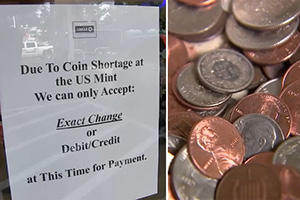












 Preppgroup