When you put your money in the bank, you assume it’s going to be safe. Everything about the average bank branch is designed to make it look like a secure place to keep money.
There are cameras, security screens in front of the tellers and maybe even armed guards. We know from movies that bank vaults have heavy steel doors with elaborate locks, and safe deposit boxes show us miniature versions of that.
All this is just the physical security that stops thieves walking in and helping themselves to cash. On top of that there are laws and government schemes designed to protect savers if the bank itself runs into problems.
Your main protection against bank failures is the Federal Deposit Insurance Corporation (FDIC), which was set up in 1933. During the Great Depression over a third of US banks failed, and many people lost everything they’d saved.
FDIC’s goal was to make sure that, in future bank failures, even if people lost money they wouldn’t be completely wiped out.
The way it works is that if a bank collapses, everyone who didn’t manage to get their money out of it on its way down will have their lost funds replaced by FDIC, up to a maximum of $250,000.
That’s actually fairly generous; in the UK, which has a similar scheme, the guarantee only covers up to £85,000 ($108,000).
It doesn’t cover everything, however, and if you’re lucky enough to have more than $250,000 saved, you could still lose everything above the protected amount.
If the existence of FDIC has persuaded you that bank deposits are well protected, here’s something you might find disturbing. 2023 was the biggest ever year for bank failures. Starting with the March collapse of Silicon Valley Bank, five financial institutions that held more than half a trillion dollars between them went under, and many people lost a lot of money.
FDIC paid out just $16.3 billion in compensation, meaning less than 3% of those banks’ assets were covered by the scheme. Bank failures are a real danger, and do you want to bet your savings on this year being any better?
We’re coming up to what could be the ugliest and most destructive presidential election in history, with the economy still fragile and the president taking some dangerous decisions in an attempt to boost his fading poll ratings.
There’s a high risk this year will be worse than last. If you have savings you need to make sure they’re protected. Here’s how to do it:
Pick the Right Bank
The first thing to be aware of is that not all financial institutions are covered by FDIC.
All actual banks are, and so are federal credit unions, but many state credit unions aren’t. Non-traditional “neobanks”, like internet-only banks, might be backed by a traditional bank and covered by its FDIC membership, but some aren’t.
Before you trust a financial institution with your money, make sure qualifies for FDIC protection. Otherwise you could lose everything – and non-traditional banks are the most likely to fail.
Put Your Money in Insured Products
FDIC insurance only covers some types of accounts. If a bank is holding money in one of those, it’s protected. The qualifying accounts are:
Checking accounts
Negotiable order of withdrawal accounts
Savings accounts
Money market deposit accounts
Foreign currency accounts
Time deposits (including certificates of deposit)
Cashier’s checks, interest checks and other negotiable instruments
Anything else – including stocks, bonds, Treasury securities and most other investments – isn’t covered, so if the bank goes down you’ll lose them if you can’t withdraw them in time.
The ones that will catch a lot of people are insurance and annuities. They can have a large cash value, and they’re totally exposed if the bank collapses.
Use Ownership Categories
Even accounts that qualify for FDIC insurance come in different types. FDIC covers seven different ownership categories:
Single accounts. These are standard bank accounts owned by one person.
Joint accounts. These have more than one owner, and all owners have equal withdrawal rights.
Some retirement accounts, including IRAs.
Employee Benefit Plan accounts.
Accounts belonging to a corporation, partnership or unincorporated association.
Revocable and Irrevocable trust accounts. These will contain wording like “In trust for” or “Payable on death”.
Government accounts.
If a bank fails, all the accounts you have with it in the same ownership category are counted as a single account – so if you have three single accounts with $250,000 in each you’re only covered for $250,000.
However, up to three ownership categories can be counted separately; if you have a single account, a joint one with your partner and an IRA, with $250,000 each, you’re covered for the whole $750,000.
Spread the Risk
If you have multiple accounts consider holding them with different banks. Even if both banks fail at the same time, they’re counted separately for compensation. Going with the example above, if you have a single account, a joint one and an IRA in each of two banks your FDIC cover grows to $1.5 million.
One thing to look out for is that some brick and mortar banks also have an internet branch that operates under a different name. FDIC doesn’t care about the name; if your physical and online banks are part of the same organization, it counts them as the same bank.
The goal is to distribute your savings so that all of it comes in under FDIC’s $250,000 per account cap. That way, as long as FDIC itself is still going, everything’s covered.
Research Your Bank
Before you put your money in a bank, do some research. Look into its credit ratings with the three big agencies – Moody’s, Fitch and Standard & Poor.
Check FDIC’s own ratings; these use a six-point test to calculate how stable a bank is. A high-scoring bank is at less risk of failure.
Bigger Can Be Better
Small, new banks can be very attractive, because they often give great deals to attract customers. They might pay higher interest rates, or provide other bonuses. That makes them look like a better option than older, more conservative banks.
The government doesn’t see it that way, though. There are a few banks – for example Bank of America, Citi, JP Morgan and Wells Fargo – that the government classes as “too big to fail”.
If one of those went down it would do massive damage to the economy, so if they’re struggling the government will do whatever it can to bail them out and keep them afloat. We all saw that in 2008, and while it was painful it’s better than being caught in a bank failure.
Don’t Panic
If you hear rumors that your bank is in trouble, be ready to act – but don’t spread the rumor and don’t rush into anything.
When banks have problems, and all their customers rush to rescue their cash, that can cause a run on the bank and cause the very thing everyone’s worried about. Usually, the bank fails faster than everyone can withdraw their cash.
Don’t Trust the System
The FDIC system is actually pretty good, but it isn’t perfect. Insulate yourself by keeping some of your savings somewhere else. This is where that old prepper standby, gold, comes in.
In the long term gold will gain value; it always does. There’s a finite amount of gold and people are always finding new things to do with it, so demand is guaranteed to keep rising and that drags the price up.
Bank failures can be scary, but if you know what you’re doing they don’t have to be a disaster for you personally.
For most of us, having more than $250,000 in a checking account is a daydream anyway; where we need to take precautions is in IRAs and similar long-term savings.
Just protect those against the risk of a collapsing bank – putting them in one of the “too big to fail” institutions is the obvious way – and you can get through a year like 2023 without having to worry too much.
Source- askaprepper.com
I want to present you one of the most interesting sites, where you will see new articles daily! www.321gold.com
Investors all over the world are looking at two timeless assets for 2025: gold and silver. Both metals have storied histories and unique advantages, yet they also come with their own challenges.
The debate over which metal makes the most sense in 2025 hinges on economic conditions, market trends, and of course, individual goals. As the new year unfolds with the potential for global economic slowdowns, geopolitical risks, and shifting central bank policies, the decision to invest in gold or silver demands a close look at each metal’s strengths and weaknesses.
The Enduring Allure of Gold
Gold has always been treasured for its stability and resilience. This precious metal’s reputation as a safe-haven asset becomes especially valuable during times of uncertainty. Central banks continue to bolster their gold reserves, supporting its price stability and pointing to gold’s significance in international finance. In an environment where politically induced interest rate cuts may weaken currencies, gold becomes even more appealing to investors seeking shelter from inflation.
Another key advantage is gold’s long track record of preserving value. Generations have relied on gold to protect wealth, and its historical performance shows relatively modest volatility compared to other assets.
This makes gold attractive for those with a conservative investment strategy who prefer steady, dependable returns. The trade-off is that gold’s higher price tag can be a barrier to entry for smaller investors, and its growth in value, while stable, may not match the explosive upward swings that sometimes occur in other commodities.
Those with a smaller budget or a higher appetite for risk might lean toward silver, betting on its industrial growth potential and greater price fluctuation to yield more significant rewards in a shorter period.
Silver’s Potential for Growth
Silver stands out for its dual role as both an investment as well as an industrial powerhouse. Demand for silver is closely tied to its critical use in the renewable energy sector, particularly in solar panels and in the manufacturing of electric vehicles.
This dual demand is expected to accelerate in 2025, providing silver with a potentially more significant upside. Its affordability compared to gold means that more people can participate in the silver market, which can translate into higher percentage gains if the metal’s price surges.
However, silver’s volatility is a double-edged sword. Sharp rallies in price can yield big gains, but sudden drops can just as quickly eat into profits. Storage considerations also matter. Because silver is cheaper, investors may require larger amounts to match the value of a smaller quantity of gold, creating potential logistical and cost challenges for safekeeping.
What the Markets Predict
Many analysts forecast gold prices reaching around $3,000 per ounce by the end of 2025. Central bank buying, geopolitical tensions, and moves by the Federal Reserve and other central banks to ease monetary policy all contribute to the narrative that gold’s rise is far from over.
At the same time, silver’s industrial demand, particularly from the booming renewable energy and electric vehicle sectors, could help it outperform gold on a percentage basis. Some forecasts see silver racing past $50 or even $60 per ounce, with more optimistic scenarios eyeing the possibility of hitting $100, driven by surges in green technology and industrial usage.
Choosing the Right Metal for Your Goals
Investors looking for stability, preservation of wealth, and a reliable hedge against inflation often favor gold. It serves as a buffer in uncertain times, and its less dramatic price swings can help reduce portfolio volatility.
Those with a smaller budget or a higher appetite for risk might lean toward silver, betting on its industrial growth potential and greater price fluctuation to yield more significant rewards in a shorter period.
An individual’s investment horizon and risk tolerance play huge roles in this decision. Gold’s steadiness can be reassuring if the thought of bigger ups and downs is unsettling. Suppose you can weather the swings in pursuit of higher returns.
In that case, silver offers an opportunity to capitalize on a rapidly expanding market for green technologies. In some cases, simply holding both metals can create a balanced portfolio, blending gold’s steadiness with silver’s potential for exceptional gains.
Finding Balance in 2025
With markets poised for shifts in the year ahead, maintaining a diversified approach can help mitigate risk. Gold offers a shield against inflation and geopolitical uncertainties, while silver can supercharge returns when industrial demand skyrockets. Taking a position in both metals ensures that your portfolio taps into the stability of gold and the growth potential of silver.
Ultimately, the “better” metal in 2025 will depend on your financial goals and your outlook on the economy.
By weighing gold’s safe-haven status against silver’s industrial prospects, you can invest in a way that reflects your priorities and risk appetite, positioning yourself strategically in this uncertain economic landscape.
I want to present you one of the most interesting sites, where you will see new articles daily! www.321gold.com
The next Great Depression will have a tremendous impact on the entire world, heavily influencing the way we think and act. As we navigate through this period, there will be a lot of changes to life as we know it today!
If and when there is a ‘next’ Great Depression (some may argue that we’ve already entered the next one – although hidden from sight), the question is “How will it be different from the first?”
The current labor force participation rate is somewhere around 62% in the U.S. and the current combined U3 & U6 unemployment numbers reflect 22.8%. Apparently there are about 41 million people receiving food stamps while nearly 14% of Americans live below the ‘official’ poverty threshold (hinged to income and family size).
The U.S. National Debt is significantly higher than 20 trillion dollars, currently exceeding $35 trillion according to recent data; meaning it has already surpassed the 20 trillion mark by a substantial amount. Unfunded liabilities are currently 104 Trillion dollars (source: usdebtclock.org). On average, each household with a credit card carries more than $15,000 in credit card debt, and the average U.S household with debt owes $130,922 (source: time.com).
According to a Federal Reserve report, nearly half of Americans couldn’t cover a $400 emergency expense without borrowing the money or selling something. Additionally, almost 30% of people report having a zero balance, and 62% have less than $1,000 in savings, according to a recent survey (source: GOBankingRates.com). An additional 21% report having no savings account whatsoever.
We as Americans are really not wealthy. Rather, we as Americans are drowning in debt while putting on a facade of phony wealth. Most do not own anything. The banks do. And guess what? The banks are in trouble too. The Federal Reserve (a private organization) has essentially been propping up the banks (and ‘the market’) since 2008 – and it’s all based on more gargantuan debt.
While most Americans are entirely clueless about the big picture here, one day (or over a period of time), we may descend further into a ‘Greater Depression’ as so many of the so called ‘asset classes’ collapse in value as they seek out their own ‘true value’ when they cannot be propped up anymore.
Okay, back to the question at hand… How will the next Great Depression be different?
Recently, a commenter here said, The “great depression” lasted somewhere around 10 years…. 90% of the population lived on farms-ish, I would bet that 90% of those had a HUGE-deep-pantry, and already had Gardens and Livestock. In 1935 there were around 127 million in the US, now 320-ish million, IF the “greater” depression hits and 90% are in the cities….. Just something to think about.
Someone else said, “…but the greatest loss is the knowledge of survival. In the “great depression” many survived by riding the rails to areas that needed farm labor – try that with most urban dwellers today. Not only are they not physically able but are totally ignorant about agriculture, nature, and most of all, being able to cooperate in a rural society.”
A few of my own thoughts…
Back during the Great Depression, people had a MUCH GREATER sense of morality, work ethic, and practical skill sets than they do today.
There is a tremendous number of people today who have not experienced real hardship. They have been coddled, they have had things handed to them, and they EXPECT to be taken care of. They get angry when they don’t get their way.
During the days of the Great Depression, people on ‘assistance’ had to line up to receive their benefits. It was very visible. Today, ‘digital cards’ hide all of that. The numbers of those receiving benefits are hidden from view and all ‘appears’ as normal…
Today, it’s easy to get a bank loan for just about anything. Back during the days of the Great Depression, people taking on loans was significantly less. They had to save and work for ‘it’.
Family farming and agriculture today is essentially non-existent compared to the years of the Great Depression.
People have no idea how large of a garden and the right kinds of foods which will produce adequate calories to help over-winter for their household. A few tomatoes and squash in a 10×20 garden is not going to cut it…
How many people today know how to preserve their own food (e.g. canning)? I would say VERY, VERY FEW.
Because most Americans suffer from extreme ‘normalcy bias’, a Greater Depression will be shocking and devastating to say the least. Many will lash out as the cities burn… (perhaps literally).
People today are NOT educated the same way as back then. Practical skills are all but ‘gone’. Used to be that many would learn some technical trades in High School and some would go on to a trade school afterwards. Whereas today, ‘everyone’ (even those who really aren’t that bright) has to go to ‘college’ where they’re taught diversity training, political correctness, ‘Dem’s Good – Repub’s Bad, etc…
Today, our manufacturing base is GONE. Back during the Great Depression, we made ‘stuff’. When a nation makes their own ‘stuff’, that’s a good thing…
In conclusion, my general opinion is that the next Greater Depression will be a complete disaster, and it will become violent as the waves of desperation wash over the land. We are a different people than back then, and it’s going to bite us in the a$$…
Care to add your own thoughts?
I want to present you one of the most interesting sites, where you will see new articles daily! www.321gold.com
First take a look at one of the most shocking videos in the world! This video actually shows us what the secret of the Trump family is related to their expressive health!!! –FULL VIDEO HERE
Back in 1949 the world was still recovering from World War II. The Korean War wouldn’t start for another year, but George Orwell was already focused on the dangers of communism and the totalitarianist government it builds. World War II was started by totalitarian governments; but worse than that was how such governments treat the citizens living under their control.
In his book 1984, the government, encapsulated in the persona of “Big Brother,” knew everything about everyone; where they were, what they were doing and even what they were thinking much of the time. This was used to keep control of people to an extreme that even the now defunct Soviet Union couldn’t reach. Yet with modern technology, the reality of such a government could very well be forming around us and we don’t even see it happening.
As we know, the government is actively spying on every one of us. That’s the essence of Edward Snowden’s message, since he left the employ of the NSA. While that spying is intended to help prevent terrorism, we’ve seen some in government be awfully free in their use of that term. One can quickly find themselves labeled as a terrorist if the political winds blow the wrong way.
The US Army’s Forgotten Food Miracle and 126 Superfoods That You Can Store Without Refrigeration for Years
The video below will shock you because you will be among the first to watching this secret!
On top of the NSA, big tech is in cahoots with government in a number of ways, most especially with providing information to law enforcement officers, as they seek to solve crimes. But that same information which is being used for the good of tracking down and convicting criminals can very well be used against the rest of us. After all, any of us can become an instant felon, simply by Congress passing a law making something that has been legal, suddenly illegal.
An excellent case in point is the current push by Democrats to restrict our Second Amendment rights. Should they do that, then millions of law-abiding citizens will suddenly be faced with the option of turning in valuable firearms or hiding them from the government. Will the government hunt down those who haven’t turned in their guns, using the same tools they are currently using to track down criminals? Only time will tell.
So, what can we do to keep the government from having an idea where we are and what we are doing? To start with, we need to understand that the government has multiple means of tracking us, not just one or two. That means we’re going to have to defeat them all, if we expect to protect ourselves from electronic spying.
Here are a few places to start.
Use a Burner Phone
The easiest way for the government to track any of us is through our smartphone. We really don’t have a handle on everything that our phones are doing in the background, while we’re not looking.
Yet there’s nearly constant communication between our phones and the local cell phone tower.
It’s clear that the communications we have through our phones is readily available to the NSA and others.
You can even pay online services to do a little spying on family members, seeing their text messages, who they’ve talked to, what they’ve looked at online and where they’ve been. If you and I can do this, then you can be sure the government can do more.
Shut Off GPS Tracking
One of the most common ways our phones help the government keep track of us is through the phone’s GPS. Google and Apple keep track of our every move through that part of the phone.
If you go to Google Maps and click on your timeline in the menu, it will show you everywhere you’ve been, for the last several years.
This feature alone could put you in danger if you just happen to be in the same place that a crime was committed. While that alone wouldn’t be enough to convict you; it would be enough to make you a suspect.
And that’s just one example of how the GPs could be used against you. What if they want to track you down because it has been reported that you said something against the government; they’d have no trouble tracking you down.
Clean Out Internet Browsing Activity and Cookies
One of the big ways that companies use the internet to keep tabs on us is through our browsing history and the cookies downloaded to our computers by the various websites we visit.
A lot can be learned about who we are and what we do by looking at that. That’s why major corporations invest so much in data mining, looking for people to buy their products.
Haven’t you seen how you can look at something online, then find advertisements for the same sort of product showing up in your Facebook feed and just about any online article you read?
That information is also admissible in court as a means of defining your character. Government prosecutors could build a totally false narrative about you as a terrorist or planning mass murder, backed up by no more than the websites you have visited. Simple curiosity can and will be used against you, perhaps even in a court of law.
Get Rid of Alexa, Siri, and other Voice-recognition Assistants
One of the key elements of Orwell’s imaginary society in 1984 was that the government was tracking what everyone was doing through their television sets.
Yet today, rather than the government having to hide that capability in our TV sets, we buy devices and use them in our homes.
Those devices track everything we do, listening in on our conversations, so that they can “serve us” better.
Employees of those companies have come forth, confessing how employees at big tech companies listen in on people’s private lives.
If they’re doing it, then the government has access to it too. Remember, everything that device does goes over the internet and the NSA is tapped into that thoroughly.
EXPOSED: Free Power Secrets! Revealed: The century-old device making solar panels obsolete. Embrace efficient, sustainable energy. Open the Gates of Innovation!
Create Alternative e-Mail Accounts for Memberships
Our online identity is largely tied into our e-mail account.
Pretty much everything you sign up for, from buying dog food to looking at different sites, involves creating an account using that e-mail address. That online presence can lead government agents to look into all areas of your online existence.
The solution is to create multiple ‘personas,’ utilizing them for different things.
In order to do this, you’re going to have to provide false information at some point, as pretty much all e-mail services try to verify that you’re a real person and that you’re who you say you are.
Create Site-specific Passwords
Passwords are the bane of modern existence, with more and more websites requiring a membership and password for access. Even those that don’t are likely to require you setting up an account to buy anything.
The information attached to that account Is just one more source for the government to look at.
Most of us pick a password and use it for as much as we can. The problem with that is that once someone figures out your password, they can try it on a variety of different platforms, trying to access your account and see what you’ve been doing.
Four different products, bought from different vendors, could easily become the parts of a bomb in some investigator’s imagination.
Avoid JavaScript
JavaScript abounds throughout the internet, having been created to make it possible for web pages to be interactive.
Unfortunately, it’s full of security holes, having been created many of the more modern modes of hacking were invented. Today, breaking into JavaScript is considered small potatoes by hackers.
Keep in mind that the government employs hackers too; they’re called “white hat hackers,” and while that term was originally coined in regards to people who were trained in hacking in order to play the “red team” in online security simulations, it’s used for any hacker who does their work as part of “legitimate” business.
Of course, as far as the government is concerned, anything they do is legitimate, regardless of what the law says.
Encrypt e-Mail
We’ve already discussed how the NSA is recording and reading every bit of communications that flows across the internet. That includes your e-mail. They know if you’re making an inquiry about buying a new home, having an online affair or discussing business secrets.
According to Snowden, some of those government employees are looking over people’s shoulders, watching their lives as if it were a live soap opera.
The world’s best code breakers work for the NSA and the majority of the world’s supercomputers are housed in their facilities. So the idea that they can’t break into an encrypted e-mail is ridiculous. Nevertheless, encrypting still makes it harder, meaning that they’d have to have a pretty good reason to bother.
While not perfect, encrypting your e-mail at least protects you from casual view.
Avoid Online, Credit Card and Debit Card Purchases
Probably one of the earliest ways that law enforcement used the benefits of the internet to solve crimes is through tracking credit card use. We’ve all seen cop shows where they tracked a suspect by looking at where they were using their credit card. That’s child’s play for the government today.
Of course, the government isn’t the only one tracking our online purchases, although I don’t think that companies have the ability to get into the records of our credit and debit card usage like the government can.
Either way, it can provide the government with a lot of information that you might not want them to know. Better to use cash and keep your transactions anonymous.
If you’ve got to buy things online, then use prepaid Visa and MasterCard gift cards, not associated with any bank account you have.
You can buy these easily at the checkout in many major stores, in denominations up to $500. That makes it possible to make a lot of purchase anonymously.
Then have the item shipped to an address that can’t be readily traced to you, like a PO box that you rented using a false address.
Don’t Fill Out Profile Data
One of the easiest ways for the government, criminals, companies and just about anyone else has of getting information about any of us is through our online profiles.
Social media has encourages people to live an open life, with everything about them becoming common knowledge. But that information can become dangerous if it gets into the wrong hands.
Save that information, so that you can give it to who you want to, rather than whoever wants it.
While it might not be quite as “neighborly” in the online community, holding that information back could help protect you from the government or from criminals.
One Final Thought
Doing the things I’ve mentioned in this article are likely to have unintended consequences. That is, they’re likely to make you look suspicious to anyone investigating you.
But then, if you haven’t done anything wrong, it really doesn’t matter how suspicious they think you look. They still have to find evidence, not suspicion, in order to take any action against you.
Your ready answer to this suspicion should be that you are protecting yourself from criminals. Even government agencies recommend taking precautions for that reason, so by stating that, you’re throwing the onus back on them. If they don’t like that, it’s just too bad.
WHAT HAPPENS NEXT? THREE WEEKS UNTIL THE BIGGEST SHIFT IN GLOBAL POWER
The clock is ticking. Trump has given NATO and Ukraine a choice: Sign the peace deal, or lose America forever.
Here’s what to expect:
✅ Europe will beg and plead for Trump to reconsider – but he won’t. They had years to fix this. Now, they’re out of time.
✅ The mainstream media will go into full meltdown mode. They’ll scream about “abandoning allies” and “giving Putin a victory.” But the truth? Trump is securing peace, not war.
✅ Globalists will panic as their war machine collapses. Without America’s endless cash and firepower, NATO’s ability to wage war is finished.
✅ America wins! Finally, no more endless wars draining our economy and resources. We can focus on our own country instead of fighting Europe’s battles.
You can access the entire video right here, or by watching it below!
Source: askaprepper.com by Rich M.
I want to present you one of the most interesting sites, where you will see new articles daily! www.321gold.com
The Great Depression in which 25% of people in America were unemployed had their homes reprocessed and faced starvation started when 7 things combined together
1. The economy went into a slower phase in the economic cycle.
2. The Wall Street stock exchange crashed in 1929 as a result of an Insider Dealer Scam (which was small compared to Maxwell or the Enron scams) still wiped out the investment of thousands of people & several banks who had not done due diligence & just hoped that share prices would continue to go up at the same rate indefinitely. Although the stock market only charts the emotional value of a stock it must sooner or later adjust the prices of stocks back to the real value based on the firm’s actual performance (it took over 2 years for the dot com bubble to burst in 2000). Other people seeing a fall in the stock market prices feared they would have a loss so rushed to sell their stock in a falling market, thus creating an excess of supply forcing prices down more to ensure they lost money.
3. The banks made things worse by demanding repayment in full of mortgages & loans at short notice in an attempt to save their business. Banks, like other businesses without Government support, will go out of business because their reduced cash flow can not keep up with their liabilities which naturally increased as the economy slowed. By removing money from economy the banks made the slow down spiral down into economic depression
4. The belief that the Government should not intervene because markets would automatically adjust to benefit a changing society because the economic system always gives people what they are worth & new jobs will appear despite the evidence.
5. The Isolation culture of thinking “if something benefits an individual than society must benefit” regardless of what harm results from that action despite the Indian’s knowing we are all part of one interconnected web of life on our only planet. The Economic system is incapable of serving the public as long as polluters do not have to compensate those who suffer from their actions because governments do not use true accounting.
6. The lack of Understanding of Fundamental Economic Cycle (still not taught in schools) leads businesses facing hard times to downsize to cut costs to hope to wait until better times return instead of looking to increase their income by switching to more profitable products. Downsizing reduces the money flowing in the economy and signals that the business has poor management & may not be trusted to be here for long.
7. The uncertain times and the untrustworthiness of the financial sector led most people to withdraw their money from the banks which the banks could not fund as only 1% of money is held as cash by banks. So more banks collapsed so creating a domino effect run on the banks.
Although FD Roosevelt did manage to halt the downward economic spiral in 1933 by ending the hysteria & restoring hope with the “New Deal” – The Great Depression did not end until full employment was created as a byproduct of the Governments policy of creating world war two with appeasement in Europe & Isolationism (ignoring the consequences of my actions in the USA)
By 1929 the down sides of technology were beginning to become apparent. E.G. the mass production lines that Henry Ford introduced to enable the greater output by braking a process down into steps performed over & over by specialists was dehumanizing people’s work and turning it into a job (just our bodies) so had strikes despite the violent oppression from their owners.
Farm technology was also having a damaging effect on wider society.
Tractors (which developed out of the world war 1 tanks) had got cheaper due to mass production so were replacing farm workers and increasing yields initially and causing an excess of supply at harvest time thereby reducing the income of the smaller farmers who then could not keep up with their mortgages.
Tractors are best for long straight fields without ditches or hedges to provide a home for natural pest controllers like ladybirds, frogs, hedgehogs etc so hedges were removed although they protect crops from the wind and supply the crops with water from deep down where they can not reach. The larger fields of monoculture naturally attracted the pests like aphids to them & with fewer predators to eat the aphids they increased in numbers every year. A couple of dry summers combined with ploughing thin soils & the removal of hedgerows & the abundance of pests led to large areas of the mid west being turned into dust bowls collapsing the income of the area & the rural banks that depended on farmers. Thus triggering the domino effect in the banking sector.
The technological fix to the problem of falling farm production caused by technology was to apply ever larger doses of poisons like DDT until they get banded because of the harm do as they get concentrated up the food chain. The chemical industry needs to constantly come up with new products to sell to farmers like fertilizers (that contaminate our water supply disrupting the reproduction of fish & humans) so they can grow the same crop in the same field year after year; new pesticides because the old ones do not work as spaying is not ever 100% effective as does not go evenly under the leaves (where the pests live) so the pests develop resistance to the poison.
In order to survive the lack of official money circulating during the great depression over 3000 other currencies (LETS) were created to enable the local exchange of transferable skills for mutual benefit to occur.
As Einstein said “Doing the same thing over & over again yet expecting different results is the definition of insanity”
So if you have a problem you need to change your thoughts to find the solution. Why do you believe the lies you are told like “Buy this and you will have women falling for you” when Happiness is an emotion so comes from with in you?
Modern society is geared to those who know how to Make Money Work for You so get to set the nominal value that the people, who will not be able to live in retirement, have to pay for things. Money only has power over your life when you choose to accept the lies you are bombarded with by the TV.
I want to present you one of the most interesting sites, where you will see new articles daily! www.321gold.com
The “U.S. government” is comprised of a wide variety of different people, many of which are good and decent human beings. So this obviously does not represent everyone who works in the government. More importantly, this does not represent U.S. citizens either, so please do not fall into the trap of defending the crimes of your government, because you feel yourself personally under attack. Identify yourself with integrity, humanity and Truth, not a criminal government or group.
After the catastrophic attacks of September 11 2001 monumental sorrow and a feeling of desperate and understandable anger began to permeate the American psyche. A few people at that time attempted to promote a balanced perspective by pointing out that the United States had also been responsible for causing those same feelings in people in other nations, but they produced hardly a ripple. Although Americans understand in the abstract the wisdom of people around the world empathizing with the suffering of one another, such a reminder of wrongs committed by our nation got little hearing and was soon overshadowed by an accelerated “war on terrorism.”
But we must continue our efforts to develop understanding and compassion in the world. Hopefully, this article will assist in doing that by addressing the question “How many September 11ths has the United States caused in other nations since WWII?” This theme is developed in this report which contains an estimated numbers of such deaths in 37 nations as well as brief explanations of why the U.S. is considered culpable.
The causes of wars are complex. In some instances nations other than the U.S. may have been responsible for more deaths, but if the involvement of our nation appeared to have been a necessary cause of a war or conflict it was considered responsible for the deaths in it. In other words they probably would not have taken place if the U.S. had not used the heavy hand of its power. The military and economic power of the United States was crucial.
This study reveals that U.S. military forces were directly responsible for about 10 to 15 million deaths during the Korean and Vietnam Wars and the two Iraq Wars. The Korean War also includes Chinese deaths while the Vietnam War also includes fatalities in Cambodia and Laos.
The American public probably is not aware of these numbers and knows even less about the proxy wars for which the United States is also responsible. In the latter wars there were between nine and 14 million deaths in Afghanistan, Angola, Democratic Republic of the Congo, East Timor, Guatemala, Indonesia, Pakistan and Sudan.
But the victims are not just from big nations or one part of the world. The remaining deaths were in smaller ones which constitute over half the total number of nations. Virtually all parts of the world have been the target of U.S. intervention.
The overall conclusion reached is that the United States most likely has been responsible since WWII for the deaths of between 20 and 30 million people in wars and conflicts scattered over the world.
To the families and friends of these victims it makes little difference whether the causes were U.S. military action, proxy military forces, the provision of U.S. military supplies or advisors, or other ways, such as economic pressures applied by our nation. They had to make decisions about other things such as finding lost loved ones, whether to become refugees, and how to survive.
And the pain and anger is spread even further. Some authorities estimate that there are as many as 10 wounded for each person who dies in wars. Their visible, continued suffering is a continuing reminder to their fellow countrymen.
It is essential that Americans learn more about this topic so that they can begin to understand the pain that others feel. Someone once observed that the Germans during WWII “chose not to know.” We cannot allow history to say this about our country. The question posed above was “How many September 11ths has the United States caused in other nations since WWII?” The answer is: possibly 10,000.
Comments on Gathering These Numbers
Generally speaking, the much smaller number of Americans who have died is not included in this study, not because they are not important, but because this report focuses on the impact of U.S. actions on its adversaries.
An accurate count of the number of deaths is not easy to achieve, and this collection of data was undertaken with full realization of this fact. These estimates will probably be revised later either upward or downward by the reader and the author. But undoubtedly the total will remain in the millions.
The difficulty of gathering reliable information is shown by two estimates in this context. For several years I heard statements on radio that three million Cambodians had been killed under the rule of the Khmer Rouge. However, in recent years the figure I heard was one million. Another example is that the number of persons estimated to have died in Iraq due to sanctions after the first U.S. Iraq War was over 1 million, but in more recent years, based on a more recent study, a lower estimate of around a half a million has emerged.
Often information about wars is revealed only much later when someone decides to speak out, when more secret information is revealed due to persistent efforts of a few, or after special congressional committees make reports
Both victorious and defeated nations may have their own reasons for underreporting the number of deaths. Further, in recent wars involving the United States it was not uncommon to hear statements like “we do not do body counts” and references to “collateral damage” as a euphemism for dead and wounded. Life is cheap for some, especially those who manipulate people on the battlefield as if it were a chessboard.
To say that it is difficult to get exact figures is not to say that we should not try. Effort was needed to arrive at the figures of 6six million Jews killed during WWI, but knowledge of that number now is widespread and it has fueled the determination to prevent future holocausts. That struggle continues.
The U.S. is responsible for between 1 and 1.8 million deaths during the war between the Soviet Union and Afghanistan, by luring the Soviet Union into invading that nation.
The Soviet Union had friendly relations its neighbor, Afghanistan, which had a secular government. The Soviets feared that if that government became fundamentalist this change could spill over into the Soviet Union.
In 1998, in an interview with the Parisian publication Le Novel Observateur, Zbigniew Brzezinski, adviser to President Carter, admitted that he had been responsible for instigating aid to the Mujahadeen in Afghanistan which caused the Soviets to invade. In his own words:
According to the official version of history, CIA aid to the Mujahadeen began during 1980, that is to say, after the Soviet army invaded Afghanistan on 24 December 1979. But the reality, secretly guarded until now, is completely otherwise. Indeed, it was July 3, 1979 that President Carter signed the first directive for secret aid to the opponents of the pro-Soviet regime in Kabul. And that very day, I wrote a note to the President in which I explained to him that in my opinion this aid was going to induce a Soviet military intervention.
Brzezinski justified laying this trap, since he said it gave the Soviet Union its Vietnam and caused the breakup of the Soviet Union. “Regret what?” he said. “That secret operation was an excellent idea. It had the effect of drawing the Russians into the Afghan trap and you want me to regret it?”
The CIA spent 5 to 6 billion dollars on its operation in Afghanistan in order to bleed the Soviet Union. When that 10-year war ended over a million people were dead and Afghan heroin had captured 60% of the U.S. market.
The U.S. has been responsible directly for about 12,000 deaths in Afghanistan many of which resulted from bombing in retaliation for the attacks on U.S. property on September 11, 2001. Subsequently U.S. troops invaded that country.
Angola
An indigenous armed struggle against Portuguese rule in Angola began in 1961. In 1977 an Angolan government was recognized by the U.N., although the U.S. was one of the few nations that opposed this action. In 1986 Uncle Sam approved material assistance to UNITA, a group that was trying to overthrow the government. Even today this struggle, which has involved many nations at times, continues.
U.S. intervention was justified to the U.S. public as a reaction to the intervention of 50,000 Cuban troops in Angola. However, according to Piero Gleijeses, a history professor at Johns Hopkins University the reverse was true. The Cuban intervention came as a result of a CIA – financed covert invasion via neighboring Zaire and a drive on the Angolan capital by the U.S. ally, South Africa1,2,3). (Three estimates of deaths range from 300,000 to 750,000
Argentina: See South America: Operation Condor
Bangladesh: See Pakistan
Bolivia
Hugo Banzer was the leader of a repressive regime in Bolivia in the 1970s. The U.S. had been disturbed when a previous leader nationalized the tin mines and distributed land to Indian peasants. Later that action to benefit the poor was reversed.
Banzer, who was trained at the U.S.-operated School of the Americas in Panama and later at Fort Hood, Texas, came back from exile frequently to confer with U.S. Air Force Major Robert Lundin. In 1971 he staged a successful coup with the help of the U.S. Air Force radio system. In the first years of his dictatorship he received twice as military assistance from the U.S. as in the previous dozen years together.
A few years later the Catholic Church denounced an army massacre of striking tin workers in 1975, Banzer, assisted by information provided by the CIA, was able to target and locate leftist priests and nuns. His anti-clergy strategy, known as the Banzer Plan, was adopted by nine other Latin American dictatorships in 1977. He has been accused of being responsible for 400 deaths during his tenure.
Also see: See South America: Operation Condor
Brazil: See South America: Operation Condor
Cambodia
U.S. bombing of Cambodia had already been underway for several years in secret under the Johnson and Nixon administrations, but when President Nixon openly began bombing in preparation for a land assault on Cambodia it caused major protests in the U.S. against the Vietnam War.
There is little awareness today of the scope of these bombings and the human suffering involved.
Immense damage was done to the villages and cities of Cambodia, causing refugees and internal displacement of the population. This unstable situation enabled the Khmer Rouge, a small political party led by Pol Pot, to assume power. Over the years we have repeatedly heard about the Khmer Rouge’s role in the deaths of millions in Cambodia without any acknowledgement being made this mass killing was made possible by the the U.S. bombing of that nation which destabilized it by death , injuries, hunger and dislocation of its people.
So the U.S. bears responsibility not only for the deaths from the bombings but also for those resulting from the activities of the Khmer Rouge – a total of about 2.5 million people. Even when Vietnam latrer invaded Cambodia in 1979 the CIA was still supporting the Khmer Rouge.
Also see Vietnam
Chad
An estimated 40,000 people in Chad were killed and as many as 200,000 tortured by a government, headed by Hissen Habre who was brought to power in June, 1982 with the help of CIA money and arms. He remained in power for eight years.
Human Rights Watch claimed that Habre was responsible for thousands of killings. In 2001, while living in Senegal, he was almost tried for crimes committed by him in Chad. However, a court there blocked these proceedings. Then human rights people decided to pursue the case in Belgium, because some of Habre’s torture victims lived there. The U.S., in June 2003, told Belgium that it risked losing its status as host to NATO’s headquarters if it allowed such a legal proceeding to happen. So the result was that the law that allowed victims to file complaints in Belgium for atrocities committed abroad was repealed. However, two months later a new law was passed which made special provision for the continuation of the case against Habre.
Chile
The CIA intervened in Chile’s 1958 and 1964 elections. In 1970 a socialist candidate, Salvador Allende, was elected president. The CIA wanted to incite a military coup to prevent his inauguration, but the Chilean army’s chief of staff, General Rene Schneider, opposed this action. The CIA then planned, along with some people in the Chilean military, to assassinate Schneider. This plot failed and Allende took office. President Nixon was not to be dissuaded and he ordered the CIA to create a coup climate: “Make the economy scream,” he said.
What followed were guerilla warfare, arson, bombing, sabotage and terror. ITT and other U.S. corporations with Chilean holdings sponsored demonstrations and strikes. Finally, on September 11, 1973 Allende died either by suicide or by assassination. At that time Henry Kissinger, U.S. Secretary of State, said the following regarding Chile: “I don’t see why we need to stand by and watch a country go communist because of the irresponsibility of its own people.”
During 17 years of terror under Allende’s successor, General Augusto Pinochet, an estimated 3,000 Chileans were killed and many others were tortured or “disappeared.”
Also see South America: Operation Condor
China An estimated 900,000 Chinese died during the Korean War.
For more information, See: Korea.
Colombia
One estimate is that 67,000 deaths have occurred from the 1960s to recent years due to support by the U.S. of Colombian state terrorism.
According to a 1994 Amnesty International report, more than 20,000 people were killed for political reasons in Colombia since 1986, mainly by the military and its paramilitary allies. Amnesty alleged that “U.S.- supplied military equipment, ostensibly delivered for use against narcotics traffickers, was being used by the Colombian military to commit abuses in the name of “counter-insurgency.” In 2002 another estimate was made that 3,500 people die each year in a U.S. funded civilian war in Colombia.
In 1996 Human Rights Watch issued a report “Assassination Squads in Colombia” which revealed that CIA agents went to Colombia in 1991 to help the military to train undercover agents in anti-subversive activity.
In recent years the U.S. government has provided assistance under Plan Colombia. The Colombian government has been charged with using most of the funds for destruction of crops and support of the paramilitary group.
Cuba
In the Bay of Pigs invasion of Cuba on April 18, 1961 which ended after 3 days, 114 of the invading force were killed, 1,189 were taken prisoners and a few escaped to waiting U.S. ships. The captured exiles were quickly tried, a few executed and the rest sentenced to thirty years in prison for treason. These exiles were released after 20 months in exchange for $53 million in food and medicine.
Some people estimate that the number of Cuban forces killed range from 2,000, to 4,000. Another estimate is that 1,800 Cuban forces were killed on an open highway by napalm. This appears to have been a precursor of the Highway of Death in Iraq in 1991 when U.S. forces mercilessly annihilated large numbers of Iraqis on a highway.
Democratic Republic of Congo (formerly Zaire)
The beginning of massive violence was instigated in this country in 1879 by its colonizer King Leopold of Belgium. The Congo’s population was reduced by 10 million people over a period of 20 years which some have referred to as “Leopold’s Genocide.” The U.S. has been responsible for about a third of that many deaths in that nation in the more recent past.
In 1960 the Congo became an independent state with Patrice Lumumba being its first prime minister. He was assassinated with the CIA being implicated, although some say that his murder was actually the responsibility of Belgium. But nevertheless, the CIA was planning to kill him. Before his assassination the CIA sent one of its scientists, Dr. Sidney Gottlieb, to the Congo carrying “lethal biological material” intended for use in Lumumba’s assassination. This virus would have been able to produce a fatal disease indigenous to the Congo area of Africa and was transported in a diplomatic pouch.
Much of the time in recent years there has been a civil war within the Democratic Republic of Congo, fomented often by the U.S. and other nations, including neighboring nations.
In April 1977, Newsday reported that the CIA was secretly supporting efforts to recruit several hundred mercenaries in the U.S. and Great Britain to serve alongside Zaire’s army. In that same year the U.S. provided $15 million of military supplies to the Zairian President Mobutu to fend off an invasion by a rival group operating in Angola.
In May 1979, the U.S. sent several million dollars of aid to Mobutu who had been condemned 3 months earlier by the U.S. State Department for human rights violations. During the Cold War the U.S. funneled over 300 million dollars in weapons into Zaire $100 million in military training was provided to him. In 2001 it was reported to a U.S. congressional committee that American companies, including one linked to former President George Bush Sr., were stoking the Congo for monetary gains. There is an international battle over resources in that country with over 125 companies and individuals being implicated. One of these substances is coltan, which is used in the manufacture of cell phones.
Dominican Republic
In 1962, Juan Bosch became president of the Dominican Republic. He advocated such programs as land reform and public works programs. This did not bode well for his future relationship with the U.S., and after only 7 months in office, he was deposed by a CIA coup. In 1965 when a group was trying to reinstall him to his office President Johnson said, “This Bosch is no good.” Assistant Secretary of State Thomas Mann replied “He’s no good at all. If we don’t get a decent government in there, Mr. President, we get another Bosch. It’s just going to be another sinkhole.” Two days later a U.S. invasion started and 22,000 soldiers and marines entered the Dominican Republic and about 3,000 Dominicans died during the fighting. The cover excuse for doing this was that this was done to protect foreigners there.
East Timor
In December 1975, Indonesia invaded East Timor. This incursion was launched the day after U.S. President Gerald Ford and Secretary of State Henry Kissinger had left Indonesia where they had given President Suharto permission to use American arms, which under U.S. law, could not be used for aggression. Daniel Moynihan, U.S. ambassador to the UN. said that the U.S. wanted “things to turn out as they did.” (1,2) The result was an estimated 200,000 dead out of a population of 700,000.
Sixteen years later, on November 12, 1991, two hundred and seventeen East Timorese protesters in Dili, many of them children, marching from a memorial service, were gunned down by Indonesian Kopassus shock troops who were headed by U.S.- trained commanders Prabowo Subianto (son in law of General Suharto) and Kiki Syahnakri. Trucks were seen dumping bodies into the sea.
El Salvador
The civil war from 1981 to1992 in El Salvador was financed by $6 billion in U.S. aid given to support the government in its efforts to crush a movement to bring social justice to the people in that nation of about 8 million people. During that time U.S. military advisers demonstrated methods of torture on teenage prisoners, according to an interview with a deserter from the Salvadoran army published in the New York Times. This former member of the Salvadoran National Guard testified that he was a member of a squad of twelve who found people who they were told were guerillas and tortured them. Part of the training he received was in torture at a U.S. location somewhere in Panama.
About 900 villagers were massacred in the village of El Mozote in 1981. Ten of the twelve El Salvadoran government soldiers cited as participating in this act were graduates of the School of the Americas operated by the U.S. They were only a small part of about 75,000 people killed during that civil war.
According to a 1993 United Nations’ Truth Commission report, over 96 % of the human rights violations carried out during the war were committed by the Salvadoran army or the paramilitary deaths squads associated with the Salvadoran army.
That commission linked graduates of the School of the Americas to many notorious killings. The New York Times and the Washington Post followed with scathing articles. In 1996, the White House Oversight Board issued a report that supported many of the charges against that school made by Rev. Roy Bourgeois, head of the School of the Americas Watch. That same year the Pentagon released formerly classified reports indicating that graduates were trained in killing, extortion, and physical abuse for interrogations, false imprisonment and other methods of control.
Grenada
The CIA began to destabilize Grenada in 1979 after Maurice Bishop became president, partially because he refused to join the quarantine of Cuba. The campaign against him resulted in his overthrow and the invasion by the U.S. of Grenada on October 25, 1983, with about 277 people dying. It was fallaciously charged that an airport was being built in Grenada that could be used to attack the U.S. and it was also erroneously claimed that the lives of American medical students on that island were in danger.
Guatemala
In 1951 Jacobo Arbenz was elected president of Guatemala. He appropriated some unused land operated by the United Fruit Company and compensated the company. That company then started a campaign to paint Arbenz as a tool of an international conspiracy and hired about 300 mercenaries who sabotaged oil supplies and trains. In 1954 a CIA-orchestrated coup put him out of office and he left the country. During the next 40 years various regimes killed thousands of people.
In 1999 the Washington Post reported that an Historical Clarification Commission concluded that over 200,000 people had been killed during the civil war and that there had been 42,000 individual human rights violations, 29,000 of them fatal, 92% of which were committed by the army. The commission further reported that the U.S. government and the CIA had pressured the Guatemalan government into suppressing the guerilla movement by ruthless means.
According to the Commission between 1981 and 1983 the military government of Guatemala – financed and supported by the U.S. government – destroyed some four hundred Mayan villages in a campaign of genocide. One of the documents made available to the commission was a 1966 memo from a U.S. State Department official, which described how a “safe house” was set up in the palace for use by Guatemalan security agents and their U.S. contacts. This was the headquarters for the Guatemalan “dirty war” against leftist insurgents and suspected allies.
Haiti
From 1957 to 1986 Haiti was ruled by Papa Doc Duvalier and later by his son. During that time their private terrorist force killed between 30,000 and 100,000 people. Millions of dollars in CIA subsidies flowed into Haiti during that time, mainly to suppress popular movements, although most American military aid to the country, according to William Blum, was covertly channeled through Israel.
Reportedly, governments after the second Duvalier reign were responsible for an even larger number of fatalities, and the influence on Haiti by the U.S., particularly through the CIA, has continued. The U.S. later forced out of the presidential office a black Catholic priest, Jean Bertrand Aristide, even though he was elected with 67% of the vote in the early 1990s. The wealthy white class in Haiti opposed him in this predominantly black nation, because of his social programs designed to help the poor and end corruption. Later he returned to office, but that did not last long. He was forced by the U.S. to leave office and now lives in South Africa.
Honduras
In the 1980s the CIA supported Battalion 316 in Honduras, which kidnapped, tortured and killed hundreds of its citizens. Torture equipment and manuals were provided by CIA Argentinean personnel who worked with U.S. agents in the training of the Hondurans. Approximately 400 people lost their lives. This is another instance of torture in the world sponsored by the U.S.
Battalion 316 used shock and suffocation devices in interrogations in the 1980s. Prisoners often were kept naked and, when no longer useful, killed and buried in unmarked graves. Declassified documents and other sources show that the CIA and the U.S. Embassy knew of numerous crimes, including murder and torture, yet continued to support Battalion 316 and collaborate with its leaders.”
Honduras was a staging ground in the early 1980s for the Contras who were trying to overthrow the socialist Sandinista government in Nicaragua. John D. Negroponte, currently Deputy Secretary of State, was our embassador when our military aid to Honduras rose from $4 million to $77.4 million per year. Negroponte denies having had any knowledge of these atrocities during his tenure. However, his predecessor in that position, Jack R. Binns, had reported in 1981 that he was deeply concerned at increasing evidence of officially sponsored/sanctioned assassinations.
Hungary
In 1956 Hungary, a Soviet satellite nation, revolted against the Soviet Union. During the uprising broadcasts by the U.S. Radio Free Europe into Hungary sometimes took on an aggressive tone, encouraging the rebels to believe that Western support was imminent, and even giving tactical advice on how to fight the Soviets. Their hopes were raised then dashed by these broadcasts which cast an even darker shadow over the Hungarian tragedy.“ The Hungarian and Soviet death toll was about 3,000 and the revolution was crushed.
Indonesia
In 1965, in Indonesia, a coup replaced General Sukarno with General Suharto as leader. The U.S. played a role in that change of government. Robert Martens,a former officer in the U.S. embassy in Indonesia, described how U.S. diplomats and CIA officers provided up to 5,000 names to Indonesian Army death squads in 1965 and checked them off as they were killed or captured. Martens admitted that “I probably have a lot of blood on my hands, but that’s not all bad. There’s a time when you have to strike hard at a decisive moment.” Estimates of the number of deaths range from 500,000 to 3 million. From 1993 to 1997 the U.S. provided Jakarta with almost $400 million in economic aid and sold tens of million of dollars of weaponry to that nation. U.S. Green Berets provided training for the Indonesia’s elite force which was responsible for many of atrocities in East Timor.
Iran
Iran lost about 262,000 people in the war against Iraq from 1980 to 1988. See Iraq for more information about that war.
On July 3, 1988 the U.S. Navy ship, the Vincennes, was operating withing Iranian waters providing military support for Iraq during the Iran-Iraq war. During a battle against Iranian gunboats it fired two missiles at an Iranian Airbus, which was on a routine civilian flight. All 290 civilian on board were killed.
Iraq
A. The Iraq-Iran War lasted from 1980 to 1988 and during that time there were about 105,000 Iraqi deaths according to the Washington Post.
According to Howard Teicher, a former National Security Council official, the U.S. provided the Iraqis with billions of dollars in credits and helped Iraq in other ways such as making sure that Iraq had military equipment including biological agents This surge of help for Iraq came as Iran seemed to be winning the war and was close to Basra. The U.S. was not adverse to both countries weakening themselves as a result of the war, but it did not appear to want either side to win.
B: The U.S.-Iraq War and the Sanctions Against Iraq extended from 1990 to 2003.
Iraq invaded Kuwait on August 2, 1990 and the U.S. responded by demanding that Iraq withdraw, and four days later the U.N. levied international sanctions.
Iraq had reason to believe that the U.S. would not object to its invasion of Kuwait, since U.S. Ambassador to Iraq, April Glaspie, had told Saddam Hussein that the U.S. had no position on the dispute that his country had with Kuwait. So the green light was given, but it seemed to be more of a trap.
As a part of the public relations strategy to energize the American public into supporting an attack against Iraq the daughter of the Kuwaiti ambassador to the U.S. falsely testified before Congress that Iraqi troops were pulling the plugs on incubators in Iraqi hospitals. This contributed to a war frenzy in the U.S.
The U.S. air assault started on January 17, 1991 and it lasted for 42 days. On February 23 President H.W. Bush ordered the U.S. ground assault to begin. The invasion took place with much needless killing of Iraqi military personnel. Only about 150 American military personnel died compared to about 200,000 Iraqis. Some of the Iraqis were mercilessly killed on the Highway of Death and about 400 tons of depleted uranium were left in that nation by the U.S.
Other deaths later were from delayed deaths due to wounds, civilians killed, those killed by effects of damage of the Iraqi water treatment facilities and other aspects of its damaged infrastructure and by the sanctions.
In 1995 the Food and Agriculture Organization of the U.N. reported that U.N sanctions against on Iraq had been responsible for the deaths of more than 560,000 children since 1990.
Leslie Stahl on the TV Program 60 Minutes in 1996 mentioned to Madeleine Albright, U.S. Ambassador to the U.N. “We have heard that a half million children have died. I mean, that’s more children than died in Hiroshima. And – and you know, is the price worth it?” Albright replied “I think this is a very hard choice, but the price – we think is worth it.”
In 1999 UNICEF reported that 5,000 children died each month as a result of the sanction and the War with the U.S.
Richard Garfield later estimated that the more likely number of excess deaths among children under five years of age from 1990 through March 1998 to be 227,000 – double those of the previous decade. Garfield estimated that the numbers to be 350,000 through 2000 (based in part on result of another study).
However, there are limitations to his study. His figures were not updated for the remaining three years of the sanctions. Also, two other somewhat vulnerable age groups were not studied: young children above the age of five and the elderly.
All of these reports were considerable indicators of massive numbers of deaths which the U.S. was aware of and which was a part of its strategy to cause enough pain and terror among Iraqis to cause them to revolt against their government.
C: Iraq-U.S. War started in 2003 and has not been concluded
Just as the end of the Cold War emboldened the U.S. to attack Iraq in 1991 so the attacks of September 11, 2001 laid the groundwork for the U.S. to launch the current war against Iraq. While in some other wars we learned much later about the lies that were used to deceive us, some of the deceptions that were used to get us into this war became known almost as soon as they were uttered. There were no weapons of mass destruction, we were not trying to promote democracy, we were not trying to save the Iraqi people from a dictator.
The total number of Iraqi deaths that are a result of our current Iraq against Iraq War is 654,000, of which 600,000 are attributed to acts of violence, according to Johns Hopkins researchers.
Since these deaths are a result of the U.S. invasion, our leaders must accept responsibility for them.
Israeli-Palestinian War
About 100,000 to 200,000 Israelis and Palestinians, but mostly the latter, have been killed in the struggle between those two groups. The U.S. has been a strong supporter of Israel, providing billions of dollars in aid and supporting its possession of nuclear weapons.
Korea, North and South
The Korean War started in 1950 when, according to the Truman administration, North Korea invaded South Korea on June 25th. However, since then another explanation has emerged which maintains that the attack by North Korea came during a time of many border incursions by both sides. South Korea initiated most of the border clashes with North Korea beginning in 1948. The North Korea government claimed that by 1949 the South Korean army committed 2,617 armed incursions. It was a myth that the Soviet Union ordered North Korea to attack South Korea. (1,2)
The U.S. started its attack before a U.N. resolution was passed supporting our nation’s intervention, and our military forces added to the mayhem in the war by introducing the use of napalm.
During the war the bulk of the deaths were South Koreans, North Koreans and Chinese. Four sources give deaths counts ranging from 1.8 to 4.5 million. (3,4,5,6) Another source gives a total of 4 million but does not identify to which nation they belonged.
John H. Kim, a U.S. Army veteran and the Chair of the Korea Committee of Veterans for Peace, stated in an article that during the Korean War “the U.S. Army, Air Force and Navy were directly involved in the killing of about three million civilians – both South and North Koreans – at many locations throughout Korea…It is reported that the U.S. dropped some 650,000 tons of bombs, including 43,000 tons of napalm bombs, during the Korean War.” It is presumed that this total does not include Chinese casualties.
Another source states a total of about 500,000 who were Koreans and presumably only military.
Laos
From 1965 to 1973 during the Vietnam War the U.S. dropped over two million tons of bombs on Laos – more than was dropped in WWII by both sides. Over a quarter of the population became refugees. This was later called a “secret war,” since it occurred at the same time as the Vietnam War, but got little press. Hundreds of thousands were killed. Branfman make the only estimate that I am aware of , stating that hundreds of thousands died. This can be interpeted to mean that at least 200,000 died.
U.S. military intervention in Laos actually began much earlier. A civil war started in the 1950s when the U.S. recruited a force of 40,000 Laotians to oppose the Pathet Lao, a leftist political party that ultimately took power in 1975.
Also See Vietnam
Nepal
Between 8,000 and 12,000 Nepalese have died since a civil war broke out in 1996. The death rate, according to Foreign Policy in Focus, sharply increased with the arrival of almost 8,400 American M-16 submachine guns (950 rpm) and U.S. advisers. Nepal is 85 percent rural and badly in need of land reform. Not surprisingly 42 % of its people live below the poverty level.
In 2002, after another civil war erupted, President George W. Bush pushed a bill through Congress authorizing $20 million in military aid to the Nepalese government.
Nicaragua
In 1981 the Sandinistas overthrew the Somoza government in Nicaragua, and until 1990 about 25,000 Nicaraguans were killed in an armed struggle between the Sandinista government and Contra rebels who were formed from the remnants of Somoza’s national government. The use of assassination manuals by the Contras surfaced in 1984.
The U.S. supported the victorious government regime by providing covert military aid to the Contras (anti-communist guerillas) starting in November, 1981. But when Congress discovered that the CIA had supervised acts of sabotage in Nicaragua without notifying Congress, it passed the Boland Amendment in 1983 which prohibited the CIA, Defense Department and any other government agency from providing any further covert military assistance.
But ways were found to get around this prohibition. The National Security Council, which was not explicitly covered by the law, raised private and foreign funds for the Contras. In addition, arms were sold to Iran and the proceeds were diverted from those sales to the Contras engaged in the insurgency against the Sandinista government. Finally, the Sandinistas were voted out of office in 1990 by voters who thought that a change in leadership would placate the U.S., which was causing misery to Nicaragua’s citizenry by it support of the Contras.
Pakistan
In 1971 West Pakistan, an authoritarian state supported by the U.S., brutally invaded East Pakistan. The war ended after India, whose economy was staggering after admitting about 10 million refugees, invaded East Pakistan (now Bangladesh) and defeated the West Pakistani forces.
Millions of people died during that brutal struggle, referred to by some as genocide committed by West Pakistan. That country had long been an ally of the U.S., starting with $411 million provided to establish its armed forces which spent 80% of its budget on its military. $15 million in arms flowed into W. Pakistan during the war.
Three sources estimate that 3 million people died and one source estimates 1.5 million.
Panama
In December, 1989 U.S. troops invaded Panama, ostensibly to arrest Manuel Noriega, that nation’s president. This was an example of the U.S. view that it is the master of the world and can arrest anyone it wants to. For a number of years before that he had worked for the CIA, but fell out of favor partially because he was not an opponent of the Sandinistas in Nicaragua. It has been estimated that between 500 and 4,000 people died.
Paraguay: See South America: Operation Condor
Philippines
The Philippines were under the control of the U.S. for over a hundred years. In about the last 50 to 60 years the U.S. has funded and otherwise helped various Philippine governments which sought to suppress the activities of groups working for the welfare of its people. In 1969 the Symington Committee in the U.S. Congress revealed how war material was sent there for a counter-insurgency campaign. U.S. Special Forces and Marines were active in some combat operations. The estimated number of persons that were executed and disappeared under President Fernando Marcos was over 100,000.
South America: Operation Condor
This was a joint operation of 6 despotic South American governments (Argentina, Bolivia, Brazil, Chile, Paraguay and Uruguay) to share information about their political opponents. An estimated 13,000 people were killed under this plan.
It was established on November 25, 1975 in Chile by an act of the Interamerican Reunion on Military Intelligence. According to U.S. embassy political officer, John Tipton, the CIA and the Chilean Secret Police were working together, although the CIA did not set up the operation to make this collaboration work. Reportedly, it ended in 1983.
On March 6, 2001 the New York Times reported the existence of a recently declassified State Department document revealing that the United States facilitated communications for Operation Condor.
Sudan
Since 1955, when it gained its independence, Sudan has been involved most of the time in a civil war. Until about 2003 approximately 2 million people had been killed. It not known if the death toll in Darfur is part of that total.
Human rights groups have complained that U.S. policies have helped to prolong the Sudanese civil war by supporting efforts to overthrow the central government in Khartoum. In 1999 U.S. Secretary of State Madeleine Albright met with the leader of the Sudan People’s Liberation Army (SPLA) who said that she offered him food supplies if he would reject a peace plan sponsored by Egypt and Libya.
In 1978 the vastness of Sudan’s oil reservers was discovered and within two years it became the sixth largest recipient of U.S, military aid. It’s reasonable to assume that if the U.S. aid a government to come to power it will feel obligated to give the U.S. part of the oil pie.
A British group, Christian Aid, has accused foreign oil companies of complicity in the depopulation of villages. These companies – not American – receive government protection and in turn allow the government use of its airstrips and roads.
In August 1998 the U.S. bombed Khartoum, Sudan with 75 cruise míssiles. Our government said that the target was a chemical weapons factory owned by Osama bin Laden. Actually, bin Laden was no longer the owner, and the plant had been the sole supplier of pharmaceutical supplies for that poor nation. As a result of the bombing tens of thousands may have died because of the lack of medicines to treat malaria, tuberculosis and other diseases. The U.S. settled a lawsuit filed by the factory’s owner.
Uruguay: See South America: Operation Condor
Vietnam
In Vietnam, under an agreement several decades ago, there was supposed to be an election for a unified North and South Vietnam. The U.S. opposed this and supported the Diem government in South Vietnam. In August, 1964 the CIA and others helped fabricate a phony Vietnamese attack on a U.S. ship in the Gulf of Tonkin and this was used as a pretext for greater U.S. involvement in Vietnam.
During that war an American assassination operation,called Operation Phoenix, terrorized the South Vietnamese people, and during the war American troops were responsible in 1968 for the mass slaughter of the people in the village of My Lai.
According to a Vietnamese government statement in 1995 the number of deaths of civilians and military personnel during the Vietnam War was 5.1 million.
Since deaths in Cambodia and Laos were about 2.7 million (See Cambodia and Laos) the estimated total for the Vietnam War is 7.8 million.
The Virtual Truth Commission provides a total for the war of 5 million, and Robert McNamara, former Secretary Defense, according to the New York Times Magazine says that the number of Vietnamese dead is 3.4 million.
Yugoslavia
Yugoslavia was a socialist federation of several republics. Since it refused to be closely tied to the Soviet Union during the Cold War, it gained some suport from the U.S. But when the Soviet Union dissolved, Yugoslavia’s usefulness to the U.S. ended, and the U.S and Germany worked to convert its socialist economy to a capitalist one by a process primarily of dividing and conquering. There were ethnic and religious differences between various parts of Yugoslavia which were manipulated by the U.S. to cause several wars which resulted in the dissolution of that country.
From the early 1990s until now Yugoslavia split into several independent nations whose lowered income, along with CIA connivance, has made it a pawn in the hands of capitalist countries. The dissolution of Yugoslavia was caused primarily by the U.S.
Here are estimates of some, if not all, of the internal wars in Yugoslavia. All wars: 107,000;
Bosnia and Krajina: 250,000; Bosnia: 20,000 to 30,000; Croatia: 15,000; and Kosovo: 500 to 5,000.
I want to present you one of the most interesting sites, where you will see new articles daily! www.321gold.com
First take a look at one of the most shocking videos in the world! This video actually shows us what the secret of the Trump family is related to their expressive health!!! –FULL VIDEO HERE
For those professing a preference for one type of government over another, anugly reality is they all cut from the same cloth. Whether we are talking about Democracy,Communism, Socialism, or Fascism the strong link they share is one of dominance and a desire to control. While seen as vastly different systems with distinct goals, each is rooted in the promise people should sacrifice as needed for “the greater good.” The main flaw in a democracy is that it allows a simple majority to force their desires upon others. This is why our forefathers set checks and balances in the Constitution, however, even these do not guarantee freedom will remain.
Today, the burden of risk and the amount of “skin in the game” is not equally shared by all of society. Over time our financial system and institutions have been corrupted by crony capitalism and a political system that panders to the masses by exchanging favors for baubles. It could be argued that those in power don’t have to take away our freedom by force if we are willing to surrender it or trade it for a few paid weeks off work. Nor do they have to be fair in how they go about this if they simply get a majority of the populace to go along with their plan.
The suspicion governments are self-serving creatures is apparent in the old school British imperial definition of “commerce” which used free trade as a cover for the military dominance of weak nations. Those put in a position of being exploited often saw this as simply a ruse promoted by those wishing to abuse them. In short, opening borders and turning off protectionism simply makes it easier to rob countries of their wealth. America, a wayward child of England, has been accused of following this same path.
In my last article titled, “The first Global Inflationary Depression Is Possible” a case was made that the world was headed towards an economic crisis due to several factors. The problem is that such a scenario encompasses all aspects of life, from food and energy, to supply chains, geopolitics, and possibly even war. This article is an effort to offer up some ideas on how governments might respond to such an event based on current trends and some of the events that have occurred during the covid-19 pandemic. If we accept the idea that governments are self-serving and that a huge majority of the people suffer during an economic depression, we should expect frictions to develop as the populace seeks solutions to ease their pain.
Sadly, governments across the world have overreached and crushed the rights of individuals during the pandemic. People have been denied the ability to travel, locked in their homes, followed by drones, and even been jailed. This may have been just a taste of what we might expect if governments are put under pressure to perform. Many people have pointed to the fact that in the past “war has been the go-to answer” often used to take our eyes off of problems. Hopefully, that will not be the case, however, many of the other options possible in the age of almost total surveillance do not seem much better.
It is wise to remember that when all is said and done, those in power will not be kind to us but they will rapidly throw us under the bus without a thought. Silencing dissidents or those that protest or disagree by limiting free speech is only a start. Lock-downs and curfews take on a whole new meaning when harshly enforced. They can include things like house arrest, cutting power, links to the internet and communication, and even water to areas where unrest gets out of hand. You can expect governments to remove anything that gives us the power to control our fate.
The topic of our future and culture always circles back to and is directly linked to the issue of jobs vanishing as automation and an army of robots march into our workplace. This can result in a future that takes on a very grim dystopian appearance. The fear of being replaced by a robot or seeing your job being outsourced or eliminated is on the rise. Do not be surprised if in the end those displaced from the job market are only given enough to ensure they remain docile and behave. If and when this becomes an issue conflict and violence will arise.
While some people credit Rahm Emanuel with the saying, Winston Churchill was the first to say, “Neverletagoodcrisisgotowaste.” He said it in the mid-1940s as we were approaching the end of World War II, and history indicates those in government have taken heed. The one thing we can count on is that when things crumble, the old, “we should have done more” or the “it would have been far worse” lines always flow forth from those in charge. Under this logic, we should be prepared to be subjected to massive abuse by those with strong agendas.
Possibly, one of the most dire threats we face flows from the combination of big tech and those in pursuit of the highly touted one-world agenda. This brings together a slew of organizations, governments, companies, wealthy, individuals, and bankers with the goal of expanding their power. The gathering in Davos of the World Economic Forum is not for our benefit but more for plutocrats like Facebook’s Mark Zuckerberg and Amazon’s Jeff Bezos that desire to “break the world” with their ruthless agendas to bring more political power into their hands. Recently a great deal of attention has been given to some of the ideas and vision the WEF has floated. One of the most powerful became visible when WEF public relations released a video entitled: “8 Predictions for the World in 2030.Its 2030 agenda offers a telling glimpse into what the technocratic elite has in store for the rest of us. It promotes the idea that by 2030 “You will own nothing. And you’ll be happy.
How do you begin to fight or turn back a force that has even incorporated and leveraged the ever-present smartphone as an ultra-powerful surveillance device? By developing programs to organize phone data so that it provides real-time intelligence on every citizen, and using it to guide and influence our actions the power of the state has been deeply enhanced. The digital age has made it far easier for government to seize our computers and records to shape a case against anyone by massaging the data as they see fit. The reason we hear so little criticism of these actions from our government may be that we are next in line to have our freedom culled. Governments are not the friend of the average man. Orwell wrote about how governments could take on a life of their own and criticized totalitarianism throughout his writings.
Totalitarianism, the most extreme and complete form of authoritarianism is a political concept that defines a mode of government, which prohibits opposition parties, restricts individual opposition to the state and its claims, and exercises an extremely high degree of control over public and private life. Political power in totalitarian states is generally pushed by those on the far left or right with strong agendas and an all-encompassing propaganda campaign, which is disseminated through mass media. Signs of its growth are often marked by political repression, growing control over the economy, restriction of speech, and mass surveillance.
Of course, a huge step in individuals losing control over their lives would be the adoption of a single world currency.Those in charge of our financial machinery have indicated to the public their desire for more power. This means creating a truly global centralized economic system and a highly controlled world currency framework dominated by a select cult of banking oligarchs. This would, in effect makes the rest of the human race their slaves. The banking elites are positioning themselves to avoid blame for a disaster in which all fiat currencies fall in value by selling us on an elaborate recovery con-game which includes converting to a new worldwide currency. Remember, this is conceived and perpetuated by those with the most to gain.
For years the IMF has been discussing replacing the dollar with the SDR as the world reserve currency. It would require governments to borrow from the world central banking authority, rather than printing currency to finance their infrastructure programs. With governments floating the idea of going cashless and to digital currencies, this would give them even greater control over our lives. To be clear, the elites are positioned and merely waiting for a geopolitical disaster or catastrophe so overwhelming that when the time arrives they can portray themselves as our saviors by carrying out this plan.
This is all part of the New World Order and globalization idea pushed by many of the rich elite and world leaders. It contends that larger, more cooperative governments under one financial unit will benefit us all. The fact is Americans have a great deal to lose if the dollar is dethroned and declines in value. Those who will be crucified are the middle-class Americans whose wealth is locked into or are holding long-term USD bonds thinking they are a safe investment. To Americans, the fate of dollar-dominated assets and their value when the dust finally settles should be a huge concern but most Americans fail to grasp the implications.
The transition to a world currency would take a far greater toll on paper assets than tangible goods. While recognizing the flaws of the dollar and our current system I have come to believe the other fiat currencies such as the euro and yen hold even less merit. This includes cryptocurrencies such as bitcoin. Regardless, in the end, we should expect to be told and not given an option as to what is coming. If events unfold in the way those promoting a one-world currency hope, they will be able to portray cleaning up a financial mess as a blessing. The truth is, they will benefit greatly from putting a dagger in the heart of freedom. This is not written to frighten or as a prediction of doom but to dampen any illusions those at the top value those below them.
I want to present you one of the most interesting sites, where you will see new articles daily! www.321gold.com
It sounds like something out of a Cold War era movie. Boxes of medical supplies stacked high in government warehouses to help citizens in the event of a public health emergency.
However, this huge stockpile is very real. It is called the Strategic National Stockpile, and “Once Federal and local authorities agree that the SNS is needed, medicines will be delivered to any state in the U.S. in time for them to be effective. Each state has plans to receive and distribute SNS medicine and medical supplies to local communities as quickly as possible.”
For security reasons, the location and the number of warehouses that comprise the SNS are classified information – as is much of what is in them. “If everybody knows exactly what we have, then you know exactly what you can do to us that we can’t fix,” Greg Burel, director of the program told National Public Radio in a recent interview. “And we just don’t want that to happen.”
The SNS started in 1999 with an approximate $50 million budget. Since then, it has built an inventory in multiple warehouses that is valued at just over $7 billion. “If you envision, say, a Super Walmart and stick two of those side by side and take out all the drop ceiling, that’s about the same kind of space that we would occupy in one of these storage locations,” Burel said.
The SNS extensive inventory includes massive amounts of small pox vaccines, antivirals in case of deadly flu pandemic, medicines to treat radiation burns and sickness, chemical agent antidotes, wound care supplies, antibiotics and IV fluids.
NPR science writer Nell Greenfieldboyce recently visited an SNS. She was told she was the first reporter ever to visit the secret warehouses, and she had to sign a confidentiality agreement not to describe the location or the exterior of the facility.
A locked section of the warehouse stocks painkillers than can be addictive. A giant freezer is filled with medicines that need to be kept frozen. Greenfieldboyce described a humming sound that comes from the rows of ventilators that are charged once a month and sent out for maintenance once a year.
With an annual budget of more than half a billion dollars, the SNS is charged with deciding what to purchase for the stockpile. In order to do so, officials must determine which threats are realistic and which are not.
“That’s where we have a huge, complex bureaucracy trying to sort through that,” Irwin Redlener, director of the National Center for Disaster Preparedness at Columbia University, told Greenfieldboyce.
The government recently hired a firm called Gryphon Scientific to analyze how well the stockpile could respond to a range of health disaster scenarios.
Although he said he could not be specific on results of the study, Gryphon Scientific’s Rocco Casagrande told the NPR reporter, “One thing we can say is that across the variety of threats that we examined, the Strategic National Stockpile has the adequate amount of materials in it and by and large the right type of thing.”
However, he pointed out that the studies were based upon a single type of attack at a time or a single type of weapon.
The brief shelf life of some of the newer medicines is a problem for the SNS. “These are often very powerful, very exciting and useful new medicines, but they are also very expensive and they expire after a couple years,” explained Dr. Tara O’Toole, a former Homeland Security official who is now at In-Q-Tel, a nonprofit that helps bring technological innovation to the U. S. intelligence community.
Another problem is the time it would take to get the medicines from the warehouses to the people who need them in the event of real emergency. “It is not going to be easy or simple to put medicines in the hand of everybody who wants it,” O’Toole told NPR.
“While they do have plans for emergencies, and lists of volunteers, they’re volunteers,” said Paul Petersen, director of emergency preparedness for Tennessee. “And they’re not guaranteed to show up in the time of need.”
Local public health officials have had severe budget cuts and are underfunded, Petersen told NPR. “Over and over, I heard worries about this part of the stockpile system.”
O’Toole said, “We have drastically decreased the level of state public health resources in the last decade. We’ve lost 50,000 state and local health officials. That’s a huge hit.” She commented that emergency drills would be helpful, adding, “The notion that this is all going to be top down, that the feds are in charge and the feds will deliver, is wrong.”
Meanwhile, the secret warehouses continue to stockpile supplies. “We have the capability, if something bad happens, that we can intervene in a positive way, but then we don’t ever want to have to do that. So it’s kind of a strange place,” Burel told NPR.
“But we would be foolish not to prepare for those events that we could predict might happen.”
I want to present you one of the most interesting sites, where you will see new articles daily! www.321gold.com
This article was originally published a year ago. It’s worth reiterating – with a few edits.
“Various types of belief can be implanted in many people, after brain function has been sufficiently disturbed by accidentally or deliberately induced fear, anger or excitement. Of the results caused by such disturbances, the most common one is temporarily impaired judgement and heightened suggestibility. Its various group manifestations are sometimes classed under the heading of “herd instinct,” and appear most spectacularly in wartime, during severe epidemics, and in all similar periods of common danger, which increase anxiety and so individual and mass suggestibility.”
– from Tavistock Institute psychiatrist Dr. William Sargant’s 1957 book, Battle for the Mind [emphases added] –
The Tavistock is the UK-spawned globalist psychological warfare centre. The UK has over time made many contributions to human civilisation. The Tavistock Institute isn’t one of them.
Please note, Sargent says during wars and “during severe epidemics,”
In other words, the mass psychology boyos know that a sudden shock such as a pandemic followed by a succession of further shocks such as the sudden confiscation of cultural norms, freedoms etc tend to render human beings suggestible.
The operative word here is “sudden”. As time goes on, the shock wears off and people come out of it. They “wake up” so to speak.
Once awake, they are likely to get very angry at those perceived to have been playing mind games with them.
We are at the point now where then shock “wears off” and people come out of the slightly hypnotic/suggestible state induced by the shock. Hence the psyop wallahs work hard to try to deliver more shocks (another lockdowm, false but alarming “pandemic” stats, Climate Change fears etc) the psychological equivalent of being repeatedly punched in the head
The Tavistock was the UK’s psychological warfare HQ during WW2. It was run by psychiatrist JR Rees, the UK counterpart of Germany’s Goebbels.
Much was learned about psychological warfare. After the war it was put to use against the People.
It still operates, which accounts for the “military grade” psychological warfare that has been inflicted on The People..
Sargent (see quote above) was a colleague of Rees.
Another colleague sand fellow psychological warrior was psychiatrist G Brock Chisholm.
G Brock Chisholm. Chisholm WAS THE FIRST DIRECTOR GENERAL OF THE WHO when it was founded in 1948.
HE WAS ALSO THE FOUNDER OF THE PSYCHIATRIC FRONT GROUP THE WFMH WHEN IT WAS FOUNDED – ALSO IN 1948.
And here is a nice quote from that particular arch-exponent of psychological warfare:
“To achieve world government, it is necessary to remove from the minds of men their individualism, loyalty to family tradition, national patriotism, and religious dogmas.”
The WHO and WFMH have been promoting one another’s agenda and working in concert ever since.
In WW2 the “philosophy” that drove the regime of Adolf Hitler was based on the psychiatry-led bogus science of “eugenics”. Eugenics’ purpose is to provide a “scientific” justification for humanitarian crimes and mass murder.
Bill Gates is a eugenicist from a family of eugenicists and primary donor to the psychiatric/pharmaceutical front group WHO.
Gates also donates heavily to “mental health” programs (see WFMH above).
Gates’ eugenics concerns centre on the notion the planet is over populated and the population must be reduced.
Gates heavily promotes vaccines which are claimed to prolong life and thus contribute to the growth in world population.
These last two points are contradictory.
So what are vaccines really intended to do?
Well by now we already know that.
I want to present you one of the most interesting sites, where you will see new articles daily! www.321gold.com
The mantra of Guns, Bullets, and Beans is a reasonably common one but bullets go both ways. Almost everyone who has served in active duty involving gunshot injuries or has been involved in treating them will tell you never to engage in a fire fight unless you have no other choice. Rather than focusing on building a fortress to defend your supplies it is safer to build a home you can walk away from without compromising your supplies or getting on the wrong end of a gunshot wound.
Rule One: Do not get shot.
Rule Two: Get shot in a leg or arm without any bone involvement.
Rule Three: If you have to be in a fire fight make sure you kill them all before they can return fire.
I have never been shot and I have only had two guns pointed at me but I have nursed a fair number of shot ICU patients over the years. In SHTF things will be different and trauma care for shooting patients (I dislike the term ‘victims’ as it implies powerlessness) needs a hard look at especially if you live in an area of the world that has a lot of armed people around you. This article will have some biology (science is fun!) and I am not talking about body armor or types of ammunition (not my specialty but here are penetration estimates. If Pat uses them there will be graphic photos and I hope these will not trigger anyone but knowledge is power.
The article is long and I am not going into lung, abdominal, brain care as basically you are likely dead. Please look up lung injuries as knowing what tension pneumothorax, septic shock, and paralytic ileus are good ideas.
Basic Field Care if you are Shot
Avoid being shot again. Disengage and get to the safe area. All home and bug out locations should have a stocked and safe area away from the main buildings that is believed to be safe in the event of an attack.
A wounded man is helped to get away from gun shots Picture: AFP
Do not scream “medic!” or “I’m hit!” There is a fire fight going on so do not give tactical information to the enemy or distract your side. Everyone on your team is a field medic and has practiced for this so no one helping you needs to be screaming for help either. You and/or they deal with it until after the fire fight. Stay off the radio until the fire fight is over and give no tactical details if summoning help. “Jimmy I’m at X and I’d like to see you” is better than “Jimmy! They shot me in my leg. It hurts. I need help now”
Look for the entrance area and check if there is an exit area. Survey yourself quickly for other injuries. Entry wounds can look insignificant and exit wounds can look dramatic. The actual issue is what was in the way and what is happening beneath these entry and exit points.
Exit wounds can look dramatic
Cover the wound’s entry and exit points with thick cloth or blood stopper bandage as soon as you can. Limit the blood flow by partial or a full tourniquet if you have knowledge to safely use one. Blood looks dramatic and it is hard to assess the amount. Pulse rising, blood pressure dropping, consciousness failing are signs of massive blood loss. Without intravenous infusions and/or blood transfusions you will likely die. I know some are prepping to give blood transfusions but this is a really dangerous and specialized intervention. Giving a basic intravenous of normal saline (0.9% sodium chloride) is simple and easily learned. Both are illegal to use but not to learn unless you are a medical doctor.
Leave this initial thick pad on no matter how wet it gets. Add more and do not remove any. I do not feel a blood clotter like the Israeli Bandage should be applied at this stage unless you have several in reserve. If you have one only consider using it after the next phase of care or buy more than one. Technology keeps evolving but if you use it can you remove it without an Operating Room?
If possible elevate the wound above your heart. This lowers the blood pressure locally and should decrease bleeding. Realistically it probably will be easier to raise your heart above the wound site.
If bone is injured splint it as it is for transport and apply the initial pad over the splint.
If it is not an abdominal injury drink as much water as you can and keep drinking one pint an hour. Sports mixes are a good idea as well. If abdominal you will likely die but stay nil by mouth (NPO) as you might get lucky and abdominal trauma is always worse if you take anything by mouth.
It is going to get painful quickly so use the brief pain-free period to move away from the bullets and get to safety.
Basic Field Care if you are the Medic
Yeah! We won and all the bad guys and girls are dead. As in all First Aid situations assess the area for possible threats prior to giving care. Any snipers waiting as your team-mate was screaming for help giving away his location? Has the shooter who did the hit been dealt with or are you next? Consider dragging the injured away from the scene before doing anything else.
When safe have a look and verify if they are alive or just barely alive? If dead or barely alive then do not waste time, energy, and supplies.
Reasonable signs of potential viability are that they are conscious and can talk to you in sentences. If they are able to do this has the wound caused abdominal contents to become free?
Sorry but without a surgeon and a good hospital/surgical set up your friend’s dead if you can see bits of their bowels. Brains oozing out of the wound, eyes, nose, or mouth are equally untreatable in SHTF so do not waste supplies on a futile attempt.
Then follow the steps you would take if you had been shot. Starting to go beyond these in the field is just not a good idea. Get them to the safe zone.
Safe Zone Preliminary Care
Everyone in your group should know how to do this as you might have to do it for yourself.
Emergency War Surgery: The Survivalist’s Medical Desk Reference
Unlike every film you have ever seen getting shot is extremely painful and shock is likely for the pain alone even if blood loss is minimal. Get calm and practice deep breathing techniques to slow and steady your breathing and your heart rate. If you have alcohol available do not drink it if you are shot. If you are the medic have a small amount. Seriously, I have a small bottle of brandy in my kit for me to swig if I am facing a major injury and it can also be used to sterilize instruments and your hands.
Okay. Now what are we facing here? If they are unconscious check for other wounds as there are many cases where the obvious and none fatal wound gets all the care while the insignificant and overlooked wound slowly kills the patient.
Strip them naked. Use scissors or a knife but get them fully naked unless they are conscious and are sure they have only one wound. Even so I am stripping them and doing a quick body search. Note where all the wounds are and where you see swelling and bruising. Is this survivable? If there is flank and/or side deep bruising from an abdominal wound likely means the spleen is damaged if on their left side or the liver if on their right side. Frankly they are going to die unless you can do surgical repair which is highly unlikely and is highly skilled. Wounds that go through the body are more survivable than those where the bullet remains inside but a through shot going through the deep abdominal area or chest is likely not one you can treat. No worries they will die quickly from blood loss or lack of oxygen.
If the decision to treat is made then clean the area around the wound and your exposed arms and forearms with something. Clean water if that is all you have or use the remaining brandy to clean your hands carefully. Soap and water is awesome hence having a stocked safe area previously set up for major injuries away from the areas likely to be in a fire fight is a good move. You can use multiple different liquids but the aim is to pour the external stuff AWAY from the wound and never towards it.
Having done that move them onto a fresh laundered sheet or have one placed under them. If possible have the room warm to avoid cold shock but you need the area naked to do this care. Avoid using beds as they are too low and the mattress will be ruined. A massage table or a folding plastic table is a good idea.
Using a powerful flash light (have a head lamp if you cannot get an assistant) pick out and remove everything you can see in the wound that is unattached to the patient. Clothing and bullet and bone fragments have to be removed or infection will occur for sure.
Now reassess blood loss. Is it arterial (bright red maybe but you can see it pulsing) or venous (dark for sure and steady stream)? If arterial use a tourniquet between the wound and the heart if possible, get sterile gloves on, and go in. Find the sight of bleeding and suture it. This can result in limb loss but most arteries can be sealed and blood flow can take alternative routes. At a pinch you can seal it with a hot piece of metal from a fire but frankly you likely will have the patient die of shock. This is not the movies. Still I’d consider it for a wound in a limb that cannot stop bleeding no mater my digging around in there.
Yes you can use back powder but only if it is a limb and the bleeding cannot be stopped. This will hurt and inflict a severe burn on top of the other injuries.
Set bones if you can and have to at this stage. The wound is as clean as you can get it and you have flushed it out with loads of cooled boiled water after adding a bit of salt. 0.9% sodium chloride is normal for the human body but flush it out a lot until most of the bleeding has stopped. You have removed every bit of dirt, clothing, and bullet you can see in there. You have stopped all major bleeding. Doing this on yourself is unrealistic despite the movies so everyone in your group needs to know how to do this not just the doctor or the nurse. They might be the one shot.
Start broad spectrum antibiotics and ensure 3-4 liters so fluid intake a day. Use the intravenous if you have to but keep them hydrated.
Broad Spectrum Antibiotics:
Amoxillin
Levofloxacin
Gatifloxacillin
Streptomycin
Tetracycline
Chloramphenicol
If bone involvement it is very important to use a broad spectrum antibiotic to avoid issues later on with chronic bone infection. If you have antibiotics then use them if the wound penetrated deep into the body. Hopefully their tetanus is up to date especially if soil has entered the wound which in SHTF is likely from clothing in a fire fight. Antibiotics will not help tetanus and it basically kills people horribly.
Ongoing Care
Evacuate them to a hospital with a trained doctor as soon as possible. If you can do this within 60 minutes you dramatically increase their chance of living. Okay if you cannot then try this!
Wound Care
If the outside of the dressing is clean and dry and there is no obvious smell, swelling, or severe pain then leave it on for 7 days. Do not peek! Change the dressing using clean materials if sterile ones are unavailable. Laundered sheets work fairly well for this so have a supply kept aside for health care use. Unopened packs of baby wipes can also be considered very clean. Wash your hands and arms well with soap and water before and after giving all care and especially wound care. You do not need a face mask but do not breathe into the wound even if you are wearing one. The outsides of face masks are extremely contaminated and the human mouth is as well even if you floss frequently. Use cooled boiled salt water to soak and dressing that are stuck and take them off gently.
If the wound is bulging or leaking pus (yellow smelly stuff) then remove one or two sutures and let it be open to drain. Be aware that 7-14 days afterwards this can occur and the entire wound site might burst open. Flush everything with loads of cooled boiled salt water and attempt to push gently back into the body and then suture really well. Probably will die but worth a try if you have got this far. Open it carefully being sterile if possible and remove obviously dead tissue and wash everything out. Have a good look for any debris you missed the first time you treated this. This is a wound infection and needs 12-24 hour dressings until it heals (once or twice a day). Change the antibiotic given if you can at this point. Do not use triple antibiotic cream, honey, or anything inside the body. Just don’t ever no matter the temptation. Flush with cooled boiled water and if open and you need to pack it use cooled boiled water-soaked sterile gauze.
General Care
Use limited bed rest. However sick they are turn them every 1-2 hours in bed and get them up in a chair as soon as possible and totally ignore their complaints about this. Immobility kills. Keep them hydrated well and use higher protein foods if available. Add a stool softener into the mix early on if they are immobile. Metamucil works fine if used early on. Let them rest a lot and avoid strain on the wound area but also make them feel useful. They can cut up clothing for toilet paper and other chores so make them earn their keep.
They will out of commission for a long time so have stored food available and firewood and drinks they can reach even in a weakened state. You might not be able to do this for them.
I want to present you one of the most interesting sites, where you will see new articles daily! www.321gold.com










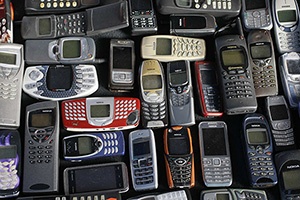
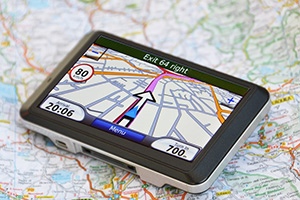




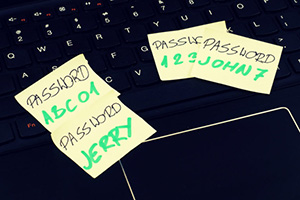










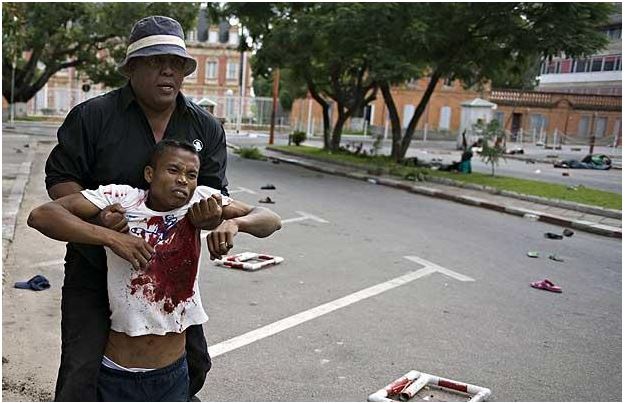


 Preppgroup