The idea the world would be better served with a single “World Currency” has been growing and looms as a real possibility in the near future. Many people see this as a major part of the “endgame” or something that will constitute a needed reset to a global economy and financial system that has gone off track. Throughout history, before an economic collapse, the masses and society tend to believe things are financially stable. Only after the economy goes over the edge of an abyss and is in free-fall does reality set in. It is not by accident that blinders have been placed upon us but it is the result of distractions being thrown in our path by those wishing to hold onto their power over us. It is wise to remember that when things do become critical, those in power will not be kind to us but that we will be thrown under the bus without a thought.
Over the last one hundred years, equity markets have been a primary tool used by the public to measure the economy. In some ways, the stock markets have become a kind of switch the elites can push at any given time to energize the masses distracting them from the dangers lurking in their economic future. When markets rise despite warnings from negative fiscal indicators, the masses become optimistic. During every upswing of stocks the elites claim they see the “green shoots” of prosperity, however, these shoots seem to always turn brown and die. We have been leaping from one recession to another even though central banks claim they now hold the key to generating true and honest growth. The truth is the current stock market bolstered by easy money and stock buybacks is a poor reflection of the real economy and what is happening in many areas across a broad swath of the world.
History indicates that establishment economists trained and educated in the ivory towers of academia are perhaps the most useless of all analysts and perpetually wrong. Only independent analysts have ever been able to predict anything of value when it comes to our economic future and that is because they have the advantage of not being blinded by the propaganda and brainwashed by lies flowing from those in control. Time and time again it has been proven the appearance of prosperity means nothing if the fundamentals do not support the optimism. A bullish stock market, a high dollar index, and low unemployment mean nothing and are unsustainable if generated by false methods and fiat money.We have seen time and time again throughout history that fundamentals matter.
The markets cannot hide from true price discovery forever.The stock market with its boom and bust cycles has proven to be a false indicator of what is really unfolding.Manipulation by the central banks has rendered this indicator of economic health useless. The problem we face is the horrible options in fiat money, massive debt, and the growth of international businesses have all come together in an explosive way.The banking elites are positioning themselves to avoid blame for this disaster while the rest of us are being sold on the most elaborate recovery con-game ever conceived and perpetuated by those with the most to gain.
Those in charge of our financial machinery have indicated to the public their desire for more power. This means creating a truly globalcentralized economic system and a highly controlled world currency framework dominated by a select cult of banking oligarchs. This would, in effect makes the rest of the human race their slaves.
Over the years, many articles have referred to a 1988 write-up in the financial magazine ‘The Economist’ titled “Get ready for a world currency by 2018.” It outlined the framework for a global currency system administered by the International Monetary Fund. This new system was and is floated on the premise that only by erasing all national economic sovereignty can true stability be obtained. It requires governments to borrow from the world central banking authority, rather than printing currency to finance their infrastructure programs.
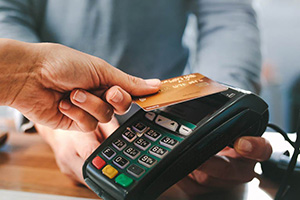
This dovetails with efforts to create such a system under the total control of the IMF which should raise the concern of every American. We are hearing more warnings and witnessing a push to destabilize the dollar as the reserve currency by China and several other countries. It is also occurring as Orwellian governments float the idea of going cashless as a way to gain further control over our lives.
For years the IMF has been openly discussing the ascension of the SDR to replace the dollar as the world reserve currency. Many developing nations that are deep in debt are already asking for help from the IMF due to volatility across the world and the BRICS are pushing hard to remove the dollar as the world reserve. This makes it a question of when such a currency reset will occur and in its wake bury the majority of the middle-class and poor throughout America. There is no way around it, the elites are positioned and merely waiting for a geopolitical disaster or catastrophe so overwhelming that when the time arrives they can portray themselves as our saviors during the chaos.
The demise of the dollar harkens back to when President Nixon severed its tie to gold. First, it’s crucial to understand that at the very core of our global economy is a financial system dominated by the U.S. dollar which has been deemed the reserve currency. The USD is unique in that it grants the U.S. the privilege of having a national currency which at the same time serves as the global reserve currency. This was solidified toward the end of World War II with the Bretton Woods agreement, which was accepted because the U.S. agreed to offer sovereign nations holding dollars a right to exchange these dollars for gold at a fixed price, however, with Nixon’s action in 1971, the USD became a fiat currency backed by nothing, the supply of which can be arbitrarily altered and manipulated by a group of unelected bureaucrats in charge of the Federal Reserve. This money system represents the most powerful tool on the planet.
The new world order and globalization pushed by many world leaders and the rich elite that tout “larger, more cooperative governments under one financial unit will benefit us all” feeds into the world currency scenario. Many Americans are oblivious to the fact we gain a great deal by our status of the dollar being the reserve currency by which all others tend to be measured. This means we have a great deal to lose if it is dethroned and stand to suffer the most if the dollar declines in value. Those who will be crucified are the middle-class Americans whose wealth islocked into or are holding long-term USD bonds thinking they are a safe investment.
Currently, a huge mismatch exists between the useof the dollar in the global financial system and the U.S. share of the world economy.This is whyChina, Russia, and several other countries that are acutely aware of this have been taking major steps to transition to a more multi-polar currency world. This is also why we should prepare and expect that in coming yearsthe world will adopt a completely different global financial system from the one chaotically birthed in the 1970s and when this occurs the USD will lose its total dominance on the world stage, resulting in major implications for America. While many people see this coming, several opinions exist as to how it will unfold and while we engage in speculation, nobody really knows what the world financial system will look like ten or twenty years down the road.
Few of us who continue to cherish freedom can get excited about transitioning away from the USD and being placed under the thumb of the IMF or an oppressive nation-state currency controlled by a country like China.That is why many of us think the dollar will be ripped from us during a time of crisis when Americans are open to accepting any solution offered to them as a way to ease their woes. While people point to cryptocurrencies as an option we should remember politics plays a massive role in how this all unfolds. To Americans, the fate of dollar-dominated assets and their value when the dust finally settles should be a huge concern but most Americans fail to grasp the implications.
It is my contention the transition to a world currency will take a far greater toll on paper assets than tangible goods. While recognizing the flaws of the dollar and our current system I have come to believe the other fiat currencies such as the euro and yen hold even less merit. This includes cryptocurrencies such as bitcoin. Regardless, in the end, we should expect to be told and not given an option as to what is coming. If events unfold in the way those promoting a one-world currency have planned it will be a dagger in the heart of freedom.
Gone Viral! The most shocking videos in the world… The US is Facing The BIGGEST Threat Of The Century
The video below will shock you because you will be among the first to watching this secret!
I want to present you one of the most interesting sites, where you will see new articles daily! www.321gold.com
This is because it can occur in the midst of any natural or man-made disasters.
The march into Martial Law is frequently overlooked by the general population, often branded as nonsense or something belonging to conspiratorial websites. Yet what’s going on in this country is just what our founders have warned us of, and Martial Law is something they’ve taken very, very seriously.
When Martial Law is going on, the world is in so much trouble that even the government won’t be able to handle it. Now I’m assuming Martial Law hasn’t happened yet.
Otherwise, you wouldn’t have been able to read this. This means that you have the opportunity to prepare for it, and I hope, for your sake, that you will do it fast.
Martial Law has no established definition, so if you’re looking for a general definition of Martial Law, then Martial Law essentially means using state or national military power to impose the government’s will on the citizens.
Soldiers, rather than city police, execute the law. Military officers make strategic decisions rather than elected officials. People convicted of offenses are taken to military courts rather than regular civil courts. In short, the army is in charge.
Under Martial Law, fundamental liberties and freedoms are abolished and citizens are no longer entitled to their constitutional rights. It effectively helps the army, or a tyrannical politician, to break the Constitution and enforce its will by military force.
Gone Viral! The most shocking videos in the world… 7 Hidden Signs That Martial Law Will Be Declared
Many of these signs point to an increased risk of the government preparing to declare martial law.
The video below will shock you because you will be among the first to watching this secret!
The History of Martial Law in U.S. History
In one way or another, tyrants have often used political authority to suppress and influence the people. Although if we’re searching for specific instances of Martial Law being used within the United States, we don’t have to search too hard or deep to find them.
Using the strictest meaning of the word, we can see the origins of Martial Law taking place in America during the time leading up to the Revolutionary War. While there were many motives for the war, including opposition to taxation levied by the British Parliament, the primary cause for England was the use of armed powers to enact the daily rule in the colonies.
Many of the most striking examples of this can be seen in the civil war. Although the history books of today largely neglect the true motives for the war or the several crimes committed by President Lincoln, the reality of what actually happened cannot be denied.
As an example, On 15 September 1863, President Lincoln imposed Martial Law by Congress. In fact, Lincoln had never had a top priority to eradicate slavery. In fact, Lincoln had never wanted to eliminate slavery. His primary interest was to centralize political authority and use the federal government to exercise full control over all residents.
The abolition of slavery was merely a by-product of the war. It actually took the thirteenth amendment to bring an end to slavery, as Lincoln really only liberated Southern slaves, not slaves, in states loyal to the Union.
Lincoln suspended the writing of Habeas Corpus without the consent of Congress. Lincoln put down or spoke against, publications whose authors expressed some dissension to the position of the Union.
Lincoln raised his forces without the approval of Congress. Lincoln closed the courts by force of statute. And eventually, without cause or trial, he too arrested residents, newspaper owners, and public officials
What Will Happen When Martial Law Takes Place
I’m pretty confident that the term “Martial Law” will never be seen. The word ” state of emergency” would undoubtedly take its place first. Martial Law can easily be accomplished globally, in situations of conflict, major terrorist threats, or locally, as observed in the aftermath of Hurricane Katrina.
WARNING: Watching The Following Video Will Give You Access To Knowledge The Government Does NOT Want You To Know About
Examples of what has occurred in modern years include Martial Law in New Orleans, August 2005. New Orleans has been declared a disaster area, and the governor has declared a state of emergency.
This allowed state officials to order evacuations and forcibly evict people from their residences, suspend some rules, confiscate weapons and suspend selling products such as liquor, firearms, and ammunition.
In the following of hurricane Katrina, New Orleans Police Department, U.S. Marshals, and the Louisiana National Guard illegally seized more than 1,000 lawful weapons from law-abiding civilians.
During Martial Law, you will probably see:
The suspension of the Constitution is likely to persist with the first amendment.
Detainment of firearms; it has happened in history, and it may happen again.
Suspension of Habeas corpus: Jail without due process and without trial.
Travel limits, including road closures and likely quarantine areas.
Let’s address it now. The nation is a complete mess. From massive civil strife, crime, and violence to the rising national debt, which comprises a whole segment of our society that relies on government aid to survive, the writing is on the wall: Trouble is coming.
In my view, we are now in the preliminary form of Martial Law. The founders never expected standing armies to police the United States’ people; unfortunately, that’s just what we have. Drones, armored vehicles with high-powered guns, tanks, and fighting helicopters are no longer something you can find on an overseas battlefield; they are all normal operating practices at police stations across the country.
Our federal government has invested billions of dollars into militarizing and taking over our country’s municipal police departments in what can only be characterized as a domestic military force or a standing army equipped to enforce federal law.
So what exactly do I mean that this has already started?
On 29 September 2006, President George W. Bush signed the John Warner National Defense Authorization Act (NDAA) for the fiscal year 2007 (H.R. 5122).
The legislation increased the power of the President to declare Martial Law in the form of amendments to the Rebellion Act. In fact, it allowed the President to take command of the National Guard forces without the consent of the state governors.
Although several parts of the bill were rolled back in 2008, President Obama used the 2012 NDAA to further expand the Executive Office’s right to declare Martial Law and introduced clauses that would allow U.S. armed forces to arrest U.S. civilians without trial.
In March 2015, the Obama administration set up a task force detailing our nation’s police rules. In his Task Force on the 21st-century Police Report, he proposed the establishment of the National Police Standards and Oversight Division of the federal government.
The study went on to explain how the Department of Homeland Security should be used to “ensure that community police tactics in the state, local and tribal law enforcement agencies are incorporated into their role in homeland security.”
The last and most troubling example is the growing number of Combined Police/Military Practices that view American citizens as theoretical risks.
From the Jade Helm military drills that identified Texas and Utah as dangerous areas to the California National Guard, using crisis actors to represent “right” U.S. civilians in their training exercises, there is an increasing number of military-style drills that portray American citizens as seen as a threat.
Back in 2012, the Army’s study on the military’s potential utilization as a U.S. police force aimed into possible scenarios that the U.S. did. The army may be used against Tea Party “insurgents” that take over U.S. cities.
Over the same time frame, the Department of Homeland Security issued a study entitled “Hot Spots of Terrorism and Other Crimes in the United States,” in which it claimed that the federal government considered the country’s greatest terrorist danger – the threat to U.S. people of radical “right-wing” views.
The United States of America that our Fathers have created is gone; it has been replaced by a system that has become so strong that most people do not even know that they have been enslaved by that same system.
What Would Life Be Like Under Martial Law
It’s not too hard to picture what Martial Law would look like. Life would certainly be difficult, and you would definitely be stripped of your rights.
I have never lived under this, but I can recall many moments in history and even events occurring under communist rule.
With that, I could paint a picture of what Martial Law could look like. Groups of armed men will walk the streets throughout the day. Your weapons will likely be confiscated if you don’t store them properly.
Your food, water, and other items will still be seized, and you will no longer be able to store them.
If you’re trying to get food or water in an area, you may have to wait hours and hours in line for a loaf of bread. Expect massive economic inflation. Any car can be halted or confiscated at any moment. Health is going to be a major problem.
Without running water for most households, rats and cockroaches could multiply and spread disease. News is going to circulate slowly.
And a lot of it is going to be inaccurate. A simple rule of thumb is never to trust something you hear under Martial Law until you’ve seen it with your own eyes.
There will certainly be a termination of habeas corpus. You will no longer have the right to a fair hearing. If you do anything wrong, even if it is for the sole reason of protecting yourself and your family, you will be judged by a military court.
The free press is going to be history, and so is the freedom of speech. You should expect armed checkpoints to be set up, even in small cities.
Whether you’re a rioter, a troublemaker, or even a suspected person, you should prepare to have “meetings” with the military. You may even be prohibited to leave town even though you didn’t do anything wrong.
Many normal people will be spies. Under Communist Romania, this was a big deal. Since the dictatorship collapsed, several high-ranking officials, journalists, and musicians suspected each other of being spies.
Expect to be scarce with the power, hot water, and even TV air time. I even predict that the open Internet is going to be a thing of the past. You might expect to lose your house. In 1950, many hotels and homes were abruptly turned over as belonging to the “people” without any compensation for their current owners.
And if you do not have the means of communication, you should expect the military to rule.
They’re probably going to have a chain of command and a degree of structure in their hierarchy if you believe that you and your neighbors should rise up to them in order to defend your freedoms.
I recommend that you still think this is a good thing. Few people want Martial Law to endure. Others are ready to die for their rights.
Your decision is yours, so please don’t be upset or patronize those who don’t make the same choice as you do. We’re all in it together.
How to Prepare for Martial Law
So how do you do to prepare for such an event? Let’s take it one step at a time.
1. Become a Prepper
It’s all about stocking up on food, water, medication, equipment, firearms, and gear. Learn survival skills and develop them before Martial Law happens.
In fact, this entire site is filled with articles on survival and preparedness. You will keep up-to-date with the latest news and articles by following me on social media and bookmarking this website.
Here are the major aspects of being prepared if you want to escape Martial Law:
The shelter is essential. You deserve to find a comfortable place to stay. A fortified house, a bug off place, or even a tent or a tarp to create shelter in the wilderness.
Food for you, for your mates, and for your pets. The more, the easier it is. But don’t forget about water.
Medicine. Bear in mind any medical problems that you or your family members may have.
Gear.
Firearms and ammunition.
Your level of fitness. You’re going to need to be solid and in shape.
Survival skills. Can you start a fire?
Drills, guy. You ought to practice evacuation, bugging, etc.
2. Expect Betrayal
When this occurs, you can bet anything that many groups will act like military or law enforcement agents or even threaten to take over the nation and become law.
This is most likely to happen when, like us, preppers like to say, in a WROL (Without Rule of Law) post-disaster scenario, when there is going to be a lot of uncertainty and uncertainty.
3. Choose to Fight or Flight
When the time comes, you’re going to make the most important decision of your life. You’re either going to bug in or out, waiting for the dust to settle, or you’re going to fight for your country and your freedoms.
Now I’m not going to tell you which of these choices is better for you. There is an open discussion about this with a lot of pros and cons on both sides. I’m trying to make it happen so that you make a decision and then see it out when the time comes. Whatever your decision is, it must be perfectly clear.
4. Be in A Trustworthy Group
When this happens, it’s going to be you and the patriots of your society versus the government. But if you want to count on their support when that happens, you need to make friends with them right now.
You can also make battle preparations for them if you want to. This will mean that you can protect your turf until the Martial Law hits and the rival groups attempt to conquer your territories.
If necessary, hold daily meetings to help coordinate and plan. Take a look at your combined range of skills (medical, woodworking, weapons, gardening, etc.) and see if any of them are lacking.
Crime of the Century! Big Pharma Doesn’t Want You to Know About Alternative: This “Egg Yolk Trick” Egg ShellErases Nerve Pain in 7 Days – Exterminates These Termite Cells
You need to build a real survival dream team from your family members and your prepper mates but beware of betrayal. You never know if someone is a double agent or when they try to take over when the time is right.
5. Avoid “Concentration” Camps
If you read the news when Katrina occurred, you couldn’t have overlooked the headlines about the Louisiana Superdome that had been used as a shelter for more than 20,000 refugees.
You see, even though the Superdome was designed to survive these kinds of emergencies, the construction itself was not the concern. The concern was the people inside and the circumstances in which they had to survive.
I could go on and on, but you’re going to get the idea. If you end up in one of these camps that are meant to keep you safe, you should expect to have no food, no water, no weapons, and no protection. So what’s the solution?
You either sit and protect your turf or your bug at the first sign of Martial Law. Heck, even though things don’t look that bad, you should still probably bug out if you’re going. Don’t wait too long. Otherwise, it may be too late.
In brief, you need to maintain a low profile to avoid revealing yourself, your family, your guns, and your preps. It also means that you keep your mouth shut at all times. Never give up some bit of information unless it’s about protecting your life or that of your family.
When Martial Law is the only law, all walls have eyes. And don’t expect just one person that wants to violate your rights. Your neighbor, the survival dream team member, the army, they’re all going to fight to figure out what you’re up to.
Final Thoughts
When things start going downhill, you know what will happen and how to prepare for it. Remember that your rights will be suspended when Martial Law occurs, and you must follow my tips to survive them.
APRIL 2ND: LIBERATION DAY — TRUMP’S TARIFF SHOCKWAVE SHATTERS GLOBALISM & IGNITES A NEW GOLDEN ERA! VIDEO
I want to present you one of the most interesting sites, where you will see new articles daily! www.321gold.com
Most of the countries all over the world are experiencing this phase of economic recession termed “Global Economic Recession” by financial analysts. Economic recession is the new hit song topping the charts the world over. Most companies have already been relegated to the league of financial bankruptcy. Many companies as well as countries have become bankrupt or are on the verge of it. Millions of people have lost their jobs, families have lost their homes, and most importantly bread winners have turned to bread losers. Many people have lost millions and billions of dollars. People in general are scared and fearsome. This is not the first time that the global economy is going through recession and this is also not going to be the last time. The United States of America, the fulcrum of the world’s economy had experienced several depressions before the stock market crash on October 27, 1929, none had been as severe or as long lasting before “Black Thursday” struck Wall Street. There is a pattern involved in it. On an average it is happening after every 8-10 years. This article has been written to highlight some of the issues involved and some of the possible solutions one can adopt to survive this hard time.
Before I proceed, I want us to check the meaning of the term recession. According to Oxford Advanced Learner’s Dictionary “Recession can be explained to mean a temporal decline in economic activity or prosperity.” It is said that “the solution to a problem lies in the problem.” Let’s borrow some few moments from history by analyzing the great depression of 1929-1939. The Great Depression took place from 1930 to 1939. During this time the prices of stock fell 40%. 9,000 banks went out of business and 9 million savings accounts were wiped out. 86,000 businesses failed, and wages were decreased by an average of 60%. The unemployment rate went from 9% all the way to 25%, about 15 million jobless people. No one knew how best to respond to the crisis. President Hoover believed the dole would do more harm than good and that local governments and private charities should provide relief to the unemployed and homeless.
By 1931, some states began to offer aid to local communities. Franklin Delano Roosevelt, then governor of New York, worked with Harry Hopkins and Frances Perkins to begin a direct work relief program. This helped only a very few. By 1932, only 1/4 of unemployed families received any relief. In 1932, only 1.5 percent of all government funds were spent on relief and averaged about $1.67 per citizen. Cities, which had to bear the brunt of the relief efforts, teetered on the edge of bankruptcy. By 1932, Cook County (Chicago) was firing firemen, police, and teachers (who had not been paid in 8 months). Breadlines and Hoovervilles (homeless encampments) appeared across the nation.
We already know that the following factors are the cause of the present economic conditions: – Credit crunch – shortage of finance. – Falling house prices – related to shortage of mortgages and credit crunch. – Cost push inflation squeezing incomes and reducing disposable income. – Collapse in confidence of finance sector causing lower confidence amongst ‘real economy’
Well there is nothing to fear about, as we all know “tough times don’t last”. Racing back through time we’ve had 7 recessions since 1967. The present one we are in is said to be the worst in history, but regardless, recessions are normal part of the ebb and flow of the US and world economies. The economic cycle always has its ups and downs, if this downswing turned out to be worse than any previous one, the reason must be sought in the profound structural changes heaped on top of a normal cycle.
I strongly believe that there is a reason for everything and I believe the reason for these recessions is to remind people that they are living above their capabilities. In past years people have lived on credit, borrowed off their future, purchased irrelevant things in order to keep up with their fake lifestyles and have ended up watching as they are losing everything they have. Now that the recession is here, what is happening? People are now blaming whoever they like for the cause of the recession.
There is no need to lay down in defeat, we have to pick ourselves up and prepare to forge ahead. According to Isaac Newton’s third law of motion “For every action there is an equal and opposite reaction.” And I have paraphrased it into “For every economic recession there is an equal and opposite opportunity.” All that is left is for you to identify the opportunities and utilize them.
Here are the tips for dealing with the storm called economic recession.
1. Be aware of it To be forewarned is to be forearmed. Preparation is the best weapon. This means when you have a premonition about something, you should be fully prepared for it.
2. Save up One of the best ways to stay financially stable at all times is to save your money and to spend wisely. You always have an emergency plan for the rainy day.
3. Avoid wastage Wastage is a sin before God and man. Jesus Christ demonstrated this when he fed the multitude. He told his disciples to gather up the remaining fragments after feeding the multitude so that none should waste. You can’t become rich by lavishing what you have.
4. Creating an extra means of income If you depend on a single means of income for survival you are definitely going to be the worst hit anytime. Having multiple streams of income is one of the sure ways of living comfortably in times of harsh economic conditions. Starting your own home based business is one of the major ways of creating extra income. And it is easier than you think if you focus on something you’re a specialist or interested in, and are willing to learn. Home businesses are becoming more and more popular with the rising cost of gas, fewer people wanting to commute and people wanting to become their own boss. Selling a product or information is an excellent way to start a home business. Find a product or service that you like and start selling. The more sales you make the more money you get.
Conclusion
I believe that this article will be highly beneficial to the readers. We are facing serious hard times and the only saving grace is what you know, because “information is power”. You can’t blame anybody for what you are going through right now. It’s just a phase it will pass along soon.
I want to present you one of the most interesting sites, where you will see new articles daily! www.321gold.com
Americans are used to being pretty much immune to any real social or economic calamities, with memories of the Great Depression being something that is limited to textbooks. We have gotten to the point where, even with the current recession, we just can’t imagine an all out economic collapse could ever happen here in our country.
However, the signs are that the very thing that we think of as unthinkable is becoming more and more probable with every passing week. An economic collapse is more likely than ever before, and with it, food shortages and power outages. Just how could that be true?
First off, the power outages and food shortages are just natural results of the economic collapse. Both food shortages and power outages are consequences of the supply chain disruptions that occur when an economy collapses.
An economic collapse like what is most likely to occur in the United States would be a scenario where the government has to print more and more money to pay its bills and that causes enormous inflation. Very quickly, the inflation turns to hyperinflation, where instead of 5% per year, the rate of inflation becomes 5% per month and then, for a brief period of panic, even 5% per week.
When the economic collapse begins and inflation skyrockets, suppliers of all sorts of products get very reluctant to ship their goods today because next week they might get a drastically higher price. Add to that the concerns that they might never get paid and more and more companies suddenly go bankrupt, and very quickly there are food shortages in the stores, even though there is plenty of food in the country.
This same dynamic affects all of the public utilities. Contractors become reluctant to perform work for the electrical utilities and other public works employers as they are concerned that by the time they are paid, their money will buy only a fraction of what it would have bought when they earned it.
This disruption in the supply chain and with contractors and key government workers causes repairs and maintenance in critical infrastructure to get delayed, making things like the electrical power grid less reliable and more prone to breakdown.
This was a key lesson from the economic collapse of Argentina. A wealthy country with a strong middle class suddenly had issues with rolling blackouts and less than reliable electrical service. It was quiet a shock to the population. However, it should not come as such a big shock if this scenario unfolds in America.
So if we know that economic collapse, food shortages and power outages are increasingly likely to happen in the United States, we are faced with a decision. We can take some measures to prepare – either extreme measures like the “Doomsday Preppers” on TV, or some more modest measures – and remember that an ounce of prevention is worth a pound of cure.
If you have any dissatisfaction with my content, you can tell me here and I will fix the problem, because I care about every reader and even more so about your opinion!
Predicting the collapse of a country is like reading between the lines of history, economics, and politics. Some nations, however, are walking on thin ice, where even a small additional burden could lead to their downfall. In this article, we’ll explore 10 countries facing severe risks that could put them on the brink of collapse by 2027. Some of these might surprise you.
1. Lebanon: A country where nothing works anymore Once hailed as the “Switzerland of the Middle East,” Lebanon is now in absolute economic chaos. Hyperinflation, currency collapse, and political corruption have brought the state to its knees. Ordinary citizens struggle to secure basic needs like food and fuel. Can Lebanon still be saved, or will it follow the fate of nations that fragmented into smaller entities?
2. Afghanistan: Taliban isolation and hunger Since the Taliban regained power, Afghanistan has plunged into international isolation. Its economy is collapsing, people are starving, and humanitarian organizations cannot meet the overwhelming needs. If the situation doesn’t improve, the state risks fragmentation into territories controlled by armed factions.
3. Haiti: From freedom to a nation ruled by gangs Haiti has been grappling with a crisis for years. With no functioning government, armed gangs dominate cities. Add to that natural disasters like earthquakes and hurricanes, and you have a recipe for complete collapse. Can Haiti ever rise again?
4. Sudan: A nation in perpetual conflict Sudan’s civil war between the army and militias is spiraling into catastrophe. Thousands are dead, millions are displaced, and famine looms large. If the conflict continues, Sudan could disintegrate into smaller regions controlled by local warlords.
5. Venezuela: From riches to rags Home to some of the world’s largest oil reserves, Venezuela has been in freefall for years. Hyperinflation, food shortages, and mass emigration have devastated the nation. Could Nicolás Maduro’s regime fall, or will Venezuela remain stuck in this “frozen collapse” for decades?
6. Myanmar: A coup that crushed hope The 2021 military coup plunged Myanmar into chaos. Protests, uprisings, and ethnic conflicts have become the norm. If the military junta doesn’t relinquish power, the country risks breaking into warring regions.
7. Yemen: A nation where survival is a battle Yemen is the epitome of disaster. Its civil war between Houthi rebels and the internationally recognized government has raged for years. Millions suffer from hunger and disease. If the conflict isn’t resolved, Yemen could vanish as a functioning state altogether.
8. North Korea: Behind the curtain of isolation Kim Jong Un’s regime appears solid, but what if it isn’t? Economic sanctions, famine, and a possible power struggle after his death could lead to an unexpected collapse. If that happens, the chaos could be unimaginable.
9. Pakistan: Battling economic and political storms Pakistan is grappling with an economic crisis deepened by debts and political instability. Extremism, corruption, and worsening relations with neighbors could weaken the country to the point of losing control over its regions.
10. Somalia: A collapse that never ended Somalia has been a failed state for decades. The terrorist group Al-Shabaab still controls large swathes of territory, while the central government remains weak. Without minimal international support, total disintegration seems inevitable.
Why Do Countries Most Of Time Collapse? Normally, the collapse of a state is always the result of a combination of factors:
Economic instability: Hyperinflation, overwhelming debts, or resource shortages.
Political corruption: Weak governments unable to address crises.
Civil conflicts: Wars, ethnic tensions, or regional uprisings.
Climate change: Worsening conditions, natural disasters, and resource depletion.
International isolation: Sanctions or loss of foreign support.
Can Any of These Countries Be Saved? History shows us that even nations on the brink of collapse can change course with the right leadership, international assistance, or societal unity. While rescue is possible, these cases will require far more than just hope.
Which other countries do you think are at risk? Let’s discuss.
Beyond the most vulnerable states, there are also numerous other countries that could face significant challenges if their situations do not improve.
Here’s a broader look at nations where trouble may deepen:
Sri Lanka – Still recovering from its 2022 financial collapse, with inflation and mounting debts remaining major hurdles.
Ethiopia – The Tigray conflict has eased, but ethnic tensions and economic woes could destabilize the country again.
Libya – Political and military division between the east and west prevents the country from restoring order.
Belarus – Lukashenko’s regime relies heavily on Russia, but domestic protests and international isolation are increasing the pressure.
Iran – Sanctions, domestic unrest, and regional tensions could severely threaten the regime’s stability.
Zimbabwe – Chronic corruption, hyperinflation, and authoritarian governance undermine hope for improving living conditions.
Nigeria – Boko Haram violence, economic inequality, and corruption destabilize Africa’s most populous nation.
Democratic Republic of Congo – Ongoing conflicts and mismanagement of natural resources deepen poverty and unrest.
Bangladesh – Climate change and political unrest could pose major risks to this densely populated country.
Eritrea – One of the world’s most closed-off nations, facing poverty, repression, and isolation.
Kazakhstan – Political unrest and tensions with neighbours could affect the stability of this oil-rich country.
Tunisia – Democratic gains are threatened by political crises and economic struggles.
Armenia – Tensions with Azerbaijan over Nagorno-Karabakh continue to jeopardize regional peace.
Papua New Guinea – Violence, poverty, and corruption hinder the country’s potential for economic growth.
Mali – Terrorist attacks and military coups threaten the future of this West African nation.
Honduras – Criminal gangs and corruption create unbearable conditions for its citizens.
Colombia – Despite peace agreements with FARC, violence remains an issue, with new drug cartels gaining strength.
El Salvador – President Bukele faces accusations of authoritarianism, while gang violence remains a constant threat.
Mozambique – Islamic insurgencies in the north and widespread poverty destabilize this country.
Bosnia and Herzegovina – Ethnic tensions and weak political leadership risk undermining the fragile peace.
These countries may not necessarily collapse, but they face serious challenges that could affect their future.
What other nations do you think are at risk? Let’s discuss!
I want to present you one of the most interesting sites, where you will see new articles daily! www.321gold.com
If your area is anything like mine, a large number of stores and small businesses have closed in recent months. Generally, there is a lag or delay before the full negative effect of businesses closing is felt. Mass layoffs, and dropping retail sales area glaring sign that the possibility of a recession is on the rise. Yes, we must add flagging retail sales to the growing list of signs of economic problems ahead.
The bailout of the auto industry following the 2008 financial crisis was based on the fact we simply had the ability and were producing too many vehicles. It was a thinning of the herd. Sadly, we are again in that situation. The oversupply of new trucks and cars has not brought down prices but instead created auto companies that face falling profits and a difficult future.
This situation of oversupply is not limited to the auto industry. After the sun had set on Sunday, as I drove the two miles from my office to home, I saw two Amazon trucks doing deliveries. This is problematic for local brick-and-mortar businesses, especially retailers. Much of this appears to be from a fundamental shift propelled forward from people being forced to stay home during Covid. This coupled with the internet has altered the retail landscape.
It does not help that stores forced to put many products behind locked glass to halt shoplifting has made shopping a distasteful experience. Many people decided a semi-covid lifestyle is preferable to going to and working in an office or leaving home. It is difficult to say how much this has hurt productivity but many business owners will tell you, it is a lot. Covid was a discipline killer resulting in many people losing the discipline to work without a supervisor looking over their shoulder.
Also, there is the issue of government office space cutbacks from the work DOGE is doing to reduce wasted spending. Coupled with the work-from-home movement this is also impacting communities. This does not bode well for landlords dependent on keeping space leased in order to pay their mortgages. Yes, we want to cut government spending but it is a double-edged sword in that it will impact economic growth in the short term. Sadly, that short term may last far longer than many people think.
The Trump administration has published a list of more than 400 federal properties that could be closed or sold, including the FBI headquarters and the main Department of Education. The Department of Government Efficiency (DOGE) has also terminated leases for more than 2.3 million square feet of office space, contributing to an estimated $60 billion in savings.
The ripple effect that empty buildings have on communities tend to come across as a cancer or long term economic rot. Supply and demand for space in an area determines rental rates and when rates drop to low, facilitate and building maintenance often take it on the chin. With this in mind, prepare for Retail Apocalypse Part II. While this could be considered a continuation of a trend that started years ago the number of closures about to occur will take things to a whole new level.
While inflation may be dropping quickly, other concerning trends, including mass layoffs, have developed. QI Research founder Danielle DiMartino Booth has been calling attention to these often underreported recession signals. She highlights rising store closures and job losses saying, “There is no greater drag on inflation than job loss.” Her concerns about a recession have been rising daily as auto loan delinquencies soar. Booth points out the number of major employers laying off workers now includes Chevron, BlackRock, Boeing, Southwest Airlines, Hewlett-Packard, Kohl’s, Meta, and Starbucks.
If consumer prices take a minor fall due to slake demand, do not expect it to help most businesses. Instead, such weakness tends to squeeze margins. Fundamentally businesses face a difficult road ahead and will not see much or any drop in overall operational costs. The removal of costly regulations coupled with gains in productivity remains their main hope. Only time will tell how large the toll of a slowing economy will be but the potential for a lot of pain does exist.
All Americans Will Lose Their Home, Income And Power By March 27, 2025
Watch the video below!
I want to present you one of the most interesting sites, where you will see new articles daily! www.321gold.com
In today’s uncertain economic climate, many Americans are growing increasingly concerned about the future. Recent surveys show that a third (33%) of Americans fear that a total economic collapse could be on the horizon, a collapse that could quickly spread across the nation, causing widespread panic and chaos.
The Looming Economic Threat
High Inflation and Interest Rates: Americans are demoralized by persistent inflation and high interest rates. Joanne Hsu, the director of the University of Michigan’s consumer sentiment survey, noted that many Americans have abandoned saving for traditional long-term goals like homeownership and retirement. Instead, they are spending money now, attempting to maintain their lifestyle despite economic pressures.
Consumer Sentiment at a Low: The University of Michigan’s survey showed consumer sentiment plummeting to a six-month low in May, driven by high inflation and rising interest rates. This decline in confidence suggests that consumers are reaching their breaking point, reining in spending after months of elevated inflation.
Retail Sales and Economic Slowdown: Recent data from the Commerce Department highlights that retail sales have stagnated, with almost no growth from March to April. This stagnation is a stark contrast to the 3% surge in retail sales a year ago. While some sectors saw slight increases, such as gas stations and food stores, others, like online retail, experienced significant declines.
Debt and Delinquency: Americans are increasingly relying on credit to support their spending, with credit card debt reaching all-time highs. Delinquency rates are also rising, indicating that many consumers are struggling to keep up with their financial obligations. The strain is particularly evident among younger generations and those in low-income neighborhoods.
Unemployment and Job Market Woes: The labor market, while still relatively strong, is showing signs of stress. The nation’s unemployment rate ticked up last month, and the number of people applying for unemployment benefits rose to its highest level since August. This weakening job market is causing consumers to act with more caution.
Economic Crisis by the Numbers
Out of Control Inflation: It now takes at least $177,798 for a family of four to live comfortably in the U.S. A recent study highlighted that in the most expensive states, families need nearly $300,000 to maintain a comfortable lifestyle, while even the least expensive states require over $100,000. The average annual salary in the U.S. is $59,428 as of May 2024.
Record Household Debt: Tens of millions of Americans are trapped in an endless cycle of debt. U.S. households are currently $17.69 trillion in debt, with household debt hitting a new record in the first quarter of this year. This surge includes a $184 billion increase from the previous quarter, primarily due to mortgage balances rising to $12.44 trillion. Auto loan balances have also climbed to $1.62 trillion, while credit card balances remain near a record high at $1.12 trillion.
The Wealth Gap: The gap between the rich and the poor is larger than ever, leading to growing frustration. The wealthiest 10% of Americans own a record high 93% of all stocks, while the poorest 50% own just 1%. When considering all forms of wealth, the bottom 50% of the U.S. population holds only 2.6% of the total wealth. This disparity has caused tens of millions of Americans to lose faith in the system, with politicians attempting to pacify them with handouts.
All Americans Will Lose Their Home, Income And Power By March 25, 2025
Preparing for the Worst: Survival Tips for Economic Collapse
Given the current economic climate, it’s important to prepare for the possibility of a large-scale financial crisis. Here are some practical tips for surviving an economic collapse:
Stockpile Essentials: Ensure you have a sufficient supply of non-perishable food, clean water, and essential medications. Aim for at least a three-month supply to weather disruptions in supply chains.
Secure Your Home: Increase home security to protect against potential crime surges during economic instability. This includes reinforcing doors and windows, installing security systems, and establishing a neighborhood watch program.
Diversify Your Assets: Convert some of your savings into physical assets like gold, silver, or other tangible goods that retain value during economic downturns. These can provide a buffer if cash loses value.
Learn Bartering Skills: In a severe economic collapse, traditional currency might become worthless. Learn bartering skills and start stockpiling items that can be traded, such as alcohol, batteries, and basic tools.
Develop Self-Sufficiency Skills: Learn essential skills like gardening, hunting, and basic medical care. These skills can reduce your reliance on external systems that might fail during a crisis.
Establish a Community Network: Build strong relationships with neighbors and local community members. A tight-knit community can offer mutual support and resources during tough times.
Create a Bug-Out Plan: Have an evacuation plan in case staying in your current location becomes unsafe. This includes knowing multiple routes out of the area and having a pre-packed emergency kit (bug-out bag) with essentials.
Maintain a Cash Reserve: While diversifying assets is important, keep some cash on hand in small denominations. In the immediate aftermath of a crisis, cash can still be useful for essential transactions.
Invest in Self-Defense: Economic downturns can lead to increased crime. Ensure you have the means to protect yourself and your family, whether through self-defense training or legal ownership of firearms.
Stay Informed: Regularly update yourself on economic news and trends. Being informed can help you anticipate changes and react swiftly to new developments. Additionally, consider getting a ham radio license. Ham radios can be a vital communication tool during any collapse where traditional communication methods might fail.
Have a Backup Power Source: In case of extended power outages, invest in alternative power sources such as solar panels or generators to keep essential appliances running.
Prepare for Medical Emergencies: Stock up on first aid supplies and over-the-counter medications. Learn basic first aid and consider taking a course to be better prepared for medical emergencies.
Build a Food Garden: Start growing your own food to reduce dependency on grocery stores. Even a small vegetable garden can provide significant sustenance.
Reduce Unnecessary Expenses: Cut back on non-essential spending to save money and redirect funds towards critical supplies and debt reduction.
Invest in Durable Goods: Purchase durable goods that will last through tough times, such as quality tools, clothing, and home repair supplies.
Create a Family Emergency Plan: Ensure every family member knows what to do in various emergency scenarios, including how to contact each other and where to meet if separated.
Stockpile Fuel: Keep extra fuel for your vehicle and generator. Fuel shortages are common during economic collapses and can hinder your mobility and power supply.
Prepare for Economic Migration: Be ready to relocate if your area becomes unsustainable. Have a plan for where you might go and how you’ll get there.
Develop Mental Resilience: The stress of an economic collapse can take a toll on mental health. Develop strategies for coping with stress and maintain a positive outlook to stay strong during difficult times.
Preparing for an economic collapse can be challenging, but it is essential in today’s uncertain world. By having a plan, diversifying your investments, stockpiling essential supplies, learning new skills, and paying off debt, you can increase your chances of surviving and thriving during a financial crisis.
Gone Viral!All Americans Will Lose Their Home, Income And Power By March 20, 2025- See video!
Have you ever wondered what makes a person snap? What causes a normal, quiet, everyday citizen, loving mother, or doting father to lose it all and fight like a caged animal? What can cause a small village to rise up and rebel against an oppressive police force and start killing them? What is the switch that gets flipped that causes a city to pour two million people into the streets, chanting and demanding to be heard by their government?
Lately it feels more and more as though we are on standing on the edge of some yawning precipice peering over the crest into darkness. What is more troubling to me is that we have been down this path before. The sense of unease is almost palpable to me sometimes; it is more evident if you are paying attention. If you are able to eliminate the white noise of the world for a minute; hit the pause button on the playlist of daily life for a while and look around, listen, you may start to recognize that you too are caught up in events that will soon change all our lives.
For several years I have felt an unsettling sense that we need to be prepared, that life is going to throw us a big, fat, greasy curve ball soon and we better not be caught napping. To try and proactively address that warning voice I started planning and taking steps to prepare my family to be able to weather events in the future. I am certainly not alone in this concern as you can easily see by the tremendous growth of the prepper movement. In the spectrum of probable events, there are a lot of potential scenarios. Natural disasters and emergencies occur every day all over the world, but you have to broaden your gaze and look to current events and history as well. One of the things that I think is a valid potential event to consider is a collapse of our way of life which leads to an authoritarian oppressive government.
Are we reaching a tipping point?
SS soldiers guarding the column of captive Jews in the Warsaw ghetto.
We have seen in recent events, by now almost too numerous to mention, the effects of a rising frustration with the way things are. It isn’t necessary to go into all of the individual reasons, but as a society there are more and more outpourings of frustration on a global scale. There are increasingly tightening restrictions against people. There is a manipulation of markets and the economy. There is a great increase in the loss of freedom and there is a more open antagonism and almost outright animosity by Government towards their people.
Related: Martial Law, Civil War is Coming to America Just Like The Days of Hitler
Governments exist either because they have come to power through force and violence or they have been elected and given power by the people. The force and violence crowd usually have their roots in the military and we like to call them Dictators. There have been a ton of them throughout history; Hitler, Stalin, Mao, Kim Jong iL and now his son, Saddam, Gaddafi, the list goes on and on. Dictators don’t care about the people and usually kill anyone who gets in their way. It is a fact that government has killed more people than any other cause, disease or reason.
The other side of the coin is what is usually called Democracies. I am lumping a lot of governments in here I know, but the democracies are usually elected and formed with the consent of the people with the noble goal of securing rights or protecting the people over whom they govern. Almost without fail however, Democratic Governments eventually do not want to answer to the people and at some point they most certainly will not be told what to do by the people to the point of ignoring the will of the people (for the people’s own good of course). Now these governments that are supposed to secure the liberties of their people are becoming more openly hostile to the same people they have sworn to defend. Funnily enough the democratically elected governments now seem to want to hang on to power with the same methods of force and violence as dictators. How else can you explain arming themselves with ammo, ignoring the constitution, purchasing assault vehicles and preparing to confiscate firearms?
When governments will steal money outright from the citizens in order to pay bills that were not incurred by the people we have a problem. When government spies on its people and uses that information against them punitively we have a problem. When Government uses the force of the military that was supposed to defend the people that was paid for by the people, for the purposes of killing the people, we have a big problem. When someone brings to light crimes by the government and is labeled as the one who is a danger, we have a problem.
The problem is that governments around the world are viewing their people as the problem and there really seems to be only one way throughout history that this is ever rectified. My fear is that we are already set on a course that won’t be changed with laws, great political leaders, or a return to the values of a golden age in time long past.
The Fine Line – The Straw that breaks the camel’s back
The fine line between someone who is a law-abiding citizen and a murderer is one that exists purely in our souls. There is nothing physical that is different from a person who follows the rules and someone who breaks them. The urge to pull the trigger isn’t something you can see and it isn’t a trait to test for, so it must be our own individual sense of right and wrong. Of good and evil.
I know that some will argue that a psychopath is definitely recognizable by character traits and maybe even brainwaves or chemistry. That may be true, but you can be a psychopath (clinically) without ever hurting anyone. By the same token, you can take a life while being perfectly “sane”.
If you hold a knife in your hand, you are just as capable of using that to stab or cut someone as the murderer in the next town, but that thought never enters the mind of an overwhelming majority of people. A baseball bat in your hands can easily be swung with great force connecting it to the back of a skull, but this thought never appears in our heads; that is unless we are forced into a corner. When a person is in desperate fear for their lives, the unspoken rules of right and wrong are broken. The processes that we follow every day are overridden in the cause of rage or self-preservation. What was unthinkable before is now very real, necessary and even righteous with the right circumstances.
When the right buttons are pushed, anyone can lose it. When the fear of dying or of losing someone you love is so overpowering, the “fine line” that has been keeping us sane, law-abiding and good is easily shattered. When this happens, all bets are off.
We as a people, a country are still rather firmly attached on the good side of this line. We have not yet completely been driven to abandon all hope and lash out. We have not yet been so harmed, have not gotten to the point that we have nothing to lose and are ready to lose it, but this may be coming in the future.
Also watch- The most shocking videos in the world! Power Efficiency Guide Will Change Our World Forever
The force and violence that is being used now to quell the dissatisfaction of people globally is increasing. The methods to cease the complaining of the rabble has been relatively minor with some exceptions. Tear gas, rubber bullets, mace and batons only work up to a point though. When the time comes that people can no longer abide, there won’t be enough police to stop them using riot control techniques. The military doesn’t have enough people to stop the entire population unless those people peacefully agree to surrender, so what will they do? Do you believe any government will quietly step down and admit that they are obviously not speaking for the people anymore? No. They will resort to more force and violence and people will die. Either that or you have a coup like they had in Egypt and guess who took over to “restore order”? Yep, the Military.
What will be the inevitable response by the authorities?
The Chinese people who started to revolt against the police in their town did so because the authorities were “placing restrictions on their culture, language and religion”. China is no picnic compared to America and we clearly know they have lived through far worse oppression than we have, but this was the straw that broke the camel’s back for them?
The protests which turned into an estimated two million citizens of Brazil had started simply enough with a protest over a rise in the rates of public transportation.
In America, what will be the trigger that causes people to rise up and say we aren’t going to take this anymore and more importantly what will happen when/if we do?
What will happen if we don’t change the path we are on?
The execution of the last Jew in Vinnytsia, made by an officer of the German Einsatzgruppen
There is a quote that has always struck me as very sad and telling from Aleksandr Solzhenitsyn in his book The Gulag Archipelago. Solzhenitsyn was a Russian who was sentenced to 8 years in a Soviet prison camp for essentially writing things about Stalin that the government didn’t like. During this time in Soviet Russia, to stifle dissent, millions were killed or sent to prison camps. In this passage Solzhenitsyn is talking about regret that everyone felt because they simply went along with this tyranny and didn’t oppose it.
“AND HOW WE BURNED IN THE CAMPS LATER, THINKING: WHAT WOULD THINGS HAVE BEEN LIKE IF EVERY SECURITY OPERATIVE, WHEN HE WENT OUT AT NIGHT TO MAKE AN ARREST, HAD BEEN UNCERTAIN WHETHER HE WOULD RETURN ALIVE AND HAD TO SAY GOOD-BYE TO HIS FAMILY? OR IF, DURING PERIODS OF MASS ARRESTS, AS FOR EXAMPLE IN LENINGRAD, WHEN THEY ARRESTED A QUARTER OF THE ENTIRE CITY, PEOPLE HAD NOT SIMPLY SAT THERE IN THEIR LAIRS, PALING WITH TERROR AT EVERY BANG OF THE DOWNSTAIRS DOOR AND AT EVERY STEP ON THE STAIRCASE, BUT HAD UNDERSTOOD THEY HAD NOTHING LEFT TO LOSE AND HAD BOLDLY SET UP IN THE DOWNSTAIRS HALL AN AMBUSH OF HALF A DOZEN PEOPLE WITH AXES, HAMMERS, POKERS, OR WHATEVER ELSE WAS AT HAND?… THE ORGANS WOULD VERY QUICKLY HAVE SUFFERED A SHORTAGE OF OFFICERS AND TRANSPORT AND, NOTWITHSTANDING ALL OF STALIN’S THIRST, THE CURSED MACHINE WOULD HAVE GROUND TO A HALT! IF…IF…WE DIDN’T LOVE FREEDOM ENOUGH. AND EVEN MORE – WE HAD NO AWARENESS OF THE REAL SITUATION…. WE PURELY AND SIMPLY DESERVED EVERYTHING THAT HAPPENED AFTERWARD.” – ALEKSANDR SOLZHENITSYN
Will this be our fate too? Will we slowly be conditioned to accept atrocities like this and to be completely defanged so that we can be herded into camps without so much as a whimper as well? That’s crazy you say! Is it? Right now, our government is hunting down someone who simply exposed how they (government) were illegally spying on all of us. Our government is buying arms and stockpiling weapons for use domestically not in some war. Our government has the IRS actively harassing a single political/opposition party. Our government has shown that they will lock down a town and go door to door while making the citizens stay cowered inside. Our government has stated that they can imprison anyone without cause for an indefinite amount of time.
Can you seriously argue that we aren’t headed down the same path as others have in our not too distant past?
This is not a call to armed Revolution, but I do think we should all be very wary of this course we are on and the echos of history. We should not be silent in the face of increasing oppression. We should not simply go along quietly because of the fear that we may get in trouble, or worse that we believe the government is only looking out for our best interests. You only need to look at the people in Poland who quietly went into the Warsaw ghettos. You don’t have to look any further than the Holocaust to see what quietly going along will get you.
This is not a fate that I will be bringing on my family.
Warning: This video may be sensitive to some viewers.
If you have any dissatisfaction with my content, you can tell me here and I will fix the problem, because I care about every reader and even more so about your opinion!
I want to present you one of the most interesting sites, where you will see new articles daily! www.321gold.com
If it isn’t already, surviving economic collapse should be at the forefront of your mind. And with good reason; the pitiable state of the economy has sparked fear that the world is to face an even larger economic collapse in the coming year.
The recent global stock market turmoil has left investors panicked and worried. This is nothing compared to what we (and our ancestors) have seen in the past. Here we take a look at the most devastating financial crises that wreaked havoc through modern history.
The financial markets reflect the irrationality, optimism, and panic of market participants. Sometimes extreme optimism causes asset prices to disconnect from the reality, only to fall dramatically when the bubble bursts. Examples include the Tulip Mania (1637) and the South Sea Bubble (1720).
These are the top 10 most devastating financial crises:
10- Argentine economic crisis, 1999
Much like other Latin American nations, the Argentine economy was hit hard by the Latin American debt crisis in the 1980s. Its forex reserves were running low. The rampant corruption, sky high inflation, military dictatorship, and the Falklands debacle drove the Argentine economy to the verge of collapse.
The steep devaluation of the Brazilian currency in 1999 hurt Argentine exports. Soon the Argentine economy was in full-blown recession that lasted three years. Following the dramatic run on banks, the government froze everyone’s bank accounts. Violent protests erupted all over the country. In the absence of cash, people bartered for goods. Two consecutive governments failed to bring the economy out of recession. It took Argentina three years to recover from the crisis.
9- Russian financial crisis, 1998
Five years prior to the financial crisis, Russia issued GKOs – inflation-free treasury bills – to fund its budget deficit. The GKOs attracted a huge number of foreign investors because of high interest rates. The government was using proceeds from GKO sales to pay off interest on existing debts.
But the Russian economy continued to struggle due to corruption, political instability, and lack of economic reforms. The falling oil prices also hit the Russian economy hard. The government owned more than $12 billion in unpaid wages to employees. In 1997, Moscow tried to raise more money by selling GKOs with interest rates of up to 200%!
Eventually, investors lost confidence in the Russian economy, selling the rubles and other Russian securities en masse. The markets tanked more than 60%. Many banks vanished within weeks. The Russian central bank used its forex reserves to stabilize the ruble, but couldn’t. Even an IMF loan proved ineffective. Russia emerged from the crisis when oil prices started rising in 1999.
8- The 1987 crisis
On October 19, 1987, the US stocks tumbled 22.6% in what is now known as Black Monday. No one is entirely sure what caused the Black Monday, but it wiped out hundreds of billions of dollars from the stock markets. By the end of October 1987, the Australian stocks fell 42%, Hong Kong stocks went down 46%, and the UK stocks fell 26.4%.
Some believe the Black Monday crash was caused by the growing influence of computers on the Wall Street. Others blamed monetary policy and inflation. Following the 1987 crisis, many of American’s leading savings & loan entities such as American Savings and Loan, Gibraltar Savings and Loan, and MCorp collapsed.
7- German hyperinflation, 1918-24
The German hyperinflation was not as bad as the Zimbabwe hyperinflation, but it was one of the most devastating financial crises in history. After the First World War, the ‘victors’ blamed Germany for starting the war. They demanded retributions for the cost of war. Whatever land, precious metals, and other assets Germany had wasn’t enough to cover the cost of war.
So, Germany started printing Mark like never before. The exchange rate skyrocketed from 4 German Marks per dollar in 1914 to 1 trillion Marks per dollar in 1923. Inflation was running high. Many countries accused Germany of deliberating sabotaging its economy to avoid the financial retributions of war.
The country tried to control the hyperinflation in 1923 by introducing a new currency called the Rentenmark. It destroyed the middle-class and paved the way for National Socialism in Germany.
6- Asian financial crisis, 1997
During the early 1990s, the Asian Tigers – Thailand, South Korea, Hong Kong, Malaysia, Singapore, and Indonesia – had become the hottest investment destinations. Developed countries were pouring billions of dollars into the region. Asset prices shot through the roof. Some of these countries were clocking annual GDP growth rates of above 12%.
Favorable exchange rates made their exports less competitive. Amid extreme optimism, investors failed to notice that the Asian Tigers were also running huge fiscal deficits. The Asian Tigers began facing fierce competition from China in the export market in 1996. The massive debts and falling exports hurt these economies. Panicked investors from developed countries withdrew credit. The asset prices started falling, leading to massive debt defaults.
The crisis began in Thailand and quickly spread to other countries. Regional currencies fell dramatically against the dollar, making dollar-denominated borrowings even more expensive. The International Monetary Fund launched a massive bailout program to help Asian countries bring their economies back on track.
5- OPEC oil crisis, 1973
The United States was sending arms and supplies to Israel during the Fourth Arab-Israel War. The OPEC nations retaliated by stopping the export of oil to the US and its allies. As a result, oil prices jumped significantly in developed countries.
Inflation was running high and the economic growth had stagnated. The NYSE lost $97 billion in value within six weeks. Japanese automakers started selling smaller and more fuel-efficient cars to compete with the American gas-guzzlers.
The oil embargo lasted only five months. But the Arab nations realized the power of oil in the global economy. The US had to enact several regulations to conserve oil. In 1977, the US government created the Department of Energy to build a strategic petroleum reserve.
4- Japan’s Lost Decade, 1991-2000
The Japanese economy witnessed a strong growth after the Second World War, thanks to the country’s high savings rate and sheer hard work. By the 1980s, Japan had become the world’s second largest economy behind the US. Japan was the world’s largest exporter of goods.
The booming economy and record-low interest rates brought prosperity. Consequently, the stock market and real estate valuations shot through the roof in late 1980s. At one point, the Japanese Imperial Palace was worth more than the entire real estate in California. It all ended in 1990s when the speculative bubble burst.
In the 1990s, the Japanese stock market lost more than $2.2 trillion in value while the real estate market declined by more than $8 trillion from the peak. It was a slow rather than a sudden decline. Borrowers failed to repay debts backed by speculative assets. The stock market and real estate bubble burst led to a decade of low growth as the economy stalled. The country is still struggling with low growth and deflation.
3- Dot-com bubble, 2000
Between October 1990 and March 2000, the S&P 500 index gained 417%. Investors had just realized the potential of the Internet Age. The rally was fueled by tech stocks. Even many non-tech companies were adding ‘.com’ to their names to attract investors’ money. In March 2000, the NASDAQ reached a peak market capitalization of $6.6 trillion. Most of the technology companies didn’t have a viable business model back then.
The NASDAQ started declining in March 2000. By 2002, investors lost an estimated $5 trillion as hundreds of technology companies vanished into thin air.
2- The Great Recession, 2007-2009
It was the most devastating financial crisis since the 1929 Great Depression. On the back of low interest rates, excessive leverage, and subprime mortgages, the US housing market was on steroids between 2002 and 2007. People with low or unstable income were able to buy exorbitantly expensive houses with zero down payments.
It was only a matter of time before the borrowers started defaulting on their loans. The S&P 500 index plunged 56.8% between October 2007 and March 2009. It wiped out more than $6.5 trillion from the US stock markets. The effects were felt all over the world. Several financial services giants including Lehman Brothers, Washington Mutual, and Bear Stearns collapsed during the Great Recession. The US government launched unprecedented bailouts to revive the economy.
1- The Great Depression, 1929
The Great Depression was the most devastating financial crisis in modern history. Prior to the 1929 crash, American experts and economists predicted that the country had entered an era of ‘permanent prosperity.’ People were borrowing money to invest in the booming stock market. Countless middle-class people had turned millionaires.
Investors panicked when the government raised interest rates. On October 29, 1929, investors lost more than $10 billion ($95 billion adjusted for inflation). Within a week, the stock market had lost about $30 billion in value, which was even more than what America had spent on the First World War.
Between 1929 and 1932, the US stocks lost 86% of their value. The Great Depression lasted about a decade. More than one-third of American banks collapsed during the crisis. In 1933, the US government established the Federal Deposit Insurance Corporation (FDIC) to restore people’s faith in the American banking system.
Millions lost their jobs. Unemployment rate reached 25% in 1933. Billionaires went bankrupt. The stock market did not reach its 1929 peak again until 1954.
I want to present you one of the most interesting sites, where you will see new articles daily! www.321gold.com
So the old adage goes anyway, and for the prepper – the one who’s keeping abreast of current events – cash is one of the last man-made means of protection that he or she has against governments that have grown to a degree of power that they never had before.
The Dangers of a Cashless Society
There are two predominant dangers that come with a cashless society, and just about every negative that you can think of due to such will fall into one of these two groups:
Denial of purchasing power
A complete loss of anonymity
Denial of Purchasing Power
A cashless society is a controlled society. If everything must go through an online banking or credit card process, then you have just lost virtually all control over what you buy.
Anything that is not politically sanctioned(guns, ammo, body armor, helmets, particular books, particular website premium subscriptions, political donations, etc.) could very easily be vaporized overnight.
This, of course, would drive the makers and holders of such products into a black market to barter their goods, and this in turn would be responded to by the use of overwhelming government force. This will come in the form of Stryker vehicles, concussion grenades, snipers, and men with automatic rifles and body armor.
Don’t believe me? Read FA Hayek’s The Road to Serfdom. Totalitarian governments must resort to force simply for the sole reason that people will naturally refuse to comply with widespread theft of their own goods. This force will only continue to grow in its usage.
Totalitarians do not accept blame for their own economical failures. The state is the end of all things to them, and as such, the end justifies the means – no matter how terrifying such a means may be.
A Complete Loss of Anonymity
Once cash is abolished everywhere, your attempts at any form of anonymity will be destroyed.
You already have an amazing amount of data that has been collected from you from your Internet search history, GPS data, voting history, bank statements, credit card statements, phone data, and a host of other publicly available information that easily allows people to deduce information from you.
And where humans fail, algorithms thrive. I have a hobby interest in algorithm creation (particularly multiple linear regression analysis) and have used it within my healthcare job as a means of predicting patient attendance rather accurately on any given day. I’ve also used them to (somewhat less accurately) predict when a patient was going to have episodes of heart block.
Algorithms are a powerful tool, and the more data you feed them, the stronger they get. With the amount of data that has been collected on you already, the government may be able to make a much stronger prediction about who you are, what you believe, and what you possess than you would’ve ever thought possible.
Just think about what a cashless society would mean for the following purchases:
Medicine – The government can now invade your medical privacy to see what meds you need to live as well as know what could either improve or hamper your condition. For those who don’t believe that this is a concern, just keep in mind that it wasn’t that long ago that the US military was warning its soldiers against getting genetic testing to determine their family tree. Why? Because it was deemed to be a security risk. What do they know here that we don’t?
Food – Algorithms can easily predict when you are buying much more than what you could eat within a particular span of time. This then means that food stores can be predicted and located. Come disaster time, your house could easily be one of the first that is targeted for “hoarding”. And what happens if it’s determined that those with large food stores are likely to be “domestic terrorists”?
Firearms and Body Armor – This is the low-hanging fruit here. Weapons, ammunition, body armor – they could all be easily tracked (and later confiscated). Buying “too much” of one particular product may cause red flags to be attached to your file, and you could very easily end up with a visit from an alphabet agency full of men carrying what is now a felony for you to own.
Ham Radios – There already seems to be an attack against ham radio users as the government has realized that this is the route that many fearing censorship/silencing are turning toward. If you can shut down all communication other than what is government sanctioned, you have effectively silenced free speech.
Media – Do you like to watch documentaries that may be labeled as conspiracy theories? Is it that hard to imagine a “misinformation tax” to discourage Americans from imbibing in certain forms of media? Why not? We’ve already seen the “death by a thousand cuts” approach being used with firearms so that the argument can be made that “no, you can have a gun, but you just have to fill out these fifty forms, pay a $4000 fee, and have a license. See? There’s no infringement whatsoever.”
To think that the same idea couldn’t be applied to the news commentators that you like to listen to is naive.
Here are some arguments that will be used for a cashless society:
Physical Money Shortages
Throughout 2020 we were told that there was a coin shortage throughout the U.S.
As a result, retailers either quit giving coin change back or strongly discouraged customers from asking for it.
Kroger actually resorted to either giving you back your money in the form of credit vouchers (to that particular store of course) or by donating the change that they owed you to charity.
Control Over Dangerous and Illegal Purchases
In what can only be viewed as an incredibly ironic wordsmithing, we will be told that one of the benefits to a cashless society is that we can finally rein in purchases that are deemed by the government to be dangerous to the public.
Guns, ammunition, freedom-oriented books (“radical terrorist recruiting material”), and the like will be argued against so that we can keep our society safe. Notice that there is always an emphasis on safety throughout this entire process.
A Fomite of Disease
Once again, 2020 set the stage here. Cash purchases plummeted worldwide, with credit cards filling in the void as people began to avoid any and all cash purchases with the hopes of not getting themselves sick.
This was a talking point spouted throughout the mainstream media in 2020 and will continue to be used in the future as the push for the abolition of cash continues.
Cost of Creation Outweighs the Actual Value of Money
We see this already with the US penny. It actually costs 2.41₵ to produce a single penny.
While our government currently has no problem with making fiscally irresponsible decisions, when it finally does come around to deciding that “you know what, pennies aren’t worth it” – or any other form of cash for that matter – there will be nobody that will argue against them.
This decision will be portrayed as a means of reducing wasteful spending, and anyone who argues against this given reasoning for the abolition of cash will be labeled as an idiot who can’t do proper math.
Less Risk of Theft
We don’t often hear this argument being made currently, but it is out there.
The argument goes that if you’re mugged while you’re carrying $300 in cash, you simply lose all of your money.
However, if you’re mugged and all you have on you is your credit card, then you can quickly call the credit card company, cancel your card, and be reimbursed for any disputed charges that were made in the interim.
What Can We Do to Fight This Process?
While I do believe that a cashless society is inevitable, I do think that there are things we can do to fight against it and to slow it down.
Here is what we can do as freedom and privacy-loving Americans.
#1. You Need to Make Friends with Like-Minded People Now
I used to always blow off this idea. It wasn’t until I began talking with Forest of Prepper Net that I began to see the light on this issue. If you don’t have like-minded friends, you’re going to be up a creek without a paddle when a cashless society hits.
You need to know who has what skills, who has what goods, who can get what, and where their sympathies lie. Perhaps this is more of a cashless society survival skill, but nevertheless, refusal to comply is still a means of fighting against a cashless society.
And this isn’t just refusal to comply based on principal. This is refusal to comply because to do otherwise would mean certain death. When you’re not allowed into a store to buy food and other necessary goods for your family because you refuse to use Fedcoins for purchase or refuse to show a vaccination card you better be dang sure that you have some alternate means of getting what you need to live.
History has proven such. Read the diary of Anne Frank. Had Otto Frank (her father) not had connections with like-minded (this is key) people throughout his neighborhood well prior to his going into hiding with his family, they would’ve died well before the Nazis came and took them away.
Listen to what Good Patriot out of Texas has to say in her Fighting Back videos on Telegram. She’s echoing this same thought process. You need to make groupings of people who can work together to combat this evil.
#2. Develop Some Means of Production
Both Ayn Rand and Adam Smith harped on the fact that production is what equals true wealth. Whether it’s learning how to raise livestock, how to work with leather, how to tan hides, you need to learn some means of production so that you can still produce wealth when cash is taken from you.
You still have to eat. You still have to put bread on the table. And there are going to be others out there who have principles and love logic who will be of the same mind as you. They are going to want to trade for supplies. Barter will come back in full force. You’ll need to have some means of producing something of value so that you can get what you need.
#3. Invest in Precious Metals
Robert Kiyosaki harps upon this in his new book, Fake, the reason being, that precious metals have intrinsic value. They’ve been used as a form of money for roughly 6,000 years now, and they’re not going to stop being a store of value anytime soon. Within a barter society, this may be one of your best stores of wealth.
On top of this, over 40% of the US dollar supply has been printed within the past year alone. Every other economist you see is screaming about the signs of inflation. The U.S. dollar is about to collapse. There is no longer any denying it. Inflation has already risen drastically and will only continue to grow worse. You need to begin doing something to protect your wealth from inflation.
Precious metals are part of the solution.
#4. Start Using Masked Payments
If you don’t have one already, you need to set up a Privacy.com account. This is a form of masked debit card that will help to keep your purchases anonymous. Yes, this is a form of cashless payment, but it is still a way to fight against such a monster.
Provided that money is flowing out of your account but nobody can tell who you just bought from or what you bought, you’ll be much safer in your transaction privacy.
#5. Refuse to Cater to Businesses that Don’t Permit Cash Transactions
If you tug on their purse strings, they eventually change their mind. I’m sorry, but when good compromises with evil, evil wins. Do what you can to avoid these businesses like the plague, and then let them know why you’re avoiding them.
I used to carry around business cards detailing why I wouldn’t support businesses with ‘’no gun’’ stickers on the front doors. I’ve since ran out. I think that such a business card for businesses that don’t permit cash transactions would be an easy way to voice one’s displeasure as well.
Here’s a sample card template:
“I consider your refusal to accept cash as un-American, a forced invasion of my privacy, and a totalitarian tool. As such, I will cease from doing any business with you for the near future and will be spending my money at your competitors instead.”
This is similar to the language that I used within my Second Amendment business cards. I bought them easily off of Vistaprint (around 500 for $20 or so) and considered the money worth every penny.
#6. Learn How to Grow Your Own Food
There’s already a movement afoot within the U.S. to keep certain types of people out of grocery stores. Vaccination papers are beginning to be asked for before one gains access to certain venues or hotel chains. It won’t be long until cashless payments are the only means of accessing even groceries.
Because of this, I highly recommend that you learn how to grow most of your own food, and begin learning now. Gardening has quite a learning curve and is nowhere near as easy as Michael Bloomberg would have you believe. You need to ensure that your family can eat, and gardening is a great part of that process.
Final Thoughts
A cashless society truly is a scary world. Picture everything that you’ve read about in history books within other totalitarian regimes, and you’ll get a taste of what is to come. I implore you to do something now to protect yourself against the rolling stone that is coming down the mountain right for you.
If you follow the above advice, you’ll help to ease the blow. And there’s no doubt about it – it will be a smack in the face. But we can’t just sit back and do nothing as privacy dies a quiet death inside what was once the freest nation on Earth.
If you’ve found other ways to combat a cashless society that we did not cover within this article, by all means, please let us and others know within the comments. This is about helping our fellow man, and as much input is needed as possible.
Gone Viral! The most shocking videos in the world… 7 Hidden Signs That Martial Law Will Be Declared
Many of these signs point to an increased risk of the government preparing to declare martial law.
The video below will shock you because you will be among the first to watching this secret!
I want to present you one of the most interesting sites, where you will see new articles daily! www.321gold.com