It sounds like something out of a Cold War era movie. Boxes of medical supplies stacked high in government warehouses to help citizens in the event of a public health emergency.
However, this huge stockpile is very real. It is called the Strategic National Stockpile, and “Once Federal and local authorities agree that the SNS is needed, medicines will be delivered to any state in the U.S. in time for them to be effective. Each state has plans to receive and distribute SNS medicine and medical supplies to local communities as quickly as possible.”
For security reasons, the location and the number of warehouses that comprise the SNS are classified information – as is much of what is in them. “If everybody knows exactly what we have, then you know exactly what you can do to us that we can’t fix,” Greg Burel, director of the program told National Public Radio in a recent interview. “And we just don’t want that to happen.”
The SNS started in 1999 with an approximate $50 million budget. Since then, it has built an inventory in multiple warehouses that is valued at just over $7 billion. “If you envision, say, a Super Walmart and stick two of those side by side and take out all the drop ceiling, that’s about the same kind of space that we would occupy in one of these storage locations,” Burel said.
The SNS extensive inventory includes massive amounts of small pox vaccines, antivirals in case of deadly flu pandemic, medicines to treat radiation burns and sickness, chemical agent antidotes, wound care supplies, antibiotics and IV fluids.
NPR science writer Nell Greenfieldboyce recently visited an SNS. She was told she was the first reporter ever to visit the secret warehouses, and she had to sign a confidentiality agreement not to describe the location or the exterior of the facility.
A locked section of the warehouse stocks painkillers than can be addictive. A giant freezer is filled with medicines that need to be kept frozen. Greenfieldboyce described a humming sound that comes from the rows of ventilators that are charged once a month and sent out for maintenance once a year.
With an annual budget of more than half a billion dollars, the SNS is charged with deciding what to purchase for the stockpile. In order to do so, officials must determine which threats are realistic and which are not.
“That’s where we have a huge, complex bureaucracy trying to sort through that,” Irwin Redlener, director of the National Center for Disaster Preparedness at Columbia University, told Greenfieldboyce.
The government recently hired a firm called Gryphon Scientific to analyze how well the stockpile could respond to a range of health disaster scenarios.
Although he said he could not be specific on results of the study, Gryphon Scientific’s Rocco Casagrande told the NPR reporter, “One thing we can say is that across the variety of threats that we examined, the Strategic National Stockpile has the adequate amount of materials in it and by and large the right type of thing.”
However, he pointed out that the studies were based upon a single type of attack at a time or a single type of weapon.
The brief shelf life of some of the newer medicines is a problem for the SNS. “These are often very powerful, very exciting and useful new medicines, but they are also very expensive and they expire after a couple years,” explained Dr. Tara O’Toole, a former Homeland Security official who is now at In-Q-Tel, a nonprofit that helps bring technological innovation to the U. S. intelligence community.
Another problem is the time it would take to get the medicines from the warehouses to the people who need them in the event of real emergency. “It is not going to be easy or simple to put medicines in the hand of everybody who wants it,” O’Toole told NPR.
The warehouse Greenfieldboyce visited contains 130 shipping containers, but who will be on the receiving end of these shipping containers during an actual emergency?
“While they do have plans for emergencies, and lists of volunteers, they’re volunteers,” said Paul Petersen, director of emergency preparedness for Tennessee. “And they’re not guaranteed to show up in the time of need.”
Local public health officials have had severe budget cuts and are underfunded, Petersen told NPR. “Over and over, I heard worries about this part of the stockpile system.”
O’Toole said, “We have drastically decreased the level of state public health resources in the last decade. We’ve lost 50,000 state and local health officials. That’s a huge hit.” She commented that emergency drills would be helpful, adding, “The notion that this is all going to be top down, that the feds are in charge and the feds will deliver, is wrong.”
Meanwhile, the secret warehouses continue to stockpile supplies. “We have the capability, if something bad happens, that we can intervene in a positive way, but then we don’t ever want to have to do that. So it’s kind of a strange place,” Burel told NPR.
“But we would be foolish not to prepare for those events that we could predict might happen.”
If you have any dissatisfaction with my content, you can tell me here and I will fix the problem, because I care about every reader and even more so about your opinion!
This article was first published in 2020, but recently updated
The WEF was Instrumental in Closing Down the World Economy and Now They Want to Revamp It
The World Economic Forum (WEF) has just made a grandiose discovery and declared (21 July 2020) under the alarming title “This is now the world’s greatest threat – and it’s not coronavirus”. The superb discovery is listed as “Affluence is the biggest threat to our world, according to a new scientific report.”
This “shocking and revealing news” is the “main conclusions of a team of scientists from Australia, Switzerland and the United Kingdom, who have warned that tackling overconsumption has to become a priority. Their report, titled Scientists’ Warning on Affluence, explains that “affluence is the driver of environmental and social impacts, and therefore, true sustainability calls for significant lifestyle changes, rather than hoping that more efficient use of resources will be enough.”
So as to better understand the context of the WEF statement, lets backtrack a bit. On June 3, 2020, WEF founder and executive chairman, Klaus Schwab, presented what the WEF and all the elites and oligarchs behind it call The Great Reset:
“The world must act jointly and swiftly to revamp all aspects of our societies and economies, from education to social contracts and working conditions… Every country, from the United States to China, must participate, and every industry, from oil and gas to tech, must be transformed. In short, we need a ‘Great Reset’ of capitalism.”
According to author Matthew Ehret-Kump, the gathering included elites from “the IMF, World Bank, UK, USA, corporate and banking sector” all looking “to take advantage of COVID-19 to shut down and “reset” the world economy under a new operating system entitled the Green New Deal.”
Gary Barnett writes on July 16, 2020
“…This is the most dangerous time in the history of man. The seriousness of this plot cannot be underestimated. It is not due to any threat of conventional war or nuclear decimation, it is based on the fact that this is a psychological war waged by psychopaths against all mankind, and it is being advanced by a small group of monsters that have taken control of the minds of the masses through long-term indoctrination and policies meant to breed dependency.”
And,
“Fear is the new weapon of mass destruction, not because it is legitimate, but because the people have lost all will to be free, have lost all ability to think, and seek shelter and comfort as a collective herd only capable of existence in a society that is based on totalitarian rule.”
And finally,
“Longing for freedom without the courage to claim it, is a meaningless endeavor, as any real demand by the masses would leave the governing elite naked and afraid. All that is necessary to achieve liberty is to want it, and this alone can defeat tyranny.”
Gary Barnett also quotes from “The Politics of Obedience” by Étienne de la Boétie:
“He who thus domineers over you has only two eyes, only two hands, only one body, no more than is possessed by the least man among the infinite numbers dwelling in your cities; he has indeed nothing more than the power that you confer upon him to destroy you.”
Well, the WEF finally got it right. Affluence and all that creates affluence and ever bigger affluence, widens the gap, rich-poor – and creates abject poverty, misery, famine and death.
According to the World Food Program (WFP), without covid, every year some 9 million people die from famine or hunger-related diseases. The WFP projects the number of people facing acute food insecurity (IPC/CH 3 or worse) stands to rise to 265 million in 2020, up by 130 million from the 135 million in 2019, as a result of the economic impact of COVID-19 (see this). Many – too many – of these people may die.
Death by famine is murder, according to Jean Ziegler, Swiss activist and former United Nations Special Rapporteur on the Right to Food.
The WEF calls for a Great Reset.
Yes, a Reset is needed, but not WEF-style.
A Reset people-style is more what can save Mother Earth and all her sentient beings, including humanity. A Reset could start with a global Debt Jubilee (debt forgiveness), so that people who can no longer pay their rent, their mortgages because due to a Deep Dark State elite-made covid-crisis they have lost their jobs, their income, their entire livelihood – debt forgiveness, so that this ever-growing segment of people will be able to keep their shelter and hopefully their sanity.
The WEF calls for “lifestyle changes”, but fails to explain what it means, and who has to change their lifestyle – the rich or the poor? While the WEF preaches for the Great Global Reset, more justice, more environmental protection, capitalism for “stakeholders”, rather than just for shareholders – RT reports that due to the covid-depression, unemployment and poverty, in the US alone, 28 million home evictions loom. And that’s probably just the beginning. Compare this with the 10 million of the 2008 / 2009 also man-made crisis.
There are currently about half a million people homeless in the US. The European Union (EU) doesn’t publish these figures, but they may be at least as high and likely higher. At the same time there are 1.5 million apartments empty in the US – about three times as many as there are homeless. Add to this the 28 million homes that may become empty in the coming months.
The 2008 crisis may be an indication. It took the banks many years to sell the 10 million “vacated” homes – and many are still not sold and rot on the rotten free market. In the bottomless depression of this covid-disaster it is even unlikelier that the banks will sell their brutally confiscated loot.
How does that fit Mr. Schwab’s, the WEF’s narrative? If the WEF was serious with the grandiose Reset for more justice, they would put the money where their mouth is – and generate the funds necessary to help the jobless to keep their homes, bail them out, or ask for a government supported debt and rent forgiveness, for all who are unemployed, with a temporary basic income of, say US$ 2,000 / month, for as long as it takes to put the economy back to work. “Temporary” – because a permanent basic income creates dependence, enslaves, and discourages the capitalist system even further from creating jobs, and use instead Artificial Intelligence (AI). This would cost a fraction from what the FED has already spent to bail out banks and financial institutions – according to the WaPo of 15 April 2020, more than 6 trillion.
In the meantime, and since mid-April, with the looming increase in corporate and banking failures, this figure may have doubled or tripled. But so what. It’s just fiat money, new debt, never to be paid back. Under this wicket principle of bailing out the rich, the FED could easily throw in another, say, 5 trillion and bail out the poor, take away a big portion of their misery, with, say a US$ 2,000 monthly minimum income for several years. Now more than ever, QE (Quantitative Easing) is of the order. Until the economy can walk again. This, in the medium to long term, would pay back by a multiple in terms of benefits to the US macro-economy. People without anxiety, without fear, would be productive and could help in reshaping the covid-destroyed economy.
By the way, this principle of bailing out the poor applies to every capitalist country, where the first to suffer are the poor, the job-dependent people. It might also apply in developing countries, where often up to 70% of the economy is made up of the informal sector, paying the unemployed a minimum wage, regardless whether they had a contractual work arrangement or not.
Though, it doesn’t look like Mr. Schwab, alias the WEF, has this kind of justice is mind.
The amassing of extreme affluence is only possible because the west is living in a turbo-capitalist system, or in a neoliberalist scheme which is slowly but surely turning into a form of economic neo-fascism with the political consequences that will likely follow. As an example, in the two months from mid-March to mid-May 2020 – so far the worst corona crisis months, when the world was basically shut down, when unemployment and accompanying misery and famine soared to proportions never known in mankind’s history – the billionaires in the US have added another 434 billion dollars to their wealth.
Again, yes, the WEF has got it right – even saying that this has to change; the world needs a better-balanced socioeconomic system and needs to do more to protect the environment and Mother Earth altogether. Of course. Nice words. But what’s the WEF’s agenda behind the words?
A legitimate question: What is the WEF and who is behind the WEF? – What makes the WEF so omni-powerful?
The WEF was created in 1971 by Klaus Schwab, a German engineer and economist. As of this day, he is at the helm of this powerful club of the rich. The WEF was created and is as of this day an NGO. It was founded as a European Management Forum, with Headquarters in Cologny, a lush suburb of Geneva, Switzerland. Its legal status is a foundation, a mere NGO (see this).
The WEF has absolutely no legal international status or role – for example, as the United Nations does – that would allow the WEF to issue edicts and rules to the world on how it should be run and behave, let alone exert control over the world’s population and decide over the fate of some 7.8 billion people (UN est. 2020 population).
Yet, that’s precisely what the WEF pretends to do – and that already for at least two or three decades. And most of the western leaders – and many non-westerners of the 193 UN members – accept the WEF as a World Authority on economic policy and political thinking. They put the WEF’s authority above that of the United Nations.
Why? – Does anybody ever ask how an NGO, the WEF, assumes for itself the power to stand above the UN, above every nation in the world and dictates as a proxy for its corporate-finance-military complex membership, basically who is to live and who is to die, by imposing a globalized economic system that has brought only abject misery to the majority of people? – And will continue to do so, if we don’t stop it.
Similar statements could be made about the G7 and the G20 – they are not even NGOs, but merely clubs of the self-declared richest and most powerful nations in the world. They too, not unlike the WEF which works hand-in-hand with the Great “Gs”, have taken over the role of the UN – to make world economic and political policy. They pretend to call the shots over war and peace. In their elitist capitalist interest, of course. Not in the interest of the people.
This is totally illegitimate and extremely dangerous.
Now, who is behind the WEF? Who are the members and players of the WEF?
They are the cream of the crop of the elite, they are the very Affluent the WEF claims are the problem, they are those who they pretend have to ‘adjust’ so that the world can continue functioning – in a “sustainable” way. – “Sustainable”, the omni-present term everywhere, overused and abused, exactly by those who chastise the world of living in unsustainable ways. They are corporate and financial magnates, former and present politicians, Hollywood personalities – and more. They are the front window of the Deep Dark State.
They are the ones, attempting to introduce the “New Green Deal”, a deviation from the current consumption based economy, to an economy based on “green” capitalism; electric cars (largely based on hydrocarbon-produced electricity), and GMO-based bio (sic) agriculture, “clean” Artificial Intelligence (AI), “green cities”, where workers (not yet wiped out by AI) cannot afford to live – and more of that sort of thing. A Green Agenda is good propaganda. It sells easily to the populace, who doesn’t ask any questions.
Do we all grasp it? – The WEF – a little NGO of a suburb of Geneva, Switzerland – acts above the UN – and has been doing so for a while. And We, The People, let it happen. We protest a bit every January when the WEF clan meets in the luxurious resort of Davos, Switzerland, to tell us what’s up their sleeves for the future of mankind and for the world. But that’s all.
Then they go “home” and disappear behind the curtain again for a year, or so we believe, and then appear again with new ideas and rules and ways to impose behavior for the 99.999% of the people of the world. And, again, this little rich NGO, without any international legal status, keeps acting like God, way above and beyond the United Nations, which, in turn, was created by nations of the world to arbitrate over conflicts for peace. Doing nothing against the WEF, letting it be and taking ever more power, means as much as accepting heir rule – it means approving of its illegitimate status as a supreme world authority.
It seems that’s what we have been doing, lately – to the detriment of the world economy, harming the social fabric of our multicultural world, as imperfect as it may be – but it has a legitimate existence. Now that existence has been shred to pieces – yes, largely by the WEF and its cohorts and cronies, WHO, the Johns Hopkins University School of Health, the Bill and Melinda Gates Foundation. They are behind the corona disaster. Event 201 is the last testimony to this effect.
They are supported by a myriad of other world scene actors, and extended arms of the affluent oligarchs and institutions, who pretend to rule the world, the IMF, World Bank, FED, the globe’s pharma imperia, private banking and financial institutions, i.e. Wall Street and its international affiliates, and not to forget the world’s war industrial complex.
The Global Destruction that the WEF now wants to fix by a Global Reset, WEF style, has been – and is being caused – by an invisible enemy, a virus, a corona virus, the same that is at the base of most flue outbreaks. The western media trumpet messages of corona fear 24 x 7 into our brains, so it must be true. But, it ain’t true at all.
The corona pandemic, what is now called COVID-19, had been carefully planned, probably for decades, at least since the 2010 Rockefeller Report, which outlines the first phase of this global destruction that we are experiencing now “The Lockstep Scenario” (p. 18 of the 2010 Rockefeller Report).
The Event 201 was the last and final important exercise, a corona pandemic simulation and its consequences – 65 million deaths in 18 months and a devastated stock market, bankruptcies no end – was the “dry run” before the outbreak, first in China, and a few weeks later throughout the world. This event was co-sponsored by the WEF, the Bill Gates Foundation and the Johns Hopkins University School of Public Health.
A number of today’s key actors in maintaining the momentum afloat – also called the Fear Indoctrination – were also present at Event 201, such as WHO, UNICEF, the IMF, the World Bank – and representatives from various UN agencies. The UN is fully complicit in this criminal and genocidal endeavor.
It shows that the UN has no teeth; a world body created after WWII, …. “The United Nations is an international organization founded in 1945 after the Second World War by 51 countries committed to maintaining international peace and security, developing friendly relations among nations and promoting social progress, better living standards and human rights”.
This just shows that that the WEF, a little NGO, has more power than the UN, and has in fact coopeted the UN and many of its agencies to follow the dictate of the elitist oligarchs, or the Dark Deep State – that stand behind the WEF.
Why do we allow it?
This Great Global Reset that the WEF predicts and plans, is of course driven by another agenda than the “Good of The World”. These self-nominated masters of the universe, some of the very same affluent people the WEF claims are the biggest risk for humanity, are now turning around and giving away their riches so that there will be a better equilibrium in the distribution of Mother Earth’s wealth, more justice, more respect for human rights, less consumerism and – an absolute protection of the environment and of unrenewable resources? – Not likely.
To the contrary, as has already been proven. The planned collapse of the world economy has created unfathomable misery by bankruptcies mostly of small and medium enterprises, to be gobbled up by large corporations – and by syphoning off what was left of the social safety nets in the Global North as well as the Global South. Another enormous shift of resources from the bottom to the top – as testified by the 434 billion dollars additional riches of US billionaires (see above) – and this does not include the sum of additional billionaire-wealth around the globe.
Having said that affluence is the biggest threat to the world, without going into any details, the WEF argues that “true sustainability will only be achieved through drastic lifestyle changes” and calls “for a great reset of capitalism in the wake of the pandemic.”
An excerpt from “In the Stranglehold of the Untruth”, by Gerd Reuther, Rubikon News – (translated from German) – may put the WEF’s agenda in yet another perspective:
“A “pandemic“ of overwhelming false-positive test results, mask obligation without an increase of infection risk, Covid “mass-outbreaks” without sick people, gigantic money transfers without compensation. Corona made possible what no counter reformation or counter information was able to achieve. How many Covid-deaths did you know personally? Probably not many. In the meantime, however, almost everyone knows someone who went crazy. Societies have bypassed the planet on the way to the abyss.”
We can only speculate what the Great Reset could mean for the world’s citizens. Let’s give it a try. This is what the affluent oligarchs through their corporate, finance, pharma and military affiliation, may intend to impose on the “big masses below them”.
To achieve the WEF’s Great Global Reset, number one is maintaining or increasing the cadence of the ongoing false fear propaganda and lies, as described above by Gerd Reuther in Rubikon.News. This has to be a relentless effort and should not be a problem, as all western Anglo-American propaganda and news outlets and their other-languages affiliates are fully coopted.
Another one or more lockdowns with masks and social distancing, confinement, to further diminishing human contact through isolation; a “masked society” loses self-esteem, the fear and anxiety lower people’s immune system, making them vulnerable to all kinds of diseases, especially the mask obligation which has people breathe their own highly toxic CO2 –anything exceeding the level of 1,000 ppm CO2 is above tolerance – wearing a mask may increase inhaling CO2 to a rate of 10,000 ppm, or higher.
Less consumerism, through extreme austerity, low-wage work, gigantic unemployment to continue, causing insecurity, anxieties and fear for survival, thus, preparing the populace’s mindset for more manipulation, more enslavement – and desperately waiting for THE VACCINE.
Replacing the fruit of work, namely wages for proud labor, by a universal basic income (UBI), creating a dependence on the system and demolishing human work and what’s left of self-esteem.
The WEF also calls for “stakeholder capitalism”. Anybody knows what it means? Google describes it as follows: “Stakeholder capitalism is a system in which corporations are oriented to serve the interests of all their stakeholders. … Under this system, a company’s purpose is to create long-term value and not to maximize profits and enhance shareholder value at the cost of other stakeholder groups.”
In other words, this would be a drastic and welcome change from the neoliberal corporate shareholder capitalism, if by “other stakeholder groups” the common consumer is meant. Highly unlikely. – More likely is that long-term benefits (profits) should accumulate more equally to shareholders, as every shareholder is also a stakeholder. But not every stakeholder is a shareholder. Consumers, common people, are left behind.
And finally, there is a strong drive to reduce the world population; Bill Gates is one of the key drivers and has said so openly on various occasions. One of his most flagrant admissions is his TED Talk in 2010, “Innovating to Zero”, in California, where he says nonchalantly, “if we are doing a real good job, we may be able to reduce “the world population by 10% to 15% – see this. This eugenics agenda fits the WEF agenda perfectly. Less people, fewer resources. Those that remain, can be more abundantly shared among the beautiful and powerful.
To close this essay on the WEF’s Great Global Reset, let me repeat the quote from “The Politics of Obedience” by Étienne de la Boétie: “He who thus domineers over you has only two eyes, only two hands, only one body, no more than is possessed by the least man among the infinite numbers dwelling in your cities; he has indeed nothing more than the power that you confer upon him to destroy you.”
To the individual who is either interested in Prepping or already knee-deep into preparing for any number of potential emergencies or disasters, security has to be one of your primary concerns. This is not any truer if you have a family than if you are all alone. The simple fact of life is that when people are scared, hurting or in some other way seriously under duress, the niceness of society disappears quickly. Someone who used to be your best friend will kill you if you are standing between food and their baby is starving.
It should be clear from any number of recent disasters where looting happened within days that you and your family need to plan for security wherever you are. Firearms are most commonly (and for good reason) associated with security. Are there other options? Sure, but I would rather have my trusty shotgun as opposed to a baseball bat and harsh language if there were a bunch of people trying to knock down my door any day. So, with that in mind, below are my list of the top 5 firearms you need to get your hands on now. This of course assumes you don’t have any firearms for personal protection and you aren’t philosophically opposed to defending your family’s life with deadly force if it comes to that.
#1 Shotgun
The Wilson Combat CQB Shotgun – When you have a lot of money to spend.
As I explained in my earlier post, if you only have the time or means to purchase one firearm to defend yourself and your family it should be a shotgun. Shotguns are everywhere and they are relatively inexpensive to purchase. Where is the best place to purchase a shotgun? You can walk into just about any WalMart and pick up a reasonably priced shotgun without too many people even blinking. Shotguns are pretty simple to use, hold on average 5-6 shots and come with a variety of ammunition options. For home defense or close quarters, a shotgun is very forgiving with respect to nervous aiming. By that I mean you don’t have to be very accurate with a shotgun to do some damage. Even the sound of racking the slide up and down can be an effective deterrent although many will disagree with that assertion. The two most common calibers are .12 and .20 gauge. The .20 gauge is usually recommended for women and smaller kids because the recoil is less.
In addition to home defense, a shotgun is perfectly suited for hunting both small game and larger animals with the right type of ammunition. Another plus is that shotguns are plentiful and the ammunition isn’t 4 times as high now with the recent talk of gun confiscation by the federal government. You can still pick up plenty of ammo and a nice new shotgun fairly easily. For the tactical minded prepper, you can even augment your shotgun with lots of accessories similar to your pistol or AR-15.
#2 AR-15
Speaking of AR-15’s… This would be my second choice if you have a shotgun already. There are several reasons for making an AR-15 next on your purchase list. The first is that this is the weapon you want to use in a variety of other solutions and its strengths lie outside of the shotgun’s sweet spot. The AR-15 chambered in 5.56 (will also shoot .223) gives you a highly flexible weapon platform. The AR-15 holds a higher capacity of ammunition so you will need to reload less often. When would you possibly need 30 rounds of ammunition? What if your home was being overrun by 50 people who had wandered off the highway from the town 20 miles away and they were deadly intent on taking your home and your possessions away from you? Or on the other end of the spectrum, what if a whole bus load of zombies was walking across the parking lot towards you. Wouldn’t you rather be able to take out 30 of the closest ones before you had to reload? The AR-15, unlike a shotgun is a medium distance hero. Where the shotgun is good for close quarters, you can’t count on hitting anything using a shotgun with any real power above 40-50 yards. The AR-15, in a competent shooter’s hand is excellent up to 300 meters on any day. I would rather take care of the bad guys when they are very far away from me and my family.
On top of its usefulness at taking out bad guys, it uses the same ammunition that your local police department, National Guard, military and now Homeland security use and are buying more of every day. The chance that you will be able to acquire some ammunition that is compatible with your AR-15 is very high in certain conditions.
Now, the rub is that because of the recent antics by some in our Congress, AR-15’s and the ammunition that go in them is harder to come by. It isn’t impossible though and you can still get an AR-15 for your very own personal use in most locations if you are willing to look around and wait a while. Where can you purchase an AR-15? You can still find quite a few at gun shows everywhere and even at places like Gander Mountain and Cabella’s. Dicks Sporting goods is not stocking them anymore I believe. Pawn shops and gun stores also have them in stock, but you will be paying a premium now unfortunately. I don’t believe this will change any time soon. If you are waiting for the price to go back to what it was last summer I think you will be out of luck. There are also places online you can purchase them and have them shipped to your local FFL dealer. The dealer will usually charge you a small fee ($25 is normal) for the transaction and long wait times are still going to be a factor. Ammunition is tougher to get and more expensive but it is still out there. Shop around online and go to your gun shows. My research shows that the prices are just about the same, once you add in shipping. Know what the price of 500 and 1000 rounds are before you go to the gun show so you can be a savvy shopper.
#3 Full-size Semi-automatic Pistol – .45 or .40
Glock 22 – Perfect as your sidearm or nightstand gun.
Pistols are usually the first firearm people choose for a few reasons. They are easier to handle, easier to hide and less wieldy in general. They are the weapon most of the good guys use in the movies so the natural inclination is to get a pistol and you will be all set like Bruce Willis in Die Hard. Pistols definitely have their place, but they would come after an AR-15 and a shotgun in my opinion. Why is that? A wise man once said that “a pistol is what you use to get back to your rifle”. Pistols are for close quarters and you want that to be a last resort. You don’t want to be that close to any bad guys. However, it happens and pistols are an important aspect of your survival battery of arms. Run out of ammunition in your shotgun or AR-15 and then you grab the pistol. Bad guy kicks in the door while you are asleep then you reach for the pistol close to the bed.
Why am I recommending .45 or .40 and not a .9mm? It comes down to stopping power really and I know I may get some blow-back on this topic. I have all three calibers, but if I could only buy one and I was buying this for home defense it would be a .40 caliber. Why not a .45? Well, for the simple fact that you can hold more rounds in the magazine of most .40 calibers because the rounds are a little smaller. That is also why I recommend a full-size and not a sub-compact if you only have one. My 1911 .45 holds 8 rounds and my .40 holds 14. It’s just that I like options and having a few more rounds gives you more options. What about the .9mm you ask? It can hold up to 17 rounds. Yes, and like I said, I have .9mm also, but if you put a big freaked out psychopath in front of me with a machete and told me to pick one gun to use to take him down I would pick up the .45 or .40 before the .9mm.
Where is the best place to purchase a pistol for home defense? Pistols are not as in demand as AR-15’s yet. I was just at Gander Mountain last week and they still had full cases of pistols in all calibers and models. The prices still looked consistent with what I would expect at that store and the only shortage I saw was of Glock. They only had one G27 on display. I personally like purchasing handguns from a gun show but you have to know what you are looking for and the price range you are willing to pay. At a gun show you have a lot more people competing for your business. I recommend finding the gun you are after at every booth, talking to the seller and getting a price. I found $200 worth of difference the last time I went for the same make and caliber of handgun so you should shop around.
Ammunition for handguns is ridiculous now and it’s running about 4 times as expensive as what it used to last year this time. My advice is to get two 50 rounds boxes of hollow-points at a minimum and put those away. After that, go to places like ammunition.com or my new favorite bulkammo.com and order in bulk to build up your supply. Make sure you have at a minimum 4 magazines for each gun also.
#4 Long-Range Rife
Large Caliber .30-06 will take down any game in North America. No matter how many legs it has on it. Perfect for hunting and long-range marksmanship.
When it comes to a long-range rifle, I am talking about between 300 and 600 yards now and this is primarily for hunting. They can also be used to take over where your AR-15 begins to fall short. If you start going too far past 300 yards, your AR-15 will need a little help. Can you still hit targets at that range? Sure but I would rather have a caliber that isn’t slowing down already. My personal recommendation for a long-range rifle is a .30-06.
For one reason, the .30-06 is capable of taking down any big game in North America. You won’t run into an animal that can’t be hunted successfully with a .30-06. Are there other calibers that can do the job? Of course, but in addition to being a great all around hunting weapon, the .30-06 is also a common sniper caliber for police forces.
Where can you purchase a good hunting rifle? They are everywhere from WalMart, Dicks, Cabella’s, Gander Mountain and the local neighborhood pawn shop. You don’t generally need a license to purchase a long rifle and they have lots of use. The ammunition is going to be more expensive, but if you are hunting with this rifle, you will need less; unless you are a horrible shot.
#5 .22 (Pistol and Rifle)
The .22 is great for two things in my mind. In a rifle, the .22 is perfect for small game or varmints. A pistol is great for practice or for use by smaller children. A .22 is a great addition because you can use this to practice your accuracy and not spend a fortune on ammunition. While it is still way more expensive than it used to be you can buy hundreds of .22 ammunition for a fraction of the more common calibers. Additionally, if they ever do try to take away guns, they might leave you with a .22 and something is better than nothing.
Honorable Mentions – Also known as if you have money left over… try these on for size.
Mosin Nagant
The Mosin is a Russian rifle used primarily during WWII and routinely runs around $100 each. For the life of me, I could never find too many of them but if you have no other option, a Mosin is a great rifle to have and could pull dual duty as a hunting rifle or a backup battle rifle. Of course, there are many limitations with the latter approach.
Concealed Carry (.380)
Yes, I do believe every legal firearm owner should carry concealed. In my recent post on the subject I explained all of the reasons I think this is wise and good for society, but it would be one of the last firearms I chose. The reason is that for most people, carrying concealed isn’t a comfortable option unless you have a much smaller weapon. The .380 is perfect and can easily fit in a pocket or purse, but the capacity and stopping power are much lower.
To those of you, who actually finished this post, thank you for reading! I am eager to hear any comments from you on my opinions and what ideas you have for your own personal top 5.
Are you a conservative, a libertarian, a Christian or a gun owner? Are you opposed to abortion, globalism, Communism, illegal immigration, the United Nations or the New World Order? Do you believe in conspiracy theories, do you believe that we are living in the “end times”?
At one time, the term “terrorist” was used very narrowly. The official definition of terrorism is “The use, or threat, of force with the intention of achieving a political goal.” That makes it pretty clear what sort of people are covered, and for decades it worked well. The government applied the label “terrorist” to people like Osama bin Laden and other Islamic jihadists. But the Obama administration removed all references to Islam from terror training materials, and instead the term “terrorist” was applied to large groups of American citizens.
And if you are a “terrorist”, that means that you have no rights and the government can treat you just like it treats the terrorists that were being held at Guantanamo Bay. So if you belong to a group of people that is now being referred to as “potential terrorists”, please don’t take it as a joke. The first step to persecuting any group of people is to demonize them. And right now large groups of peaceful, law-abiding citizens are being ruthlessly demonized.
Below is a list of 72 types of Americans that are considered to be “extremists” and “potential terrorists” in official U.S. government documents.
1. “Those that talk about “individual liberties” 2. “Those that advocate for states’ rights 3. “Those that want “to make the world a better place” 4. “The colonists who sought to free themselves from British rule” 5.“Those that are interested in “defeating the Communists” 6.“Those that believe “that the interests of one’s own nation are separate from the interests of other nations or the common interest of all nations” 7. “Anyone that holds a “political ideology that considers the state to be unnecessary, harmful,or undesirable” 8. “Anyone that possesses an “intolerance toward other religions” 9. “Those that “take action to fight against the exploitation of the environment and/or animals”
10. “Anti-Gay” 11. “Anti-Immigrant” 12. “Anti-Muslim” 13. “The Patriot Movement” 14. “Opposition to equal rights for gays and lesbians” 15. Members of the Family Research Council 16. Members of the American Family Association 17. Those that believe that Mexico, Canada and the United States “are secretly planning to merge into a European Union-like entity that will be known as the ‘North American Union” 18. Members of the American Border Patrol/American Patrol 19. Members of the Federation for American Immigration Reform 20. Members of the Tennessee Freedom Coalition 21. Members of the Christian Action Network 22. Anyone that is “opposed to the New World Order” 23. Anyone that is engaged in “conspiracy theorizing” 24. Anyone that is opposed to Agenda 21 25. Anyone that is concerned about FEMA camps 26. Anyone that “fears impending gun control or weapons confiscations” 27. The militia movement 28. The sovereign citizen movement 29. Those that “don’t think they should have to pay taxes” 30. Anyone that “complains about bias” 31. Anyone that “believes in government conspiracies to the point of paranoia” 32. Anyone that “is frustrated with mainstream ideologies” 33. Anyone that “visits extremist websites/blogs” 34. Anyone that “establishes website/blog to display extremist views” 35. Anyone that “attends rallies for extremist causes” 36. Anyone that “exhibits extreme religious intolerance” 37. Anyone that “is personally connected with a grievance” 38. Anyone that “suddenly acquires weapons” 39. Anyone that “organizes protests inspired by extremist ideology” 40. “Militia or unorganized militia” 41. “General right-wing extremist” 42. Citizens that have “bumper stickers” that are patriotic or anti-U.N. 43. Those that refer to an “Army of God” 44. Those that are “fiercely nationalistic (as opposed to universal and international in orientation)” 45. Those that are “anti-global” 46. Those that are “suspicious of centralized federal authority” 47. Those that are “reverent of individual liberty” 48. Those that “believe in conspiracy theories” 49. Those that have “a belief that one’s personal and/or national ‘way of life’ is under attack” 50. Those that possess “a belief in the need to be prepared for an attack either by participating in paramilitary preparations and training or survivalism” 51. Those that would “impose strict religious tenets or laws on society (fundamentalists)” 52. Those that would “insert religion into the political sphere” 53. Anyone that would “seek to politicize religion” 54. Those that have “supported political movements for autonomy” 55. Anyone that is “anti-abortion” 56. Anyone that is “anti-Catholic” 57. Anyone that is “anti-nuclear” 58. “Rightwing extremists” 59. “Returning veterans” 60. Those concerned about “illegal immigration” 61. Those that “believe in the right to bear arms” 62. Anyone that is engaged in “ammunition stockpiling” 63. Anyone that exhibits “fear of Communist regimes” 64. “Anti-abortion activists” 65. Those that are against illegal immigration 66. Those that talk about “the New World Order” in a “derogatory” manner 67. Those that have a negative view of the United Nations 68. Those that are opposed “to the collection of federal income taxes” 69. Those that supported former presidential candidates Ron Paul, Chuck Baldwin and Bob Barr 70. Those that display the Gadsden Flag (“Don’t Tread On Me”) 71. Those that believe in “end times” prophecies 72. Evangelical Christians
The groups of people in the list above are considered “problems” that need to be dealt with. In some of the documents referenced above, members of the military are specifically warned not to have anything to do with such groups.
We are moving into a very dangerous time in American history. You can now be considered a “potential terrorist” just because of your religious or political beliefs. Free speech is becoming a thing of the past, and we are rapidly becoming an Orwellian society that is the exact opposite of what our founding fathers intended.
If you have any dissatisfaction with my content, you can tell me here and I will fix the problem, because I care about every reader and even more so about your opinion!
If things go sideways in a really bad way and I’m talking about the kind of bad that a region or country doesn’t quickly or ever bounce back from, more than likely you and your family will die if you’re not prepared. Are you prepared enough to ensure your family can weather a major catastrophe?
fires-so-cal
I tend to try and be as optimistic as I can when I consider possibilities involving an SHTF scenario. I consider myself a practical, pragmatic prepper of sorts and I tend to focus on the most probable of disaster scenarios that I’ll probably face in my area, like fires or earthquakes. I’d like to believe that most catastrophic problems in my region can be resolved within 2 to 4 weeks assuming help comes. But I know as a prepper it’d be foolish to not consider the possibility that things may not bounce back or help may not arrive. If this were to happen, would I be ready to take care of myself and my family? Many experts predict that if our power grid were to go down in the U.S., by the end of the first month, ½ of all Americans would die. Can you live 30 days without power, water or food being available to you?
In this article, we’ll discuss the 10 most common ways people will die in the first month if there were an extended catastrophe. While this topic could be perceived as discouraging, the good news is we’ll present solutions to ensure you and your family will be prepared to face these challenges.
By the way, if you haven’t read the book “1 Second After”, I encourage you to purchase it today…after reading this article of course. While it’s fiction, it’s a great read and covers many of these items we’ll be discussing in this article.
So let’s jump in discussing the top 10 things that will likely kill you or your family in the first 30 days after a catastrophe in which help doesn’t come.
1. The lack of water or even safe water to drink.
prepping-clean-water
I put this intentionally first as you can only live 3 days without water. The biggest killer at the beginning of a catastrophe will be people dying from either a lack of water or the inability to gain access to sanitary water. If you’ve ever watched the news after a major catastrophe hits an area, you’ll see that lethal diseases will quickly run rampant through individuals that have been displaced. The lack of sanitary water leads to diarrhea and other problems that can quickly kill people due to pathogens contaminating the water supply due to unsanitary conditions.
How do you protect against this? Easy. Having gravity fed water filtration or other water filtration systems that do not require power to operate will allow you to make your water safe. In my family’s bug out bags, I have a few different water filters: a sawyer water filter, a life straw, and a pure sip personal water filter. While these small filters are good for handling bacteria, they’re not really equipped to handle contaminants in water. In our home, we have a Berkey water filter as well which we use on a daily basis. These filters can make contaminated water safe to drink. If you do not have water stored and a way to filter water, you need to focus on this first. In addition, have bleach, iodine tablets, or pool shock to kill viruses if your filter doesn’t filter at this level.
2. Starving to death
prepping-starving
The average person can only last 21 days without food. Most Americans only have enough food for a few days as they’re used to visiting the grocery store every few days. If a catastrophe prevents food deliveries to your local grocery store which typically carries enough supplies for 3 days, then what? Malnutrition, food poisoning, and starvation will wipe out a large percentage of individuals in the first 30 days.
This problem can be easily remedied by building a short-term food plan. In my home, I have stocked up on foods that we already use on a daily basis. We pull the food from this inventory as we need it…things like spaghetti, rice, honey, beans, coffee, canned meats, canned food, etc. This setup is by no means a long term food storage plan which we’ll cover in a future article, but rather this is food that is already used in our daily life. Here’s what I did. We started setting aside a little extra money in our budget each month to grab additional food we already used and added it to our inventory. When we pull the food from our extra inventory supply we built up, we have a clipboard in our storage area where we write down what was taken and on our next trip we simply replace that food. Many people focus on storing canned foods which are fine for short term, but having a balance of other foods that can easily sit on the shelf is a good idea as well. Remember: begin stocking staple foods that are easy to store and prepare and have a balance of fat, carbs and proteins.
3. Your medication runs out
prepping-medicine-runs-out
This one is a bit of a challenge as you can’t necessarily stock up on medications if your doctor only gives you enough of a supply until your next appointment. After many catastrophes hit an area, apart from people making a run on their local grocery store to grab as much food and water as they can, you can expect people will make a run on their local pharmacy to secure the drugs they need to survive. In addition, you need to consider the effect it will have in your local area when people come off meds. Many people rely upon medications to not only deal with health issues but to keep them mentally stable. Without their meds, there could severe side effects. People will get desperate and potentially dangerous. There will be those that need their meds to survive. Without the meds, they won’t last long. If your health condition can be managed with changes in your lifestyle (for example getting in shape and losing weight), you need to give serious consideration to this which leads us to our next point.
4. People will die because they’re out of shape
prepping-out-of-shape
A few months ago I had a tree in my backyard which began dying and it was time to cut it down. I don’t own a chainsaw and so I used an ax to cut it down. Growing up we cut trees down all the time on our property and split wood…that was back when I was 18 years old. Now that I’m over 40, that same task is more difficult. Cutting down that tree was a bit of a challenge. While I spend 3 days in the gym and try to do cardio activities on the other days, when cutting the tree down I began to realize I was no longer a spring chicken. I was winded quickly and found myself wishing I had a chainsaw. I got sloppy as well due to getting tired and nearly injured myself when I tried to cut the tree at an angle and nearly caused the ax blade to bounce into my leg (which I’ll talk about in the next point). But the fact that I had been keeping myself in decent shape made the job possible. In a grid down situation where things are not bouncing back, you’ll probably be required to perform physical activities to survive.
If you’re used to sitting in an office chair all day and not performing daily activities which push your body, you might be surprised how little your body will be up for strenuous labor. Please don’t underestimate this point as something you can put off. You have the opportunity to get your body in shape. If you don’t push yourself, your body will naturally atrophy. Also, consider things like how much extra weight you are currently carrying on your body. Being obese can be a huge liability in a grid down situation. With a modification to your diet, getting off your behind and begin moving on a daily basis, you can steer yourself in the right direction. The older I get, the more I realize the limitations of my body and the less I want to exert myself. There may come a time when my family relies on me to have to work physically hard for them in order to survive and I don’t want to be unable because I had simply allowed my body to atrophy.
5. Individuals will die due to trauma, small injuries or simply get sick
prepping-small-injury
As I mentioned earlier while chopping down the tree, I nearly had the ax blade slam into my leg. While it’s easy to laugh this off as someone not being safe, think about how many people will get injured performing a lot of physical activities that carry the risk of injury. Not only will major trauma potentially injure individuals, but think about how many have a minor injury that could lead to a severe infection. If you’ve ever had a small cut that has turned into an infection that needed attention, you could simply visit your physician to get the proper medications to treat the problem. But now imagine individuals getting small cuts and nicks that they neglect only have it turn into something worse and no one can help. Not only do injuries carry a large risk of death, but getting sick can as well.
So what can you do? Begin gaining medical knowledge and the proper medical supplies now. In addition, make sure you don’t neglect basic sanitation. Not that a long ago I took training through my local fire department named C.E.R.T. Part of the training taught us how to stabilize individuals with major trauma. I encourage you to begin researching courses like this in your local area. My degree in college was Microbiology and during this time I spent a lot of time volunteering in hospitals. While I am by no means a physician, while being in this environment I learned the basics in sanitation and treating minor injuries. I have been working on stocking medical supplies and am working on expanding that out at this time. There’s a lot of great channels on Youtube like the Patriot Nurse or Dr. Bones and Nurse Amy which are great for someone looking for help getting up to speed on the basics of medicine. At a minimum have a book in your inventory like The Survival Medicine Handbook.
In addition, do yourself a favor and pick up a good pair of work gloves and safety goggles.
6. Lack of sanitation
prepping-sanitation
In the previous point, I pointed out that individuals getting sick can result in death without medical attention. If things go bad in your area, proper sanitation will be critical. Have you considered how you will dispose of the waste your family produces? By waste I am referring to your urine and excrement, in addition, leftover food or dirty dishes. We’re so used to simply flushing our toilets and taking the trash out to the curb and the problem is gone. But what happens when the sewage stops running and the trash man doesn’t come to pick up your trash. Then what?
A lack of sanitation can lead to illness which can spread through your home and kill your family. Began researching options to dispose of your waste. Essential things like washing your hands thoroughly will be more important than ever. Having a decent supply of hand sanitizer will be helpful as well. When I lived in Afghanistan in 2003, I was fortunate that I never really got sick even though sanitation was a foreign concept in the general population. I was OCD about sanitation and during my time working with an NGO and living with 24 other people in our house, fortunately, I didn’t have many of the health issues that our team members had. I attribute my good fortune to staying on top of being careful to make sure I kept my hands clean, I sterilized my water bottle daily and made sure the dishes I used had been properly cleaned. Not only can getting sick be a problem in your family, but consider the damage it can do to morale having sick family members or being sick yourself.
7. You die when looters come for your stuff
prepping-looters
Many people envision the looters they’ll have to face will be gangs or some group of people displaced coming to take their supplies. While marauders like this can potentially be a big threat, the reality is you may have neighbors or other family members which can turn on you if you’ve prepared and they haven’t.
When I first got serious about prepping, I thought sharing my excitement about prepping with friends and family would excite them to get serious about prepping. It pretty much had the opposite effect: they looked at me strangely and later they brought up that if things were to go bad, they’d come to my house immediately to seek help. Remember earlier we mentioned that only about 1% of Americans are “Preppers”? Well, what do you think the other 99% of Americans are going to do when they can’t find water or food? Thinking about this does concern me greatly because I’d never want to harm someone if they were hungry and coming for my stuff, especially if they were someone I knew and loved. And by “coming for my stuff”, I don’t mean just asking or pleading. When people get desperate, they will do anything it takes to survive. And by “anything”, I mean “a-ny-thing”. If you only have enough supplies to keep your family alive, what will do if that neighbor that hasn’t prepared goes past demanding help and decides they will take from you even if they have to hurt you or your family?
So what are you to do? If gangs or looters are bent on hurting you for what you have then the answer is obvious, but what are we to do regarding friends or family? This is a moral dilemma that goes through my head a lot and I see it often discussed in this community as well. If you want to open your supplies to help others, remember you are lessening the probability your family will live that much longer and the probability those people you helped with keep coming back. In my mind, there’s only 3 answers which I’ll run through quickly (and if you have other views please share them in the comment section below): 1. Keep your mouth shut. The less information you provide to others about what you have, the better. 2. Help others now and educate them. While this might seem to be the exact opposite piece of advice from my point #1, you don’t have to disclose all your preps and show off everything you have to them. Just help educate them that they should prepare. I need to create a separate video for this, but I’ve slowly been introducing neighbors to prepping and they’ve begun taking steps to prepare. Remember, the less desperate they are, the less of a threat they are to you. 3. Arm yourself. If it comes down to it, you may have to be forced to protect your family. While I have no desire to harm someone, if it comes down to me and my family and a person bent on hurting us, I’ll do what I have to do. Side note: I don’t advocate violence and I greatly value human life. Remember, if you harm or kill someone, you will ultimately be held accountable for your actions. But when the social niceties that we enjoy in our society go out the window when people get desperate and they pose a threat to me or my family, I won’t hesitate for a moment to do whatever it takes to stop them.
8. You aren’t prepared for reality
prepping-reality
So your plan is if things hit the fan is to grab that awesome bug out bag and run to the mountains and live off the land. In your mind, you dream of picking berries, drinking from streams, trapping rabbits and hunting deer. You’ll live in a tent with your family and survive in that national forest near you. OK, so I don’t have time in this article to break this entire fantasy down, but good luck with that.
The reality is that all that cool tactical gear you bought with the molle, the 5000 rounds of ammo you’re storing up, those seeds you purchased online to build a big crop that you’ve never planted won’t save you. If you’ve got a family, think you can run them into the mountains to live off the land? If you’re not practicing this lifestyle now, you’re probably not going to suddenly transition overnight to this and suddenly thrive or even survive. What am I saying here? Live in reality on this issue. The fantasy of becoming some amazing survivalist with several family members in tow isn’t going to last long. I live in a suburban environment and I know beyond a shadow of a doubt that my 7000 square foot suburban home will not support my family long-term unless I prepare and think ahead now. I know we can definitely survive for an extended period of time if we’re able to bug-in and don’t have any major conflicts as mentioned in the previous point.
So what can you do? Network. Build relationships with other like-minded preppers. I’ve been fortunate to find a solid network in my area. In the past, I have used the website meetup.com to find a local prepper group in my area. You’ll definitely meet some oddballs but overall I’ve been able to meet some solid people. While it’s beyond the scope of this article, the lone wolf mentality will only get you so far. Live in reality and take an honest assessment of what you and your family can do and do yourself a favor and connect with other preppers that can help where you are deficient.
9. You freeze to death
prepping-freeze-to-death
I’m fortunate to live in a part of the U.S. that doesn’t get terribly cold during the winter. But in many parts of the US, temperatures can drop to very dangerous levels that can kill. So what will you do? Gonna start that fireplace you have never used before? OK, do you have firewood already cut and prepared? If not do you have the tools to do so and do you have places around you to cut down firewood? For many that can not get a fuel source in time before the temperature drops to dangerous levels, they’ll try burning things that they shouldn’t and stand the possibility of carbon monoxide poisoning or possibly burning their home down.
If you have a fireplace, start by making sure the chimney is cleaned out and have firewood on hand that is already cut up. Find methods that others use in your area to heat their home that is not dependent on the electrical grid functioning. Each region is unique and different in how they handle heating homes and be sure to have a backup plan.
10. You give up
prepping-do-not-give-up
Last but not least, many people will simply give up. Even those that have prepared to cover the points above, some will simply lose the will to move forward or to keep fighting. Things may not go according to plans. Bad things may happen. Your supplies may get looted, someone in your home may die. The list of what could happen could go on and on. The key is this: do not give up. Especially if you have a family or others depending on you. You may have to dig deep inside to find the strength and fortitude that come hell or high water, you will not back down and you will not give up. If you have dependents, giving up is not an option. Remember this: a negative, defeated attitude can be like cancer and spread to others around you. As we discussed earlier, morale in times like this is critical. If you’ve ever read accounts from those that have had to survive extended periods of time in impossible situations, the will to survive and the morale required to do so was the only thing that enabled them to continue living when others around them gave up and simply died. This goes beyond having the right tools or supplies. If you are prepping now for yourself and your family, remember, they will be looking to you to lead not only in your preps but in those dark moments when all hope seems lost. Don’t give up. Determine now that will dig in your heels and align your mind to that end. You may be the only beacon of hope others have.
While writing this article, it challenged me to reconsider a few things I need to focus on a little more and I hope it will do the same for you. Again, please feel free to provide your feedback in the comment section below.
One of the scenarios we prepare for is the complete absence of any form of government, or at least the local governments we rely on to keep things quasi-normal. When the chaos is too great or the resources are overwhelmed due to illness, panic or scale of the issue, the systems we rely on now for support in bad times can disappear. Hospitals can become overcrowded and stop accepting patients. Police departments can be overwhelmed if crime is reported in too many areas or riots are taking the bulk of their staff. Fire Departments can be rendered obsolete if the water stops flowing or there are simply too many fires to put out.
Without law enforcement as a deterrent to crimes, desperate, opportunistic or even criminally motivated people take to the streets and chaos ensues. When this happens, you have anarchy. It’s just one of the many scenarios us preppers describe as SHTF. In some instances, anarchy like behavior is tolerated as in the 2015 riots in Baltimore where the mayor wanted to give protestors some “space” to destroy.
“It’s a very delicate balancing act because while we try to make sure that they were protected from the cars and the other things that were going on, we also gave those who wished to destroy space to do that as well, and we work very hard to keep that balance and to put ourselves in the best position to de-escalate.” – Baltimore Mayor Stephanie Rawlings-Blake
The Anarchy I am referring to today is not your usual (these days) run of the mill rioting over social injustices – perceived or real, hypocritical outrage from the outcome of a political race or made up issues people want to scream about (hoop earrings, really?). I am specifically talking about situations caused by internal or external triggers that instead of leaving police in a position to allow thugs “space to destroy”, they are incapable of stopping it even if they wanted to. When this happens, things get violent quickly and for the prepper caught in the wrong place, they can turn deadly. Have you considered what you would need to do if you found yourself in that type of situation?
Identifying the threat
Without going into the potentially boring details of what Mob Mentality is, (you can read about that here if you care to) I think most of us would agree that when angry people get together to protest, bad things can happen. If you disagree with that statement, this article isn’t for you and perhaps you should be attending a local meeting of people who just want to “Hug it Out”.
In a WROL environment, there will be no checking the crowds. There will be no barricade of police officers to keep them noisily contained to one section of town, the mob will be free to roam as they see fit. Targets that fall into their hands will be random and the mob will not self-regulate. All behavior will be deemed acceptable because the crowd chooses to go along with each other. Cars are overturned, windows smashed and shops set ablaze. Innocent bystanders are attacked and beaten either for some perceived slight or out of the sheer glee of getting away with acts the perpetrators know are wrong. They simply don’t care.
What could cause an anarchy situation in your town? Any one of hundreds of reasons probably, but I will throw out a few hypothetical scenarios for discussion.
Migrants have moved into an area causing confrontations with the locals. Women are raped and law enforcement does nothing to stop this from happening. Locals form to put a stop to this. Things escalate.
Hackers take down the EBT system preventing anyone from obtaining any benefits. Over 46 MILLION Americans are no longer able to purchase as much food. Fear and panic take over as entire population centers descend into chaos as people try to hoard as much food and steal items to sell for money.
EMP device detonation over the middle of the US completely eviscerates the electrical grid. Instantly we are taken back to the 1800’s in terms of technology. The only problem is we have none of the 1800’s know-how to survive.
Fanatics succeed in several major assassination attempts on political figures and accept responsibility immediately giving race retribution as their motivation. Race war is raging in the streets and people are forced to choose sides. Large cities are worst hit.
You have options
So, the scenarios could come from anywhere, but the potential exists in many ways for a complete breakdown of society. I mean, that is one of the major driving forces for prepping, correct? OK, so when it all goes to hell and the mobs are a few blocks away, what are your choices?
Run – The best way to avoid conflict is to never get involved in conflict in the first place. Large unruly mobs who are motivated or who simply have enough time will take down even the most hard-core prepper. You do not have enough guns. You won’t be able to kill them all before they get to you so your best bet is to run before they are even close.
But how will you know when the right time to act is? First you have to as a prepper be very in tune with your local surroundings. This takes situational awareness to the next level. Make sure you have at least a casual understanding of world, national and regional issues that are going on. Unless something like an EMP happens, things usually escalate. Ham Radio or even CB communications are great tools for keeping tabs on where violence is. A great police scanner and a good area map of your city will help you pinpoint exactly where trouble spots are if the police have any presence at all.
Situations like this are exactly why your bug out bags are so important and should be ready at all times. With minutes notice you can have everything you need packed in the family bug out mobile and your town in the rear-view mirror heading to a safer location.
Hide – Hiding is a riskier option but it is still possible especially if you have any type of hidden rooms. Mobs aren’t going to be methodically searching house to house and may be content thinking you already hightailed it out of dodge if they arrive to find your doors open and belongs strewn on the lawn already. You can make your home look as though it has already been picked over and if they can’t quickly find people or anything they want to take, may just keep moving on. This isn’t a Walking Dead situation where they have time to sit and chat.
Blend In – This is not the same as joining in, but it may look virtually similar and this brings a higher amount of risk potentially and would require the least adherence to any moral code you have. If you have no other options, you could join into the Anarchy. Put your balaclava on and take a few swings with a sledge-hammer at the shop door for credibility. One danger in this is that you could be forced into a situation where you could be party to causing injury to someone innocent and then, well. You are the mob – so you deserve no quarter.
Blending in for me would only work in a situation where you weren’t participating in any violence, but might be walking along with the crowd, chanting some of the same non-sense they are in order to move through an area safely. You join the throng from a side street pumping your fists and high-fiving everyone you meet. Carry on for a block or so and then exit out another side street to make your way out-of-town. You won’t be able to look like you are bugging out in this scenario though so the facility is of limited value I think and could only be used in the most extreme examples.
Could you fight?
Yes, you could, but I think you would die. Even if I had Seal Team 6 as my best friends and we were holed up in my house with about 10,000 rounds of ammo I would still think the better odds would be to get the hell out of there. You will be overrun, or burn out or a car could drive through the front door. Too many variables for the normal suburban prepper to adequately account for. Yes, the body count would be high on their side but I still think its a losing proposition. I certainly wouldn’t want to put my family at risk for those odds.
So much of what we prepare for is to be on our own in some sense to provide for our own safety. If we only had to worry about ourselves, survival would be less of an issue for most of us, but people are always going to be the greatest threat to our safety. Anarchy may be the worst expression of this threat absent an invading army. It’s best to plan now to avoid this type of situation as early as possible.
We’ve all heard that we’re moving towards cashless societies, but we’ve all probably brushed it off as doomsaying or too-far-into-the-future technology.
Except now we’re getting closer to that reality.
According to an article from January 2024, some banking experts are predicting that Sweden will eliminate cash as a payment method by the year 2025 and that all of their transactions will use a digital payment method, such as credit and debit cards, RFID signals, digital wallets, and so on.
Should this happen, this would make Sweden the first cashless country in the world.
In this article, we are going to take look at the various countries that are aiming towards cashless societies in the near future as well as what this means for merchants moving forward.
Merchants need to have a greater understanding of what payment solutions are going to look like in the future.
It is important to note, that while some predictions indicate the United States will go cashless, it still remains a distant reality.
Let’s take a look at what a cashless society and cashless countries would entail for merchants, as well as for individuals.
What Is A Cashless Society?
A cashless society in its simplest terms is a society in which purchases of services and or goods are made by credit cards/electronic funds rather than cash or check.
You might be thinking, “well aren’t a vast majority of purchases made electronically already?” You would be correct, as it is impossible to deny the convenience of electronic transfers and purchases.
This being said, just because countries are taking tremendous steps to go cashless, that doesn’t mean that it will be enforced by the government.
It is also important to remember that there are individuals who still prefer cash, as they feel there is less government control.
A cashless society doesn’t mean just a major shift from cash to electronic payments, it means a complete shift in that cash is no longer used for anything.
To better understand what going cashless means, let’s take a look at the pros and cons below.
Pros
There are many benefits to going cashless. Those who are able to take advantage of ever-growing technology will find that one of the main benefits is convenience.
With apps like Venmo, Paypal, and Zelle, it is hard to deny the convenience that technology has provided us with.
Should countries decide to go cashless, this would greatly decrease illegal activity such as money laundering, illegal transactions, illegal gambling, and drug operations.
Here are the main benefits that you could expect from a cashless country.
Convenience: Far more convenient for consumers and for merchants, especially when those are traveling and dealing with currency exchange.
Lower Crime Rates: Going cashless would mean there would be no tangible money to steal, reducing crime.
Decreased Money Laundering: It is harder for people to launder money without cash as it is much easier to track electronic payments/spending with digital paper trails.
Time: A lot of time will be saved from not managing cash for both businesses and consumers.
Health Benefits: In general, cash is dirty. The spread of viruses and other illnesses can be greatly halted when germs aren’t being spread through cash.
While a lot of these points may seem like common sense, they are extremely valid points of discussion.
In general, many individuals probably would agree that all of these things are positives.
This being said, let’s take a look at some of the cons with a cashless society.
Cons
From what we’ve gathered, the main downfalls of going totally cashless are security breaches and personal spending habits. To combat this, over the years, the banking and credit card processing industries have seen drastic increases in security.
While hacking can certainly be a concern, digital paper trails could end up being the reason why you’re able to get back $2,000 that was stolen from you. If this was cash, it would be much harder to prove it wasn’t you who spent the funds or that you were robbed.
Security: Should your bank account get hacked, you wouldn’t have any additional funds until it’s cleared up.
Spending Habits: Some may have trouble saving money when physical cash isn’t leaving their wallets.
Tech Problems/Glitches: Should there be glitches or outages, merchants may have trouble accepting payments, leaving you without the ability to purchase goods when needed.
Digital Paper Trails: All transactions would be easy to track and this could be something that frequent cash users won’t like.
Overview Of A Cashless Society
So, what would a cashless society look like? In a way, similar to what we’re seeing today with electronic transfers, and more and more businesses accepting different forms of electronic payments.
This is one of the major reasons why merchants need to make sure they are working with reliable and up-to-date payment processing companies.
Without cash and coins, all payments would be handled electronically. Rather than using cash to exchange value, you would be authorizing transfers of funds from one bank account to the next.
While credit cards and debit cards are definitely seeing a heavy uptick in overall users, they may not be the only thing to contribute to a totally cashless society.
In addition to the traditional Visa, MasterCard, and American Express cards, as well as Discover, JCB (Japan Credit Bank), there are other options you need to be prepared for.
There are apps like PayPal, Venmo, Zelle, and Cash apps. There’s WeChat Pay and AliPay mobile chat and payment apps, which have 800 million users around the world.
And lastly, there’s Brazil’s Boleto Bancário, which is organized by the Brazilian Federation of Banks, which makes up 25% of the country’s total payments with 3.7 billion transactions per year.
Mobile wallets would also likely be heavily prevalent with services like Apple Pay. Countries that are starting to stray from cash and have seen a steady rise in mobile payments.
The last thing to touch on is cryptocurrencies. Cryptocurrencies are already being used for transfers and they also bring new technology and innovation.
This being said, cryptocurrencies like Bitcoin are still considered to be extremely high-risk for merchants and consumers.
To sum this all up, we would likely see an increase in security and an increase in mobile apps focusing on convenience for consumers and merchants.
Cashless Cities
Smarter Travel predicts that cities like Stockholm, Reykjavik, Seoul, Singapore, and several cities in China will go cashless. So what does this mean for retail and online merchants, and their merchant service providers?
While these cities going cashless will only affect a fraction of the globe, merchants who accept all forms of payment may need to get used to more and more alternative forms of payment to crop up.
Cashless Countries
There are currently no cashless countries. This being said, there’s a growing number of countries seeking to go cashless in the coming years.
Let’s take a look below at some of the countries that are closest to going cashless:
Sweden
Finland
China
South Korea
United Kingdom
Australia
Netherlands
Canada
Sweden
With a date set in 2025 to go completely cashless, Sweden is arguably the closest country to achieve this. It is currently not uncommon to see signs that say “No Cash Accepted” in various shops in Sweden.
A recent study from the European Payments Council showed that cash transactions accounted for only 1% of Sweden’s GDP in 2019 with cash withdrawals steadily declining by about 10% a year.
While consumers are generally happy, those struggling financially or technologically still continue to rely on cash.
Recent reports show that mobile payments are accelerating very sharply in Sweden. One of the main reasons for this is that Swedes are tech-savvy.
For example, Swish, which is a mobile app, had over 7.8 million users in July of 2020 and also performs close to 50 million transactions a month.
Should Sweden achieve a truly cashless economy, visitors will want to be sure that they have forms of electronic payments.
Finland
Finland has a smaller population of around 5.5 million. This being said, cash in Finland is becoming irrelevant through rural and urban areas.
So, what is Finland doing differently than Sweden? Finland is not taking as aggressive measures as Sweden in going towards a fully digital economy, however, it is reported that Finland is currently more capable of going fully cashless this moment.
Finland currently ranks second to just Ireland in terms of frequency of use of cards, and fifth in e-commerce spending, and second in smartphone penetration.
China
While China is a bit behind both Finland and Sweden, the growth in electronic payments is far more significant, given its massive population size.
Like other countries that have been aiming towards going cashless, China has shown a rapid adoption of mobile payments. Currently, one of the most popular ways to pay by phone is through QR code scanning.
China is leading the charge in eCommerce and is the biggest eCommerce market in the world. With annual online sales of $672 billion and an annual growth rate of 27.3%, China doesn’t show signs of slowing.
South Korea
South Korea is currently more cashless than China, however, there are far fewer people.
More and more South Koreans are starting to rely on credit cards and various digital payment tools. South Korea already has most of the infrastructure in place nationwide to go cashless.
It was reported that roughly 6% of South Korea’s GDP being eCommerce spending and more than 100 transactions on every credit card per year.
This should keep South Korea in the conversation in the coming years when it comes to the idea of going cashless or even just relying more on electronic solutions.
United Kingdom
The UK has embraced technology, including the digitization of money. London, specifically, has done so the most so far and continues down this path.
The UK has a strong presence in online banking and it is currently in second place to just the United States when it comes to financial tech areas. There has also been a strong increase in merchants accepting more card and mobile payments.
In 2020, the UK was 3rd to just the United States and China in eCommerce GDP, and they sit well above 4th place, Japan.
Australia
Australia is a bit behind the other countries mentioned in this list, however, it is definitely worth the mention. We are currently seeing Australia start to digitize most of its economy. It is predicted that most individuals in Australia will own a smartphone by 2020.
This is a major advancement as a lot of payments are done via mobile transactions nowadays.
On top of this, internet banking penetration is now over 75% of the total population.
Over the last 5 years, the use of debit cards has increased by over 90% and online banking transactions have increased by over 43%.
Netherlands
The Netherlands is one of the leaders in Europe when it comes to electronic transactions. A striking statistic is that 99% of the population currently owns a debit card.
Over half of payment transactions in 2020 were contactless and via debit card. This is a huge step towards the potentiality of going cashless.
With this being said, cash still remains to be an important payment type.
Canada
While Canada is nowhere near going cashless, they have some very interesting statistics regarding electronic transactions.
83% of Canadians no have a smartphone. This is huge as consumers use smartphones to pay bills, shop online, and transfer funds. A study even suggested that nearly 80% of Canadians wouldn’t leave home without their phones.
We’re also seeing that over 70% of personal purchases in Canada are now card-based. While it’s hard to deny this boom, going completely cashless in Canada seems to still be far away.
Will The U.S. Become A Cashless Country?
With a disparate level of technology and a wide span between rich and poor people, it is hard to see the United States going completely cashless in the near future.
When a significant number of our population are poor, refuse to use smartphones, or are severely unbanked/underbanked, one could guess that cash will be around for a long time.
Not to mention the various laws that require that anyone who sells something must accept cash as a form of payment, as well as several cities that have also passed ordinances to prevent businesses from going completely cashless.
While many believe the United States won’t be going cashless anytime soon, countries with lower levels of economic inequality and greater trust in government seem to be pushing the envelope.
This being said, the United States, like most countries, is making some major moves when it comes to electronic payments and transactions.
What Can Merchants Do?
Now, more than ever, merchants should be doubling down and making sure that they are able to accept various payment methods.
As certain cities and countries around the world continue pushing electronic transactions, it will be more important than ever that your business is able to process various payments.
Even if countries don’t go completely cashless, tourists may be reluctant to travel with cash and may resort to different forms of payment.
Wrapping Up
While we still have a few years before Sweden goes totally cashless and the other countries begin to follow suit, take this opportunity to look at accepting different payment methods and forms of currency.
Should you be a merchant, it is extremely important to make sure that you are working with a merchant services provider that is ready to adapt to an ever-changing industry. Not only does Corepay do this, but we also offer solutions to all types of industries including high-risk.
In the American theory of government, the idea is that your rights do not come from any government, potentate, king or religion. By merely existing, you have rights. As stated in the founding document of the nation, the Declaration of Independence.
“We hold these truths to be self evident, that all men are created equal, that they are endowed by their Creator with certain inalienable rights; -that among these are Life, Liberty and the pursuit of Happiness.”
Dealing with this subject has been quite difficult for me. Both the concept of the state stripping you of everything and the SHTF concept have as many backgrounds as diverse interpretations, so trying to approach this from a single point of view is a complicated task.
In my country, Venezuela, after 20 years of “revolution,” we have bottomed out and learned to live in situations we never imagined (so much so that I was able to write an article on survival techniques I never imagined myself using on daily basis).
It’s not that the governments before Hugo Chavez were much better. But there was a much more stable political and economic situation with access to the international market.In 1999, when Chávez’s government was instated, oil prices were the highest in Venezuela’s history. The newly born Communist policy in the country was hardly felt and had very few repercussions on the professional citizens who lived on a monthly salary.
That’s probably why those first few years didn’t really feel like something was taken away from us. In addition, the newly elected president had a 60% popular approval rating and promised endless opportunities for the neediest people.
One of the first economic policies was the implementation of exchange control, currently in effect. Any operation with foreign currency was managed by the state. Later came the control of the prices of basic products, which caused the disappearance of those items and initiated a black market that is also very much in force to this day.The real problem began in 2004 with the accelerated decrease in oil prices that translated into a lower income for the government. Remember that we are talking about an oil-reliant country.
The decay was soon seen in many aspects. There was no longer maintenance on public roads, and public services failed often until reaching the point of constant failures of electric service, even for days.
The public health situation is also getting worse and worse. As a health professional, I have seen this deterioration for the last 10 years.
I am an oncologic breast surgeon. In Venezuela, breast cancer is the main cause of death from cancer in women. However, in the hospital where I work, the most important hospital in Caracas, there are no basic services for this issue. No chemotherapy, the radiotherapy equipment has been inoperative since 2015, and surgical procedures are suspended every week.
For me, as a doctor, it is frustrating not to be able to help my patients in any way. Just last week two breast cancer patients who were going to the operating room were suspended for the fourth time in a row. This time the anesthesia machine was failing.
The purchasing power of the Venezuelan citizen also decreased. It seemed to have happened from one day to the next, but if you look at the political situation since 1988, the decline took a long time; all that was left was to hit rock bottom.
Finding ourselves in extreme situations makes our defense system act in a primitive way. This means activating the fight or flight response at any time within any context—and yes, the state takes advantage of that.
The state will rip you off, but it doesn’t happen all of a sudden. There are a lot of logistics; it takes a long time to develop the kind of policy that makes citizens totally dependent on the state.
You start by losing something unimportant, like some kind of monetary bonus now given to you as government-run grocery store credits, and you end up losing your freedom and all kinds of rights, including freedom of speech and protest, but these issues are so extensive that they require an article of their own to explain them properly.
The state has taken charge, with great success I must say, and you are now living in fear of the so-called public authorities, meaning police and military police, since they serve as pro-government forces of repression.
Many of us have lost the incentive to go out and protest. We did it for more than 10 years. However, I have seen the evolution of the manifestations before and now.
I remember 2003 when repression was minimal, almost non-existent. Today many friends who still have the strength to continue have gotten gas masks in order to defend themselves from the hundreds of tear gas grenades used by the authorities that should be defending people.
In any public protest, savage repression is a constant. That violence is what we Venezuelans have become used to.When there is no public or social security, when the devaluation of the currency is occurring on a daily basis, and when you don’t know if the bakery on the corner is going to be broken into tomorrow, at that moment, the debacle has already occurred.
Defending oneself from these kinds of problems is as difficult as trying to explain them. Many have chosen to leave and seek a future in other countries. That way the state even strips you of your own country by causing you to become self-exiled.
I don’t blame them. We all have more than one family member or close friend who has been kidnapped or stolen from violently, and sadly, all we can say is “You should be thankful you weren’t killed”.
Personal security becomes a problem of epic proportions, to the extent that going out on the street is considered a risky activity—a risk to which, unfortunately, you have to get used to in order to live a normal life.Living in that state of continuous stress in which your rights are violated, in cities where, despite paying high taxes, everything seems to be in ruins, is part of that hopelessness that the state achieves in the individual.
Living in a place where a good monthly salary fora top executive, for example, does not reach $100 a month, is not easy, especially taking into consideration that a basic shopping list for a family of four can cost up to $140 monthly.
So the mismanagement of incompetent and corrupt civil servants results in the deep separation of three social classes: extreme poverty, which represents more than 80% of the population and is totally dependent on the government; the working middle class, which manages to subsist through one or two basic incomes plus the economic help of family members abroad; and those who do business with the government and can live in a very comfortable, ideal world that has nothing to do with reality.
Of course, there are exceptions to this, and some people have high incomes without being involved in dubious businesses.
It is sad to see how fourth-level professionals, trained in the country, must leave in order to provide for their families.
I know it is not a unique situation in the world—it has happened and will continue to happen—but it is very different to read about it than to see it sitting in the front row or even being the leading character.
Nowadays it is the common denominator, and more and more qualified professionals and technicians step into the international airport in search of a better quality of life.That’s why there is a whole generation that has no kind of roots in their country and only waits for the opportunity to leave.
I think the worst part of all this is the desolation sown in all of us. It seems to be an endless story, with the political disqualification of opposition leaders, political prisoners, and many more vexations.
Writing all this is not easy, but it makes me reflect. It is an exercise in introspection. Without a doubt, the state strips you of everything in its eagerness to stay in charge. That’s the way they do it.
There comes a point at which the only thing in your mind is to know if you will return home alive. Everything else is secondary. At that point, the state has already massacred you internally. You can never be the same again. I’m sure I am not.
Even if you are a person who is not involved in politics, an “apolitical” citizen, in this state of anarchy, you have to fix your position.
As Desmond Tutu said, “If you are neutral in situations of injustice, you have chosen the side of the oppressor.”
When it comes to preparing for an economic collapse, there are a lot of different schools of thought. Some people believe that stockpiling food and supplies is the best way to go, while others think that having a stash of cash on hand is the key to weathering the storm. But what if neither of those options is available to you? What if the only thing left to rely on is your own two hands? In this blog post, we are going to take a look at every possible solution for what to own when the dollar collapses.
A part of this article is summarized in the following video:
What to Own When the Dollar Collapses
1. Gold, Silver, and Other Precious Metals
Precious metals like gold and silver have been used as a form of currency and store of value for centuries. In times of economic or political turmoil, precious metals are often seen as a safe haven asset.
Investors typically turn to gold when they are worried about inflation eroding the purchasing power of their paper money holdings. Gold is also seen as a hedge against geopolitical risk. Silver, on the other hand, is more industrial in nature and is used in many different industries, from electronics to photography. As such, it can be more sensitive to economic trends.
When considering investing in precious metals, it’s important to understand that there is no one-size-fits-all solution. Each investor’s circumstances are unique and will dictate what type of investment makes sense. But for those looking for an alternative to traditional investments like stocks and bonds, precious metals may be worth considering.
A few additional precious metals for your consideration:
Platinum: Platinum is a white metal that is rarer than gold. It is often used in jewelry and has industrial applications. Platinum prices are usually more volatile than gold prices.
Palladium: Palladium is a silvery-white metal that is similar to platinum in terms of rarity and uses. Palladium prices tend to follow the same trends as platinum prices.
Rhodium: Rhodium is another rare metal with a silvery-white color. It is often used in catalytic converters and has industrial applications. Rhodium prices can be very volatile, so it may not be suitable for all investors.
2. Foreign Currency
When it comes to foreign currency, there are a few different options that can be considered.
The Japanese yen has been one of the strongest currencies over the past few years as Japan continues to recover from its debt crisis. And with interest rates still near zero, there’s no reason to think that this trend will change anytime soon.
The euro is also often seen as a safe bet. This is because the Eurozone has been relatively stable compared to other parts of the world. Furthermore, the European Central Bank is perceived as being hawkish on inflation, which makes the euro a good choice for investors looking for stability.
The Swiss franc has also been one of the strongest performers over the past few years, thanks largely to Switzerland’s status as a stable economy during uncertain times of market turbulence. Even when the markets are relatively calm, investors are still flocking to Switzerland seeking safety. All this demand has helped push up the value of Swiss francs.
The Chinese yuan has been on the rise in recent years. This is because the Chinese economy has been growing steadily in recent years, while other economies have been struggling. As a result, the value of the yuan has been rising against other currencies. For example, since 2010, the yuan has risen by 20% against the US dollar.
3. Foreign Stocks
Investing in foreign stocks could be a very wise move. After all, if the value of the dollar plummets, then the value of foreign stocks is likely to go up since they will be priced in stronger currencies.
Of course, there are risks involved with investing in foreign stocks. For one thing, you may not be familiar with the company or understand how it operates in its home country. Additionally, political and economic conditions in other countries can impact your investment (think Brexit).
That being said, here are a few foreign stocks that could be worth considering:
Royal Dutch Shell (RDS-A): This oil giant is based in The Hague and has operations all over the world. While oil prices can sometimes be all over the place, Shell is still a well-run company with a diversified business model. As the oil prices rise, Shell’s stock continues soaring.
HSBC Holdings (HSBC): Based in London, HSBC is one of the largest banks in Europe with around 7200 branches across 80 different countries. It’s been through some tough times lately due to concerns about its growth prospects and exposure to China’s economy, but HSBC remains a solid long-term pick for many investors.
Nestle (NSRGY): A food and beverage powerhouse headquartered in Switzerland, Nestle owns some of the most iconic brands out there, including Gerber baby food, Nespresso coffee machines, and much more. Here is a live chart of this stock:
4. Foreign Bonds
When it comes to protecting your portfolio from a potential dollar collapse, there is an option to invest in foreign bonds. Foreign bonds can offer stability and diversification, as well as the potential for higher returns.
There are a number of factors to consider when investing in foreign bonds, including inflation rates, interest rates, and political risk. Inflationary risks are particularly important to consider, as high inflation can erode the value of your investment. It’s also important to be aware of currency risks – if the value of the US dollar falls relative to other currencies, your investment will lose value (in USD terms).
One way to mitigate some of these risks is to invest in foreign bonds with shorter durations – that is, bonds that mature sooner rather than later. This way you’re not exposed to as much interest rate or currency risk. Another strategy is to ladder your investments, which means investing in a series of bonds with different maturity dates, so that not all of your money is invested at once.
Of course, no investment is without risk – but by diversifying into foreign bonds you can help protect yourself against the potentially devastating effects of a collapsing dollar.
As a side note, keep in mind that a direct purchase of foreign bonds can be a highly challenging task. Try going through an exchange-traded fund or a closed-end fund to ensure a successful purchase.
The following video from Kingcademy gives a crash course on foreign bonds:
5. Bitcoin and Other Cryptocurrency
While gold, land, and various commodities propose a physical form of investment, you can diversify your assets by investing in Bitcoin and other cryptocurrency.
Bitcoin is often called “digital gold” because like gold, it is scarce (there will only ever be 21 million bitcoins in existence), durable (it can’t be destroyed or corrupted) and portable (you can carry millions of dollars’ worth of bitcoin in your pocket). It also has similar properties to gold in that it isn’t controlled by any government or central bank. This makes it an appealing choice for people who are looking to protect their wealth from inflation or a potential collapse of the US Dollar.
Other cryptocurrencies also offer similar benefits. Ethereum, for example, has been designed with the intention of being used as a global currency and platform for decentralized applications. This makes it different from Bitcoin, which was primarily designed as a digital store of value. However, both Bitcoin and Ethereum offer investors protection from inflation and the possibility of huge gains if they continue to rise in popularity and value.
6. Collectibles
Collectibles can hold their intrinsic value even when the local currency loses its own value. Here are some things to consider collecting:
Gold and silver coins: These have always been considered a safe investment, and for good reason (see the earlier discussion about precious metals). They retain their worth even in times of inflation or economic chaos.
Jewelry: Fine jewelry is not only beautiful, but it’s also an excellent investment. Look for pieces made with quality materials like gold, platinum, and diamonds. Avoid costume jewelry, which has no resale value.
Artwork: Collecting art can be a passion as well as an investment. If you buy wisely, your collection will increase in value over time. But beware of fakes! Do your research before making any purchases and consult with an expert if needed.
Classic cars: For many people, classic cars are more than just vehicles – they’re collector’s items. If you have the space (and the budget), consider investing in one or two classic cars. They could become quite valuable down the road.
Firearms: Many people view firearms as essential for self-defense in unstable times. Whether or not you agree with this sentiment, there is no denying that guns can be worth a lot of money. So, if you’re interested in firearms, start collecting now.
7. Income-Producing Real Estate
Real estate is a solid option that shields you against the devaluation of the US dollar. Let’s review the reasons:
Real estate is a physical asset that can’t be created or destroyed. Unlike paper assets like stocks and bonds, which can become worthless overnight, real estate will always have value as long as there is a demand for it.
Real estate provides a hedge against inflation. As prices go up, rents generally increase as well, providing a built-in mechanism for increasing cash flow over time. Over the long term, investments in income-producing real estate tend to keep pace with or outperform inflation.
Real estate offers potential tax advantages. In many cases, you can deduct expenses related to owning and operating an investment property from your taxable income (consult a tax advisor to confirm eligibility). Additionally, any capital gains you realize when you sell an investment property may be subject to preferential treatment under the tax code.
Income-producing real estate can generate passive income streams. If you purchase a property with the intention of renting it out, you can collect regular rental payments without having to actively manage the property yourself (though there will be some work involved in finding tenants and maintaining the property). This type of investment can provide ongoing cash flow regardless of what happens in the broader economy. Moreover, because rental properties tend to appreciate over time, such investments also offer the potential for significant capital gains when they are eventually sold.
For these reasons, investing in income-producing real estate should be considered by anyone looking to protect their wealth during an economic downturn.
8. Land and Agricultural Commodities
When the dollar collapses, land and agricultural commodities will be some of the best investments you can make. Here’s why:
Land is a physical asset that can’t be created or destroyed.
Agricultural commodities are essential for human survival and will always be in demand.
Both land and agricultural commodities are limited in supply, which means they have the potential to increase in value as demand increases.
Unlike stocks or bonds, land and agricultural commodities can’t be printed or created by central banks, so their supply is more stable.
They offer protection against inflationary pressures, as their prices tend to rise when the cost of living goes up.
They provide a hedge against political instability and economic uncertainty, as investors flock to these assets during challenging times.
9. Off the Grid Living Solutions
A major economical collapse might require more than just investing in precious metals and foreign currencies. There is a good chance you will need to live off the grid, away from your country’s control and infrastructures. Here are some things you can do to be prepared and survive:
Grow your own food: This is one of the best ways to become self-sufficient and independent from the government or other institutions. You can grow a garden with fruits and vegetables, or even keep chickens for eggs. If you have the space, consider starting a small farm. For more in-depth information, please see my article on off grid farming.
Store water: It is important to have a clean water supply in case tap water becomes contaminated or unavailable. You can store water in barrels or containers and purify it using a filtration system or boiling. You can also establish your own water system; I have a separate post that explains in detail everything there is to know about off grid water systems.
Generate your own power: Solar panels and wind turbines are becoming increasingly affordable and can help you generate electricity when traditional sources are unavailable or unreliable. Alternatively, you can invest in a generator powered by gasoline, propane, or natural gas.
Heating and cooling solutions: Consider investing in a wood-burning stove for heating, as well as insulation for your home to make it more energy efficient. For cooling, evaporative coolers are much more affordable than air conditioners and use far less energy.
Learn new skills: In an uncertain future, it may be useful to learn new skills that could help you barter or trade for goods and services.
There is much more to learn about living off the grid, which is why I invite you to read my complete guide on off grid living.
10. Barter Items
When the dollar collapses, barter items will become increasingly important. Here are some items that will be especially valuable. You will notice some similarities with the previous list, since both lists deal with items essential to your survival and independence.
Food: In a post-dollar world, food will be one of the most valuable commodities around. Stock up on non-perishable items like canned goods, grains, and nuts, which can be traded for other goods and services.
Water: Clean water is essential for survival, so it will be in high demand in a post-dollar economy. Store water in clean containers and have a filtration system ready to go in case you need to purify contaminated water. Invest in a good filtration system – click the link to view products on Amazon and select the best reviewed one.
Ammunition: In an unstable world, self-protection will be crucial. If you own firearms, stock up on ammunition as it will be difficult to come by after the dollar goes down.
Tools and supplies for basic needs, such as shelter, warmth, and hygiene: Things like matches, sewing needles, fishing line, lye soap, and bandages may not seem valuable now, but could mean the difference between life and death in a post-dollar society. Make sure you have a good supply of these items stored away.
Final Words
When it comes to investing in the face of an impending dollar collapse, there are a few key things you should keep in mind. First and foremost, diversification is key. Don’t put all your eggs in one basket, so to speak. Invest in a variety of assets that will hold their value even if the dollar does tank. Gold and silver are always reliable choices, but, as stated earlier, you can also look into investments like real estate or art.
Another important thing to remember is that timing is everything. If you wait until after the dollar has already collapsed, it will be too late to invest. You need to get ahead of the curve and start investing now. The sooner you do, the better position you’ll be in when (or if) the bottom falls out from under the dollar.
Finally, don’t panic! It’s easy to let fear take over when thinking about such a potentially catastrophic event as a currency collapse. But try to stay calm and rational; otherwise you could make some very costly mistakes with your investment portfolio.
According to wikipedia– Martial law can be used by governments to enforce their rule over the public, as seen in multiple countries listed below. Such incidents may occur after a coup d’état (Thailand in 2006 and 2014, and Egypt in 2013); when threatened by popular protest (China, Tiananmen Square protests of 1989); to suppress political opposition (martial law in Poland in 1981); or to stabilize insurrections or perceived insurrections. Martial law may be declared in cases of major natural disasters; however, most countries use a different legal construct, such as a state of emergency.
Unfortunately, the distinction between local or regional disasters, such as a hurricane or earthquake, and a wider SHTF or “end of the world as we know it” event, are rarely made. In any historic disaster that you can name, the government has always continued to function at both the state and federal levels. A varied collection of mostly nameless bureaucratic agencies has always been able to respond to a recognized need. The degree to which they were timely in their response or even effective, is not an issue. The point is that a constituted and functional government (the people who you think you elected), were responding to a recognized need because they had a political motivation or statutory obligation to do so.
Most frequently cited in Prepper articles is the warning that gun confiscation is an inevitable consequence of a declaration of martial law. In the case of Hurricane Katrina, law enforcement personnel were, in fact, going door to door to confiscate firearms. There were numerous highly qualified Search and Rescue teams that refused to go to New Orleans because they were not allowed to carry firearms for their own protection.
If you want to see what happens when things go south, all you have to do is look at Venezuela: no electricity, no running water, no law, no antibiotics, no painkillers, no anesthetics, no insulin or other important things.
If the entire system were to suddenly go sideways, what is the probability of an enforceable martial law declaration, followed by gun confiscation? For example, if a solar coronal mass ejection (CME) event took out the entire national power grid could you realistically expect an army platoon to break through your front door in search of firearms, ammo, and surplus food? I think not.
In order for martial law to be effective, you must first have a means of declaring it to the general populace. Second, you must have a means of enforcing it. The absence of either factor renders the declaration a moot point. Even without a means of communication, citizens will realize that a major catastrophe has happened. If there are no lights on at city hall, it won’t take a genius to figure out that civilization has gone south. Without a means of communication (TV, radio, Internet, posters on telephone poles, etc.) there is no way the general populace would know that martial law has been declared.
Second, if the command and control communications infrastructure has been disabled, government will have no ability to issue notifications or orders to law enforcement agencies (federal, state, county or local). By using the term “infrastructure,” I refer to computer based network communications, the ability to transmit communiqués via radio, the ability to contact and muster enforcement personnel, and essential coordination of resources. Stated a bit more directly, Fort Bliss will not dispatch a battalion of troops from the 1st Armored Division to Albuquerque, New Mexico (a distance of 225 air miles) to confiscate your firearms. They won’t be doing it in Humvees, M1-A1 tanks or Blackhawk helicopters. And they most assuredly won’t be on foot.
Finally, the enforcement of martial law (including gun confiscation) presupposes that county and local law enforcement personnel will be willing to carry it out on a national scale. It is one thing to suppress looters and arsonists, but requiring the military or state/county law enforcement to confiscate 350 million legally owned firearms is an entirely different proposition; especially if they are faced with determined resistance. Importantly, there are an increasing number of county sheriffs across the U.S. that have gone on record to refuse cooperation with federal initiatives that would lead to gun confiscation.
Doing house to house searches – whether vacant or occupied – is a very time-consuming and labor intensive process; not to mention the risks involved. Based on national averages, patrol officers number about 2 per 1,000 residents across the country. In rural communities, that number may be as low as one per thousand. In crime ravaged cities like Chicago, Washington DC and Baltimore, it can exceed four per thousand. When you consider housing and population density in urban areas, gun confiscation would be a daunting task to assign to any police force.
Excluding overseas deployments, the number of active-duty Army and Marines in the contiguous U.S. is significantly less than 500,000. That is less than 1.5% of the entire population. The number of Army/Marine personnel that would be trained and equipped to deprive you of your personal defense weapons would actually be less than one per 10,000 population.
Within a matter of days, every state-side military installation will be in the same situation that you will face: No gasoline, no diesel or jet fuel for vehicles or aircraft, no resupply for commissaries or mess halls, and no direction from the federal or state branches of government. They will be eating MREs for breakfast, lunch, and dinner. If the grid is down for you, it will be down for them, too. If you don’t have fuel, or if the semiconductor circuits in your vehicle have been fried, do you think the military will escape a similar fate? You can think of it as an ‘equal opportunity’ form of calamity.
In my view, the disintegration of government and the abandonment of Constitutional rule of law would rapidly lead to a collapse of civil order. Without a functioning government, looting, arson, and home invasions would erupt within hours – if not minutes – in major population centers. Any form of effective law enforcement (civil or military) would quickly evaporate. Instead, as the realization that civilization, as we know it, has come to an end, local communities and individuals would institute their own versions of martial law, but in a distinctly reverse manner.
The important distinction is that communities would be relying on citizen’s firearms to prevent being overwhelmed by refugees and looters. In other words, if you are inside the compound or town limits, and have possession of a firearm, you will be a defensive asset to the community. Moreover, local law enforcement will likely be aiding your collective defense. The enemy will be on the outside of the barricade.
In a total SHTF scenario, I believe that you are far more likely to be engaged in defending your family, property or survival community from raiders than you would be from government-backed confiscators of your weapons. The more tangible danger is from a still-functioning government that has abandoned Constitutional rule of law.
MUST WATCH BELOW!!!
Food Confiscation: How to protect your food stores and production from government confiscation

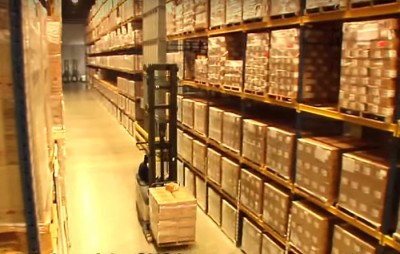


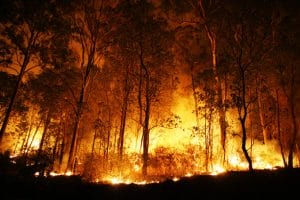




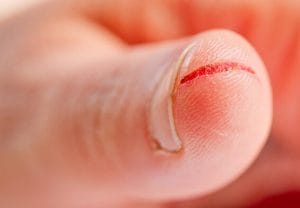


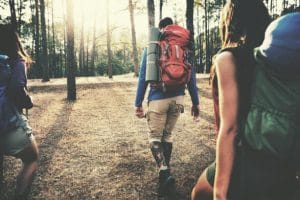



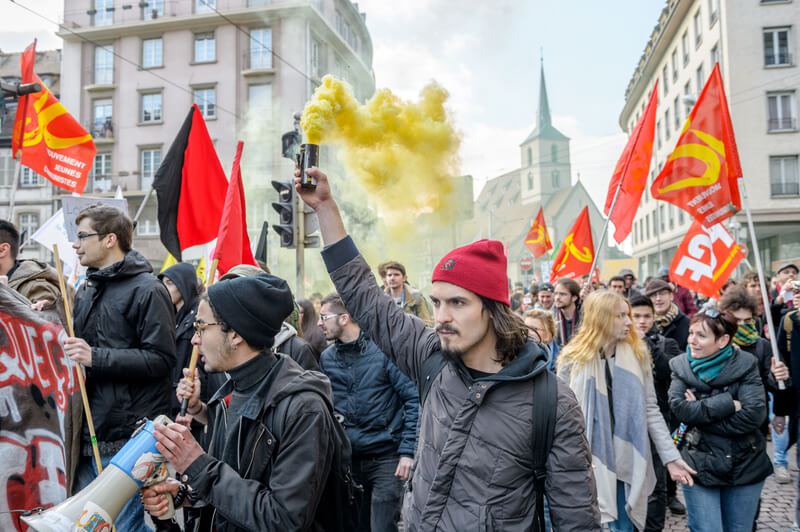
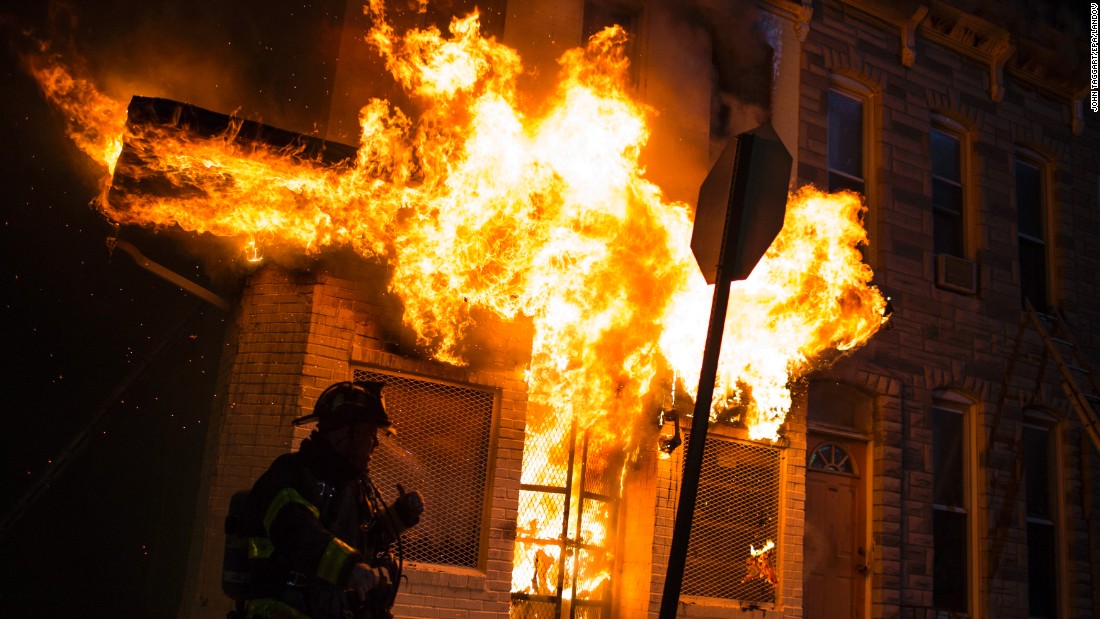
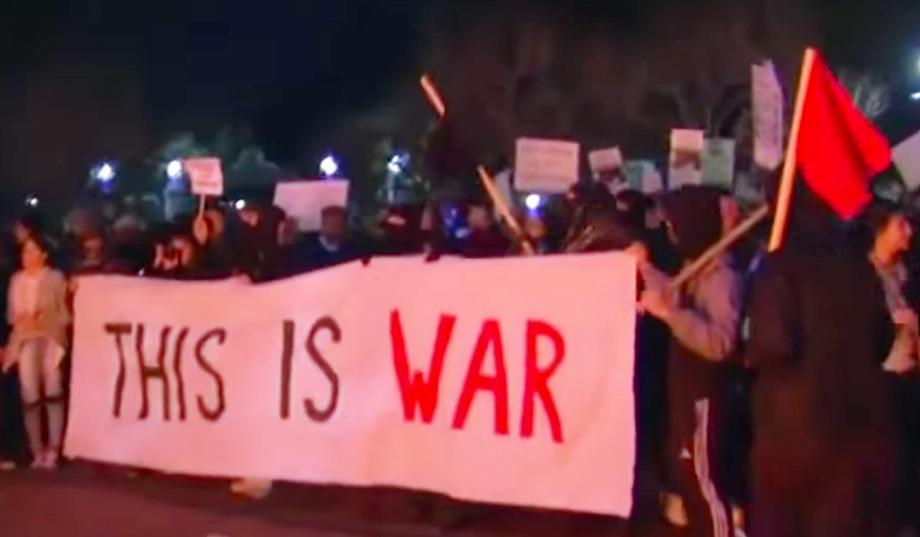

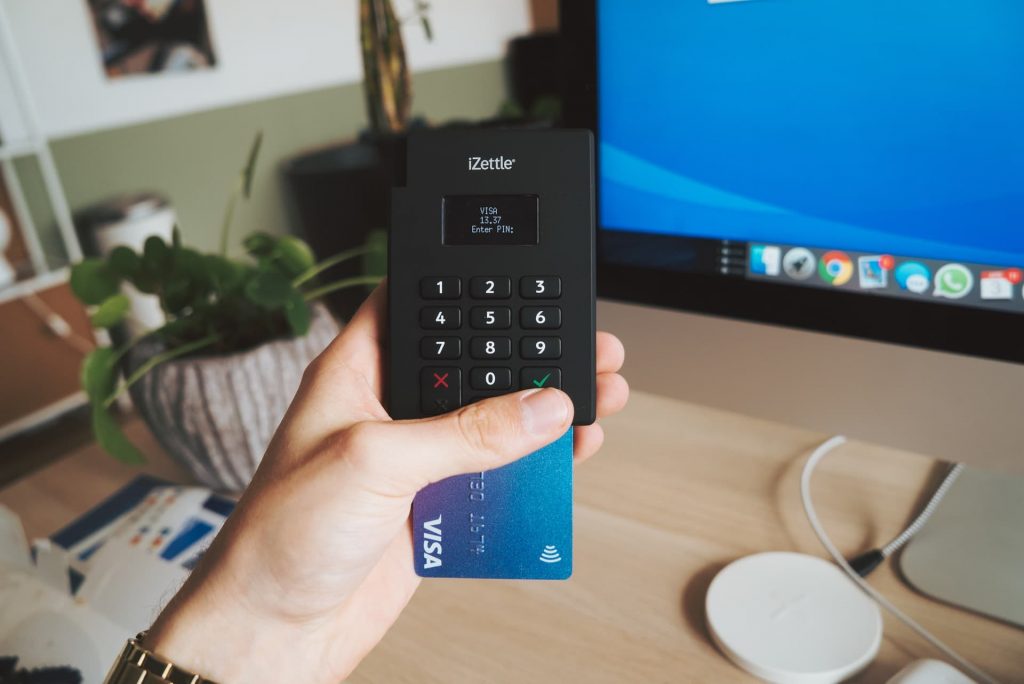


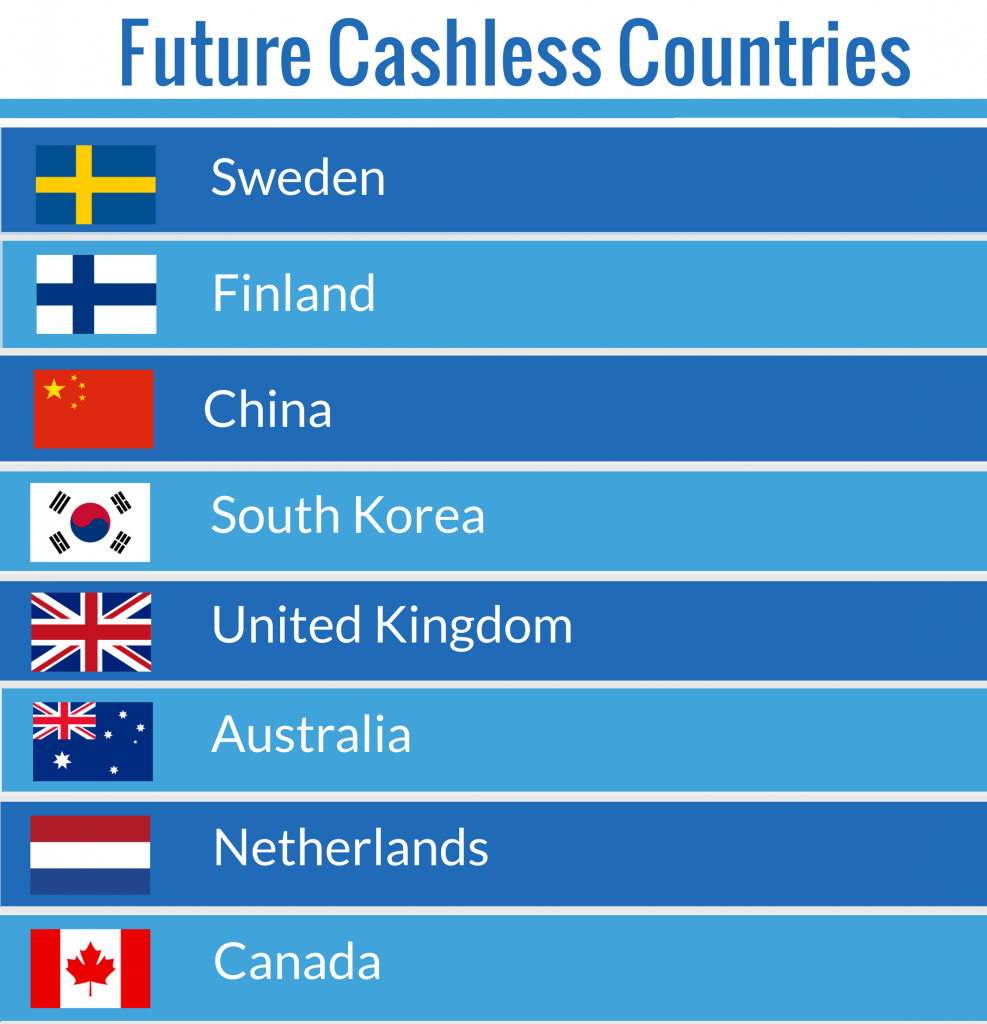


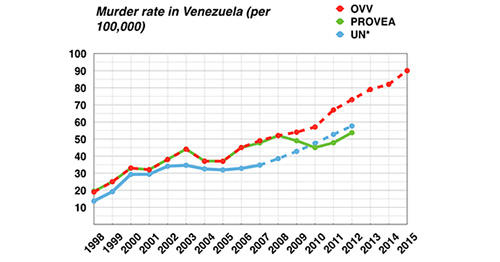
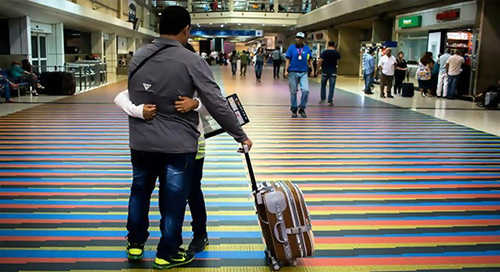



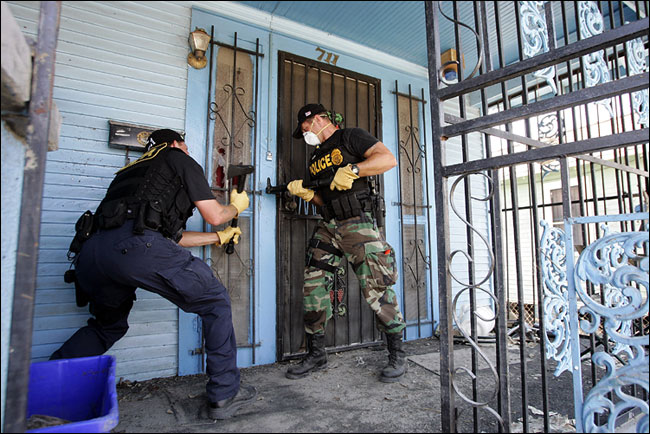
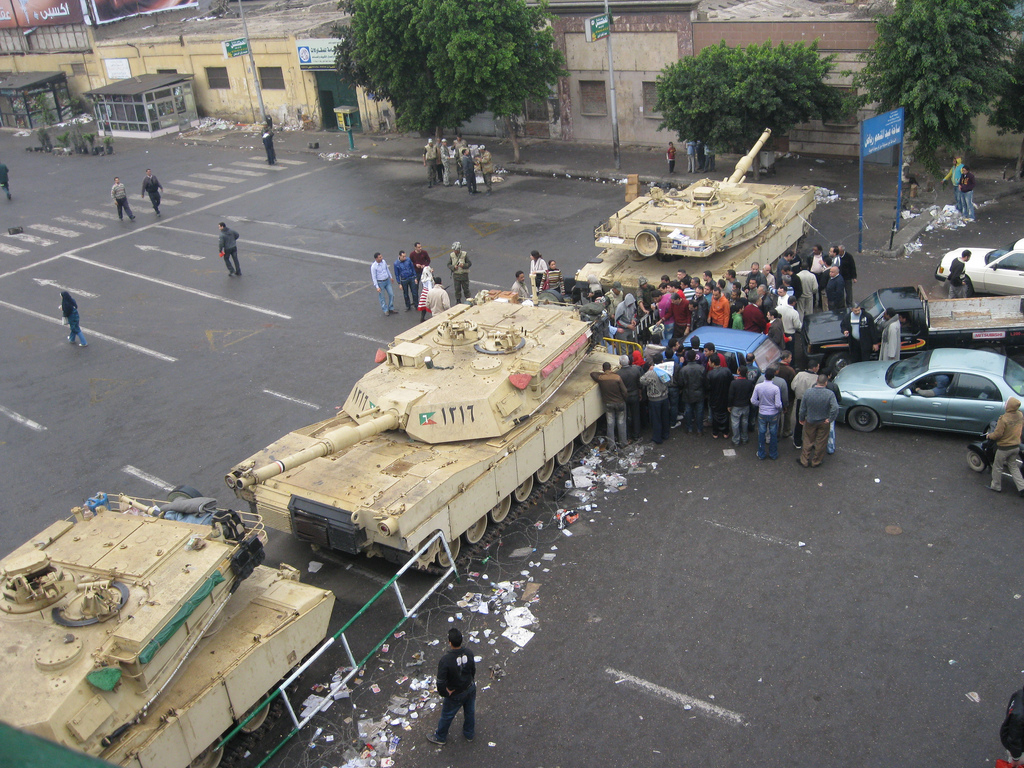
 Preppgroup