At some point, the governing criminals will come after all those not willing to be injected, and will make living very difficult for all of us… This could become a very dangerous country in a short amount of time for people demanding freedom.
The Worst Is Yet To Come as Death and False Flag Threats Are Planned by the State
Our whole practical government is grounded in mob psychology and the Boobus Americanus will follow any command that promises to make him safer.”
The final push toward a totalitarian state is upon us, and an all-out assault on society seems imminent.
With most of the population still going along with these scams, still obeying every order, and still unable to muster any courage…, what are those of us that are informed and willing to defy ‘authority’ to do?
What is coming will be a combination of extreme propaganda, fear-mongering, false flag attacks, fake ‘virus’ attacks, a deadly flu season due to ‘vaccination,’ more ‘vaccine’ mandates, and power and water grid shutdowns, creating an environment to allow for full or partial martial law.
Watch this video below to find out the great secrets hidden by the government.
This will set the stage to reinstate lockdowns, quarantines, and isolation, to advance bogus ‘climate change’ agendas, and to create a regulatory climate so restrictive as to mirror that of a total dictatorial state.
First and foremost, the ‘variant’ threat will be easily advanced because many more will likely die this fall and winter… due to widespread immune system failures because of…millions of poisonous injections…
Deaths… will still be blamed on a ‘virus’ or ‘variant’ that does not exist, and this tactic will allow the purposeful spreading of extreme fear.
This government… will then go after the children by planned injection of the toxic ‘Covid vaccine throughout the … indoctrination centers called ‘public’ schools. This will begin with children 12 and older, and… will be targeting every child down to babies and infants with this deadly concoction.
With more death and sickness, new and more severe lockdowns will be attempted…
This plot will be enhanced due to planned cyber attacks that are ‘expected’ to shut down power and water grids across the nation. These so-called attacks will certainly be false flag terror against the masses, and could easily cause civil unrest, violence, and extreme aggression by the state in response to any dissent.
Simulations have been greatly intensified this year.
As the year progresses, more division will occur in an us-versus-them situation, pitting ‘vaccinated’ against those unvaccinated. …
At some point, the governing criminals will come after all those not willing to be injected, and will make living very difficult for all of us…
Don’t forget about the fictitious manmade ‘climate change’ agenda, as it looks like the drive toward radical policy decisions based on climate are already in the works.
This is very troubling, as it adds another dangerous level of tyranny to a society already consumed by dictatorial madness. It could easily be used to force more quarantines, travel bans, and allocation of utility services, that are all virtually controlled by this government and its partners.
What comes with this agenda is mass restriction of life-giving water and power, the decimation of food production and distribution, supply line shutdowns, and unstoppable runaway inflation, especially concerning the most vital needs of this citizenry. When food becomes so scarce that many are starving, total chaos will ensue.
Economically speaking, any or all of these things happening will disrupt all economic activity for the masses, but will be used by the claimed ‘elite’ ruling class to continue to steal the wealth from all of you, just as has happened over the past year and a half.
This has been the biggest wealth transfer in history, and it is not over yet. The powerful that are destroying the lives of billions, are continuing to live like kings while claiming ownership of all money and property. The goal of course, is for you to own nothing and be happy about it.
CONCLUSION
…The more that refuse to accept this totalitarian domination, the better, as time has run out, but if a very large number of excess deaths occur this fall and winter as I expect, the wheels of tyranny will turn faster and faster in an attempt to finish this long-planned coup to capture and control the bodies and minds of humanity.
At that point, we will have already lost, especially those living in the highest population areas such as cities.
I realize all this sounds far-fetched to most, but then most have no idea of what is coming. We are not in Kansas anymore.
Did you know that if you have even a small subsistence farm to grow and or raise food for your family it all could be confiscated. Did you know the government is currently trying to identify and register all food producers to support this goal? Whether you are aware or not, at any time the president deems necessary, the US can now confiscate key resources in the name of national security. In particular, the food you worked hard to grow or raise could be seized. Naturally, it makes no sense to spend your time and money developing a farming capability to insulate your family from hard times only to have it seized. By following a few basic rules, you can help to protect your food supply and ensure those that helped cause the collapse and refused to prepare aren’t fed on your watch.
President Obama also nationalized our nation’s food supply through executive order. This executive order effectively orders the heads of various agencies to include the US Department of Agriculture (USDA) to identify critical resources under their purview and develop policies on how to ensure their production and procurement during national emergencies. As with most government regulation, this order on the surface doesn’t sound too draconian. However, the devil is in the details regarding its implementation. In order for the USDA to “secure” the US food supply, it becomes necessary to identify everyone involved in food production. Once identified, then upon order, the USDA can send nationalized goon squads to confiscate any and all “critical resources” deemed necessary for national security. National security may very soon include declaring “preppers” “extremists and depriving them of their stores of food. In this particular case, it could involve your entire crop.
Watch this video below to find out the great secrets hidden by the government.
Doubt this affects you? Consider this, if you live in North Carolina, you must register with the state if you have even one chicken. This is ostensibly being done to rapidly inform, monitor, and protect the state’s poultry farmers from avian flu strains. However, as soon as anyone in government starts talking about “protecting” anything, one should suspect subterfuge. In this case, the government suddenly feels that you must be forced to “register” even if you have one chicken. By the government’s own admission, small isolated flocks have almost no risk to catching or passing the current avian flu strains due to their lack of ability to intermingle with wild waterfowl and then spread the virus to other birds. As such, one must consider alternative reasons the government feels that it is necessary to pry so deeply into private citizens’ lives. I would entertain the government’s arguments if they were focused solely on large commercial poultry farms, but they are not. This North Carolina regulation targets even an owner of a single bird as a pet and as such, is far too broad to be considered justifiable. However, when considering the quiet push behind the scenes by the USDA to identify all food producers, it makes much more sense.
You may be thinking that North Carolina is an isolated incident or that this is only applicable to poultry, but it is not. Let’s look at Wisconsin, which now “mandates” livestock premises registration. Again, as in North Carolina, if the regulation was solely focused on large scale livestock operations, it could be justifiable for the monitoring and tracking of disease. However, just like in North Carolina, this applies to even the smallest of hobby farms and in fact applies to anyone that has even one animal. It is also completely unnecessary. Just like the family that has a few chickens as pets in North Carolina, the family in Wisconsin with a pot belly big or rabbits do not pose any demonstrated increased risk to the livestock of the state. As such, once again, the trend supports a motive more indicative of complete registration and tracking of “all” food resources vice monitoring and mitigation of livestock diseases. Wisconsin isn’t alone. Both Michigan and Indiana also mandate registration of “any” livestock of any number being kept anywhere. Digging a bit deeper, the state link to the USDA policy of registration, monitoring, and tracking of all livestock (under the guise of tracking infectious disease) becomes very clear. In fact, the Council of State Governments blatantly tells us the states are in fact tracking all farms and livestock at the behest of the USDA.
Again, I recognize that skeptics will assert these are nothing more than well intentioned regulations being taken out of context and that they would need to see more specific evidence. To rebut their arguments, I could write volumes about the numerous new government regulations relating to heirloom seeds, animal and plant propagation, food storage, small gardens, raw foods, off-grid living, and water rights. When these regulations are considered in their entirety they form a powerful body of evidence that supports my assertion the government is building a broad database to use in the event it decides to confiscate food. However, the willfully ignorant and blind supporters of government tyranny are not of my concern. No amount of “evidence” will overcome their cognitive dissonance. My concern is to warn and inform those of you amongst us that have proven immune to brain washing and still have free thinking independent minds. Therefore, the fact remains that there is a growing trend at both the federal and state level of forcing everyone with live stock, orchards, gardens, etc. to register with the government. Once this database is complete, the government will no doubt use it to extract taxes and fees, conduct inspections and raids, and ultimately, should the need arise, confiscate your food. To prevent mitigate possible confiscation attempts from both government agents and looters; one should consider employing my four rules of food security. Living without power, cars, electronics or running water may seem like a nightmare scenario but to pioneers it was just the way life was. Having the skills to survive without modern conveniences is not only smart in case SHTF, it’s also great for the environment. Keep in mind that the key to a successful homestead does not only lie on being able to grow your own food but on other skills as well. Learning these skills will take time, patience and perseverance, and not all of these skills are applicable to certain situations. Hopefully, though, you managed to pick up some great ideas that will inspire you and get you started! Just like our forefathers used to do, The Lost Ways Book teaches you how you can survive in the worst-case scenario with the minimum resources available.It comes as a step-by-step guide accompanied by pictures and teaches you how to use basic ingredients to make super-food for your loved ones.
My first rule comes from the movie “Fight Club.” Don’t talk about your food production and storage. Although it may be obvious to neighbors you garden or raise a small amount of livestock such as hogs and poultry for personal consumption, the broader public doesn’t need to know. Continuing with that point, how much food you put up for long term storage and where it is stored should never be an open topic of discussion. Let them think you have nothing in food stores even if that means using disinformation.
My second rule is to disperse your food stockpiles using food caches. If you have stored adequate amounts of food for your family properly, even a complete confiscation of your current harvest shouldn’t push you to food lines and soup kitchens. Just like with firearms, don’t store your food all in one place. Food preserved properly can be cached in the ground just like most anything else and store literally for years. In fact, well camouflaged in-ground storage areas similar to mini-root cellars are excellent places to store food. Just make sure you don’t mix foods like apples and potatoes, which will cause the other to go bad quickly in your food cache. The simplest of these food caches can be constructed by digging a hole below the frost line big enough to store what you want. Then load your cache, cover it with a board, add a layer of insulation, and cover it with a layer of dirt (dirt alone can be used to cover and insulate). To finish it, camouflage the cache site any remove traces of a trail to it. I favor using a technique where you cache a mixed bundle of food stuffs capable of supporting the basic nutritional needs of your family for a month. This method allows a cache to remain undisturbed until you actually are going to use it and includes all of your food staples. It also justifies the investment of energy making the site.
My third rule requires developing the skills to identify and use wild and edible plants. As I have written many times about any government bureaucrat with an accompanying goon squad or looter can identify a cellar of potatoes and a field of corn. However, very few will ever be able to recognize wild spinach, pokeweed, dandelions, chicory, huckleberries, and common milk weed as “food.” In fact, most will walk right past these tasty, super-nutritious wild plants assuming them to be weeds in a fallow field you didn’t plant this year. Further, even if they recognize them as potentially being cultivated, they wouldn’t have enough sense or knowledge to know when to pick them, what parts to pick, and how to prepare them without potentially poisoning themselves. Like the bureaucrats and looters though, if you don’t study this knowledge on your own, you will not be capable of employing this critical food security technique. I find that the best way to employ this technique is in a deliberate fashion. Leave small plots of your garden or fields to appear “fallow,” but in reality, plant these plots with a natural mix of wild edibles. This requires you to collect the seeds from various edible plants the season before and store them in a cool, dark, dry location. In the spring, till up the soil in that plot, mix the wild seeds, and broadcast them throughout the fresh soil. Then lightly cover the seeds and allow nature to do its work. The plot will grow up appearing as if it is a natural mix of weeds typical of any fallow field or recently disturbed ground, but in reality will be a dense mix of mutually supporting edible plants that require little to no further gardening. In fact, the yield may far exceed the yields of your cultivated plant species, will naturally choke out undesirable weeds, and require no additional work aside from harvesting. I apply the same basic concept to my fruit and nut trees. Naturally, having an orchard setting is smart, but also intentionally plant Black Walnut, Butternut, various hickory, apple, pear, plum, and pawpaw trees throughout your property and forest. These trees will also blend in to the natural flora and an untrained eye will never be able to pick them out as fruit and nut bearing trees outside of an orchard setting. Respective of livestock, one faces more difficult challenges keeping their existence hidden. One technique to leverage is to raise free range animals, which are difficult to completely account for and round up. In the event of an inspection, theft, or confiscation, it is unlikely that without the owners help, the offender will be able to locate and completely coral and capture all of the free range livestock. For animals such as ducks and chickens, this can be accomplished pretty easily; especially, if non-traditional coups are used and they are dispersed throughout the property. However, with grazing livestock and hogs, a fence must be used to limit their range. Still though, with enough property, one can let their animals roam as they graze and forage like the old cattle ranchers of the West. Ultimately, if confiscations were to begin, one could simply release their livestock to become feral and be hunted rather than allowing their livestock to be stolen or seized.
My fourth rule is to register absolutely nothing unless you absolutely have to. Whether or not you choose to comply with government regulations is a matter you must individually assess and decide upon. If registering your farm, livestock, or garden isn’t mandatory, this is a no brainer…don’t. However, when it becomes “mandatory,” one must consider the pros and cons. For example, maybe it is best if you just register “some” of your livestock to give legitimacy to your farming operation, but not draw unnecessary attention from authorities. Maybe you simply want no trouble and are willing to risk confiscation so you comply 100%. Maybe the risks are not the issue and you decide that your moral and ethical code to resist encroaching tyranny at all opportunities is more important so you register nothing. I cannot make this decision for you, but you must make it. Either way, my first three rules are designed to work equally well whether or not you decide to comply when the time comes.
In summary, the USDA working in conjunction with the military and the Department of Homeland Security have set in motion plans to identify and track all critical resources in this country to include food. The impact of this could mean that in a time of crisis, if the government deems it necessary, it will confiscate your food. To ensure your food security, I have provided you four basic rules to follow that will help you cache your food, diversify your crops, and provide for better overall food security in the face of looting or confiscation.
The latest news is shocking!!!
Experts predict that an EMP strike that wipes out electricity across the nation would ultimately lead to the demise of up to 90% of the population.
There have been over 300 victims of shootings in NYC in a month’s time. This is up 3-fold from the stats from the same period in 2019. People know that policing has changed drastically, and the worst elements of society are taking full advantage of this.
In our brave new America, it is hard to know where you stand. The ground underfoot is unsure, and the culture is changing rapidly. If you find yourself standing before law enforcement do you know the best course of action? Do you know when to speak and when to dummy up to protect yourself?
Cops are people. Never forget that. They show up to assess and enforce the law. There are many people who have wound up in custody when they shouldn’t have. Much of it has to do with simply saying too much or communicating the wrong information.
Fifth Amendment Protections
Now we have a world movement that is attempting usurp the constitution and its vast protections. We could stand to lose everything if we go the route of a one world government or a coalition of nations woven together by big tech and socialist ideologies.
We do not have to talk to the police at all. We can simply comply in silence. In most cases it’s just easier to go along and get along. If you were speeding than be cordial, give them what they ask for and pay your fine. You broke the law.
However, things can get more complicated in matters of false accusation or self-defense. In those moments you might choose to evoke the powers of the 5th Amendment. Which states:
“No person shall be held to answer for a capital, or otherwise infamous crime, unless on a presentment or indictment of a Grand Jury, except in cases arising in the land or naval forces, or in the Militia, when in actual service in time of War or public danger; nor shall any person be subject for the same offence to be twice put in jeopardy of life or limb; nor shall be compelled in any criminal case to be a witness against himself, nor be deprived of life, liberty, or property, without due process of law; nor shall private property be taken for public use, without just compensation.”
To further drive this home let’s look at few situations where you can effectively communicate with police and some circumstances where you are better off just shutting up and letting the law work or lawyer up to protect yourself.
DON’T SPEAK: When You Are Nervous
Police must gauge people in high stress situations, and they are trained to recognized strange behavior.
Some people get incredibly nervous when they interact with police. People who are sneaking things and doing bad things can get nervous and act strange when confronted by the police, too.
They cannot know which type of person you are in the seconds after they pull you over. If you are nervous and you are fumbling over your words, limit way you say and do your best to comply with reasonable requests.
DON’T SPEAK: If You Don’t Know Where You Stand
In a simple traffic violation, you know where you stand. Your light is out, you were speeding, or you got caught searching on your phone instead of paying attention to the road. It’s pretty cut and dry even though many people still argue with police in these moments.
What is much more alarming is when you find yourself standing before a police officer without knowing why they have shown up or what you have done.
This could happen for lots of reasons. A malicious neighbor might have called the cops to your home for a loud party you are having, you might fit the description of someone who they are looking for or you might have just strolled into a crime scene at the wrong time.
The best thing to do is dummy up and keep quiet. Don’t spend your time explaining yourself. Don’t spend time explaining your innocence. You are protected by the constitution and your calm; compliance will do you much better than arguing and resisting.
DON’T SPEAK: If You Are Called in After the Fact
If you find yourself in a police station answering questions as more than just a witness to a crime, you need a lawyer. You are on the verge of becoming a statistic.
Remember, police are interested in enforcing the law and putting cases to bed.
If you start talking and suddenly fit the bill you might already be a suspect and your words could incriminate you even further.
DON’T SPEAK: In a Self Defense Scenario
If you have just experienced a violent scenario where you were forced to protect yourself with your fists, a knife, a gun or some other kind of weapon, you need to focus on calming down, above all.
You are in no condition to start explaining why you used your firearm or how the attacker approached you.
While we like to believe that simply defending ourselves is a protection awarded to us by the law, most states have some hoops to jump through before you can physically harm another person in self-defense. Particularly if firearms and death are involved. Wait for your attorney on this one.
SPEAK: If You Are a Witness
As a witness your words hold weight with police. This one can be a little tricky depending on the situation but in many cases eyewitness reports are valuable. This can be especially true if there are limited witnesses.
In my opinion this is part of your civic duty.
SPEAK: To Announce your CCW
Always announce you CCW. Be truly clear and assure the officer understands what you are saying. In most cases the police officer will ask you to put the gun someplace safe or, if its in a bag, will move the bag to the trunk of your car.
This is for both of your safety.
SPEAK: To Be Cordial and Respectful
This was lost on people even before this current cultural revolution against law enforcement. People don’t like to be told they are wrong, even when they are wrong!
I always try to be cordial and respectful to police. I am not a big fan of authority figures and never have been. Still, I understand the struggle. I understand the risk in what they do. Most importantly, I understand that they are people just like you and me and if I pulled someone over for running a red light I would want a society that is mature enough to admit they were wrong and move on while simply being decent.
It is hard to know what the future of policing might look like. In many places where the police are needed most, they have been massively defunded. No one has really been clear about what this kind of defunding will do to police capabilities.
In all the funk and the whirlwind of this cultural revolution you will likely have an interaction with police. We are preppers. You should not be surprised by how you act in almost any situation. Interactions with police should be mostly cordial.
No matter where you fall on the police debate there will be times that you should hush up and go with the flow of the officer. There will be times when your freedom might depend on you being quiet and waiting for an attorney. For the most part, though, speaking with cops on average is just about being polite and respectful.
A good stockpile of food will go a long way toward helping you survive the aftermath of any disaster or life crisis, especially when grocery stores are emptied.
In fact, I’d go so far as to say that there are people who are not preppers who nevertheless instinctively know to stockpile food. This really isn’t surprising when you consider that through most of mankind’s history, stockpiling food was essential to survival — specifically surviving the winter months. During those months, wildlife is bedded down trying to stay warm and plants are dormant. If one didn’t have a good stockpile of food, their chances of survival were pretty darn slim.
But knowing to stockpile food and knowing what to stockpile are two different things. The vast majority of what the average American family eats is unsuitable for stockpiling, because it falls into one of three categories:
Junk food – Lots of carbs, lots of sugar, lots of salt and lots of chemicals, but not much nutrition.
Fresh food – Foods that won’t keep without refrigeration.
Frozen food – It will begin to spoil within two days of losing electrical power.
So we need to come up with other foods — foods that will give us a lot of nutrition and also have the ability to be stored for a prolonged period of time. Here are what we consider the 19 most important ones:
1. Beans – This is one of the more common survival foods. Not only are beans plentiful and cheap, but they provide a lot of protein — something that’s hard to find without meat.
2. White rice – The perfect companion to beans. An excellent source of carbohydrates, and it stores well. [Note: Don’t store brown rice, which contains oils and will spoil.]
3. Canned vegetables – A good way of adding micro-nutrients to your survival diet. Canned goods keep well, long past the expiration date on the label.
4. Canned fruit – For something sweet, adding canned fruit allows you a nice change of diet. Being canned, they keep as well as the vegetables do.
5. Canned meats – Of all the ways of preserving meat, canning is the most secure in protecting the meat from decomposition. While it doesn’t typically have as good a flavor as fresh meat, it still provides animal protein at the most reasonable price you’ll find.
6. Honey – As long as you can keep the ants out of it, honey keeps forever. Plus, it is beneficial during cold season.
7. Salt – Nature’s preservative. Most means of preserving foods require the use of salt. In addition, our bodies need to consume salt for survival.
8. Pasta products – Pasta is a great source of carbohydrates, allowing you a lot of variety in your cooing. Besides that, it’s a great comfort food for kids. Who doesn’t like spaghetti?
9. Spaghetti sauce – Obviously, you need this to go with the pasta. But it is also great for hiding the flavor of things your family doesn’t like to eat. Pretty much anything, with spaghetti sauce on it, tastes like Italian food — whether you’re talking about some sort of unusual vegetable or a raccoon that you caught pilfering from your garden.
10. Jerky – While expensive to buy, jerky is pure meat, with only the addition of spices. Its high salt content allows it to store well, making it a great survival food. It can be reconstituted by adding it to soups and allowing it to cook.
11. Peanut butter – Another great source of protein and another great comfort food, especially for the kiddies. It might be a good idea to stockpile some jelly to go with it.
12. Wheat flour – For baking, especially baking bread. Bread is an important source of carbohydrates for most Americans. Flour also allows you to shake up the diet with the occasional batch of cookies or a cake.
13. Baking powder & baking soda – Also for making the bread, cookies or cakes.
14. Bouillon – Otherwise known as “soup starter,” this allows you to make the broth without having to boil bones on the stove for hours. Soups will probably be an important part of anyone’s diet in a survival situation, as they allow you to eat almost anything. Just throw it together in a pot and you’ve got soup.
15. Water – We don’t want to forget to stockpile a good supply of water. You’ll go through much more than you expect. Experts recommend a minimum of one gallon per person per day, but remember: That’s just for drinking.
16.Whole-wheat –Crackers are a good replacement for bread and make a fine substitute when making sandwiches. Due to their higher fat content, whole-wheat or whole-grain crackers have a shorter shelf life than their plain counterparts (check the box for expiration dates), but the extra fiber pays off when you’re particularly hungry. Consider vacuum-packing your crackers to prolong their freshness.
17. Nuts and trail mixes – Stock up on these high-energy foods—they’re healthful and convenient for snacking. Look for vacuum-packed containers, which prevent the nuts from oxidizing and losing their freshness.
18. Powdered milk –Almost all dairy products require refrigeration, so stock this substitute for an excellent source of calcium and vitamin D when fresh milk isn’t an option.
19.Multivitamins –Supplements will help replace the nutrients you would have consumed on a normal diet.
While this doesn’t constitute a complete list of every type of food that you should stockpile, it’s a good starting point. You’ll want more variety than this, but in reality, your family can survive for quite a while with just the 15 things on this list.
As your stockpile grows, add variety to it. One way of doing that is to create a three-week menu, with the idea of repeating that menu over and over. If you have everything you need to cook everything on that menu, you’ll have a fair assortment of food, and enough so that your family shouldn’t grow tired of it.
Economic collapse can lead to a breakdown of society and mass food shortages. Severe drought or weather, natural disasters, or a man-made catastrophe like an EMP can also bring on food shortages, and famine, followed by starvation. Millions go hungry. Countless people to die.Most Americans have only experienced the consequences of massive famine on their television screens. In 1981, in the movie The Road Warrior (played by Mel Gibson), this survivor in the apocalyptic wasteland of Australia experienced the results of widespread famine first hand. His way to survive: Dog food. Canned dog food.
I can’t remember the brand name. Alpo maybe. But does it even matter? The point is this: In a time of mass famine following nuclear war or some catastrophic disaster that takes place, people who survive may find themselves eating things they would never imagine themselves ever capable of eating. Or you simply starve to death.
Famine – A social and economic crisis that is often accompanied by widespread malnutrition and starvation which leads to epidemic and significantly increased mortality.
Here are a few good tips for preparing for a famine of Biblical proportions, a famine that experts believe could be a direct consequence of a widespread disaster, economic collapse, or even a nuclear terrorist attack, which is a growing risk today to the U.S.
Famine from EMP
The much talked about and feared EMP (electro-magnetic pulse) could also lead to famine, at least in the nation affected by the EMP. It’s not that an EMP will cause food to stop growing: Instead, a famine will take place when transportation comes to a halt and food out in counties and states where farming is plenty suddenly have no way to transport seasonal harvest to several million people out in distant cities.
Mass starvation on a widespread scale is a very real threat and can threaten your very survival. That includes your family and friends.
It also include your neighbors, yes that couple that seems so well put together. When pets start disappearing from around your neighborhood, it might be your neighbors behind the disappearances. After about 1 day without food your neighbors may resort to asking other neighbors for food, and then begging if no one is willing to hand over much.
The latest news is shocking!!!
Experts predict that an EMP strike that wipes out electricity across the nation would ultimately lead to the demise of up to 90% of the population.
What happens if you have a few neighbors that are unprepared? Those without may band together, and go after those who have. Guess what? If your neighbors don’t see you out looking for food, begging for food, and instead simply locking yourself inside your home, in their minds they’re going to suspect you’re sitting on a bunch of food.
If enough hungry people band together, they may decide to take it from you by force.
Finally, after about three days of your neighbors going hungry it’s possible that someone will mention “pets”; when day five rolls around, and still no food, there’s a good chance that it’s going to be open season on pets, I’m talking cats and dogs.
Have Stocks of Food, Water to Combat Famine
Do you understand now why it’s important to have at least a few weeks of extra food and water on hand? A famine resulting from any number of disasters has the potential to wreck havoc fast on Western nations. Having not experienced true hunger before, it is likely to affect Westerners more than it does say people in third world countries.
It may not happen right away, in the first few days of food shortages. But after several weeks food may start becoming sparse around the neighborhood; local church pantries may start running dry (outside of a miraculous provision from God, which is always a possibility, looking at the Bible). And then the day is going to come when there is simply no more food around the neighborhood.
Knowing how a few of your neighbors may act, you might want to buy yourself a ton of cheap bulk food like rice and beans, in addition to your typical emergency food stocks. That way you can at least have something to give to your neighbors, and hopefully keep them from turning on you, should they suspect that indeed you actually have quite a bit of food.
The End of the Old Kingdom- In the mid 22nd century B.C., Egypt was a hot bed of activity with a large population of people, which translated into a lot of mouths to feed; farming in the region provided food and the Nile River was a chief provider of water. Out of nowhere a brief change took place in the local climate that impacted Egypt’s food supply during the time of Unas (2381-2345). No one really understands what caused the weather problems; however, the results of this climate change seem clear.
Lake Moeris dried out, the Nile lowered, and bad harvests followed. Unfortunately for ancient Egypt, that spurred on a great famine throughout their lands. All of these factors also led to civil unrest and that meant crime and revolts.
The Old Kingdom never fully recovered.
Famine, Modern Day
The Causes of Famine and Mass Starvation
Famine can be caused by any number of factors. One of the most common reasons behind famine is climate change (as previously noted). When that happens drought, crop issues, and pestilence are often culprits.
Famine can also be brought on by war and political problems.
Politically, at different times in history, choices have been made by governments that have resulted in famines. Many times those in power have literally deprived the middle income and poor. In fact, many believe that the North Korean famine of the 1990s was a direct result of government actions forced on the people.
There are many who believe that almost all famine is — in essence — truly compelled more by politics than nature (in other words, problems that cause issues in the food supply can be handled by a pro-active government; one that is adequately prepared for a disaster and any food shortages that may arise).
Regardless, with the natural changes occurring all around us — some say climate change or global warming, others say the hand of God and the Bible “end times” of the modern world — the possibility of widespread famine due to climate change or widespread disaster is becoming more and more plausible, even in the United States of America.
What Does It Take To Survive A Famine?
Historically, the United States — unlike countries such as North Korea, for example — tries to make decisions that are in the best interests of its people.That’s the hope anyway; hope coming from the American people.
However, you shouldn’t assume that the United States will be able to come through for you. After all, if it wasn’t completely clear to you after Hurricane Katrina in New Orleans, we are not in charge of nature.
Still, political policies will play a huge role in determining whether or not we survive a famine. However, since that is in essence outside of our control (with the exception, of course, of the voting process) let’s talk about three other things that could help during a famine. Namely, these are growing food, storing food, and hunting, trapping and fishing.
Growing Food During A Famine
This one is tough to talk about simply because the task of growing food may be why the famine you’re dealing with is even happening. That said, consider that there may still be ways to grow food, at least on a small scale.
The Green Revolution — Okay, the Green Revolution basically refers to the spread of technologies for subsistence agriculture to countries that needed them: Things like pesticides, irrigation projects, and nitrogen fertilizer. These concepts and materials first spread to Mexico in 1943.
Now you’re probably asking what this has to do with surviving a famine on your own. Well, simply follow suit. In other words, you’ll need some know how, strong seeds (when shopping for seeds, ask for seeds that have the best chances to grow in sub-prime conditions), land, and pesticides / fertilizers.
If you’re worried about a famine in your neck of the woods, call a garden center and ask them what crops, pesticides, and fertilizers would work best in your area.
Regardless, during a famine growing food will almost certainly be a tough prospect. After all, if it were easy, then the famine wouldn’t be occurring, right?
Becoming A Survivor: Hunting, Trapping, And Fishing
In the CBS television show, Jericho, the story unfolds around a small Kansas town and its challenges trying to survive following a nuclear attack that has decimated the United States of America. As a result, the town of Jericho, Kansas begins to starve as a result of food shortages; at the same time, there isn’t an abundance of wildlife in the area, to provide food.
In other words, there’s not much to hunt. Even if there was, several towns and cities have too many people; there would just be too much competition between hunters in the early days and weeks of a disaster and famine; hunting in an area would be short lived and for most people unsuccessful. Those who went after big game (deer, elk, etc.) first would likely face the most challenges as a sudden increase in hunting would drive many of these animals out of the area.
Small Mammals, Birds, Snakes, And Insects On The Menu
Those willing to forgo big game instead for small animals like rabbit, duck, turkey, squirrels, cats and dogs (in a worst case scenario), stand to have the best chances of bringing home a meal in a time like this. In most communities, there are a number of small mammals and even reptiles like snakes that make a tasty meal in a time of need. You just have to be willing to look outside the traditional Western diet and you’ll find a number of foods, even things like insects and earthworms, to get you by on days when there’s simply nothing to eat.
If you learn to think like a survivor, you’ll find that these things are actually a lot easier to eat than you might believe today.
With small mammals, birds, snakes and insects on the menu, that doesn’t mean there won’t be any big game out there; as covered in a previous article on hunting big game, you’re going to need to go to remote areas — the more remote the better.
That’s because experienced hunters will target prime areas (which will be semi-remote) first; because they know how to hunt, and they understand the dynamic of “hunting pressure” and how it drives big game quickly out of an area. As a rule of thumb, if you want to hunt in a time like this, seek out wilderness areas that are deep in the wilderness and beyond those semi-remote areas. Now you’ll have the best chances of finding big game that hasn’t been spooked by a drastic increase in “hunting pressure”.
Finally, when it comes to hunting, those with experience and knowledge of the land stand to do best. Those without experience or basic knowledge, stand to fail miserably.
For all of you non-hunters, there’s one thing you need to know right now.
Watch this video below to find out the great secrets hidden by the government.
Tools Of The Trade
If you believe there is a chance in the coming months and years that a famine might occur in your neck of the woods, then seriously consider purchasing a gun. As back-up, get yourself a crossbow with a good scope. After all, both a rifle and crossbow are proven tools when it comes to hunting. A crossbow is relatively easy to shoot and you can do quite a bit of urban hunting without alarming local town folk with sounds of gun fire.
Of course, you may need a gun to defend yourself. Count on a firearm first, before a crossbow, in purposes of self defense.
Squeamish about guns? The good thing is that there are alternatives (like crossbows, long bows, and compound bows, for example). Though, to be frank, nothing works better for hunting than a firearm.
What else should you have on hand for surviving a time of mass famine? Here’s a list:
1. Fishing pole and nets, or just strong line and plenty of hooks (know the water sources you’re likely to fish and then have the proper gear on hand to give yourself the best chances of success). 2. Traps and snare wire 3. Bait for whatever small mammals are most common in your area and most palatable 4. Crabbing gear (if you live in an area where crabbing is possible) 5. Camouflaged clothing (choose colors that best blend with the wilderness areas you’re likely to hunt). 6. Hunting knife
And there are a host of other things that might come in handy depending on what you’re hunting for and the area of the world you live in. Talk to experienced hunting guides in your region or the region you plan to relocate to in a time of disaster. Discuss everything from big game and small mammals to wild birds and even predators.
Then talk to some fishing guides. Discuss everything from lakes and rivers, to even streams (crawdads, crayfish), and finally the coast, if you live near the ocean.
Storing Food
Preparation is the key to everything from coaching a football team to rallying your friends and family to survive during a famine or mass starvation. Thus, if you’re worried — and if you look around, you’ll probably realize that you should be — you might want to start buying non-perishable food items with a shelf-life of several years. At the same time, keep a revolving supply of non-perishable food items with a shelf life of just a few months. You can eat that food first, and then turn to foods like freeze-dried food after you’ve gone through the good stuff.
After all, growing food and hunting when the demand is high will probably not always go your way. Most people are going to be unprepared and just unable to make growing and hunting food a tool to count on in a time of disaster.
Along with this, it would be prudent to get your hands on foods like white and brown rice, wheat, and beans. When appropriately packaged and stored, these foods can sometimes last for decades. Speaking of storing dry foods appropriately, here are some things to consider:
1. Have #10 cans on hand (so you can do your own canning).
2. Have foil pouches (made multi layer laminated plastic and aluminum).
3. Buy a number of bottles made of polyethylene terephthalate (PETE bottles). These are used for long term dry food storage.
Further, dry foods should be stored at a temperature of 75 degrees F/ 24 degrees C or lower (recommended). If this prerequisite cannot be met, the foods should be rotated. Beyond that, moisture should be kept to a minimum (one way to help this along is to keep containers off the floor).
Also, keep things like cooking oil and long term storage items (oftentimes in PETE bottles) out of the light. And, of course, keep all foods protected in pouches or bottles (as this will serve many functions, one of which is to protect from insects / rodents).
Finally, to help reduce the threat of moisture, include oxygen absorbing packets in food storage containers.
There are several ways you can use these, so read the directions carefully. In fact, teach yourself the proper ways of using oxygen absorbing packets. Serious problems can occur when directions aren’t followed correctly (this is true for food storage in general, not just oxygen absorbing packets).
When in doubt, check with professionals in the field.
Last, but certainly not least, there’s the perishable items. Obviously, meats will need to be stored frozen. Further, it would be prudent to consume these first. The same can be said for fresh vegetables and fruit. Don’t go into your dry food stash until it’s needed.
Famine is a broad topic that can come about for a host of reasons. The way to combat famine can change depending on the situation.
Famine Caused By Natural Disaster Or Nuclear Attack
If your area is hit by a devastating natural disaster, such as an earthquake or tsunami — or worse even an asteroid or massive volcano eruption in the region — or if multiple cities are destroyed in a nuclear attack, access to food can shut down across the country overnight.
In a situation like this, you can find yourself quickly without food (and without drinking water, depending on the severity of the disaster). Seriously consider a back-up supply of food and water to support you and your family for up to 90 days or longer.
Just in case things get really chaotic in the world, you may want to have a back-up supply of food and water that can last you and your family six months or more, and then plans for resupplying your food and water as it runs low.
With disaster and probable famine looming on the horizon, due to the number of threats all seemingly lining up with the times we’re living in, stocking up on non-perishable foods , large jugs of water, and cash — if your bank is closed indefinitely or there is no power for an extended period, credit and debit cards will be useless — as well as things to barter with like ammunition, water filtration devices, and bulk coffee may be a smart move.
There are plenty of threats that people associate with a major disaster. Infection, however, is rarely one of the first threats to come to mind. Nevertheless, it is one of the most dangerous. In the absence of modern medicine and modern conveniences, deadly infections will run rampant, potentially killing millions of people.
Below is a list of the most common deadly infections you are likely to contend with after the SHTF, as well as how to treat them. If you are squeamish, then be warned that the lists of symptoms below could put some disgusting images in your head, but this information is very important considering how many people are likely to die from infections in an SHTF scenario.
1. Dysentery
Dysentery is a colon infection that can be caused by a number of things including bacteria, parasites, viruses, and even protozoa.
Symptoms of dysentery include severe diarrhea, bloody stool, abdominal pain, and fever. The infection is spread mostly through the consumption of contaminated food or water, though it can also be spread by coming into contact with someone who has the infection.
If you come down with dysentery, your first and foremost goal should be to stay hydrated. Diarrhea alone kills countless people each year because of the dehydration it causes, meaning it’s essential that you drink plenty of fluids, not only to flush out the infection but also to avoid dehydration.
You’ll also want to take antibiotics and/or diarrhea pills if you have them. To prevent coming down with dysentery, be sure to boil your drinking water and only eat food from trusted sources.
2. Cholera
Like dysentery, cholera is a gastral infection that is contracted by drinking contaminated water. Rather than infecting the colon, though, cholera is an infection of the small intestine.
The symptoms of cholera include severe diarrhea that is clear/white in color and vomiting clear fluid. As with dysentery, the biggest threat of cholera is the dehydration and electrolyte imbalance caused by fluid loss through vomiting and diarrhea. If left untreated, about half of individuals who come down with cholera will die from the infection.
If you are experiencing the symptoms of cholera, be sure to stay hydrated and take antibiotics and diarrhea pills. To avoid cholera, boil or otherwise purify all the water you drink and only eat from food sources that you trust.
3. Norovirus
Norovirus is a highly contagious gastral infection that can be spread through the air as well as through the consumption of contaminated food and water.
Symptoms of norovirus include nausea, vomiting, watery diarrhea, and abdominal pain. There is no vaccine or proven treatment for norovirus, and the recommended treatment is simply supportive care such as resting and drinking plenty of fluids.
To avoid norovirus, be sure to purify your water and eat only trusted food sources, though given how contagious this infection is, it can be difficult to avoid even if these measures are taken.
4. Pneumonia
Pneumonia is a respiratory infection that can be brought on by a number of bacteria, viruses, and fungi. In most cases, the diseases that could lead to pneumonia are treated and eliminated before pneumonia ever has a chance to take hold. If left untreated, though, non-fatal colds and cases of flu can quickly turn into fatal pneumonia.
Symptoms of pneumonia include sharp chest pain, wheezing, difficulty breathing, fever, and chills. If the lungs fill up with too much fluid due to pneumonia, the infection could be fatal.
If you come down with pneumonia, it is best treated with a combination of antibiotics as well as oxygen in order to make up for the reduced amount of air you are able to inhale. The best treatment for pneumonia, however, is prevention.
Treat every cold and flu seriously no matter how minor it may seem and do your best to knock it out before it is able to transition into a case of pneumonia.
5. Tetanus
In the developed world, tetanus is quite uncommon. Being punctured by a rusty metal object certainly isn’t an everyday occurrence, and even if you do suffer an injury that makes tetanus a concern, tetanus vaccines are readily available.
However, in a disaster scenario where the likelihood of an unsanitary injury is much higher and access to the vaccine is no longer an option, tetanus becomes a much more serious concern.
Symptoms of tetanus include difficulty swallowing, stiffness in the neck and jaw, fever, high blood pressure, and sweating. If untreated, tetanus can make it extremely difficult to breathe, eventually leading to death.
In the absence of a tetanus vaccine, antibiotics can be used to treat tetanus with varying degrees of effectiveness. The best way to treat tetanus, though, in the absence of a vaccine is to try and prevent it by thoroughly cleaning any wound with alcohol or another antiseptic and covering it with a bandage.
6. Tuberculosis
Thanks to modern medicine, tuberculosis cases are extraordinarily rare in developed countries. In the developing world, though, tuberculosis is still a common and dangerous killer. Should a major disaster set the country back to a third-world state, tuberculosis could make a frightening comeback.
Symptoms of tuberculosis include blood-tinged coughing, night sweats, fever, and weight loss. Compared to most deadly diseases, though, the symptoms of tuberculosis can appear minor at first, making them hard to spot. Tuberculosis is a slow killer, but it is an efficient one nevertheless.
In the absence of modern medicine, there is no proven treatment for tuberculosis. Unless the right antibiotics are administered at the right times on the right schedule, the infection will develop an antibiotic resistance and become impossible to cure. This makes avoiding tuberculosis the best course of action in an SHTF scenario.
Take precautions when you’re around other people, especially if they are exhibiting signs of tuberculosis such as a bloody cough.
7. E.Coli
Many efforts have been taken within the agricultural industry and water sanitation industry to prevent the spread of the deadly bacteria E.coli. In a scenario where people begin to get their food and water from less trustworthy sources, though, E.coli infection becomes a major concern.
Symptoms of E.coli infection include nausea, vomiting, stomach cramps, bloody diarrhea, and a fever in excess of 100 degrees Fahrenheit. Thankfully, E.coli infections can often be treated with only home care, making this one of the more survivable diseases that you are likely to encounter in a disaster scenario. Plenty of fluids and bed rest is most likely all it will take to ride out the infection.
To prevent coming down with an E.coli infection in the first place, boil or otherwise purify your water and try to only eat food from trusted sources.
8. Measles
Modern medicine has almost wiped out the threat of measles entirely, and the World Health Organization projects that the disease could be eliminated completely by as early as 2020. Should a major setback come between now and then, measles would be poised for a deadly comeback.
Measles is highly contagious, meaning that all it would take for an outbreak is a few infected individuals in a world where measles vaccines are no longer prevalent.
Symptoms of measles include pain in the muscles, a skin rash, fever, sore throat, and a cough. Measles can also lead to blindness, encephalitis, and fatal respiratory infections. Short of preventing measles with a vaccine, there is no proven treatment for the infection. Fever reducers and vitamin A can be used to reduce its symptoms, though.
The best course of action for avoiding measles in the event of an outbreak is to follow good hygiene practices and avoid anyone with a skin rash resembling that caused by measles.
9. Flu
Even today and even in modern countries, the flu is incredibly common. What sets this infection apart and makes it so difficult to prevent is the rate at which it mutates. Every year, a new flu vaccine must be developed in order to prevent the latest mutation, and even then there is a lot of guesswork involved in regards to which form the virus will take.
There are two factors, however, that make the flu much more of a concern in an SHTF scenario: lack of vaccines and lack of treatment. In a scenario where the healthcare community is unable to develop a vaccine for the flu’s latest mutation, flu outbreaks are likely to become much more common. If left untreated, the flu can be fatal – especially in the elderly and the young.
Symptoms of the flu include aching muscles, chills, fever, sweating, and congestion.
All of this is bad enough, but it also assumes that the flu will take a form similar to the form it takes each year. The reality is, there are much more serious forms that the flu can take. In 1918, the Spanish flu infected an estimated 500 million people – one-third of the world’s population – and killed an estimated 50 million of those that it infected.
There is another strain of flu, though, that could dwarf the lethality of the Spanish flu – avian flu. The mortality rate of avian flu sits at a terrifying 60% – and that’s with modern medicine and appropriate treatment.
The only thing keeping avian flu from being a world-ending threat is the fact that it is very difficult to spread. However, a few mutations could change that in a matter of years.
Suffice it to say that the flu will be a major concern in an SHTF scenario, even if it is in its common, easily treatable form. If, however, we are hit with a pandemic of a flu strain such as avian flu in a world already crippled by another disaster, the results could easily be apocalyptic.
All of this should remind you how crucial it is to purify water and keep yourself clean when the SHTF.
Don’t run away from what scares you; stare it down, and get prepared.
So let’s start by agreeing “What Urban Survival Is” and “What It’s Not”.
The definition of Urban Survival differs slightly depending on who you ask.
Many take it to mean your “day-to-day city survival and safety measures” – a.k.a. “street smarts.”
But for us, I define it as follows:
The skills, tactics and ability to survive a widespread prolonged disaster while remaining in a densly populated urban environment (even if it’s just for a few days).
Urban survival is having the ability to tough it out in the belly of the beast.
Surviving a world-shattering catastrophe event from within the heart of a dangerous city takes an entirely different mindset. It also takes a particular set of survival skills, tools, and plans to stay alive.
Now, even if you don’t live or work in one of these 146 high population counties, maybe, you have a family member that does. Or maybe you occasionally visit your kids, friends or relatives in a nearby high-density city.
The bottom line is this:
If SHTF happens and you live in a city or are just there for a short visit, do you have the urban survival skills and knowledge to hunker down and survive? Maybe you’re forced to stay for a couple of days or weeks, do you know how to successfully transverse such an environment?
Urban survival skills differ significantly from wilderness survival skills. You should learn both…
So today we are going to cover the following urban survival topics:
Getting Home
Back Up Rendezvous Location
Bunkering Down or Bugging Out
Urban Survival Planning and Preparation
Avoiding Others – Staying Put
Avoiding Others – Urban Transportation
Get To Know Your Area Well
Scavenging Key Resources
Situational Awareness
Trusting Others
Staying Fit, Stay Trained
Living In A Post-Disaster World
Getting Home
When a disaster strikes, the first thing you’ll want to do is to get home (unless your home was destroyed). Why? Because if you’ve prepared to any degree, that’s where you’ll be keeping the bulk of our survival gear and resources. But they don’t do you much good unless you can’t get home first.
You should assume you won’t be home when disaster strikes. You might be…but you shouldn’t assume that. This assumption helps you get prepared for that scenario.
And that’s why you need a fully stocked Get Home Bag.
Before you skip this section, hear this first: a GET HOME BAG is very different than a “Bug Out Bag” (BOB).
A BOB tends to be a large backpack, stored at home, and chalked full of almost every necessary piece of survival gear imaginable. It’s used for surviving (mostly in the wild) post-disaster.
A “Get Home Bag” by comparison, is small, lightweight and straightforward. You should have at least one of these but for many, it makes sense to have several dispersed in strategic areas. One for the car, one for the office, one for the boat, one of the RV, etc.
A get home bag should contain a number of specific survival resources to help you get back to home base. Here are the most common items found in a get home bag:
Spare Cash
Everyday Carry Knife
Maps (of city and surrounding areas)
Military Compass
Everyday Carry Flashlight
Small First Aid Kit
Hand Crank Radio
Protein Bars
Water and Portable Water Filter
The point of a Get Home Bag is to help you Get Home, duh! It’s the basic survival gear that will give you a bit of an edge should the world surrounding you fall into chaos when you’re away from your home base.
Rendezvous Location Specification
Great now that you’ve got your Get Home Bag, what happens if home base is destroyed or not safe? Do you have a backup rendezvous location? Have you shared this location with your loved ones?
When you are trying to survive an urban emergency, you might not have the opportunity to call your family and friends to arrange a meeting place. The kids might be at school. Your significant other may be at work across town; you might be at the dentist.
It’s better to plan ahead and specify a rendezvous point. But it has to be somewhere memorable – this does not work if everyone forgets where the meeting place is. Landmarks, schools or someone else’s house (you trust) are all possible options.
Make sure everyone is on the same page and even practice a few rendezvous drills to this location.
Deciding to Bunker Down or Bug Out
OK, this is the next big decision you need to make.
The desire to get as far away from the city in a prolonged disaster is natural, but not an urge you should follow in every circumstance. When you get home, check the news and talk to your neighbors to dig up more information on the situation. There are some considerations to take into account:
What is your emergency food stock looking like? Depending on how much food and water you have stocked up, you may be able to survive at home longer. The better your stockpile, the higher your chances of survival.
How serious is the disaster or emergency? If it’s dangerous and forecasted to continue that way, maybe your best option is to grab your stocked bug out bag and go. OR, it could be a severe (but temporary) emergency in which case bugging out might be a rash decision.
Are government institutions still functioning? Without police officers, firefights, and paramedics, EMT’s things are going to get nasty fast.
Of course, unanticipated things happen all the time – and they tend to occur more frequently during emergencies and disasters. Some unforeseen event may sway your decision. It may force you out of the city, or trap you within your own home; expect the unexpected.
You need to plan and then decide if it makes more sense to stay or go.
Urban Survival Planning and Preparation
For the sake of the rest of this article, let’s assume you decide it’s best to hunker down.
The real survival threat in an urban setting is the sheer number of people fighting over the same resources. So to survive such an environment we will primarily focus on the following two skills:
1 – Avoiding Others
2 – Scavenging Resources
If you can limit your exposure to others and scavenge essential resources, your chances of urban survival go up significantly.
Avoiding Others – Staying Put
Avoiding others will be a real challenge in a dense city, but the easiest way to avoid other people is to stay hidden in your home or apartment. And the only way you’re going to be able to do that for an extended period of time is to stockpile.
I won’t go into extreme detail here about stockpiling, but basically, you need to stock food, water, medical supplies, etc.
A note of caution: Don’t tell your neighbors or even friends about your stockpile. Unless you’re OK with sharing your stock resources when SHTF.
So limiting the amount of exposure to others by hunkering down is a good first step. But if you’re dealing with a prolonged disaster, at some point you’ll be forced to venture out for replenishment.
Avoiding Others – Urban Transportation
Naturally, if you jump in your car, start her up and put the pedal to the metal you’ll be noticed by others. But more often than not, in serious emergencies roads will be jammed up anyways. This can be a serious obstacle for someone determined to get back to home base or trying to move about the city.
Cars and trucks are the hardest to get around in the midst of chaos. Motorcycles and scooters more nimble and can dart/weave through thick traffic and tight roadways.
Bicycles are another quick way of getting around in an emergency – they are particularly handy in the case of an EMP because they do not require any electrical input to get you from point A to point B. However, with all of these options you are highly exposed. Exposed to gangs, thieves, or a looter who all may have gunfire.
So evasion is paramount when exposure becomes risky.
Going by foot is preferred once cars, scooters, and bikes become a liability because you can move quietly, and efficiently without the need for roads. Unfortunately, many large cities sprawl which means that you could have a very long distance to cover. Miles could take days if remaining hidden is required.
Darting through small buildings, basement or rooms to provide hidden paths can work, however, if you don’t know the city well you may be evading right into a bad guy’s lair.
Cities simply have too many people in them to remain undetected for the long haul. So you also need to have a self-defense plan and be ready to take immediate proactive action.
Firearms are loud but effective so equip yours with a suppressor. Melee weapons are quieter but less efficient.
I plan to have both options with me at all times and use the one that seems most appropriate for any given situation.
Get To Know Your Area Well and Practice
People who live and work in urban environments should know their area intimately. Take multiple different routes to and from work each day to explore new areas and find back alleys and shortcuts.
Buy some detailed maps of the city and surrounding areas (keep these in your Get Home Bag). Study these maps. Learn them now so you’re not fumbling with them later when the lights go out, and anarchy breaks loose in the city.
Urban survival includes learning how to move about a city undetected; like a ninja. Traveling over rooftops or sewer systems becomes a major advantage. These are routes you should start practicing today to move secretly throughout a city.
Here’s a video that provides several excellent ideas on how to travel and scavenge in an urban survival situation.
Scavenging For Resources
As we just discussed, moving about undetected is key to avoiding conflict. But where are you going and why? You’re scavenging.
Finding useful resources in an urban environment may seem like a simple process. Just dart off to the nearest Walmart or Target, right? The problem with these public locations is that they are obvious.
Everyone already knows about these locations and they will be looted early in a disaster. So you need some new ideas. Some good locations where the masses won’t be looking (at least initially).
You want to focus on places that the masses have never thought about. Places such as distribution centers, manufacturing sites, schools, or building construction sites.
Your odds of scoring a few precious resources go up significantly if the masses haven’t been there yet. The main resources you’re going to want are:
Water
Food
Medical Supplies
Tools and Gear
Also, if you’re a skilled survivalist, you’ll know how to turn what looks like junk into a useful survival item. So keep that in mind when scavenging.
The following two videos provide several examples of less well known urban survival locations that you’ll want to focus your scavenging efforts.
Situational Awareness
The urban survival skill you really need to focus on and develop is situational awareness. The choices you make when traveling and scavenging will be determined by how well you’ve honed your situational awareness.
Using your instincts and constantly scanning your environment for evidence of trouble will help you to make wise survival decisions. Often it’s not the strongest or most aggressive who wins, but the one who makes better choices based on what a situation calls for.
The bottom line is: A lot of violence could be prevented if more people had better situational awareness.
To learn more, watch this video that focuses in detail on urban situational awareness techniques.
To Trust Others or Not
Helping your neighbors can be incredibly rewarding. Sharing your emergency food stockpileor ammo, or even a useful survival tip can earn you an ally during a tumultuous period.
You watch their back, and they will watch yours. It is a symbiotic relationship that benefits both parties.
Besides, having survival friends is nice for the company.
However, don’t be too trusting or you might end up dead. Even if it is someone you have known for years and consider a close friend, it is never a good idea to show someone where you keep your survival stash.
Use diversion safes to keep your most valuable items hidden.
Revealing valuable food, water, weapons or your ammo supplies to someone might present unnecessary temptation. It would suck to wake up one morning and find out your “buddy” Scott skipped town with all your ramen noodles and shotgun shells.
Be conservative with your trust; do not just give it to anyone. If there is a big bad cue ball meth-head living down the hall, you can go ahead and assume you are better off without him. Have some common sense.
There is also the option not to trust anyone at all. You do not necessarily need other people to survive (although, it does make it easier). Sticking just to yourself makes life a little simpler, you just need to be sure you have the ability to do so. The lone wolf lifestyle certainly has its advantages.
Personally, I take the middle ground. I trust with extreme caution. The two criteria for me to trust someone is:
1) They are nearly as prepared as me BEFORE the world goes to shit.
2) They pull their own weight.
If they have these two qualities, I will consider building a relationship with them in preparation for SHTF. But building a new relationship mid-diaster is like playing Russian roulette. Not recommended unless it’s truly your only option.
Stay Fit, Stay Trained
If you are trying to make your way back home or to your apartment from within a city you will have to travel through dangerous territories (probably by foot).
Roadways will likely be jammed up by police barricades, gridlocked traffic, or debris from destruction.
And along the way, you may have to fight. So it is pertinent to stay in shape, and even train yourself physically for such an event.
Long walks, hikes or runs are great ways of keeping fit. But it’s also great practice for traveling by foot. Having travel endurance is key to urban survival.
For urban survival, you should practice moving quickly and with urban evasion techniques. Thrill sports such as rock climbing, bouldering, and free running are great for toning your core and upper body muscles. This will prepare you to climb building ladders, scramble between rooftops.
Mostly you need to be able to move throughout a city with minimal visual exposure.
Martial arts are particularly useful because, on top of being great exercise, they are tried and tested methods of self-defense.
If you ever find yourself in a violent riot or a looting frenzy, there may arise the necessity to fight as opposed to flight – if you are a trained martial artist, you are going to be ready for that.
Living In A Post-Disaster World
It is not going to be easy.
When the dust finally settles, and the hectic mayhem subsides, there will be a severely damaged society to cope with.
Depending on how severe the destruction is, there may be an extended period of “toughing it out”. It could be weeks, months, or years before life starts returning to normal – you may have to go without running water, electricity, and essential services like garbage removal.
The fight over scarce resources will drive the chaos. If resources continue to be scarce escalation will ensue. People will go from fighting over resources to killing forthem.
The most important step is survival, and if you keep your wits about you, and prepare yourself with these steps, you will be ready to cope with just about any urban survival scenario you find yourself in.
…and like a good civilian, you call the cops to report the incident.
What happens next?
Well hopefully, Officer Smiley shows up alongside an ambulance… they remove the garbage from your living room floor… and you show up on the next day’s news as the “hero of the day”.
Except sometimes they put YOU in jail instead!
To avoid a self-defense shooting turning into a nightmare like this, you need to know how to avoid common mistakes that START with your 911 call after an incident.
In this this week’s podcast episode, warriors, we cover the 3 most common errors people make when they dial 911… and how you can avoid them while setting yourself up to better defend and justify your actions!
Here’s What You’ll Discover In This Week’s Episode:
A secret about 911 call recordings you may not know.
The one thing a 911 operator is TRAINED to do to you when you call!
Why you should (or shouldn’t) HANG UP on 911!
And much, much more!
As always, I’d love to hear from you on our blog regarding YOUR thoughts on this topic.
Share your tips, tricks, and thoughts with me… and help us build our Warrior Life community.
If society collapses, you can bet that the foods the pioneers ate will become dietary staples
Chile has struggled to become a thriving democracy. Once a dictatorship under Augusto Pinochet, the country has gone through considerable turmoil since his death. Capitalism has not treated everyone fairly in this country, even though Pinochet was once lauded for the dynamic free-market economy he created, once cited as the “model for the developing world.”
By no means has Chile been the only country which has struggled to become a free-market democracy. Russia is still struggling, decades after the collapse of the Soviet Union. Iraq really hasn’t accepted democracy as a political model, even after enormous amounts of investment by the US government. Other countries have struggled as well, but not with the same results.
Much of the problem that Chile has been experiencing has been due to the vast income inequality that exists in that country. While there are portions of the population which are thriving, many others are still suffering, especially those who are dependent on retirements that were established under the Pinochet regime. Many schoolteachers are still working into their 80’s, because they can’t survive on their $300 a month pension.
For those working in non-skilled jobs, public transit to take them to and from their work costs as much as 21% of their weekly wages. Thus, when the government announced a 30 peso rise in the cost of the metro, it was met with anger. A student-led protest, called evasión swarmed the metro, jumping the turnstiles to avoid paying the increased fare. Workers took advantage of the opportunity to save a little money and joined the protest.
While protests are nothing new in Chile, these seem to have gained traction. A demonstration which started in the capital has now spread to many of the major cities, with continued evasión of fares and widespread protests in the streets.
It appears that socialist organizers and anarchists have joined in the protests, working to turn it to their political ends. As in many such cases, word coming out of Chile is a bit confused, with each side accusing the other of what they themselves are doing. Much of the reporting is tainted by the political leanings of the reporters who are on the scene. But one thing is certain, the government’s response doesn’t stand up under scrutiny.
The Government’s Response
President Sebastián Piñera has declared that his country is “at war.” But if it is, it’s a war between the government and the citizens. While some government response is required to the violent acts of the protesters, that should be a police response, arresting the worst of the offenders and those who are inciting others to commit illegal acts. Protests, as our own government has learned, are not the reason to call out military forces armed and equipped to use deadly force.
We’ve seen that before in this country; at Kent State University in 1970. National Guard troops were called out in response to a protest. Although the National Guard does receive some training in how to respond to a riot, they are first and foremost soldiers, equipped and trained to kill, not to arrest people. In this case, the results were four dead college students and another nine who were injured.
The soldiers on the streets of Chile reminded many of the older citizens of the years of Chilean dictatorship, when such sights were common; a parallel that was lost on the students who started the protest. For the older citizens, that sight struck fear in their hearts.
The government has admitted to eight people being killed in the protests, but information leaking out of the country claims over 20 killed. There are also widespread reports of police and military brutality against the population, including against people who were not protesting, but merely in the wrong place at the wrong time.
Martial law was declared by the President, early on in the protests, allowing for the use of military forces and imposing ever more restrictive curfews on the people. Interestingly enough, whenever the protesters have gotten the upper hand, troops have retreated to wealthy areas of the cities, focusing on protecting the wealth centers. It seems clear from that action alone, that the leadership of the country is only interested in protecting their financial standing, not protecting the people.
Under martial law, police and military forces have beaten hundreds or perhaps even thousands of innocent people, often plucking them off the streets in civilian clothes, in an attempt to hide their identity. Civil rights are being trampled daily, as the government attempts to regain control.
Could that Happen Here?
Regardless of where you stand politically, Americans have grown afraid of politicians on the other side, especially as the political divide has grown. Each side assumes that the other is likely to declare martial law, on the thinnest of pretexts, imprisoning those who have declared themselves aligned with the other side. Yet that sort of thing has never happened in this country. For that matter, we haven’t seen people rounded up and put in any sort of detention camps since World War II.
Those on the left decry the “oligarchy” regularly, declaring that this country is actually run by them. But I’d like to propose a different viewpoint on that. That is, every government that has ever existed has been an oligarchy of one sort or another. Even monarchies are oligarchies, as the wealth is concentrated in the hands of the royalty.
Successful merchants could buy themselves titles under such a regime, gaining political respectability. But that’s not all they bought; they bought access to the throne, the seat of power. That’s what their titles and their money did for them, just like the oligarchy we have today.
Why is this important? Because in reality it has always been the oligarchy, the elite, who have been in control. I don’t care if you’re talking about the Rothchilds, the Bilderberg group, George Soros or our own political parties, they have kept the power to themselves. Much of the reason why they hate President Trump, is that he has defied their rule and has been working to do whatever he can to overthrow it.
As we’ve seen in the last few years, these power-brokers will do whatever they have to, in order to keep their power. Rumors have existed for years about how the Clintons have done away with anyone who could be a whistleblower on their nefarious actions. The same sort of rumors existed about Obama when he was in office. I’m sure if we searched around the world, we would find many more examples.
The accumulation of power and money is the central focus of these people’s lives. As such, they will do whatever it takes to retain that money and power. They don’t mind if we “little people” accumulate wealth or even some local power; but they aren’t sharing theirs with us. They will use whatever they have to, in order to keep control. Whatever they have to includes military forces.
These power brokers have control of large portions of our government, just like they do in other countries. As long as things go their way, they will allow us the illusion of our freedom. But if things don’t go their way, you can be sure they will take the necessary action to retain power.
What that Means for Us
One big difference between the United States and Chile is the Second Amendment. Even though there are those who are constantly chipping away, trying to take that right, the Second Amendment guarantees our right to keep and bear arms. There is no such equivalent in Chile.
That’s not to say that the Chilean people can’t own firearms. They can; but there are huge hurdles to overcome in order to get a permit to own one. Even bigger hurdles exist to having a permit to carry that gun outside your home. On top of that, private ownership of semi-automatic arms is prohibited.
Should martial law ever be declared in the United States, you can almost guarantee that it will be accompanied by widespread gun confiscation. This happened in New Orleans, in the wake of Hurricane Katrina. Probably the only thing that kept that from turning ugly and kept armed citizens from defending their right to keep and bear arms, was that there were so few of them still in the city; government forces had them outnumbered.
Many have declared that widespread gun confiscations would result in civil war. I tend to agree with that. While there are many gun owners who would give up their guns, albeit reluctantly, rather than fight government troops, there are enough of us who would stand up for our rights. How that war would end is anyone’s guess.
Recently, the new Democrat majority in Virginia’s state legislature passed a number of very restrictive gun control laws, without taking into account public opinion. They ended up being forced to retract those laws, when citizens got up in arms about it and law enforcement officers declared that they would not enforce those laws.
The same thing has happened in other parts of the country, as Democrat controlled state legislatures have tried over and over again to tamper with our Second Amendment rights. But in each and every case, while there have been some who have complied like good little sheeple, the majority refused.
This means that any protests against government overreach here in the United States have the potential of becoming much more violent than they do in other countries. While those of us on the right, who own most of the guns, are not the kind to take violent action, there are always a few who don’t see it that way. All it takes is one or two of them to start the ball rolling, and things could turn ugly, real quickly.
A second American Civil War would be even bloodier than the first. Not only are there more privately owned guns in the hands of citizens, than there are citizens, but the level of military technology has increased by several orders of magnitude. Hunters alone have our military grossly outnumbered. On the other side, the military has all the tanks, planes and artillery. As I said, it would be bloody.
This is probably why there are those in government service who are so bent on disarming the population. It also explains why the AR-15 is the main target of these people. You can’t win a war with pistols and even trying to win it without semi-automatic rifles would be difficult. Those who want to control us don’t want us to be able to fight back.
Throughout the last century, there have been numerous examples of what happens when the government disarms the civilian population. What we’re seeing in Chile today is nothing new; it has been done time and time again. Those who want to be despotic dictators (regardless of what political name they hide behind) know they must disarm the people first. It’s much easier to get sheep to submit, than it is to get sheep dogs too. The sheep dogs have teeth.
If anything, Chile serves as one more reminder as to why we need to defend our Second Amendment rights. Otherwise, it’s much too easy for those who would take away what remains of our liberty, the freedom to do so.
There have been over 300 victims of shootings in NYC in a month’s time. This is up 3-fold from the stats from the same period in 2019. People know that policing has changed drastically, and the worst elements of society are taking full advantage of this.
In our brave new America, it is hard to know where you stand. The ground underfoot is unsure, and the culture is changing rapidly. If you find yourself standing before law enforcement do you know the best course of action? Do you know when to speak and when to dummy up to protect yourself?
Cops are people. Never forget that. They show up to assess and enforce the law. There are many people who have wound up in custody when they shouldn’t have. Much of it has to do with simply saying too much or communicating the wrong information.
Fifth Amendment Protections
Now we have a world movement that is attempting usurp the constitution and its vast protections. We could stand to lose everything if we go the route of a one world government or a coalition of nations woven together by big tech and socialist ideologies.
We do not have to talk to the police at all. We can simply comply in silence. In most cases it’s just easier to go along and get along. If you were speeding than be cordial, give them what they ask for and pay your fine. You broke the law.
However, things can get more complicated in matters of false accusation or self-defense. In those moments you might choose to evoke the powers of the 5th Amendment. Which states:
“No person shall be held to answer for a capital, or otherwise infamous crime, unless on a presentment or indictment of a Grand Jury, except in cases arising in the land or naval forces, or in the Militia, when in actual service in time of War or public danger; nor shall any person be subject for the same offence to be twice put in jeopardy of life or limb; nor shall be compelled in any criminal case to be a witness against himself, nor be deprived of life, liberty, or property, without due process of law; nor shall private property be taken for public use, without just compensation.”
To further drive this home let’s look at few situations where you can effectively communicate with police and some circumstances where you are better off just shutting up and letting the law work or lawyer up to protect yourself.
DON’T SPEAK: When You Are Nervous
Police must gauge people in high stress situations, and they are trained to recognized strange behavior.
Some people get incredibly nervous when they interact with police. People who are sneaking things and doing bad things can get nervous and act strange when confronted by the police, too.
They cannot know which type of person you are in the seconds after they pull you over. If you are nervous and you are fumbling over your words, limit way you say and do your best to comply with reasonable requests.
DON’T SPEAK: If You Don’t Know Where You Stand
In a simple traffic violation, you know where you stand. Your light is out, you were speeding, or you got caught searching on your phone instead of paying attention to the road. It’s pretty cut and dry even though many people still argue with police in these moments.
What is much more alarming is when you find yourself standing before a police officer without knowing why they have shown up or what you have done.
This could happen for lots of reasons. A malicious neighbor might have called the cops to your home for a loud party you are having, you might fit the description of someone who they are looking for or you might have just strolled into a crime scene at the wrong time.
The best thing to do is dummy up and keep quiet. Don’t spend your time explaining yourself. Don’t spend time explaining your innocence. You are protected by the constitution and your calm; compliance will do you much better than arguing and resisting.
DON’T SPEAK: If You Are Called in After the Fact
If you find yourself in a police station answering questions as more than just a witness to a crime, you need a lawyer. You are on the verge of becoming a statistic.
Remember, police are interested in enforcing the law and putting cases to bed.
If you start talking and suddenly fit the bill you might already be a suspect and your words could incriminate you even further.
DON’T SPEAK: In a Self Defense Scenario
If you have just experienced a violent scenario where you were forced to protect yourself with your fists, a knife, a gun or some other kind of weapon, you need to focus on calming down, above all.
You are in no condition to start explaining why you used your firearm or how the attacker approached you.
While we like to believe that simply defending ourselves is a protection awarded to us by the law, most states have some hoops to jump through before you can physically harm another person in self-defense. Particularly if firearms and death are involved. Wait for your attorney on this one.
SPEAK: If You Are a Witness
As a witness your words hold weight with police. This one can be a little tricky depending on the situation but in many cases eyewitness reports are valuable. This can be especially true if there are limited witnesses.
In my opinion this is part of your civic duty.
SPEAK: To Announce your CCW
Always announce you CCW. Be truly clear and assure the officer understands what you are saying. In most cases the police officer will ask you to put the gun someplace safe or, if its in a bag, will move the bag to the trunk of your car.
This is for both of your safety.
SPEAK: To Be Cordial and Respectful
This was lost on people even before this current cultural revolution against law enforcement. People don’t like to be told they are wrong, even when they are wrong!
I always try to be cordial and respectful to police. I am not a big fan of authority figures and never have been. Still, I understand the struggle. I understand the risk in what they do. Most importantly, I understand that they are people just like you and me and if I pulled someone over for running a red light I would want a society that is mature enough to admit they were wrong and move on while simply being decent.
It is hard to know what the future of policing might look like. In many places where the police are needed most, they have been massively defunded. No one has really been clear about what this kind of defunding will do to police capabilities.
In all the funk and the whirlwind of this cultural revolution you will likely have an interaction with police. We are preppers. You should not be surprised by how you act in almost any situation. Interactions with police should be mostly cordial.
No matter where you fall on the police debate there will be times that you should hush up and go with the flow of the officer. There will be times when your freedom might depend on you being quiet and waiting for an attorney. For the most part, though, speaking with cops on average is just about being polite and respectful.





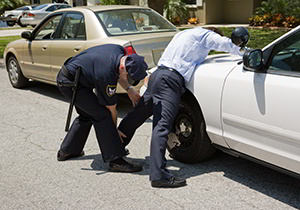
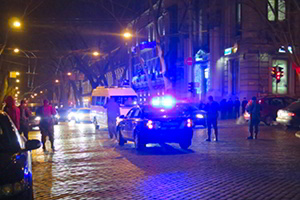


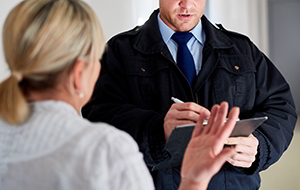
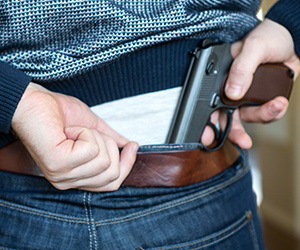






 Preppgroup