Living In A Post-Disaster World It Is Not Going to be Easy (The Fight Over Scarce Resources Will Drive The Chaos)

Urban survival scares the hell out of me.

Too many people, living too close together.

But that’s why I’ve prepared for it.

Don’t run away from what scares you; stare it down, and get prepared.

So let’s start by agreeing “What Urban Survival Is” and “What It’s Not”.

The definition of Urban Survival differs slightly depending on who you ask.

Many take it to mean your “day-to-day city survival and safety measures” – a.k.a. “street smarts.”

But for us, I define it as follows:

The skills, tactics and ability to survive a widespread prolonged disaster while remaining in a densly populated urban environment (even if it’s just for a few days).

Urban survival is having the ability to tough it out in the belly of the beast.

Surviving a world-shattering catastrophe event from within the heart of a dangerous city takes an entirely different mindset. It also takes a particular set of survival skills, tools, and plans to stay alive.

Now, even if you don’t live or work in one of these 146 high population counties, maybe, you have a family member that does. Or maybe you occasionally visit your kids, friends or relatives in a nearby high-density city.

If society collapses, you can bet that the foods the pioneers ate will become dietary staples

The Lost Ways prepares you to deal with worst-case scenarios with the minimum amount of resources just like our forefathers lived their lives, totally independent from electricity, cars, or modern technology.

So pay chose attention because this video will change your life forever for the good!

The bottom line is this:

If SHTF happens and you live in a city or are just there for a short visit, do you have the urban survival skills and knowledge to hunker down and survive? Maybe you’re forced to stay for a couple of days or weeks, do you know how to successfully transverse such an environment?

Urban survival skills differ significantly from wilderness survival skills. You should learn both…

So today we are going to cover the following urban survival topics:

  • Getting Home
  • Back Up Rendezvous Location
  • Bunkering Down or Bugging Out
  • Urban Survival Planning and Preparation
  • Avoiding Others – Staying Put
  • Avoiding Others – Urban Transportation
  • Get To Know Your Area Well
  • Scavenging Key Resources
  • Situational Awareness
  • Trusting Others
  • Staying Fit, Stay Trained
  • Living In A Post-Disaster World

Getting Home

When a disaster strikes, the first thing you’ll want to do is to get home (unless your home was destroyed). Why? Because if you’ve prepared to any degree, that’s where you’ll be keeping the bulk of our survival gear and resources. But they don’t do you much good unless you can’t get home first.

You should assume you won’t be home when disaster strikes. You might be…but you shouldn’t assume that. This assumption helps you get prepared for that scenario.

And that’s why you need a fully stocked Get Home Bag.

Before you skip this section, hear this first: a GET HOME BAG is very different than a “Bug Out Bag” (BOB).

A BOB tends to be a large backpack, stored at home, and chalked full of almost every necessary piece of survival gear imaginable. It’s used for surviving (mostly in the wild) post-disaster.

A “Get Home Bag” by comparison, is small, lightweight and straightforward. You should have at least one of these but for many, it makes sense to have several dispersed in strategic areas. One for the car, one for the office, one for the boat, one of the RV, etc.

A get home bag should contain a number of specific survival resources to help you get back to home base. Here are the most common items found in a get home bag:

  • Spare Cash
  • Everyday Carry Knife
  • Maps (of city and surrounding areas)
  • Military Compass
  • Everyday Carry Flashlight
  • Small First Aid Kit
  • Hand Crank Radio
  • Protein Bars
  • Water and Portable Water Filter

The point of a Get Home Bag is to help you Get Home, duh! It’s the basic survival gear that will give you a bit of an edge should the world surrounding you fall into chaos when you’re away from your home base.

Rendezvous Location Specification

Great now that you’ve got your Get Home Bag, what happens if home base is destroyed or not safe? Do you have a backup rendezvous location? Have you shared this location with your loved ones?
When you are trying to survive an urban emergency, you might not have the opportunity to call your family and friends to arrange a meeting place. The kids might be at school. Your significant other may be at work across town; you might be at the dentist.

It’s better to plan ahead and specify a rendezvous point. But it has to be somewhere memorable – this does not work if everyone forgets where the meeting place is. Landmarks, schools or someone else’s house (you trust) are all possible options.

Bug In vs Bug Out

Make sure everyone is on the same page and even practice a few rendezvous drills to this location.

Deciding to Bunker Down or Bug Out

OK, this is the next big decision you need to make.

The desire to get as far away from the city in a prolonged disaster is natural, but not an urge you should follow in every circumstance. When you get home, check the news and talk to your neighbors to dig up more information on the situation. There are some considerations to take into account:

What is your emergency food stock looking like? Depending on how much food and water you have stocked up, you may be able to survive at home longer. The better your stockpile, the higher your chances of survival.

How serious is the disaster or emergency? If it’s dangerous and forecasted to continue that way, maybe your best option is to grab your stocked bug out bag and go. OR, it could be a severe (but temporary) emergency in which case bugging out might be a rash decision.

Are government institutions still functioning? Without police officers, firefights, and paramedics, EMT’s things are going to get nasty fast.

Of course, unanticipated things happen all the time – and they tend to occur more frequently during emergencies and disasters. Some unforeseen event may sway your decision. It may force you out of the city, or trap you within your own home; expect the unexpected.

You need to plan and then decide if it makes more sense to stay or go.

Urban Survival Planning and Preparation

For the sake of the rest of this article, let’s assume you decide it’s best to hunker down.

The real survival threat in an urban setting is the sheer number of people fighting over the same resources. So to survive such an environment we will primarily focus on the following two skills:

1 – Avoiding Others

2 – Scavenging Resources

If you can limit your exposure to others and scavenge essential resources, your chances of urban survival go up significantly.

Avoiding Others – Staying Put

Avoiding others will be a real challenge in a dense city, but the easiest way to avoid other people is to stay hidden in your home or apartment. And the only way you’re going to be able to do that for an extended period of time is to stockpile.

I won’t go into extreme detail here about stockpiling, but basically, you need to stock food, water, medical supplies, etc.

A note of caution: Don’t tell your neighbors or even friends about your stockpile. Unless you’re OK with sharing your stock resources when SHTF.

So limiting the amount of exposure to others by hunkering down is a good first step. But if you’re dealing with a prolonged disaster, at some point you’ll be forced to venture out for replenishment.

Avoiding Others – Urban Transportation

Naturally, if you jump in your car, start her up and put the pedal to the metal you’ll be noticed by others. But more often than not, in serious emergencies roads will be jammed up anyways. This can be a serious obstacle for someone determined to get back to home base or trying to move about the city.

Cars and trucks are the hardest to get around in the midst of chaos. Motorcycles and scooters more nimble and can dart/weave through thick traffic and tight roadways.

Bicycles are another quick way of getting around in an emergency – they are particularly handy in the case of an EMP because they do not require any electrical input to get you from point A to point B. However, with all of these options you are highly exposed. Exposed to gangs, thieves, or a looter who all may have gunfire.

So evasion is paramount when exposure becomes risky.

Going by foot is preferred once cars, scooters, and bikes become a liability because you can move quietly, and efficiently without the need for roads. Unfortunately, many large cities sprawl which means that you could have a very long distance to cover. Miles could take days if remaining hidden is required.

Darting through small buildings, basement or rooms to provide hidden paths can work, however, if you don’t know the city well you may be evading right into a bad guy’s lair.

Cities simply have too many people in them to remain undetected for the long haul. So you also need to have a self-defense plan and be ready to take immediate proactive action.

Firearms are loud but effective so equip yours with a suppressor. Melee weapons are quieter but less efficient.

I plan to have both options with me at all times and use the one that seems most appropriate for any given situation.

Get To Know Your Area Well and Practice

People who live and work in urban environments should know their area intimately. Take multiple different routes to and from work each day to explore new areas and find back alleys and shortcuts.

Buy some detailed maps of the city and surrounding areas (keep these in your Get Home Bag). Study these maps. Learn them now so you’re not fumbling with them later when the lights go out, and anarchy breaks loose in the city.

Urban survival includes learning how to move about a city undetected; like a ninja. Traveling over rooftops or sewer systems becomes a major advantage. These are routes you should start practicing today to move secretly throughout a city.

On December 6th President Trump’s words shook the world.

For the first time in over 2000 years, Jerusalem was recognized as the capital of Israel.

Whether he knows it or not, President Trump fulfilled his part in a frightening biblical prophecy exactly as the scriptures predicted.

Only the top church leaders and Bible scholars know the real meaning behind this great and terrible moment, yet no one is saying a thing about it…

So pay chose attention because this video will change your life forever for the good!

Here’s a video that provides several excellent ideas on how to travel and scavenge in an urban survival situation.

Scavenging For Resources

As we just discussed, moving about undetected is key to avoiding conflict. But where are you going and why? You’re scavenging.

Finding useful resources in an urban environment may seem like a simple process. Just dart off to the nearest Walmart or Target, right? The problem with these public locations is that they are obvious.

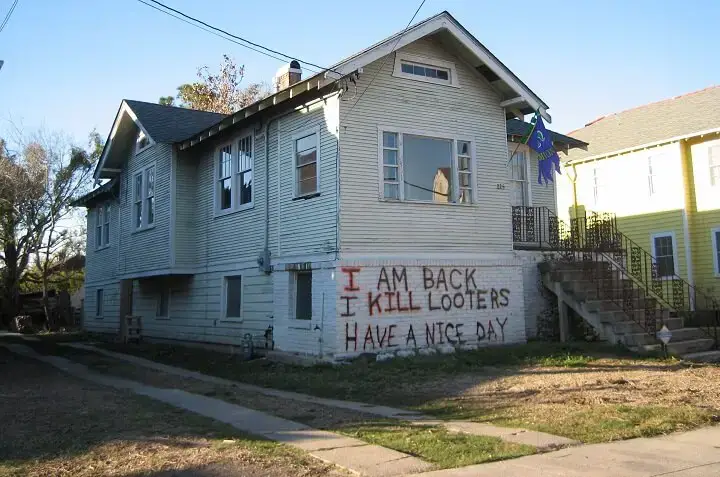
Everyone already knows about these locations and they will be looted early in a disaster. So you need some new ideas. Some good locations where the masses won’t be looking (at least initially).

You want to focus on places that the masses have never thought about. Places such as distribution centers, manufacturing sites, schools, or building construction sites.

Your odds of scoring a few precious resources go up significantly if the masses haven’t been there yet. The main resources you’re going to want are:

  • Water
  • Food
  • Medical Supplies
  • Tools and Gear

Also, if you’re a skilled survivalist, you’ll know how to turn what looks like junk into a useful survival item. So keep that in mind when scavenging.

The following two videos provide several examples of less well known urban survival locations that you’ll want to focus your scavenging efforts.

Situational Awareness

The urban survival skill you really need to focus on and develop is situational awareness. The choices you make when traveling and scavenging will be determined by how well you’ve honed your situational awareness.

Using your instincts and constantly scanning your environment for evidence of trouble will help you to make wise survival decisions. Often it’s not the strongest or most aggressive who wins, but the one who makes better choices based on what a situation calls for.

The bottom line is: A lot of violence could be prevented if more people had better situational awareness.

To learn more, watch this video that focuses in detail on urban situational awareness techniques.

To Trust Others or Not

Helping your neighbors can be incredibly rewarding. Sharing your emergency food stockpileor ammo, or even a useful survival tip can earn you an ally during a tumultuous period.

You watch their back, and they will watch yours. It is a symbiotic relationship that benefits both parties.

Besides, having survival friends is nice for the company.

However, don’t be too trusting or you might end up dead. Even if it is someone you have known for years and consider a close friend, it is never a good idea to show someone where you keep your survival stash.

Use diversion safes to keep your most valuable items hidden.

Revealing valuable food, water, weapons or your ammo supplies to someone might present unnecessary temptation. It would suck to wake up one morning and find out your “buddy” Scott skipped town with all your ramen noodles and shotgun shells.

Be conservative with your trust; do not just give it to anyone. If there is a big bad cue ball meth-head living down the hall, you can go ahead and assume you are better off without him. Have some common sense.

There is also the option not to trust anyone at all. You do not necessarily need other people to survive (although, it does make it easier). Sticking just to yourself makes life a little simpler, you just need to be sure you have the ability to do so. The lone wolf lifestyle certainly has its advantages.

Personally, I take the middle ground. I trust with extreme caution. The two criteria for me to trust someone is:

1) They are nearly as prepared as me BEFORE the world goes to shit.

2) They pull their own weight.

If they have these two qualities, I will consider building a relationship with them in preparation for SHTF. But building a new relationship mid-diaster is like playing Russian roulette. Not recommended unless it’s truly your only option.

Stay Fit, Stay Trained

If you are trying to make your way back home or to your apartment from within a city you will have to travel through dangerous territories (probably by foot).

Roadways will likely be jammed up by police barricades, gridlocked traffic, or debris from destruction.

And along the way, you may have to fight. So it is pertinent to stay in shape, and even train yourself physically for such an event.

Long walks, hikes or runs are great ways of keeping fit. But it’s also great practice for traveling by foot. Having travel endurance is key to urban survival.

For urban survival, you should practice moving quickly and with urban evasion techniques. Thrill sports such as rock climbing, bouldering, and free running are great for toning your core and upper body muscles. This will prepare you to climb building ladders, scramble between rooftops.

Mostly you need to be able to move throughout a city with minimal visual exposure.

Martial arts are particularly useful because, on top of being great exercise, they are tried and tested methods of self-defense.

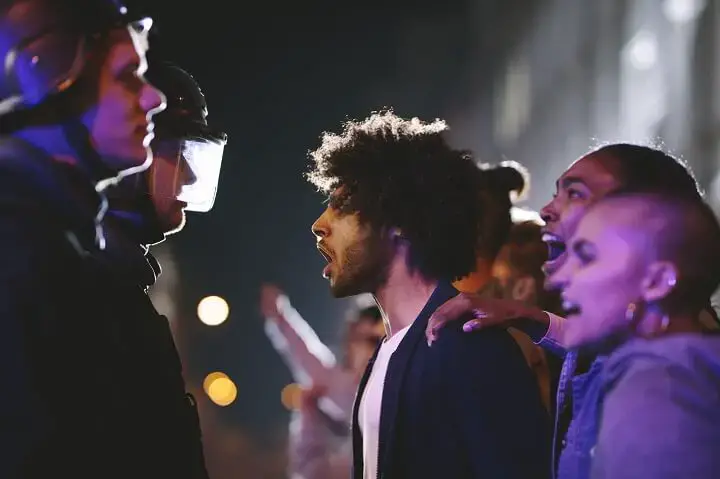
If you ever find yourself in a violent riot or a looting frenzy, there may arise the necessity to fight as opposed to flight – if you are a trained martial artist, you are going to be ready for that.

Living In A Post-Disaster World

It is not going to be easy.

When the dust finally settles, and the hectic mayhem subsides, there will be a severely damaged society to cope with.

Depending on how severe the destruction is, there may be an extended period of “toughing it out”. It could be weeks, months, or years before life starts returning to normal – you may have to go without running water, electricity, and essential services like garbage removal.

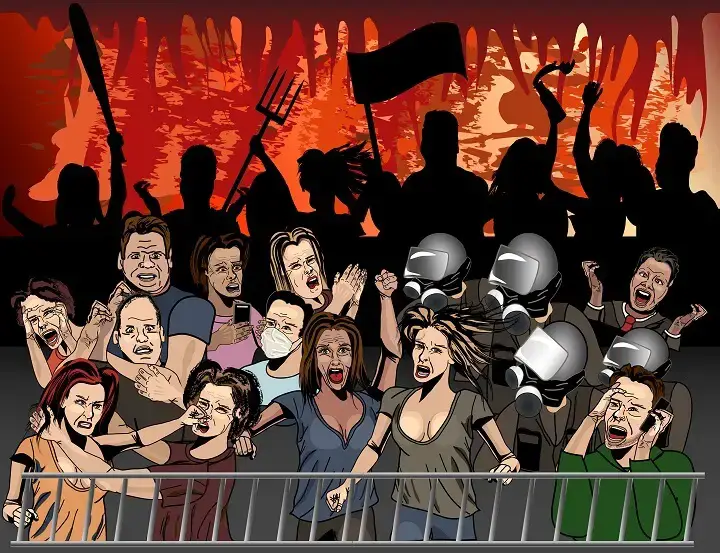
The fight over scarce resources will drive the chaos. If resources continue to be scarce escalation will ensue. People will go from fighting over resources to killing for them.  

The most important step is survival, and if you keep your wits about you, and prepare yourself with these steps, you will be ready to cope with just about any urban survival scenario you find yourself in.

You might be living in one of America’s deathzones and not have a clue about it
What if that were you? What would YOU do?

In the next few minutes, I’m going to show you the U.S. Nuclear Target map, where you’ll find out if you’re living in one of America’s Deathzones.

This image has an empty alt attribute; its file name is untitled-1.png

8 Industry Experts Pick Their Must-Have SHTF Gun: Our panel of experts answers the age-old question ‘If you could only grab one gun when SHTF, what would it be?’

Our panel of experts answers the age-old question ‘If you could only grab one gun when SHTF, what would it be?’

The question is pretty commonly heard at gun shops, barbecues and shooting ranges. Every shooter knows it, and every shooter thinks about it. What gun would you choose if you could only have one gun? It seems simple, but experts and enthusiasts alike know how difficult it can be.

The question gets a little trickier when we add a caveat: What if it’s during the apocalypse? Now you have to consider ammunition; if you run out of ammo, will you be able to scrounge some up? What about hunting and self-defense?

Answering this question can be difficult, but that’s why we’ve assembled an assortment of industry experts to offer their opinions. On top of learning more about each of these gurus, these answers can also help you formulate your own.

Nick Collier

  • Affiliation: DoubleStar Corp.
  • Position: Senior Executive, DoubleStar, Training Academy Instructor
  • SHTF Gun: AR-15

I’d choose an AR-15 for a SHTF situation. That’s an easy choice. I have had this conversation many times with industry associates as well as family members and friends. With the thousands of variations available, the AR-15 is the best choice. My decision is based on the following: training, reliability, ease of use, size and ammunition.

I have spent ample time training on this firearm. I feel like I would be able to handle the weapon in a variety of situations. Whether I am in a rural setting taking distant shots or a densely populated area, the AR-15 is capable of kill shots in excess of 300 yards, and it’s short enough to maneuver in urban terrain.

The reliability of the AR-15 is only as good as the sum of its parts. When built with quality components, the AR-15 will perform in most any condition, as proven by our military and law enforcement over the years. I adhere to the “buy once, cry once” principal when buying gear. Go ahead and pay for the good stuff and you won’t have to buy it again.

Ease of use is another big factor. Not everyone is a trained firearms enthusiast, so you may encounter situations where you are unable to fire and need to teach someone in your group to return fire or hunt for food. The AR is very basic and easy to use. My 9-year-old son has been shooting one since he was big enough to hold it up, and in my training experience, it doesn’t take much to get the average person up to speed safely.

The size of the AR-15 makes it easy to carry. If you have ever covered a long distance on foot, you know every ounce you are carrying counts. Moving through obstacles also requires a small, compact firearm. Any hunter can tell you that climbing over fallen trees and rough terrain is easier with a smaller, shorter rifle, and the AR-15 can be made short to carry and adjusted for the correct length of pull with collapsible stocks.

The last and maybe biggest factor is ammunition. The AR-15’s standard 5.56mm cartridge is big enough to put down small- to medium-sized targets with well-placed shots. Whether it’s a zombie horde or a whitetail dinner that comes into the scope, the 5.56mm cartridge can handle it. Carrying six to ten 30-round magazines on your plate carrier or in your backpack still leaves room for things like water, food and medical supplies on your trek without adding too much bulk or weight. Other factors include caliber conversions for larger ammunition and parts availability. The AR-15 is the most popular rifle in America, and it should be easy to find ammunition and parts while scavenging. For these reasons, the AR-15 is the ideal SHTF firearm.

Mike Detty

  • Affiliation: Mad Dawg Global Marketing, Inc.
  • Position:President
  • SHTF Gun: AR-15 carbine

Guns are tools, and each of them has been designed to perform a certain job. Unfortunately, an event of apocalyptic proportions can limit our choices, so the selection of just one gun is extremely critical. To me, this means choosing a gun that has a great degree of versatility. My pick would be an AR-15 carbine.

For many years I competed in USPSA competition and considered myself an above- average shooter, and I own many nice, custom 1911 pistols. But I have enough experience behind a carbine to know that no matter how much I practice with my pistol, I will never be able to shoot one as accurately as one of my AR-15 carbines. AR-15s are accurate while the 5.56mm cartridge is light on recoil, making this combination especially effective and easy to shoot for all family members.

Besides the precision of a carbine, there is also the capacity factor. Thirty-round AR magazines are abundantly available at bargain prices. My own home-defense guns all use 40-round Magpul 5.56mm magazines.

Flattop carbines are especially versatile and offer the shooter the ability to use folding backup sights, reflex sights or a scope depending on the task at hand. Free-floating handguards make it easy to attach lights, lasers and other accessories to aid the shooter.

The AR’s modular design also makes it easy to switch uppers—i.e., convert the gun from a short M4-style carbine to a long-range precision rifle with ease. Guns can even be converted to hard-hitting calibers like the .458 SOCOM or inexpensive .22 LR.

The ubiquitous of the AR-15 makes its choice a logical one in a doomsday scenario. Parts, magazines and ammunition should be easier to find with such a popular gun. Unwanted parts or accessories should also make for good trading fodder.

My own choice for home defense is an AR-15 SBR with a 7-inch barrel, a flash suppressor and a red dot reflex sight. In the event of an unimaginable catastrophe where I can only grab one gun before I leave my home, I would feel very well protected with my AR-15!

Mykel Hawke

  • Affiliation: U.S. Army Special Forces veteran, survival instructor, author, star of the Travel Channel’s “Lost Survivors”
  • Position: Founder and Director of SpecOps Adventures and Training
  • SHTF Gun: Scavenger 6 by Ralston Arms

Like any skilled person, I prefer to use the right tool for the task. However, sometimes you have to make do and improvise. As a survival guy, I live with a long machete, large, medium and small knives and a backup. The same principles apply for my weapons; I have sniper rifles, shotguns, AR-15s, pistols. But if I must choose just one weapon, I want the one that will give me the biggest bang for the buck, which means it has the most utility and versatility.

So, for me, the best all-around weapon to carry in a bug-out situation would be the Scavenger 6 by Ralston Arms. Designed by one of the most creative survival inventor/designer guys I’ve ever met, Tim Ralston, it’s a weapon that can shoot 21 different calibers. In a survival situation, you never know what kind of ammo will be available. It’s very likely you’ll sooner or later expend whatever ammo you have stored and you can’t always carry all the ammo with you, but if your weapon will shoot whatever is around, you’re well ahead of the power curve, and in a crisis, that could be the difference between surviving and pushing up daisies.

Jared Hinton

  • Affiliation: Vista Outdoor
  • Position: Communications Coordinator for Firearms & Ammunition
  • SHTF Gun: Savage 11 Hog Hunter

I’m a bolt-action fanatic, and a gunsmith first. Somewhere deep down inside me, I still believe that the autoloading firearm is a passing fad; lever actions, bolts and revolvers are simple mechanical mechanisms that still rise to the top of my list if SHTF. Don’t get me wrong—I play with the AR platform, and I’ve assembled more ARs than I can count. The AR-15 is a great option if you expect a firefight. My primary concern is a simple rifle that anyone can operate and maintain should I become immobilized. Backup iron sights are mandatory. If anything happens to the optic, I can’t be stuck guessing where I am shooting. I need to be able to harvest game while having the ability to stop two-legged varmints. No excess hanging off the gun, waiting to get caught on brush while moving. Simplicity.

I value the ability to make one shot matter, and believe the Savage 11 Hog Hunter rifle in .223 Remington would be tough to beat if things got bad in a hurry. The Model 11 Hog Hunter comes in at 7.25 pounds, so it’s no flyweight, but I’ll take the extra weight of the medium-contour barrel for better off-hand control on target. Pre-threaded for a suppressor, the medium-contour barrel won’t submit to point-of-impact shifts that a sporter-weight barrel will with a suppressor out front. I’d top the rifle with a Weaver Classic 1-3x24mm optic in Weaver rings. Light, simple, reliable and the adjustable LPA sights ensure I can hit what I’m aiming at no matter the situation. With an optic, I can keep the entire package under 10 pounds, which is a reasonable threshold for days on the move.

Moving parts and reciprocating mass are more likely to wear, raising concerns over long-term maintenance. Autoloaders have a tendency to make a person waste ammo with extra trigger pulls. The Hog Hunter is compact, made to be hauled through the stuff no one wants to move through, precisely where I’ll be lurking. The Savage action is extremely strong, and should I come across ammo that is questionable, I know that the chances of the action failing are all but nonexistent. The zero-headspace system of the Savage barrel nut and floating bolt head give me a 100-percent reliable lockup that guarantees maximum accuracy and safety.

By choosing the .223 Remington as my caliber, I can carry a high volume of ammo. I need to pack as much ammo on my person as possible. While we’re at it, make it 69-grain Federal Gold Medal rounds; I need to know I’m hitting exactly where I’m aiming. Federal’s Gold Medal Match ammunition is sufficient to engage targets out to 600 yards while I make evasive maneuvers. It also doesn’t hurt that I have a large stockpile of it cached at the farm. It’s not designed for expansion, so it doesn’t excessively damage rabbits, pheasants and vermin that I may need to eat. I also have a decent supply of Fusion ammo stashed around; the 62-grain bonded bullet is more than sufficient for the biggest Minnesota deer I’ll encounter.

If SHTF, my goal is to avoid a close-range confrontation. I don’t need to eliminate most threats—I just need to slow them down long enough for me to get out of the area. Being discreet is my go-to plan, and getting to and holding our farm ground would be my top priority. The Model 11 Hog Hunter is versatile enough that I could trust my life with it when the going gets tough.

Jason Morton

  • Affiliation: CZ-USA
  • Position: Vice President of Marketing
  • SHTF Gun: CZ Scorpion EVO

If SHTF, I can assume that I’m not expecting a typical self-defense scenario, which our daily-carry pocket dump anticipates in these pre-apocalypse times. Instead I have to assume that we can expect multiple encounters with multiple targets. Since my first choice, air support, isn’t an option, I’m reduced to choosing only one gun.

Whatever I choose has to accomplish three goals: have adequate stopping power against multiple targets, be easy to carry with lots of ammo and, given the likelihood of a target rich environment, be common enough in caliber to have a reasonable expectation of finding more ammo when necessary. The multiple-target expectation means that for me, I need semi-auto capability. It also needs to be maneuverable both indoors and out. I think an SBR is just the ticket here. Assuming there is no government at this point, an SBR won’t require a tax stamp—just a hacksaw.

Caliber-wise, I like the .22 LR because I can carry lots of ammunition with me. Unfortunately, I have to find that ammo first and haven’t had very good luck doing that for several years. I know bunches of people are hoarding it in their basements, but if I try to scavenge it from there, I’m very likely to become one of their targets. Let’s say that the .22 LR won’t work due to ammo availability, and we don’t even need to consider stopping power for this one. The 5.56mm and 9mm calibers are going to be the most commonly encountered rounds. They are close enough to the same overall bullet weight that we can call choosing one over the other a draw. For stopping power though, the 5.56mm  NATO has to get the nod, assuming I can come up with something other than FMJs, but that’s not a guarantee.

The 5.56mm gives me more range over the 9mm, but I’m more concerned with multiple close targets, so a 9mm carbine or submachine gun is probably going to be my go-to gun in this scenario. It’s got plenty of magazine capacity, good stopping power with the defensive loads most commonly found in the caliber, and it generates low recoil. The 9mm is lighter in weight than a 5.56mm carbine and with a folding stock, and it’s easily concealed. Some might accuse me of being a little biased here, but my top pick has to be the CZ Scorpion EVO for my SHTF gear bag. The Scorpion is fast and reliable. Add a red dot and a suppressor and it’s even better.

Sean Murphy

  • Affiliation: Nightforce Optics
  • Position: Marketing Communications Manager
  • SHTF Gun: DEVGRU “RECCE” carbine

In the event of a true SHTF situation, we must accept that our “normal” day isn’t so normal. If I am limited to taking just one firearm to help me solve problems in a SHTF environment, it’s going to be a rifle.

In my eyes, it is hard to beat the all-around qualities of a good AR-15 carbine. My personal favorite for “the one” is a modern interpretation of the DEVGRU “RECCE” carbine. This upgraded AR-15 has a medium-contour, 16-inch, stainless steel, match barrel; a slim, 15-inch handguard; a muzzle device to accept a suppressor; a collapsible buttstock; and a match trigger. When paired with a good optic/ammo combination, you now have a very effective platform to deliver rounds accurately on target at any practical distance.

Topping off the carbine would be a Nightforce 2.5-10X riflescope, attached in a Nightforce Ultralite Unimount. This piece of glass is a perfect all-around optic that enables close/fast firing at low power, and up to 10X power for target indentification and shooting at longer-range targets. Quality ammo with heavy 69- to 77-grain projectiles or a premium- bonded bullet would be fed through the rifle for the best balance of accuracy and maximum terminal effect downrange.

The moderate weight and overall handiness of this package makes it easy for such a combination to accompany me on many trips hunting for deer, ridding fields of prairie dogs, competing in field/action rifle matches and countless trips to the range. The carbine is not too heavy to carry in hand or on a sling and is a good size to stash in a vehicle. I can deliver precision fire out to 600 yards with reliability (and a little farther on good days), but also engage targets at CQB ranges with ease. Other qualities to like about this setup are the plethora of magazines available, light recoil, ease of operation and perhaps most importantly, reliable operation. As higher-level maintenance or repairs became necessary; the parts availability and limited tools required make it an easy task for a competent person to handle.

Additionally, lights, lasers, bipods, night-vision devices and a whole range of other accessories can be added or removed to suit a particular use or environment. Chambered in 5.56mm NATO, this setup can also accommodate nearly any .223/5.56mm ammo one had stashed or had to scrounge.

If things go seriously wrong in my part of the world, my anticipated threat levels are going to go up, and my armament levels will go up to match. While a handgun provides an easy solution to carry all day, the energy on target, effective range, ammunition capacity and modularity of an AR-15 rifle cannot be ignored. My preference for an “accurized” carbine provides a balanced set of features for nearly any use, from hunting to defense or even limited offense if needed. I like having options to deal with problems, and my “RECCE” gun would be the one to grab.

Robin Sharpless

  • Affiliation: Redding Reloading
  • Position: Executive Vice President
  • SHTF Gun: Marlin 1894C

This is a very fun question to answer. It gives insight into both professional and personal preferences. Many will look at personal interest and or a favorite cartridge. Others will think about the sexiest gun to have during this time. For me, I’ll be driven by practicality.

As an avid handloader, my decision will be driven by something that is effective on wild game for food and predators, be they two- or four-legged. But it also must conducive to being handloaded and offer real versatility. Therefore, my choice is a .357 Magnum lever-action rifle, the Marlin 1894C. With its 18-inch barrel, it can generate enough energy to kill a deer, disable an attacker and handle coyotes but is also compact and convenient enough for easy carrying. Mine would sport a peep sight that works very well for my eyes, and the rifle’s overall handling characteristics make it a good choice for instinctive or point shooting when necessary.

From the reloading front, the choice of the .357 Magnum allows for the use of a variety of powders and, most importantly, the ability to simply and easily cast bullets for future use. Hopefully I’ll have a large stock of good projectiles on hand, but if that’s not the case, this caliber is a simple one to cast bullets for, regardless of what that dark future may hold.

Since the .357 Magnum has a straight-walled case, I won’t need to have lube for sizing. It is extremely easy to load for, and long case life is a positive. Additionally, in a future where we may have to scrounge for components. With that in mind, .357 Magnum and .38 Special brass is going to be relatively easy to find. Through creative loading we can create a range of offerings from quiet, low-velocity, low-flash defense loads to heavy-bullet loads capable of taking deer-sized North American game for food. While I would not tackle a grizzly bear, I would have confidence with this rifle on a black bear, which, by the way, could produce lube for my cast bullets if needed, with a heavy bullet and slower powder.

Bill Wilson

  • Affiliation: Wilson Combat
  • Position: President and Founder
  • SHTF Gun: Wilson Combat Tactical Lightweight .308 (rural), Wilson Combat AR9B(urban)

I think there are two different answers to this question based on where I am geographically. If I’m living on my ranch in rural Texas when SHTF and I can only have one firearm for the foreseeable future, my pick would be a lightweight .308 Winchester AR with a 14.7-inch barrel. I’d hopefully also have two additional upper receivers—in 6.5 Creedmoor and .338 Federal—with 18-inch, crowned-muzzle barrels for longer-range defense and more killing power for hunting. I’d really feel pretty naked without a handgun on my side since I carry one 24/7, but the question was one gun, and a .308 Winchester AR would handle most any defensive situation I would likely encounter in rural Texas and still put meat on the table as needed. Also .308 ammunition is pretty common in this neck of the woods—not that I don’t always have plenty on hand!

My setup would be as follows: I’d choose a Wilson Combat Tactical Lightweight .308 with a 14.7-inch barrel and a permanently attached Q-Comp flash suppressor. I’d add a top-quality optic like a Leupold 2-12x42mm VX-6 riflescope as well as a Streamlight TLR-1 HL weapon light and a sturdy Blue Force Gear Vickers two-point sling.

If allowed, my extra 6.5 Creedmoor upper would have a mid-weight, 18-inch, crowned-muzzle barrel and a Leupold 2-12x42mm VX-6 scope. The .338 Federal upper would have a light “Hunter” 18-inch, crowned-muzzle barrel and the same scope.

If I am in a large city on business (I would never live in a city!) when SHTF and I can only have one firearm for the foreseeable future, my answer changes. For this one I’m assuming total society breakdown and chaos in the city. For that, the need for concealed carry is a thing of the past. That being said, I’d go with one of our new AR9B 9mm carbines that uses Beretta 92/M9 magazines, which I normally take with me when I travel. In a true SHTF situation in an urban area, I want to be prepared for multiple assailants at relatively short ranges.

A light and short carbine that is easy to carry and deploy in tight places would be very handy. A 9mm carbine would also allow me to carry a lot of ammunition, and using subsonic loads, it would be almost as quiet as a suppressed 5.56mm. An additional plus would be the very likely chance that eventually I would be able to acquire a 9mm pistol, and ammunition compatibility would be a good thing.

For this setup I’d choose a Wilson Combat AR9B with a fluted, 14.7-inch barrel and a permanently attached Q-Comp flash suppressor. I’d use a Leupold 1-6x24mm VX-6 scope and an Aimpoint CompM4s, both in QD mounts, as well as a Streamlight TLR-1 HL weapon light and a Blue Force Gear Vickers two-point sling.