What to Own When the Dollar Collapses: Every Possible Solution (When it comes to preparing for an economic collapse, there are a lot of different schools of thought.)

When it comes to preparing for an economic collapse, there are a lot of different schools of thought. Some people believe that stockpiling food and supplies is the best way to go, while others think that having a stash of cash on hand is the key to weathering the storm. But what if neither of those options is available to you? What if the only thing left to rely on is your own two hands? In this blog post, we are going to take a look at every possible solution for what to own when the dollar collapses.

A part of this article is summarized in the following video:

What to Own When the Dollar Collapses

1. Gold, Silver, and Other Precious Metals

Precious metals like gold and silver have been used as a form of currency and store of value for centuries. In times of economic or political turmoil, precious metals are often seen as a safe haven asset.

Investors typically turn to gold when they are worried about inflation eroding the purchasing power of their paper money holdings. Gold is also seen as a hedge against geopolitical risk. Silver, on the other hand, is more industrial in nature and is used in many different industries, from electronics to photography. As such, it can be more sensitive to economic trends.

When considering investing in precious metals, it’s important to understand that there is no one-size-fits-all solution. Each investor’s circumstances are unique and will dictate what type of investment makes sense. But for those looking for an alternative to traditional investments like stocks and bonds, precious metals may be worth considering.

A few additional precious metals for your consideration:

  • Platinum: Platinum is a white metal that is rarer than gold. It is often used in jewelry and has industrial applications. Platinum prices are usually more volatile than gold prices.
  • Palladium: Palladium is a silvery-white metal that is similar to platinum in terms of rarity and uses. Palladium prices tend to follow the same trends as platinum prices.
  • Rhodium: Rhodium is another rare metal with a silvery-white color. It is often used in catalytic converters and has industrial applications. Rhodium prices can be very volatile, so it may not be suitable for all investors.

2. Foreign Currency

When it comes to foreign currency, there are a few different options that can be considered.

  • The Japanese yen has been one of the strongest currencies over the past few years as Japan continues to recover from its debt crisis. And with interest rates still near zero, there’s no reason to think that this trend will change anytime soon.
  • The euro is also often seen as a safe bet. This is because the Eurozone has been relatively stable compared to other parts of the world. Furthermore, the European Central Bank is perceived as being hawkish on inflation, which makes the euro a good choice for investors looking for stability.
  • The Swiss franc has also been one of the strongest performers over the past few years, thanks largely to Switzerland’s status as a stable economy during uncertain times of market turbulence. Even when the markets are relatively calm, investors are still flocking to Switzerland seeking safety. All this demand has helped push up the value of Swiss francs.
  • The Chinese yuan has been on the rise in recent years. This is because the Chinese economy has been growing steadily in recent years, while other economies have been struggling. As a result, the value of the yuan has been rising against other currencies. For example, since 2010, the yuan has risen by 20% against the US dollar.

3. Foreign Stocks

Investing in foreign stocks could be a very wise move. After all, if the value of the dollar plummets, then the value of foreign stocks is likely to go up since they will be priced in stronger currencies.

Of course, there are risks involved with investing in foreign stocks. For one thing, you may not be familiar with the company or understand how it operates in its home country. Additionally, political and economic conditions in other countries can impact your investment (think Brexit).

That being said, here are a few foreign stocks that could be worth considering:

  • Royal Dutch Shell (RDS-A): This oil giant is based in The Hague and has operations all over the world. While oil prices can sometimes be all over the place, Shell is still a well-run company with a diversified business model. As the oil prices rise, Shell’s stock continues soaring.
  • HSBC Holdings (HSBC): Based in London, HSBC is one of the largest banks in Europe with around 7200 branches across 80 different countries. It’s been through some tough times lately due to concerns about its growth prospects and exposure to China’s economy, but HSBC remains a solid long-term pick for many investors.
  • Nestle (NSRGY): A food and beverage powerhouse headquartered in Switzerland, Nestle owns some of the most iconic brands out there, including Gerber baby food, Nespresso coffee machines, and much more. Here is a live chart of this stock:

4. Foreign Bonds

When it comes to protecting your portfolio from a potential dollar collapse, there is an option to invest in foreign bonds. Foreign bonds can offer stability and diversification, as well as the potential for higher returns.

There are a number of factors to consider when investing in foreign bonds, including inflation rates, interest rates, and political risk. Inflationary risks are particularly important to consider, as high inflation can erode the value of your investment. It’s also important to be aware of currency risks – if the value of the US dollar falls relative to other currencies, your investment will lose value (in USD terms).

One way to mitigate some of these risks is to invest in foreign bonds with shorter durations – that is, bonds that mature sooner rather than later. This way you’re not exposed to as much interest rate or currency risk. Another strategy is to ladder your investments, which means investing in a series of bonds with different maturity dates, so that not all of your money is invested at once.

Of course, no investment is without risk – but by diversifying into foreign bonds you can help protect yourself against the potentially devastating effects of a collapsing dollar.

As a side note, keep in mind that a direct purchase of foreign bonds can be a highly challenging task. Try going through an exchange-traded fund or a closed-end fund to ensure a successful purchase.

The following video from Kingcademy gives a crash course on foreign bonds:

5. Bitcoin and Other Cryptocurrency

While gold, land, and various commodities propose a physical form of investment, you can diversify your assets by investing in Bitcoin and other cryptocurrency.

Bitcoin is often called “digital gold” because like gold, it is scarce (there will only ever be 21 million bitcoins in existence), durable (it can’t be destroyed or corrupted) and portable (you can carry millions of dollars’ worth of bitcoin in your pocket). It also has similar properties to gold in that it isn’t controlled by any government or central bank. This makes it an appealing choice for people who are looking to protect their wealth from inflation or a potential collapse of the US Dollar.

Other cryptocurrencies also offer similar benefits. Ethereum, for example, has been designed with the intention of being used as a global currency and platform for decentralized applications. This makes it different from Bitcoin, which was primarily designed as a digital store of value. However, both Bitcoin and Ethereum offer investors protection from inflation and the possibility of huge gains if they continue to rise in popularity and value.

6. Collectibles

Collectibles can hold their intrinsic value even when the local currency loses its own value. Here are some things to consider collecting:

  • Gold and silver coins: These have always been considered a safe investment, and for good reason (see the earlier discussion about precious metals). They retain their worth even in times of inflation or economic chaos.
  • Jewelry: Fine jewelry is not only beautiful, but it’s also an excellent investment. Look for pieces made with quality materials like gold, platinum, and diamonds. Avoid costume jewelry, which has no resale value.
  • Artwork: Collecting art can be a passion as well as an investment. If you buy wisely, your collection will increase in value over time. But beware of fakes! Do your research before making any purchases and consult with an expert if needed.
  • Classic cars: For many people, classic cars are more than just vehicles – they’re collector’s items. If you have the space (and the budget), consider investing in one or two classic cars. They could become quite valuable down the road.
  • Firearms: Many people view firearms as essential for self-defense in unstable times. Whether or not you agree with this sentiment, there is no denying that guns can be worth a lot of money. So, if you’re interested in firearms, start collecting now.

7. Income-Producing Real Estate

Real estate is a solid option that shields you against the devaluation of the US dollar. Let’s review the reasons:

  1. Real estate is a physical asset that can’t be created or destroyed. Unlike paper assets like stocks and bonds, which can become worthless overnight, real estate will always have value as long as there is a demand for it.
  2. Real estate provides a hedge against inflation. As prices go up, rents generally increase as well, providing a built-in mechanism for increasing cash flow over time. Over the long term, investments in income-producing real estate tend to keep pace with or outperform inflation.
  3. Real estate offers potential tax advantages. In many cases, you can deduct expenses related to owning and operating an investment property from your taxable income (consult a tax advisor to confirm eligibility). Additionally, any capital gains you realize when you sell an investment property may be subject to preferential treatment under the tax code.
  4. Income-producing real estate can generate passive income streams. If you purchase a property with the intention of renting it out, you can collect regular rental payments without having to actively manage the property yourself (though there will be some work involved in finding tenants and maintaining the property). This type of investment can provide ongoing cash flow regardless of what happens in the broader economy. Moreover, because rental properties tend to appreciate over time, such investments also offer the potential for significant capital gains when they are eventually sold.

For these reasons, investing in income-producing real estate should be considered by anyone looking to protect their wealth during an economic downturn.
8. Land and Agricultural Commodities

When the dollar collapses, land and agricultural commodities will be some of the best investments you can make. Here’s why:

  • Land is a physical asset that can’t be created or destroyed.
  • Agricultural commodities are essential for human survival and will always be in demand.
  • Both land and agricultural commodities are limited in supply, which means they have the potential to increase in value as demand increases.
  • Unlike stocks or bonds, land and agricultural commodities can’t be printed or created by central banks, so their supply is more stable.
  • They offer protection against inflationary pressures, as their prices tend to rise when the cost of living goes up.
  • They provide a hedge against political instability and economic uncertainty, as investors flock to these assets during challenging times.

9. Off the Grid Living Solutions

A major economical collapse might require more than just investing in precious metals and foreign currencies. There is a good chance you will need to live off the grid, away from your country’s control and infrastructures.  Here are some things you can do to be prepared and survive:

  1. Grow your own food: This is one of the best ways to become self-sufficient and independent from the government or other institutions. You can grow a garden with fruits and vegetables, or even keep chickens for eggs. If you have the space, consider starting a small farm. For more in-depth information, please see my article on off grid farming.
  2. Store water: It is important to have a clean water supply in case tap water becomes contaminated or unavailable. You can store water in barrels or containers and purify it using a filtration system or boiling. You can also establish your own water system; I have a separate post that explains in detail everything there is to know about off grid water systems.
  3. Generate your own power: Solar panels and wind turbines are becoming increasingly affordable and can help you generate electricity when traditional sources are unavailable or unreliable. Alternatively, you can invest in a generator powered by gasoline, propane, or natural gas.
  4. Heating and cooling solutions: Consider investing in a wood-burning stove for heating, as well as insulation for your home to make it more energy efficient. For cooling, evaporative coolers are much more affordable than air conditioners and use far less energy.
  5. Learn new skills: In an uncertain future, it may be useful to learn new skills that could help you barter or trade for goods and services.

There is much more to learn about living off the grid, which is why I invite you to read my complete guide on off grid living.

10. Barter Items

When the dollar collapses, barter items will become increasingly important. Here are some items that will be especially valuable. You will notice some similarities with the previous list, since both lists deal with items essential to your survival and independence.

  1. Food: In a post-dollar world, food will be one of the most valuable commodities around. Stock up on non-perishable items like canned goods, grains, and nuts, which can be traded for other goods and services.
  2. Water: Clean water is essential for survival, so it will be in high demand in a post-dollar economy. Store water in clean containers and have a filtration system ready to go in case you need to purify contaminated water. Invest in a good filtration system – click the link to view products on Amazon and select the best reviewed one.
  3. Ammunition: In an unstable world, self-protection will be crucial. If you own firearms, stock up on ammunition as it will be difficult to come by after the dollar goes down.
  4. Tools and supplies for basic needs, such as shelter, warmth, and hygiene: Things like matches, sewing needles, fishing line, lye soap, and bandages may not seem valuable now, but could mean the difference between life and death in a post-dollar society. Make sure you have a good supply of these items stored away.

Final Words

When it comes to investing in the face of an impending dollar collapse, there are a few key things you should keep in mind. First and foremost, diversification is key. Don’t put all your eggs in one basket, so to speak. Invest in a variety of assets that will hold their value even if the dollar does tank. Gold and silver are always reliable choices, but, as stated earlier, you can also look into investments like real estate or art.

Another important thing to remember is that timing is everything. If you wait until after the dollar has already collapsed, it will be too late to invest. You need to get ahead of the curve and start investing now. The sooner you do, the better position you’ll be in when (or if) the bottom falls out from under the dollar.

Finally, don’t panic! It’s easy to let fear take over when thinking about such a potentially catastrophic event as a currency collapse. But try to stay calm and rational; otherwise you could make some very costly mistakes with your investment portfolio.

Stay safe and be prepared!

What the Government Can or Can’t Do Under Martial Law (Can the government take your guns during martial law?)

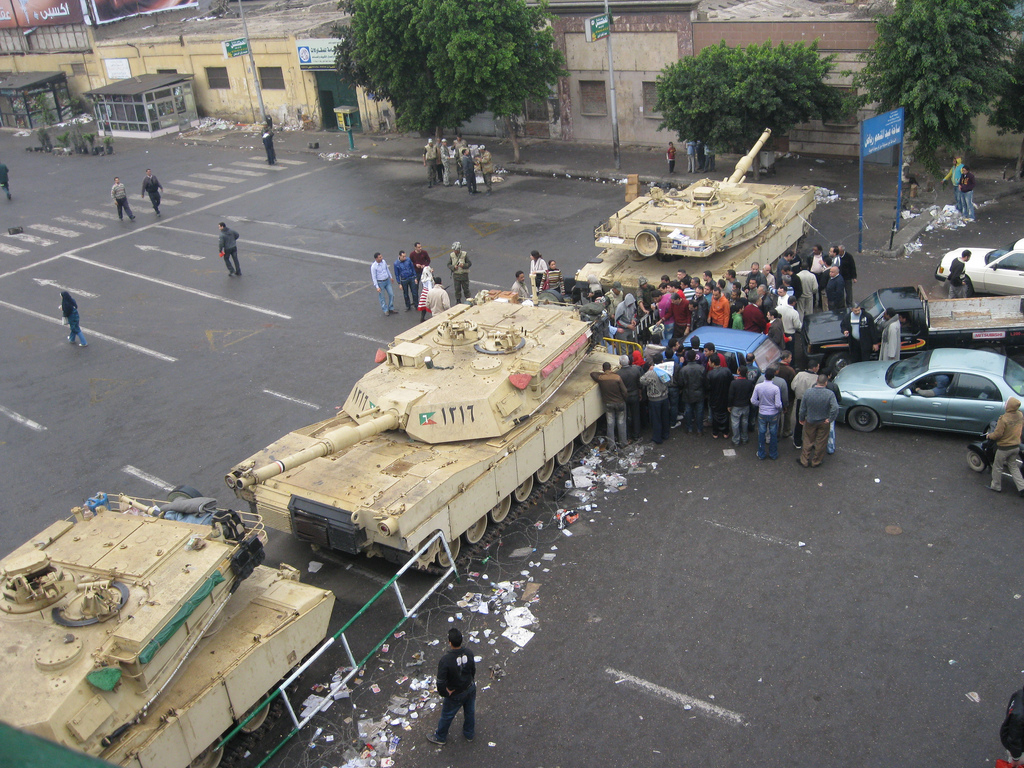
According to wikipedia– Martial law can be used by governments to enforce their rule over the public, as seen in multiple countries listed below. Such incidents may occur after a coup d’état (Thailand in 2006 and 2014, and Egypt in 2013); when threatened by popular protest (China, Tiananmen Square protests of 1989); to suppress political opposition (martial law in Poland in 1981); or to stabilize insurrections or perceived insurrections. Martial law may be declared in cases of major natural disasters; however, most countries use a different legal construct, such as a state of emergency.

Many Prepper and survivalist websites contain an abundance of material about the likelihood of gun confiscation in the aftermath of a major disaster. The general premise is that government agencies and/or military units will be going door to door after a declaration of martial law to forcibly deprive you of weapons and ammunition. You resist – you die or end up in a prison cell on the backside of some undocumented FEMA camp in the middle of nowhere, or so the theory goes.

Unfortunately, the distinction between local or regional disasters, such as a hurricane or earthquake, and a wider SHTF or “end of the world as we know it” event, are rarely made. In any historic disaster that you can name, the government has always continued to function at both the state and federal levels. A varied collection of mostly nameless bureaucratic agencies has always been able to respond to a recognized need. The degree to which they were timely in their response or even effective, is not an issue. The point is that a constituted and functional government (the people who you think you elected), were responding to a recognized need because they had a political motivation or statutory obligation to do so.

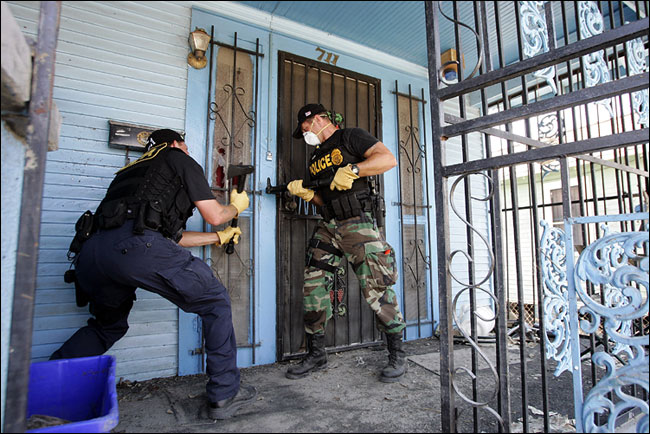
Most frequently cited in Prepper articles is the warning that gun confiscation is an inevitable consequence of a declaration of martial law. In the case of Hurricane Katrina, law enforcement personnel were, in fact, going door to door to confiscate firearms. There were numerous highly qualified Search and Rescue teams that refused to go to New Orleans because they were not allowed to carry firearms for their own protection.

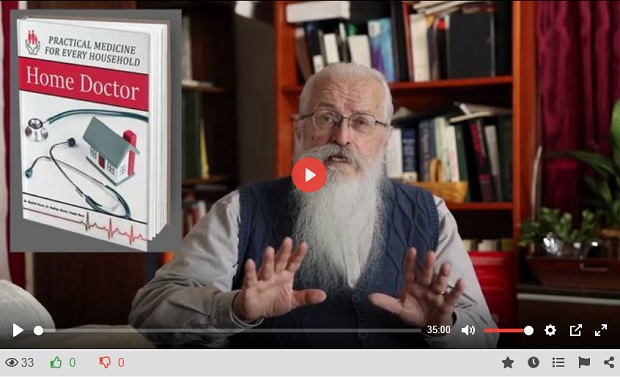
I highly recommend this book: The Home Doctor – Practical Medicine for Every Household – is a 304 page doctor written and approved guide on how to manage most health situations when help is not on the way.

If you want to see what happens when things go south, all you have to do is look at Venezuela: no electricity, no running water, no law, no antibiotics, no painkillers, no anesthetics, no insulin or other important things.

But if you want to find out how you can still manage in a situation like this, you must also look to Venezuela and learn the ingenious ways they developed to cope.

If the entire system were to suddenly go sideways, what is the probability of an enforceable martial law declaration, followed by gun confiscation? For example, if a solar coronal mass ejection (CME) event took out the entire national power grid could you realistically expect an army platoon to break through your front door in search of firearms, ammo, and surplus food? I think not.

There was actual gun confiscation after Katrina.

In order for martial law to be effective, you must first have a means of declaring it to the general populace. Second, you must have a means of enforcing it. The absence of either factor renders the declaration a moot point. Even without a means of communication, citizens will realize that a major catastrophe has happened. If there are no lights on at city hall, it won’t take a genius to figure out that civilization has gone south. Without a means of communication (TV, radio, Internet, posters on telephone poles, etc.) there is no way the general populace would know that martial law has been declared.

Second, if the command and control communications infrastructure has been disabled, government will have no ability to issue notifications or orders to law enforcement agencies (federal, state, county or local). By using the term “infrastructure,” I refer to computer based network communications, the ability to transmit communiqués via radio, the ability to contact and muster enforcement personnel, and essential coordination of resources. Stated a bit more directly, Fort Bliss will not dispatch a battalion of troops from the 1st Armored Division to Albuquerque, New Mexico (a distance of 225 air miles) to confiscate your firearms. They won’t be doing it in Humvees, M1-A1 tanks or Blackhawk helicopters. And they most assuredly won’t be on foot.

Finally, the enforcement of martial law (including gun confiscation) presupposes that county and local law enforcement personnel will be willing to carry it out on a national scale. It is one thing to suppress looters and arsonists, but requiring the military or state/county law enforcement to confiscate 350 million legally owned firearms is an entirely different proposition; especially if they are faced with determined resistance. Importantly, there are an increasing number of county sheriffs across the U.S. that have gone on record to refuse cooperation with federal initiatives that would lead to gun confiscation.

Doing house to house searches – whether vacant or occupied – is a very time-consuming and labor intensive process; not to mention the risks involved. Based on national averages, patrol officers number about 2 per 1,000 residents across the country. In rural communities, that number may be as low as one per thousand. In crime ravaged cities like Chicago, Washington DC and Baltimore, it can exceed four per thousand. When you consider housing and population density in urban areas, gun confiscation would be a daunting task to assign to any police force.

Martial Law has routinely been implemented in other countries.

Excluding overseas deployments, the number of active-duty Army and Marines in the contiguous U.S. is significantly less than 500,000. That is less than 1.5% of the entire population. The number of Army/Marine personnel that would be trained and equipped to deprive you of your personal defense weapons would actually be less than one per 10,000 population.

Within a matter of days, every state-side military installation will be in the same situation that you will face: No gasoline, no diesel or jet fuel for vehicles or aircraft, no resupply for commissaries or mess halls, and no direction from the federal or state branches of government. They will be eating MREs for breakfast, lunch, and dinner. If the grid is down for you, it will be down for them, too. If you don’t have fuel, or if the semiconductor circuits in your vehicle have been fried, do you think the military will escape a similar fate? You can think of it as an ‘equal opportunity’ form of calamity.

Also watch- COVID-19 returns in 2024! The video below will shock you because you will be among the first to find out the truth!

A More Probable Scenario for gun confiscation

In my view, the disintegration of government and the abandonment of Constitutional rule of law would rapidly lead to a collapse of civil order. Without a functioning government, looting, arson, and home invasions would erupt within hours – if not minutes – in major population centers. Any form of effective law enforcement (civil or military) would quickly evaporate. Instead, as the realization that civilization, as we know it, has come to an end, local communities and individuals would institute their own versions of martial law, but in a distinctly reverse manner.

The important distinction is that communities would be relying on citizen’s firearms to prevent being overwhelmed by refugees and looters. In other words, if you are inside the compound or town limits, and have possession of a firearm, you will be a defensive asset to the community. Moreover, local law enforcement will likely be aiding your collective defense. The enemy will be on the outside of the barricade.

In a total SHTF scenario, I believe that you are far more likely to be engaged in defending your family, property or survival community from raiders than you would be from government-backed confiscators of your weapons. The more tangible danger is from a still-functioning government that has abandoned Constitutional rule of law.

MUST WATCH BELOW!!!

Food Confiscation: How to protect your food stores and production from government confiscation

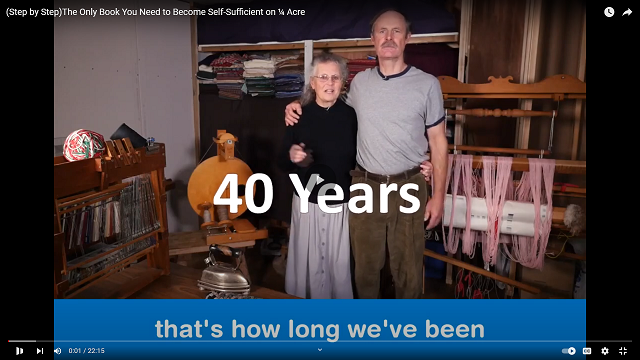
Take Advantage of Our 40 Years Experience Living Off The Grid and Turn Your Home Into a Self-Sufficient Homestead

(Step by Step)The Only Video You Need to Become Self-Sufficient on ¼ Acre

FEMA estimates only 3% of gun owners will resist gun confiscation by force! (Human Life Will Be Unrecognizable)

According to FEMA whistle blower Celeste Solum, left, Americans have been cast in the role of Jews in Nazi Germany and will meet the same fate. 
Global governance means we’ll have to play by a “totally new set of rules.”

If Celeste Solum is right, we are in much worse trouble than we think. She comes from an Illuminati background and worked as a FEMA planner for 20 years. So she is in a position to know.
Her horrifying vision is the darkest you will find. I cannot confirm that it will transpire but this may be a case of “forewarned is forearmed.” Prepare for “a world of hurt.”
She doesn’t write so I couldn’t find a text to repost. Instead she gives interviews to people like Mike Adams, Dave Hodges and David Icke. I listened to a few and provide some of her claims:

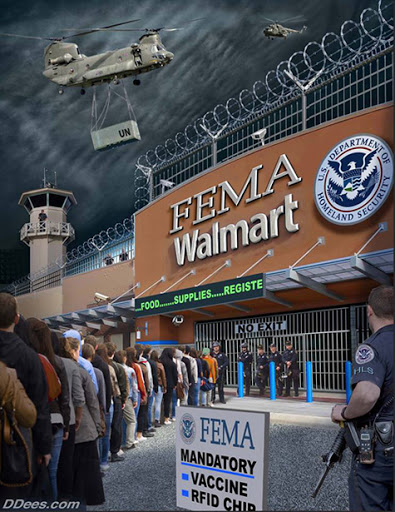
dees-walmart.jpeg

With robotics, most human beings have become redundant to the Illuminati. When there are famines and power blackouts, people will stream to “reception centers” (at Costco’s and Walmarts of all places?) where they will be interned and sent to concentration camps where they will be gassed or guillotined.  The goal is to offload 90% of the population.

Covid tests are intended to collect your DNA. The vaccines contain aborted fetus stem cellsand human proteins that have been bred in plants and mice (“a human in a mouse suit.”) They also contain “hydrogels” – nanoparticles that permanently fuse with your tissue, that connect with a 5G computer network that “monitor your health” at all times and determine if you can go to work or buy food. 
Speaking of food, meat will be phased out and concentration camp rations –“micronutrients” — introduced for the general public. There will be no “going to the supermarket.” We will not be allowed “to take anything from nature” and must downsize to half our carbon footprint. If we live in a mansion, we must move to a bungalow. (I know it sounds crazy.) 
 FEMA estimates only 3% of gun owners will resist gun confiscation by force. 

 They are making an inventory of everything of material value. All private property “will be federalized.” 
CRACKPOT?It is tempting to dismiss Solum as a crackpot and a fear monger. There were many red flags. She tends to exaggerate, claiming she grows 500 varieties of tomatoes on her farm in Montana and there are “seven million drones” monitoring us. She places a lot of emphasis on cosmic changes: “2000 year cycles’; “the sun has gone silent” and the “magnetosphere” has weakened. We are in the “end times.” She claims that a second Wuhan virus was released- a “plant destroyer” that decimated her orchards in Montana. 

coleman.png

On the other hand, consider her message in the context of what is actually happening. Trillions have been spent and millions of lives have been disrupted or destroyed for a virus that has a .25% mortality rate. 68,000 Britons have been fined for lockdown breeches. A young couple was terrorized by 12-man SWAT team who thought they were having a party. An 82-year-old grannie was watching TV in bed when police arrived to warn her about having tea in her garden with two friends earlier that day.  A Michigan restaurant owner was led away in shackles after publicly warning Americans they were being enslaved. 
Make up your own mind. But my view is prepare for the worst and pray for the best.

Furthermore- Below we have some additional data related to what science tells us about the effects of gun policies.

Good public policies are based on facts and data, and the most effective laws—including gun laws—are written when policymakers understand the effects of such laws on a range of outcomes and can weigh the inherent trade-offs. For gun policies, relevant outcomes can include, among others, the health of the gun industry, individuals’ ability to defend themselves, and homicide and suicide rates. In other words, policymakers need to understand the costs and benefits that different policies are likely to produce for society as a whole, including gun owners, communities wracked by violence, and other affected groups. This is not to say that all lawmakers need is an understanding of the true effects of policies. There are many other considerations as well, such as whether policies are consistent with Second Amendment protections or might infringe on other rights. Nevertheless, understanding the true effects of policies on a variety of outcomes is essential to creating policies that are both fair and effective.

As part of the RAND Gun Policy in America initiative, we conducted rigorous and transparent reviews of what current scientific knowledge could tell the public and policymakers about the true effects of many gun policies that are frequently discussed in state legislatures. Our first such review, released in 2018, synthesized the available scientific data from studies published between 2004 and 2016 examining how 13 classes of state-level gun policies affect firearm-related deaths, violent crime, the gun industry, participation in hunting and sport shooting, and other outcomes. In 2020, we released an expanded and updated review, which added five new classes of gun policies and extended the period over which we conducted our literature search to span from 1995 to 2018. Another update, expanding the literature search to include studies published through 2020, was released in 2023. With continued growth in the number of new scientific publications on gun policy, we incorporate those studies in our updated analyses, in several areas drawing new or revised conclusions about the quality of evidence available to support claims about the effects of various policies.

We restricted our analyses to only those studies using methods designed to identify possible causal effects of the policies. For instance, studies that reported simple correlations between gun policies and various outcomes at a single point in time did not meet our inclusion criteria, because such studies provide no evidence that it is the gun policy itself that explains the outcome differences rather than other social, demographic, or historical differences between jurisdictions with and without those policies. However, even among the research studies that met our criteria of using methods more appropriate for establishing the causal effects of gun policies, the methodological quality of studies varies. A team of RAND methodologists analyzed the methodological quality of each individual study and then applied standardized and explicit criteria for determining the strength of the evidence provided by the body of research regarding the effect of each policy.

First 20 Safest Countries That Will Survive Nuclear War (There are still some places on Earth that would be relatively safe in the event of a nuclear war.)

When it comes to global disasters, few things are more terrifying than the prospect of nuclear war. The devastation wrought by even a single atomic bomb is unparalleled, and the thought of an all-out nuclear conflict is enough to send anyone running for cover.

Fortunately, there are still some places on Earth that would be relatively safe in the event of a nuclear war. These countries have either developed extensive anti-nuclear capabilities or are geographically isolated enough that they would be unlikely targets for a nuclear strike.

So, what is the safest country in case of nuclear war? Here are top 20 candidates for surviving a nuclear war.

1. Iceland

Iceland is a small island country located in the North Atlantic Ocean. It has a population of just over 300,000 people and an area of 103,000 square kilometers. Iceland is one of the safest countries in case of nuclear war due to its isolation, lack of military, and geothermal energy.

Because Iceland is isolated from the rest of the world by the North Atlantic Ocean, it would be very difficult for a nuclear missile to reach Iceland without being detected first. Even if a nuclear missile did manage to reach Iceland, there wouldn’t be much damage because of the small population and size of the country.

Iceland doesn’t have a standing army or any other military force. This means that there would be no one to target with a nuclear weapon. The only people who would be at risk are those working in vital infrastructure such as power plants or airports. However, even these workers could take shelter underground where they would be safe from radiation exposure.

Finally, Iceland generates all of its electricity from geothermal sources. This means that even if the entire electrical grid went down, Iceland would still have power thanks to its natural hot springs.

Before we continue with this list, ask yourself – are YOU prepared for the worst? If moving to a safer country is not an option, consider a proven solution that will keep you alive and safe. Vivos Shelters are a global initiative that builds underground bunkers suitable for both small and large groups of people. These are not the simplistic and unreliable bomb shelters from the 1950s! Vivos Shelters are a known authority in constructing, outfitting, and stocking long-lasting underground shelters and cities, which are humanity’s last hope against the dangerous future. 

2. Canada

Canada is definitely one of the leading candidates to survive a nuclear war. First and foremost, Canada has a very strong military alliance with the United States through NORAD. In fact, the two countries have such a close relationship that they often coordinate their military exercises. This means that if one country were to be attacked by a nuclear weapon, the other would most likely come to its aid.

Furthermore, Canada has a large landmass and population spread out over a wide area. This makes it less likely that a single nuclear strike could wipe out the entire country. Additionally, many parts of Canada are relatively remote and sparsely populated, which would also help reduce casualties in the event of an attack.

It’s also worth noting that Canada has some experience dealing with nuclear accidents, but thanks to quick action by authorities and military forces, there were no deaths or long-term health effects reported in Canada as a result. This shows that even in the worst-case scenario, Canadian officials would be able to effectively deal with a nuclear crisis.

3. Australia

Australia is often cited as a top candidate for the safest country in case of nuclear war. And it’s no wonder why – Australia is a vast, empty continent with few major population centers. It would be very difficult for an enemy to target all of Australia in a nuclear attack, and even if they did, the sparse population means that there would be relatively few casualties.

In addition, Australia has a strong military alliance with the United States, which would provide additional protection in a time of a nuclear war. The U.S. has a large arsenal of nuclear weapons, and it is unlikely that any adversary would risk attacking Australia knowing that they would face such a formidable opponent.

As a nation, Australia also has a lot of resilience and experience in recuperating from a nation-wide disaster, such as the infamous bushfires. All in all, this strong country can face and overcome even a nuclear warfare.

4. New Zealand

New Zealand is often thought of as a peaceful and idyllic country, far removed from the troubles of the world. But did you know that it’s also one of the leading countries that can survive a nuclear war, according to a new study?

The research, conducted by the University of Southampton and published in the journal Nature Communications, looked at which countries would be most likely to survive a nuclear bomb.

New Zealand ranked highly due to its distance from major nuclear targets, its small population, and its lack of military infrastructure.

“The likelihood of New Zealand being caught up in a large-scale nuclear conflict is extremely low,” said lead author Alex Wellerstein.

If you want to learn more about Australia and New Zealand, especially their geographical isolation from the rest of humanity, watch the following video:

5. Norway

Norway is one of the safest European countries when it comes to nuclear war. In fact, Norway was ranked in 2021 by the Global Peace Index as the 14th most peaceful country in the world.

There are a number of reasons why Norway is such a safe place to be during a nuclear war. First, Norway has a very small population compared to other countries. This means that there would be fewer people affected if there were a nuclear attack on Norwegian soil.

Second, Norway is geographically isolated from other countries, to some degree. This isolation makes it less likely that Norway would be caught up in a regional conflict that could lead to nuclear war.

Finally, Norway is a member of NATO and has close ties to the United States. These relationships help to ensure that Norway would have access to military support, if it happens to be attacked.

6. Sweden

Sweden is often thought of as a peaceful country. For instance, its homicide rate is the third lowest in the world. But Sweden isn’t just a safe place to live – it’s also one of the safest countries on this list.

That’s because Sweden has a strong policy of neutrality and non-alignment, meaning that it doesn’t take sides in international conflicts or belong to any military alliances. This makes it less likely that Sweden would be drawn into a nuclear conflict.

But Sweden isn’t just relying on luck – it also has a well-developed civil defense system. In case of an attack, Swedish citizens are advised to go indoors and stay there until the “all clear” is given. The government has also stockpiled food and supplies and built underground shelters where people can seek refuge.

Sweden also has a large landmass with very low population density, meaning there wouldn’t be as many targets for enemy missiles. Additionally, Sweden has a strong economy and well-developed infrastructure.

So, if you’re looking for a safe place to ride out a nuclear war, Sweden is definitely worth considering.

7. Finland

Let’s be honest, when it comes to nuclear war, there is no such thing as a 100% safe country. But some countries are safer than others, and Finland is one of them. Here’s why:

  1. Finland is geographically isolated from the rest of Europe.
  2. Finland has a small population and a large land area, so there would be fewer people affected by a nuclear attack.
  3. Finland has a strong civil defense system that includes shelters and evacuation plans.
  4. Finnish law requires that all buildings be designed and built to withstand an explosion equivalent to a 20-kiloton nuclear bomb (about the size of the atomic bomb dropped on Hiroshima).
  5. The Finnish government has stockpiled emergency food, water, and medicine.
  6. Finns are generally prepared for emergencies and have a “can do” attitude when it comes to dealing with difficult situations.

8. Cambodia

Cambodia has been through a lot in recent history. From the Vietnam War to the Khmer Rouge regime, the country has seen its share of conflict. But today, Cambodia is at peace, and it’s one of the most secure countries on the planet.

That’s why, when we were looking for the safest countries, Cambodia was on our list. Here are some of the factors in its favor:

  1. There are no nuclear weapons in Cambodia.
  2. The country is not involved in any international conflicts.
  3. Cambodians are some of the most hospitable people in the world. You’d be welcomed with open arms if you sought refuge here during a time of crisis.
  4. The countryside is beautiful and there would be plenty of food and water to go around if you had to live off the land here.

9. Thailand

If you’re looking for a safe place to be in case of nuclear war, Thailand is definitely one of the contenders. Here are some of the reasons:

  1. It’s geographically isolated from potential adversaries. Thailand is located in Southeast Asia, far away from any potential nuclear targets. Additionally, the country is surrounded by several large bodies of water, which would help protect it from radiation in the event of a nuclear explosion
  2. Bangkok, Thailand’s capital city, is home to some of the best hospitals in Southeast Asia. These facilities would be critical in treating those who are injured or sickened by radiation exposure following a nuclear attack.
  3. Thai forces are well-trained and equipped and would be able to defend the country effectively.
  4. The Thai government has close ties with the United States, which would provide protection and assistance if an attack takes place.
  5. Thailand has a robust economy and infrastructure, so it would be able to recover quickly after an attack. Despite being hit hard by the global recession, Thailand’s economy has been slowly recovering thanks to strong exports and tourism growth. This economic stability would help fund reconstruction efforts after a nuclear attack and provide jobs for those left unemployed by the disaster.
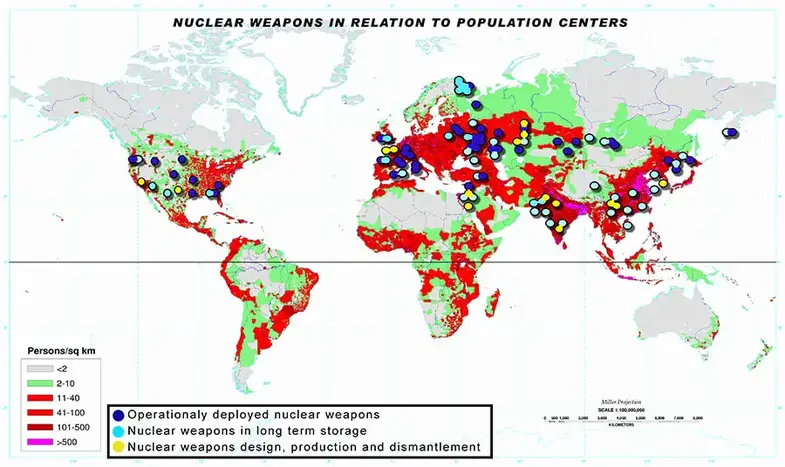
Safest Country - Nuclear Map

10. Greenland (Denmark)

Greenland is the world’s largest island, located in the Arctic Ocean between Canada and Iceland. Greenland is an autonomous Danish territory with a population of approximately 57,000 people. Although it is sparsely populated, Greenland has a rich cultural heritage and its own language, Inuit.

Greenland’s location means that it would be out of range of most nuclear missiles. Even if another country did manage to launch a missile at Greenland, the vast majority of the island is covered by ice sheet, meaning that there would likely be little damage done.

In addition to its geographical isolation, Greenland also has very few military targets. There are no large cities or industrial facilities on the island, making it less attractive as a target for nuclear attack. And even if Greenland were targeted, the small population size means that there would be fewer casualties than in other countries.

11. Maldives

Maldives is an archipelago of 26 atolls, with over 1,000 individual islands. The Maldives are located in the Indian Ocean south of India and Sri Lanka.

Maldives is often hailed as one of the best locations in case of an apocalyptic event. The reason is not surprising: this small island nation is in the middle of the Ocean, far away from any potential targets. Plus, with an average elevation of just 1.5 meters above sea level, the Maldives would be virtually unaffected by a nuclear blast.

But what makes the Maldives even more appealing as a safe haven is its political stability. Unlike many other countries in the world, there has never been a military coup or civil war in Maldives history. This makes it one of the most peaceful countries on earth – and an ideal place to survive a nuclear war.

12. Fiji

Fiji is often thought of as a paradise on Earth. With its crystal-clear waters, pristine beaches, and lush tropical forests, Fiji is a true natural gem. But what many people don’t realize is that Fiji is also among the most secure nations in the world, in the event of a nuclear war.

Here are some reasons why Fiji would be the perfect place to weather a nuclear apocalypse:

  1. It’s isolated from the rest of the world. Fiji is located in the middle of the Pacific Ocean, far away from any major landmasses. This isolation means that it would be less likely to be targeted in a nuclear attack.
  2. There are no large cities or important targets on Fiji. Since there are no large cities or important military or political targets on Fiji, it’s unlikely that the country would be bombed in a nuclear war.
  3. The terrain is largely uninhabitable. Most of Fiji consists of mountains, jungles, and reefs, making it unsuitable for large-scale human habitation. This lack of population density would make it easier to avoid fallout from a nearby nuclear explosion.
  4. There are few roads and infrastructure. This makes sense when you consider that much of the terrain isn’t suitable for human settlement (see point 3). Fewer roads mean fewer targets for bombers.
  5. The government has made preparations for emergencies like this. In 1982, the Fijian government established an Emergency Operations Centre in Nadi which coordinates disaster response efforts for all types of emergencies, including nuclear disasters.
  6. There are plenty of caves and underground tunnels. These could provide shelter from nuclear radiation.

13. Tonga

Tonga is a Polynesian island nation, which is located in the middle of the Pacific Ocean, far from any potential targets. It’s also surrounded by some of the deepest waters on Earth, which would help protect it from radiation. While these reasons are similar to many other island nations, here are some which are specific to Tonga.

  1. There is a low likelihood of an attack. Tonga is not involved in any major conflicts and does not have any enemies that would be likely to launch a nuclear attack. Additionally, Tonga has signed treaties committing them to peaceful resolutions of disputes and renouncing the use of force.
  2. The damage from a nuclear attack would be limited. Even if Tonga was attacked by a nuclear weapon, the damage would be relatively limited due to its small size and lack of population density. There wouldn’t be many targets for a bomber or missile, and most people could find shelter quickly enough to avoid serious injury or death.
  3. The country has a good chance of recovering from an attack. Given Tonga’s small size and limited infrastructure, it would probably take less time and effort to rebuild after a nuclear attack than it would for larger countries with more complex systems.

14. South Korea

South Korea is often cited as one of the top countries to live in. But can be it safe enough during a nuclear warfare? After all, it shares a border with an extremely hostile neighbor, North Korea, who is known for its nuclear threats.

Let’s have a look at what South Korea has to offer in terms of nuclear safety.

  1. Strong economy: South Korea has the 10th largest economy in the world, and is projected to be the 7th largest by 2030. It’s also home to some of the most successful companies in the world, including Samsung, Hyundai, and LG.
  2. Robust military: South Korea has one of the strongest militaries in Asia, with over 630,000 active personnel. The country also spends a significant amount on defense – nearly $50 billion per year.
  3. Proximity to North Korea: Strangely enough, this can actually make South Korea a safe country. Unless North Korea wishes to destroy itself as well, they will hesitate to detonate a nuclear bomb only a few dozen kilometers from their own border.

15. Nepal

Nepal is often considered as one of the most protected Asian countries. This might be unexpected, given its location between two giant nuclear powers, India and China. But just like in the case of South Korea/North Korea, none of Nepal’s neighbors would want to drop a bomb on their own doorstep.

Besides its geographical advantages, Nepal is also home to some of the world’s tallest mountains, which would provide natural protection from any radiation or fallout. You can say it’s perfectly isolated, like an island nation, even though it’s completely land-locked.

The country is also largely rural, with a small population density, meaning there would be less chance of widespread contamination.

16. Bhutan

If you’re looking for a safe place to ride out a nuclear war, Bhutan just might be the perfect choice. Like Nepal, this Himalayan kingdom is nestled between India and China, two of the world’s most populous countries and two of the world’s nuclear powers. But Bhutan has its own unique history and culture, and it’s been able to stay largely isolated from the rest of the world.

In fact, Bhutan only started allowing tourists in 1974, and even now tourism is tightly regulated. That means there are few foreigners in Bhutan, which could make it easier to blend in if things get hairy. And with almost 70% of the country covered in forested mountains, Bhutan offers plenty of places to hide out.

Of course, no place is completely safe from a nuclear attack. But as far as potential targets go, Bhutan is about as low on the list as you can get. So if you’re looking for a place to hunker down during World War III, this remote kingdom might just be your best bet.

17. Sri Lanka

Sri Lanka is an island nation located in the Indian Ocean, off the southeastern coast of India. The country has a long history dating back over 2,000 years and is home to a rich culture and diverse landscape. Sri Lanka is a popular tourist destination, known for its beautiful beaches, lush jungles, and ancient ruins.

So why is Sri Lanka so safe? For starters, the island nation is far from any potential targets for a nuclear attack. Additionally, Sri Lanka has a small population (just over 20 million) and limited infrastructure, which would make it difficult for an attacker to cause widespread damage. Finally, the government has strict controls on access to weapons and explosives, making it unlikely that terrorists or other groups could get their hands on nuclear materials.

18. Japan

There are a lot of reasons why Japan is often cited as one of the top candidates for the safest country during a nuclear conflict, despite its past. For starters, Japan is one of the few countries in the world with a no-first-use policy when it comes to nuclear weapons. This means that Japan would only use nuclear weapons if another country attacked them first with nuclear weapons.

In addition, Japan has a very strong anti-nuclear proliferation stance. They are members of both the Treaty on the Non-Proliferation of Nuclear Weapons and the Comprehensive Nuclear Test Ban Treaty. And, they have signed and ratified both treaties.

Finally, Japan has a very robust civil defense system. In fact, they even have an annual National Disaster Prevention Day where people all over the country practice evacuation drills and learn about what to do in case of various disasters, including nuclear attacks. Here is a news story about this important day:

19. Philippines

A new report, released by the Nuclear Threat Initiative (NTI), ranks the Philippines as the 20th safest country in the world out of more than 180 nations assessed.

According to NTI, the Philippines has made significant progress in reducing its nuclear risks since signing the Treaty on the Non-Proliferation of Nuclear Weapons (NPT) in 1968. The country has also ratified several international treaties and conventions related to nuclear safety and security, including the Convention on Physical Protection of Nuclear Material and the International Convention for the Suppression of Acts of Nuclear Terrorism.

“The Philippines has taken important steps to reduce its vulnerability to nuclear threats,” said NTI President Joan Rohlfing. “By ratifying key international treaties and conventions, investing in physical protection measures for nuclear facilities, and establishing a national interagency task force on radiological emergency preparedness and response, Manila is demonstrating its commitment to keeping its citizens safe from nuclear dangers.”

However, in addition to being one of the safest countries during a possible nuclear warfare, the Philippines is also one of the most disaster-prone countries in Asia. The country experiences an average of 20 typhoons each year, making it vulnerable to storms and flooding. It is also located within what is known as “the Pacific Ring of Fire,” an area prone to earthquakes and volcanic eruptions, which could magnify the effects of a nuclear blast. Despite these hazards, NTI’s report found that Philippine authorities have made considerable progress in improving disaster preparedness and response plans in recent years.

20. Antarctica

As you have seen by now, when it comes to the question of which country is the safest in case of a nuclear war, there are many different factors to consider. One important factor is the location of the country. Countries located far away from major population centers are often considered to be safer, as they are less likely to be targeted in a nuclear attack. Another important factor is the size of the country. Smaller countries are often considered to be safer, as they are less likely to be involved in a nuclear exchange.

One territory that meets both of these criteria is Antarctica. Antarctica is located at the southernmost point on Earth, and is thus very far away from any major population centers. Additionally, Antarctica is a very large continent, and would therefore be difficult for an attacker to target with a limited number of nuclear weapons. Finally, Antarctica has no permanent inhabitants, and so there would be no one living there who could be harmed by a nuclear attack.

Of course, there are also some potential drawbacks to using Antarctica as a safe haven. The most significant drawback is that Antarctica is extremely cold and inhospitable, and so it would not be possible for people to live there permanently without special equipment and training. Additionally, Antarctica is the farthest location from anywhere else in the world, and it would be extremely challenging to reach it in a limited period of time.

Further Reading

So there you have it, the top 20 candidates for the safest country in case of nuclear war. Naturally, additional countries can be safe as well, either thanks to their geographical isolation, or thanks to their peaceful politics and the ability to rebuild. Whichever country you choose, always remember to stay safe and alert, and head for the nearest bomb shelter at the first sign of trouble.

Communism and depopulation in America come under the guise of being “patriotic” and accepting your own vax-termination out of fear of Covid-19 and its variants

Communism is frequently used as a synonym for socialism and the exact differences between the two are heavily debated. One difference is that communism provides everyone in the country with an equal share, rather than the equitable share promised by socialism. Communism is commonly summarized by the Karl Marx slogan, “From each according to his ability, to each according to his needs,” and was believed by Marx to be the step beyond socialism. Individual private ownership is illegal in most communist countries.

I once had a favorite meme I would push out as kind of a tongue-in-cheek that said “When exposing a crime is treated as committing a crime, you are ruled by criminals”. Seemed pretty funny at the time.

Today, not so funny. In fact, what we are experiencing is very real.

Let’s take a look at the definition of tyranny according to legaldictionary.net:

  1. An oppressive or severe form of government
  2. An unrestrained use of authority or power
  3. A state ruled by, or government of, an absolute ruler
  4. Excessive severity
  5. Cruel and unfair treatment by someone in authority

What we lack in the world, not just the United States, is a system of checks and balances. Governments are out of control as they care very little about the laws they have established unless it relates to you the citizen, and they certainly give complete disregard for the voting system as we are finding out they have been manipulating the outcomes to meet their agenda for quite some time.

Our rights to free speech are all but gone and our ability to assemble peacefully is now seen as extremism. Think about it for a minute, when Patriots assemble to voice their concern, they have to worry that either the assembly will be infiltrated by people seeking to create a negative image of them, or those same people causing violence, thus putting Patriots front and center as targets by their own government.

By now, if you haven’t been vaccinated for Covid, then you know that the vaccine is much more dangerous than the virus. In fact, if you know anything about anything they put in vaccines today, then you know that Covid was just an excuse for ushering in communism in America, and a depopulation scheme that’s got 150 million people set up like bowling pins, getting ready for the “big knockdown.”

Most important to realize, and it’s not too late for the unvaccinated, is that the spread of fear of Covid was needed to establish government authority initially, that way they could further violate our constitutional rights and order us around — to wear masks all day, social distance, shut down our businesses and only buy products from huge corporations that fund the fake war on Covid-19.

It’s a fake war, and “they” (Democrats, CCP and Globalists running DC) want your support.

You see, governments all prefer populace support for a war, whether it’s a kinetic war, a fake war on “terror,” or a fake war against a “killer virus.” The irony of it all is that this time the enemy isn’t foreign at all; in fact, it’s every American.

There’s always a cover for the real insidious agenda. There has to be for everyone to buy in. Of course, 9/11 was cover for Halliburton’s embezzling of $5 billion and the constitution-and-privacy-crippling Patriot Act. The War in Afghanistan was cover for the US takeover of the opium trade for the heroin-based epidemic of highly-addictive, health-destroying prescription painkillers.

Now, Covid-19 and the Delta Variant are cover for a communist takeover of America and the depopulation/ sterilization campaign that can wipe out at least 50 percent of the US populace with one “booster” shot. Call it the “kill switch.”- SEE VIDEO!

10 Steps to Tyranny

  1. Create a new human disease (virus) that kills off the weak and immune-compromised (complete).
  2. Spread Covid-19 around the planet (complete).
  3. Create “vaccines” for that virus that cause blood clots and life-threatening myocarditis (complete).
  4. Spread so much fear about Covid that at least 70 percent of the planet (or at least the USA) gets inoculated (only at 50 percent now).
  5. Spread fear-mongering propaganda of a new “variant” (called Delta) that’s even “more deadly” and “more contagious” than the original virus (just begun).
  6. Blame all vaccine injuries and deaths on the new “Delta Variant” (just beginning).
  7. Require every vaccinated person to get their “Delta Variant” inoculation, which either instructs the recipient’s cells to produce billions of toxic protein prions that drive the patient insane and cause heart failure, or the vaccine contains the ultimate “payload” of virus-mimicking pathogenic proteins that overdose the recipients’ immune systems, killing them.
  8. A new mass event “occurs” that cripples all communication between the populace, and the Chinese Communists start “herding” in from our southern border.
  9. Another mass shooting event “occurs” that’s made to look like a Trump supporter who is “anti-vaccine” and right-wing extreme.
  10. All guns are confiscated from all remaining, unvaccinated Americans and the Republic is lost.

Communism and depopulation in America come under the guise of being “patriotic” and accepting your own vax-termination out of fear of Covid-19 and its variants

Getting vaccinated to death is considered “patriotic” because the country is being run by communists right now, who want to eliminate at least 3/4ths of Americans using domestic bio-terrorism (deadly vaccines) and move a billion Chinese here from China.

Just as Hitler used propaganda to sell his motives as helpful for society and Germany’s economy, the CDC and CCP are “selling” everyone on vaccines, masks, social distancing and lockdowns, in an effort to end America as we know it. That’s why Joe Biden just told everybody that Americans getting vaccinated is the most patriotic thing you can do.

Agenda 21 and the reorganization of human society- Most people are unaware that one of the greatest threats to their freedom may be a United Nations program which plans to depopulate 95% of the world

According to Wikipedia– Agenda 21 is a non-binding action plan of the United Nations with regard to sustainable development. It is a product of the Earth Summit (UN Conference on Environment and Development) held in Rio de Janeiro, Brazil, in 1992. It is an action agenda for the UN, other multilateral organizations, and individual governments around the world that can be executed at local, national, and global levels. One major objective of the Agenda 21 initiative is that every local government should draw its own local Agenda 21. Its aim initially was to achieve global sustainable development by 2000, with the “21” in Agenda 21 referring to the original target of the 21st century.

The final Goal of agenda 21 would be to bring down the planets population down to 500,000,000, about a quarter of the current 7 billion in order to make us easier to “control” SO since financial tyranny alone isnt producing results fast enough, well introducing agenda 21. The E.P.I.C (Elite.Powers.In.Control) are attempting to carry out this genocidal scheme through, vaccinations, GMO, predictive programming, removal of 2nd amendment, false flags, manipulation of our public school system, as well as manipulation of the weather causing drouts or natural disasters anywhere they please using H.A.A.R.P, this is how they will remove all the farmers from their land so they can buy it all up for cheap, effectively owning ALL of our consumed seed. Agenda 21 is a highly elaborate, multi-facicetied plan that’s been at work behind the scenes for generations. it’s finally coming to the mass concensuness because it impossible to hide at this point. If this is your first time hearing about agenda 21 I HIGHLY suggest you go research all of those topics I presented above, this affects everyone.

Agenda 21- Depopulation Of 95% Of The World By 2030

The United Nations (UN) for some people conjure up images of a benevolent organization intended for the preservation of human life wherever conflict occurs, and of encouraging international cooperation and peace.

Far from this peaceful image, however, is their little-publicized plan to depopulate 95% of the world by 2030. Or as they have called it, Agenda 21.

United Nations plot to depopulate 95% of the world by 2030

Agenda 21 was United Nations Department of Economic and Social Affairs, Division for Sustainable Development and was apparently developed as a means of restructuring the world population to lessen environmental impact and achieve an improved quality of life.

One of the main ways of achieving this, however, is through encouraged and direct depopulation.

Also watch this video- Guns have been referred to as “the great equalizer,” and there’s no weapon which can come close to them in that regard.

As the UN put it:

“comprehensive plan of action to be taken globally, nationally and locally by organizations of the United Nations system, government, and major groups, in every area in which humans have impact on the environment.”

Although the language used in the original 70-page report (National Implementation of Agenda 21 – A Summary) that the UN published on Agenda 21 is vague and open to interpretation, as well as plausible deniability, the intentions in certain sections are clear:

Depopulation to lessen environmental impact and stop overpopulation leading to instability.

While this sounds like a positive thing in some aspects, mere policy changes at governmental level alone cannot create an environment where big enough changes can come about in a short space of time.

To achieve such huge scale depopulation with a relatively short deadline the actions were taken would have to be drastic. Either a world war, global epidemic or some kind of widespread starvation caused by massive crop failures would be the only likely ways of achieving this.

The idea also raises the question of-

  • Which 5% of the global population would be saved? 
  • Would these be those strong and hardy enough to survive the conditions placed on the earth that would kill off the remaining 95%? 
  • Or perhaps the survivors would be chosen selectively from the elite and wealthy?

Whether such a plan could ever actually be successful is another matter.

Plans of this size and scope would require the collusion and agreement of at least every first world government in the world, not to mention that the amount of resources and effort that would have to go into keeping something like this covered up would be astronomical.

Conclusion– This wicked Agenda 21 puts people close together in urban prison housing and forbids them to visit or walk many places on the earth to decrease the Carbon footprint and reduce Carbon Emissions by destroying fossil fuel and killing off 80% of the worlds population under a One World Dictatorship. This Agenda 21 is becoming more real and should be opposed like much of this climate change initiative which is NOT about Conservation of Earth’s resources but World Fascist Control of ALL nations and destroying their culture and national sovereignties.

9 Places to Find Food After a Collapse of Society- Will You Be Able to Survive When It Happens?

I’m confident that most of you have plenty of food stocked away. Many of you have at least a small vegetable garden, and some of you even have livestock of some sort.

That’s great, but what happens during an extended disaster or a total collapse of society? Eventually, your freeze-dried food and canned goods will run out. You’ll have a tough time getting all the essential amino acids your body needs from plant-based protein sources alone. It’s not impossible, but the volume of plant-based protein you’ll need to consume will quickly whittle away your food supply.)

Fortunately, a little knowledge goes a long way because there are plenty of places to find food—especially protein, during a collapse of society.

Kennels

We may view dogs and cats as our cuddly little pals here in America, but they are a food source throughout the world. If society collapses and your survival is on the line, you better be ready to get over your emotions and make a meal of Fido. Since most people would be busy fighting over the last pack of Oreos at Walmart, kennels would become a great place to find plenty of fresh meat with little or no competition. The dogs and cats are even tucked into convenient cages, making you job of harvesting them simple.

Pet stores

The same principles apply here, but with a larger selection of choices. (Dogs, cats, birds, rabbits, fish, reptiles, etc.) You’ll find the added benefit of a stockpile of food for the animals and antibiotics used in aquariums and ponds.

I would also recommend taking a few pairs of animals you can breed for a sustainable food source. Rabbits are an ideal choice.

Zoos

I appreciate the beauty of the animals you find at a zoo as much as anyone, but I will happily slaughter a giraffe to feed my family. There are a couple of things to consider here:

  1. Nearly every animal in the zoo is larger, stronger, faster, and much more dangerous than you.
  2. Nearly every animal in the zoo provides more meat than you can carry or consume before it spoils.

Based on those facts, it’s important that you have a plan, support, and weapons. A semiautomatic rifle capable of efficiently killing the target is essential, along with enough people to quickly butcher that animal. (I recommend nothing smaller than a 5.56, but preferably .308 or larger.)

In the case of predatory animals like lions or tigers, it would be wise to drag it from the cage or pen before butchering so his buddies don’t attack you during the process. Sure, you could shoot them too, but a pride of dead lions would spoil before you could eat the meat, and during a collapse you don’t want to waste anything.

Also be sure to enter with caution and stay alert at all times because you don’t know if any animals have escaped their enclosures.

Aquariums

You’ll probably have to harvest food from aquariums relatively quickly due to potential water contamination. They usually have robust backup generators to keep their filters running, but that is designed for natural disasters like hurricanes that may only last for several days. Once you start stretching into weeks or months, algae, bacteria, and other pathogens can quickly overtake even the largest aquariums, killing of the marine life.

You may be able to harvest some marine life relatively easily, but the larger tanks, like the one we have here at the Tampa Aquarium will require fishing gear—in some cases, heavy-duty fishing gear, to pull the fish out.

Amusement Parks

Speaking of restaurants, there are dozens of them scattered throughout most amusement parks, making them a plentiful and reliable source of food that never crosses most people’s minds.

School cafeterias

You can find a lot of food in school cafeterias and since most of it will be either canned or dehydrated, or frozen in walk-in freezers powered by backup generators, it should be fresh for a long time to come. Keep in mind that this will only be accessible during a total collapse of society. Schools are often used to temporarily house and feed people during short-term disasters.

Grocery Stores

You’ll have to hit your local Publix pretty damn early if you hope to find anything, but even then your chances are pretty slim. People will usually mob the store leading up to the event, whether it’s a hurricane, financial collapse, or something else, and following the event, it’s one of the first targets for the unprepared. So don’t get your hopes up. It’s probably best to avoid this entirely due to the risk of violent encounters.

Restaurants

Like grocery stores, expect restaurants to be picked over pretty quickly, but you might find something.

Distribution Centers

Most people don’t give any thought to how the food gets to their grocery store so they aren’t even aware this exists, making it a step up from your local grocery store. When you take into account the fact that distribution centers are usually located outside of heavily populated areas, they become even more appealing during a collapse.

If you have any dissatisfaction with my content, you can tell me here and I will fix the problem, because I care about every reader and even more so about your opinion!

New Update- First Safest Places to Live When SHTF

There are so many places to live when doomsday approaches us, and they all offer their fair share of resources that can be crucial to our survival. So where should you go? 

Where should you not go? When should you go? Let’s talk about everything you need to know when deciding where you’ll retreat to when doomsday approaches us.

Where are the best places to live when SHTF?

There are not only great locations all around the world fit for doomsday preppers but also great spaces within the United States. 

Here we’ve listed some international locations as well as some locations within the United States to look into when deciding where you should begin prepping. 

International Locations For Doomsday:

  • Antarctica: unlikely to be affected by war, avoid if climate change becomes increasingly worse.
  • The Isle Of Lewis, North Atlantic Ocean: a plethora of natural resources, isolated area, unlikely to be invaded.
  • Tierra Del Fuego, South America: unlikely to be hit by nuclear fallout, unlikely to be invaded.
  • Yukon, Canada: hunting, trapping, river commute, hard winters.

United States Locations For Doomsday:

  • The Dakotas: farming, largest prepping communities, has one of the largest bunkers in the world.
  • Montana: low population, known as a survivalist state, however, is in a shot of a nearby supervolcano located in the Wyoming area of Yellowstone National Park.
  • Washington: average population, good water quality, and area for cultivation. Avoid the Seattle area.
  • Idaho: low population, low levels of pollution, gun-friendly.

Why be in these places when SHTF?

It’s ideal to be in places that are not only safe and rural but also can provide you with essentials you might need, such as clean water, good hunting and trapping, and a good cultivation rate. 

These places are also ideal for avoiding militia and actual military bases that might pose a threat to you.

When should you try to get to these places when things go south?

Many people will pre-plan, and while it’s good to get to these places as soon as possible, states like Montana already have an actual market perfect for doomsday prepping. 

At the same time, those people who are or have already created a safe space for doomsday prefer to be anonymous and remain in unknown locations.

If you do not want to prepare in advance or cannot afford to, it’s important to have at least a stash of things to use for survival on hand that you can take with you want to commute to the place you want to go. 

These include tents, sustainable foods that will last you long periods of time, fire starts, and so much more.

What places should you avoid?

While there are many great places out there, there are also places you should avoid. These places all have characteristics that we should keep in mind. 

Characteristics include areas with extreme populations or civilizations—for example, bigger cities such as New York, Los Angeles, and Houston are all places you will definitely want to avoid.

It would be best if you also avoided places where it may be hard to begin cultivation for a food source, such as dry areas that are known to have droughts in some areas such as California, Nevada, or Arizona. 

Unless you have somehow configured how to have a working air conditioner at your prepper location – surely you’ll want to avoid these places anyways. 

Final thoughts on where to go when SHTF

You will find great places to retreat to not just within the United States but around the world. These include locations such as Montana or Antarctica. 

Of course, every location has its own perks and setbacks, which is why it’s important to understand what the land you are retreating to can offer. 

Getting to these places in time can be crucial, and it’s important to know how serious things are when commuting to these rural areas. 

Avoid places with mass populations and civilizations, as well as locations that have military bases, especially when traveling to your desired location.

I can also you find below 10 Realistic SHTF survival situations that most people Don’t Prepare or Plan for!

While many of the threats you will face can be easily predicted by looking at recent events, we wanted to look at some very likely SHTF scenarios that very few think about, and almost nobody prepares for. These are threats they may present themselves during short-term disasters, but in all likelihood, these threats will be the ones that start to pop up during those extreme long-term situations where people lose hope and become desperate.

SHTF Law Enforcement Issues

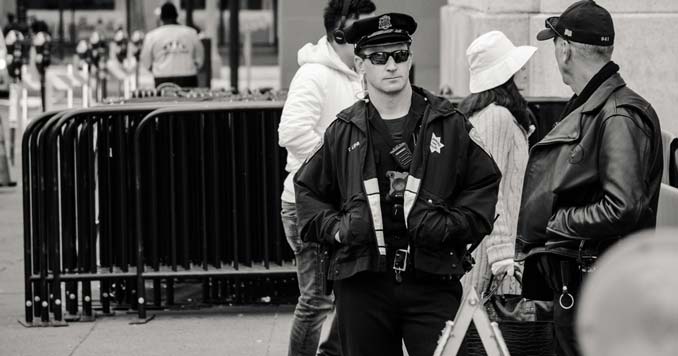
Fake Police Officers

1. No Law Enforcement

During an extreme SHTF scenario, it is very likely that law enforcement and emergency responders will be pretty hard to find; in fact, I would go even further and say that they will become nonexistent. Even during small-scale disasters, law enforcement officers often leave to take care of their own families first. When things go bad (empty grocery stores, no utilities, mass riots, violence, etc.) you are more than likely going to have to defend and take care of yourself.

2. Fake Law Enforcement

In a SHTF Scenario, you need to be on the lookout for everything including people impersonating law enforcement and military personnel. During a catastrophic event, you will most likely see criminals preying on the innocent by pretending to be either police, firefighters, emergency personnel, or military officers. In fact, almost every time a natural disaster hits we see criminals posing as some type of first responder in order to gain easy access to areas where they can then take advantage of the situation and loot homes and businesses.

You have to be able to quickly determine who are the real law enforcement officers or be prepared to stay away from people at all costs.

3. Law Enforcement and the Military Will Try to Take Your Guns.

Think it can’t happen? It already has!

In the aftermath of Hurricane Katrina, New Orleans Police Superintendent Eddie Compass ordered all local law enforcement, including the U.S. Marshalls office and the National Guard, to seize all civilian firearms.

Without warrants, armed National Guard troops and New Orleans law enforcement officials forcibly confiscated over 1,000 legal firearms from law-abiding citizens. The New Orleans gun confiscation should serve as a warning to how the government and law enforcement officials will react during a large-scale national disaster.  

It’s very high on the probability list that they will come for your guns!

SHTF Personal Safety Issues

Safety Threats from Looters

4. Gangs & Raiders

When things go bad, there will likely be more people who mean to do you harm than there will be people who are prepared. This is something that you must accept and learn to deal with. The fact is, most people have no idea what it really takes to survive, and once their safety net is removed, they will become increasingly desperate and unpredictable. Even your once jolly neighbor will become a threat when he is faced with surviving without knowledge or supplies.

Let’s face it, even during the good times there’s a certain segment of our population that’s just downright insane. From the idiots who go nuts and riot after their team loses a game to the violent criminals and gangs who are already terrorizing big cities throughout America, there’s little doubt that a total collapse will make urban living almost impossible.

5. You need to be able to Defend Yourself.

During an extreme emergency situation, the lunatics of the world are going to be roaming the streets looking for easy victims to target.  If you’re serious about survival, you need to train yourself in multiple self-defense styles and techniques. This means arming yourself with not only weapons but also with the knowledge of how to defend yourself without them.

These are things you should be doing now to ensure you can protect yourself during a SHTF situation:

  • It Starts with Developing your Situational Awareness: This is probably the single most important self-defense skill you can have. It will allow you to defuse most dangerous situations before they can become a threat to your safety.
  • How to Protect Yourself from Violent Mobs of Criminals: The really scary thing about situations like this is when people start to mob up and form groups. You need to be prepared to take on multiple attackers, and you need to know how to quickly get out of hotspots and trouble zones.
  • Surviving Active Shooter Situations: Sadly this is a SHTF situation that we have to deal with now, in our everyday lives. Imagine how bad things will get during an actual crisis!

SHTF Sanitation Issues

Garbage in the streets

6. Garbage will become a Killer.

This is another survival topic that’s not often thought about or discussed, but it’s one that will probably become one of the biggest problems you will face during any long-term disaster situation. If the gangs and criminals don’t get you, the real danger might actually come from something that you already have in your home: GARBAGE!  

You need to have a serious plan on how to deal with it and how to make sure your general sanitation doesn’t become a threat. Check out our article on how to deal with Garbage during a SHTF disaster.

7. You have to Stock up on Sanitation Items

When planning to survive a long-term disaster or collapse, one thing that’s often overlooked is the danger associated with a lack of adequate sanitation. It’s certainly not a pleasant thing to think about, but this one issue has the potential to kill more people than any other survival issue we can talk about.

Even today, because of liberal policies that are destroying big cities throughout our country, we are starting to see Medieval diseases reemerge because of unsanitary living conditions in homeless and immigrant populations in these urban hell holes. In fact, in California multiple disease outbreaks are running through these populations including Typhus.

Mental & Physical Health Issues

Mental Health during Survival Situations

8. Maintaining a Positive Mental Attitude during a Survival Situation

The ability to maintain a positive mental attitude during a survival situation is something that needs to be taken seriously. It’s also something that you need to start working on now, before disaster strikes.

Making it through a survival scenario often comes down to how well you can control your emotions. Keeping a positive frame of mind in the face of an unthinkable threat will help you process what’s happening and will help you respond to the situation without giving into fear.

9. You must be prepared to face a number of physical and mental challenges.

From dealing with a lack of sleep and inadequate hydration to coping with hunger pains and other stressors, survival can take a huge toll on your body. One of the best things you can do to ensure your survival, in just about any situation, is to make sure your body and your mind are trained to survive. This means motivating yourself to get off your butt and get in shape before it’s too late.

SHTF Communication Issues

10. You will be cut off from the outside World.

In a survival situation, knowledge is going to be a critical factor in determining the ultimate outcome of your situation. The ability to be able to predict what will happen during a survival situation is an important part of being prepared and often comes down to your ability to send and receive information.

When the power lines go down, and the radio stations stop transmitting, there’s one line of communication that will still be alive and well.  

FEMA Calculates Riskiest, Safest Places In US (First looking at weather patterns, it appears that if there is nuclear fallout, where could you want to be?)

First looking at weather patterns, it appears that if there is nuclear fallout, where could you want to be? Remember weather patterns start in the West or North West and move across the country and change throughout the year, but always for the most part blow from East to West. So if you live East of the West Coast you could be in trouble if a Western city gets nuked. Then there are the East Winds in CA, which are called the Santa Ana Winds which are hot, fast moving and dry, the worst possible conditions for fires. As we see every few years in the Southern CA mountains.

So then perhaps you might wish to live on the West Coast, fairly good weather all year and the wind blows the other way. But you would want to live far from any major city on the West Coast. Not in LA, Not near the Nuclear Power plants, Not near the Military bases of Pt Mugu, Camp Pendleton or Vandenburg AFB. So where? Probably on the coast between Humbolt, CA and mid state OR. But alas there are huge faults along the West Coast and the OR Coastline is riddled with issues from liquefaction to offshore Tsunami generating Earthquake faults.

San Francisco gets huge Earthquakes as we know and LA is not immune either and neither is the central valley of CA with it’s issues after proof in the Coalinga Fault. Living between the Russian River and OR Coastline near the coast would be okay even with these issues. Also you would not be down wind from any fallout and you are not a target. Safe in that you have fish for food and lumber for heat and no need for much of anything like power, surrounded by capable woods people.

You would have lots of rain and no water that would be polluted running off from areas of fallout. Of course from an attack by sea from the Pacific side in the case of invasion, you would not be in the best spot, we are not expecting any wars, yet 20 years from now will China be our biggest trading partner or will 2 billion of them like this piece of real estate? If we were attacked for some reason you would have air support from all the Navy and Air guard Bases along the Pacific Coast. Where are other good spots? If Seattle was not hit by a weapon of mass destruction then you still have Earthquakes and remember MT. Saint Helen. There are some cities inland on the I-5 freeway surrounded by mountains, but they are close to volcanoes too?

Where else would be good? Well not Phoenix, not Las Vegas and Reno is over the hill from CA and gets all it’s left over weather. Boise has issues too. Although there are other cities in ID worthy of mention. Salt Lake is on a huge Earthquake fault. How about Helena MT, drought plagued and fire issues. Kellogg ID, superfund area. Billings out of water, Bozeman? Well too close to the State Park and there are issues with the volcanoes there too. Butte, MT also too close. Casper WY out of water and down wind in case of Volcanic Activity from Yellow Stone. Also think if Portland, SF or LA are not hit with nukes then we like, Four Corners, Elko NV, Battle MT (armpit) are doable with large underground water supply but it has arsenic in it. Winnamucka NV many not be safe either, but has thermal activity for power. ND and SD seem safe too, but winter weather is tough. Ogalla underground aquifer is being drained fast and could cause Earthquake from collapse. Western NE, not good, Denver either in case of water supply issues in future or fallout from volcano in Yellow Stone. How about in the Northern Section of AZ? Flagstaff has harsh weather, fire season. Winslow AZ is okay, with rail and FWY, but isolated. Of course these are only a few western states really and well we have identified several great locations with everything you need to survive.

Having studied the FEMA reports and the regional issues of each area and state and the disaster plans, we are well served by such data, but it falls short and a comprehensive plan of attack needs to be considered, because many people living in a region will need supplies, such as we see after major Hurricanes. Which by the way leaves us to wonder if there are in fact any safe cities on the entire Eastern Seaboard, Gulf Coast or West FL coastlines. As we saw in the black out of 2003, the Hurricanes and loss of power, the many fires in drought areas of CA, AZ, NV, MT, ID, OR, NM these are all big issues.

When multiple disasters hit, and transportation is down, power is out, water turned off, dams broken, bridges out, etc. Then what? Well, for some it will be their demise, others have adequately planned. Some of the safest cities are sitting near large underground water supplies and generate their own power or have co-generation plants, which are co-ops near by. Those mid western cities near large rivers are not safe due to the issues with flooding, as we have seen and continue to see every three to five years some town gets it. The water is fresh and clean in those areas and very soft, but when it floods, it is a disaster and very dangerous too.

Some would say it is probably unnecessary to have a major disaster plan, however it is a good exercise anyway, in planning. Things of importance are fresh water supply uncontaminated, food supply, encapsulated market, not over populated, no problems with contaminated air from normal weather patterns know and comparable to the last 200 years, out side of a fire zone and a defendable location. Also of secondary importance out side the risk of major seismic activity, travel from major highways causing and influx of others trying to get away thus bringing in diseases or viruses or using up local natural resources. Worst places to be D.C., state capital cities with lots of military bases close by, cities on major freeways with bridges and no other ways around for over 40 miles or passes on mountain ranges.

The cities which do not make the safest cities are Denver, Dallas, Mobile, Biloxi, Seattle, Chicago, NYC, Orlando, Tampa, Las Vegas, Salt Lake, LA, etc. Cities with no way to get out the population quickly are of problem, for instance DC with it’s daily grid lock or Los Angeles, Atlanta, SF, etc. Cities, which rely on outside sources to get in important stuff are bad. Not to mention you are more likely to die from an auto wreck, although on the plus side they have the cleanest and best filtrated water supplies. That of course a trade off from the polluted air around you which could also kill you before your average life expectancy figure.

Port cities and cities with big major airports, which are hubs for major airlines are bad too. Cities that are big but do not have fed banks are one click down on the list too. Think of the logistics by train too. Cities which are down river close to major railroad bridges, which handle lots of interstate trains are bad too. Port cities get an extra bad deal. Cities which are close to port cities which are over 2 million population are dangerous too. Large cities near borders of Mexico are dangerous if they have over 2 million populations.

San Diego County, San Antonio, Phoenix, Austin TX, Houston, even throw in Tucson, El Paso, Yuma all bad. Already at a fresh water problem time due to droughts and over populations. Santa Monica is bad and LAX is a bad area to be near. A problem at the sewer treatment plant near LAX could be devastating with chlorine gas and weather patterns, with a weapon of mass destruction. Worrisome also to our scenario of possibilities is the major computer brain areas. Like Silicon Valley, Seattle, VA and other Internet hubs, which would also include Boston.

I would like to see a comprehensive plan to save American lives if an attack or Mother Nature event occurs, one which encompasses the entire country. Perhaps this is a good job for our war planners at the Pentagon, to try a reverse order plan, it would help them learn where best to minimize vulnerabilities and an action plan against International Terrorists or Catastrophic Mother Nature Events.

I have been to every city in the United States over 10,000 population. Where have you lived? Have you lived through a natural disaster? Many of us have. The Hurricanes alone last year alone added 40 more million people to that list, it was a costly year for FEMA, but we made it through and showed resilience. So where are you safe? The answer might be nowhere or everywhere and preparation and quality of first reponders may hold that key. What were your concerns, and immediate needs during that period in your life when you faced such uncertainty? What would you tell others who plan to protect the property and lives of America, too the first responders, planners and those entrusted to protect humanity in the times of need?

How much cash should we keep on hand at home in case of an emergency? What is the minimum amount required to run our household if all power goes out forever?

It is the final backup plan for a lot of us in the case of a disaster. A generous supply of cold hard cash to buy our way out of trouble, pick up as many last-minute supplies as possible or to acquire resources that are unavailable to anyone with a credit card in a world where the electricity is out and the internet is down. We frequently talk about having cash for emergencies, but how much cash should you have if the grid goes down? What will you be able to purchase with your doomsday supply and how long would it last in the first place?

One of our readers made a recommendation the other day to have between $500 and $1000 in cash for your bug out bag and at the time it prompted me to consider again if this amount makes sense. In my personal preparedness plans I have a supply of cash but I am always trying to figure out if what I have is enough or too much. Will it even matter when TEOTWAWKI comes and how can I best use the cash I have to survive?

Why do you need to have cash on hand?

You want to know the time when you will need cash the most? It will be when you can’t get to it. How many of you right now have no cash at all in your wallets or purses? I used to be the same way. I never had cash and relied on the ready availability of cash machines or most often the ability to pay for virtually everything with a debit card. How convenient is it to never have to make change or worry if you have enough cash when with the swipe of a card your bank account funds are at your disposal. This is a great technological advance, but the problem is that this requires two things to be functioning. First, the card readers and ATM machines require electricity. If the electricity is out, neither of these two machines works. The second thing is a network connection. If the network is down, even with electricity the transaction won’t work and you can’t pay for goods or get cash from your bank.

In a disaster, one of the first casualties is electricity. This doesn’t have to be due to some cosmic solar flare that has rendered the grid useless, it could be as destructive and common as a fire, flood, earthquake, tornado or winter storm. It could also be from simple vandalism or perhaps terrorism. A major fiber optic cable was cut in Arizona back in February leaving businesses without the ability to accept payments. When the electricity is out, you aren’t going to be able to access your cash via the normal means so having a supply on hand is going to be a huge advantage for you in the right circumstances.

Even if there is no natural disaster, you are still at the mercy of your bank. What if your bank closes or there is a bank holiday declared because of some economic crisis. In any of these situations, if you are dependent on access to money that is controlled by either technology or physical limitations like a bank office it is wise to have a backup plan should either of those two conditions prevent you from getting cash.

What is cash good for in a crisis?

I think there are two levels to consider when it comes to keeping cash on hand. There is the bug out scenario mentioned above where you would have some “walking around money” to take care of relatively minor needs like food, a hotel or gas. The second is for a longer or more widespread unavailability of funds. Let’s say the economy tanks and the price of everything skyrockets but stores are still open for business. Your bank is one of the casualties, but you had a few thousand dollars of cash stored away that you could use to purchase food, gas and necessary preparedness items for your family. In this scenario, the government is still backing the fiat currency and vendors are still accepting it as a form of payment. For this scenario having a few thousand dollars makes sense.

But what if we have an extreme event where the currency is devalued and is essentially worthless? Your thousands of dollars might only buy you a loaf of bread. Don’t believe it can happen? It did to the Weimar Republic after WWI so it can happen again. That isn’t to say it will, but you should balance how much money you have squirreled away under your mattress with supplies you can purchase now that will last and keep you alive during that same event. My goal is to make sure I have the basics I need to survive at home for several months to a year without needing to spend any cash. This way, if the money is worthless, I still have what my family needs to survive.

If we have a regional disaster where you can bug out to a safer location, your cash should serve you well. Of course if you are in a safer location, assuming electricity was working your access to bank funds should still be working. If this is truly the end of the world as we know it, how long will that cash you have be worth anything?

How much cash do you need?

So the million dollar question is how much cash should you have if the grid goes down? I always try to plan for the worst case scenario. My rationale is that if I am prepared for the end of the world as we know it, I should be just as prepared for any lesser disaster or crisis I may be faced with. The way I see it is if we do have a disaster, you aren’t going to be using that cash most likely to pay your mortgage, student loans, rent, or your credit card bills. Cash will go to life saving supplies and this will need to be used in the earliest hours of any crisis before all of the goods are gone or the cash is worthless. Once people realize for example that the government has been temporarily destroyed, they aren’t going to want to take your $500 for a tank of gas. They are going to want guns, food or bullets.

I also don’t see you using your cash to buy passage to another country, but that’s just me. I know there is a historical precedent for that, but I am not planning on that being something I realistically attempt with my family. I am also not planning on bribing any officials with cash either. My cash is for last-minute necessities and then it is back into the hopefully safe confines of my home to plan the next steps. For that I have only a couple of thousand dollars in cash stored away. I figure if I need more than that I didn’t plan well. Also, I would rather spend my money on supplies like long-term storable food and equipment than having a large horde of cash. With that amount, I figure I can make one last run if needed or be able to weather any short-term emergency when I can’t access cash.

What is the best place to hide cash in your home?

I wrote a post awhile back titled, How to hide your money where the bankers won’t find it that had lots of good ideas for reasonably safe places you could store cash. As I said in that article, you do have risks involved with keeping cash in your house, but I think you have just the same, if not worse risks relying on banks to keep your money safe and give it back when you want it. There are a million places to hide cash, but you can get tricky and buy a fake shaving cream safe to store several hundred dollars in there. Just be careful you don’t throw that away. There are other options like wall clocks with a hidden compartment inside that might be less prone to getting tossed in the trash. Your imagination is really all that is needed for a good hiding place, but I would caution you that you don’t store cash in too many places or you could forget where you hid it. This happened to me when I had hidden some cash behind an item that I ended up giving to my daughter because I thought I didn’t need it anymore. Imagine my surprise when she came into the living room and said, “Dad, I found an envelope with a lot of money in it”. I gave her a twenty for a reward…

What about you? How much cash do you think you need to have on hand and what do you plan on spending it on if the grid goes down?