10 Scary Things That Would Happen If The Grid Went Down

You may have already read or seen a variety of articles about what would happen if the grid went down or how 90% of people would die. You may also think that many of those articles are far-fetched and designed to instill fear in readers rather than seriously discuss the issue.

If that’s the case for you, then you may think the same about this article based on the title alone. But the purpose of this article is not to scare you or to spread so-called ‘doom and gloom,’ but rather to educate you on what very well could happen if the grid really went down and stayed down.

If and when the grid goes down, it’s not going to be like a normal power outage. Not even close. A true grid-down situation would last much longer, perhaps weeks or months, and during that time, a lot of things are going to happen that you never would have imagined.

In this video, i will unearth a long-forgotten secret that helped our ancestors survive famines, wars, economic crisis, diseases, droughts and anything else life trew at them.
So pay chose attention because this video will change your life forever for the good!

Here are ten scary things that would happen if the grid went down. Hopefully, this will remind you of how fragile our society actually is and inspire you to start preparing if you haven’t already.

1. No More Supply Trucks

When the supply trucks stop, no stores and restaurants are going to get resupplied. It’s not that it matters much anyway, because those stores are going to be looted and then abandoned afterward anyway.

This will guarantee that within a few short hours of the grid going down, life will already change dramatically because you will no longer be able to resupply yourself with the things that you need. Suddenly, you’ll be wondering why you hadn’t stocked up like you knew you should have been doing all along.

If you haven’t already, consider reading our beginner’s guide to emergency food storage.

2. All The Stores Would Close

As was just mentioned, without the resupply trucks, stores and restaurants are most certainly going to be shut down. The only real question is, when will looting occur?

In some places, you can fully expect looting and rioting to occur within just a few hours of the grid going down, and perhaps even sooner than that. People are going to freak out, and everyone will recognize that it may be their last chance to get resupplied.

Once some people start looting, many more will join in just for the heck of it, and that’s not an exaggeration. Mobs and looters and raiding parties will form quickly and the general breakdown of society around you will be rapid. One moment things will be as they always were, and in the next everything will be a war zone.

If this happens, you’ll need to avoid the riots and get home fast.

Riots and Police

3. Schools Would Be Shut Down

Schools will be shut down, even though you can also guarantee they will hold onto any students in session during the early stages of the grid down situation. It’s incredibly unlikely that school administrators and educators will simply release children into the chaos, making it the responsibility of the parents to show up and retrieve their kids in schools.

These Solar Backup Generators Deliver 4 Times More Power Than Other Models!

4. Commerce Would Cease

This is one that you’re going to want to think about. A grid down situation is seriously going to lead to a complete and utter breakdown of commerce as we know it. Banks will no longer be open, ATM’s won’t work, and debit and credit cards will no longer be of any use.

Will you still be able to use cash? Possibly. At the very least, you’ll be able to use it in the early hours of the disaster before things get really bad. You can head on down to your local store and buy as much stuff as you can get if you know things are about to head south.

(Here are 23 survival uses for honey that you didn’t know about.)

Beyond that though, it’s difficult seeing cash being of much use for anything. The reason is simple: it has no value other than what people attach to it, and it’s not something we can use to stay alive. In the event of hyperinflation, where the individual dollar will lose value rapidly, it will be of literally no use at all other than as an alternative to Kleenex or toilet paper.

The only type of real commerce that will be going on after then will be bartering, or where people exchange certain goods that we need to survive for other goods. For example, you may be able to trade a box of ammo for several rolls of toilet paper (both of those things are going to be in very high demand following a major disaster).

Preparedness Hacks: Once a nuke is heading your way, you might think that there isn’t much left to do, but you would be wrong!

Because we will show you America’s natural nuclear bunkers that are also EMP proof. When the sirens start wailing, all you need to do is pick the closest one to your home, where you can take cover before it hits.

5. Gasoline Would Be Gone

This is a big one. Gasoline is going to become one of the most precious commodities once people are unable to get any more of it at gas stations.

Everything from cars to motorcycles to ATVs to generators all run on gasoline. We’ve all seen post-apocalyptic movies and TV shows where literally thousands of cars are lying uselessly abandoned by the side of the road. Well, that really won’t be all too far from reality.

In short, once the gasoline supply runs out, we’ll lose everything that runs on gasoline. The only gasoline we’ll have left is what you have stored and what you will be able to barter from other people (and you can guarantee that it’s going to command a very high price).
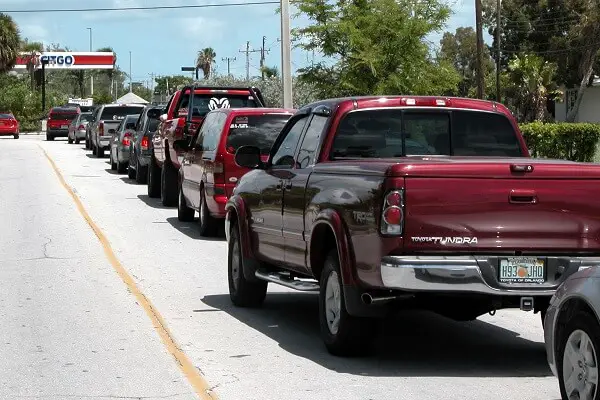
Long Line At Gas Station

6. Cell Service Would Stop

Your phone may still work after a grid down, but it’s honestly not going to do you much good if you aren’t able to use it to access cell service or the internet.

It’s one reason why investing in other communication devices will be so important, such as a HAM radio or a CB radio.

Once the Internet and cell service goes down, communication, as we know it in general, is going to get very different (and not at all easier).

7. Post Offices Would Close

You can say goodbye to ordering products from Amazon or sending or receiving mail from people when the grid goes down. This will greatly impact the way that we communicate with people long distance as well.

8. Air Conditioning Won’t Work

Is a lack of air conditioning life-threatening by any means? It depends. In the middle of summer, it very well could be if you don’t take steps to keep yourself cool without AC. At the very least it will be very uncomfortable. And it’s not just air conditioning you won’t have anymore…

9. Heaters Wouldn’t Work

Just as the summer months are going to get really uncomfortable due to the lack of air conditioning, so will the freezing cold winter months due to the lack of heat.

In fact, the lack of heat is going to be a far worse problem than the lack of air conditioning and really could be life-threatening if it ever gets particularly cold outside.

This is why you’re going to want to stock up on as much firewood, propane bottles for heaters, and candles as you can. The firewood will be good if you have a firewood stove inside your home, but even if you lack the stove, you can still use it for getting a small and controllable fire outside.

Meanwhile, propane-run heaters will also be good to stock up on and cost less than five dollars each on average, and you can even use candles for warmth and light as well. Finally, be sure to invest in plenty of warm blankets and sleeping bags to go with it.

10. No More Running Water

This is another big one. You won’t be able to run the dishwasher or the washing machine anymore, nor would you be able to take a shower, run the bath, water your plants, or even fill up a sink.

This is why when you stockpile water, you need to stockpile both drinking and cleaning/personal hygiene water. The recommended amount will be at least one gallon of water per person per day. One half of that gallon will be for drinking, and the other half will be for cleaning and personal hygiene.

Water filters and purification tablets will also be immensely important because when you do manage to procure more water for drinking purposes from other sources, it may not be safe to drink. Drinking unsafe water can oftentimes be more unsafe than not drinking any water at all, which will make a water filter device even more important and critical to own.

This guide below can help you in a survival situation

Guns have been referred to as “the great equalizer,” and there’s no weapon which can come close to them in that regard.

A lot of the popularity of firearms is due to the fact that anyone can use them effectively, not only the strong and agile. The young, the old, men, women and child can take up firearms in defense of home and family and do so effectively.

But what do you do if you can’t use a gun – or if you don’t have a gun — to protect yourself?

50 Items You Forgot To Put In Your Bug Out Bag

Do a search for “bug out bag list” and you’ll find hundreds of different checklists all over the Internet. So which one is right? The truth is, there’s no perfect list of items you should put in your bug out bag. It all depends on you, who will be with you, where you live, what types of survival items you prefer, and so forth.

However, there are some basic items that should be in almost every bug out bag (check out the article, What Goes In A Bug Out Bag for some suggestions). But once you have all the basics covered, you’ll need to make sure there aren’t any items you forgot. That’s where this post comes in.

You probably won’t be able to fit all of these items in your bug out bag, but this post is not meant to be a checklist. This post is to remind you of any items you would have put in your bag but forgot, and it’s to give you some ideas you might not have considered. The list is in alphabetical order.

1. Antibiotics

These could save your life. To fight 90% of infections, be sure to pack some cephalexin, ciprofloxacin, and metronidazole.

2. Baby Wipes

A very easy and convenient way to keep clean.

3. Backpack Rain Cover

Keep your bug out bag and its contents dry even if it’s pouring down rain.

4. Bandanas

You wouldn’t think so, but bandanas have dozens of uses.

5. Benadryl

If you’re outdoors and on foot, allergies could become a major problem.

6. Can Opener

If you have any canned food in your bag, then for God’s sake don’t forget to bring a can opener.

7. Celox Blood Clotting Powder

This stuff is great. It will stop small, penetrating wounds from bleeding.

8. ChapStick

Use it to moisten chapped skin, stop small cuts from bleeding, prevent blisters, start fires, and much more.

9. Clothesline and Pins

Even if you take a lot of clothes with you, you’ll still have to wash and dry them at some point.

10. Collapsible Bowl

A sturdy bowl that takes up very little space.

11. Compact Survival Fishing Kit

If you pass any lakes or rivers, try to catch some fish so you don’t go through your packed food as quickly.

12. Dental First Aid Kit

Tooth pain can be excruciating, but a temporary filling can help relieve the pain until you can get to a dentist.

13. Duct Tape

There’s a reason MacGyver liked duct tape. It has all sorts of surprising uses.

14. Ear Muffs

Frostbite on your ears will make you miserable. Don’t let that happen.

15. EpiPen

These are used in emergencies to treat severe allergic reactions. Ask your doctor to prescribe one.

16. Faraday shield

This will protect your electronics in case of an EMP (electromagnetic pulse).

17. Flash Drive

Scan all your important documents, forms of identification, pictures, books, etc. on this key chain flash drive.

18. Hoyle’s Rules of Games

If you pack a deck of cards, make sure you also pack this book.

19. Glow Sticks

You can use these to mark things in and around your camp so you’re not fumbling in the dark.

20. Goggles

Useful if you have to swim, and they’ll also protect your eyes from sand and debris in a storm.

21. Gum

I always have a pack of gum on me. And if you also have an AA battery, you can use that and the gum wrapper to start a fire.

22. Instant Coffee

If you’re a caffeine addict, be sure to pack this so you can avoid caffeine headaches.

23. Kindle Paperwhite 3G

Get one of these and load it with free ebooks so you can look up important information in the sunlight or in the dark. The battery lasts for weeks.

24. LifeStraw

Drink water directly from the source. This awesome invention filters up to 260 gallons of water.

25. Liquid Bandage

An invisible, flexible, waterproof, antiseptic bandage to prevent infections.

26. N95 Masks

Filter out dust, smoke, ash, and other small particles.

27. Moleskin

Protect calluses, blisters, and sore spots from painful friction.

28. Pantyhose

Has all sorts of surprising uses, from building shelters to hunting animals and more.

29. Paper Clips

Here are a couple dozen survival uses for paper clips.

30. Pen or Pencil and Pad of Paper

I recommend this space pen which works in all weather conditions and these waterproof notebooks.

31. Penny Can Stove and Denatured Alcohol

A small, lightweight stove that gets very hot and is very efficient.

32. Pictures of Family and Friends

This is important in case you get separated. People you encounter might be able to help you find your family and friends again.

33. Pocket Chain Saw

This takes up very little space but can cut through thick branches.

34. Poncho Liner Blanket

A weather-resistant blanket that can also be used for building a shelter.

35. Potassium Permanganate

Useful for starting fire, cleaning wounds, purifying water, and more.

36. Power Inverter

Even if you’re bugging out on foot, maybe you’ll come across an abandoned vehicle and be able to use this. It turns a cigarette lighter into an outlet and USB charger.

37. Ranger Bands

Secure belts, cables, cords, hoses, lines, straps, etc.

38. Seasoning Kit

Great thing to have if you’re hunting and foraging. Also bring some cayenne pepper as it has several health benefits and can keep pests away.

39. Sewing Kit

If it’s the end of the world as we know it and you’ve bugged out to a remote location far away from any stores, you’ll have to mend damaged clothes.

40. Sillcock Key

Great urban survival tool. This allows you to take water from buildings with outside spigots.

41. Siphon

Refuel your vehicle with gas from abandoned vehicles.

42. Sling Shot

Hunt birds and small game without wasting ammo.

43. Solar Charging Kit

Charge your devices and batteries whenever the sun is out. You can attach this to the outside of your bug out bag so it works even while you’re walking.

44. Spare Glasses and/or Eyeglass Repair Kit

The last thing you want is to be half blind in a survival scenario.

45. Stanley Wonderbar

Not just for prying open doors. This is a very versatile tool.

46. Trail Marking Tape

Find your way back in case you get lost or help others find you.

47. Trash Bags

There are dozens of reasons to pack trash bags.

48. Trick Candles

Since these refuse to go out, they’re great for building a fire in windy conditions.

49. Umbrella

Pretty self-explanatory. Being wet isn’t very fun, especially if it’s cold and you’re walking.

50. Zip Ties

Yet another small item with multiple uses. Even just a few of them could be useful.

Urban Survival SHTF: How To Pick A Lock

Learn how to pick a lock quickly. Lock picking is a fun hobby and important urban survivalist skill when SHTF comes to find shelter, food, and more.

In this video, i will unearth a long-forgotten secret that helped our ancestors survive famines, wars, economic crisis, diseases, droughts and anything else life trew at them.
So pay chose attention because this video will change your life forever for the good!

DISCLAIMER: We do not condone criminal activity in any way, these skills are for shtf situations only!! Lock picking is always a controversial subject. We are not advocating lock picking for illegal purposes. Lock picking is a fun hobby and is legal to practice on your own property, plus it’s fun and a great survival skill. In many areas it’s a crime to carry picks on your person/in your vehicle unless you are licensed.

Lock picking basics are very easy to learn and once you have a set of picks, you will be opening all the doors and padlocks in your home in no time at all.

A simple lock picking guide (like this one) can teach you how to easily gain entry to doors, cars, and even small safes if you’ve lost the key.

Knowing how to pick a lock, and just as importantly, how to make a lock pick set from scraps, are valuable skills today and even more so in SHTF.

Why Learn How To Pick A Lock?

We like to share urban survival tips from time to time, and knowing how to pick a lock could be vital for your safety and at least a valuable skill in SHTF no doubt, especially for an urban survivalist. You could open locks without anyone ever knowing, and additionally having the ability and tools to pick locks is a skill you could barter with.

Not to mention that knowing how to pick a lock could save a call to a locksmithing and their costs, not to mention the time wasted waiting around for them to show up. Lock yourself out of your house? Knowing how to pick a door lock could save you $125 or more.

Left your keys in your car (the most common reason to call a locksmith)? It’s simple and only takes a few minutes to open it yourself, if you learn how to pick a car lock ahead of time that is. The same can be said for padlocks, cabinets, and small safes when you’ve lost your key.

Pro Tip: A lock is not a deterrent against thieves! They are easily busted open, worked around, or simply picked. This is the most important takeaway for a prepper. You need more than a lock to protect yourself and your property!

On the other hand, knowing how to pick a lock during SHTF could get you out of handcuffs, let you open doors to abandoned buildings for a safe nights sleep, or even give you access to abandoned food, water, and other survival gear.

urban survival shtf pick a lock food

The Morals Of Picking Locks

Many people assume only criminals need to know how to pick locks but In reality common criminals rarely pick locks, they almost always smash and pry their way through instead.

Lock picking has grown into a hobby for many. While picking most locks is surprisingly easy, lock-picking is really only if you want to be quiet, are in no hurry, and want to save the lock.

If something has a lock on it and it isn’t your possession it could be seen as a criminal act, regardless if you have good intentions or not. Don’t go messing around with other peoples property unless you have permission.

The Legality Of Lock Picking

Carrying lock picking gear is a criminal offence in some areas, or will at least result in a lot of hassle. Always check your local laws and know your rights before buying any lock picking tools.

Don’t assume that just because one lock picking tool is legal in your area that they all are. While some areas may allow a simple lock pick set, they may outlaw bump keysor slim jim’s (the flat bar used to pop some car door locks).

Lock picking tools for opening car doors are particularly illegal in some areas, so again make sure you know before you buy and don’t carry them around with you.

If you are doing something that could looks like a crime, even if it’s not, there is an attached risk and ignorant people could give you trouble. Lock picking trips a lot of false alarms in many people’s heads.

Say for example, you wanted to know how to pick a deadbolt lock so you practice on your front door. If someone walking by saw you they probably wouldn’t understand it’s just practice and may call the police. Would you be in trouble? Of course not, but you’ll still have to spend 30 minutes explaining why you want to know how to pick locks to the cops.

Anyone attempting to pick locks they don’t own will need permission from the owner, else they are likely breaking the law.

Preparedness Hacks: Once a nuke is heading your way, you might think that there isn’t much left to do, but you would be wrong!

Because we will show you America’s natural nuclear bunkers that are also EMP proof. When the sirens start wailing, all you need to do is pick the closest one to your home, where you can take cover before it hits.

Learn Lock Picking

If your interested in learning and practicing this skill yourself I recommend a set of practice locks. They are clear housings with standard locks inside. Practice locks are invaluable learning tools because you can actually see what you’re doing and don’t have to go by feel alone.

In this excellent video below you will learn how to pick a lock with paperclips. bobby pins or just about any small and bendable metal object could also work.

In this video, you’ll get an understanding of how lock picking works and you’ll learn how to pick a lock with hairpins. With this video and just a bit of practice, you will add a new skill to your portfolio.

How To Make A Lock Pick Set

You can print out lock pick templates online and then cut or bend the shapes out of your metal of choice.

urban survival shtf pick a lock paperclip

During SHTF you may not have the time or tools to make intricate lock pick tools. If you find yourself in a pinch without any lock picking tools (or a printer to make the templates because all of society has collapsed), you can make a DIY lock pick tool from two paperclips using a multi tool or a pair of needle nose pliers to shape them, bending one into a simple “L” shape and giving the other two raised bumps near the end as shown in the picture.

The most common scavenged lock picking tool in movies is the bobby pin. While they can certainly be used, in reality you have a much better chance of finding something like a paperclip.

A standard hose clamp off of a car and a pair of pliers to cut and shape it make an excellent set. You can also make them from hacksaw blades, coke cans, or just about any stiff and thin metal that you can work into an L shape and a “double bump”.

Of course, with professional lock pick kits cheaply and freely available one has to wonder why not simply buy them now and put them in your prepping supplies.

Experts predict that an EMP strike that wipes out electricity across the nation would ultimately lead to the demise of up to 90% of the population. However, this figure begs an important question: if we were able to live thousands of years without even the concept of electricity, why would we suddenly all die without it?

In this infographic by PickerOfLocks.com you can see how to use lock picking tools and how to pick a lock in four simplified steps.

urban survival shtf pick a lock infographic

The Alternative

You may find yourself in a situation without any sort of lock pick or with no desire to save the lock. If you’re not trying to be stealthy… simply prying, cutting, or smashing your way in are always alternatives.

Pry bars, bolt cutters, wedges etc… All these tools can be used as alternatives to picking a lock. They are usually faster, but the downside is how loud they can be and it’s very obvious someone has been in a place or is there now, not so good for OPSEC. If that’s not a concern and you don’t care if someone knows you’ve been there feel free to smash away.

These Solar Backup Generators Deliver 4 Times More Power Than Other Models!

A lock pick kit (or MUCH better for the inexperienced, a pick gun), a small pry bar, a flat head screw driver, and a few door stoppers are lightweight enough and will get you into just about anything quickly and you’ll have many options for whatever you come against.

The door stoppers act as wedges to keep the door open when you pry it. Once you have that gap, you can open the door by slipping in the screwdriver. This is what many locksmiths do, and they can do it in under 30 seconds. Wedges even work on car doors, just wedge it open and then use a clothes hanger or other long and flexible item to hit/pull the locks.

Bottom Line

Be prepared and have many lightweight tools in your prepping supplies. Get a practice lock and a high quality lock picking kit, or an automatic lock pick gun. These pick guns work very quickly on most locks (residential doors, padlocks, etc…) and require almost no skill at all.

That all being said, lock picking is fun to practice and an important skill to know today and when SHTF comes. Those in cities can especially benefit from knowing how to pick a deadbolt or master lock of an abandoned building during SHTF to find shelter.

This guide below can help you in a survival situation

Guns have been referred to as “the great equalizer,” and there’s no weapon which can come close to them in that regard.

A lot of the popularity of firearms is due to the fact that anyone can use them effectively, not only the strong and agile. The young, the old, men, women and child can take up firearms in defense of home and family and do so effectively.

But what do you do if you can’t use a gun – or if you don’t have a gun — to protect yourself?

Affordable Vehicles That Can Survive an EMP

The energy that heats your food in a microwave, the data sent to your smart phone and the music you listen to on a terrestrial radio – these are all forms of electromagnetic energy.

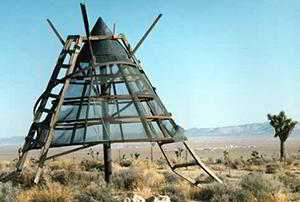
An EMP test tower in Nevada

An EMP test tower in Nevada

What makes the EMP unique is that this electromagnetic energy is sent in large amounts over a very short period of time.

The EMP attack is portrayed as sending modern society back to medieval times. Whether this is true or not is subject to much debate. One often discussed topic is whether a typical vehicle could survive an EMP and if so, what vehicle would have the best chance of doing so.

Preparedness Hacks: Once a nuke is heading your way, you might think that there isn’t much left to do, but you would be wrong!

Because we will show you America’s natural nuclear bunkers that are also EMP proof. When the sirens start wailing, all you need to do is pick the closest one to your home, where you can take cover before it hits.

Conventional wisdom is that the older the vehicle, the more likely it can survive an EMP strike. This may be true in theory, but may not always be true in practice. One reason for this is that modern vehicles have some shielding against unwanted electromagnetic energy interference. For example, car engineers understand that you wouldn’t want a TV, radio, walkie-talkie, Wi-Fi or other wireless signal to interfere with your vehicle’s onboard computers.

But there are many other variables that will determine if a given vehicle will survive an EMP attack and to what extent it would survive it. The only way to know for sure is to actually test the vehicle. But even with extensive testing, you wouldn’t necessary have a perfect list of EMP-proof vehicles.

Therefore, the following list provides a good starting point as to what vehicles stand the best chance of surviving an EMP strike in drivable condition and are also affordable for the average person.


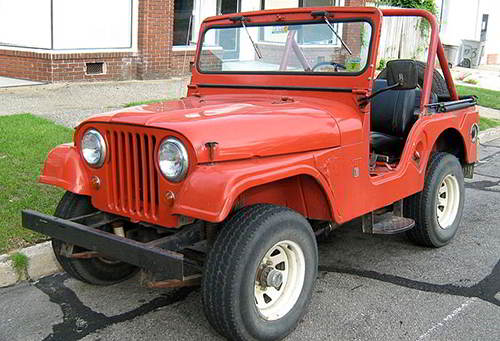
Option 1: 1979 Jeep CJ5 4×4. Average Street Value = $7,100

1979 Jeep CJ5 4x4

The Jeep (AMC) CJ5 is one of the most famous versions of the venerable “Willys Jeep.” Given its reliability and performance, it’s no wonder the CJ5 had one of the longest production runs of any Jeep. Starting in the 1980s, the CJ5 Jeeps were made with more advanced electronics, such as AM/FM radios and more complex electronic control units. Getting a CJ5 older than a 1979 model can’t hurt, but the prices tend to rise as the model years get older, so the affordability advantage is diminished.

Contributing to its EMP survivability is a naturally aspirated engine utilizing a carburetor. As one might expect, the CJ5s are typically found with manual transmissions, which are easier to repair, should the need arise.

The CJ5 also makes a fantastic off-road vehicle, which can be of great use in a survival situation. Lastly, the CJ5 doesn’t stand out too much (except to the most fanatic Jeep fans), so it’s unlikely to draw any unwanted attention.

Related: 10 Things to Have Ready before the Huge EMP !!!


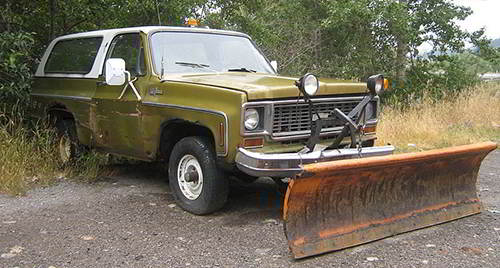
Option 2: 1984 Chevrolet Blazer. Average Street Value = $6,100

Chevrolet Blazer

The Chevrolet Blazer is a popular classic vehicle and it’s easy to see why, given its traditional styling, history and off-road capability. Like other vehicles listed in this article, the 1984 Chevrolet Blazer’s engine uses a carburetor and natural aspiration, so there are fewer sensitive electronics controlling engine performance. The Blazer is also very popular for making additions and modifications, with many options available.

There are other models of the Blazer that would do well surviving an EMP, such as a model from the 1970s or early 1980s, but they are significantly more expensive, almost double the price on the used car market.

(Here are 23 survival uses for honey that you didn’t know about.)


Option 3: 1972 Volkswagen Beetle. Average Street Value = $5,900

Volkswagen Beetle

The Volkswagen Beetle is one of the most recognizable vehicles ever manufactured; in fact, it is the best-selling vehicle in history. It’s also another iconic vehicle that’s noted in pop culture (The Love Bug comes to mind).

Starting around 1975, the VW Beetles were made with the Bosch fuel injected engines, which added extra electronics to the vehicle. While this addition is not very advanced by today’s standards, it adds a weak link to the VW Beetle’s EMP resistance. Therefore, most VW Beetles from the early 1970s or older would serve as the most ideal versions for surviving an EMP strike.

If a truck or SUV isn’t your thing, the VW Beetle is definitely a vehicle you should look into getting.


Option 4: 1983 Ford Bronco. Average Street Value = $5,000

The Ford Bronco was first released back in 1966 and was discontinued 20 years later in 1996. However, it’s a popular vehicle and has a bit of history, especially in pop culture (OJ Simpson’s infamous Ford Bronco is of the 1993 model year).

The 1983 Ford Bronco makes a great vehicle for surviving an EMP because it has a naturally aspirated carburetor engine. This means a simple air intake system is used and the air-fuel mixing doesn’t rely on electronic assistance.

But why is the 1983 model recommended in particular? Starting with the 1984 model Ford Broncos, electronic emissions equipment became standard. Besides creating another area of potential failure in an EMP strike, it also reduces the vehicle’s performance. Additionally, certain 1985 Ford Broncos have electronic fuel injection, which creates yet another potential weak point against an EMP.


Other Things to Consider

This article lists only a handful of vehicles that are likely to survive an EMP. Basically, any vehicle from the 1960s or earlier will probably survive an EMP event in drivable, if not perfect condition. However, they’re unlikely to be the most affordable or practical. Obviously, an even older vehicle, such as one that’s steam or animal-powered would have the absolute best chance of surviving the EMP, but they wouldn’t be practical to operate (for most people) and are quite expensive to purchase and maintain.

Even if you find a great vehicle for surviving an EMP, don’t forget other practical considerations, such as parts availability, ease of maintenance and repair, performance, inconspicuousness and fuel availability (gasoline versus diesel).

In this video, i will unearth a long-forgotten secret that helped our ancestors survive famines, wars, economic crisis, diseases, droughts and anything else life trew at them.
So pay chose attention because this video will change your life forever for the good!

How To Make a Tarp Shelter –15 Designs

Having in your survival bag a versatile item like a tarp will come in handy during an emergency situation. It will help you gather water, camouflage your supplies and it will provide an excellent shelter in case nothing else is available. Improvising a basic tarp shelter can keep your head dry. It will help you conserve heat and it provides a sense of comfort and safety.

A polyethylene tarp will go a long way and you should definitely get one for your bug out bag. It is lightweight, durable, draft-proof and waterproof. They come in a variety of sizes and color, and they won’t burn a hole in your wallet.

Making a tarp shelter is easy and there are dozens of different ways and patterns to construct a suitable shelter with only a single tarp.

The Lost Ways – Pemmican Tutorial Guide


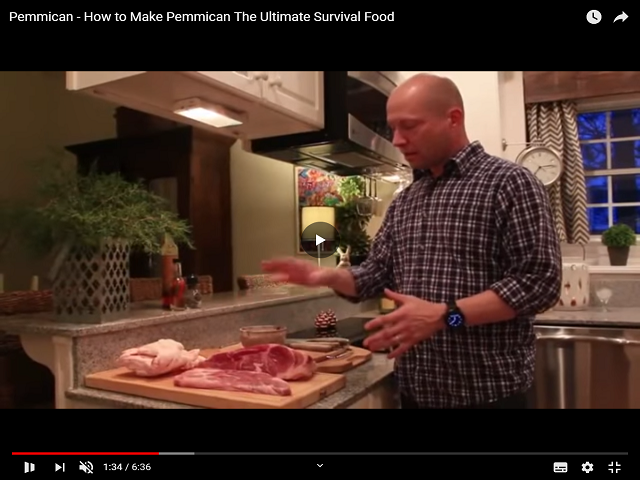
The Lost Ways website has an awesome step-by-step how to make Pemmican video. While having a written guide is important and helpful to a lot of people, watching a video guide is even better.

They cover a few things I did not and demonstrate how to make your own pemmican.

This video is an excellent pemmican making resource.

Before you make your tarp shelter you must consider the following:

  • The location of your shelter is crucial and you should stop and think about it before building your shelter.
  • The direction from which the wind is blowing should be taken into account or your shelter will sail away.
  • The ground should be comfortable enough if you plan to get some sleep. Pointy rocks will keep you awake.
  • The ground should slope slightly for the water to runoff.
  • If there is no slope, you will have to dig some trenches around your shelter to aid drainage.
  • Take into account the purpose of the shelter and make it as large as it needs to be.
  • Consider the weather and chose a model that is stable and won’t collapse if rain or snow are expected.

Tarp Shelter Designs:

For all the shelter examples provided here, you can use a 10X10 foot tarp.

1. The A-frame tarp shelter

Prepper's Will - Basic A-Frame tarp shelter

The A-Frame shelter is probably the most common shelter one can make. It can be made by stringing the paracord between two trees. Draping over the tarp and staking it down are the final steps required to make this standard shelter.

The 30-degree angle of the tarp’s roof will create a ten-foot-long living area. The shelter will be 8.6 feet wide and 2.5 feet tall. This shelter provides a good rain and snow runoff and a proper wind deflection.

The downside of the A-frame shelter is that there is no floor and if you haven’t stretchered the paracord tight enough, there will be sagging in the middle.

2. The Sunshade tarp shelter

Prepper's will - Basic Sunshade tarp shelter

To create this type of shelter, you will need four anchoring points to which you will tie the paracord. This is a shelter parallel to the ground and it’s designed to provide 100 square feet of shade against the sun.

Some people use this type of shelter during the rain because the water will pool in the middle and it’s easier to collect it. To make it sturdier, you can add support poles to the corners. (Here are 23 survival uses for honey that you didn’t know about.)

This basic sunshade tarp shelter will provide maximum protection against the sun, but it’s not suitable for cold weather and it can’t support rain for long.

3. The Lean-To tarp shelter

Prepper's Will - Basic Lean-To tarp shelter

This is another shelter that it’s simple to make and it’s excellent for deflecting wind or providing sunshade. To make this shelter, you need to secure the tarp to the ground on the windward side and support it with the paracord between two anchor points.

A 30-degree angle of the tarp will provide five feet of height and 8 feet of width under the shelter. This is an “on the go” shelter because it’s easy to erect and you can quickly take it down. It provides excellent wind deflection and it will keep you safe from rain or sun heat.

The downside of this shelter is that there are no sides and no floor to offer protection against other elements.

4. The tube tent tarp shelter

Prepper's Will - Tube Tent tarp shelter

This is a sturdy shelter that provides a floor and, if suitably secured to the ground, will prevent rain from seeping in.

To make it, you will need to secure the paracord between two trees and drape over the tarp with the opposite ends secured together.

The sixty degrees walls will provide 3 feet in width and almost 3 feet of headroom. This should be enough room for a single adult.

5. The mushroom fly tarp shelter

Prepper's Will - Mushroom Fly tarp shelter

This type of shelter is very similar to the primary sunshade shelter but it adds a central support pole at the tarp’s midpoint. It is designed for rain or snow runoff and it’s pretty sturdy if you secure the four corners of the tarp well enough.

You can make it as tall or as short as you need depending on the length of the pole. This shelter provides an excellent runoff for rain or snow, but it doesn’t have any sides to protect you from the wind or cold.

6. The cornet tarp shelter

Prepper's Will - The Cornet tarp shelter

This shelter utilizes the entire length of the paracord strung from a tree to the ground. The tarp is draped over the paracord diagonally, while the leading edges fold under to form the floor. The corner of the shelter must be faced towards the direction of the wind.

You will also need to tie off some drip lines above the entrance of the shelter to prevent rain from running down the paracord and into the shelter.

This is a good design for wind deflection and rain/debris shedding. The downside of this model is that it doesn’t offer too much headroom and if you are a tall person, you might not have enough room for you and your gear.

Preparedness Hacks: Once a nuke is heading your way, you might think that there isn’t much left to do, but you would be wrong!

Because we will show you America’s natural nuclear bunkers that are also EMP proof. When the sirens start wailing, all you need to do is pick the closest one to your home, where you can take cover before it hits.

7. The dining fly tarp shelter

Prepper's Will - Dining Fly tarp shelter

This is the favorite design for many campers and it’s a simple open-air cover. It provides a good sunshade and enough headroom without sacrificing too much space. It keeps away rain but it offers limited protection against the other elements due to its lack of sides.

When properly tied down and staked, the dining fly becomes a sturdy shelter and the height of the support pole will dictate the amount of headroom.

This is a good model for desert survival because it provides proper ventilation and adequate coverage.

8. The wind shed tarp shelter

Prepper's Will - Wind Shed tarp shelter

This type of shelter requires a little practice to get it done the right way. You will need to fold the tarp into thirds and make sure the leading edge of the roof hangs over the groundsheet for adequate rain runoff. The main ridgeline has to be secured with paracords while stretched between two trees.

A length of paracord must be added to the bottom fold, where the back panel meets the groundsheet. It provides excellent wind deflection, but it requires a lot of secure points.

The hanging roofline could also sag under rain loads and channel the water onto the groundsheet.

9. The Fold-Over Wind Shed tarp shelter

Prepper's Will - Fold-Over Wind Shed tarp shelter

This design is similar to the traditional wind shed, but it provides more coverage by sacrificing the groundsheet.

The height of the paracord ridgeline determines the angle of the roof and the footprint of the shelter.

It offers excellent wind deflection and rain runoff, but it doesn’t protect entirely against the elements due to its lack of floor, flaps or sides.

10. The diamond fly tarp shelter

Prepper's Will - Diamond Fly tarp shelter

This shelter is suitable for two persons and it’s easy to make. You will need to secure the paracord to a tree and the ground and drape over the tarp at a diagonal. The length of the paracord and the angle with which it is tied to a tree will determine the overall headroom and width of the shelter. The steep walls will shed rain and will deflect wind if they are well staked. This model will require drip lines, just like the cornet shelter.

Depending on the size of the tarp, this shelter can accommodate more than two persons or more equipment. However, the lack of a floor and flaps won’t keep out the elements. If the wind changes direction frequently, the shelter can be compromised.

11. The arrowhead shelter

Prepper's Will - Arrowhead tarp shelter

Start the construction of this shelter by supporting the center of two perpendicular edges with five foot long poles or by attaching those edges to trees using a paracord. You will need to stake to the ground the opposite corner so that it creates a series of four triangles.

This design will provide 35 square feet of living space and five feet of headroom at the opening. The flap will hand down and make a partial closure. The poles need to be supported by paracord tie-downs.

This shelter deflects wind with its low profile and it’s very roomy.

12. The half box tarp shelter

Prepper's Will - Half Box tarp shelter

This shelter will require some time to be built and you need to use at least four support poles and as many or more tie downs to hold it all up. The footprint provided is 25 square feet and it has two sides of protection from the elements.

If not supported in the middle or kept taut from the sides, it will sag under the weight of water or snow. A full one-quarter of the tarp goes unused and folded up behind the rear corner.

This type of tarp shelter provides good sunshade throughout the entire day if you position it correctly.

13. The barn stall tarp shelter

Prepper's Will - Barn Stall tarp shelter

To make this shelter, you can either use four five-foot poles for support or two poles and a paracord attached to two anchor points. The front is supported by poles and the single 90-degree wall provides enough protection, although strong wind can damage the entire structure.

This shelter produces a 50 square feet living area but it has no floor. It’s simple to build, but it doesn’t provide adequate protection from the weather.

14. The Square arch tarp shelter

Prepper's Will - Square Arch tarp shelter

As the name implies, this shelter is an arch with a square top. Starting with two parallel lengths of paracord attached to anchor points approximately 3 feet apart and 3 feet high, drape the ground cloth over the two lengths of paracord and secure the long ends of the tarp with stakes.

This is a good shelter for narrow spaces, but the odds of finding four anchor points in the needed proximity is quite low. To allow rain to runoff, make sure you secure one paracord slightly higher than the other.

This shelter is three feet wide, three feet wide and ten feet long.

15. The shade sail tarp shelter

Prepper's Will - Shade Sail tarp shelter

This is an easy and quick to build shelter and it requires to diagonally drape the tarp over a length of paracord attached to two anchor points. The opposite corners of the tarp are staked to the ground.

This is an open and airy shelter and the lower the angles of the sides are, the better it will deflect wind and the more shade will provide.

It provides all-day shade and it requires minimal stakes and set up, but it’s not weather resistant and it will not keep you dry.

What not to do when building a tarp shelter:

  • Don’t make your shelter over an ant nest or any type of burrows
  • Never set up your shelter beneath a dead tree or in the vicinity of one
  • Don’t attach tarp lines to a tree standing alone or too tall trees. Always go for the short tree in a group of taller trees.
  • Never set up your shelter below the high tide mark of a shoreline
  • Don’t set up your shelter on top of a hill or ridge.
  • Don’t set up your shelter on a river bank

Making a proper tarp shelter also depends on what you bring along. Things like a backpacking knife, durable paracord, and one or two space blankets will help you improve the quality of your shelter. It takes time to master the art of making a proper shelter using just a tarp. However, once you manage to do so, you will be able to build various shelters in all sorts of environment.

Conclusion

Making a tarp shelter is not rocket science. With a little bit of practice, anyone should be able to make one. Learning these tarp shelter patterns will come in handy during an emergency preparedness situation. If you are looking to buy a tarp explicitly designed for the backcountry, I recommend going with the Sanctuary SilTarp or Aqua Quest Safari models.

Solar energy is a renewable source of energy with has many benefits.

The best thing is that you’ll save money on you electric bill.

To build your own solar panel almost for free, you’ll need to watch this video

How To Make Pemmican: A Survival Superfood That Can Last 50 Years

Packed with calories and nutrition and able to be packed and stored for long periods, pemmican is often called the ultimate survival food.

Created by Native Americans and adopted by European explorers of the New World, pemmican is a concentrated blend of fat and protein from lean, dried meat. The word “pemmican” is derived from the Cree root word “pimi” for “fat” or “grease.” Traditionally, the meats used in pemmican included bison, moose, deer and elk.  Beef can be used as well.

The secret to pemmican’s long shelf life is in properly rendering the fat from the meat. The pemmican can be stored in airtight containers without refrigeration in a cool, dark and dry place. If made and stored property, it can last for years or even decades. There are reports of some pemmican lasting 50 or more years.

The Lost Ways – Pemmican Tutorial Guide


The Lost Ways website has an awesome step-by-step how to make Pemmican video. While having a written guide is important and helpful to a lot of people, watching a video guide is even better.

They cover a few things I did not and demonstrate how to make your own pemmican.

This video is an excellent pemmican making resource.

Let’s look at the steps to making pemmican.

1. Dry the meat. Cut off all the fat, and then slice the meat as thinly as possible before placing it on a drying rack in full sunlight. Another option is to place the meat directly on your oven rack with the oven temperature at its lowest setting. The meat needs to be dry enough that it cracks when you try to bend it. Adding salt will extend the shelf life. The more salt you add, the longer it will last.

2. Grind the meat. Now you need to grind the meat until it is powder form. If you do not have a food processor, mince the meat and then grind it in the blender. If you are in a survival situation, chop the meat into small bits and then crush it into a powder.

3. Render the fat. Now heat the fat in a crockpot, in the oven or on the stove. Use a low setting for several hours, and be sure to stir the fat occasionally until it has stopped bubbling. Then pour it through a mesh strainer to filter out any pieces.

4. Mix the meat with any dry extras. If you are using any nuts or dried fruit, such as raisins, dried cherries or cranberries, mix it with the dried meat in a large bowl (leaving room for the fat). Note: These extras reduce the shelf life.

5. Add the fat. Next, add one part of fat per every two parts of the dried meat mixture (add more fat if needed). Slowly pour the hot liquefied fat into the meat mixture and stir well.

6. Add any wet extras. If you are adding wet ingredients such as honey, maple syrup or peanut butter, mix them in now. If the mixture seems too wet, you can add a little almond meal to get it to your desired consistency. You also may add salt to taste if you like. Note: These extras will reduce the shelf life.

(Here are 23 survival uses for honey that you didn’t know about.)

7. Form the pemmican. A popular method is to spread the mixture into a casserole dish. Let it get firm before cutting it into squares or bar sizes. If you prefer, you can form the mixture into balls.

8. Store the pemmican. Once cut, place it into airtight containers and store them in a cool, dark and dry place. You also store your pemmican in zippered bags in your freezer.

There are many varieties of pemmican, but they all use the basic instructions. Many other recipes begin with a 1:1:1 ratio of basic ingredients such as:

1 cup of dried meat

1 cup of dried fruit or berries

1 cup of melted animal fat

Pemmican is surprisingly filling and can supply energy for hours.

You can experiment to find the recipe that works well for you. Label the pemmican you make with the ingredients and proportions you used, so you will know what combinations work well and how you might want to tweak a certain recipe a little in the future.

Preparedness Hacks: Once a nuke is heading your way, you might think that there isn’t much left to do, but you would be wrong!

Because we will show you America’s natural nuclear bunkers that are also EMP proof. When the sirens start wailing, all you need to do is pick the closest one to your home, where you can take cover before it hits.

24 Lost Survival Tips from 100 Years Ago – with Illustrations

When we’ll have no running water, no hyperactive emergency services, no electricity… we are going to turn back to what people did 100 years ago. Here you’ll find some “little” survival tricks popular in the early 1900’s and (some of them) useful even today.

100 years ago Gallaher Ltd printed a short “How-To” series, with clever hints for emergency situations. The cards were distributed with packs of cigarettes. All the pictures bellow are part of the George Arents Collection, The New York Public Library. Please enjoy the article.

1. How to Extract a Splinter

6

Take a wide mouthed bottle and fill it with hot water nearly to the brim. Now press the affected hand or foot tightly against the mouth of the bottle.

This will then cause a suction and pull the flesh down. The suction plus the steam will help pull out the splinter.


2. How to Make an Emergency Water Filter

A handy and efficient water filter can be made out of an ordinary bucket.

First make a hole at the bottom of the bucket.

Instructions: “The water percolates through the layers of fine and coarse sand, and clean picked gravel and stones, with which the pail is filled, filtering through to the bottom in a clear state.”

One of the best layers you should add to this bucket is one made of charcoal.

In this video, i will unearth a long-forgotten secret that helped our ancestors survive famines, wars, economic crisis, diseases, droughts and anything else life trew at them.
So pay chose attention because this video will change your life forever for the good!


3. How to Engrave on a Knife

2

This method was widely used during the Middle Ages and all the engravings in swords or armors. Here are some armors engraved using this traditional way.

Instructions: “The steel to be worked upon should be covered completely with a coating of beeswax. The lettering or design to be engraved can then be drawn with the point of a clean quill pen. This lays bare the metal. A strong solution of sulphate of iron should then be repeatedly poured over the exposed surface for about ten minutes. The more prolonged the action of the sulphate the deeper will the steel be engraved.”


4. How to Make a Fire Extinguisher

Although is good to know, probably none of us will make these old fashion extinguishers since is much easier to buy one. And because the new ones are more effective (I guess) and definitely safer.

Dissolve one pound of salt and half a pound of salt-ammoniac into two quarts of water. Then bottle the liquid in thin glass bottles holding about a quart each.

Should a fire break out, dash one or more bottles into the flames, and any serious outbreak will probably be averted.


5. How to Purify Water in a Cistern

1

Easy! Stir in a tablespoon of powdered alum.

After 30 minutes the alum cause the particles and the bacteria to bound together and cause them to drop to the bottom leaving a clear purified water.

A tablespoon or half an ounce of alum will purify from sixteen to twenty gallons of water.


6. How to Treat an Animal Bite

First tight a ligature round the limb above the wound. This will stop a little bit the bleeding and it will give you a better visibility to evaluate the wound.

The next advice given back then was: “Thoroughly cleanse the wound and if there is any suspicion of madness in the attacking animal the place should be well sucked and cauterized with luna caustic, or a white hot iron, after cutting away the surrounding flesh with a sharp clean knife.”

The advice was really good for that time, when there were no vaccines. And even today doctors recommend thoroughly washing the wound as soon as possible with soap and water for approximately five minutes (to reduce the number of rabies particles). Povidone iodine or alcohol is then recommended to reduce the virus further. When SHTF and we’ll no longer be able to access vaccines this is your only option available.

(Here are 23 survival uses for honey that you didn’t know about.)


7. How to Detect Escaping Gas

Gas leaks can be caused by faulty appliances, or by those that have been incorrectly installed or poorly maintained.

Some of us don’t even use gas anymore (like me) or some may have gas detectors, but either way, after an earthquake, or a hurricane or a tornado there will always be gas leaks.

This 100 years old method is risk free and quite reliable.

“Paint strong soap solution on the suspected length of pipe and the gas will then cause bubbles at the escaping point, which can be dealt with at once.”


8. How to Light a Match in the Wind

10

Instructions: “The familiar difficulty of lighting a match in the wind can be to a great extent overcome if thin shavings are first cut on the match towards its striking end, as shown in the picture.

On lighting the match, the curled strips catch fire at once; the flame is stronger and has a better chance.”


9. How to Find a Lost Trail

If a trail is lost, there isn’t much to do but to search for it.

A very good way to do that is to mark the last foot-print or sign you notice as the center of the circle and go round it at a distance of anything from 30 to 100 yards.

The trail should be discovered somewhere crossing the circular track you are following.


10. How to Cure Chilblains

“A simple and homely remedy, which immediately relieves the irritation and pain caused by chilblains, is salt and fresh apple juice.

The affected parts are rubbed gently with a slice of apple dipped in common salt. A good juicy apple should be used.”

Preparedness Hacks: Once a nuke is heading your way, you might think that there isn’t much left to do, but you would be wrong!

Because we will show you America’s natural nuclear bunkers that are also EMP proof. When the sirens start wailing, all you need to do is pick the closest one to your home, where you can take cover before it hits.


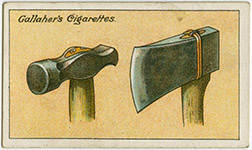
11. How to Secure Loose Hammers and Axe Heads

12

After wedging the handle of hammer as tight as possible, drill two holes at the end of wood and drive in two large screws.

An axe-head can be secured by boring a hole through the haft just bellow head and wiring through the hole and over top.

The wire should be twisted and staple driven into a hold position.


12. How to Tell the Points of the Compass with a Watch

compass

Take the watch of your hand. Point the hour hand at the sun and then lay a piece of wire or a blade of grass crosswise between the hour hand and the figure twelve.

The end of the wire between the twelve and the hour hand points south.


13. A Simple Cure for Catarrh

13

Treatment for catarrh may not be necessary because it often disappears within a few days, after your body has fought off the infection. But in some cases it doesn’t go away and it can be a health problem, especially for the underfed. In food crisis when people are poorly fed, these low-risk diseases kill more people than starvation itself.

Instructions: “Take a pinch of ordinary table salt up the nostrils, just as you would a pinch of snuff.

Then gargle the mouth and throat with warm water, being careful not to swallow it.

Do this each morning before breakfast.”


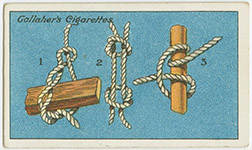
14. Three Useful Knots

15

No. 1 is the Timber Hitch, which is especially useful in lifting all kinds of heavy work, such as huge beams.

No. 2, the Fisherman’s Knot, shows a good method of joining two ropes tightly together.

No. 3 is the famous Clove Hitch, which becomes tighter the harder it is pulled.


15. How to Bandage a Foot

A traditional method used to make the inflammation heal faster (especially for sprain ankles) was to place a leaf of cabbage between the bandage and the ankle.

In the picture: “Rest injured foot on operator’s knee on a clear towel.

Commence bandaging in manner shown by the lower diagram, the bandage being bound over and round the back of foot in spiral fashion, and eventually fixed by means of a safety pin, just beneath ankle, as shown in upper illustration.”


16. How to Make Roller Bandages

17

Instructions: “A roller bandage must be rolled evenly and tightly, so in the absence of a machine a chair will serve this purpose.

The picture illustrates procedure. Whilst one person carefully rolls another pulls tight opposite end of the bandage, and at the same time sees that no folds or creases are allowed to form.”


17. How to Fell a Tree

Having decided which side you wish the tree to fall, cut alternatively a downward and inward cut as you can see in the picture – in this order.

When about half through, proceed to cut the other side a few inches higher, and finally pull tree down with the help of a rope.

In a survival situation (and not only) you can use trees for their nutritious sap.


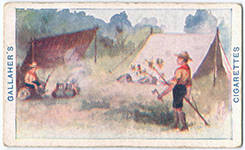
18. How to Build a Simple Shelter

22

Instructions: “A simple shelter can be made by driving two forked sticks into the ground and connecting these by a pole resting on them.

Branches are then laid resting on the pole. The right angle should be around 45 degrees, and the screen fitted up with smaller branches, ferns, etc.”


19. How to Make a Water Fountain for Chickens

Instructions: “A simple water fountain, ensuring a supply of fresh water for the chickens, can be made from a pint wine bottle, supported by wire loops to a wooden upright as shown.

The bottle is inverted over an earthenware pan, with the mouth of the bottle about half an inch above the bottom of pan.”

I see that now there are even some “rodent resistant chicken feeders” which can be used together with the water fountain if you leave for 2-3 days.


20. How to Remove Foreign Particles from the Eye

7

Few things are more irritating than having something in the eye.

“Drop sweet or castor oil into the corner of the eye. Picture shows a ready method of allowing drop of oil to fall into eye from the poim of a paint brush.”

If the particle is of mortar or lime, bathe eye with weak vinegar and water.


21. How to Make a Chair to Cross a Stream

If your group has one or more people who cannot (maybe there are wounded) or don’t know how to swim, you might want to find a simple solution to help him cross a river. If there are nearby trees – and usually near rivers there are – all you need is a rope.

Fasten a strong rope to a tree and let somebody (who can swim) go across the stream and fasten the other end to a tree on an opposite bank.

Use another rope to improvise a chair fastening it into a running loop. “By means of a light rope fastened to the middle of (the) chair and held by someone at each end, those unable to swim are safely passed over.”


22. Keeping Plants Watered While Away on Holiday

There are many simple and cheap DIY tricks to keep your green friends properly hydrated so that you don’t return home to a house full of wilting and yellowing plants.

A traditional method is to fill a large bucket with water, and place it a little above the level of the plants.

You can group round or near as many plants as you want. Place one end of a strand of wool in the bucket and the other one to the plant.

You can place as many yarns as you want.


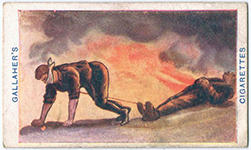
23. Rescue from Fire

24

If it is necessary to enter a burning house in a search of unconscious persons, or to save a family member, first place a wet bandage over your nose and mouth and crawl in on all fours. You do this because the only Oxigen you may find is on close to the floor. (and the visibility is better)

Place a rope around his ankles. The other end of the rope around your chest or shoulders.

Then turn your back on him and drag him out. (you’re going on all fours with rope underneath)


24. How to Preserve Eggs

14

Preserve only eggs that are newly laid. Bury them in a box of salt.

This traditional way of keeping eggs has been almost forgotten. The eggs last about an year when they are totally buried in the salt. No air whatever must be allowed to get at the shells.

This way you’ll have eggs and salt for survival.


25. How to Treat Sprains

Elevate the injured joint and wrap in cloths wrung out in cold water. The picture shows how to keep the cloths constantly wet without having to change them.

Place a jug of water higher than the injured limb and a strip of linen with one end in the jug and the other end resting upon the wrapping of sprained joint.

The water will pass from the jug to compress keeping it constantly wet and cold.

The SHTF we all prep for is what folks 150 years ago called daily life. A hundred years ago people knew how to do a lot of things – that we now take for granted. Learning how to do stuff on your own is one of the most important things that one can do to prepare… And in time of crisis you need to be able to support and sustain your family without much outside aid.

Solar energy is a renewable source of energy with has many benefits.

The best thing is that you’ll save money on you electric bill.

To build your own solar panel almost for free, you’ll need to watch this video

Hidden bunkers discovered stocked with survival supplies

ST. GEORGE, Utah — A large amount of explosives and illegally built survivalist cabins were found by crews working to suppress a wildfire in southern Utah in June.

According to a release issued by the Iron County Sheriff’s Office, boxes of modified novelty hand grenades, explosive powder, fuses, ammunition and firearms were found in multiple survivalist-style shelters illegally built on U.S. Forest Service and state-managed land near the ski resort town of Brian Head.

Firefighters battling the 71,000-acre Brian Head fire heard a series of “popping” sounds while working to control the blaze near Henderson Hill on June 27 (2017)— 10 days after the fire was allegedly started by a man using a weed torch to clear his property in dry conditions, the release stated.

Preparedness Hacks: Once a nuke is heading your way, you might think that there isn’t much left to do, but you would be wrong!

Because we will show you America’s natural nuclear bunkers that are also EMP proof. When the sirens start wailing, all you need to do is pick the closest one to your home, where you can take cover before it hits.

“The firefighters first thought the ‘popping’ sounds were rocks exploding due to heat, but as the sound continued for approximately five minutes, firefighters realized the ‘popping’ sound was actually ammunition exploding in the fire,” Iron County sheriff’s Lt. Del Schlosser wrote in the release.

The remains of a cabin burned down by the Brian Head fire. Officials said the cabin and bunkers were filled with explosives. (Photo: Iron County Sheriff’s Office

Firefighters discovered a burned-down cabin and a bunker that had been dug into the ground. The bunker contained a box of grenades that had been altered by drilling out the bottoms and plugging the drilled holes with threaded, galvanized pipe plugs. Explosive powder, fuses, ammunition and containers of food storage were also found in the bunker. (Here are 23 survival uses for honey that you didn’t know about.)

On June 30, officers contacted a man in Parowan, about 20 minutes away, who admitted to owning the cabin, bunker and explosives. He also told investigators there were an additional seven or eight structures hidden throughout the area that he had built over a “number of years.”

“He said it was a place to go when the end of the world came,” Schlosser said.

Dozens of grenades in inert condition were found in the original bunker. Bomb technicians destroyed several hand grenades at the site and “a significant quantity” of black powder.

Investigators located each of the bunker and cabins the next day. All the structures had been built on public land. County and federal officials had to remove the items from the bunkers before dismantling them.

Two of the cabins had been destroyed in the fire. They had been constructed with concrete footings at each of the four corners as anchors for the structure. It was also outfitted with a corrugated metal roof and a metal stove and chimney.

Another cabin was located on a steep mountainside outside of the fire area on state-managed land. This cabin, which was not effected by the fire, was made of plywood and two-by-four beams secured to concrete footing, measuring approximately 4 feet wide by 8 feet long and 10 feet tall in size. Two bunk-beds, food and water storage, reading materials and a small amount of ammunition were found inside.

The name of the Parowan man has not been released.

Schlosser said a criminal investigation has been completed and has been forwarded to the Iron County Attorney’s Office and the U.S. Attorney’s Office to determine whether charges should be filed.

In this video, i will unearth a long-forgotten secret that helped our ancestors survive famines, wars, economic crisis, diseases, droughts and anything else life trew at them.
So pay chose attention because this video will change your life forever for the good!

40 Bizarre Home Remedies Our Grandparents Taught Us That Actually Work

These days, it has become all too common for people to reach for a pill bottle or call the doctor anytime something goes wrong, or even for the smallest scrape. The simple, wacky home remedies of our grandparents, those weird concoctions formed from everyday household goods, are often mocked by today’s medical establishment. But surprisingly, the truth is that our grandparents actually knew a lot more about the world than we give them credit for, and many of these old-fashioned folk remedies actually work. Not just that, but many of them work better than the synthetic pharmaceuticals that so many people stuff their bodies with today.

In this video, i will unearth a long-forgotten secret that helped our ancestors survive famines, wars, economic crisis, diseases, droughts and anything else life trew at them.
So pay chose attention because this video will change your life forever for the good!

Here are 40 weird, wacky, but shockingly effective home remedies that still work today, and would make grandma proud.

1. Use Garlic and Olive Oil for Athlete’s Foot

Everyone knows about the many health benefits of garlic, but did you know that it can fix your athlete’s foot problem in a jiffy? Just mince some garlic cloves, mix them with natural olive oil, and then use bit of cotton to rub this mixture onto the affected area between the toes.

2. Potato Slices for Headaches

Headaches and/or migraines can ruin even the best day, but there is a weird natural solution that works: potato slices. Just cut a few slices from a raw potato, soak them in a very thin cloth, and apply them to your forehead or directly to the temples.

3. Ease Cuticle Infections with Vinegar

Done too much manicuring? Cuticles all torn up and infected? Make a glass of vinegar and warm water, then put your fingers in it for about 15 minutes. Repeat this procedure once a day or so until the infection fades away.

4. Use Vinegar to Cure Swimmer’s Ear

There’s nothing that ruins a good day at the beach like coming home with swimmer’s ear. But when your grandparents told you to drop some vinegar in your ears, they weren’t kidding. The acidic properties of vinegar can kill off that awful swimmer’s ear bacteria, leaving you feeling like yourself again. Just take out some white vinegar, dilute it with distilled water, and put three drops into the problematic ear, three times a day, until the problem fades. (Here are 23 survival uses for honey that you didn’t know about.)

5. Olive Oil for Eczema

Feeling itchy already? Eczema can make anyone grow crazy. But olive oil, which is full of antioxidants and often used as an ingredient in professional skin creams, isn’t just good for athlete’s foot: it can ease the symptoms of eczema as well. Simply rub some olive oil onto the eczema-affected areas of your skin, and it should help quite a bit. Moreover, olive oil is named in the Bible as a cure-all remedy.

6. Fix Hiccups with a Spoonful of Sugar

Yes, seriously. The legends are true. Don’t get too overzealous with it, because diabetes isn’t something to mess around with, but this old-fashioned trick will halt the hiccups in their tracks. The reason why is because the behavior we call “hiccups” are actually just spasms of your diaphragm, so having a spoon of dry sugar will throw off the nerve muscles and cure their agitation.

7. Get rid of warts with duct tape

It sounds crazy, but it works. Instead of going to all the work to get your warts frozen off, just covered them with duct tape. After cleaning a wart off, just apply a strip of the tape to the affected area, and then keep it there for three days. After that, remove, rub the wart area with a pumice stone, and then apply new tape.  Continue this process every three days until the wart goes the way of the dinosaurs.

8. Treat Acne with Coconut Oil

Coconut oil might seem like the cool new kid on the block, but it’s actually an old-timer that’s been around since the 1800s. In addition to many other uses, coconut oil is an effective treatment for acne, since its antibiotic properties prevent further breakouts. Just apply coconut oil to the skin, maybe mixing it with a little raw honey.

9. Have a Little Yogurt for That Bad Breath

Bad breath, officially known as halitosis, is a terrible thing to live with. But the cure for it is right there in your fridge: yogurt. At least two servings a day of this probiotic wonder, ideally a plain brand with no sugar, changes the landscape of your tongue so that it won’t breed any more the bad bacteria that produces that distinctive stink.

10. Deal with bug bites by using toothpaste

Well, not technically the toothpaste itself, but rather, the peppermint oil inside the toothpaste: if you have the pure peppermint oil itself, that’s even more effective. Either way, applying peppermint oil to a bug bite—even if it’s just through dabbing on a little toothpaste – will immediately reduce the raw itchiness we all know too well.

11. Use Licorice to Eliminate Corns

Yes, licorice, everyone’s least favorite candy. But the one thing worse than licorice is having a corn on your toe. If you soak some licorice with oil, apply it all to the affected area, then wrap it tight under plastic wrap (and maybe a sock) for 6-8 hours—for instance, overnight—this will cause the licorice to soften the corn.

12. Ease Your Hangover with Apple Cider Vinegar

Drinking might be fun, but hangovers aren’t fun for anyone. But when you used to see grandpa downing a shot of apple cider vinegar after a night with his buddies, he knew what he was doing. Apple cider vinegar balances the pH levels in your stomach after a little too much alcohol throws it off. Just gulp down a teaspoon of this vinegar, or a small shot-glass. If you can’t take it straight, dilute it with some water.

Preparedness Hacks: Once a nuke is heading your way, you might think that there isn’t much left to do, but you would be wrong!

Because we will show you America’s natural nuclear bunkers that are also EMP proof. When the sirens start wailing, all you need to do is pick the closest one to your home, where you can take cover before it hits.

13. Constipation with beets

The human body needs to eliminate waste, and when it gets all bunched up, major discomfort ensues. One home solution you may have heard from your grandparents was to eat some fresh-steamed beets, then drink the water they were steamed in. This should clear out your colon like magic. Just be warned that when you do go, your stools or urine may be bright red: nothing to worry about, just the natural dye of the beets.

14. Vodka for stinky feet

Having trouble with foot odor? Get some vodka. No, we’re not suggesting that you get drunk and avoid the problem. The key is that alcoholic is an antiseptic, which means it eliminates the fungus that causes foot odor, and dries your feet out. Just soak a thin cloth in some vodka, swipe your foot down, and feel the smell go away.

15. Mix Cumin, Honey, Cinnamon and Ginger for Diarrhea

A bad case of the runs can keep you up all night. Instead of taking drugs that will simply constipate you, thereby causing more stomach pains, a better natural remedy is to combine a teaspoon of cumin, and the same portion of honey, cinnamon, and ginger into a paste that you can drink.

16. Lemons for an Earache

Pain in the ears can be soothed by the application of freshly-squeezed lemons. Just squeeze a lemon onto a Q-tip, and delicately rub this just inside the ear to restore pH balance.

17. Stinging Nettle for Hair Loss

You can’t force hair to regrow once it’s already gone, but you can slow down the rate of hair loss through the use of stinging nettle, an herb often used for tea. Drinking stinging nettle tea a few times a day should help, and you can also massage stinging nettle itself in your scalp.

18. Cure Nausea with Olives

Whether it’s from motion sickness or an unpleasant sight, the familiar (but unpleasant) side effects associated with nausea can be cured by eating olives, due to the tannin inside them.

19. Potatoes for Spider Bites

If a spider managed to sink its teeth into you, ease the itching and swelling by shredding a potato, wrapping the pieces in cloth, and applying to the bite area. Note, this is a treatment for symptoms of a regular, non-deadly bite: if the bite comes from a more deadly spider, such as a black widow, seek immediate medical attention.

20. Raw Honey for Chapped Lips

Don’t ever waste your money on Chapstick again. Much has been said about the healing properties of raw, organic honey, but if your lips are chapped, you can simply apply honey to the affected area—rub it on, just as you would Chapstick—and it will do the job nicely, and taste better to boot. Just make sure the honey is both raw and organic.

21. Garlic for Allergies

For a more natural antihistamine when your nasal allergies act up, eat lots of garlic, whether it’s straight bulbs or slices on crackers. Garlic contains a lot of the antioxidant quercetin, which eases allergy symptoms. If there’s no garlic in the pantry, onions work as well.

22. Buttermilk and Ginger for Diarrhea

If you don’t have cumin on hand, another weird-but-effective home remedy for diarrhea is to mix half of a teaspoon of dry ginger into a cup of buttermilk, and drink it.

23. Treat Styes with Potatoes

If you haven’t noticed, potatoes are a lot more powerful than people realize. If you get a stye on your eye, just grate a potato, wrap the gratings in a cloth, and press to the affected area to ease inflammation.

24. Avoid Mosquitoes with Garlic

If you don’t want to get eaten alive with mosquitoes, enjoy a garlic-rich diet, because mosquitoes are totally repelled by garlic. For further protection, rub garlic oil on your skin. If it’s already too late, you can also ease the stinging of the bites with garlic as well.

25. Yams for Menopause

To up your dosage of vitamin A, lower your cholesterol, and add more antioxidants to your diet, start incorporating yams—real yams, not sweet potatoes—into your regular daily diet. This will help with common menopause symptoms.

26. Apples Help the Bowels

Apples are high in pectin, a naturally occurring fiber that both bulks up and softens stools. This means that apples are an effective treatment for both diarrhea andconstipation. Just make sure to eat the skin too, which contains valuable ursolic acid.

27. Banana Peel for Poison Ivy

While bananas won’t prevent you from getting the allergic rash that 85% of the population contracts from touching poison ivy, they can help. Rub the inside of a banana peel against poison ivy rash for relief from the pain and itchiness.

28. Honey for Acid Reflux

As soon as the symptoms of acid reflux begin affecting you, swallow three spoons of honey, and it should help you achieve better digestion.

29. Blackstrap molasses for Constipation

If you suffer from frequent constipation, try injecting a little blackstrap molasses into your diet, whether as a coffee additive or an extra ingredient in cookies. This molasses should ease constipation, but be careful not to over-indulge, because too much molasses will increase constipation.

30. Pine Syrup for Sore Throats

You know what helps a sore throat? Pine needles. Yes, really. To make pine syrup, collect a cup of freshly-washed pine needles, and thoroughly blend them. Meanwhile, boil water, corn syrup, and a bit of salt, mix this with the needles, then steep for a few hours. Keep this syrup in the refrigerator for at least a month, then keep it on hand forever to treat sore throats.

31. DIY Cough Syrup

If you want to make a good cough syrup from the ingredients of your pantry, mix together ¼ teaspoon ground ginger, 1 tablespoon of apple cider vinegar, ¼ teaspoon cayenne pepper, 1 tablespoon of honey, and a few spoons of water. Mix it all together, and have 1-3 teaspoons to ease coughing symptoms.

32. Garlic for toothache

Nothing will keep you up at night like a bad cavity or an exposed nerve. While garlic won’t cure the underlying issue, chewing on garlic at night, particularly chewing whole cloves in the affected area, will ease pain tremendously.

33. Put on Wet Socks to Treat a Cold

Hear us out for a minute. To treat the symptoms of a common cold, begin by soaking your feet in hot water for at least three minutes – or just taking a bath. Meanwhile, soak a pair of your socks in ice water. Put the socks on your feet, cover them up with a pair of wool socks, and then go to bed. As you sleep with these horribly cold feet, the blood vessels will constrict, pushing nutrients up into your body to push out the infection.

34. Fix Dry Skin

To soften dry skin, break down two bananas and mix them with a bit of honey. Apply this paste to the skin, let it sit for about 20 minutes, and then wash it off, and your skin should feel softer.

35. Teabags for Burns

Get a cool-temperature, wet teabag, of any tea, and place it directly on the burned area. This won’t fix the burn, but it will relieve the pain almost immediately.

36. Oil Pulling

This might have become a trend recently, but it’s actually an old practice that our grandparents learned from their grandparents. Basically, enhance your dental routine by taking a spoonful of coconut oil – though other oils work as well – and swishing it in your mouth for five minutes a day, specifically pulling it through the teeth, and then spit it out into the toilet. The oil will “pull” all of the toxins out of the mouth, allowing you to spit them out in one go. When used in addition to standard brushing and flossing, oil pulling will help digestion, reduce gingivitis, prevent receding gums, get rid of bad breath, strengthen teeth, and much, much more.

37. Help Eczema with an Oatmeal Bath

If the horrendous itchiness of eczema still has you down, you can hugely reduce the itchiness by following your grandmother’s old advice taking a bath of oatmeal. There’s a reason that so many lotions and pharmaceutical eczema treatments contain oatmeal as an ingredient: it really works! For a home solution, just make a bath for yourself, fill it with colloidal oatmeal, and then soak for a while.

38. Stop Your Snoring

Is your snoring annoying your wife or husband? Try drinking a glass of warm milk with a teaspoon of turmeric powder added to it before bed, and hear your partner’s relief.

39. Basil Leaves and Ginger for Fever

Fevers are the body’s way of pushing out an infection, but when it’s time to cut back on the heat, here’s a home solution. Crush some ginger and basil leaves together into  paste, then add a teaspoon of honey. Squeeze out the liquid, and then take a drink ever four hours or so.

40. Soak Golden Raisins in Gin for Arthritis

If there’s one thing that afflicted so many of our grandparents, it was the terrible swelling pains of arthritis. But they had a home remedy that still works today. Get some golden raisins, soak them in gin, and let it sit overnight until all of the gin has been soaked up. After this is done, eat about ten raisins a day. While this won’t fix the underlying problems of arthritis, it will greatly ease the symptoms.

Solar energy is a renewable source of energy with has many benefits.

The best thing is that you’ll save money on you electric bill.

To build your own solar panel almost for free, you’ll need to watch this video

Root Cellars 101- Root Cellar Design, Use and Mistakes to Avoid

In this article we’ll talk about 5 things you must include in a root cellar design, plus 10 tips for fruit and vegetable storage. There’s also a printable storage guide for over 30 fruits and veggies, and jump links to additional information at the bottom of the post.

A root cellar is a great low-cost way to store food – not just root vegetables, but other fresh produce, too. They require no energy to use and very little maintenance. You can build in a root cellar when your home is under construction, but it’s also possible to add a root cellar to your basement, or build one outside your home.

(21 wild edibles you can find in urban areas)

What is a root cellar?

Dig a deep enough hole, and you’ll find that the ground is cool (and often moist). Root cellars tap into those cool, moist soil conditions and use them to store produce – like your refrigerator produce bin.

Preparedness Hacks: Once a nuke is heading your way, you might think that there isn’t much left to do, but you would be wrong!

Because we will show you America’s natural nuclear bunkers that are also EMP proof. When the sirens start wailing, all you need to do is pick the closest one to your home, where you can take cover before it hits.

Building a Root Cellar

There are five major elements that a root cellar requires:

  1. Ventilation:  Some produce gives off ethylene gas, which can cause other produce to spoil. Also, a tightly sealed cellar will increase the risk of mold. Make sure fresh air can get in, stale air can get out, and air can circulate around the produce.
  2. Earth-shelter:  The soil insulates and maintains a cool temperature. A packed earth floor or gravel floor is better than concrete for keeping moisture levels high.
  3. Darkness:  Light can trigger sprouting, so if you have a window in your root cellar, keep it covered, and don’t leave the lights on.
  4. Humidity:  A high humidity level of 85-95% keeps produce from drying out. Note: Humidity that is high enough for produce may cause canning jar lids to rust, so be sure to check lids and rotate stock if you store canned goods in the root cellar.
  5. Shelving/Storage bins: Wood shelving and bins are naturally antibacterial. Wood also conducts heat more slowly than metal, and doesn’t rust. Avoid treated wood, and stick to those that are naturally rot resistant.

Types of Root Cellars and Natural Cold Storage Options

Natural cold storage options include (click on any item in the list to jump to more information below):

  • Basement or Under Porch Root Cellar (accessible from inside the home)
  • Traditional Root Cellar (buried below ground, accessible from outside)
  • Earth Berm (at ground level or partially above ground)
  • Barrel in the ground

These earth sheltered fruit and vegetable options work best for those in cooler climates, where the ground temp is naturally cooler. For those in warmer areas, check out the posts Above Ground Root Cellars and Build Your Own Walk In Cooler with a CoolBot Controller and A/C Unit.

(Here are 23 survival uses for honey that you didn’t know about.)

You may not be able to store things like we northerners can, but the Above Ground Root Cellar post will give you some ideas of what you can store, plus tips for year round food production so you always have fresh, local food to enjoy. The Coolbot makes it very affordable to use a standard AC unit for refrigerated fruit and vegetable storage.

10 Tips for Fruit and Vegetable Storage in a Root Cellar

Key storage tips to remember:

  1. Late-maturing crops store better than early maturing crops. Specific varieties also store better than others. Watch for varieties that are noted for good storage quality.
  2. Check fruit and vegetable condition at storage time. If you note any damage on produce, use those items first. One bad apple or onion can spoil the whole bin, so it’s good to regularly inspect produce during storage, too.
  3. Cure the vegetables that need it before storage. Vegetables that require curing include onions, garlic, winter squash (pumpkins) and potatoes.
  4. Most root vegetables store best in the root cellar if they are wiped off rather than washed. Wipe excess dirt off of carrots, beets, rutabagas and turnips and store them in lightly dampened leaves or straw. Use fresh leaves each year to prevent potential pathogen buildup. Sand and sawdust will also work, but are messier.
  5. If you have a muddy garden at harvest time, it’s okay to wash, but make sure dry up excess moisture (and cure if needed) before storage to avoid rot.
  6. Less-than-ideal conditions shorten storage life – try to get as close as possible to target temps and moisture levels. Use different areas of your storage for crops that are a best fit, such as storing carrots and beets lower (colder) and tomatoes and winter squash higher (warmer). (See chart below.)
  7. Store fruits that give off ethylene gas away from produce that can be spoiled easily by ethylene gas. You can also wrap fruit that produces excess ethylene in newspaper to contain the gas. See Ethylene Gas below for more information.
  8. The odor of strong smelling vegetables, like turnips and cabbage, can be absorbed by fruits and other vegetables. Store them away from other food and where the odor cannot waft into the house.
  9. Do not allow fruits and vegetables to freeze. They will get mushy and rot. 
  10. Track temperature and humidity to measure your root cellar performance. The SensePushunit can track up to 20 days and sync with your smartphone.

Fruit and Vegetable Storage Chart

The chart below gives preferred temperature and moisture ranges for root cellar storage of a variety of fruits and vegetables. Adapted from the University of Missouri Extension Office. 

root cellar storage chart

Root Cellar Location – In the Basement or Buried Outside?

By default, the word “cellar” means “underground”. A big part of why root cellars work as well as they do is that the earth remains at a relatively constant (cool) temperature. This temperature will vary, depending on your location. Closer to the equator, and it may be cooler than air temp, but still isn’t likely to act well as a root cellar. At the opposite extreme, you have arctic permafrost, which the native folks use to store whole animals.

Retrofitting a Root Cellar in an Existing Home

The easiest option for building a root cellar is to section off a part of the basement (or maybe even the whole basement, if you live in an old farmhouse) for produce storage. Old dirt floor basements without heat are great for maintaining proper temperature and humidity levels.

Select an area with an existing window if possible, and use the window for ventilation. Fill the window with exterior grade plywood, and cut the necessary vent holes through the plywood. (The plywood also helps block light.)

North facing corners work well, because you can leave the two exterior walls uninsulated, and only insulate the interior walls. A north facing wall won’t gain heat from the sun. Use materials that tolerate moisture exposure.

Your basement root cellar should have no standard heating or cooling. Take note of ductwork or piping that runs through the ceiling above your root cellar (if any), and make sure vents or hot water pipes are well insulated so they don’t bleed heat into your root cellar.

For additional food storage space, build shelving on the outside of your basement root cellar for canned goods or other items.

During a SHTF situation, pain could become an annoyance for some, but unbearable for others.
If doctors are scarce and medicine becomes even scarcer, this one little weed, found all over North America and similar to morphine, could be a saving grace.

Adding a Root Cellar in a New Home

Many new homes have small concrete exterior porch. Typically this area has 4ft footings and is filled under the porch with dirt. You need to put a foundation wall under it anyway, so why not put this area to good use?

To turn this under porch area into a root cellar, have the builder put in full footings, an insulated exterior grade access door from the basement and two 4 inch vent holes. Add concrete slab on top as normal. This area could also be a wine cellar or safe room.

Our under porch root cellar measures about 6’x8′, which provides plenty of room for our stash of root veggies, plus gives a nice sized porch above. Locating the root cellar outside the footprint of the home allows the root cellar to maintain cooler temperatures more easily than a cellar located within the house.

"root cellars 101" test over table piled carrots and beets

Building a Root Cellar Outside the Home

For an exterior root cellar, similar rules apply – have good ventilation, keep it earth sheltered and dark. A north facing door is preferred, to avoid sun beating in and heating your cellar up. Aim for at least one to two feet of soil covering the root cellar, and make sure you choose a premade option (some people have used new septic tanks) or materials that are rot resistant and can stand the weight of wet soil.

Traditional Root Cellar

This is what most of us think of when we hear the phrase “root cellar”. There are insulated doors that lead down into the earth. It’s dug down or into the side of a hill. Walls are concrete, cinder block, or more creative materials like old tires. You need to make sure the roof and walls are well supported to avoid collapse. Engage an engineer to help ensure safety.

Earth Berm Root Cellar

Above ground root cellars are usually partly sunken with earth mounded on 3 sides and the door avoiding the direct sun. See the  Above Ground Root Cellars post for more information.

For a great resource on building a homestead root cellar, check out the book below by my friend, Teri, of Homestead Honey.

Barrel in the ground A (approximately Zones 6-9)

The size and depth depends on the zone you live in. A simple bucket, with holes drilled in the bottom and top, buried level with the soil with a bale of hay as an insulating cover will work into zone 7 and possibly into zone 6 depending on cover and conditions. The colder and hotter zones require the bucket or barrel to be deeper, and more insulation on the top to avoid the freezing surface temps.

Barrel in the ground B (approximately Zones 3-6)

Buy one large heavy duty garbage can, and a smaller garbage can that fits inside the larger one (with an inch or two gap). Both the larger garbage can and the smaller one need holes in the bottom. The inside one needs a cover with vents / screen. Cover exterior holes with screens to keep rodents out. It also needs significant insulation above it.

Prepare a hole that is deeper than the large garbage can, with rocks and gravel in the bottom to create a simple French drain. If water drains well, you will need a small amount of rocks and gravel. If soil doesn’t drain well, you need to go deeper and wider so your underground storage barrel doesn’t turn into a water hole. Another trick is to dig a very deep, large hole next to the garbage can hole and fill that hole with rocks. The deeper hole acts as a drain for your shallower garbage can root cellar.

Once you have the large garbage can in the ground and secure, lower the smaller one into the larger barrel. Store food in the small barrel. When you need access, grab from the top or pull out the smaller barrel. This makes it easier to reach food the bottom. There are many variations on this. Search “garbage can root cellar” for examples.

stored potatoes

Root Cellar Ventilation

Improper ventilation is one of most common mistakes that people make when designing/installing a root cellar. They build their underground food storage airtight to keep things nice and cold, and everything spoils. Why? Because some foods give off ethylene gas, which speeds ripening (and rotting). A root cellar that is too airtight may also build up excess humidity, leading to mold and mildew.

How should you ventilate your root cellar? Use two vents, about 3-4 inches in diameter. Place the vents so that one is near the top of the root cellar to exhaust stale air and ethylene gas. The other vent should be run down to near the floor, to drop in fresh air. 4 inch vents should be adequate for to up to around an 8’x10’ room. If your cellar is larger than this, consider additional ventilation. Make sure to put screen on the outside to keep mice and other small animals out!

Ethylene Gas

As fruits such as apples and pears ripen, they give off ethylene gas, which decreases the storage life of some produce. Ethylene gas can cause sprouting, decay, mold, yellowing, shrinking, toughness, softness, bitterness and other damage.

To combat spoilage from ethylene gas, segregate fruits and veggies that produce excess ethylene gas from those that are easily damaged from ethylene gas. (This is a good idea for your refrigerator produce bins, too.)

Fruits and Vegetables that may create excess ethylene gas include:

Apples, apricots, avocados, ripening bananas, blueberries, cantaloupe, citrus fruit (not grapefruit), cranberries, figs, guavas, grapes, green onions, honeydew, ripe kiwi fruit, mangoes, melons, mushrooms, nectarines, okra, papayas, passion fruit, peaches, pears, peppers, persimmons, pineapple, plantains, plums, prunes, quinces, tomatoes and watermelon.

Fruits and vegetables that may be damaged by excess ethylene gas include:

Asparagus, broccoli, Brussels sprouts, cabbage, carrots, cauliflower, chard, cucumbers, cut flowers, eggplant, endive, escarole, florist greens, green beans, kale, kiwi fruit, leafy greens, lettuce, parsley, peas, peppers, potatoes, potted plants, romaine lettuce spinach, squash, sweet potatoes, watercress and yams.

Root Cellar Lighting

Light exposure is the enemy of food storage. Every time I see people lining up their canning jars or spices on open shelves, I cringe. It looks beautiful, but light bleaches out the color and the nutrient value of foods.

In the root cellar, light exposure may lead to sprouting and green potatoes. If you’re venting through a window, cover the rest of the window. If you have a light in your root cellar so you can see your food storage better, don’t leave the light on when you’re not using it. A hunk of burlap drawn over bins of potatoes or fruit will allow ventilation while still blocking the light. A single incandescent light (switched on exterior) should provide adequate lighting (unless your room is really huge) and, if for some reason your storage gets too cold, you can always use it to introduce a little heat.

Solar energy is a renewable source of energy with has many benefits.

The best thing is that you’ll save money on you electric bill.

To build your own solar panel almost for free, you’ll need to watch this video

Root Cellar Humidity – Keep Things Moist But Not Wet

Checking the fruit and vegetable storage chart, you’ll see that most store best with fairly high humidity. If you have a dirt or gravel floor in your root cellar, you’re in luck, because the natural ground moisture will help keep your produce damp.

Produce will give off some moisture on its own, but if you note that your produce is shriveling, your root cellar is probably too dry. Take a tip from the grocery stores, and try a little misting action with a spray bottle. Avoid getting any area too wet, as that can lead to standing water and potential mold growth. Some people leave trays of water in the root cellar to increase humidity. Be careful with this option, as it can also result in bacteria or mold growth.

pumpkins and squash

Root Cellar Shelving

Shelving should allow airflow and add storage. Keep a gap between the shelving or storage bins and wall to encourage air flow. Remember to check the chart and keep produce that likes cooler temps lower and food that like warmer temps higher.