At the top of the financial pyramid sits the Bank for International Settlements (BIS) in Switzerland , the “central bank of central banks.” It acts as a clearinghouse for financial operations between major nations and secretly controls monetary policy for over 60 central banks worldwide. They operate with complete legal immunity from national governments and taxation.
Central banks themselves , like the Federal Reserve, European Central Bank, Bank of England, and others , print fiat currency at will, control interest rates, and manipulate economic conditions to serve the interests of the elite, not the public.
2. The Old Banking Families
Names like:
Rothschild
Rockefeller
Warburg
Morgan
Vanderbilt
These families accumulated obscene amounts of wealth through monopolies on banking, oil, railroads, and shipping during the 18th, 19th, and early 20th centuries , and much of that wealth was quietly transitioned into trusts, holding companies, and offshore accounts.
Estimates of the Rothschild family’s total wealth range from hundreds of billions to trillions of dollars, though it’s nearly impossible to trace because it’s hidden in foundations, trusts, and behind nominal ownership.
3. Tax Havens & Offshore Accounts
According to a study by the Tax Justice Network, the global elite hide $21 to $32 trillion in offshore accounts , in places like:
Cayman Islands
Luxembourg
Switzerland
Singapore
Panama
This hoarded wealth escapes taxation, public scrutiny, and accountability.
4. Black Budget & Missing Trillions
The U.S. government alone has been caught “losing track” of trillions:
In 2001, Donald Rumsfeld admitted the Pentagon couldn’t account for $2.3 trillion.
Catherine Austin Fitts, former HUD Assistant Secretary, has documented the “missing money” schemes siphoning public funds into off-books projects , believed by many to fund secret space programs, underground bases, and elite escape plans.
5. Land, Media, and Pharma Ownership
A handful of investment firms, BlackRock, Vanguard, and State Street, now collectively own controlling stakes in:
Over 90% of U.S. media
Most pharmaceutical companies
Key military contractors
Major agricultural companies (including those producing GMOs and pesticides)
They also control massive real estate portfolios , quietly buying up farmland, housing, and critical infrastructure worldwide.
6. The Vatican’s Hidden Fortune
The Vatican Bank holds untold billions in gold, real estate, and art. Documents have shown it profited from wars, colonial plundering, and financial schemes. Rumors persist about secret underground vaults loaded with treasures taken during centuries of conquest and conflict.
Why Is This Hoarded Wealth a Problem?
Because it’s not idle money — it’s used to:
Control governments through campaign funding and lobbying.
Manipulate markets via hedge funds and currency speculation.
Fund social engineering through foundations (think Gates, Soros, and Rockefeller initiatives).
Suppress new technology that could liberate humanity (free energy, advanced medicine, etc.).
Drive wars and migration crises to destabilize nations and consolidate power.
And while the average person struggles with inflation, debt, and taxes , these entities hoard enough wealth to end global poverty dozens of times over.
The idea of a global elite controlling humanity through debt, manipulation, and hoarded wealth isn’t a theory. It’s a fact that history’s empires have always functioned this way. The names and technology have changed, but the strategy hasn’t.
And when the people finally see how it works, it falls apart. Every time.
I want to present you one of the most interesting sites, where you will see new articles daily! www.321gold.com
First take a look at one of the most shocking videos in the world! This video actually shows us what the secret of the Trump family is related to their expressive health!!! –FULL VIDEO HERE
In the universe of alternative media, the immense size and influence of the Science/Medicine Industrial Complex (including “Big Pharma”) is well-known and commonly accepted.
However, this massive network of organizations might be better understood as Big Research.
A recent investigation dealing with UAB football (too embarrassing to cancel) led me to perform further research into the key source of funding for this university, the largest employer in the state of Alabama.
The revenue UAB derives from scientific “research grants” awarded by the federal government is of a scale that boggles the mind of this citizen researcher.
This examination of UAB funding sources should illustrate the massive amounts of money flowing from Washington D.C. – as well as various other medical foundations and private sources – into the coffers of certain higher education institutions that have leveraged allocations labeled “scientific research” into money-printing factories.
In the past seven years, UAB – a public college of 23,000 students and 24,000 (!) employees – generated at least $5 billion in revenue from government grants, most coming from the federal government and most from grants bestowed by the National institutes of Health (NIH).
In Fiscal Year 2022, UAB was the recipient of a “record” $774.5 million in federal grants and funding (source: al.com Pulitzer Prize-winning columnist John Archibald).
From 2018 through 2022, UAB received $3.178 billion in science research grants. Assuming annual funding levels were similar in 2023, 2024 and 2025, UAB has pocketed more than $5 billion in “research” money.
According to an analysis published by the The Urban Institute in 2022, 37 percent of UAB’s operating revenues came from federal funding. Only two colleges in America – MIT (48 percent) and Johns Hopkins (42 percent) – received a larger percentage of their total income from the federal government.
For context, every year UAB makes approximately twice the amount of revenue from federal grants as the university does from student tuition and fees.
According to the school’s financial report from 2020, the school netted $244.93 million in tuition and fees in Fiscal 2020 and $484 million from “grants and contracts.” (Even tuition is federally subsidized, as nation-wide, 31.6 percent of students receive Pell Grants. I also learned that graduate students who help perform medical research are paid with federal dollars.)
It pays to be a “research” university
In 2022, UAB received $774 million in federal funding, more than double the $332.4 million it received as a legislative approproriation from the State of Alabama.
The vast majority of UAB’s federal funding comes from the NIH, the parent agency of the NIAID, the sub-agency headed by Anthony Fauci through 2023.
According to various sources, UAB received $413 million from the NIH in 2023 and $407 million in 2022. Indeed, the Alabama college is in the “top 1 percent” of colleges that receive grants from this agency.
Also, the NIH is not the only “public health agency” that showers money on UAB. The same year the college received more than $20 million from the CDC and $11.5 million from the National Science Foundation.
The college also benefits from “private grants and contracts,” which presumably come from “partners” in Big Pharma like Pfizer, NGOs and various foundations, including the Bill and Melinda Gates Foundation.
In 2019, the University received $81.2 million from “private” grants, according to the 2020 CPA financial report.
The school also derives income from patents and royalties on drugs and vaccines its faculty helped create.
According to a UAB press release, “other growth areas include industry and clinical trials. Total industry awards, which include grants, funded trials and services, more than doubled (106 percent) since 2018 to exceed $150 million in 2022.”
For further context, the amount of revenue UAB derives every year from federal funding and federal grants is at least $550 million more than the entire operating budget of Jacksonville State University, a four-year Alabama college with approximately 9,000 students.
According to a Google AI query, 88 percent of the “medical research money” distributed to Alabama’s 34 four-year colleges went to just one university – UAB.
The key to the operation/scam …
The justification for the vast amounts of “research money” flowing into UAB coffers is that these investments “save lives” and improve the health of Alabamians and Americans.
Indeed, earlier this year, an RFK, Jr. initiative at the HHS threatened to make “huge cuts to biomedical research grants” distributed to “research colleges” like UAB.
According al.com columnist John Archibald, “several (UAB) professors and doctors privately were close to panic … wondering if they should pack their bags.”
According to the all-important authorized narrative, possible cuts in medical research would result in horrific spikes in future deaths and unfathomable medical misery.
To emphasize the requisite scare-mongering point, Archibald quoted Birmingham Mayor Randall Woodfin.
“…You’re either pro-Alabamian and American health or you’re not,” said Mayor Woodfin. “There’s no in-between here. And when you cut funding, you hurt not just employers, but you hurt the people who voted for you as it relates to the ability for life-saving medicine, period.”
In one column, Archibald urged Alabama Republican senator Katie Britt to fight to protect “life-saving research” being conducted at UAB.
Not surprisingly, Britt did just this, writing a letter to President Trump to “speed up the release of NIH funds to UAB.”
According to Sen. Britt’s spokesperson Grace Evans:
“Senator Britt has been a strong advocate for ensuring the NIH remains the gold-standard of research and innovation across the nation and the world. She has continued to express the need for taxpayer dollars … which includes funding life-saving,groundbreaking research at high-achieving institutions like those in Alabama.”
According to Sen. Britt’s letter, “withholding or delaying these funds could undermine critical research; risk jobs supported by scientific research and delay Americans’ access to life-saving treatments.”
As a jaded, skeptical contrarian, I’m happy to challenge the entire “life-saving research” narrative.
For starters, it should be noted for the record that every phD and medical researcher at UAB (like all “research” universities) was spectacularly wrong about Covid and the Covid response, including the necessity for “life-saving” vaccines.
I recently published an article about a UAB faculty member who spent 400 words in a guest column telling citizens the novel coronavirus was largely spread from physical surfaces.
My long-time readers also know that Anthony Fauci’s successor at the NIAID was Dr. Jeanne Marrazzo, who graduated to this job after serving for years as the director of UAB’s highly-acclaimed Infectious Disease Department.
While a revered and honored Birmingham resident, Dr. Marrazzo, like 99.9 percent of higher education experts, was wrong about everything Covid.
Furthermore, she helped lead the safety trials for remdesivir (nicknamed “Run, Death is Near!”), a formerly FDA-rejected drug which was “researched” and “developed” by UAB and the NIH.
According to many contrarians and ignored hospital whistleblowers, this “ground-breaking, life-saving” Covid “treatment” has killed thousands of American citizens. (One of UAB’s grants – for $37.5 million – was awarded to administer safety trials for this life-taking drug.)
In researching this story, I found an article about another esteemed UAB faculty expert, Dr. Paul Goepfert, a “UAB vaccine expert.”
In November 2020, Yellowhammer News ran a big story on this vaccine expert after Pfizer (a regular benefactor of UAB), reported its vaccine was “90 percent effective.”
“That’s tremendous news,’ said Dr. Goepfert. “… The most optimistic of us were thinking about 70% effective, so 90% effectiveness is fantastic.”
Goepfert advised … “if the Pfizer vaccine is indeed 90% effective, around 60% of the population would need to take the vaccine to achieve herd immunity.”
Applying “follow-up journalism” to Yellow Hammer News’ glowing report, at least 60 percent of the population did get two doses of these “vaccines” and “herd immunity” did not happen. In fact, the vaccinated become much more likely to be infected once, twice or four times than the unvaccinated.
A few examples of our medical research dollars at work …
When I think about the hundreds of billions of dollars distributed to research colleges like UAB, the conclusion I reach is that most of this money is being spent to develop new pills and new vaccines to treat medical conditions that aren’t getting better.
Per my analysis, researchers identify a medical issue that’s allegedly causing a terrible medical condition, followed by Big Pharma rushing in to create and sell a new pill, which patients will have to take the rest of their lives.
For example, researchers discovered that “high cholesterol” was the major risk factor for heart attacks and sold billions of Statins. (Also, the numeric definer of “high cholesterol” was steadily lowered).
The same thing happened with blood pressure medications and anti-depressants, which half of the country now takes (including large percentages of teenagers, especially female teenagers).
The nightmare depression risk is suicide, but the number of suicides have increased, perhaps because anti-depressants increase the risk of suicide.
Colonoscopies – like breast cancer screenings – were supposed to be a life saver but all that happened is researchers encouraged citizens to start getting annual colonoscopies and mammograms at earlier points in their lives (when it comes to colonoscopies, “45 is the new 55.”)
Like many research universities, UAB features an academic department devoted just to fighting infectious diseases. However, infectious diseases don’t show up on any Top 10 or Top 15 list of “leading causes of death.”
Researchers tell us vaccines eliminated deaths from infectious diseases like chicken pox, measles and polio, but those death and illness numbers essentially vanished because of better sanitation.
UAB is also famed for its cancer research. While the “war on cancer” has been waged my entire life, cancer deaths and diagnosis are higher than they’ve ever been.
***
IMO, it’s entirely possible the vast Medical Research Complex has caused a net increase in deaths due to over-prescriptions and over vaccination.
If the “research” is bad or dubious, the public would have been better off with no “ground-breaking, life-saving solutions” …all brought to the public by the army of scientists performing studies and experiments in NIH-funded laboratories.
For those who think these comments are medical disinformation or blaspheme, my rejoinder is … try selling these “solutions” to the Amish, who don’t receive any of these shots or take any of these pills … and who are living to a ripe, healthy old age.
A Key Final Point …
As a final editorial point on the alleged importance of cutting-edge medical research, the world needs more contrarians who ask questions about all of the medical research that doesn’t take place at these universities.
As this article documents, just one university in Alabama has received more than $5 billion in research grants and contracts in a few years.
However, not one research dollar has been allocated to research the embalmers’ clots. No “ground-breaking, life-saving” research has told the public what’s causing these white, fibrous clots in tens of millions of people and what might stop them.
Nor is UAB investigating or researching the source of the spike in cancer diagnoses or “turbo cancers.”
If a prize was awarded for the most egregious, diabolical and lucrative scam of modern times, it might be named in honor of Anthony Fauci, John D. Rockefeller or Bill Gates … and the Medical Research Complex would win this trophy every year.
If it isn’t already, surviving economic collapse should be at the forefront of your mind. And with good reason; the pitiable state of the economy has sparked fear that the world is to face an even larger economic collapse in the coming year. We are truly in a precarious position. The moment the United States dollar experiences a weakening, and the value of basic commodities like oil, gold, and grain skyrocket, a lot of people will be scared for their own daily survival. But, is there still a way of surviving total economic collapse if this event were to take place? The good news is, the answer is yes. The bad news is, while every one of these tactics are absolutely achievable, most Americans will never take the care to implement them. For this reason most will either suffer terribly, or perish in the wake of this disaster. There are various survival skills, both physically and financially, which you can learn and implement now, in order for you and your family to survive in case there is a total economic meltdown.
Surviving economic collapse is a planners game. One of the simplest, but greatest, ways of surviving economic collapse is to lay a plan out beforehand. List down all your assets and liabilities. How fast will you be able to pay out your debts and at the same time, buy your needed supplies? There should be no debt in your goals and you must also procure and store valuable assets. As much as possible, the preparation timetable on this needs to be brief and concise. All with a view at how soon you can get up to the barest minimum of survival supplies in the shortest amount of time. Beyond this it is also advisable to make a similar physical plan. Where will your family meet. What are your specific plans in case of natural disaster, fire, home intrusion etc. Run through these plans before hand and you will see that these will prove to be invaluable in the time of crises.
Convert Liquid Savings
If the US dollar collapses, your money will be useless. In order for your savings to be safe, convert a portion of your savings to precious metals and other valuable commodities. Economic collapse survival will NOT be dependent on U.S. dollars. These commodities will become your safety net in these perilous times. These can be utilized as a means of currency or exchanged for valuable currency like Swiss francs in a time of crises. As the value of dollar decreases, silver, gold, and other precious metals will have their value preserved or or even increased dramatically. This means that even if there were another economic recession, or total collapse you would have a means of survival.
Economic collapse survival will not be a problem if you buy your valuable goods beforehand. This will include guns for your personal protection and hunting, as well as basic supplies like food. Foodstuff like legumes and grains can be stored easily for long periods of time. You can also start investing in bottles and tablets for water purification and keep several water bottles handy in case a shortage happens. Basic survival preparedness information is readily available and can be found numerous places online.
Grow Your Food
Raising some animals and growing your own supplies of food will also be great, if you have the wherewithal to do it. This is not an undertaking for the faint of heart. Farming and crop growing is a laborious task with it’s own specialized skill set. Some easier animals to tend are Rabbits and chickens, as they are small and require considerably less work. The chickens can also give you eggs as well, which are a great source of fat and protein, that can be a critical nutritional factor in you surviving economic collapse. In case there will be economic downturns like a depression or double dip recession, producing your own food is an essential skill that you need to have.
Prepare Your First Aid Kit
For economic collapse survival to be possible, you must see to it that you prepare your first aid and sewing kits as well. These are as critical to your survival as similar practical necessities of daily living. These kits are great to have around the house. They are readily available and can be used both for your regular day to day bumps and bruises and for emergencies.
Know the Community You are In
Wherever you might be living, see to it that you know all your neighbors. In case there will be a collapse in the economy, your life will be revolving locally and for you to survive, you will need to work with others and this will start with other families in your area. In many cases in fact community will be the sole determining factor individuals perishing or prospering. And Lastly make a list, or refer back to this mini-tutorial frequently, so that you can be at the forefront of surviving economic collapse.
If you have any dissatisfaction with my content, you can tell me here and I will fix the problem, because I care about every reader and even more so about your opinion!
I want to present you one of the most interesting sites, where you will see new articles daily! www.321gold.com
This article is written from the perspective of a friend.
There’s a reason this silent war between Donald Trump and the Federal Reserve is unfolding in real time, and it’s not about politics. It’s about power, sovereignty, and survival.
Let’s be clear: the Federal Reserve is not federal, and it holds no reserves. It’s a private banking cartel that controls the value of your dollar through debt and manipulation. For decades, it has operated under the illusion of legitimacy, inflating the money supply, creating boom-bust cycles, and handing out wealth to the elite while draining the average American’s savings.
The fiat dollar, a currency backed by nothing but blind faith, is on its last legs. Inflation is no longer just a headline; it’s an everyday reality. Groceries are up. Gas is up. Rent is up. But the value of your dollar? Down. Quietly and consistently, it is being eroded right in your bank account.
In the last 30 days alone, multiple regional banks have closed their doors. Some were absorbed. Others disappeared. The cracks in the system are showing, and fast. If the Federal Reserve collapses or becomes obsolete (and signs point to it being dismantled or absorbed into a new monetary system), what happens to your cash sitting in the bank?
It ceases to exist m, or it becomes inaccessible.
Here’s the signal to watch: Silver.
While gold has somewhat plateaued in recent months, silver is gearing up to soar. When you see silver cross into the $40+ per ounce range, it’s not just a rally, it’s a warning. It means the major players know what’s coming. It means confidence in fiat is dying.
Why silver?
Because it’s real. It’s tangible. It’s finite. It’s used in industry, tech, medical, and energy, and it’s historically undervalued compared to gold. If gold is the king of monetary metals, silver is the stealth warrior that takes over when the system falls apart.
If you’ve been waiting, don’t.
Now is the time to convert cash into silver. Tangible assets will be the only form of trust when the digital or fiat systems are reset, restricted, or restructured. Don’t wait until the headlines confirm what we already know. By then, it will be too late. Prices will be out of reach and supply will be gone.
Prepare now. Secure your future. Remove your dependency on a system built to fail you.
It is advantageous to have a plan for emergencies, and you never know when they will occur.
Every day, so many events happen without, or with little, advance warning. It is difficult to predict when a crisis is imminent.
Wouldn’t it be better if you could see IT coming? Wouldn’t you rather be prepared and have the tools to handle anything the world throws at you?
I have put together the 5 most common warning signs that show when a crisis is on the way!
The unthinkable has already happened during the COVID-19 pandemic Do you remember the time a few years ago when entire countries began to shut down due to COVID-19?
You couldn’t travel to other countries, not even to another state. There were even curfews!
It was unthinkable, and yet it happened within a few days.
Then toilet paper and noodles ran out, and most people started hiding in their homes.
When I think about the last two years, I have come to the conclusion that there can indeed be a time when it is too late to prepare.
The important difference between survival and prepping
I know that some of you could survive based on your skills and your location. Others have been preparing for so long that they could easily lie down for months.
Survival is what happens after an event, and there are all sorts of creative ways to survive and make it through each day.
Prepping is different. Prepping (preparing) means taking measures in advance and being proactive so that you’re ready when a crisis situation occurs.
Your preparations are now paying off to mitigate the effects of this event.
Here are the warning signs that I consider important to signal that it’s too late to prepare.
Five warning signs that it’s too late to prepare
Here are the signs that it’s time to hide with everything you have, wherever you are.
Contact close friends and relatives and prepare for what’s coming.
Warning sign #1: You no longer have easy access to your money
Long lines at the bank, people standing early in the day to make transactions
Banks limit withdrawal amounts
Limited bank hours
The ATM runs out of cash
New government regulations that restrict cash withdrawals or other types of transactions
Warning sign #2: It’s harder or impossible to travel easily
The government regulates the sale of fuel and determines the maximum distance driven
The prices of gasoline become so expensive that traveling is no longer worth it.
Checkpoints are established between states, federal states, or even districts to ensure regulations are enforced
When freedom of movement becomes almost impossible, survival also becomes impossible.
A journey to your bug-out-location is no longer possible due to the measures
Warning Sign #3: Ordinary shopping becomes harder
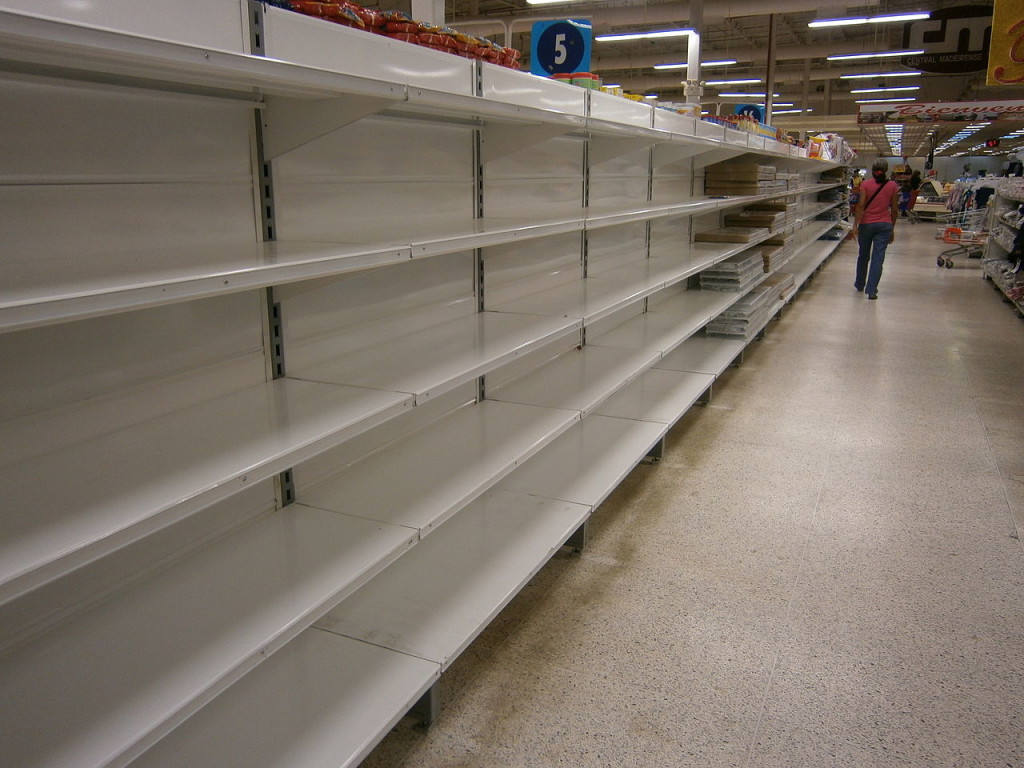
Food becomes scarce, increased number of empty shelves
More competition for goods and services
Prices skyrocket until even the basics are no longer affordable
Restrictions on purchases set by retailers or government agencies
A black market develops
Due to shortages and regulations, you can’t even stock up on the basics anymore
Warning Sign #4: The financial markets go crazy
Days of uncertainty that spiral out of control and cause panic among people
For example, a stock market drop of 30% or more of the Dow Jones Industrial Average (DJIA) in less than 10 days
beginning of “bail-ins” (depositors’ funds are used to pay off insolvent banks)
collapse of the bond market
Warning sign No. 5: Unrest breaks out
Plundering/Unrest spreads to nearby cities
Crime and lawlessness increase and reach a “turning point”
Racist violence
Class violence
As you can see, these 5 warning signs signal the end of easy or quick preparation.
I don’t have a crystal ball to predict if any of these warning signs will occur or when they might happen.
But all 5 signs are effortless to imagine. Since Corona and the Ukraine war, you are no longer in the realm of crazy conspiracy theories.
We have all seen too many of these theories turn out to be 100% true.
Ultimately, it all comes down to your attention. Awareness of such events is ESSENTIAL.
It is also essential to trust your gut feeling in all of this. If you or someone in your family or group “doesn’t feel good” about what’s coming, that should also be a valid triggering event.
Is it ever too late to prepare for a crisis?
It is never too late to prepare for a crisis. Even if you have been in denial or have tried to avoid the subject altogether, it is time to prepare for the inevitable.
You do not need a lot of time or money to do so. Simply start with a few small preparations and you can get started.
There are many things you can do to prepare yourself and your family for an emergency. One of the most basic steps you can take is to ensure that your home has enough water supplies and food supplies in case of an emergency.
But preparing for a crisis is not just about stocking up on food and water. It is also about having the mental and physical ability to cope with the stress that comes with a disaster.
Summary
I have shown you my own five warning signs of when it is too late to prepare. Compare them with your thoughts and then write to me in the comments.
I hope my thoughts give you inspiration and help you refine your preparation plans so that we never have to deal with any of these types of events.
But I will never stop preparing for all eventualities!
I want to present you one of the most interesting sites, where you will see new articles daily! www.321gold.com
The prospect of a recession can be tremendously upsetting for many people. In fact, it’s been over more years since Americans endured one of the worst recessions in history: the Great Recession of 2008, brought on by the housing market’s collapse.
A recession is a prolonged era of several months to years during which a country or region suffers from a weak economy, high inflation, and lowered purchasing power of consumers.
In financial terms, a country is going through an economic recession when the GDP (gross domestic product) is low, the unemployment rate is high, retail sales decline, and the manufacturing metrics fluctuate for an extended period.
What Causes Recessions?
There are clear and ambiguous causes of a recession. Numerous economists would differ over particular recession reasons and come up with explanations for why they might happen.
There are a few traits that most recessions frequently share, even though no two recessions are the same.
Recessions can have a variety of causes, such as:
Excessive debt
Stock market crash
High deflation
Technological change
High Inflation
Asset bubbles bursting
Sudden economic shock
Post-war slowdown
What Happens During A Recession?
Everyone can experience anxiety during recessions, especially when millions of people may lose their jobs as unemployment rates grow throughout the economy’s various sectors.
It may have a snowball effect, making things worse before they get better for the economy.
You can anticipate the following items during a recession:
Rising Unemployment
An increase in unemployment rates is one of the first things to happen during a recession. It is because firms frequently have to reduce spending during recessions, and hiring staff is sometimes one of the first costs.
Government Debt Rises
As the government works to stabilize the economy with stimulus packages and aid, government debt rises as businesses lay off employees and those employees apply for unemployment benefits.
Less Spending
Losing a job has an impact on an employee’s income. Consumers are less likely to spend when they have little or no pay, which harms businesses and stocks by reducing the amount of money entering the economy.
Assets Lose Value
Many assets, particularly stocks and homes, have the potential to depreciate, which might cause investors and homebuyers to lose money or possibly go bankrupt.
How Does The Recession Affect The Citizens?
As unemployment rates climb during a recession, you can lose your job.
Because more individuals are unemployed, it becomes much tougher to obtain a new job, and you are more at risk of losing the existing one. Those with their jobs intact may experience reduced salaries and/or benefits.
They are not even in a position to negotiate for a pay rate increment.
During a recession, you may even suffer from heavy losses in your stocks, bonds, real estate, and other forms of investments. That, in turn, lowers your savings and disrupts your retirement plans.
Even worse, you can risk losing your home and other possessions if you cannot pay your expenses due to losing your work.
In a recession, business owners experience lower sales and sometimes even bankruptcy. The government finds it challenging to keep everyone solvent amid a severe downturn.
What Are The Signs Of Economic Recession?
Recessions don’t necessarily follow a pattern. However, some indicators can predict a recession.
Knowing these indications can even help you understand how to prepare for a downturn so you aren’t stuck fighting to make ends meet when the economy drops.
Check out the top recession warning indicators listed below:
Rising Unemployment Rate
Typically, an increasing unemployment rate is an indication of an impending recession.
High unemployment rates will cause consumers to steadily lose purchasing power, which will finally cause demand to decline.
Declining Property Sales
In a healthy economy, consumer spending—including the sale of real estate—is frequently high. However, the rate of property sales declines during an ongoing economic fall—in fact, it serves as a telltale warning sign of financial instability.
Inverted Yield Curve
It measures the correlation between the short-term interest rates and long-term fixed income rates per the US Treasury.
An inverted yield curve indicates an impending economic recession when the interest rates on short-term securities are higher than those on long-term deposits.
Poor Stock Performance
Because of the stock market’s tremendous volatility and the fact that declines are not uncommon, it’s not always a reliable signal of a recession.
A prolonged bear market, however, might trigger a recession if low stock performance persists for a long time.
Increased Inflation
Inflation can signify that demand increases because of rising wages and a strong labor force.
On the other hand, high inflation causes people to minimally invest in goods and services due to weakened purchasing power, bringing down the demand in this sector.
Increase In Credit Card Debt Defaults
Spending by consumers stimulates the economy.
However, while using credit cards, consumers risk getting into debt if interest rates are high, which increases the likelihood of defaults and bankruptcies. A recession may start when this occurs.
Consumers’ Loss Of Trust
Without consumers, the economy would collapse. The economy’s main driver is the consumer. They may be more likely to spend less when they lose confidence in the economy because they are under financial strain. A slowdown in consumer expenditure may indicate a potential recession.
The Bottom Line
Recessions can cause turbulent periods of uncertainty and dread. Navigating a recession can be difficult for consumers and businesses due to higher unemployment rates, company closures, and decreased consumer confidence in the market.
With this knowledge, you may create a strategy to weather the effects of the most recent recession and upcoming ones to maintain the health of your finances.
Some advice includes reducing wasteful spending, preserving your own food, repurposing old items and building an emergency fund to help you overcome times of financial difficulty.
I want to present you one of the most interesting sites, where you will see new articles daily! www.321gold.com
Recent world crises and the resultant weakening of the global economy has left many fearing the worst. There is talk of a global recession, or worse yet, a complete collapse of the economy.
While it is impossible to say whether such a severe economic downturn is upon us, understanding how to survive a potential economic collapse (whether now or in the future) could save you and your family when the times get tough.
WHAT IS AN ECONOMIC COLLAPSE?
An economic collapse is defined as a severe breakdown of the economy at a national, regional, or territorial level. It is a broad term used to describe bad economic conditions that are not part of the ordinary business cycle of expansion and contraction.
An economic collapse usually signals the start of a significant economic contraction, recession, or depression, which can last months or even many years.
All Americans Will Lose Their Home, Income And Power By May 27, 2025
Watch the video below!
WHAT CAUSES AN ECONOMIC COLLAPSE?
There are various events and circumstances that can trigger an economic collapse, which makes it difficult to attribute it to a single cause. An economic collapse can happen suddenly as a result of an unexpected crisis such as the onset of a war, natural disaster, political unrest, and various other events.
It can also be the culmination of a series of events or ongoing circumstances which signal a weakening and fragility of the economy.
WHAT ARE THE RESULTS OF AN ECONOMIC COLLAPSE?
The results of an economic collapse are equally difficult to predict, as the ripple effects of a severe economic downturn are widespread and impossible to accurately track. Some general and obvious results of an economic collapse are:
A rise in job loss and unemployment.
Loss of value of investment markets which results in the average investor losing significant value in their portfolio.
Slowing of production, and therefore less new innovation, fewer startups, and so forth.
A potential hyperinflationary environment in extreme cases where the cost of basic items increases dramatically.
An increase in poverty which can also lead to crime, civil unrest, and various other social issues.
Widespread business failures leading to shutting down of companies and laying off of staff.
HOW TO PREPARE FOR AN ECONOMIC COLLAPSE
Preparation is key in order to successfully survive an economic collapse. It is important to not become too complacent when the good times are rolling, as you never know when the situation may change for the worse.
Convenience Store Owner Threatens Man At Gunpoint After Hitting His 5th Lottery Winner In 3 Months
Follow these practical guidelines to ensure you are well prepared :
1. KEEP AN EMERGENCY FUND
Having liquid cash safely deposited in a savings account with your bank can be a lifesaver in times of economic crisis. First of it all, it will retain its value while market linked assets such as equities deteriorate.
Secondly, it will provide you with the best liquidity so that you can quickly access your money during a time of extreme need. It is recommended to keep at least 3 – 6 months’ worth of expenses in an emergency fund.
2. BECOME DEBT FREE
The additional pressure of carrying debt if there is an economic collapse can put you in an extremely difficult situation. You should start working towards becoming debt free today.
This will reduce your monthly expenditure and will keep you from landing up in a precarious position should you lose your job in the future. Begin by paying off your highest interest debt such as credit cards and other short-term loans, and then move onto lower interest debts such as house mortgages.
3. CREATE ADDITIONAL INCOME SOURCES
The risk of losing your primary job is elevated during an economic recession or collapse. You can mitigate the negative consequences of this by creating additional sources of income now before the bad times are afoot.
We live in an age of boundless opportunities to make money on the side remotely. You can start your own web business or do freelance consulting work.
Even if you have a great job, it is well worth diversifying your income sources and establishing other ways to sustain yourself. Even a few hundred dollars a month can make a big difference in a time of need.
4. REDUCE UNNECESSARY SPENDING
Most people tend to spend recklessly when times are good and then suddenly try to adjust when there is a downturn or they lose their job. This is a big mistake for two reasons:
Firstly, if you make overspending a habit in your regular life, it becomes extremely difficult to adjust your spending habits when you need to do so. If you practice living with less even during the good times, it will be much easier during a financial squeeze.
Secondly, wasting unnecessary money on a regular basis means you have less to put into savings each month. We spoke about the importance of having an emergency fund, and living off less now can help you keep that fund growing for when the rainy day comes.
5. MAINTAIN A DIVERSIFIED INVESTMENT PORTFOLIO
Entire markets and industries can deteriorate during an economic collapse, while others might be more protected. Maintaining a diversified investment portfolio will ensure that you are not overexposed to one specific asset class, sector of the economy, or graphical region.
While your overall asset value might still decline significantly, you will be more protected from the risk of complete financial ruin if you keep your eggs in different baskets.
6. STOCKPILE FOOD AND OTHER SUPPLIES
During severe economic collapses, like the one experienced by Venezuela in current times, or the Great Depression of the 1930s, even things like basic food and other supplies can be in shortage.
Even if supplies are available, a hyperinflationary environment can make basic necessities completely unaffordable. It is always a good idea to keep a stockpile of food and other essential supplies (e.g., medicines, toiletries, paper supplies, tools, etc.) that can last you more than a year in tough times. This may also protect you from other crises such as natural disasters, war, etc.
One step further is to learn to grow your own food. If you have a small garden in which you could plant a few crops, start learning how to prepare the soil and grow some basic fruit and vegetables. Not only will it make you less reliant on a potentially failing economic system, but will be an extremely rewarding process too.
Watch this video below to find out the great secrets hidden by the government.
7. LEARN BASIC SKILLS
Basic DIY skills are invaluable during an economic crisis. Instead of paying someone to repair your car or fix your house, you can do it yourself for free. You could even earn some additional income by providing these services to others. Examples of basic skills that can save you money and bring great fulfilment during difficult times include things like:
Baking bread and making other foot items from scratch (e.g., pickles, jams, fermented vegetables, yoghurt, etc.)
Growing your own vegetables and herbs
Sewing
First aid and caring for a sick child
Mechanic work such as fixing cars, motorbikes, bicycles, etc.
Building and repairing household items such as furniture and shelves
Basic electrical and plumbing work
8. ESTABLISH STRONG CONNECTIONS
One of your most valuable resources are the people who are close to you. When times are difficult, it is important to work together with close friends and family to overcome the challenges.
You will have a much better chance of making it through compared to trying to tough it out alone. Start building strong relationships with those who are close to you, like neighbours, friends, and family. Having the mutual understanding that you can depend on each other in difficult times is a great comfort.
You can also practice the habit of mutual exchange (i.e., bartering), where you offer your skills in exchange for something that the other can give. This can help you circumvent the traditional economy and help you move more towards the “sharing economy”. This also reminds us of the importance of learning as many basic skills as possible, so that you may help others in need and receive their support in kind.
Hopefully you will be well prepared to deal with an economic collapse when it comes having followed the above steps. However, it is impossible to perfectly predict how a collapse in the economy will play out, and you will need to deal with the situation that is presented to you at the time. Here are a few additional steps you may need to take when you are actually faced with an economic collapse:
1. DISCUSS THE SITUATION WITH YOUR HOUSEHOLD
The very first thing you should do is sit down with the members of your household and discuss the situation with them. Go over your finances together and work together to come up with a plan of how you will navigate these difficult times together.
It is important that you are all on the same page, but also to know that everyone has their own approach and attitude to dealing with money. How you resolve these differences and work together will have a big impact on your ability to deal with the challenging times, and strengthen your relationships in the process.
2. FURTHER REDUCE EXPENSES AS NEEDED
In preparation for a recession, you would have practiced living off less. When you are faced with an actual economic collapse, you may have to further adjust your spending habits to be able to cover your monthly expenses. In most cases, it is quite possible to maintain a good quality of life while cutting out unnecessary expenditures. Start by cutting out spending on all the things which are not necessary for you to live on, and finding ways to reduce the costs of the things you do need. Some ways that you may be able to reduce your spending include:
Cut out discretionary spending (i.e., stop buying things you can do without) like luxury items, new clothes that you don’t need, new gadgets, etc.)
Reduce transportation costs by carpooling, using public transport, walking or cycling, etc.
Reduce housing costs by moving to a cheaper area, subletting out part of your house, or even moving in with family until your financial situation improves.
Reduce food costs by cooking at home instead of going out to eat. Also refrain from buying too many luxury food items that you don’t really need and instead buy simple, healthy food.
3. GET MUTUAL SUPPORT FROM FRIENDS AND FAMILY
We spoke about the importance of building strong relationships when preparing for an economic collapse. Well, here is the time to lean on the solid bonds you have created by not being afraid to ask for support. You should also help and share your skills and resources with others who are in need.
4. PROTECT YOUR HOME AND FAMILY
Extreme economic collapses and recessions can lead to social degradation such as more violent crime, petty theft, scams, and so on. This has been clearly demonstrated in Venezuela and is one of the reasons why so many citizens have fled the country. You may need to take action to safeguard your home and protect your family from criminals and other dangers during a severe recession.
5. KEEP EARNING
If at all possible, make sure to keep the money flowing in. If you have a job, go the extra mile to prove that you are a valuable employee. You should be seen as the last person to be laid off in your employer’s eyes.
First 5 Places In America You Don’t Want to be When Society Collapses!
In the meantime, keep networking and working on generating alternative income streams so that you are not left stranded without any income if your employer does need to shut down.
6. DON’T STOP ENJOYING LIFE
Finally, and most importantly, don’t allow yourself to be ruled by fear and sadness. There is no reason to stop enjoying and appreciating life just because you are faced with economic difficulties.
Be grateful for the things you do still have and keep having fun in the ways you can with those you hold dear. You should try to see the situation as a challenge on your creativity and flexibility, and encourage friends and family to come up with inventive ways to have fun without spending money all the time.
Of all the disasters which can face a society, an economic collapse is one of the most challenging to deal with. Due to its nebulous nature and widespread impacts, it is very difficult to escape its effects. Being adequately prepared to deal with a sever economic downturn before it arises, and knowing how to respond when you are faced with it, is vital in order to make it through intact.
You will probably have to accept that you will be impacted one way or another, but the severity can be greatly reduced with the right approach. Most important of all is to continue living with joy and hope in the midst of the difficult times, and not get sucked into needless fear and anxiety.
Around 50 percent of billionaires have some sort of “apocalypse insurance,” LinkedIn co founder Reid Hoffman said. The insurance can range from an elaborate bunker to a farm in New Zealand.
How do billionaires prepare for the apocalypse?
More than half of the billionaires I know own private bunkers that they intend to use in the event of an apocalyptic event, Reid Hoffman, one of the founders of the LinkedIn social network, once admitted.
Especially since the beginning of the pandemic, and then due to the outbreak of war in Ukraine, now also in Israel, more and more people are interested in ‘Preppers’, a ‘movement’ that has existed for decades.
The average citizen can save some money, get some cans, “secure” the basement… Those with slightly thicker pockets will perhaps install some kind of bunker underground that can accommodate those closest to them. Always and everywhere ready.
If money is not your problem, but you fear the apocalypse, then there is a whole other world.
Some of you have already heard of bunkers with luxury apartments where you can wait until things are safe on the surface, but they are popular with millionaires. Billionaires don’t share a bunker with hundreds of other families. But a bunker doesn’t mean anything to you if you’re stuck somewhere in a meeting… You need to get to a safe zone somehow. One of the directors of a large investment fund admitted in an anonymous interview to the New York Times that 24 hours a day, wherever he is, there is a helicopter and a pilot near him ready to take him to his underground bunker.
Steve Huffman, one of the founders of Reddit, furnished his home in San Francisco with guns and motorcycles, and also had vision surgery to increase his chances of survival in the event of an apocalypse.
Yishan Wong, the one-time director of Reddit, underwent the same surgery.
‘System collapse brings chaos’
The former director of Yahoo, Marvin Lao, started practicing archery because he is afraid of the apocalypse, Antonio Garcia Martinez, one of the former key people of Facebook, bought a large island equipped with solar panels, where he keeps a large amount of weapons… And these are only those who admitted that preparing for something…
As Hoffman said, there are more reasons to prepare, The New Yorker writes. They’ve been working on technologies that will replace a lot of human labor for a long time, so they’re afraid that the masses won’t attack them.
Another reason is political unrest. A system crash would cause chaos,” Hoffman said.
New Zealand utopia
One location is particularly popular with billionaires from all over the world – New Zealand. They bought up so much territory on which they built their underground bunkers, that the New Zealand government had to change its laws.
“New Zealand is already a utopia,” said Peter Thiel, an entrepreneur whose fortune Forbes estimates today at $6.1 billion.
Back in 2011, he managed to ‘buy’ New Zealand citizenship. He also said he had an ‘exit route’ that could lead him to his New Zealand estate, but, as expected, he declined to reveal details.
And why New Zealand?
Well, according to Business Insider, Thiel was inspired by James Dale Davidson’s 1997 book How to Survive and Succeed in an Apocalypse. In it, New Zealand was mentioned as an ideal location for surviving the apocalypse. The book is about a group of individuals who would hide from the collapse of society, wait for the chaos to pass, and then set out to build and rule again.
I want to present you one of the most interesting sites, where you will see new articles daily! www.321gold.com
In today’s uncertain economic climate, many Americans are growing increasingly concerned about the future. Recent surveys show that a third (33%) of Americans fear that a total economic collapse could be on the horizon, a collapse that could quickly spread across the nation, causing widespread panic and chaos.
The Looming Economic Threat
High Inflation and Interest Rates: Americans are demoralized by persistent inflation and high interest rates. Joanne Hsu, the director of the University of Michigan’s consumer sentiment survey, noted that many Americans have abandoned saving for traditional long-term goals like homeownership and retirement. Instead, they are spending money now, attempting to maintain their lifestyle despite economic pressures.
Consumer Sentiment at a Low: The University of Michigan’s survey showed consumer sentiment plummeting to a six-month low in May, driven by high inflation and rising interest rates. This decline in confidence suggests that consumers are reaching their breaking point, reining in spending after months of elevated inflation.
Retail Sales and Economic Slowdown: Recent data from the Commerce Department highlights that retail sales have stagnated, with almost no growth from March to April. This stagnation is a stark contrast to the 3% surge in retail sales a year ago. While some sectors saw slight increases, such as gas stations and food stores, others, like online retail, experienced significant declines.
Debt and Delinquency: Americans are increasingly relying on credit to support their spending, with credit card debt reaching all-time highs. Delinquency rates are also rising, indicating that many consumers are struggling to keep up with their financial obligations. The strain is particularly evident among younger generations and those in low-income neighborhoods.
Unemployment and Job Market Woes: The labor market, while still relatively strong, is showing signs of stress. The nation’s unemployment rate ticked up last month, and the number of people applying for unemployment benefits rose to its highest level since August. This weakening job market is causing consumers to act with more caution.
Economic Crisis by the Numbers
Out of Control Inflation: It now takes at least $177,798 for a family of four to live comfortably in the U.S. A recent study highlighted that in the most expensive states, families need nearly $300,000 to maintain a comfortable lifestyle, while even the least expensive states require over $100,000. The average annual salary in the U.S. is $59,428 as of May 2024.
Record Household Debt: Tens of millions of Americans are trapped in an endless cycle of debt. U.S. households are currently $17.69 trillion in debt, with household debt hitting a new record in the first quarter of this year. This surge includes a $184 billion increase from the previous quarter, primarily due to mortgage balances rising to $12.44 trillion. Auto loan balances have also climbed to $1.62 trillion, while credit card balances remain near a record high at $1.12 trillion.
The Wealth Gap: The gap between the rich and the poor is larger than ever, leading to growing frustration. The wealthiest 10% of Americans own a record high 93% of all stocks, while the poorest 50% own just 1%. When considering all forms of wealth, the bottom 50% of the U.S. population holds only 2.6% of the total wealth. This disparity has caused tens of millions of Americans to lose faith in the system, with politicians attempting to pacify them with handouts.
All Americans Will Lose Their Home, Income And Power By March 25, 2025
Preparing for the Worst: Survival Tips for Economic Collapse
Given the current economic climate, it’s important to prepare for the possibility of a large-scale financial crisis. Here are some practical tips for surviving an economic collapse:
Stockpile Essentials: Ensure you have a sufficient supply of non-perishable food, clean water, and essential medications. Aim for at least a three-month supply to weather disruptions in supply chains.
Secure Your Home: Increase home security to protect against potential crime surges during economic instability. This includes reinforcing doors and windows, installing security systems, and establishing a neighborhood watch program.
Diversify Your Assets: Convert some of your savings into physical assets like gold, silver, or other tangible goods that retain value during economic downturns. These can provide a buffer if cash loses value.
Learn Bartering Skills: In a severe economic collapse, traditional currency might become worthless. Learn bartering skills and start stockpiling items that can be traded, such as alcohol, batteries, and basic tools.
Develop Self-Sufficiency Skills: Learn essential skills like gardening, hunting, and basic medical care. These skills can reduce your reliance on external systems that might fail during a crisis.
Establish a Community Network: Build strong relationships with neighbors and local community members. A tight-knit community can offer mutual support and resources during tough times.
Create a Bug-Out Plan: Have an evacuation plan in case staying in your current location becomes unsafe. This includes knowing multiple routes out of the area and having a pre-packed emergency kit (bug-out bag) with essentials.
Maintain a Cash Reserve: While diversifying assets is important, keep some cash on hand in small denominations. In the immediate aftermath of a crisis, cash can still be useful for essential transactions.
Invest in Self-Defense: Economic downturns can lead to increased crime. Ensure you have the means to protect yourself and your family, whether through self-defense training or legal ownership of firearms.
Stay Informed: Regularly update yourself on economic news and trends. Being informed can help you anticipate changes and react swiftly to new developments. Additionally, consider getting a ham radio license. Ham radios can be a vital communication tool during any collapse where traditional communication methods might fail.
Have a Backup Power Source: In case of extended power outages, invest in alternative power sources such as solar panels or generators to keep essential appliances running.
Prepare for Medical Emergencies: Stock up on first aid supplies and over-the-counter medications. Learn basic first aid and consider taking a course to be better prepared for medical emergencies.
Build a Food Garden: Start growing your own food to reduce dependency on grocery stores. Even a small vegetable garden can provide significant sustenance.
Reduce Unnecessary Expenses: Cut back on non-essential spending to save money and redirect funds towards critical supplies and debt reduction.
Invest in Durable Goods: Purchase durable goods that will last through tough times, such as quality tools, clothing, and home repair supplies.
Create a Family Emergency Plan: Ensure every family member knows what to do in various emergency scenarios, including how to contact each other and where to meet if separated.
Stockpile Fuel: Keep extra fuel for your vehicle and generator. Fuel shortages are common during economic collapses and can hinder your mobility and power supply.
Prepare for Economic Migration: Be ready to relocate if your area becomes unsustainable. Have a plan for where you might go and how you’ll get there.
Develop Mental Resilience: The stress of an economic collapse can take a toll on mental health. Develop strategies for coping with stress and maintain a positive outlook to stay strong during difficult times.
Preparing for an economic collapse can be challenging, but it is essential in today’s uncertain world. By having a plan, diversifying your investments, stockpiling essential supplies, learning new skills, and paying off debt, you can increase your chances of surviving and thriving during a financial crisis.
First take a look at one of the most shocking videos in the world! This video actually shows us what the secret of the Trump family is related to their expressive health!!! –FULL VIDEO HERE
Back in 1949 the world was still recovering from World War II. The Korean War wouldn’t start for another year, but George Orwell was already focused on the dangers of communism and the totalitarianist government it builds. World War II was started by totalitarian governments; but worse than that was how such governments treat the citizens living under their control.
In his book 1984, the government, encapsulated in the persona of “Big Brother,” knew everything about everyone; where they were, what they were doing and even what they were thinking much of the time. This was used to keep control of people to an extreme that even the now defunct Soviet Union couldn’t reach. Yet with modern technology, the reality of such a government could very well be forming around us and we don’t even see it happening.
As we know, the government is actively spying on every one of us. That’s the essence of Edward Snowden’s message, since he left the employ of the NSA. While that spying is intended to help prevent terrorism, we’ve seen some in government be awfully free in their use of that term. One can quickly find themselves labeled as a terrorist if the political winds blow the wrong way.
The US Army’s Forgotten Food Miracle and 126 Superfoods That You Can Store Without Refrigeration for Years
The video below will shock you because you will be among the first to watching this secret!
On top of the NSA, big tech is in cahoots with government in a number of ways, most especially with providing information to law enforcement officers, as they seek to solve crimes. But that same information which is being used for the good of tracking down and convicting criminals can very well be used against the rest of us. After all, any of us can become an instant felon, simply by Congress passing a law making something that has been legal, suddenly illegal.
An excellent case in point is the current push by Democrats to restrict our Second Amendment rights. Should they do that, then millions of law-abiding citizens will suddenly be faced with the option of turning in valuable firearms or hiding them from the government. Will the government hunt down those who haven’t turned in their guns, using the same tools they are currently using to track down criminals? Only time will tell.
So, what can we do to keep the government from having an idea where we are and what we are doing? To start with, we need to understand that the government has multiple means of tracking us, not just one or two. That means we’re going to have to defeat them all, if we expect to protect ourselves from electronic spying.
Here are a few places to start.
Use a Burner Phone
The easiest way for the government to track any of us is through our smartphone. We really don’t have a handle on everything that our phones are doing in the background, while we’re not looking.
Yet there’s nearly constant communication between our phones and the local cell phone tower.
It’s clear that the communications we have through our phones is readily available to the NSA and others.
You can even pay online services to do a little spying on family members, seeing their text messages, who they’ve talked to, what they’ve looked at online and where they’ve been. If you and I can do this, then you can be sure the government can do more.
Shut Off GPS Tracking
One of the most common ways our phones help the government keep track of us is through the phone’s GPS. Google and Apple keep track of our every move through that part of the phone.
If you go to Google Maps and click on your timeline in the menu, it will show you everywhere you’ve been, for the last several years.
This feature alone could put you in danger if you just happen to be in the same place that a crime was committed. While that alone wouldn’t be enough to convict you; it would be enough to make you a suspect.
And that’s just one example of how the GPs could be used against you. What if they want to track you down because it has been reported that you said something against the government; they’d have no trouble tracking you down.
Clean Out Internet Browsing Activity and Cookies
One of the big ways that companies use the internet to keep tabs on us is through our browsing history and the cookies downloaded to our computers by the various websites we visit.
A lot can be learned about who we are and what we do by looking at that. That’s why major corporations invest so much in data mining, looking for people to buy their products.
Haven’t you seen how you can look at something online, then find advertisements for the same sort of product showing up in your Facebook feed and just about any online article you read?
That information is also admissible in court as a means of defining your character. Government prosecutors could build a totally false narrative about you as a terrorist or planning mass murder, backed up by no more than the websites you have visited. Simple curiosity can and will be used against you, perhaps even in a court of law.
Get Rid of Alexa, Siri, and other Voice-recognition Assistants
One of the key elements of Orwell’s imaginary society in 1984 was that the government was tracking what everyone was doing through their television sets.
Yet today, rather than the government having to hide that capability in our TV sets, we buy devices and use them in our homes.
Those devices track everything we do, listening in on our conversations, so that they can “serve us” better.
Employees of those companies have come forth, confessing how employees at big tech companies listen in on people’s private lives.
If they’re doing it, then the government has access to it too. Remember, everything that device does goes over the internet and the NSA is tapped into that thoroughly.
EXPOSED: Free Power Secrets! Revealed: The century-old device making solar panels obsolete. Embrace efficient, sustainable energy. Open the Gates of Innovation!
Create Alternative e-Mail Accounts for Memberships
Our online identity is largely tied into our e-mail account.
Pretty much everything you sign up for, from buying dog food to looking at different sites, involves creating an account using that e-mail address. That online presence can lead government agents to look into all areas of your online existence.
The solution is to create multiple ‘personas,’ utilizing them for different things.
In order to do this, you’re going to have to provide false information at some point, as pretty much all e-mail services try to verify that you’re a real person and that you’re who you say you are.
Create Site-specific Passwords
Passwords are the bane of modern existence, with more and more websites requiring a membership and password for access. Even those that don’t are likely to require you setting up an account to buy anything.
The information attached to that account Is just one more source for the government to look at.
Most of us pick a password and use it for as much as we can. The problem with that is that once someone figures out your password, they can try it on a variety of different platforms, trying to access your account and see what you’ve been doing.
Four different products, bought from different vendors, could easily become the parts of a bomb in some investigator’s imagination.
Avoid JavaScript
JavaScript abounds throughout the internet, having been created to make it possible for web pages to be interactive.
Unfortunately, it’s full of security holes, having been created many of the more modern modes of hacking were invented. Today, breaking into JavaScript is considered small potatoes by hackers.
Keep in mind that the government employs hackers too; they’re called “white hat hackers,” and while that term was originally coined in regards to people who were trained in hacking in order to play the “red team” in online security simulations, it’s used for any hacker who does their work as part of “legitimate” business.
Of course, as far as the government is concerned, anything they do is legitimate, regardless of what the law says.
Encrypt e-Mail
We’ve already discussed how the NSA is recording and reading every bit of communications that flows across the internet. That includes your e-mail. They know if you’re making an inquiry about buying a new home, having an online affair or discussing business secrets.
According to Snowden, some of those government employees are looking over people’s shoulders, watching their lives as if it were a live soap opera.
The world’s best code breakers work for the NSA and the majority of the world’s supercomputers are housed in their facilities. So the idea that they can’t break into an encrypted e-mail is ridiculous. Nevertheless, encrypting still makes it harder, meaning that they’d have to have a pretty good reason to bother.
While not perfect, encrypting your e-mail at least protects you from casual view.
Avoid Online, Credit Card and Debit Card Purchases
Probably one of the earliest ways that law enforcement used the benefits of the internet to solve crimes is through tracking credit card use. We’ve all seen cop shows where they tracked a suspect by looking at where they were using their credit card. That’s child’s play for the government today.
Of course, the government isn’t the only one tracking our online purchases, although I don’t think that companies have the ability to get into the records of our credit and debit card usage like the government can.
Either way, it can provide the government with a lot of information that you might not want them to know. Better to use cash and keep your transactions anonymous.
If you’ve got to buy things online, then use prepaid Visa and MasterCard gift cards, not associated with any bank account you have.
You can buy these easily at the checkout in many major stores, in denominations up to $500. That makes it possible to make a lot of purchase anonymously.
Then have the item shipped to an address that can’t be readily traced to you, like a PO box that you rented using a false address.
Don’t Fill Out Profile Data
One of the easiest ways for the government, criminals, companies and just about anyone else has of getting information about any of us is through our online profiles.
Social media has encourages people to live an open life, with everything about them becoming common knowledge. But that information can become dangerous if it gets into the wrong hands.
Save that information, so that you can give it to who you want to, rather than whoever wants it.
While it might not be quite as “neighborly” in the online community, holding that information back could help protect you from the government or from criminals.
One Final Thought
Doing the things I’ve mentioned in this article are likely to have unintended consequences. That is, they’re likely to make you look suspicious to anyone investigating you.
But then, if you haven’t done anything wrong, it really doesn’t matter how suspicious they think you look. They still have to find evidence, not suspicion, in order to take any action against you.
Your ready answer to this suspicion should be that you are protecting yourself from criminals. Even government agencies recommend taking precautions for that reason, so by stating that, you’re throwing the onus back on them. If they don’t like that, it’s just too bad.
WHAT HAPPENS NEXT? THREE WEEKS UNTIL THE BIGGEST SHIFT IN GLOBAL POWER
The clock is ticking. Trump has given NATO and Ukraine a choice: Sign the peace deal, or lose America forever.
Here’s what to expect:
✅ Europe will beg and plead for Trump to reconsider – but he won’t. They had years to fix this. Now, they’re out of time.
✅ The mainstream media will go into full meltdown mode. They’ll scream about “abandoning allies” and “giving Putin a victory.” But the truth? Trump is securing peace, not war.
✅ Globalists will panic as their war machine collapses. Without America’s endless cash and firepower, NATO’s ability to wage war is finished.
✅ America wins! Finally, no more endless wars draining our economy and resources. We can focus on our own country instead of fighting Europe’s battles.
You can access the entire video right here, or by watching it below!
Source: askaprepper.com by Rich M.
I want to present you one of the most interesting sites, where you will see new articles daily! www.321gold.com