An empirical analysis of the systemic disintegration of real monetary reserves and the critical moment when the majority will no longer afford financial protection
We stand at the precipice of a monetary fracture unprecedented in modern history, and the signs are so glaring that only the ideologically blind refuse to acknowledge them. Central bank gold reserves in the Western bloc have reached critical thresholds while real physical demand has outpaced global extraction capacity by a margin that deepens exponentially with each fiscal quarter. Data published by the World Gold Council in their Q2 2025 report reveals a terrifying reality: annual refined gold production has stagnated at approximately 3,600 tonnes for the past decade, while official central bank purchases exploded to 1,089 tonnes in 2024 alone, marking the fourth consecutive year of acquisitions exceeding 1,000 tonnes. China, Poland, Singapore, Turkey, and the Czech Republic are absorbing physical quantities that should have circulated in the open market, transforming the yellow metal into an asset that retail investors will soon find functionally inaccessible regardless of their fiat currency holdings.
The concentration of gold ownership has reached levels not seen since the Bretton Woods collapse, with the top fifteen central banks now controlling over 52,000 tonnes while commercial inventories available for private investment have contracted by 34% since 2020. The London Bullion Market Association reported in June 2025 that deliverable gold in London vaults has fallen to 8,200 tonnes, the lowest level since records began in 1999, while outstanding gold-backed derivatives exceed physical availability by a leverage ratio of 92:1. This is not a market anomaly; it is a structural transformation where the window for physical accumulation is closing at a velocity that renders traditional investment timelines obsolete. By 2030, projections based on current extraction rates and central bank acquisition trajectories indicate that freely available gold for private purchase will have contracted by an additional 60-70%, pushing prices into stratospheric ranges where only institutional and sovereign entities can participate.
Silver presents an even more alarming scenario because this metal enjoys a unique dual status in the global economy: it is simultaneously historical money and an essential component in green technologies, photovoltaic panels, electric vehicles, medical applications, and 5G infrastructure. The Silver Institute confirmed in their 2025 annual report that the structural silver deficit reached 237 million ounces in 2024, the largest supply-demand imbalance in modern market monitoring history, and preliminary Q1 2025 data suggests this gap is widening toward 280 million ounces annually. More disturbing, audit reports from LBMA and COMEX depositories show that coverage ratios for physical delivery against futures contracts have dropped below 12%, meaning that for every physical ounce there are now over eight paper claims demanding delivery. When this fractional reserve pyramid collapses, price discovery will detach from industrial utility and enter a phase of crisis allocation where the metal becomes unobtainable for ordinary investors regardless of their bank account balances.
The commercial banking system and custodial institutions have already implemented mechanisms restricting access to physical metals, masked under the label of “risk management.” Throughout 2024 and the first half of 2025, major investment banks raised storage premiums for physical gold by 45-70%, introduced minimum purchase limits that exclude investors with capital below $500,000, and extended delivery waiting periods to 10-14 weeks. These are not market coincidences but represent brutal natural selection through which the middle class is systematically eliminated from real asset ownership. Central banks do not purchase gold at market prices because they are speculating; they purchase because they know something the broader public still refuses to accept: the current debt-based monetary model is approaching a terminal inflection point where restructuring will be imposed by force majeure rather than democratic consensus.
Data regarding global debt published by the Institute of International Finance reveals that the global debt-to-GDP ratio has surpassed 336%, and sovereign debt service now consumes over 19% of fiscal revenues in developed economies. In this context, gold and silver are no longer mere speculative instruments but become the only real measures of relative value that have survived millennia of failed monetary experiments. What makes the current situation distinct from previous historical cycles is the speed at which technology and automation are eliminating the need for traditional monetary maneuvering masses. Central bank digital currency projects are advancing in over 135 jurisdictions simultaneously, and the architecture of these systems includes mechanisms for programmed currency expiration, holding caps, and geographical usage restrictions. These instruments are not designed to coexist with private ownership of precious metals but to replace it completely with total control over individual economic flows.
Independent analysts monitoring physical precious metals flows through logistical hubs in Dubai, Singapore, Zurich, and increasingly Tbilisi and Astana report a qualitative shift in institutional buyer behavior. Purchase orders no longer target hundreds of ounces but multi-tonne allocations, and storage requirements in jurisdictions non-aligned with Western interests have increased by 340% over the past eighteen months. Nation-states with traditions of accumulating dollar alternatives are no longer seeking merely monetary gold but also industrial silver, platinum, and palladium, creating a competitive vacuum that extracts metals from circulation available to small investors. When a sovereign wealth fund with $900 billion in assets decides to allocate just 2% of its portfolio to physical gold, it absorbs the equivalent of 18% of annual global production, leaving the retail market in desperate competition for liquid remnants.
The optimal accumulation window is not abstract theory but mathematical reality dictated by the marginal supply curve. Extraction costs for new gold deposits have risen to $1,350-$1,550 per ounce, while for silver the profitability threshold sits around $18-$22 per ounce in primary mines and significantly higher in secondary extraction. Once market prices reflect these real costs plus the geopolitical risk premium, it will be too late for those who have not positioned capital in advance. History demonstrates unequivocally that when precious metals enter phases of accelerated price discovery, physical access becomes impossible at the retail level, and derivative instruments become mere uncovered promises that evaporate during crisis. Those who hold physical now hold the real option; those who delay hold only the illusory hope that the current system will survive indefinitely.
Looking ahead toward 2030, three vectors converge toward a financial singularity that will redefine property in the civilizational sense of the word. The first vector is the geopolitical shift of economic gravity toward Eurasia, which is accumulating metals at accelerated rhythm while deactivating dependence on the US dollar. The second vector is the demographic collapse of Western consumption, which reduces the available fiscal base for sustaining sovereign debts and forces direct monetization of deficits. The third vector, the least discussed but most dangerous, is the fragmentation of global financial infrastructure into incompatible monetary blocs, each attempting to secure real resources before the others. In this tableau, gold and silver are no longer luxury goods or diversification instruments but become elements of systemic survival for those who understand that fiat money is a temporary convention, not natural law.
By 2028, projections from the Mining Intelligence Network indicate that above-ground investment-grade gold available for private purchase will have fallen below 15,000 tonnes globally, a quantity that sounds substantial until one realizes that three sovereign wealth funds could absorb it entirely within six months at current accumulation rates. Silver’s industrial demand from the energy transition alone is projected to reach 550 million ounces annually by 2030, effectively consuming the entire global mining output and leaving nothing for monetary or investment purposes. The divergence between paper prices and physical availability will reach a breaking point where COMEX and LBMA prices become irrelevant because no physical metal flows at those numbers. At that moment, the only holders with leverage will be those who accumulated during the 2023-2027 window when prices still reflected the illusion of abundant supply.
The empirical conclusion is incontestable: the window of opportunity for accumulating precious metals at accessible prices is closing rapidly, and when it closes definitively, the majority will realize too late that they confused monetary liquidity with financial security. Central banks do not err when purchasing gold; they are preparing the terrain for a new monetary architecture where physical possession will determine global economic hierarchy. Those who act now, before prices reflect complete market dislocation, will hold a structural advantage impossible to recover later. Those who wait for social validation or media confirmation will discover that programmable digital currencies offer no exit when the system imposes capital controls and virtual expatriation taxes upon captive economies. The choice is not between gold and equities, or between silver and bonds; the choice is between real property and voluntary subordination. The time remaining in which this choice can be made freely is now measured in months and quarters, not years.
For generations, the American supermarket symbolized abundance. Endless aisles filled with fresh produce, dairy, meat, and household essentials reflected not only the country’s productive capacity but also the confidence that ordinary families could afford to fill their shopping carts without questioning every purchase. Today, that image is beginning to fracture. Across the United States, an unsettling behavioral shift is taking place inside grocery stores. Consumers are pausing longer before reaching for familiar products, comparing prices with unprecedented scrutiny, abandoning name brands for cheaper alternatives, and, perhaps most disturbingly, placing food back on the shelves before reaching the checkout. These silent decisions rarely appear in economic headlines, yet they may reveal more about the nation’s financial condition than any quarterly GDP report or inflation statistic.
Watch the short video below to discover what happens behind the scenes before the next emergency alert reaches your phone.
The contradiction defining the current American economy is becoming increasingly difficult to ignore. Official reports suggest that inflation has moderated compared to the historic peaks experienced after the pandemic, unemployment remains relatively low, and consumer spending continues to support economic growth. Yet beneath these encouraging indicators lies an uncomfortable reality: millions of households no longer measure financial security by whether they have employment, but by whether they can comfortably afford dinner at the end of the week. Economic resilience loses much of its meaning when full-time employment no longer guarantees access to necessities that were once considered ordinary.
This transformation represents far more than a temporary consequence of inflation. It reflects the cumulative erosion of purchasing power that has occurred over several years. Prices rarely return to previous levels after inflation slows; instead, they stabilize at significantly higher levels while wages struggle to keep pace. As a result, families experience a permanent reduction in living standards even when economic reports celebrate improving inflation figures. The distinction between declining inflation and declining prices is frequently misunderstood, allowing optimistic narratives to overshadow the daily financial pressures confronting ordinary consumers.
Perhaps nowhere is this disconnect more visible than inside the grocery store. Food occupies a unique position within household budgets because it cannot be postponed indefinitely. Consumers may delay purchasing a new vehicle, cancel vacations, or postpone home renovations, but eating remains unavoidable. When families begin reducing the quantity or quality of food they purchase, economists should recognize this not as a routine adjustment but as evidence of financial distress. Grocery shopping has quietly become one of the most revealing indicators of household confidence because it reflects decisions that cannot easily be manipulated by optimism or political messaging.
According to CNBC, major food manufacturers including PepsiCo, General Mills, Kraft Heinz, Campbell’s, and Conagra have increasingly relied on aggressive discounts, promotional campaigns, and price reductions after consumers significantly reduced grocery spending. Rather than reflecting stronger competition, these pricing strategies reveal weakening demand among households increasingly unwilling—or unable—to absorb years of cumulative food inflation. Even large multinational corporations are acknowledging that consumers have fundamentally changed their purchasing habits after years of rising living costs.
The psychological consequences of this transformation are equally significant. Shopping, once a routine weekly activity, has evolved into an exercise in financial calculation. Every item placed into a shopping cart represents a trade-off against another essential expense. Parents compare unit prices with mathematical precision, elderly consumers sacrifice nutritional diversity for affordability, and young professionals increasingly discover that stable employment no longer guarantees financial comfort. The supermarket has become less a marketplace and more a battlefield where every purchasing decision reflects broader economic anxieties.
One of the most alarming developments accompanying this shift is the growing dependence on consumer credit for basic survival. Credit cards were originally designed to finance convenience and discretionary purchases, yet they are increasingly being used to purchase groceries, fuel, prescription medications, and other essential items. When households finance food with revolving debt carrying interest rates exceeding twenty percent, the financial burden extends well beyond the initial purchase. Every loaf of bread, gallon of milk, or package of vegetables purchased on credit becomes progressively more expensive as interest accumulates month after month. What appears to be temporary financial flexibility often evolves into long-term economic entrapment.
The expansion of household debt reflects a broader structural imbalance within the American economy. Total household liabilities have climbed to unprecedented levels while serious credit card delinquencies continue increasing, particularly among younger borrowers who entered adulthood during periods of elevated inflation, expensive housing markets, and rising borrowing costs. These trends suggest that financial stress is no longer confined to traditionally vulnerable populations but increasingly affects middle-income households that historically provided the backbone of consumer spending. Rising debt is not simply evidence of confidence; in many cases, it represents the growing inability to finance ordinary living expenses through earned income alone.
Housing costs further amplify this pressure. Rent and mortgage payments continue consuming historically large portions of household income across many metropolitan regions. Simultaneously, insurance premiums have increased substantially, utility bills remain elevated due to energy costs, healthcare expenditures continue expanding faster than wage growth, and transportation expenses place additional strain on family budgets. Individually, each category appears manageable. Collectively, however, they leave increasingly little financial capacity for groceries, forcing households to make choices that previous generations would have considered unimaginable.
According to the U.S. Department of Agriculture (USDA), food prices are expected to remain under upward pressure throughout 2026 despite slower overall inflation. Government forecasts indicate continued increases for grocery purchases made at home, while restaurant prices are expected to rise even faster. Several categories remain particularly vulnerable, including fresh vegetables, sugar, sweets, nonalcoholic beverages, and beef, where structural supply constraints continue limiting production. These forecasts suggest that temporary promotions offered by retailers are unlikely to reverse the broader trajectory of rising food costs. More information is available through the USDA Food Price Outlook: USDA Food Price Outlook.
The consequences extend beyond individual households into broader economic behavior. Consumers increasingly prioritize discount retailers, private-label brands, warehouse clubs, and promotional events while reducing impulse purchases and premium products. On the surface, retail sales may continue expanding modestly, but the composition of that spending has fundamentally changed. Growth driven primarily by discount hunting does not indicate rising confidence. Instead, it reflects an economy in which consumers have adapted to permanent financial constraints rather than temporary economic uncertainty.
History demonstrates that profound economic deterioration rarely begins with dramatic financial collapses. Instead, it emerges gradually through countless invisible adjustments made inside ordinary households. Families postpone replacing worn-out clothing. Medical appointments are delayed. Fresh produce is substituted with processed alternatives. Portions become smaller. Vacations disappear. Eventually, these incremental sacrifices accumulate into measurable declines in quality of life. By the time macroeconomic indicators fully capture these changes, the underlying deterioration has often been underway for years.
The grocery cart therefore serves as a uniquely honest economic instrument. Governments can revise employment statistics, central banks can influence interest rates, and politicians can selectively emphasize favorable indicators. Consumers, however, cannot negotiate with the prices displayed on supermarket shelves. Every abandoned purchase reflects a direct confrontation between household income and the cost of survival. Unlike financial markets driven by expectations, grocery purchases reveal present reality without interpretation.
Perhaps the darkest implication of this evolving crisis lies in its normalization. As households gradually adapt to reduced purchasing power, financial hardship begins to resemble ordinary life. Children grow accustomed to fewer choices at dinner. Parents quietly absorb additional debt without discussing it. Entire communities adjust expectations downward while public debate focuses primarily on whether inflation has technically slowed rather than whether living standards have actually improved. Economic deterioration rarely announces itself dramatically; it often advances through quiet acceptance.
America’s grocery stores have become more than places to purchase food. They have evolved into mirrors reflecting the nation’s underlying economic condition. Every product returned to the shelf, every discounted purchase replacing a preferred brand, and every essential item financed through high-interest credit tells a story that official statistics cannot fully capture. The real warning sign is not simply that prices remain elevated. It is that millions of working Americans have begun redefining necessity itself. When food becomes a calculation instead of a certainty, the economy is revealing a truth far darker than any headline inflation report can convey.
History has seldom unfolded with the theatrical violence that popular imagination so readily associates with catastrophe. Civilizations have more often succumbed not beneath the thunder of artillery or the conflagration of invading armies, but beneath the silent corrosion of confidence. Markets collapse without the sound of explosions. Banks perish without smoke rising from their vaults. Entire nations may descend into deprivation while every building remains standing, every boulevard retains its familiar outline, and every cathedral continues to cast its shadow upon the same stones it has overlooked for centuries. Such was the singular horror of the Great Depression, a calamity whose most devastating weapon was neither steel nor fire, but the gradual evaporation of belief itself. It extinguished faith in prosperity, in financial permanence, in governments, and even in the seemingly immutable assumptions upon which industrial civilization had erected its magnificent façade. Long after stock exchanges recovered and factories resumed production, that invisible wound remained embedded within the institutional memory of nations, shaping economic doctrine, political authority, and public psychology in ways that continue to define contemporary society.
The widespread tendency to identify the Great Depression solely with the collapse of the New York Stock Exchange during October 1929 obscures the far more intricate anatomy of the disaster. The infamous days remembered as Black Thursday, Black Monday, and Black Tuesday were not the genesis of the catastrophe but rather the first unmistakable manifestation of an affliction that had been incubating beneath the dazzling prosperity of the Roaring Twenties. Financial exuberance had become detached from productive reality. Credit expanded with astonishing rapidity, speculation eclipsed prudence, and the conviction that prosperity possessed no discernible terminus evolved into an almost theological certainty. Wealth appeared capable of reproducing itself independently of labour, industry, or tangible production. This illusion transformed stock certificates into objects of near-mystical reverence, while ordinary citizens increasingly regarded financial markets not as instruments of investment but as inexhaustible fountains of effortless affluence.
Such optimism concealed profound structural frailties. Industrial productivity accelerated at a pace unmatched by wage growth, generating an imbalance between production and genuine purchasing power. Factories manufactured unprecedented quantities of automobiles, household appliances, textiles, and agricultural machinery, yet a considerable proportion of consumers lacked the sustained income necessary to absorb this expanding abundance. Warehouses quietly accumulated inventories while balance sheets continued to proclaim prosperity. Beneath the surface of apparent economic triumph, an increasingly fragile architecture emerged, supported less by authentic demand than by borrowed capital and speculative expectation. The resulting prosperity resembled an immense cathedral erected upon unstable marshland—majestic in appearance, yet destined to founder beneath its own extraordinary weight.
Perhaps the most insidious characteristic of speculative euphoria lies in its capacity to transform caution into apparent irrationality. Individuals who expressed reservations were frequently dismissed as pessimists incapable of appreciating a new economic era supposedly liberated from the cyclical limitations that had governed previous generations. Newspapers celebrated unprecedented fortunes with almost liturgical enthusiasm. Brokers became symbols of modern sophistication. Banks extended generous loans secured not by substantial collateral but by confidence in perpetually rising asset prices. Margin buying enabled investors to purchase stocks with only a fraction of their own capital, borrowing the remainder under the assumption that tomorrow’s appreciation would effortlessly repay today’s obligations. As long as prices continued ascending, the mechanism appeared almost miraculous. Yet every ascent predicated exclusively upon expectation inevitably reaches an altitude at which confidence itself becomes insufficient to sustain further elevation.
This phenomenon represented more than a financial distortion; it constituted a profound psychological metamorphosis. Economic systems have always depended upon measurable variables—production, consumption, employment, and capital allocation—but they are sustained equally by intangible sentiments. Confidence cannot be quantified with the precision of interest rates, yet its disappearance possesses the destructive capacity of a natural cataclysm. When trust evaporates simultaneously across millions of individuals, commerce ceases not because physical resources have vanished but because belief in future stability dissolves. The Great Depression demonstrated with terrifying clarity that modern economies are constructed as much upon collective expectation as upon factories, railways, or mineral reserves.
The collapse itself unfolded with extraordinary velocity. During the closing weeks of October 1929, selling pressure intensified beyond anything previously witnessed in financial history. Prices descended not gradually but precipitously, annihilating fortunes accumulated across decades within mere hours. Panic became self-reinforcing. Investors liquidated assets not because careful analysis required such action, but because everyone else appeared to be fleeing. This recursive dynamic transformed ordinary market corrections into an avalanche whose momentum exceeded the capacity of any institution to arrest it. Brokerage houses struggled to process orders as telegraph lines became overwhelmed. Crowds gathered outside financial institutions, newspapers issued successive editions throughout the day, and rumours propagated with astonishing speed through cities already gripped by uncertainty. Although later generations often romanticized these scenes through monochromatic photographs, contemporaries experienced them as manifestations of almost incomprehensible disintegration.
The stock market crash, however, represented merely the prologue. The destruction of paper wealth rapidly infiltrated the broader financial system. Banks that had invested heavily in equities or extended imprudent loans discovered that their balance sheets had become catastrophically impaired. Depositors, observing alarming headlines, sought to withdraw savings simultaneously. Modern banking operates upon fractional reserves, a principle permitting institutions to lend substantial portions of deposited funds while retaining only a limited reserve of immediately accessible currency. Under ordinary conditions, this architecture functions efficiently because only a small percentage of customers require withdrawals at any given moment. During widespread panic, however, the mechanism reveals its extraordinary vulnerability. No institution, regardless of reputation, can satisfy every depositor simultaneously when confidence disintegrates.
Bank runs soon evolved into one of the defining spectacles of the Depression. Endless queues materialized before dawn outside imposing financial edifices whose marble façades projected permanence but concealed acute insolvency. Elderly couples clutched passbooks containing the savings of entire lifetimes. Shopkeepers abandoned their businesses in desperate attempts to recover working capital. Labourers who had painstakingly accumulated modest deposits through years of arduous employment discovered that numerical entries recorded within ledgers possessed little meaning once institutions suspended operations. When bank doors failed to reopen, wealth did not merely diminish—it ceased to exist. The psychological devastation inflicted by such losses exceeded their monetary value, for they shattered one of the foundational assumptions of modern civilization: that disciplined thrift would invariably secure tomorrow.
The ensuing contraction extended far beyond financial districts. Credit, the invisible bloodstream of industrial economies, abruptly coagulated. Manufacturers unable to secure operating loans curtailed production. Retailers cancelled orders. Construction projects halted mid-completion, leaving skeletal steel frameworks suspended above silent streets like monuments to interrupted ambition. Railroads reduced services as freight volumes collapsed. Shipping companies anchored vessels that no longer carried profitable cargo. Agricultural prices descended with astonishing severity, rendering harvests scarcely worth transporting to market. The paradox confronting millions of farmers possessed an almost medieval cruelty: fertile land continued yielding abundant crops while economic reality rendered those harvests nearly worthless. Food existed in considerable quantities, yet countless families descended into hunger because purchasing power had evaporated.
This contradiction exposed one of the most unsettling truths about industrial capitalism. Scarcity was no longer exclusively determined by nature. Previous centuries had associated famine with drought, flood, pestilence, or failed harvests. During the Great Depression, deprivation emerged amid material abundance. Granaries contained grain. Fields produced cotton. Factories retained machinery capable of manufacturing goods. Yet economic paralysis transformed abundance into inaccessibility. The machinery of exchange had fractured, severing production from consumption with consequences that appeared almost surreal. Entire communities observed goods accumulating in warehouses while children endured malnutrition only a few streets away. The spectre haunting the Depression was therefore not absolute absence but inaccessible plenty—a form of societal disintegration whose cruelty derived precisely from its preventability.
As unemployment accelerated into unprecedented territory, another transformation unfolded, one far less visible than bankruptcies yet arguably more enduring. Work constitutes more than the acquisition of income; it provides rhythm, identity, and participation within the broader fabric of communal life. The sudden disappearance of employment generated not merely financial hardship but a profound crisis of personal meaning. Individuals who had once regarded themselves as indispensable craftsmen, machinists, engineers, accountants, or labourers increasingly confronted an existence defined by waiting. Days became indistinguishable from one another. Factory whistles fell silent. Workshops gathered dust. The disciplined cadence that had governed industrial society yielded to an oppressive stillness that settled across countless cities like an invisible shroud. That silence, more than any statistical measure of economic contraction, marked the true beginning of one of history’s darkest chapters.
The Anatomy of Despair: When Economic Collapse Became a Civilization’s Psychological Cataclysm
The unprecedented contraction of industrial activity did not simply diminish national income or reduce commercial output; it dismantled the intricate framework through which modern societies had long defined dignity, stability, and purpose. Economic statistics, though indispensable to historians, often fail to convey the deeper dimensions of collective suffering. Percentages of unemployment and declining gross production remain abstractions until translated into human existence. Every shuttered factory represented thousands of interrupted routines. Every insolvent bank extinguished decades of sacrifice. Every foreclosed farm dissolved a lineage that, in many cases, had endured for generations. The Great Depression evolved into a calamity that transcended economics, infiltrating the intimate architecture of family life, moral conviction, and social cohesion with a relentlessness rarely witnessed in peacetime history.
One of the most haunting characteristics of the era was its profound invisibility. Unlike armed conflict, where devastation announces itself through ruined skylines and fractured landscapes, the Depression advanced almost imperceptibly. Streets remained intact. Churches continued to ring their bells. Railway stations opened according to schedule, while government buildings preserved every outward symbol of authority. Yet beneath this veneer of continuity, society experienced an almost imperceptible decomposition. Shop windows gradually emptied, apartment buildings filled with tenants unable to pay rent, and factories that had once radiated the rhythmic pulse of machinery became silent monuments to suspended ambition. Civilization had not collapsed in appearance; it had decayed internally, much like an ancient structure whose foundation had been hollowed by forces concealed beneath the surface.
This gradual disintegration exerted an especially corrosive influence upon the human psyche. The industrial age had cultivated an unwavering belief that diligent labour would inevitably produce material security. Such a conviction had become deeply embedded within Western political philosophy, educational systems, and public morality. The Depression shattered that assumption with astonishing brutality. Men and women who had obeyed every conventional prescription for economic success—working diligently, saving consistently, avoiding extravagance, and honoring financial obligations—found themselves destitute despite their discipline. The catastrophe therefore undermined more than household finances; it destabilized the ethical contract upon which industrial society had been constructed. If perseverance no longer guaranteed survival, the philosophical legitimacy of the economic system itself entered a state of profound uncertainty.
Psychologists and sociologists have frequently observed that prolonged uncertainty inflicts wounds more enduring than immediate disaster. Human beings possess remarkable resilience when confronted by identifiable dangers. Earthquakes, epidemics, or military invasions provoke intense suffering, yet they also present recognizable adversaries. The Great Depression offered no such clarity. There existed no invading army, no contagious pathogen, no visible enemy against whom collective resistance could be organized. The threat resided within invisible mechanisms—credit contraction, monetary deflation, collapsing demand, and institutional insolvency—concepts that few ordinary citizens fully comprehended. This absence of tangible causality generated a uniquely oppressive atmosphere. Entire populations experienced catastrophic consequences while remaining incapable of identifying the precise force dismantling their existence.
The resulting emotional landscape became fertile ground for despair. Contemporary diaries and personal correspondence repeatedly reveal the emergence of profound psychological exhaustion rather than dramatic emotional collapse. Individuals described an overwhelming sensation of suspended existence, as though life itself had entered a prolonged state of abeyance. Time lost its familiar cadence. Employment searches extended into months, then years. Savings disappeared gradually, each withdrawal representing another concession to an increasingly uncertain future. Household possessions were sold not in moments of theatrical desperation but through quiet, incremental necessity—a dining table one month, family heirlooms the next, winter coats thereafter. The erosion of dignity occurred with such methodical persistence that many victims scarcely recognized the extent of their transformation until almost every vestige of previous stability had vanished.
Children constituted perhaps the least acknowledged casualties of this prolonged deterioration. Economic historians naturally emphasize industrial production, monetary policy, and banking reform, yet an entire generation matured beneath conditions of chronic deprivation that permanently altered attitudes toward consumption, savings, and security. Young people observed parents who concealed anxiety behind carefully measured silence. Evening conversations increasingly revolved around unpaid debts, shrinking opportunities, and uncertain prospects. Birthdays became modest occasions, holidays contracted into austere ceremonies, and educational aspirations were frequently abandoned in favor of immediate survival. These experiences cultivated habits of extraordinary frugality that persisted long after prosperity eventually returned. Even decades later, many survivors continued preserving every scrap of food, every length of fabric, and every household object with almost ritualistic care, having internalized scarcity as a permanent feature of existence rather than a temporary misfortune.
Across the United States, sprawling settlements of improvised shelters emerged upon the peripheries of major cities. Constructed from discarded timber, corrugated metal, salvaged bricks, tar paper, and whatever fragments desperate families could obtain, these communities became enduring symbols of economic destitution. They were widely known as Hoovervilles, a bitter expression of public resentment directed toward President Herbert Hoover, whose administration many believed had underestimated both the magnitude and urgency of the unfolding catastrophe. Although lacking sanitation, reliable heating, or meaningful infrastructure, these settlements gradually evolved into fragile social organisms governed less by formal authority than by shared necessity. Their existence illustrated one of history’s most unsettling paradoxes: within the wealthiest industrial nation on Earth, thousands survived in conditions more commonly associated with frontier encampments than with twentieth-century modernity.
Equally devastating was the ecological catastrophe that compounded economic collapse across vast regions of North America. The Dust Bowl, produced through a convergence of prolonged drought, aggressive agricultural expansion, and destructive farming practices, transformed millions of acres of fertile land into desolate expanses of airborne soil. Entire horizons disappeared beneath immense clouds of dust that engulfed towns, infiltrated homes, contaminated food supplies, and rendered ordinary respiration an arduous endeavor. Fields that had once sustained prosperous farming communities became sterile landscapes bearing an uncanny resemblance to abandoned worlds. Livestock perished in extraordinary numbers, while countless families relinquished ancestral farms and embarked upon uncertain migrations toward states where employment remained scarcely more attainable.
The conjunction of environmental disaster and financial collapse created an atmosphere approaching existential desolation. Nature itself appeared to participate in humanity’s affliction. Dust storms darkened midday skies until daylight assumed an eerie sepulchral hue, while abandoned homesteads stood as weathered monuments to vanished livelihoods. The landscape itself became a participant in the tragedy, reinforcing the perception that civilization had entered an epoch of inexorable decline. This convergence of ecological and economic calamity profoundly influenced literature, photography, journalism, and political discourse throughout subsequent decades, establishing visual archetypes that continue to shape cultural memory whenever financial crises emerge.
The deterioration of social trust extended beyond economic institutions into the very fabric of democratic governance. Confidence in governments had long rested upon an implicit expectation that public authority possessed the capacity to preserve stability during periods of extraordinary adversity. As unemployment intensified and poverty expanded, that confidence began to fracture. Across numerous countries, parliamentary systems appeared indecisive, fragmented, and incapable of responding with sufficient speed to escalating distress. Political moderation increasingly struggled to command public allegiance, while ideological movements promising decisive intervention attracted expanding support. The Depression therefore functioned not merely as an economic watershed but as a catalyst for one of the most consequential political realignments in modern history.
Authoritarian ideologies derived considerable strength from this pervasive atmosphere of disillusionment. Economic desperation frequently erodes patience for procedural governance, replacing gradual reform with demands for immediate resolution irrespective of constitutional restraint. In several nations, extremist movements exploited widespread humiliation, unemployment, and national anxiety by presenting themselves as architects of restored order. Their ascent cannot be understood independently of the economic devastation that preceded it. Financial collapse weakened not only markets but also the institutional resilience necessary for democratic societies to withstand radicalization. The Depression thereby demonstrated that prolonged economic instability possesses consequences extending far beyond commerce, reaching into the constitutional foundations of entire civilizations.
At the same time, governments that preserved democratic institutions gradually began reconsidering the relationship between state authority and market autonomy. For much of the nineteenth century, classical economic doctrine had emphasized limited governmental intervention, assuming that markets would ultimately restore equilibrium through their own internal mechanisms. The prolonged severity of the Depression profoundly challenged this orthodoxy. Passive observation appeared increasingly indistinguishable from institutional paralysis. Economic suffering reached such extraordinary dimensions that previously unthinkable forms of public intervention acquired both political legitimacy and moral necessity.
It was within this crucible of unprecedented hardship that the intellectual foundations of the modern interventionist state began to crystallize. Public employment programs, banking guarantees, financial regulation, social insurance, deposit protection, infrastructure investment, and expansive fiscal policy gradually emerged not as ideological luxuries but as practical responses to systemic collapse. Many institutions that contemporary societies regard as permanent features of economic governance were conceived amidst this atmosphere of desperation, forged less through theoretical speculation than through the harsh discipline of historical necessity. The invisible architecture supporting twenty-first-century financial stability would owe its existence to lessons extracted from one of history’s darkest economic abysses—a transformation whose consequences would continue to reverberate across every major crisis that followed.
The Inheritance of Ruin: How the Great Depression Continues to Shape the Architecture of the Modern World
The conclusion of the Great Depression did not signify the disappearance of the forces that had produced it. Rather, it inaugurated one of the most profound transformations in the history of political economy. Governments emerged from the catastrophe with an altered understanding of their own responsibilities, economists abandoned assumptions that had governed public policy for generations, and financial institutions were reconstructed according to principles designed to prevent the recurrence of systemic collapse. The world that gradually arose after the 1930s was therefore not a restoration of the previous order but an entirely different civilization, built upon the remnants of one that had demonstrated its extraordinary fragility.
Perhaps the most enduring intellectual consequence of the Depression was the erosion of the conviction that markets possessed an inherent capacity for self-correction irrespective of circumstance. Classical liberal orthodoxy had long maintained that recessions, however painful, represented temporary imbalances destined to resolve themselves through declining prices, lower wages, and renewed investment. The severity and unprecedented duration of the Depression challenged this doctrine with devastating clarity. Entire economies remained trapped in prolonged stagnation despite falling prices and widespread hardship, revealing that contraction itself could become self-perpetuating. Declining consumption reduced industrial output; reduced production generated unemployment; unemployment further diminished purchasing power, producing a vicious cycle whose momentum appeared capable of sustaining itself indefinitely.
Within this altered intellectual landscape, the ideas of John Maynard Keynes acquired unprecedented influence. Keynes argued that governments could no longer remain passive observers during periods of severe economic contraction. Public expenditure, infrastructure projects, employment programmes, and active fiscal intervention were presented not as ideological departures but as practical instruments capable of restoring aggregate demand when private investment collapsed. Although economists have continued debating the precise scope and effectiveness of Keynesian policy, few dispute that the Depression fundamentally redefined the relationship between governments and economic life. The modern expectation that states should intervene during financial emergencies, provide unemployment assistance, stabilize banking systems, and stimulate economic recovery traces its intellectual lineage directly to this extraordinary period.
The administration of Franklin D. Roosevelt translated many of these emerging principles into practical governance through an ambitious constellation of reforms collectively remembered as the New Deal. Public works projects employed millions in the construction of bridges, dams, roads, schools, hospitals, and electrical infrastructure whose benefits endured for generations. Financial regulation became substantially more rigorous, commercial banking was separated from speculative investment in an effort to reduce systemic risk, and federal deposit insurance restored public confidence by assuring citizens that personal savings would not simply vanish with institutional failure. These reforms represented far more than temporary emergency measures; they established precedents that continue to influence financial regulation throughout much of the contemporary world.
The transformation extended well beyond the United States. Across Europe and numerous other industrialized societies, governments increasingly accepted responsibility for social welfare, labour protection, pension systems, and public investment. Institutions once regarded as extraordinary innovations gradually became ordinary components of democratic governance. Social security programmes, unemployment insurance, central bank intervention, and expansive fiscal policy entered the permanent vocabulary of modern states. Ironically, many citizens living today encounter these institutions so routinely that their origins are seldom remembered. Yet each represents, in one form or another, a response to the profound institutional trauma inflicted by the Depression.
The catastrophe also accelerated the concentration of economic expertise within central banks. Prior to the twentieth century, monetary authorities occupied comparatively modest positions within political life. Following the Depression, however, central banks gradually evolved into guardians of financial stability whose decisions possessed consequences extending across entire continents. Interest rates, liquidity provision, reserve requirements, quantitative easing, and emergency lending facilities became indispensable instruments through which governments attempted to prevent the recurrence of banking panics resembling those of the early 1930s. The immense authority exercised today by institutions such as the Federal Reserve, the European Central Bank, and the Bank of England cannot be fully understood without appreciating the historical lessons extracted from the Depression.
Yet history possesses a disquieting tendency to preserve structural vulnerabilities beneath evolving institutional forms. Financial crises rarely replicate one another in precise detail; rather, they adapt to new technologies, regulatory environments, and patterns of speculation. The global financial crisis of 2008 illustrated this principle with remarkable clarity. The immediate causes differed substantially from those of 1929. Mortgage-backed securities replaced speculative railroad shares; complex derivatives supplanted margin loans; multinational investment banks occupied positions once held by local financial institutions. Nevertheless, the underlying dynamics exhibited striking similarities. Excessive leverage, speculative exuberance, inflated asset prices, inadequate regulatory oversight, and the widespread assumption that markets would continue appreciating indefinitely produced conditions hauntingly reminiscent of those prevailing before the Great Depression.
When confidence evaporated during 2008, governments reacted with extraordinary speed precisely because historical memory remained alive within institutional decision-making. Central banks injected unprecedented liquidity into financial markets, governments guaranteed deposits, emergency lending facilities prevented cascading bankruptcies, and fiscal stimulus programmes attempted to preserve employment. These interventions attracted considerable controversy, yet they reflected one unmistakable reality: policymakers feared not merely recession but the resurrection of the systemic collapse that had devastated the world during the 1930s. The spectre of the Great Depression had become an invisible participant in every major economic decision.
Barely more than a decade later, the global economy encountered another trial of exceptional magnitude. The COVID-19 pandemic differed fundamentally from previous financial crises in origin, emerging from a public health emergency rather than speculative imbalance. Nevertheless, its economic repercussions once again compelled governments to deploy instruments forged during the Depression and refined throughout subsequent decades. Massive fiscal expenditures, direct income support, wage subsidies, emergency business loans, and expansive monetary intervention were implemented on a scale previously considered almost inconceivable. Within months, trillions of dollars entered the global financial system in an effort to prevent economic paralysis from evolving into another prolonged depression.
The aftermath of these interventions has revealed a more intricate dilemma. Although catastrophic collapse was largely averted, the combination of disrupted supply chains, expansive monetary policy, geopolitical instability, and resurgent demand contributed to the highest inflation experienced by many advanced economies in several decades. Governments consequently confronted an uncomfortable paradox. The very instruments capable of preventing depression may also generate new forms of instability when employed on an extraordinary scale. Economic history therefore offers no permanent solutions, only evolving compromises between competing risks.
At the same time, the twenty-first century has introduced vulnerabilities scarcely imaginable during the 1930s. Globalization has woven national economies into an intricate network whose complexity magnifies both prosperity and fragility. Financial transactions now traverse continents within milliseconds. Supply chains span dozens of jurisdictions before a single product reaches consumers. Digital banking permits instantaneous withdrawals unimaginable during the era of physical queues outside neighbourhood banks. Artificial intelligence increasingly influences investment decisions, algorithmic trading executes millions of transactions beyond human perception, and cyber threats possess the capacity to disrupt financial infrastructure without a single soldier crossing an international frontier. Modern civilization has acquired extraordinary efficiency, yet that efficiency has also produced unprecedented interdependence.
This interconnectedness represents one of the most profound legacies of the Depression. Policymakers increasingly recognize that financial instability rarely remains confined within national borders. A banking crisis originating in one country can rapidly propagate through global credit markets, commodity exchanges, currency systems, and investment portfolios. Economic contagion has become as transnational as modern commerce itself. Consequently, institutions such as the International Monetary Fund, the World Bank, and numerous multinational regulatory frameworks emerged from the conviction that economic cooperation constitutes not merely diplomatic idealism but practical necessity.
Despite these institutional safeguards, certain psychological characteristics remain remarkably constant across generations. Speculative euphoria continues to flourish whenever prolonged prosperity persuades investors that traditional constraints have become obsolete. Debt expands whenever confidence eclipses caution. Asset bubbles invariably construct persuasive narratives explaining why historical precedents no longer apply. Human memory, unlike institutional memory, possesses a troubling tendency toward gradual erosion. Each generation encounters prosperity as though it were permanent and crisis as though it were unimaginable. This recurring amnesia constitutes perhaps the most enduring vulnerability within every economic system.
The Great Depression therefore survives not because identical circumstances continue to exist, but because the fundamental conditions capable of producing systemic instability remain inseparable from human behaviour itself. Markets are ultimately composed not of abstract mathematical models but of individuals driven by ambition, fear, optimism, imitation, and uncertainty. Technology may evolve, regulations may proliferate, and institutions may acquire greater sophistication, yet collective psychology retains astonishing continuity across centuries. Financial history repeatedly demonstrates that the architecture of capitalism possesses extraordinary resilience, but also extraordinary susceptibility to excess whenever prudence yields entirely to exuberance.
Nearly one hundred years have elapsed since the first tremors of the Depression reverberated through Wall Street, yet its deepest legacy cannot be measured solely through legislation, institutional reform, or economic statistics. Its most enduring inheritance resides within a quieter domain: the collective consciousness of modern civilization. Every emergency interest-rate decision, every banking guarantee, every deposit insurance scheme, every fiscal rescue package, and every governmental effort to preserve confidence during periods of instability bears the faint imprint of those desperate years.
The Great Depression was never simply an episode confined to dusty archives or monochrome photographs preserved within museums. It became the crucible in which the modern economic order was forged, the silent architect of institutions that now appear almost timeless, and the invisible shadow accompanying every subsequent financial crisis. Civilizations seldom remember their greatest catastrophes through monuments alone. More often, they remember them through the precautions they continue to observe long after the original danger has faded from living memory. In this respect, the Depression has never truly concluded. It survives within the foundations of the contemporary world, concealed beneath the apparent stability of skyscrapers, digital markets, and illuminated financial districts—an enduring reminder that the most terrifying collapses in human history have often occurred not amid the roar of cannons, but within the almost inaudible silence that descends when confidence itself begins to die.
There are moments when the world stands on the edge of transformation, yet almost no one realizes it until the change has already rewritten the rules of everyday life. Economic crises rarely announce themselves with a single dramatic event. Instead, they unfold quietly, almost invisibly at first, through small increases that seem manageable on their own but become overwhelming when combined over months and years. A few extra dollars for groceries. A slightly higher fuel bill. Another increase in rent. Another insurance premium. Another electricity bill that feels heavier than the last. Individually these changes appear temporary, yet together they begin to alter how millions of people live, spend, save, and think about the future.
This Shocking Video Explains What Authorities Never Expected
Across much of the world, the cost of living has become one of the defining concerns of the decade. While inflation has eased from its peak in several major economies, prices for many essential goods remain substantially higher than they were only a few years ago. Food, housing, transportation, utilities, and healthcare continue to consume a growing share of household income, leaving families with less financial flexibility and greater anxiety about unexpected expenses. The result is not merely an economic adjustment but a profound psychological shift, as ordinary purchases increasingly feel like difficult financial decisions rather than routine necessities.
Food prices illustrate this transformation more clearly than almost any other indicator. Global agricultural markets have experienced repeated disruptions caused by extreme weather, geopolitical instability, supply-chain interruptions, disease outbreaks affecting livestock, and volatile energy costs. Even when international food price indices moderate after periods of rapid inflation, consumers often discover that prices at local supermarkets rarely return to previous levels. Instead, they stabilize at a permanently higher baseline, forcing households to accept what would once have seemed extraordinary as the new normal.
Behind every loaf of bread, carton of milk, or package of meat lies an intricate network of farms, fertilizer producers, fuel suppliers, shipping companies, warehouses, wholesalers, retailers, and countless workers whose operating costs have increased over recent years. Rising diesel prices influence transportation costs. More expensive electricity affects refrigeration and manufacturing. Higher borrowing costs impact farmers and food processors alike. Every additional expense accumulates along the supply chain before finally reaching the consumer standing beneath the bright lights of a supermarket aisle.
For many families, this has produced a gradual erosion of purchasing power that often feels invisible until compared with previous years. Shopping carts that once held a week’s worth of groceries now appear noticeably emptier despite costing the same—or even more. Consumers increasingly report changing shopping habits by purchasing fewer premium products, reducing meat consumption, switching to cheaper brands, postponing purchases, or abandoning non-essential items altogether. Financial pressure is no longer confined to low-income households; in many regions, middle-income families have also begun reassessing spending habits that once seemed entirely ordinary.
Fuel prices add another layer of complexity because modern civilization remains deeply dependent on affordable transportation. Every truck transporting food, every cargo vessel crossing oceans, every agricultural machine harvesting crops, and every delivery vehicle serving local communities depends directly or indirectly on energy markets. A significant increase in fuel prices rarely affects only drivers at gas stations. Instead, it quietly spreads through entire economies, influencing retail prices, logistics costs, manufacturing expenses, and eventually household budgets.
This interconnectedness helps explain why many economists describe energy as one of the foundational pillars supporting modern economic stability. When energy becomes more expensive, nearly every sector experiences additional pressure. Businesses facing higher operating costs often pass at least part of those expenses on to consumers, creating a cycle in which rising prices reinforce one another. Even modest increases can become significant when multiplied across thousands of daily transactions within national economies.
Perhaps the most unsettling aspect of today’s economic environment is not necessarily the existence of inflation itself but the growing perception that wages have struggled to keep pace with the cumulative increase in living expenses. Although labor markets remain relatively strong in several advanced economies, many households continue to report feeling financially weaker despite maintaining steady employment. The gap between official economic indicators and personal financial experiences has become one of the defining characteristics of the current decade.
This disconnect contributes to rising public frustration because people rarely evaluate economic health through charts or statistical reports. Instead, they judge prosperity according to practical realities: whether groceries fit comfortably within the monthly budget, whether fuel tanks can be filled without hesitation, whether unexpected medical expenses can be absorbed, and whether savings continue to grow rather than disappear. For many households, these everyday measures have become increasingly difficult to satisfy.
Economic history demonstrates that prolonged financial pressure often influences society in ways extending far beyond balance sheets. Consumer confidence weakens. Birth rates decline as younger generations postpone starting families. Home ownership becomes increasingly unattainable for first-time buyers. Personal debt grows. Mental health challenges become more widespread as financial uncertainty persists. Communities gradually adapt to lower expectations, often without realizing how dramatically daily life has changed over only a few years.
The Great Depression remains one of history’s most sobering reminders that economic hardship rarely begins with empty shelves or widespread unemployment. It often starts with shrinking confidence, reduced spending, tightening credit, and a slow deterioration of financial security. During the 1930s, millions who believed their savings, employment, or investments were secure discovered how rapidly economic assumptions could collapse when fear spread through markets and institutions. Although today’s global economy differs enormously in its structure, regulation, and resilience, the Depression continues to serve as a powerful lesson that persistent financial stress can reshape societies long before a full-scale crisis becomes visible. History repeatedly teaches that protecting public confidence is nearly as important as protecting financial systems themselves.
Modern governments possess economic tools unavailable during the 1930s, including more active central banks, stronger deposit insurance systems, broader social safety nets, and faster international coordination during financial emergencies. These differences matter significantly and reduce the likelihood that history will repeat itself in exactly the same form. Yet history rarely repeats itself with perfect symmetry. More often, it echoes through familiar patterns expressed in different circumstances.
It is precisely within this uncertainty that speculative discussions have become increasingly popular across online communities. Some commentators imagine that if prolonged inflation, repeated supply disruptions, persistent geopolitical tensions, and elevated energy costs were to continue simultaneously for many years, households could face an era in which financial stability becomes increasingly difficult to achieve. Others speculate about a future where grocery bills consume an ever-larger share of disposable income, forcing families to sacrifice savings, leisure spending, or long-term investments simply to maintain everyday necessities. These scenarios are not established outcomes, nor are they supported as inevitable by evidence; they reflect possibilities debated by commentators and online communities rather than confirmed forecasts.
Another recurring concern centers on the psychological effects of sustained economic pressure. Financial insecurity can influence consumer behavior long before any formal recession is declared. When enough households become cautious simultaneously, businesses may experience weaker demand, hiring may slow, investment decisions may be postponed, and economic momentum can gradually weaken. Such dynamics have appeared during various periods of history, although each episode has been shaped by its own unique circumstances.
Statistics alone only tell part of the story, yet they remain difficult to ignore. Since the early 2020s, cumulative increases in the prices of many everyday goods have substantially reduced purchasing power in numerous countries. Surveys in several advanced economies have consistently shown that large shares of consumers identify inflation and the cost of living as their primary financial concern. Food, housing, insurance, utilities, and transportation continue to rank among the fastest-growing household expenses, leaving many families feeling that financial progress has become increasingly difficult despite continued employment.
The most striking consequence may ultimately prove to be cultural rather than economic. Entire generations are beginning to redefine what constitutes financial success. Previous generations often regarded stable employment, home ownership, annual vacations, and modest savings as realistic expectations. Increasingly, younger households describe these milestones as ambitious goals rather than ordinary achievements. Expectations evolve quietly, and societies often recognize the magnitude of those changes only in hindsight.
Key Takeaways
The cumulative cost of food, fuel, housing, utilities, and everyday essentials continues to place sustained pressure on household finances in many parts of the world.
Higher energy costs influence almost every product through transportation, manufacturing, and supply-chain expenses.
Inflation may slow while prices remain permanently elevated, meaning consumers often continue paying more even after inflation rates decline.
Financial stress increasingly affects middle-income households rather than only the most vulnerable.
Historical experience suggests that prolonged economic uncertainty can reshape social behavior, consumer confidence, and long-term planning.
Speculative discussions about future economic hardship have grown more common online, but such scenarios should not be mistaken for established facts or guaranteed outcomes.
When Survival Slowly Replaces Prosperity
History rarely announces its turning points with dramatic headlines. More often, it whispers through grocery receipts that become slightly longer each month, fuel pumps that stop a little sooner than expected, and family budgets that leave increasingly little room for optimism. Whether current economic pressures eventually fade or evolve into something more severe remains uncertain, and no one can predict the future with confidence. What is certain, however, is that societies are often transformed not by a single catastrophic event but by countless ordinary decisions made under extraordinary financial pressure. Long before statistics fully capture the human cost, millions of people have already begun changing the way they eat, travel, save, dream, and imagine tomorrow. If there is one enduring lesson from history, it is that resilience matters—but so does recognizing the warning signs before they become impossible to ignore.
Introduction: The Currency That Holds the World Together
Throughout modern history, empires have risen on military power but endured because of financial confidence. Gold once fulfilled that role, later replaced by paper currencies backed by governments, institutions, and ultimately public trust. Since the end of the Second World War, no currency has shaped the international economy more profoundly than the United States dollar. Today, it remains the dominant reserve currency, facilitates a large share of global trade, influences commodity pricing, and serves as the preferred store of liquidity during periods of uncertainty. Yet history repeatedly reminds us that no financial system—regardless of its size, prestige, or influence—has ever been immune to structural change. Every dominant monetary order eventually faced challenges that few observers believed possible until they unfolded before the world’s eyes.
Confidence, however, is an unusual economic asset because it cannot be measured in barrels, tons, or cubic meters. It exists only as long as billions of individuals, corporations, governments, and financial institutions collectively believe tomorrow will resemble today. Should that confidence begin to fracture—even gradually—the consequences would extend far beyond stock exchanges or central banks. They would ripple through grocery stores, hospitals, energy markets, retirement funds, transportation networks, and eventually ordinary households. History suggests that financial crises rarely announce themselves with dramatic headlines on the first day. Instead, they often begin quietly, disguised as isolated market corrections, temporary inflationary spikes, or political disagreements before evolving into something far more consequential.
The Dollar’s Extraordinary Position in the Global Economy
Few currencies have ever enjoyed the level of international dependence currently associated with the U.S. dollar. According to recent international financial statistics, approximately 58% of official foreign exchange reserves remain denominated in dollars, while a substantial portion of international trade—including crude oil, industrial metals, agricultural commodities, and aviation fuel—is still settled using the American currency. Even countries with limited economic ties to the United States frequently hold dollar-denominated assets because they are considered among the world’s most liquid financial instruments.
This remarkable dominance has allowed the United States to finance enormous government expenditures while maintaining global demand for Treasury securities. Yet economists increasingly debate whether this position could gradually weaken as geopolitical competition intensifies, emerging economies expand their influence, and several nations actively explore alternative payment systems. None of these developments necessarily imply an imminent collapse. Instead, they illustrate that the international monetary landscape is evolving, sometimes faster than public perception recognizes. Markets rarely react to isolated events; rather, they respond to cumulative changes in expectations, confidence, and perceived stability.
Global Reserve Currency Snapshot
Indicator
Approximate Current Value
Why It Matters
Share of Global FX Reserves (USD)
≈58%
Indicates worldwide reliance on the dollar
U.S. National Debt
Over $36 trillion
Higher debt increases long-term fiscal pressure
Global Trade Settled in USD
A significant share
Supports international demand for dollars
Gold Purchases by Central Banks
Near multi-decade highs
May reflect efforts to diversify reserves
Inflation Since 2020 (U.S.)
Elevated compared with the previous decade
Influences purchasing power and interest rates
The First Signs Nobody Notices
Every major financial crisis in modern history has shared one unsettling characteristic: most people failed to recognize its significance while it was unfolding. The Great Depression, the 2008 Global Financial Crisis, and numerous sovereign debt crises all appeared manageable during their earliest stages. Small warning signals were frequently dismissed as temporary corrections or exaggerated concerns amplified by pessimists. Only with hindsight did those seemingly isolated developments reveal themselves as interconnected components of a much larger systemic problem.
Imagine waking one morning to discover that the dollar had weakened sharply against multiple major currencies within days rather than years. Financial television stations would likely assure viewers that volatility was expected. Politicians might emphasize resilience. Economists would debate whether intervention was necessary. Meanwhile, multinational corporations could begin adjusting contracts, commodity exporters might demand alternative payment methods, and investors could quietly redirect billions into perceived safe-haven assets such as gold, strategic commodities, or foreign government bonds. None of these developments alone would necessarily constitute a collapse, but collectively they could signal a profound shift in confidence.
If Confidence Breaks, Everyday Life Changes Faster Than Markets
One of the greatest misconceptions surrounding financial crises is the belief that they primarily affect investors. Reality suggests otherwise. Financial instability eventually reaches every household through rising prices, disrupted supply chains, declining purchasing power, and increased uncertainty regarding employment. Even individuals with stable incomes may discover that the same salary purchases significantly fewer necessities within months than it did previously.
Consider how interconnected modern civilization has become. Food travels thousands of kilometers before reaching supermarkets. Pharmaceuticals depend upon international manufacturing networks. Fuel prices influence transportation costs, which subsequently affect nearly every consumer product. When the currency underpinning much of global commerce experiences severe instability, businesses often react by increasing prices to compensate for uncertainty. Consumers notice these changes not first in financial newspapers but at gas stations, grocery stores, pharmacies, and utility bills.
Visual Scenario: How a Confidence Shock Could Spread
      MARKET UNCERTAINTY
               │
               ▼
      Investors Reduce Exposure
               │
               ▼
    Currency Weakens Significantly
               │
               ▼
      Import Costs Increase
               │
               ▼
   Businesses Raise Consumer Prices
               │
               ▼
 Purchasing Power Begins Declining
               │
               ▼
  Public Confidence Weakens Further
               │
               ▼
      More Financial Volatility
Preparing Before a Crisis Is Easier Than Reacting During One
Economic preparedness has historically been less about predicting the exact trigger of a crisis than about improving resilience regardless of what eventually occurs. Families who maintain emergency savings, reduce unnecessary debt, diversify long-term investments according to their financial circumstances, and keep reasonable emergency supplies often find themselves better positioned during periods of uncertainty. Preparation is fundamentally different from panic. Panic reacts emotionally after events unfold, whereas preparation quietly reduces vulnerability beforehand.
This principle extends beyond financial assets. Communities with strong local relationships frequently recover more effectively from natural disasters, economic disruptions, and infrastructure failures than isolated individuals. Trust, cooperation, practical knowledge, and communication become valuable resources that cannot be purchased overnight. History repeatedly demonstrates that resilient societies are rarely built solely upon wealth. They depend equally upon organization, adaptability, and shared responsibility.
Could Precious Metals Become Relevant Again?
Throughout history, precious metals have periodically regained attention whenever confidence in paper currencies weakened. Gold, in particular, has maintained purchasing power across centuries despite wars, revolutions, banking failures, and political transitions. This historical resilience explains why many central banks have continued expanding their gold reserves in recent years even while modern financial markets become increasingly digitized.
That does not imply gold replaces modern currencies under ordinary economic conditions. Rather, it reflects a broader principle of diversification. Investors, governments, and institutions frequently seek assets that respond differently under stress. Alongside precious metals, diversified investment portfolios, emergency liquidity, and prudent financial planning remain commonly discussed approaches among financial professionals seeking to manage long-term uncertainty.
Key Indicators Worth Monitoring
● Inflation trends over multiple consecutive quarters.
● Significant shifts in central bank reserve allocations.
● Sustained increases in government borrowing costs.
● Rapid declines in consumer confidence indices.
● Disruptions affecting global shipping and energy markets.
● Persistent weakness across major sovereign bond markets.
● Extraordinary intervention measures announced by central banks.
Three Hypothetical Scenarios That Economists Quietly Debate
Scenario One — The Slow Erosion
Rather than collapsing overnight, the dollar gradually loses purchasing power over many years. Everyday life continues, yet households increasingly notice that savings buy less each year while essential goods become progressively more expensive. Such an environment could encourage greater demand for tangible assets, productivity-enhancing investments, and diversified savings strategies.
Scenario Two — The Confidence Shock
A combination of geopolitical tensions, financial instability, and unexpected market events triggers a rapid decline in investor confidence. International capital flows accelerate toward alternative assets while financial markets experience heightened volatility. Businesses temporarily postpone investment decisions, lending standards tighten, and consumer spending weakens. Governments respond aggressively through monetary and fiscal measures designed to stabilize confidence.
Scenario Three — The Fragmented Financial World
Rather than one dominant reserve currency, international trade gradually becomes divided among several competing payment systems. Different regions increasingly settle transactions using different currencies, reducing the dollar’s historical dominance without necessarily eliminating it entirely. Such fragmentation could permanently reshape international finance, trade negotiations, and geopolitical alliances throughout the twenty-first century.
Preparedness Without Panic
One lesson consistently emerges from financial history: resilience is rarely built during a crisis. Whether confronting recessions, inflationary periods, banking disruptions, or geopolitical uncertainty, households generally benefit from thoughtful planning rather than emotional decision-making.
Practical considerations include:
● Maintaining an emergency financial reserve.
● Reducing unnecessary high-interest debt.
● Diversifying long-term investments according to individual circumstances.
● Continuing financial education instead of reacting solely to headlines.
Preparedness should never be confused with fear. The objective is not to anticipate catastrophe but to reduce dependence upon perfect economic conditions.
A Final Reflection
Perhaps the greatest danger associated with any monetary system is not inflation, recession, or debt alone. It is complacency. Throughout history, societies have often assumed that the institutions surrounding them were permanent until circumstances demonstrated otherwise. The global financial system remains among the most sophisticated ever constructed, supported by advanced technology, international cooperation, and decades of institutional development. Yet it ultimately rests upon something remarkably intangible: confidence.
If that confidence were ever to weaken significantly, the consequences would likely extend far beyond numbers displayed on trading screens. They could influence employment opportunities, retirement savings, government budgets, international diplomacy, food prices, and the psychological sense of stability upon which modern civilization quietly depends. Whether such a transformation ever occurs remains uncertain. What history makes unmistakably clear, however, is that the strongest economies are not necessarily those that never experience crises—they are the ones whose citizens, institutions, and communities are prepared to adapt when the unexpected arrives.
Editor’s Final Note
“History rarely repeats itself exactly—but it often whispers before it roars. Every great financial upheaval was once dismissed as impossible, every market panic began with ordinary headlines, and every era of prosperity eventually confronted its own moment of uncertainty. Whether tomorrow resembles today or not, one truth has survived every economic age: knowledge remains the only asset that cannot be devalued overnight.”
This report is based on a growing body of economic indicators, labor market behavior patterns, and on-the-ground observations across multiple U.S. states. While the official economy continues to show stability on paper, independent data sources and field accounts suggest a rapidly expanding informal labor structure operating outside traditional reporting systems. Readers should be aware that the reality described below reflects a widening gap between measured economic performance and lived financial conditions across large segments of the population.
At 5:03 a.m., in a suburban parking lot outside Atlanta, the day has already begun long before the official economy wakes up. Pickup trucks arrive in silence, parked in uneven rows under flickering streetlights. There are no company logos, no HR onboarding stations, no formal scheduling system displayed on screens or printed notices. Instead, a foreman moves through the crowd with a folded sheet of paper, calling names in a low voice that barely carries through the morning air. Workers respond, step forward, and are assigned to jobs that will never appear in a payroll database. Payment is handled later, in cash, discreetly, with no digital record beyond the work itself.
What is unfolding here is not an exception or a marginal practice. It is increasingly part of a parallel labor structure that has expanded quietly across the United States over the past decade. Construction crews, cleaning teams, delivery work, home repairs, informal logistics, and even digital freelance services now frequently operate through arrangements that sit partially or entirely outside official reporting systems. What was once considered temporary or informal has, in many regions, become a functional layer of economic survival.
The scale of this shift is what makes it difficult to ignore.
The United States remains the largest economy in the world, with GDP exceeding $27 trillion according to recent international estimates. Financial markets continue to set new highs, corporate earnings in key sectors such as technology and healthcare remain strong, and headline unemployment figures suggest relative stability compared to past economic downturns. On the surface, the system appears structurally intact.
Yet beneath these indicators, another economic layer continues to expand—one that is not fully captured by GDP calculations, labor statistics, or tax reporting systems. Economists typically classify this as the shadow economy, though the term itself understates its complexity. It is not a single market or sector, but rather a dispersed network of informal activity, ranging from cash labor and unreported freelance work to partially concealed small business operations.
In the United States, conservative estimates place this shadow economy at approximately 5% to 7% of GDP, or roughly $1.2 to $1.8 trillion annually, depending on methodology. These figures are inherently imprecise, not due to lack of data collection, but because the very nature of informal economic activity resists complete measurement.
What matters more than its exact size is its trajectory.
Over the past decade, structural economic pressures have steadily pushed more activity outside formal systems. Housing costs have increased at a pace that has consistently outstripped wage growth in many urban and suburban regions. In several major metropolitan areas, rent alone now consumes 30% to 40% or more of household income, leaving limited financial flexibility for savings or unexpected expenses. At the same time, healthcare costs, insurance premiums, transportation expenses, and basic consumer goods have all increased in ways that are not always reflected proportionally in headline inflation metrics.
Even when inflation slows, prices rarely reverse. They stabilize at a higher baseline, creating what economists sometimes describe as “ratchet effects” in cost structures. Over time, this produces cumulative financial pressure rather than temporary strain.
As that pressure builds, households begin to adapt.
Two Economic Realities Operating Side by Side
Official Economy
Informal / Shadow Economy
Payroll-based wage reporting
Cash-based compensation
Taxed employment systems
Unreported or partially reported labor
Formal contracts and protections
Informal agreements and flexibility
Bank-tracked transactions
Cash or encrypted payments
Statistically measurable output
Partially invisible activity
Stable job classification
Fluid, multi-source income work
This division is not absolute. In practice, the boundary between the two systems is increasingly porous. Individuals often move between formal employment and informal income streams depending on necessity. A worker may hold a traditional full-time job while supplementing income through cash-based weekend work. A small business may operate formally while paying certain labor costs informally. A freelancer may report part of their income while leaving other transactions outside official systems.
The result is not a replacement of one economy by another, but a gradual blending of both.
One of the clearest indicators of this shift appears in household financial behavior. Credit card debt in the United States has surpassed $1 trillion, reflecting sustained reliance on borrowing to maintain consumption levels. Savings rates, meanwhile, have shown volatility, often declining during periods of economic stress when real wages fail to keep pace with living costs.
At the same time, the Internal Revenue Service continues to estimate a tax gap measured in hundreds of billions of dollars annually, representing the difference between taxes owed and taxes actually collected. While this gap is not exclusively the result of informal labor, it reflects broader patterns of underreporting, noncompliance, and structural complexity in income tracking.
Taken together, these indicators suggest not a collapse, but a system under continuous adjustment.
A Pattern Repeated Across the Country
In a midwestern city, a man in his early fifties begins his day at a warehouse loading trucks under a formal employment contract. His paycheck is reported, taxed, and tracked. Yet his actual financial stability depends on what happens after his shift ends. Three evenings a week, he repairs household appliances for cash. On weekends, he works construction jobs arranged through personal contacts. None of this additional income appears in official records, not because of deliberate evasion, but because his primary income no longer covers his monthly obligations.
This pattern is increasingly common across professions that once represented middle-class stability. Teachers supplementing income through tutoring or freelance work. Nurses providing private care services. Electricians and plumbers taking unregistered residential jobs. Delivery drivers combining platform-based gig work with direct, informal arrangements.
The structure of employment has evolved faster than the structure of financial security.
Technological change has accelerated this transformation. Digital platforms now allow services to be advertised, negotiated, and paid within minutes. Peer-to-peer payment systems reduce friction in transactions. Messaging applications coordinate labor informally across local networks. As a result, economic activity that once required formal intermediaries can now occur directly between individuals with minimal oversight.
At the same time, labor markets have shifted toward greater flexibility and reduced long-term security. The growth of contract work, freelance arrangements, and gig-based employment has increased adaptability but also transferred financial risk from institutions to individuals. Workers increasingly manage multiple income streams simultaneously, rather than relying on a single employer.
This fragmentation produces a labor environment where income stability is no longer guaranteed by employment status alone.
Key Structural Indicators
Indicator
Current Trend
Shadow economy size
~5–7% of GDP
Credit card debt
Above $1 trillion
Wage vs rent growth
Rent significantly outpacing wages
Federal tax gap
Hundreds of billions annually
Gig/informal labor share
Gradually increasing
Household financial stress
Broad-based rise
None of these indicators individually suggests systemic failure. However, collectively they describe an economy that is continuously adapting under sustained financial pressure rather than operating in equilibrium.
What distinguishes the current period from earlier phases of American economic history is not crisis, but normalization. Informal income is no longer confined to the margins of the economy. It has become embedded within mainstream financial survival strategies. For many households, it is not considered “extra” income in a discretionary sense, but necessary income required to bridge the gap between wages and cost of living.
Large and small businesses alike have also adjusted. Some rely more heavily on subcontracting arrangements. Others restructure labor relationships to reduce fixed obligations. Smaller firms, facing rising operational costs, sometimes incorporate informal labor practices as a way of maintaining competitiveness. These adaptations are typically pragmatic rather than ideological, driven by cost structures rather than intent.
Over time, these micro-level adjustments accumulate into macroeconomic change.
The result is a system in which two economic realities operate simultaneously. One is visible, measured, and formally recorded. The other is adaptive, partially invisible, and embedded in daily financial behavior across millions of households. One is reflected in official statistics and policy frameworks. The other is reflected in cash transactions, informal labor, and untracked digital exchanges occurring continuously across the country.
Most individuals do not consciously choose between these systems. They operate within both, depending on necessity and circumstance.
And it is precisely this fluid movement between formal and informal activity that defines the current transformation of the American economy more than any single statistic or headline.
Conclusion: The Economy That Changed Without Announcing It
The most persistent misconception about the American economy is the assumption that it functions as a single, unified system that can be fully captured through official data. In reality, it is increasingly composed of two overlapping structures operating in parallel—one visible and measured, the other adaptive and partially unrecorded.
For now, this dual structure maintains balance. It allows households to remain financially active, enables businesses to adjust to cost pressures, and sustains consumption even when formal wages fall short of rising living expenses. But it also signals a deeper transformation: a widening gap between official economic representation and lived financial reality.
What is becoming clear is not a sudden breakdown, but a gradual divergence. The economy has not stopped functioning—it has reorganized itself in ways that traditional models struggle to fully describe.
And this shift did not arrive through policy or announcement. It emerged quietly, in early morning parking lots, in second jobs taken after full shifts, in weekend cash work, and in everyday financial decisions shaped by necessity rather than preference.
Over time, without a defined starting point, a parallel system did not replace the old one—it grew inside it, until both became impossible to separate completely.
I want to present you one of the most interesting sites, where you will see new articles daily! www.321gold.com
More than four decades after the United States began building its emergency petroleum stockpile, the reserve has returned to levels last seen during Ronald Reagan’s first term—despite a world that now consumes dramatically more energy than it did in the early 1980s.
Editor’s Note
Some stories announce themselves with market crashes, geopolitical crises, or dramatic political decisions. Others emerge quietly from government databases, hidden among thousands of statistics that rarely attract public attention. The latest inventory figures from the U.S. Strategic Petroleum Reserve belong to the second category.
At first glance, the number appears almost reassuring. More than 340 million barrels of crude oil remain stored in federally controlled facilities along the Gulf Coast. By international standards, that is still an enormous emergency stockpile. Yet numbers gain meaning only when placed in context, and the context surrounding the Strategic Petroleum Reserve is difficult to ignore. The reserve now contains the smallest volume of oil recorded since 1983, a period when the Cold War still defined global politics, China’s economic rise had barely begun, and worldwide oil consumption was dramatically lower than it is today.
The significance of that comparison lies not in nostalgia for a different era, but in the uncomfortable contrast between then and now. The reserve has returned to a level associated with the early 1980s, while the scale of the global economy, international trade, and energy demand has expanded far beyond anything policymakers of that period could have anticipated.
The Number That Few People Noticed
The Strategic Petroleum Reserve currently holds approximately 340 million barrels of crude oil, according to recent U.S. Department of Energy data. While that figure remains substantial, it represents a dramatic decline from the reserve’s peak inventory of more than 726 million barrels, reached in 2009.
The scale of that reduction becomes easier to understand when viewed visually.
Strategic Petroleum Reserve Inventory

2009 Peak
726.6 million barrels
████████████████████████████████████████

2026
340.3 million barrels
███████████████████

Total Decline
386.3 million barrels

Reduction
53.2%
More than half of the oil that once occupied America’s emergency reserve is no longer there.
The decline did not occur as the result of a single event. Over the past decade, inventory levels have been reduced through a combination of congressionally mandated sales, budgetary measures, market interventions, and emergency releases intended to stabilize energy prices during periods of extraordinary volatility. Each decision was made within its own political and economic context. Viewed collectively, however, those decisions have produced the smallest reserve inventory in more than forty years.
Back to 1983—But Not the Same World
The comparison with 1983 is frequently mentioned in reports covering the reserve’s decline, but the historical significance extends beyond the number itself.
When inventories were last this low:
• Global oil demand was approximately 60 million barrels per day.
• The Soviet Union still existed.
• China’s economy represented only a fraction of its current size.
• International supply chains were significantly shorter and less complex.
• Global container shipping volumes were dramatically lower than today.
The world of 2026 operates on a vastly different scale. Global oil consumption now exceeds 100 million barrels per day, reflecting decades of industrial growth, urbanization, aviation expansion, and international trade.
Global Oil Demand

1983
≈ 60 million barrels/day
██████████████████

2026
≈ 103 million barrels/day
██████████████████████████████████

Increase Since 1983
≈ 71%
This contrast is one reason why energy analysts continue to pay close attention to reserve inventories. A stockpile level that appeared substantial in the early 1980s exists within a completely different economic environment today. The reserve has effectively returned to an early-Reagan-era inventory level, while the energy requirements of the global economy have expanded by more than two-thirds.
A Reserve Built for Events That Had Not Happened Yet
The Strategic Petroleum Reserve was never intended to function as a conventional market tool. Its origins can be traced directly to the oil crises of the 1970s, when supply disruptions exposed vulnerabilities that many governments had underestimated.
The idea behind the reserve was straightforward: maintain a large emergency stockpile capable of providing additional supply during severe disruptions. The objective was not to replace commercial markets, but to buy time during moments when normal supply chains were under pressure.
That distinction remains important today. Strategic reserves are fundamentally different from commercial inventories. They exist because governments recognize that energy markets occasionally experience disruptions that unfold faster than producers, refiners, and logistics networks can adapt.
For decades, the reserve served as a physical reminder of that lesson. Buried deep beneath Texas and Louisiana, inside enormous underground salt caverns, it represented one of the largest concentrations of emergency energy reserves ever assembled anywhere in the world.
The Empty Space Beneath the Gulf Coast
One of the more overlooked aspects of the reserve’s decline is that much of the infrastructure remains unchanged.
The caverns are still there. The pipelines remain connected. Marine terminals continue to operate. The federal government retains access to an extensive storage network capable of holding significantly more crude oil than it does today.
What has changed is the balance between available capacity and stored inventory.
Strategic Petroleum Reserve Capacity

Maximum Capacity
714 million barrels
████████████████████████████████████████

Current Inventory
340 million barrels
███████████████████

Unused Capacity
374 million barrels
█████████████████████
More than half of the reserve’s storage capacity is currently unoccupied.
That fact does not necessarily indicate a strategic failure. Emergency reserves are meant to be used when circumstances require it. Nevertheless, rebuilding inventories is typically a slower process than drawing them down. Large-scale replenishment programs require favorable market conditions, transportation capacity, long-term purchasing commitments, and substantial financial resources.
As a result, restoring depleted inventories often becomes a multi-year effort rather than a short-term policy decision.
Why Energy Security Is Ultimately Measured in Time
Discussions about strategic reserves often focus on barrels, inventories, and storage capacity. Those figures are important, but energy planners frequently view the reserve through a different lens: time.
A strategic stockpile exists to create flexibility during emergencies. It provides governments with additional weeks or months to respond while markets adjust, infrastructure recovers, or alternative supply arrangements are established.
Several risks continue to influence those calculations:
• Disruptions affecting major oil-producing regions.
• Maritime disruptions along critical shipping routes.
• Cyberattacks targeting energy logistics networks.
• Geopolitical conflicts capable of affecting global supply flows.
Individually, none of these scenarios guarantees a major crisis. Collectively, they explain why strategic reserves continue to occupy an important place within national security planning. Their value is derived less from current market conditions than from their ability to provide options when conditions deteriorate unexpectedly.
The Cost of Strategic Depletion
The United States remains one of the world’s largest oil producers, and the current inventory level does not suggest an imminent fuel shortage. Yet the decline of the Strategic Petroleum Reserve carries significance beyond immediate market conditions.
For much of its history, the reserve represented a substantial cushion between normal economic activity and severe supply disruption. That cushion still exists, but it is noticeably thinner than it was during previous decades. At the same time, the global economy has become larger, more interconnected, and more dependent on uninterrupted energy flows than at any point in modern history.
The result is a striking historical contrast. The reserve now contains roughly the same volume of oil that it did in 1983, while the world surrounding it bears little resemblance to the one that existed four decades ago. Whether that difference ultimately proves inconsequential or highly significant will depend on events that have not yet occurred. What can already be observed, however, is that one of America’s most important emergency stockpiles has entered territory not seen since the early years of the Reagan administration—a milestone that would have attracted far greater attention had it occurred during a less stable period in global energy markets.
I want to present you one of the most interesting sites, where you will see new articles daily! www.321gold.com
People have always imagined the beginning of a crisis in dramatic terms. They imagine emergency broadcasts interrupting television programs, endless traffic jams, crowds gathering in confusion and images powerful enough to convince everyone that something unusual is happening. History, however, has rarely unfolded with such theatrical precision. More often, profound changes have emerged quietly, disguised behind ordinary routines and familiar landscapes. Some of the most significant disruptions experienced by societies during the last century began during periods that, in retrospect, appeared almost painfully normal. Shops remained open, roads stayed crowded and millions of people continued planning holidays, discussing mortgage payments and making appointments for the following month, unaware that the mechanisms supporting that normality had already begun experiencing pressures invisible to the public.
Throughout 2026, discussions among analysts specializing in infrastructure, logistics and long-term resilience have become increasingly focused on a subject that rarely attracts widespread attention. Their concern has not revolved around spectacular disasters or apocalyptic scenarios, but around something far more difficult to explain. Modern civilization has become extraordinarily efficient, perhaps more efficient than at any other moment in history. Yet efficiency and resilience have never meant precisely the same thing. Systems capable of operating with remarkable precision under normal circumstances are not necessarily systems designed to absorb multiple disruptions occurring simultaneously.
For decades, abundance gradually transformed from a privilege into an expectation. Entire generations grew up without experiencing prolonged shortages, without preserving food for winter and without considering the possibility that products lining supermarket shelves represented the final stage of a chain extending across oceans and continents. Convenience became so deeply embedded in everyday life that the mechanisms sustaining it faded into the background. People no longer thought about warehouses, shipping routes or distribution centers for the simple reason that they had never needed to. Deliveries arrived. Shelves remained stocked. The machine continued functioning.
Historians studying previous periods of instability have repeatedly noted a curious phenomenon. Individuals describing the weeks preceding economic crises, wars or large-scale disruptions often remembered ordinary details with remarkable clarity. They remembered birthdays, sporting events, routine shopping trips and conversations that, at the time, appeared completely insignificant. Looking back years later, many struggled to identify the precise moment when circumstances changed. There was no single date, no universally recognized warning and no obvious signal that the assumptions governing daily life were becoming increasingly fragile.
According to assessments discussed throughout 2026, nearly two-thirds of households living in highly urbanized regions possess emergency reserves sufficient for fewer than six days. Such figures may appear abstract when presented as percentages, but their implications become far more unsettling when translated into ordinary reality. In a metropolitan area containing ten million inhabitants, this would mean that more than six million people depend almost entirely upon trucks arriving on schedule, warehouses operating without interruption and distribution systems functioning with almost surgical precision every hour of every day. The margin separating abundance from scarcity, according to several specialists, is no longer measured in seasons or months, but in the number of days required for shelves to be replenished.
THE NUMBERS DRAWING ATTENTION IN 2026
Indicator
Estimate
Households with less than one week of reserves
65%
Citizens who consider prolonged shortages unlikely
79%
Additional buyers capable of straining supply systems
20%
Logistics decisions projected to be AI-driven by 2030
82%
Population expected to rely on highly automated supply chains by 2030
74%
Perhaps even more remarkable than those figures is the confidence with which most people continue to view the future. Surveys examined during 2026 suggested that almost four out of every five respondents regarded prolonged shortages as events belonging either to history books or to distant regions of the world. In practical terms, this would mean that in a city of ten million residents, nearly eight million people continue making plans for the next five or ten years without seriously considering the possibility that systems they have trusted throughout their lives might someday behave differently.
Several projections extending toward 2030 have attracted particular attention among researchers concerned with resilience and infrastructure. Their conclusions vary considerably, yet they share a common observation. By the end of the decade, dependence upon automation, artificial intelligence and synchronized logistics networks may reach levels unprecedented in human history. Supporters describe these developments as the natural evolution of efficiency. Critics, however, have raised a different question altogether. They wonder whether increasing precision has gradually reduced the margin separating normality from disruption.
Among the developments receiving particular attention during 2026 are the following:
• Analysts examining long-term trends have suggested that by2030, nearly three quarters of the population living in advanced economies could depend almost entirely upon supply networks extending hundreds or even thousands of miles beyond the cities in which they reside.
• Researchers studying consumer behavior estimated that if only one household out of every five attempted to secure two additional weeks of supplies during the same weekend, visible disruptions could begin emerging within less than two days.
• Forecasts discussed throughout2026indicated that artificial intelligence might be responsible for coordinating more than eighty percent of logistics decisions by the end of the decade.
• Some specialists warned that inventory reserves, which had steadily declined in favor of efficiency over several decades, could become increasingly vulnerable to simultaneous disruptions affecting transportation, labor and energy availability.
What makes such projections unsettling is not necessarily the numbers themselves, but the images they represent. Researchers have long argued that human beings do not react primarily to statistics. They react to what statistics look like when translated into everyday life. A percentage becomes meaningful when it transforms into something visible.
If twenty percent of households inside a metropolitan area containing fifteen million inhabitants suddenly altered their purchasing habits during the same forty-eight-hour period, nearly three million families would be entering stores with the same intention. To logistics specialists, the figures themselves are less striking than the scene they imply. Millions of shopping carts moving through aisles. Thousands of delivery vehicles expected to absorb extraordinary demand. Warehouse managers monitoring inventories minute by minute. Distribution centers operating around the clock. Shelves that appeared perfectly ordinary on Friday evening gradually developing isolated gaps by Sunday afternoon.
A CITY OF 15 MILLION PEOPLE
👥 15,000,000 residents
🛒 3,000,000 households decide to secure additional supplies
🚚 Thousands of deliveries required simultaneously
⏱ 36–48 hours
🏬 Visible gaps begin appearing in certain sections
During the summer of 2026, life across much of the developed world continued with remarkable normality. Airports remained crowded. Shopping centers were filled with customers. Restaurants accepted reservations weeks in advance. New residential developments continued expanding on the outskirts of major cities. Construction cranes dominated skylines. Financial markets fluctuated according to familiar patterns. From the perspective of ordinary citizens, nothing appeared fundamentally different.
Yet historians examining previous episodes of instability have consistently encountered the same paradox. Societies rarely perceive their vulnerabilities while prosperity continues. Confidence itself often becomes part of the landscape, so familiar that people mistake it for permanence. Diaries written during periods preceding economic collapse, wartime shortages or political upheaval frequently contain surprisingly mundane observations. Weather conditions. Family gatherings. Plans for the following year. Rarely do they contain a sense of approaching change.
By April 2026, several predictive models extending toward 2030 had begun attracting attention for reasons that had less to do with catastrophic scenarios and more to do with the extraordinary complexity modern societies had created. One simulation suggested that by the end of the decade, more than eighty percent of logistical decisions across certain sectors could be managed through artificial intelligence and automated forecasting systems. Supporters viewed such developments as remarkable achievements. Critics, however, pointed out that complexity itself introduces dependencies unlike anything previous generations experienced.
For many observers, the scale becomes easier to imagine when translated into human terms. In a country containing fifty million inhabitants, seventy-four percent dependence upon automated logistics networks would represent thirty-seven million people relying every day upon systems they would never see, truck drivers they would never meet and algorithms whose existence most would never even consider. Their breakfast, medications, fuel and household necessities would depend upon invisible processes unfolding far beyond the horizon of ordinary experience.
VISUAL PROJECTIONS FOR 2030
██████████ 82%
Estimated share of logistics decisions coordinated through artificial intelligence.
█████████ 74%
Population in advanced economies projected to depend heavily on automated supply networks.
███████ 60%
Urban residents expected to maintain less than one week of emergency reserves.
███ 20%
Change in consumer behavior capable of generating visible stress within distribution systems.
Perhaps that has always been the most deceptive characteristic of periods preceding uncertainty. They do not announce themselves through chaos. On the contrary, they hide behind ordinary routines, familiar conversations and the comforting assumption that tomorrow will unfold much as yesterday did. Streets remain crowded. Deliveries continue arriving. People argue about trivial matters, plan vacations and postpone concerns for another time. Everything appears normal because, from the outside, normality itself remains intact.
And according to some historians and analysts studying the lessons of the past and the possibilities extending toward 2030, it is precisely during such periods—when nothing appears unusual—that societies become least inclined to imagine that anything fundamental could ever change.
By the beginning of 2030, some of the projections that had once been dismissed as excessively cautious were being discussed with increasing seriousness in specialist circles. What attracted attention was not the emergence of a single overwhelming threat, but the gradual convergence of trends that had been developing for years. Urban populations had continued to expand. Distribution systems had become more interconnected than at any previous point in history. Artificial intelligence had assumed responsibilities that, only a decade earlier, were still managed almost entirely by human operators. On paper, the numbers reflected extraordinary progress. Yet beneath those same figures, some observers believed a different story was beginning to emerge.
Several models published toward the end of the decade suggested that dependence upon automated coordination had reached levels few citizens fully appreciated. In practical terms, millions of people began each day relying upon processes unfolding far beyond their field of vision. Their food, medications, fuel and household necessities moved through networks whose complexity remained largely invisible. To most consumers, the system appeared effortless. A few taps on a smartphone application, a short drive to the nearest store and shelves lined with products from every corner of the world had become so familiar that abundance itself no longer seemed remarkable.
At the same time, researchers studying historical patterns noted that confidence often reaches its highest levels during periods when underlying vulnerabilities are least visible. Societies experiencing prosperity rarely devote much attention to the possibility of interruption. Daily routines possess an extraordinary power to reinforce assumptions. The simple act of seeing busy roads, illuminated city centers and crowded shopping districts creates an impression of permanence that is difficult to challenge. Yet history repeatedly demonstrates that appearances and resilience have not always evolved together.
Some analysts examining long-term scenarios pointed to an increasingly narrow margin separating stability from disruption. Their concern did not arise from catastrophic events, but from the cumulative effects of smaller disturbances occurring within systems that had become extraordinarily efficient. Delays measured in hours rather than weeks. Labor shortages affecting specific sectors. Interruptions in transportation. Temporary energy fluctuations. Individually, such events appeared manageable. Collectively, under certain circumstances, they could interact in ways that previous generations would have struggled to imagine.
One comparison circulated among infrastructure specialists during the early years of 2030 described modern civilization as a vast orchestra performing with remarkable precision. Every instrument depended upon countless others. Timing mattered. Coordination mattered. Under ideal conditions, the result was extraordinary harmony. Yet critics of excessive optimization argued that systems designed to perform with perfect synchronization sometimes possessed surprisingly little tolerance for unexpected delays. A missed note could be absorbed. Several missed notes occurring simultaneously produced consequences far more difficult to predict.
Perhaps more unsettling than the technical discussions themselves were the demographic trends emerging across major urban regions. By 2030, projections indicated that unprecedented numbers of people would spend their entire lives without direct experience of scarcity. Generations raised in an era of permanent connectivity had come to regard immediate availability not merely as a convenience but as an ordinary feature of existence. Many had never known anything different. Previous generations remembered preserving food, maintaining emergency reserves and preparing for uncertainty because uncertainty had once been regarded as an unavoidable aspect of life. By contrast, modern societies had gradually learned to regard preparation as unnecessary.
Sociologists observing these changes described a growing distance between perceived security and structural resilience. Confidence remained abundant. Preparedness, however, appeared to be moving in the opposite direction. Surveys conducted throughout the decade repeatedly revealed the same paradox. Citizens expressed extraordinary trust in the continuity of daily life while simultaneously maintaining fewer reserves than previous generations. The contradiction fascinated researchers because it appeared to challenge assumptions regarding human behavior. Prosperity had not eliminated vulnerability. In some respects, it had simply made vulnerability more difficult to recognize.
The Quiet Interval That Historians Often Remember Differently
When historians examine periods of transformation, they frequently encounter an unsettling pattern. Individuals living through those years rarely perceive themselves as standing at the edge of anything unusual. Diaries, interviews and personal recollections are filled with ordinary details. Vacations. Family gatherings. Sporting events. Arguments about politics. Complaints about rising prices. Plans extending years into the future. Reading such accounts decades later, one is often struck not by the presence of fear, but by its absence.
Several historians specializing in social crises have noted that ordinary routines possess an almost hypnotic influence. The repetition of familiar experiences encourages people to project present conditions indefinitely into the future. As a result, gradual changes often attract less attention than sudden events, even when their long-term consequences prove more significant. Entire populations may continue behaving normally not because they are unaware of isolated problems, but because those problems fail to challenge the deeper assumption that tomorrow will resemble yesterday.
This tendency has led some researchers to focus less on the visible stages of panic and more on the periods that precede it. Panic itself, they argue, is rarely the beginning of a crisis. More often, it represents the moment when ordinary assumptions finally collide with realities that have been developing quietly for much longer. By the time uncertainty becomes visible, many of the processes responsible for it may have already been unfolding beneath the surface for years.
Projections extending beyond 2030 have therefore attracted increasing attention among observers concerned with resilience. Their scenarios vary considerably, but several themes appear repeatedly. Continued urbanization. Greater dependence upon artificial intelligence. Further reductions in reserve capacity. Increasing complexity. None of these developments necessarily imply catastrophe. Yet they point toward a world in which interruptions measured in days rather than months may possess consequences disproportionate to their duration.
For critics of these projections, such concerns represent little more than exaggerated caution. Supporters, however, argue that history offers numerous examples in which confidence itself became one of the least questioned assumptions of an era. Civilizations rarely imagined themselves as fragile. Prosperity rarely announced its own limits. And perhaps most remarkably, societies approaching moments of profound change seldom appeared dramatic to those living through them.
On the contrary, they often appeared perfectly ordinary. Exactly as they had the day before. And the week before that. With roads still crowded, store windows still illuminated and millions of people continuing to believe, with complete sincerity, that the future would unfold much as it always had.
Looking Beyond 2030: The Question Few Wanted To Ask
As discussions surrounding resilience moved beyond 2030, the focus of some researchers began shifting away from immediate disruptions and toward something more difficult to quantify. Their attention increasingly centered on a question that previous generations rarely had to confront. How much complexity could highly interconnected societies absorb before the systems supporting ordinary life began exhibiting forms of stress visible even to those who had never paid attention to infrastructure, logistics or emergency preparedness?
By the early years of the next decade, several projections suggested that automation would continue expanding across sectors previously regarded as dependent upon human judgment. Artificial intelligence systems were expected to oversee increasingly sophisticated decisions involving transportation, inventory management and demand forecasting. Advocates described these developments as the natural evolution of efficiency. Skeptics, however, warned that complexity itself carried costs that rarely appeared during periods of stability.
What concerned some observers was not the possibility of dramatic failures, but the gradual disappearance of redundancy. Throughout history, societies often survived uncertainty because they possessed margins. Extra reserves. Additional capacity. Local alternatives. Multiple layers capable of compensating when one element encountered difficulties. Critics of excessive optimization argued that the modern world had spent decades removing those margins in pursuit of speed and efficiency. From a financial perspective, the strategy appeared rational. From the perspective of resilience, opinions became increasingly divided.
One scenario discussed among preparedness specialists attracted attention because of its simplicity. Suppose that a disruption lasting only four days affected transportation across several regions simultaneously. Not a complete shutdown. Not a catastrophe. Simply delays. Fuel deliveries arriving later than expected. Certain warehouses operating below capacity. A temporary labor shortage affecting distribution centers. Under conditions common during previous decades, such disturbances might have passed largely unnoticed. Yet some simulations suggested that by the early 2030s, systems optimized with extraordinary precision could respond very differently.
Researchers examining these possibilities emphasized that the issue involved timing rather than absolute shortages. Warehouses might still contain products. Resources might still exist. Ships might still be crossing oceans. Yet synchronization itself could become increasingly sensitive. A delay measured in hours in one location could interact with delays elsewhere, creating effects that appeared disproportionate to their original causes.
Projections Frequently Discussed Beyond 2030
Scenario
Estimated Trend
AI-managed logistics decisions
85%
Population living in highly urbanized regions
78%
Households maintaining less than one week of reserves
63%
Supply systems dependent upon international networks
81%
Consumers expecting uninterrupted availability
89%
For some sociologists, the most fascinating element remained psychological rather than technological. Human beings possess an extraordinary ability to interpret familiarity as permanence. The repetition of daily routines creates assumptions that become almost invisible precisely because they appear so obvious. The lights turn on. Deliveries arrive. Pharmacies remain stocked. Restaurants remain open. Such experiences become so deeply integrated into everyday life that few people stop to consider the mechanisms required to sustain them.
Several historians have pointed out that confidence itself has often represented one of the least examined characteristics of prosperous societies. Looking backward, periods later associated with instability frequently appear strangely ordinary in personal recollections. The people living through those years remembered ordinary concerns rather than extraordinary fears. They worried about careers, mortgages and school schedules. They made plans extending years into the future. Their confidence was genuine because the world surrounding them had given them little reason to think otherwise.
By 2030, some analysts had begun describing this phenomenon as the paradox of invisible dependence. Never before had so many people relied so completely upon systems they scarcely noticed. The average citizen could spend an entire lifetime without seeing a distribution center, speaking to a cargo pilot or understanding the algorithms coordinating inventories across continents. Yet countless aspects of ordinary life depended upon those invisible processes functioning continuously.
One projection discussed toward the end of 2030 attempted to illustrate the scale involved. In a country containing fifty million inhabitants, if seventy-five percent of the population depended heavily upon automated supply networks, that would represent more than thirty-seven million individuals relying each day upon mechanisms operating far beyond their awareness. Thirty-seven million breakfasts prepared with ingredients transported across thousands of miles. Thirty-seven million medicine cabinets dependent upon manufacturing chains extending across continents. Thirty-seven million households assuming, with complete sincerity, that tomorrow’s shelves would look exactly like today’s.
To supporters of technological progress, such interdependence represented one of humanity’s greatest achievements. To critics, it represented something else entirely. Not weakness in the traditional sense, but a form of vulnerability hidden beneath unprecedented efficiency. They argued that societies had become so successful at creating abundance that abundance itself had ceased to inspire caution.
Perhaps this explains why historians often speak less about panic and more about what comes before it. Panic leaves photographs. It leaves headlines. It leaves memories impossible to forget. The quieter phase preceding it leaves almost nothing. It unfolds beneath ordinary conversations and familiar routines. It hides behind holiday plans, traffic reports and supermarket receipts. People living through it rarely recognize it because recognition itself requires comparison, and comparison is difficult when normality has become all they have ever known.
And so life continues. New buildings rise above expanding suburbs. Families make plans for the coming years. Airports remain crowded. Delivery trucks move along highways before dawn. Cities glow beneath the same lights that illuminated the previous evening. Millions of people continue believing, as generations before them once believed, that the systems surrounding them are stronger than they appear fragile and more permanent than they appear temporary.
Whether such confidence represents wisdom or merely another chapter in a pattern historians have observed for centuries remains a matter of debate. Yet one conclusion appears repeatedly throughout records left behind by previous generations. The world people later remembered losing rarely announced its departure. It simply continued behaving normally, right up until the moment when normality itself began to look unfamiliar.
I want to present you one of the most interesting sites, where you will see new articles daily! www.321gold.com
Three years ago, the first cracks in the global economy appeared far from Wall Street and central bank boardrooms. They emerged in freight markets, ports, warehouses, and shipping routes that most investors ignored until inflation became impossible to ignore.
Today, several of those same warning signals are flashing again. Transportation costs are surging, freight capacity is shrinking, and supply chains are becoming increasingly vulnerable to disruption. Whether these pressures evolve into a broader inflation shock remains uncertain, but history suggests that supply-chain stress rarely stays confined to the logistics sector for long.
The following analysis examines why a growing number of indicators are pointing to a risk that financial markets may be underestimating.
For most of the past year, financial markets have been focused on a relatively straightforward narrative. Inflation was gradually easing, central banks were preparing for eventual rate cuts, and the global economy appeared to be moving toward a period of slower but more stable growth. Compared with the turmoil that followed the pandemic, the environment looked remarkably calm.
Press play below if you want to see the part nobody talks about.
That perception is becoming increasingly difficult to reconcile with what is happening inside global logistics networks.
Recent transportation and warehousing data point to a sharp deterioration in conditions that few investors appear to be paying attention to. Freight costs have surged to their highest levels since the inflation crisis that followed the pandemic, transportation capacity has fallen dramatically, and businesses are once again allocating significant resources to inventory management despite growing concerns about weaker demand. None of these developments guarantee a new inflationary cycle. Taken together, however, they suggest that the world’s supply chains are becoming less efficient, more expensive, and increasingly vulnerable to disruption.
The significance of this shift extends far beyond the transportation industry. Modern economies depend on a logistics system that operates largely out of public view. Manufacturers rely on it to secure components, retailers depend on it to replenish inventories, and consumers experience its effects every time they purchase goods whose prices reflect thousands of miles of transportation, storage, and distribution. When stress begins to accumulate within that system, the consequences rarely remain confined to warehouses and freight terminals.
The last time a similar pattern emerged, the warning signs were largely dismissed. Rising shipping costs were treated as temporary distortions created by extraordinary circumstances. Supply shortages were expected to ease as trade normalized. Policymakers repeatedly argued that inflationary pressures would fade once bottlenecks disappeared. Instead, logistics became one of the principal transmission mechanisms through which higher costs spread across the global economy, eventually contributing to the strongest inflationary episode experienced by developed economies in more than four decades.
What makes the current situation particularly concerning is that it is unfolding in a fundamentally different economic environment. During the pandemic recovery, governments still possessed considerable fiscal flexibility and central banks had substantial room to tighten policy. Today, public debt burdens are significantly higher, economic growth is weaker across several major regions, and interest rates remain elevated after years of aggressive monetary tightening. The global economy is therefore entering a period of renewed logistics stress with fewer tools available to absorb the shock.
The Logistics Data Is Flashing Warning Signals
The latest figures reveal a remarkable divergence between transportation costs and transportation capacity, a combination that historically has been associated with periods of supply-chain stress rather than economic stability.
Logistics Indicator
May 2024
May 2026
Change
Interpretation
Transportation Prices
57.8
96.0
+66.1%
Severe cost inflation
Transportation Capacity
57.3
31.7
-44.7%
Significant tightening
Warehousing Utilization
64.0
62.9
-1.7%
Inventory demand remains elevated
The relationship between these indicators is arguably more important than the individual numbers themselves. Transportation prices are not merely increasing; they are rising while available capacity is contracting. Under normal conditions, higher costs are often accompanied by an expansion of capacity as carriers respond to stronger demand. The opposite appears to be occurring. Freight markets are becoming more expensive even as transportation resources become scarcer, suggesting that structural pressures are beginning to outweigh normal market adjustments.
A broader statistical review of the data reinforces that conclusion.
Indicator
Lowest Reading (2024-2026)
Highest Reading (2024-2026)
Current Reading
Position Within Range
Transportation Prices
54.2
96.0
96.0
At cycle high
Transportation Capacity
28.4
57.3
31.7
Near cycle low
Warehousing Utilization
42.9
68.3
62.9
Above average
Rather than pointing toward normalization, the figures suggest that logistics networks are becoming increasingly constrained. Transportation pricing is sitting at the highest level recorded during the observed period, while capacity remains close to its lowest reading. Warehousing utilization, meanwhile, remains well above its cycle average, indicating that companies continue to maintain substantial inventory buffers despite concerns about slower economic activity.
Global Trade Is Becoming More Fragile
One of the most striking aspects of the current environment is that these logistics pressures are emerging despite relatively modest economic growth. Historically, freight costs tend to surge when demand accelerates rapidly and transportation networks struggle to keep pace. Today’s circumstances are different. Growth expectations across much of Europe remain subdued, manufacturing activity has weakened in several key economies, and consumer spending has shown signs of moderation. Yet transportation markets continue to tighten.
The explanation increasingly appears to lie on the supply side rather than the demand side of the equation. Geopolitical tensions around strategic maritime corridors, persistent uncertainty in energy markets, higher insurance costs, rerouted shipping traffic, and longer transit times have collectively reduced the efficiency of global transportation networks. Even when goods continue to move, they often do so at higher cost and with greater complexity than was the case only a few years ago.
This distinction matters because supply-driven inflation behaves differently from demand-driven inflation. Central banks can influence borrowing costs, spending decisions, and credit conditions. They cannot reopen shipping lanes, reduce maritime security risks, lower marine insurance premiums, or increase the number of vessels available to transport goods across critical trade routes. As a result, logistics-driven inflation tends to be more persistent and considerably harder to control once it becomes embedded within the broader economy.
The broader concern is not that transportation costs have reached record levels or that freight capacity has tightened significantly over the past two years. Markets have experienced both before. What makes the current situation noteworthy is that several warning indicators are deteriorating simultaneously while the global economy is operating with far less flexibility than it did during the last major supply-chain disruption. Higher debt burdens, elevated interest rates, persistent geopolitical tensions, and slower growth leave policymakers with fewer options if logistics pressures continue to intensify.
None of this guarantees a return to the inflationary shock that defined 2021 and 2022. Supply chains are more resilient today than they were during the pandemic, and businesses have invested heavily in strengthening logistics networks. Nevertheless, the latest data suggest that stress is once again building beneath the surface of the global economy. Transportation costs are sitting at cycle highs, capacity remains near cycle lows, and companies continue to maintain elevated inventory levels despite a weaker economic backdrop.
For now, these pressures remain concentrated within the logistics sector. History suggests, however, that when freight markets, transportation capacity, and supply-chain efficiency begin moving in opposite directions, the effects rarely remain isolated for long. Whether the current disruption proves temporary or evolves into something more significant will depend on developments in energy markets, global trade routes, and transportation networks over the months ahead. What is becoming increasingly difficult to ignore is that some of the same warning signals that preceded the last inflation crisis are beginning to flash once again.
What once sounded impossible has become the subject of growing debate. In a world increasingly shaped by shortages, crises, and expanding emergency powers, some fear that the next battle for control may not be over money or energy, but over something far more essential: food itself.
For generations, people understood something that modern society gradually allowed itself to forget. True wealth had very little to do with numbers displayed on computer screens or with the promises printed on paper. Real security was tangible. It could be stacked on shelves, buried beneath layers of earth, preserved inside jars, hanging in smokehouses, or walking around inside a fenced pasture. Families who had survived wars, economic depressions, devastating droughts, and entire decades of uncertainty understood that food itself represented freedom. It was not merely something purchased at the supermarket. It was insurance against chaos, protection against hunger, and perhaps the only form of wealth that retained its value when everything else collapsed. Long before refrigerated trucks and sprawling distribution networks became the backbone of modern civilization, people depended upon their own gardens, livestock, orchards, and skills to survive. They planted seeds because previous generations had taught them that difficult times were never as far away as most people imagined.
The Great Depression left scars that remained visible long after the economy recovered. Families who endured those years remembered standing in bread lines and watching neighbors lose everything they possessed. Many swore that they would never again allow themselves to become entirely dependent upon systems beyond their control. The same mentality existed among those who lived through wartime rationing. They understood that governments, no matter how powerful, could not always guarantee abundance. Consequently, root cellars, preserved vegetables, fruit trees, chickens, rabbits, and smokehouses became ordinary parts of everyday life. None of these practices were considered unusual or extreme. They represented common sense passed down through generations that had learned survival through hardship rather than convenience.
As decades passed, however, prosperity transformed attitudes. Supermarkets expanded, transportation networks became more efficient, and global trade created the illusion that shortages belonged exclusively to history books. Entire generations grew up believing that shelves would always remain full and that supply chains were as permanent as the ground beneath their feet. Few people stopped to consider how dependent modern civilization had become upon systems so vast and interconnected that even minor disruptions could trigger consequences extending thousands of miles beyond their origin. Preparedness slowly became associated with pessimism. Those who stored extra food or devoted time to growing their own crops often found themselves labeled eccentric or paranoid. Yet history has repeatedly demonstrated that societies tend to rediscover forgotten wisdom only after crises force them to remember what previous generations already knew.
The financial collapse of 2008 served as a harsh reminder that stability itself could disappear with frightening speed. Millions of people watched savings evaporate, homes vanish, and lifelong careers collapse almost overnight. In the years that followed, interest in self-sufficiency quietly began to re-emerge. Backyard chickens became increasingly common, heirloom seeds regained popularity, and homesteading communities expanded rapidly across the country. More families began asking questions that their grandparents would have considered perfectly ordinary. How much food should a household store? What would happen if transportation networks experienced major disruptions? How vulnerable had modern civilization become after decades of replacing local production with centralized distribution systems that prioritized efficiency over resilience?
At roughly the same time, federal and state agencies were becoming increasingly interested in food security. Official explanations seemed entirely reasonable. Emerging diseases, climate instability, population growth, and international tensions all represented legitimate concerns capable of affecting agriculture. Policymakers argued that stronger monitoring systems and improved coordination between agencies were essential for maintaining stability during future emergencies. Most Americans accepted such arguments without hesitation because the language surrounding these policies sounded practical and reassuring. Protecting supply chains, preventing outbreaks, and ensuring resilience appeared to be responsible objectives rather than causes for concern. Nevertheless, some observers began noticing that history had often demonstrated how extraordinary powers introduced during uncertain times had a tendency to expand far beyond their original purpose.
State regulations concerning poultry and livestock attracted particular attention among researchers and preparedness advocates. North Carolina became one example frequently discussed because registration requirements extended even to owners possessing a single chicken. Wisconsin implemented livestock premises registration programs, while similar policies emerged in Michigan and Indiana. Officials consistently maintained that these measures existed to combat disease and protect agricultural industries. Supporters argued that comprehensive records allowed authorities to react quickly in the event of outbreaks. Critics, however, questioned why isolated hobby farms and families raising only a handful of animals required the same level of oversight applied to massive commercial operations housing thousands of livestock.
Former Officials, Strange Policies, and Disturbing Rumors Surrounding the Coming Harvest Emergency — Watch the Video Below!
The Registry Nobody Paid Attention To
Individually, none of these regulations appeared especially alarming. Most citizens remained completely unaware of them, and those who were aware generally dismissed them as little more than bureaucratic inconveniences. Yet researchers who followed agricultural policy closely began observing broader patterns that seemed difficult to ignore. Registration requirements were no longer confined to enormous industrial farms responsible for supplying food on a national scale. Instead, they appeared to be reaching steadily downward, encompassing smaller producers and even ordinary families maintaining modest homesteads. Backyard flocks, fruit orchards, rabbits, goats, and private gardens increasingly found themselves included within systems originally justified as safeguards against disease and supply disruptions. To critics, these developments suggested that authorities were becoming interested in creating something far more comprehensive than simple disease prevention.
From their perspective, effective control had always depended upon information. Governments could not coordinate resources they could not identify, and no emergency response system could function efficiently without accurate records and inventories. The argument itself was logical, yet it also raised uncomfortable questions regarding how such information might eventually be used during extraordinary circumstances. History provided numerous examples demonstrating that powers established for one purpose often evolved into something entirely different once severe crises emerged. During wartime, governments had repeatedly assumed authority over industries, transportation systems, and strategic resources. Rationing became normal. Production priorities shifted. Private property rights frequently became secondary to what officials considered the national interest. Citizens generally accepted these measures because survival itself appeared to be at stake.
The events of September 11, 2001, had already demonstrated how dramatically public attitudes could change under the influence of fear. Policies that would have encountered fierce resistance during ordinary times suddenly became acceptable when presented as necessary safeguards against extraordinary threats. Entire bureaucracies expanded, surveillance systems grew more sophisticated, and emergency powers evolved in ways few Americans would have predicted only a decade earlier. Many scholars later observed that societies possessed an extraordinary ability to normalize exceptional measures once those measures became associated with safety and security. It was not difficult to understand why some researchers believed similar principles could eventually extend to food, particularly as concerns regarding supply chains and global instability became increasingly prominent.
When Executive Order 13603 was signed in 2012, relatively few Americans paid attention to its contents. Most headlines described the order as a routine update involving national defense resources preparedness. Supporters insisted that it merely modernized existing authorities dating back decades and argued that such planning represented common sense rather than evidence of anything sinister. Critics viewed the matter differently. They pointed out that the significance of emergency powers had rarely depended upon how they were explained during times of peace, but rather upon how they might be interpreted when circumstances deteriorated. Food resources fell under the responsibilities assigned to the Department of Agriculture, and while supporters emphasized the administrative nature of these provisions, skeptics warned that history consistently showed how temporary necessity had a tendency to become permanent policy.
Several key concerns repeatedly appeared within preparedness communities and independent research circles:
• The gradual expansion of registration systems beyond large commercial producers and into private homesteads and hobby farms.
• The increasing tendency to describe agriculture and food supplies as components of (national security) rather than purely private property.
• The historical precedent demonstrating that severe emergencies often transformed rights previously considered untouchable into privileges subject to government priorities.
By the mid-2020s, global events seemed to reinforce those concerns. Supply chain disruptions, inflation, geopolitical tensions, labor shortages, and extreme weather events exposed vulnerabilities that many experts had spent years warning about. Images of empty shelves that once seemed unimaginable suddenly appeared on television screens around the world. Basic goods became difficult to obtain in certain regions, transportation networks experienced unprecedented strain, and governments began discussing strategic reserves and emergency preparedness with increasing urgency. International organizations warned about declining water resources, rising populations, and the possibility that climate variability could affect agricultural output on a scale not seen in generations. Against this backdrop, the concept of food as a matter of national security became increasingly accepted among policymakers, even as critics warned that emergencies had historically provided fertile ground for the expansion of authority.
According to rumors that would later circulate among preparedness circles, a series of classified exercises allegedly conducted during the early 2030s explored scenarios involving prolonged droughts, cyberattacks against transportation infrastructure, cascading failures within supply chains, and simultaneous crop losses affecting multiple regions. The existence of contingency planning itself was hardly surprising. Governments had always prepared for worst-case scenarios. What attracted attention among independent researchers were the fragments of language that reportedly surfaced years later through retired officials and leaked documents. Buried among technical terminology were references to concepts such as (resource prioritization), emergency acquisition frameworks, and strategic distribution systems. None of these phrases necessarily implied sinister intentions, but for those who had spent decades studying the expansion of emergency powers throughout history, they sounded disturbingly familiar.
Some observers noted three developments that appeared particularly troubling:
• The creation of increasingly detailed databases capable of identifying producers of every size.
• The growing classification of food resources as critical infrastructure.
• The assumption that future crises could justify extraordinary measures considered unacceptable during normal times.
Most Americans, however, remained focused on ordinary life. Elections came and went. Sports dominated headlines. Social media controversies occupied public attention, while celebrity scandals generated endless debates. Few people cared about obscure agricultural regulations or executive orders hidden beneath thousands of pages of legal language. The overwhelming majority believed that modern civilization had evolved beyond the shortages and hardships endured by previous generations. After all, supermarkets remained open, trucks continued arriving, and the machinery of abundance appeared to function as reliably as it always had.
What almost nobody realized was that events unfolding throughout the following decade would expose just how fragile that assumption truly was. The warnings that had once been dismissed as exaggerated speculation would begin resurfacing under circumstances that few had anticipated, and by the summer of 2032, rumors emerging from several western states would ignite fears that some people had quietly harbored for years. Entire farming communities would find themselves confronting whispers of inspections, emergency declarations, and a rapidly expanding network of authorities determined to account for every bushel of grain, every head of livestock, and every acre capable of producing food. The stories sounded unbelievable at first, little more than the kind of rumors that flourish whenever uncertainty spreads through frightened populations, but within months even the most skeptical observers would begin to notice that something unusual was happening behind closed doors, and that the language of preparedness was slowly being replaced by something far more unsettling.
The rumors that spread during the summer of 2032 were initially dismissed as the product of fear, misinformation, and the tendency of uncertain times to give birth to extraordinary stories. Few people outside rural communities paid much attention when reports began circulating about unusual inspections and emergency agricultural directives appearing across regions already struggling with drought and severe reductions in crop yields. News organizations devoted most of their coverage to economic instability, increasingly volatile energy prices, and international tensions that seemed to worsen with each passing month. Meanwhile, among farming communities and preparedness circles, conversations that had once been considered fringe topics began attracting the attention of individuals who had never before questioned the resilience of the system. Stories emerging from isolated counties spoke of officials conducting detailed inventories, requesting updated production estimates, and encouraging cooperation in anticipation of what were described as temporary resource management measures. Publicly, authorities maintained that these efforts were necessary to prevent shortages and maintain stability. Privately, however, distrust began spreading among people who had spent their lives producing food and who increasingly felt that they were being viewed less as independent citizens and more as assets within a larger machine.
By the beginning of 2033, severe drought conditions affecting multiple agricultural regions had become impossible to ignore. Reservoirs reached alarming levels, irrigation restrictions intensified, and crop failures in several states forced governments to consider measures that only a few years earlier would have been politically unthinkable. Grain reserves began shrinking, transportation costs surged, and supermarkets in certain metropolitan areas experienced intermittent shortages that generated waves of panic buying. Images of empty shelves once again dominated television broadcasts, though this time the disruptions appeared far more persistent than those experienced during previous crises. Officials attempted to reassure the public by insisting that contingency plans were functioning as intended, but confidence had already begun to erode. Citizens who had spent years dismissing preparedness suddenly found themselves purchasing generators, storing food, and rediscovering skills that previous generations had never abandoned.
For homesteaders and small-scale producers, however, the situation felt increasingly different. Farmers who maintained large commercial operations often possessed direct relationships with state agencies and agricultural organizations, allowing them access to information unavailable to the general public. Smaller producers lacked such connections and relied instead upon rumors, local networks, and fragmented reports that painted an increasingly disturbing picture. Stories emerged of emergency agreements encouraging producers to prioritize regional supply needs over private contracts. Livestock owners reported receiving questionnaires requesting detailed information regarding herd sizes and production capacities. Others claimed that inspectors had become unusually interested in storage facilities and long-term reserves. Although no evidence suggested widespread confiscation, many people sensed that the atmosphere itself had changed. Words such as cooperation and voluntary compliance appeared repeatedly in official statements, yet beneath the surface lay an unspoken understanding that circumstances were becoming increasingly serious.
Historians would later compare the mood of those years to earlier periods marked by rationing and scarcity. During both World Wars, citizens had accepted extraordinary measures because survival demanded sacrifices that few would have tolerated under normal conditions. Governments exercised powers once considered temporary, and populations adapted with remarkable speed. The lessons of history suggested that fear and necessity often altered the boundaries separating individual rights from collective priorities. What distinguished the crisis of the early 2030s, according to some analysts, was the unprecedented amount of information available to authorities. Never before had databases been so comprehensive, satellite imagery so precise, and digital records so extensive. Entire sectors of agriculture had become interconnected through systems capable of monitoring production with extraordinary accuracy. For those who had spent decades warning about the gradual expansion of oversight, these developments appeared to confirm fears that had long been dismissed as exaggerated.
By the winter of 2033, whispers regarding unofficial quotas and emergency procurement agreements had become widespread enough to attract the attention of investigative journalists. Most mainstream outlets avoided the topic, dismissing such claims as speculation, yet independent researchers continued uncovering documents suggesting that contingency plans had been expanded significantly during previous years. Some retired officials openly acknowledged that governments had always maintained strategies for securing resources during national emergencies. Such admissions were hardly shocking in themselves, but they fueled growing anxiety among communities already struggling with uncertainty. In many rural areas, trust between citizens and institutions deteriorated rapidly. Farmers who had once viewed government agencies as partners increasingly regarded them with suspicion, while authorities grew frustrated by what they perceived as dangerous misinformation spreading throughout preparedness networks.
The Quiet Return of Old Survival Knowledge
As uncertainty deepened, something remarkable began occurring across the country. Skills that had nearly disappeared from modern life experienced a quiet revival. People who had never planted a garden suddenly found themselves studying soil conditions and seed preservation. Families rediscovered canning, dehydrating, smoking, and fermenting techniques that had sustained previous generations through difficult times. Interest in heirloom seeds surged, and books on self-sufficiency sold in numbers not seen in decades. Rural supply stores reported unprecedented demand for livestock feed, fruit trees, hand tools, and water filtration systems. The movement was not driven solely by fear. For many, it represented a desire to reclaim a sense of independence that modern life had gradually eroded. Yet among experienced homesteaders, a more cautious attitude prevailed. Those who had spent years preparing understood that self-sufficiency involved much more than accumulating supplies. Knowledge itself represented the most valuable resource, because skills could not be confiscated and experience could not be seized.
Older generations often recalled stories passed down by grandparents who had survived depressions, wars, and shortages. They remembered lessons that had once seemed outdated but now appeared increasingly relevant. One principle emerged repeatedly from these accounts: never attract unnecessary attention. Families that survived periods of scarcity often did so not because they possessed extraordinary resources, but because they understood the importance of discretion. During difficult times, envy and desperation could transform neighbors into informants and strangers into predators. Throughout history, those who openly displayed abundance frequently became targets, whether the threat came from criminals, mobs, or authorities acting under emergency powers. Such lessons, once considered relics of another age, regained significance as uncertainty spread across the country.
Many preparedness advocates emphasized that secrecy had always represented an essential component of survival. There was little advantage in advertising the extent of one’s food reserves or discussing long-term storage plans with acquaintances whose circumstances might someday become desperate. Experienced homesteaders frequently advised newcomers to maintain the appearance of normalcy and to avoid drawing attention to their capabilities. Gardens visible from the road were one thing, but detailed discussions regarding stored supplies, backup systems, and hidden resources were considered unnecessary risks. History offered countless examples demonstrating that information itself could become dangerous when scarcity transformed ordinary people into competitors struggling for survival.
Knowledge of wild edible plants also experienced renewed interest. Previous generations had understood how to identify species that modern society largely ignored. Dandelions, chicory, purslane, wild spinach, huckleberries, and numerous other plants possessed nutritional value that many people had forgotten entirely. What appeared to an untrained eye as weeds growing in abandoned fields often represented food sources capable of sustaining families during difficult periods. Experienced foragers understood seasonal cycles, preparation methods, and the subtle distinctions separating useful plants from dangerous ones. Such knowledge required patience and experience, yet its importance became increasingly apparent as concerns regarding food security intensified. Some homesteaders deliberately encouraged edible wild species to grow naturally throughout their properties, creating landscapes that appeared ordinary to outsiders while quietly producing remarkable quantities of food.
The same philosophy extended to orchards and perennial crops. Traditional orchards remained valuable, but many survival-minded landowners preferred less obvious approaches. Nut trees, apple trees, pears, plums, and other productive species could be distributed across woodlots and natural landscapes where they blended seamlessly with surrounding vegetation. To the casual observer, such areas appeared untouched and unremarkable. Only those familiar with the land understood that beneath the appearance of wilderness existed carefully cultivated systems capable of producing food year after year with minimal maintenance. Similar practices had been employed throughout history by populations forced to survive periods of occupation, war, and social collapse. Nature itself provided camouflage more effective than fences or locks.
Livestock presented greater challenges. Chickens, ducks, goats, and larger animals could not easily be hidden, yet free-ranging systems offered advantages unavailable to confined operations. Animals accustomed to foraging over broad areas proved difficult to account for completely, and experienced farmers understood that rigid inventories rarely reflected reality. Storms, predators, disease, and natural variation had always made precise numbers elusive. Such realities frustrated bureaucratic systems that preferred exact records and predictable outcomes. For many rural families, maintaining flexibility became an essential aspect of preparedness. They understood that resilience often depended not upon efficiency, but upon diversity and adaptability.
As the decade progressed and the atmosphere surrounding food security became increasingly tense, one truth emerged with startling clarity. Modern civilization had created extraordinary abundance, yet that abundance depended upon fragile systems vulnerable to disruption. The old ways that previous generations had practiced out of necessity were gradually returning, not because people desired hardship, but because uncertainty itself was forcing society to remember lessons it had almost forgotten. Those lessons had survived world wars, economic depressions, and countless local disasters, passed quietly from one generation to the next by individuals who understood that the line separating prosperity from scarcity was often far thinner than most people wished to believe.
Region (Fictional Scenario)
Relative Risk of Government Food Seizure
Main Factors Increasing Risk
California Central Valley
Very High
Drought, large-scale agricultural output, water restrictions
Strategic crop importance and national supply dependence
Pacific Northwest
Moderate
Smaller population density and diversified agriculture
Appalachian Regions
Low to Moderate
Scattered homesteads and difficult terrain
Rocky Mountain Communities
Low
Isolated locations and lower production density
Deep South Rural Areas
Moderate
Poultry and livestock concentration
Great Lakes Region
High
Freshwater resources and agricultural infrastructure
Desert Southwest
Very High
Severe water shortages and emergency resource controls
Remote Northern Forest Regions
Low
Limited accessibility and decentralized production
By the middle of 2035, the atmosphere throughout much of the country had changed in ways that would have seemed almost impossible to imagine only a decade earlier. The transformation had not occurred suddenly, nor had it arrived with dramatic announcements or the kind of scenes people associated with dystopian fiction. Instead, it emerged slowly, almost imperceptibly, through a succession of crises that individually appeared manageable but collectively produced something far more unsettling. Years of irregular harvests, severe weather events, prolonged economic instability, and increasingly strained supply chains had gradually eroded the confidence that people once placed in institutions and systems they had long taken for granted. What frightened many observers was not the existence of shortages themselves, because shortages had occurred before, but rather the realization that each disruption seemed to leave behind permanent changes. Temporary emergency measures had a curious tendency to outlive the emergencies that justified them, while programs introduced as extraordinary solutions quietly became accepted features of everyday life. The language surrounding these developments remained reassuring, yet beneath the official statements and carefully crafted press conferences, distrust had become deeply rooted among millions of ordinary citizens.
Throughout rural communities, stories circulated with increasing frequency. Some involved unusual inspections. Others described emergency agreements that producers allegedly signed under pressure in exchange for fuel allocations or access to essential supplies. Many of these accounts could never be fully verified, and rumors often spread faster than facts, yet the sheer number of stories emerging from different regions created an atmosphere in which uncertainty itself became almost as damaging as reality. In coffee shops, feed stores, and local markets, conversations that would once have been dismissed as absurd began attracting serious attention. Elderly farmers who had spent entire lifetimes working the land admitted that they had never witnessed such widespread anxiety. They remembered recessions, droughts, and even the turmoil of previous decades, but what disturbed them most was the growing sense that ordinary people no longer trusted the systems that had governed their lives for generations.
Among preparedness communities, discussions increasingly focused on history. Researchers revisited examples from the twentieth century and beyond, examining how societies under stress had repeatedly responded to scarcity. They studied wartime rationing, agricultural requisitions, and the mechanisms through which governments had historically redirected resources during periods of national emergency. Some concluded that history revealed a consistent pattern. Severe crises altered priorities, and priorities often altered definitions. Rights that appeared absolute during periods of abundance became conditional during times of necessity. Property itself acquired new meanings when survival entered the equation. Such observations did not necessarily imply malicious intent, yet they reinforced fears that extraordinary circumstances possessed the power to reshape societies in ways few people anticipated. Certain writers referred to this phenomenon as (“the elasticity of freedom”), arguing that rights rarely disappeared overnight but instead contracted gradually under the pressure of fear, uncertainty, and collective desperation.
(“By 2036, according to rumors that would later become the subject of endless debate among independent researchers, certain internal assessments allegedly concluded that decentralized food production represented both a strength and a vulnerability. Supporters viewed local production as essential to resilience. Critics feared that authorities increasingly viewed independent producers as resources to be managed rather than citizens exercising traditional rights. Whether these accounts reflected reality or merely the anxieties of the era remains impossible to determine with certainty, yet the persistence of such stories revealed how profoundly trust had deteriorated.”)
What changed most dramatically during those years was not legislation or policy, but human behavior. Neighbors who had once shared tools and helped one another during harvest season became increasingly cautious about discussing their circumstances. People learned to reveal less. Those who possessed knowledge rarely advertised it. Families that had spent years quietly building resilience often avoided conversations about food storage altogether, understanding that scarcity had a remarkable ability to transform perceptions. Envy and desperation had accompanied every major crisis in history, and experienced individuals understood that danger rarely announced itself in advance. Sometimes it appeared in the form of thieves. Sometimes it emerged through frightened neighbors searching for someone to blame. Sometimes it came disguised as temporary authority exercised in the name of necessity. History offered examples of each.
As uncertainty deepened, many communities rediscovered customs that previous generations had practiced almost instinctively. Seed exchanges became common. Families traded preserves, dried meats, and homemade remedies. Knowledge once dismissed as outdated acquired new importance. Children learned to identify edible plants and medicinal herbs. Fruit trees were planted not for appearance but for survival. Skills replaced conveniences, and patience replaced efficiency. In some regions, old abandoned farms slowly returned to life after decades of neglect. Fields that had stood empty since the late twentieth century once again produced crops. Forgotten wells were restored. Root cellars reopened. Smokehouses that had become decorative relics resumed their original purpose. It was as though the hardships of the decade had awakened memories that civilization itself had tried to bury beneath layers of technology and convenience.
(“Certain rumors that emerged around 2037 became particularly controversial. Anonymous reports claimed that several communities in remote areas had intentionally adopted what some observers described as ‘ghost agriculture,’ a practice involving dispersed orchards, hidden gardens, and small production sites designed to blend naturally into the surrounding environment. Supporters insisted such measures represented little more than prudent insurance against theft and instability. Critics dismissed the stories as paranoid fantasies. Yet aerial surveys conducted years later reportedly revealed unusual concentrations of fruit-bearing trees and perennial food species growing in regions previously considered undeveloped. The findings fueled speculation that entire networks of hidden food systems had quietly emerged during the darkest years of uncertainty.”)
By 2038, criminal activity associated with food theft had increased significantly in several regions. Law enforcement agencies, already stretched thin by broader social and economic pressures, struggled to respond effectively. Organized groups targeted warehouses, livestock operations, and transportation routes. In some areas, communities revived practices that had not been common for generations. Neighbors organized watches. Information traveled through local networks rather than official channels. Trust became more valuable than money, and reputation once again mattered in ways that many younger generations had never experienced. Sociologists studying the period later observed that scarcity had produced two very different responses. Some people became more selfish and fearful. Others rediscovered cooperation and mutual dependence. Human nature, as always, proved capable of producing both its darkest impulses and its greatest strengths.
Several controversial books published during the late 2030s argued that modern society had become dangerously dependent upon centralized systems whose efficiency concealed profound fragility. Their authors claimed that convenience had created complacency and that generations raised during periods of abundance had forgotten lessons once considered essential to survival. These works attracted millions of readers, particularly after further disruptions affecting international trade reinforced concerns regarding long-term stability. Critics accused the authors of exploiting fear, while supporters argued that they were merely reviving knowledge previous generations had considered ordinary. Regardless of opinion, one fact became increasingly difficult to deny. The assumption that prosperity was permanent had suffered irreversible damage.
(“Among the more unsettling stories preserved from those years were accounts describing the so-called ‘Summer Inventories’ of 2039. According to unofficial testimonies that surfaced much later, temporary emergency assessments allegedly expanded far beyond their original scope, leading some communities to believe that authorities had become interested not merely in commercial production but in the aggregate capacity of private citizens themselves. No conclusive evidence supporting these claims was ever produced, and official records remained incomplete. Nevertheless, the rumors survived, passed quietly from one generation to another, becoming part of the strange folklore that emerged from an era defined as much by uncertainty as by hardship.”)
By the dawn of the 2040s, the country had changed in ways few could have predicted. Not through revolution or catastrophe, but through a gradual accumulation of events that altered how people thought about security, ownership, and independence. The greatest lesson learned during those years was not that governments were inherently benevolent or malicious, nor that institutions should be blindly trusted or automatically feared. Rather, it was the realization that resilience had always depended upon ordinary people retaining the skills and knowledge necessary to endure difficult times without surrendering entirely to circumstances beyond their control. Families that had preserved traditions, maintained practical abilities, and valued self-sufficiency discovered that preparedness was not an ideology or a political statement. It was simply a continuation of wisdom that countless generations before them had already understood.
Long after the worst years had passed, elderly survivors would often speak of a strange irony. Humanity had reached extraordinary technological heights, built systems of breathtaking complexity, and created levels of abundance unimaginable to previous centuries, yet when uncertainty finally arrived, people found themselves rediscovering truths that their ancestors had never forgotten. They remembered that gardens mattered. They remembered that knowledge mattered. They remembered that communities mattered. Most of all, they remembered that freedom itself had always been inseparable from the ability to provide for one’s family when circumstances became uncertain. Everything else, they would say, was temporary.
And perhaps that was the most unsettling lesson left behind by those decades. It was not the fear of confiscation, nor the rumors that flourished in the shadows, nor even the countless stories whose truth would remain forever uncertain. It was the realization that civilization had always rested upon assumptions so familiar that few people ever stopped to question them. As long as shelves remained full and prosperity appeared endless, those assumptions felt permanent. Yet history had repeatedly demonstrated that permanence was often little more than an illusion, and that beneath the comforts of modern life there still existed the same ancient realities that had governed humanity since the beginning of time. Those realities had never disappeared. They had merely been forgotten, waiting patiently in the background until circumstances forced people to remember them once again.


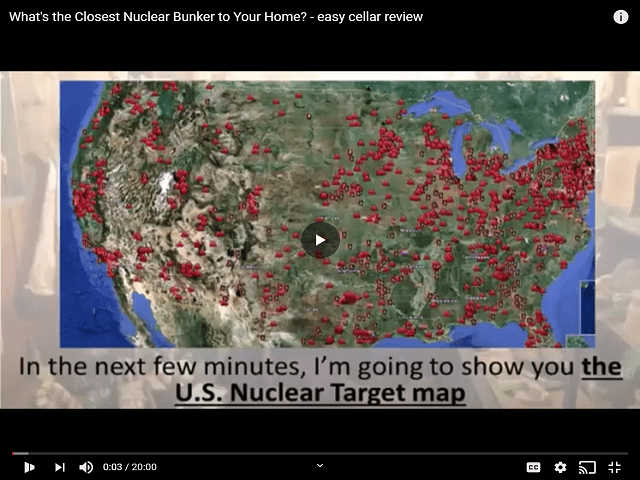


 Preppgroup