People of the world at present can define what is recession and what is inflation. We all want to survive or recover. We do not want to have another great depression. As described in Wikipedia, the great depression was a worldwide economic downturn from 1929 and ending at different times in the 1930s and 1940s. This happened in most places of the different countries. It was known to be the largest and the most severe economic depression in the 20th century. Whenever there is a decline in the world’s economy, that great depression is used as an example of the extent of the decline that the world’s economy can actually have. There is always the other side of a story. Therefore, there is also, the other side of the life of the great depression. The other side that I am referring to are the reflections and lessons we can gain from it.
Life during the great depression was not easy. It was at this time that people – rich or poor became very vulnerable to the effect of the great depression. Rich or poor looked for means on how to survive the great depression. Both of them have experienced severe economic financial crisis and both of them sought for a crisis management plan. So, the first reflection that we can have is that reach or poor are affected and that life during the great depression crosses boundaries of culture, money, and race. Our being human is what remains to be there. Second reflection, although the rich people are affected, it is the poor who are greatly affected. Good for the rich people because they still have something to get from their pocket whenever their stomachs are hungry. The poor becomes poorer each day until some are starving already. Third reflection that I have is that people are the ones who cause the great depression and we are also the ones who suffer.
Another side of the life during the great depression are the lessons we can learn out of it. These lessons are:
Frugality.
We should learn how to be thrifty. Let us learn the lesson of the fable “The Ant and the Grasshopper.” The ant saves for rainy days, the grasshopper don’t. In this case, who are we then? Are we more of an ant or more of a grasshopper. Prioritize your needs. Never ever confuse your needs and wants.
Discipline.
Control your desires. Do not ever think that because you have a credit line, you will have to engage in debts. Be guided by the quote “Don’t spend money you don’t already have in your pocket.” More importantly, do not engage in gambling. “A gambler always loses.” If you have money, do not be a one day millionaire. You spend it all for one day and you suffer on the succeeding days.
Hard work.
Many times, we want to avoid chores. Why don’t you do the tasks which you can. Imagine how much you will be able to save when you do your part.
The people during the great depression have learned new mental attitude. Aside from the characteristics mentioned above, they were able to realize the value of close relationships with their immediate family, relatives, friends, and with God. The high-priced lesson they have is actually being able to realize that mo re import to material things are the quality of relationships that they build with their fellowmen. And this is the essence of the other side of the life during the great depression.
While everybody is losing money, jobs and properties would you believe that some people are at their best during recession? Be one of the people who discovered the secret to achieve true wealth during recession.
If you have any dissatisfaction with my content, you can tell me here and I will fix the problem, because I care about every reader and even more so about your opinion!
I want to present you one of the most interesting sites, where you will see new articles daily! www.321gold.com
So the old adage goes anyway, and for the prepper – the one who’s keeping abreast of current events – cash is one of the last man-made means of protection that he or she has against governments that have grown to a degree of power that they never had before.
The Dangers of a Cashless Society
There are two predominant dangers that come with a cashless society, and just about every negative that you can think of due to such will fall into one of these two groups:
Denial of purchasing power
A complete loss of anonymity
Denial of Purchasing Power
A cashless society is a controlled society. If everything must go through an online banking or credit card process, then you have just lost virtually all control over what you buy.
Anything that is not politically sanctioned(guns, ammo, body armor, helmets, particular books, particular website premium subscriptions, political donations, etc.) could very easily be vaporized overnight.
This, of course, would drive the makers and holders of such products into a black market to barter their goods, and this in turn would be responded to by the use of overwhelming government force. This will come in the form of Stryker vehicles, concussion grenades, snipers, and men with automatic rifles and body armor.
Don’t believe me? Read FA Hayek’s The Road to Serfdom. Totalitarian governments must resort to force simply for the sole reason that people will naturally refuse to comply with widespread theft of their own goods. This force will only continue to grow in its usage.
Totalitarians do not accept blame for their own economical failures. The state is the end of all things to them, and as such, the end justifies the means – no matter how terrifying such a means may be.
A Complete Loss of Anonymity
Once cash is abolished everywhere, your attempts at any form of anonymity will be destroyed.
You already have an amazing amount of data that has been collected from you from your Internet search history, GPS data, voting history, bank statements, credit card statements, phone data, and a host of other publicly available information that easily allows people to deduce information from you.
And where humans fail, algorithms thrive. I have a hobby interest in algorithm creation (particularly multiple linear regression analysis) and have used it within my healthcare job as a means of predicting patient attendance rather accurately on any given day. I’ve also used them to (somewhat less accurately) predict when a patient was going to have episodes of heart block.
Algorithms are a powerful tool, and the more data you feed them, the stronger they get. With the amount of data that has been collected on you already, the government may be able to make a much stronger prediction about who you are, what you believe, and what you possess than you would’ve ever thought possible.
Just think about what a cashless society would mean for the following purchases:
Medicine – The government can now invade your medical privacy to see what meds you need to live as well as know what could either improve or hamper your condition. For those who don’t believe that this is a concern, just keep in mind that it wasn’t that long ago that the US military was warning its soldiers against getting genetic testing to determine their family tree. Why? Because it was deemed to be a security risk. What do they know here that we don’t?
Food – Algorithms can easily predict when you are buying much more than what you could eat within a particular span of time. This then means that food stores can be predicted and located. Come disaster time, your house could easily be one of the first that is targeted for “hoarding”. And what happens if it’s determined that those with large food stores are likely to be “domestic terrorists”?
Firearms and Body Armor – This is the low-hanging fruit here. Weapons, ammunition, body armor – they could all be easily tracked (and later confiscated). Buying “too much” of one particular product may cause red flags to be attached to your file, and you could very easily end up with a visit from an alphabet agency full of men carrying what is now a felony for you to own.
Ham Radios – There already seems to be an attack against ham radio users as the government has realized that this is the route that many fearing censorship/silencing are turning toward. If you can shut down all communication other than what is government sanctioned, you have effectively silenced free speech.
Media – Do you like to watch documentaries that may be labeled as conspiracy theories? Is it that hard to imagine a “misinformation tax” to discourage Americans from imbibing in certain forms of media? Why not? We’ve already seen the “death by a thousand cuts” approach being used with firearms so that the argument can be made that “no, you can have a gun, but you just have to fill out these fifty forms, pay a $4000 fee, and have a license. See? There’s no infringement whatsoever.”
To think that the same idea couldn’t be applied to the news commentators that you like to listen to is naive.
Here are some arguments that will be used for a cashless society:
Physical Money Shortages
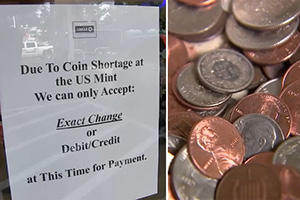
Throughout 2020 we were told that there was a coin shortage throughout the U.S.
As a result, retailers either quit giving coin change back or strongly discouraged customers from asking for it.
Kroger actually resorted to either giving you back your money in the form of credit vouchers (to that particular store of course) or by donating the change that they owed you to charity.
Control Over Dangerous and Illegal Purchases
In what can only be viewed as an incredibly ironic wordsmithing, we will be told that one of the benefits to a cashless society is that we can finally rein in purchases that are deemed by the government to be dangerous to the public.
Guns, ammunition, freedom-oriented books (“radical terrorist recruiting material”), and the like will be argued against so that we can keep our society safe. Notice that there is always an emphasis on safety throughout this entire process.
A Fomite of Disease
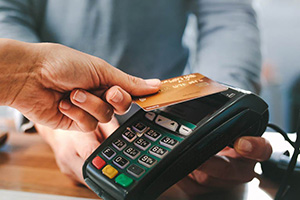
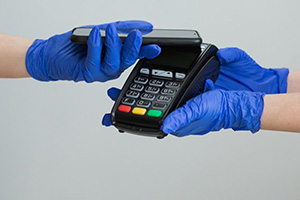
Once again, 2020 set the stage here. Cash purchases plummeted worldwide, with credit cards filling in the void as people began to avoid any and all cash purchases with the hopes of not getting themselves sick.
This was a talking point spouted throughout the mainstream media in 2020 and will continue to be used in the future as the push for the abolition of cash continues.
Cost of Creation Outweighs the Actual Value of Money
We see this already with the US penny. It actually costs 2.41₵ to produce a single penny.
While our government currently has no problem with making fiscally irresponsible decisions, when it finally does come around to deciding that “you know what, pennies aren’t worth it” – or any other form of cash for that matter – there will be nobody that will argue against them.
This decision will be portrayed as a means of reducing wasteful spending, and anyone who argues against this given reasoning for the abolition of cash will be labeled as an idiot who can’t do proper math.
Less Risk of Theft
We don’t often hear this argument being made currently, but it is out there.
The argument goes that if you’re mugged while you’re carrying $300 in cash, you simply lose all of your money.
However, if you’re mugged and all you have on you is your credit card, then you can quickly call the credit card company, cancel your card, and be reimbursed for any disputed charges that were made in the interim.
What Can We Do to Fight This Process?
While I do believe that a cashless society is inevitable, I do think that there are things we can do to fight against it and to slow it down.
Here is what we can do as freedom and privacy-loving Americans.
#1. You Need to Make Friends with Like-Minded People Now
I used to always blow off this idea. It wasn’t until I began talking with Forest of Prepper Net that I began to see the light on this issue. If you don’t have like-minded friends, you’re going to be up a creek without a paddle when a cashless society hits.
You need to know who has what skills, who has what goods, who can get what, and where their sympathies lie. Perhaps this is more of a cashless society survival skill, but nevertheless, refusal to comply is still a means of fighting against a cashless society.
And this isn’t just refusal to comply based on principal. This is refusal to comply because to do otherwise would mean certain death. When you’re not allowed into a store to buy food and other necessary goods for your family because you refuse to use Fedcoins for purchase or refuse to show a vaccination card you better be dang sure that you have some alternate means of getting what you need to live.
History has proven such. Read the diary of Anne Frank. Had Otto Frank (her father) not had connections with like-minded (this is key) people throughout his neighborhood well prior to his going into hiding with his family, they would’ve died well before the Nazis came and took them away.
Listen to what Good Patriot out of Texas has to say in her Fighting Back videos on Telegram. She’s echoing this same thought process. You need to make groupings of people who can work together to combat this evil.
#2. Develop Some Means of Production
Both Ayn Rand and Adam Smith harped on the fact that production is what equals true wealth. Whether it’s learning how to raise livestock, how to work with leather, how to tan hides, you need to learn some means of production so that you can still produce wealth when cash is taken from you.
You still have to eat. You still have to put bread on the table. And there are going to be others out there who have principles and love logic who will be of the same mind as you. They are going to want to trade for supplies. Barter will come back in full force. You’ll need to have some means of producing something of value so that you can get what you need.
#3. Invest in Precious Metals
Robert Kiyosaki harps upon this in his new book, Fake, the reason being, that precious metals have intrinsic value. They’ve been used as a form of money for roughly 6,000 years now, and they’re not going to stop being a store of value anytime soon. Within a barter society, this may be one of your best stores of wealth.
On top of this, over 40% of the US dollar supply has been printed within the past year alone. Every other economist you see is screaming about the signs of inflation. The U.S. dollar is about to collapse. There is no longer any denying it. Inflation has already risen drastically and will only continue to grow worse. You need to begin doing something to protect your wealth from inflation.
Precious metals are part of the solution.
#4. Start Using Masked Payments
If you don’t have one already, you need to set up a Privacy.com account. This is a form of masked debit card that will help to keep your purchases anonymous. Yes, this is a form of cashless payment, but it is still a way to fight against such a monster.
Provided that money is flowing out of your account but nobody can tell who you just bought from or what you bought, you’ll be much safer in your transaction privacy.
#5. Refuse to Cater to Businesses that Don’t Permit Cash Transactions
If you tug on their purse strings, they eventually change their mind. I’m sorry, but when good compromises with evil, evil wins. Do what you can to avoid these businesses like the plague, and then let them know why you’re avoiding them.
I used to carry around business cards detailing why I wouldn’t support businesses with ‘’no gun’’ stickers on the front doors. I’ve since ran out. I think that such a business card for businesses that don’t permit cash transactions would be an easy way to voice one’s displeasure as well.
Here’s a sample card template:
“I consider your refusal to accept cash as un-American, a forced invasion of my privacy, and a totalitarian tool. As such, I will cease from doing any business with you for the near future and will be spending my money at your competitors instead.”
This is similar to the language that I used within my Second Amendment business cards. I bought them easily off of Vistaprint (around 500 for $20 or so) and considered the money worth every penny.
#6. Learn How to Grow Your Own Food
There’s already a movement afoot within the U.S. to keep certain types of people out of grocery stores. Vaccination papers are beginning to be asked for before one gains access to certain venues or hotel chains. It won’t be long until cashless payments are the only means of accessing even groceries.
Because of this, I highly recommend that you learn how to grow most of your own food, and begin learning now. Gardening has quite a learning curve and is nowhere near as easy as Michael Bloomberg would have you believe. You need to ensure that your family can eat, and gardening is a great part of that process.
Final Thoughts
A cashless society truly is a scary world. Picture everything that you’ve read about in history books within other totalitarian regimes, and you’ll get a taste of what is to come. I implore you to do something now to protect yourself against the rolling stone that is coming down the mountain right for you.
If you follow the above advice, you’ll help to ease the blow. And there’s no doubt about it – it will be a smack in the face. But we can’t just sit back and do nothing as privacy dies a quiet death inside what was once the freest nation on Earth.
If you’ve found other ways to combat a cashless society that we did not cover within this article, by all means, please let us and others know within the comments. This is about helping our fellow man, and as much input is needed as possible.
First take a look at one of the most shocking videos in the world! This video actually shows us what the secret of the Trump family is related to their expressive health!!! –FULL VIDEO HERE
Aside from economic collapse scenarios, many countries are in the process of eliminating physical cash and coins. Instead, everyone has an account that holds their money. You cannot purchase goods or services without access to government-based cryptocurrency. Even if the currency itself is still backed by faith in the government, you have to use this electronic system.
The result is multiple problems that could leave you in a situation where you have the money in the bank to pay your bills and purchase goods and services, yet you cannot do so.
These hacks usually affect the bank or primary clearinghouse rather than a specific person’s account. You may be unable to purchase goods or services for hours or days. While this is inconvenient, it isn’t as bad as a full collapse, where the banks close for good.
There’s only so much you can do about this kind of hack other than make sure you can go two weeks without buying anything at any given time. It is also essential to keep a paper-based address book with phone numbers and account information so that you can contact utility companies or others who may be expecting payments from you while the bank or clearinghouse is down.
Let’s say you can connect to Wi-Fi independently of the SIM Card. Your phone app may not work with Wi-Fi. This is why I recommend having an app on your phone that doesn’t use the SIM card to dial out on Wi-Fi so that you can make the necessary calls.
Attacks Sponsored by Non-government Groups
If the hacker was able to steal money from your accounts, it could take weeks to years before you recover the money. In the short term, you will have to shut down credit cards and so on, then wait for new ones to come in the mail. You may also have to manage restoring devices and regaining access to your accounts.
Here again, make sure you can go at least 2 weeks without buying anything so that you can manage your basic necessities.
Merchant Category Codes and Social Credit Scores
Merchant Category Codes are unique identifiers that put different products into separate categories. For example, food has one set of numeric identifiers, while clothing has other identifiers.
Even without looking at your receipt, the bank and transaction clearinghouse may have some ideas about what you bought. The transaction cost can then give some estimates about quantity and item type. One day, data from all banks and clearinghouses may pool into a central government computer.
Social credit scores work like your financial-based credit scores. Consider how your financial credit score enables businesses to “reward” you with credit or better interest rates if you pay your bills on time and have an optimal debt-to-income ratio. Your social credit score looks at how you act in society. For example, China has a system that rewards things like donating blood.
This same system “punishes” people who drive drunk or engage in other activities that aren’t “beneficial to society.” People with good social credit scores may get tax breaks, an increased chance of getting a promotion, or other benefits.
When vaccines became available for COVID-19, governments worldwide were concerned because people hesitated to embrace mRNA vaccines. This led to people not complying with recommendations to get vaccinated. Social credit scores can be paired with cashless systems that will block purchasing from specific merchant category codes. It could become possible to deny people the ability to buy food, gas, and other essentials if they aren’t vaccinated.
When you can’t use cash, pressure campaigns like this will be almost 100% effective because you will have to comply or do without the necessities of life.
The only way to outlast a pressure campaign like this is to have a stockpile of food and other essentials that will last until the pressure tactics are stopped.
Moving Away From Hard Cash to Fiat Cryptocurrency
At first, you might think merchant credit codes will only come into play when the government seeks to limit, slow down, or prevent purchasing certain goods and services. The problem is that modern networks aren’t safe from hackers, including those who seek to disrupt trade for ethical reasons.
For example, the Internet Archive was recently targeted by a hacktivist group, Blackmeta. They claim they attacked this non-profit library site because it is based in the USA and, therefore, is aligned with Israeli activities. Ironically, the Internet Archive has been locked in multiple court battles with publishers that may be far more aligned with Israel. These publishers, in turn, are trying to shut down the Internet Archive because when people don’t buy from the publisher, it cuts into their profits.
Now imagine this kind of situation happening with the information stolen from the Heritage Foundation, and then used to target more granular data in banks and merchant clearinghouse systems. You could very easily see transactions declined for what appears to be “government” or other legislative curbs, when in fact, it’s some group attacking you because of a “social credit score” known only to them.
If you want to buy something right now, you can just put your credit card away and use cash. This won’t be possible once the only fiat currency available is electronic in nature. No matter how much you want to look at the potential for excess government imposition, the fact remains any group with sufficient skills and interest can cause serious problems.
AI-Based Curbing Impositions
AI can keep track of billions of records and patterns of activity. This includes determining if what you buy is “normal” for your location as well as for you as a consumer within a particular category.
Right now, that’s likely beyond the implementation of the cashless centralized government cryptocurrency systems.
At some point, though, someone on something like the “no-fly list,” etc., could wind up unable to buy certain items or in certain quantities and not realize there is a curb based on a government-based list. Considering how many lists there are, it may be difficult, if not impossible, to resolve the problem and purchase goods in a timely manner.
This includes lists that may be compiled based on estimated political slant. Consider that even now, traffic cameras can match license plates with bumper stickers and yard political signs to determine your likely preferences.
When you factor in non-governmental groups, the situation gets even worse. Technologically speaking, it’s within the scope of foreign agents and hacktivists to bring together limits on how you spend your money and non-financial activities.
As we are seeing in various hacks, there is certainly a “social credit score” being applied to businesses that can be scaled to target individuals who may want to purchase extra supplies to manage an emergency.
Use Multiple Banks to Store Your Money
Right now you can protect your money while it is still in your control. First, it is very important to keep your money in different banks. Even if one goes down, the others may still be functioning.
This applies to credit and debit cards. If you have only Visa cards, ensure you have at least one Mastercard. You can do this with prepaid cards as well as more permanent accounts.
This method won’t work if every transaction must go through a centralized clearinghouse that includes every possible bank or other institution. At this point, it’s impossible to say whether that kind of system exists and how various groups would use or misuse it.
Second, if you routinely buy from certain stores, you can purchase gift cards and have the money ready and waiting in your account. If you cannot access your bank account, you can still buy from that store. This won’t necessarily prevent you from running into rationing or other limits that may be imposed by the government through the store or at the store level.
Bartering: An Alternative to Using Fiat and Non-Government Currency
Preparing for small—and large-scale disasters is essential for your well-being and that of your family. You can still use bartering, provided you have a clear sense of the value of what you will offer and whether or not the other party needs what you have.
Make consistent contacts with small or local farmers and others who may be willing to take something in exchange for food. The trade could be anything from assisting with mechanical repairs to making garments. Everything will depend on the relationship you develop and the situation.
You can make barter arrangements for just about anything from tangible goods to training in various skills. Look for small businesses and local groups, as they may be more open to these kinds of arrangements. Spending a few dollars extra and supporting these people now may be very useful later on.
This is also a good time to form relationships with established flea markets and others with different kinds of products. These people may be very helpful when you find a way to barter for tools or other goods that you can no longer purchase using money. Here again, you have to know what their needs are and how you can meet them.
As hacks on banks, hospitals, water purification plants, and the government itself become more common, it should be obvious that a cashless society can pose significant risks if you aren’t prepared. Taking a few simple measures now may help you get through these situations as painlessly as possible.
At the top of the financial pyramid sits the Bank for International Settlements (BIS) in Switzerland , the “central bank of central banks.” It acts as a clearinghouse for financial operations between major nations and secretly controls monetary policy for over 60 central banks worldwide. They operate with complete legal immunity from national governments and taxation.
Central banks themselves , like the Federal Reserve, European Central Bank, Bank of England, and others , print fiat currency at will, control interest rates, and manipulate economic conditions to serve the interests of the elite, not the public.
2. The Old Banking Families
Names like:
Rothschild
Rockefeller
Warburg
Morgan
Vanderbilt
These families accumulated obscene amounts of wealth through monopolies on banking, oil, railroads, and shipping during the 18th, 19th, and early 20th centuries , and much of that wealth was quietly transitioned into trusts, holding companies, and offshore accounts.
Estimates of the Rothschild family’s total wealth range from hundreds of billions to trillions of dollars, though it’s nearly impossible to trace because it’s hidden in foundations, trusts, and behind nominal ownership.
3. Tax Havens & Offshore Accounts
According to a study by the Tax Justice Network, the global elite hide $21 to $32 trillion in offshore accounts , in places like:
Cayman Islands
Luxembourg
Switzerland
Singapore
Panama
This hoarded wealth escapes taxation, public scrutiny, and accountability.
4. Black Budget & Missing Trillions
The U.S. government alone has been caught “losing track” of trillions:
In 2001, Donald Rumsfeld admitted the Pentagon couldn’t account for $2.3 trillion.
Catherine Austin Fitts, former HUD Assistant Secretary, has documented the “missing money” schemes siphoning public funds into off-books projects , believed by many to fund secret space programs, underground bases, and elite escape plans.
5. Land, Media, and Pharma Ownership
A handful of investment firms, BlackRock, Vanguard, and State Street, now collectively own controlling stakes in:
Over 90% of U.S. media
Most pharmaceutical companies
Key military contractors
Major agricultural companies (including those producing GMOs and pesticides)
They also control massive real estate portfolios , quietly buying up farmland, housing, and critical infrastructure worldwide.
6. The Vatican’s Hidden Fortune
The Vatican Bank holds untold billions in gold, real estate, and art. Documents have shown it profited from wars, colonial plundering, and financial schemes. Rumors persist about secret underground vaults loaded with treasures taken during centuries of conquest and conflict.
Why Is This Hoarded Wealth a Problem?
Because it’s not idle money — it’s used to:
Control governments through campaign funding and lobbying.
Manipulate markets via hedge funds and currency speculation.
Fund social engineering through foundations (think Gates, Soros, and Rockefeller initiatives).
Suppress new technology that could liberate humanity (free energy, advanced medicine, etc.).
Drive wars and migration crises to destabilize nations and consolidate power.
And while the average person struggles with inflation, debt, and taxes , these entities hoard enough wealth to end global poverty dozens of times over.
The idea of a global elite controlling humanity through debt, manipulation, and hoarded wealth isn’t a theory. It’s a fact that history’s empires have always functioned this way. The names and technology have changed, but the strategy hasn’t.
And when the people finally see how it works, it falls apart. Every time.
I want to present you one of the most interesting sites, where you will see new articles daily! www.321gold.com
Since the 2008 crisis, four huge shifts take place that define the modern financial industry:
(1) Private Equity and Alternative Credit
Due to the strict regulatory policy adopted after the crisis, the post-2008 banking sector was uncompetitive relative to the pre-2008 banking sector, with the aggravating circumstance that the banks that survived the crash were buried in debt and deeply exposed in regards to their internal control mechanisms. In this context, the industrial sector sought for alternative, non-bank financing methods; namely private equity and alternative credit, with the latter occupying the power vacuum left by old-fashioned moneylenders that had been wounded by the housing market crash and the former constituting a revolutionary way of investing in company stock.
The most iconic finance job ever, the stockbroker, pretty much suffered its extinction during the 2008 crash. This opened the door for automated forms of investing in which the role of the intermediary – the broker – became trivial. Instead of investing on specific companies due to shareholder expectations of growth and performance, investors shifted towards large diversified funds listing hundreds of companies and tracking their growth over long periods of time. The vast majority of portfolios rarely list individual company stock anymore; instead you’ll find passive investments on the S&P 500 or similar indexes.
(3) The Fall of Public Pension Plans
The pre-2008 get-rich-quick culture came to an end long ago, with the exception of online quasi-scams and compulsive gamblers stepping out of casinos and into the stock market. Nowadays, equity investments are much more sober, striving for low returns on the short term, but large gains in the long run due to compound interest. This focus on long-term wealth planning is but a consequence of the overall lack of confidence in the solvency public pension plans – a very reasonable public sentiment that has grown especially amongst young generations and that has pushed them to rely on private retirement systems.
(4) Democratization of Access to Alternative Investments
While fee compression already democratized the access to the stock market, small investors were still excluded from alternative investments such as private equity and venture capital. With the rise of alternative credit (as detailed in point 1) private equity funds did not only lower their minimum capital requirements, but we also witnessed the appearance of “feeder funds” aimed at collecting cash from small investors in order to meet the capital requirements of actual private equity funds. In occasions, markets have even experienced feeder funds of feeder funds, or feeder funds creating ETF-like portfolios combining investments on several private equity funds, such as EQT.
Summary
The financial sector is arguably a more mature sector due to developments taking place since the 2008 crisis. This is mainly due to automatization of middleman roles and thence a democratization of access to investment opportunities, a soberized portfolio management culture, the rise of non-bank financing methods, and a declining confidence in public pension plans.







 Preppgroup