Our “Leaders” Have Taken Blood Oaths- These people swore an oath or to represent citizens, but their true loyalty is to Satan (Communism.)

The blood oath is fundamental.  Biden and most of his cabinet and most courts and congress have probably taken it. That’s why they are excluded from mandatory vaccines. 
These people swore an oath or to represent citizens, but their true loyalty is to Satan (Communism.).They are traitors and should be treated as such.

Worldwide the vaccine passports is leading to a Chinese Communist social credit system where your every word and move are monitored for political correctness.

Like our “leaders,” the Chinese Communist Party (CCP)are Satanists.
We now face persecution from this evil red dragon in the form of medical tyranny.We’re dealing with PURE EVIL. 

The Final Choice is Good or Evil. What Choice Will Those with a Blood Oath Make?

The ultimate and final choice is between Good and Evil.

The Chinese say, “you can’t stand in two boats”; as the boats move apart, you will be forced to choose one boat or fall into the water. Those who have taken a blood oath are conflicted between doing what is Good or following a path that stops at no Evil. 

The way to discern good or evil is to evaluate it against Truth, Compassion and Tolerance; this is the characteristic of the cosmos. Those who adhere to these universal principles are good. The ones who deviate from Truth, Compassion and Tolerance are wicked.

marx-hand.jpg

Karl Marx signalling the “hidden hand”, indicating the real power of the world from behind the scenes controls him and he has taken a Blood Oath.

In the Communist Manifesto (Chapter 2), Karl Marx spells out that communism is Satanism:

“There are, besides, eternal truths, such as Freedom,, etc., that are common to all states of society. But Communism abolishes eternal truths, it abolishes all religion, and all morality, instead of constituting them on a new basis; it therefore acts in contradiction to all past historical experience.”

Because communism is opposed to Truth and it abolishes all morality; therefore it is easy to see communism is evil.

Communism was created by evil and it is spread by evil people, hidden in the top layers of society with dual loyalties.

Today, the Chinese Communist Party (CCP) is playing the leading role to establish global communism.

The CCP requires a blood oath to join; it has brutally persecuted many groups in China since coming to power in 1949, killing an estimated 60-80m people who were opposed to communism.

This genocide in China has continued until today, because the CCP is always persecuting someone. One noteworthy group is Falun Gong, a peaceful meditation practice that was brought to the public in May, 1992. It was very popular in China, with over 100m people taking up the practice. The practice has five slow moving qigong exercises and a series of lectures that help people improve themselves to their very core.

Because Falun Gong practices Truth, Compassion and Tolerance, the CCP has persecuted them since July 20, 1999. Practitioners were detained, arrested, put to forced labor, imprisoned, tortured and had live organ harvesting (faluninfo.net).

 The CCP is against Truth, Compassion and Tolerance. Now, the CCP and those aligned with it are utilizing every means at their disposal to persecute the entire world. Good people everywhere now face persecution from this evil red dragon in the form of medical tyranny.

COMMUNIST AGENTS

The CCP goal is the destruction of the USA and imposition of The Great Reset — worldwide communism. People are recruited because they hold positions of status or influence in society, and they are able to maintain their positions, while at the same time, secretly pledging their loyalty to something else.

The CCP requires a blood oath to become a member with these words:

“… ready at all times to sacrifice my all for the Party…”

“…both parties stop and swear unto death while standing in the midst of the blood, swearing by G-d (thus making G-d their 3rd party) to kill the covenant breaker and his seed after him if the terms of the covenant are breached.”

pence-coin.jpeg

Traitor VP Mike Pence received this “token of appreciation” immediately after voting against Pres. Trump on Jan 6th, 2021. It’s rare to see high level secret society ceremonies in a public setting.

“All this I most solemnly and sincerely promise and swear, with a firm and steadfast resolution to keep and perform the same, without the least equivocation, mental reservation, or self-evasion whatsoever, binding myself under no less a penalty than that of having my body severed in twain, my bowels taken thence and burned to ashes, and these scattered by the four winds of heaven, that no more remembrance may be had among men or Masons of so vile a wretch as I should be, should I, in the least, knowingly or wittingly, violate or transgress this my Master Mason’s Obligation. So help me God and keep me steadfast.”

The Jesuit oath (from 1533 Jesuit oath):

“In confirmation of which I hereby dedicate my life, soul and all corporeal powers, and with the dagger which I now receive, I will subscribe my name, written in my blood in testimony thereof; and should I prove false or shaken in my determination, may my brethren and fellow soldiers of the militia of the Pope cut off my head and my feet and my throat from ear to ear, my belly opened and sulphur burned therein with all the punishment that can be inflicted upon me by demons in eternal hell forever.”

Finally, the Mafia also has a blood oath (related by Joe Valachi in testimony to Congress):

“I sit down at the table. There is wine. Someone put a gun and a knife in front of me. The gun was a .38 and the knife was what we call a dagger. Maranzano [the boss] motions us up and we say some words in Italian. Then Joe Bonanno pricks my finger with a pin and squeezes until the blood comes out. What then happens, Mr. Maranzano says, ‘This blood means that we are now one Family. You live by the gun and the knife and you die by the gun and the knife.’

Those swearing a blood oath are often required to spy and commit crimes for these groups. Their blood oath has priority over any other oath, they literally pledge their lives to these groups and must keep this secret. Their feet are more firmly planted in the evil boat, but they still have a chance until the end to make a better choice.

HANDSIGN-FAUCI.jpg

Dr. Fauci is Jesuit trained and a Deep State operative through six administrations. Watch his signals to know where his loyalties lie.

DUAL LOYALTIES

People who have taken a blood oath can be found throughout society in positions of authority and power in nearly every corner of the globe.

Many have literally “sold their souls” for wealth and other benefits. People who take a blood oath are recruited in, no one can “apply” to join and membership often follows family lines. The secret organizations see the power the person has access to, they can also “direct” things to make a person gain even more power, even becoming president of the United States.

Is it a surprise the “hidden hand” has guided events and created history in this manner? The large scale ritual sacrifices are now on a grand scale: two World Wars, the Holocaust (which means “burnt offering), 9/11 and now the biggest of all…the COVID/CCP Virus. All of these events were perpetrated by people with dual loyalties, whose feet are in two boats.

The Global Food Crisis Is Here- The Scale Of The Current Global Hunger And Malnutrition Crisis Is Enormous. (Most People Tend to Believe That We Can “Fix This Country” By Getting The Right Politicians Into Power Or By Implementing Certain Economic Or Social Reforms.)

According twfp.org: The scale of the current global hunger and malnutrition crisis is enormous. WFP estimates – from 78 of the countries where it works (and where data is available) – that more than 333 million people are facing acute levels of food insecurity in 2023, and do not know where their next meal is coming from. This constitutes a staggering rise of almost 200 million people compared to pre-COVID-19 pandemic levels. 

At least 129,000 people are expected to experience famine in Burkina Faso, Mali, Somalia and South Sudan. Furthermore, any fragile progress already made in reducing numbers risks being lost, due to funding gaps and resulting cuts in assistance. The global community must not fail on its promise to end hunger and malnutrition by 2030.  

WFP is facing multiple challenges – the number of acutely hungry people continues to increase at a pace that funding is unlikely to match, while the cost of delivering food assistance is at an all-time high because food and fuel prices have increased.  

Unmet needs heighten the risk of hunger and malnutrition. Unless the necessary resources are made available, lost lives and the reversal of hard-earned development gains will be the price to pay. 

The Biggest Crisis Of The 21st Century!

The food crisis will be the biggest crisis of the 21st century. It will push up food prices and spread hunger and poverty. Surging food prices will create inflation and create more crisis in the world. This will not only affect developing countries but also developed countries. According to United Nations World Food Programme (WFP), more than 73 million people in 78 countries who depend on food handouts are facing reduced rations this year.

High prices have caused food protests around the world like Mexico, India, Senegal, London, Mauritania and other parts of Africa. India, Mexico, Haiti, Philippines, Ethiopia, Indonesia and Yemen have seen food riots this year protesting the food crisis. Hardest hit of this crisis will likely be African countries, where many of the world’s poorest nations are here. A lack of food as the primary needs of humans will cause riots, suicide and millions of people could die from it.

Nearly every region of the world is experiencing drastic inflation caused by food this year. Retail prices are up 18% in China, 17% in Sri Lanka and 10% or more throughout Latin America and Russia.

In 3 May 2008, a cyclone devastated Myanmar’s low-lying Irrawaddy delta region leaving more than 1 million people homeless, according to the UN. An estimated 80,000 people died in the delta’s Labutta district alone. Myanmar had been expected to export 600,000 tons of rice this year, including to Sri Lanka and Bangladesh, according to the Food and Agriculture Organization. The cyclone flooded 5,000 square kilometers (1,930 square miles) of farmland. Cyclone Nargis struck the country’s main rice-growing area, worsening a food crisis that’s triggered unrest from Haiti to Egypt.

Why does it happen

Rocketing oil prices, global warming, biofuels, and the world population explosion are the cause of this food crisis. The primary driver is the soaring cost of oil, which reached $123 a barrel for the first time. Oil cost will make transportation more expensive, thus making food more expensive too. The price of oil has sent the cost of food imports skyrocketing this year.

The World Bank predicts global demand for food will double by 2030. This is partly because the world’s population is expected to grow by three billion by 2050. Food demand will also grow due to new prosperity in India and China.

Global warming will disrupt food production in many countries. It can cause climate instability which is bad for crop.

Food price are affected by accelerating demand for biofuels. Biofuels, made from food crops such as corn, sugar cane, and palm oil, are seen as easing the world’s dependence on gasoline. But when crude oil is expensive, these alternative energy sources can also be sold at higher price. Last year a quarter of the US maize crop was turned into ethanol to fuel vehicles. US supplies more than 60% of the world’s maize exports. According to the World Bank, this is putting pressure on countries’ food supplies.

The worldwide food reserves are at their lowest in 35 years. Demand is growing much more than supply.

How to solve

For short term, massive government and international agency aid is needed especially from rich nations. For long term, there should be incentives to increase food production. Relative price fluctuations are an unavoidable part of an efficient economy. This becomes worrying when some people are so poor that a small rise in price becomes a life and death question for them.

The two primary driver for the crisis is oil price and global warming. Oil price hike is mainly caused by geopolitical risk, not supply and demand. Political conditions affect oil production in Iraq, Nigeria, Venezuela, and Iran. Iraq is still struggling to recover from decades of war. Nigerian production is affected by attacks and sabotage. Venezuelan oil production has never fully recovered since December 2002, when political strife brought Venezuelan production to a halt. The key is to bring peace on those country.

Global warming has caused climate instability, which can destroy crop fields. Nowadays, there has been a lot of talking about global warming. Each day, more and more people realized that global warming is endangering the world. For short term, he hope that researchers can improve farming technique to address worldwide hunger. Researchers around the world like the International Rice Research Institute in Philippines are studying how to improve crop which more pest and weed resistant, more nutrient rich and high yielding.

If you have any dissatisfaction with my content, you can tell me here and I will fix the problem, because I care about every reader and even more so about your opinion!

All Warnings Have Come True! Our Society Is Now In The Process Of Collapsing All Around Us, And You Can See Evidence Of This Everywhere That You Look.

This article is meant to bring a fresh perspective on the collapse of civilization.

Even some of our brightest scientific minds are projecting that there is absolutely no positive future for our civilization if we stay on our current course.  Perhaps one of the reasons why our society has become so obsessed with short-term results is because most of us can’t bear to think about the long-term consequences of our actions.  I have a website that focuses on “economic collapse”, but it isn’t just the economy that is headed for catastrophe.  Virtually every aspect of our society is coming apart at the seams all around us, and the era that we are moving into will be more nightmarish than most people would dare to imagine.  But our political leaders continue to insist that everything is going to work out just fine somehow, and most people choose to believe them.

This year, an old MIT study from 1972 that projected that our civilization will collapse at some point during the 21st century made headlines on several major news sites…

In 1972, a team of MIT scientists got together to study the risks of civilizational collapse. Their system dynamics model published by the Club of Rome identified impending ‘limits to growth’ (LtG) that meant industrial civilization was on track to collapse sometime within the 21st century, due to overexploitation of planetary resources.

In particular, the study identified a period of time “around 2040” when societal collapse would be very likely…

The study was published in the Yale Journal of Industrial Ecology in November 2020 and is available on the KPMG website. It concludes that the current business-as-usual trajectory of global civilization is heading toward the terminal decline of economic growth within the coming decade—and at worst, could trigger societal collapse by around 2040.

Of course events are not going to transpire exactly as they foresaw, but as far as the big picture is concerned they were right on the money.

Our society is now in the process of collapsing all around us, and you can see evidence of this everywhere that you look.

This week, civil unrest is causing widespread chaos in the streets in Cuba, South Africa, Beirut and Paris.  We have entered a period of time when it seems like people are perpetually angry, and the wild scenes that are playing out around the globe are absolutely shocking.

Here in the United States, we are in the midst of a crazy crime wave.  Murder rates in our major cities rose by an average of 30 percent in 2022, and they are up another 24 percent so far in 2023.  Extreme violence has become a way of life in many of our largest metropolitan areas, and this is particularly true in the city of Chicago…

A Chicago rapper died after suffering as many as 64 bullet wounds to his head and other parts of his body in what police are calling an ambush shooting just as he was released from jail.

Londre Sylvester, 31, who is known by his stage name KTS Dre, was one of three people who were shot just outside Cook County Jail in the Little Village section of Chicago on Saturday.

Chicago police seem powerless to stop the endless violence, but of course the same could be said about many other police departments around the country.

The streets of our biggest cities are becoming war zones, and what we have experienced so far is just the beginning.

Meanwhile, we are dealing with the worst epidemic of illegal drugs in our history.  If you can believe it, drug overdose deaths were up nearly 30 percent last year…

Drug-overdose deaths in the U.S. surged nearly 30% in 2021, the tragic result of a deadlier supply and the destabilizing effects of the Covid-19 pandemic, according to preliminary federal data and public health officials.

The estimated 93,331 deaths from drug overdoses last year, a record high, represent the sharpest annual increase in at least three decades, and compare with an estimated toll of 72,151 deaths in 2019, according to provisional overdose-drug data released Wednesday by the Centers for Disease Control and Prevention.

Drug overdose deaths were already at an all-time high coming into 2020.

So for the number of deaths to rise 30 percent above that level in just one year is really, really tragic.

At the same time, our system of public education continues to rapidly deteriorate.

Earlier today, I was shocked to learn that 41 percent of all high school students in Baltimore have a grade point average that is below 1.0…

Project Baltimore obtained a chart assembled by Baltimore City Schools. The chart shows the average GPA for every high school grade in the city – freshman through senior. In the first three quarters of this past school year, according to the chart, 41% of all Baltimore City high school students, earned below a 1.0 grade point average. In other words, nearly half of the 20,500 public high school students in Baltimore earned less than a D average.

“It’s heartbreaking,” said Patterson. “If almost half of our kids are failing, what options do they have after high school? This is really disheartening. It’s sad to see this.”

I don’t just want to single out Baltimore, because that isn’t fair.

All across this once great country of ours, public schools are completely and utterly failing our kids.  The vast majority of our high school graduates cannot read, write or speak coherently, and that simply should not be happening in the wealthiest nation on the entire planet.

Switching gears, authorities up in Canada are dealing with a different form of social decay.  For years, I have been warning that Christians in the western world would soon face the same sort of extreme persecution that Christians in other parts of the globe are forced to endure, and now it is starting to happen.

In recent weeks, individuals that are apparently motivated by a deep hatred for Christians have been setting churches on fire all over Canada…

Terrorists are attacking and burning down churches across Canada with impunity.

It’s a reality most Canadians only thought possible for Middle Eastern countries like Syria, where ISIS has bombarded and razed dozens of Christian heritage sites in the name of Islam.

We haven’t seen anything quite like this before.  According to Keean Bexte, a total of 45 Canadian churches have been burned just since the beginning of June…

The Counter Signal has kept a close eye on these terrorist attacks, reporting on the scene just hours after a fire in a refugee church.

Our information shows that since June, there have been 45 attacks on Christian and mainly Roman Catholic congregations. Of those, 17 of them have been scorched or burnt to a crisp in suspicious circumstances.

The corporate media should accept responsibility for their role in provoking these attacks.

For years, the corporate media has been relentlessly demonizing conservative Christians, and churches are the most visible symbols of conservative Christian culture in our society.

As the corporate media continues to blame conservative Christians for society’s ills, it is inevitable that there will be more attacks on churches in the future.

But of course there will be more violence everywhere around us as our society continues to steadily unravel.

I have never seen as much anger, frustration and hate as I am seeing right now, and there is no future for a society in which virtually everyone is filled with rage.

The years ahead are going to be extremely chaotic, and I would suggest that you plan accordingly.

The State Takes The Place Of God… “They Want to be Our Shepherds. But That Requires Us to be Sheep.”

Modern politics is a chapter in the history of religion. The greatest of the revolutionary upheavals that have shaped so much of the history of the past two centuries were episodes in the history of faith – moments in the long dissolution of Christianity and the rise of modern political religion. The world in which we find ourselves at the start of the new millennium is littered with the debris of utopian projects, which though they were framed in secular terms that denied the truth of religion were in fact vehicles for religious myths.

Communism and Nazism claimed to be based on science – in the case of communism the cod-science of historical materialism, in Nazism the farrago of ‘scientific racism’. These claims were fraudulent but the use of pseudo-science did not stop with the collapse of totalitarianism that culminated with the dissolution of the USSR in December 1991. It continued in neo-conservative theories that claimed the world is converging on a single type of government and economic system – universal democracy, or a global free market. Despite the fact that it was presented in the trappings of social science, this belief that humanity was on the brink of a new era was only the most recent version of apocalyptic beliefs that go back to the most ancient times.

Jesus and his followers believed they lived in an End-Time when the evils of the world were about to pass away. Sickness and death, famine and hunger, war and oppression would all cease to exist after a world-shaking battle in which the forces of evil would be utterly destroyed. Such was the faith that inspired the first Christians, and though the End-Time was re-interpreted by later Christian thinkers as a metaphor for a spiritual change, visions of Apocalypse have haunted western life ever since those early beginnings.

During the Middle Ages, Europe was shaken by mass movements inspired by the belief that history was about to end and a new world be born. These medieval Christians believed that only God could bring about the new world, but faith in the End-Time did not wither away when Christianity began to decline. On the contrary, as Christianity waned the hope of an imminent End-Time became stronger and more militant. Modern revolutionaries such as the French Jacobins and the Russian Bolsheviks detested traditional religion, but their conviction that the crimes and follies of the past could be left behind in an all-encompassing transformation of human life was a secular reincarnation of early Christian beliefs. These modern revolutionaries were radical exponents of Enlightenment thinking, which aimed to replace religion with a scientific view of the world. Yet the radical Enlightenment belief that there can be a sudden break in history, after which the flaws of human society will be for ever abolished, is a by-product of Christianity.

The Enlightenment ideologies of the past centuries were very largely spilt theology. The history of the past century is not a tale of secular advance, as bien-pensants of Right and Left like to think. The Bolshevik and Nazi seizures of power were faith-based upheavals just as much as the Ayatollah Khomeini’s theocratic insurrection in Iran. The very idea of revolution as a transforming event in history is owed to religion. Modern revolutionary movements are a continuation of religion by other means.

It is not only revolutionaries who have held to secular versions of religious beliefs. So too have liberal humanists, who see progress as a slow incremental struggle. The belief that the world is about to end and belief in gradual progress may seem to be opposites – one looking forward to the destruction of the world, the other to its improvement-but at bottom they are not so different. Whether they stress piecemeal change or revolutionary transformation, theories of progress are not scientific hypotheses. They are myths, which answer the human need for meaning.

Since the French Revolution a succession of utopian movements has transformed political life. Entire societies have been destroyed and the world changed for ever. The alteration envisioned by utopian thinkers has not come about, and for the most part their projects have produced results opposite to those they intended. That has not prevented similar projects being launched again and again right up to the start of the twenty-first century, when the world’s most powerful state launched a campaign to export democracy to the Middle East and throughout the world.

Utopian projects reproduced religious myths that had inflamed mass movements of believers in the Middle Ages, and they kindled a similar violence. The secular terror of modern times is a mutant version of the violence that has accompanied Christianity throughout its history. For over 200 years the early Christian faith in an End-Time initiated by God was turned into a belief that Utopia could be achieved by human action. Clothed in science, early Christian myths of Apocalypse gave rise to a new kind of faith-based violence.

When the project of universal democracy ended in the blood-soaked streets of Iraq, this pattern began to be reversed. Utopianism suffered a heavy blow, but politics and war have not ceased to be vehicles for myth. Instead, primitive versions of religion are replacing the secular faith that has been lost. Apocalyptic religion shapes the policies of American president George W. Bush and his antagonist Mahmoud Ahmadinejad in Iran. Wherever it is happening, the revival of religion is mixed up with political conflicts, including an intensifying struggle over the Earth’s shrinking reserves of natural resources; but there can be no doubt that religion is once again a power in its own right. With the death of Utopia, apocalyptic religion has re-emerged, naked and unadorned, as a force in world politics.

If you have any dissatisfaction with my content, you can tell me here and I will fix the problem, because I care about every reader and even more so about your opinion!

I highly recommend this book: The Home Doctor – Practical Medicine for Every Household – is a 304 page doctor written and approved guide on how to manage most health situations when help is not on the way.

If you want to see what happens when things go south, all you have to do is look at Venezuela: no electricity, no running water, no law, no antibiotics, no painkillers, no anesthetics, no insulin or other important things.

But if you want to find out how you can still manage in a situation like this, you must also look to Venezuela and learn the ingenious ways they developed to cope.

The ‘Great Reset’ reads like a globalist plot with some plot holes- The Davos Revolution And The Re-Making Of Civilization

Carl Teichrib takes us inside the 2021 meeting of the World Economic Forum featuring the Great Reset. The priesthood of techno-totalitarianism is guiding the global transformation into an other-worldly existence barren of human choice and dignity.

The Great Reset dangles before us: a global public-private partnership that follows the mystic path of social feelings, the holy writ of consensus politics, and the self-anointed prophets of international finance… all watched over by the priests of digital technology. It’s the operating system of the collective New Age, an algorithmic-technocratic revolution – maximum efficiency for managed harmony – and of course, it’s all for the “greater good.”

“A crisis is a productive event.” – Guy Parmelin, President of the Swiss Confederation.

Since the 1970s, the ski-resort community of Davos, Switzerland, has frequently been a gathering place for global elites during the month of January. Hosted by the World Economic Forum, an organization granted special status by the Swiss government, the Davos conference brings together an array of selected power-brokers; governors of central banks, international financiers, heads-of-state, UN leaders, CEOs from the largest corporations, and well-placed media personalities. To be a “Davos Man” typically means you’ve embraced an international perspective, and have the ability to influence long-term shifts in political and economic culture. You’re part of an elite club with the self-anointed task of directing global change.

Because of Covid complications, this year’s WEF annual meeting was postponed, and has since been re-scheduled with the hope of gathering in Singapore later this August. Nevertheless, the last week of January 2021 still witnessed a significant WEF event; a virtual conference titled the Davos Agenda, which could be live-monitored by anyone willing to take the time.

What was front-and-center of this online meeting? The Great Reset.

Before we go further, it’s important to note that this article only scratches the surface of what transpired. And how could it do anything but? The Davos Agenda ran five days, each being 10-to-12 hours long, and with most time slots holding multiple and simultaneous panel discussions. To give you an idea of the schedule, the first day – Monday, January 25 – had a total of 29 individual sessions. It was information overload.

It also must be stated that not everybody who officially participated was on the same page as the World Economic Forum. For example, Benjamin Netanyahu gave a talk outlining how he purposefully cut through the red tape to secure Covid vaccinations, making sure his nation had the supplies it needed. His approach didn’t fit with the WEF consensus of “vaccine solidarity,” to act globally before your national interests – after all, as another speaker explained, “the vaccine needs to be a public good.” The phrase “vaccine nationalism” was used throughout the week, a disparaging term for those who sought national health goals above global collaboration.

Another example was Brazil’s Minister of Foreign Affairs, Ernesto Araujo, who publicly encouraged the United States to stay the course as the “superpower of freedom.” Araujo went on to say that Brazil desired an open economy based on liberty, noting that this would challenge the global emergence of a rising “techno-totalitarianism.”

“I’m not a great fan of the concept of the Great Reset,” Araujo stated, explaining that while he generally supported ideas like sustainable development, there was a problem. The Great Reset was missing “freedom and democracy.”

Most others, however, were either on-board or otherwise playing the game.

President of China, Xi Jinping – introduced by Klaus Schwab, founder of the WEF – stressed collaborative action; we must create a new and global economic model, we must “abandon ideological prejudice and jointly follow a path of peaceful coexistence,” and we must bring “prosperity for all.” A “shared future for mankind,” he explained, is necessary. This would include strengthening global economic governance, committing to the UN system of world law, and supporting the World Health Organization as they build “a global community of health for all.” But who will lead the way?

The rest of his speech focused on how China, as a “modern socialist country,” is blazing the trail, including the Belt and Road initiative, and the promotion of a “new type of international relations.” His speech wrapped up with words of solidarity,

“There is only one Earth and one shared future for humanity. As we cope with the current crisis and endeavor to make a better day for everyone, we need to stand united and work together. We have been shown time and again that to beggar thy neighbor, to go it alone, and to slip into arrogant isolation will always fail. Let us all join hands and let multilateralism light our way toward a community with a shared future for mankind.”

Klaus responded by thanking Xi Jinping for “such an important speech, which at this crucial movement in history, provides us with a truly comprehensive framework for shaping the future.”

China was often applauded during the Davos Agenda, being admired for its digital leap forward. But there were some concerns, albeit framed through a globalist worldview.

For example, a few hours after the Chinese leader spoke, the UN Secretary General pointed to the growing rift between China and the United States, noting that both countries were dividing the world with their separate agendas. What was needed, he said, was “one global economy with universal respect for international law.”

Another star performance was from Ursula von der Leyen, the President of the European Commission. It only took a few minutes before she slapped the former Trump administration, saying, “democracy itself might have been permanently damaged in the last four years.” And like others throughout the week, she linked Covid with climate change. Ursula was clear; “We must learn from this crisis. We have to change the way we live and do business.”

Her speech pointed to Europe’s very own Green New Deal, the EU’s push for carbon neutrality by 2050, and how private companies will face stronger regulatory diligence. Regarding digital governance – for it’s vital that online platforms curb fake news while affirming democracy – Ursula called for the United States to join the EU and, together, create a worldwide digital rulebook “based on our values.”

All of the above – like the early pandemic collaboration between the EU, the WEF and the Gates Foundation – represents how “Europe is determined to contribute to this global common good.” At the end of her prepared talk, she affirmed to Schwab that new alliances will be necessary: “This is what we will work for – and I know I can count on you and the World Economic Forum to help us build it.”

Schwab was excited, afterwards saying that this speech represented the practical meaning of the Great Reset. He paraphrased a take-away; what we need is a “values based, social governance system” connected through a digital web.

With the Reset in mind, the Davos Agenda focused on seven interlocking subjects: “How to Save the Planet,” “Fairer Economies,” “Tech for Good,” “Society & Future of Work,” “Better Business,” “Healthy Futures,” and “Beyond Geopolitics.” A mountain of talking points emerged from these encompassing themes. However, we will only highlight a few:

1. Covid: Speaking on the pandemic, Li Xin of China-based Caixin Media, told us this “crisis should not be wasted.” Nor was it. We were constantly reminded that Covid revealed our interdependence while pointing to the problem of nationalism. Old values and conventions no longer work; the global supply chain needs to be digitized, the World Health Organization must be empowered, we need a universal healthcare system, there must be a centralizing program to pool national health data, and economic recovery should be tied to vaccination criteria.

“You’re going to need the vaccine year-after-year-after-year,” we were told.

2. Climate: If Covid was our existential crisis, climate is our planetary emergency. And in order to meet this supposed planetary challenge, the world must pursue a significant reduction in carbon emissions, all the way to net zero by 2050 at the latest. This requires nothing less than a complete overhaul of energy production, the transportation sector, all industry and especially agriculture, and our personal behavior.

Net-zero isn’t an abstract exercise. New Zealand and the United Kingdom have already passed legislation binding them to net-zero by 2050, and similar proposals are on the table in Canada, South Korea, and the European Union. Moreover, the Group of Thirty – a high-level consultative body comprised of the most influential figures in central banking and international financing, many with WEF connections – is pushing for net-zero across the spectrum of global economic activity. [1] In the United States, just a few days after Davos, the National Academies released their decarbonization report – “a technical blueprint and policy manual” – thus creating a roadmap for net-zero by mid-century. [2] And yes, there are working links between the Academies and the WEF.

So it was no surprise that on January 27 – day three of the Davos Agenda – John Kerry, President Biden’s Special Envoy for Climate, reminded the WEF audience how his government is “making climate central to foreign policy planning and national security preparedness.” Kerry explained that “a zero emissions future” will bring new opportunities for green growth: “To use the President’s words, to ‘build back better’ from the global economic crisis.”

Kerry reinforced that climate is everybody’s responsibility: “The whole world has to come to this table to solve the problem.”

3. Social Justice: An inclusive world for all was the mantra – unless, of course, you’re not in agreement with the global consensus. Nevertheless, social justice themes are directly bolted to the framework of the Great Reset. From racial issues to gender claims, social justice leaves its mark. However, a range of other justices needs to be considered, such as eco-justice, climate justice, and vaccine justice. Each of these justice-issues were attached, in some measure, to the Reset structure that was unfolding.

In the panel on creating a New Social Contract, economic justice was front-and-center. A Global Social Protection Fund must come into play, pairing international debt relief to a universal social-economy of “Living Wages and Living Communities.” On the same panel, James Quincey, CEO of Coca-Cola, described how his company is addressing social justice by fashioning an internal, racial/social economic ecosystem. More than that, industry-leading corporations must influence smaller companies to follow suit, especially those in their supply chains. Entire sectors need to re-align their economic models to social justice priorities, and that’s the essence of Stakeholder Capitalism.

4. Stakeholder Capitalism: Unlike shareholder capitalism shaped by company owners and direct market forces, stakeholder capitalism takes a social approach. Since the early 1970s, Schwab has been an advocate of the stakeholder model. Back then it was mainly geared to incorporating labor, union, and government interests in corporate decision-making. Today, Schwab is aggressively pushing a grander vision – capitalism in service to the planet while supporting social causes.

In a WEF article released a few days before the Davos Agenda, Schwab wrote,

   “The planet is thus the center of the global economic system, and its health should be optimized in the decisions made by all other stakeholders.

   The same interconnectedness can be observed for the people who live on the planet… it is incumbent on all of us as global citizens to optimize the well-being of all.”

In other words, capitalism bends to the demands of special interest groups and “green government.” Corporations, industries and sectors – including financial institutions – must shift their business models to appreciate and accelerate these new global norms.

How will this be ascertained?

In September 2020, the WEF released its White Paper, Measuring Stakeholder Capitalism, which envisioned a common standard for “sustainable value creation.”[3] What emerged was a set of principles and benchmarks coalescing around three headings: Environmental, Social, and Governance (ESG). As a whole, the ESG framework is to dovetail with the UN Sustainable Development Goals. To put it in acronym parlance, the ESG process is the WEF mechanism to achieve the SDGs.

Upholding the ESG are four pillars: Governance, Planet, People, and Prosperity. Supporting these four categories are 21 core metrics, along with 34 expanded metrics to enable a deeper audit – for that is essentially what’s happening, an audit to ensure compliance and cooperation. Hence, each metric acts as an information node in a detailed review process, and in using this tool, businesses and institutions can measure their purpose and behavior, taking into account environmental issues and social expectations.

Does the board have gender and minority representation? Has it taken climate risk into consideration, and what internal policies are being implemented to achieve net-zero? How much land does the company own, and what is its relationship to key biodiversity areas? Wage and age and gender employment categories, healthcare support, collective agreements, water consumption, community investment and taxation levels; the list is long, incorporating financial details, energy usage, supply chain relationships, waste disposal, lobbying efforts, social ethics and diversity indicators, and on and on.

The trajectory of corporate governance, therefore, will no longer be “business as usual.” Governance, rather, will need to solicit and incorporate input from approving stakeholders, including special interest groups, unions and labor associations, government departments, and international agencies. In other words, stakeholder capitalism is a planetary public-private partnership that hinges on social license.

After the ESG process is complete and satisfactory, your “purpose driven company” will be certified within a global ecosystem of regulators and industry associations. This status will be the key to unlocking investment funds, favorable insurance pricing, and positive consumer recognition. Without achieving ESG benchmarks, however, your business may be cut off from licensing, funding sources, supply chains, government contracts, or marketplace access. Presently, ESG exists as screening criteria used by some investors, but the WEF agenda extends into a wider and more permanent realm.

So long as your business is complying with the global narrative, your company can make money. Those who don’t play ball will be pushed out of the game.

Welcome to “corporate cancel culture.”

5. Digitization: Nothing short of a total, global commitment will suffice if we want to save the planet, or so the narrative goes. Therefore, we need powerful new tools to manage our way forward. Digitization becomes the tie that binds, and data the lifeblood of our new technocratic era.

In this not-too futuristic vision, the information collected from our lifestyle choices will be aggregated, analyzed, and used to modify behaviors for planetary outcomes. One of the Davos themes was “Smart Cities,” noting that urban zones are rich information ecosystems. Here’s an emerging possibility: In our “smart cities,” street-based sensors will talk to smart cars, and payment apps will be notified of your movement, automatically deducting carbon taxes or travel credits from your account. It’s hardly far-fetched.

The overall trajectory is deeper integration with Artificial Intelligence, Central Bank Digital Currencies, universal healthcare data networks, smart supply chains, and more automation. Even greater feats are before us: through blockchain technologies, everything that can be cataloged has the potential to become a numerically assigned asset. Therefore, the life-cycle of anything can be theoretically traced, from raw resource to manufacturer to point-of-consumption. You, too, can become a number in the age of “managed harmony.”

What is not harmonious, however, is contrary thinking and behavior – anything unaligned with approved global narratives. Conservative values, national determination and traditional notions of sovereignty, personal rights attached to private property: If such concepts and beliefs are antithetical to the Great Reset, then they are part of the great problem.

On the last day, US Senator Gillibrand called for accountability regarding right-wing news outlets. More than that, she stressed the need for oversight of social media platforms, holding them to account for allowing right-wing messages to proliferate. She then affirmed these positions by appealing to her faith; that we need to love one another.

For conservative Christians, the idea of the Great Reset strikes at something deeper than talking points. The real question becomes one of salvation. Who ultimately saves the world? Is Jesus Christ our messiah, or does collective humanity redeem itself by saving the planet? It appears we are at a Romans 1 crossroad, faced with the question of worshiping and serving the creation, or the Creator.

And thus, the Reset dangles before us: a global public-private partnership that follows the mystic path of social feelings, the holy writ of consensus politics, and the prophets of international finance… all watched over, and guided by, the priests of technology. It’s the operating system of the collective New Age, an algorithmic-technocratic revolution – maximum efficiency for managed harmony – and of course, it’s all for the “greater good.”

Maybe the concerns expressed by Brazil’s Foreign Minister – the looming dangers of a rising techno-totalitarianism – are worth considering.

Worst 5 States for Preppers to Retire- If the grid went down nationwide and society as we know it collapsed, would be people be escaping from your state, or escaping to your state?

We don’t all get to choose where we live; at least, not the state we live in. For most of us, that’s determined by our work; we live where our jobs are. But what about when our jobs no longer determine where we live? Can that happen? It usually does when we reach retirement.

Granted, most people don’t move once they retire, but you’d be surprised how many people actually do. The area where I live has tens of thousands of retired winter residents who come down here to escape the cold weather “up north.” Some of those people come for the winter and just end up staying on, becoming permanent residents in the area. So if they can, you and I can too.

That raises the question of where we would go to retire, if we could go anywhere we want. As preppers, there’s more to that question for us, than there is for our friends and neighbors (unless they are preppers too). We obviously would want to go somewhere where we can live comfortably, even should a TEOTWAWKI scale disaster strike.

My Criteria

This is actually a fairly complex question, with a lot of factors involved. So let me see if I can thin it out a bit for you. I’m not going to tell you where you should go; but let me offer you a glimpse of states that you should avoid going to. I’m basing my decisions on the following criteria:

  • Population Density – The higher the population density of an area, the more of a fight for resources. This fight will probably hurt the poor, the aging and single mothers more than anyone, as they will not have the ability to fight. Survival of the fittest will take over, as people literally fight for the available resources. That’s enough to make many areas unattractive.
  • Average Annual Rainfall – We all know that water is going to be a problem in a post-disaster world. Areas with little rainfall and few rivers will be hard to live in. For most of us, the best way of harvesting water is probably going to be rainfall capture, so we’re going to need a lot of rainfall.
  • Political Leaning – While we all assume that government services and interference in our lives is going to be severely curtailed during a post-disaster situation, we have to think about the here and now as well. Many of the bluest states in the country are also the ones which are working the hardest to take away our Second Amendment rights. That alone is enough to say that those states aren’t a good place to move to.
  • Federally Owned Land – A lot of people talk about bugging out to the wild. That’s great; I have my own plans for that as well. But in most cases, the only practical place to bug out into the wild is federally owned land; national parks, national forests and other land under the control of the federal government. So states with little federal land ownership aren’t all that attractive for preppers to retire to.
  • Forestation – The most practical means of heating a home in a post-disaster world, especially one in which there is no electricity, is with wood. That means having a lot of forests available, where you can cut that wood. This leaves out huge swaths of the nation, such as the entire breadbasket, which is farmland, nor forests.

There may be other criteria which are important to consider; but I limited myself to those five. To me, those seem like the major ones which will affect a prepper’s ability to survive, both in a pre-disaster and a post-disaster world.

The Worst States

Based on that, here are my picks for the worst states to retire in, if you’re a prepper:

  • New York – I lived in upstate New York for a number of years and it is absolutely beautiful. There are miles and miles of hardwood forests, lakes and rivers. But even so, the state is one of the most heavily populated in the country. It is also one of the most left-leaning states, politically speaking, with some of the harshest anti-gun laws around. It would be a very difficult state to survive in.
  • California – In many ways, California and New York are copies of each other. Both have a high population and both are strongly blue. While California has a lot going for it, in the area of natural resources, it has the highest population of any state in the Union. We can expect many people to expand outwards from the major population centers, gobbling up everything in their path. I sure wouldn’t want to be in their path.
  • Florida – At first glance, Florida looks like a great place to go and a lot of people retire there. But much of the state is covered up by the Everglades. Unless you are going to learn how to survive in that harsh environment, it might not be a great place to be. The lack of forestation really isn’t much of an issue, as you aren’t really going to have to heat your home. But you are going to have to worry about hurricanes, which seem to have an affinity for the state.
  • Arizona – Another popular retirement state that’s going to be a mess in a post-disaster world. Arizona is extremely hot, even hotter than South Texas and the Florida peninsula. But there is very little water to be found. That alone is enough to put this state on our worst list. I seriously doubt there will be many people surviving in the heat of Arizona, without access to water.
  • Minnesota – Minnesota is known as “the land of 1,000 lakes” so there’s no shortage of water there. They’re pretty good in the forestation department too. So there’s actually a lot going for this state. But it and its neighbor Wisconsin have very high populations. Unless you could get way out in the boonies, it might be hard to avoid the crowds. Of course, way out in the boonies means the coldest parts of the state, so you have the problem of cold to contend with. That not only affects how much wood you need for your fire, but the very short growing season will make it hard to grow enough food to eat.

Granted, there are a lot of other states which we can rule out, based upon the same criteria. Pretty much all of both the eastern and western seaboards would be bad places to go, for the same reasons I’ve already mentioned. The trick is finding someplace that is good to move to.

My Picks for Best States

Everyone has their own opinion, but here are my top picks for the best states or regions for retiring in as a prepper. These choices were made based on the same criteria that I used for picking the worst states.

  • Eastern Texas – While Texas isn’t a perfect survival location, there are a lot of good areas in the Hill Country and eastern Texas where there is good forestation and water.
  • Idaho, Western Montana and Western Wyoming – This whole area is excellent; providing a lot of forestation, water, federally owned land, rainfall and good hunting. Although far enough north that cold would be a bit of a problem, I would call this the best area of the country to have a retirement home and/or survival retreat.
  • The Appalachian Mountains – This mountain range, passing through several states and changing names a number of times, is a great place to live. While there are some high population areas to avoid, there’s still a lot of back country, which would be ideal for our purposes. I’d avoid the Virginias though, for their political leaning.
  • The Gulf Coast – There’s a lot of good land in the gulf states, along with people who like to hunt and fish. While there really isn’t much government land to bug out to, there are lots of forests, lots of water and lots of game to hunt.

Are You Prepared For 19th Century Living? (90% of the population could die within 2 years due to the sudden lack of modern technology)

Those that are aware of the EMP commissions report have probably also heard the statement that this type of event would suddenly transport everyone involved back to the 1800’s almost instantly. It is also possible that up to 90% of the population could die within 2 years due to the sudden lack of modern technology. It does not matter if it is an EMP, CME, cyber attack or terrorist attack on the grid, the results will be largely the same.

This is a sobering notion that you can either believe or disbelieve. If you think it is all hype you need only to go back to your daily activities and hope it never happens and leave your survival to someone who will do something if it ever happens. For those hardy souls that take responsibility for their own fate and that of their family, it falls to you to determine what this type of event will mean for you. An event of this magnitude will affect different people in different locations in different ways.

It is important to first realize what changes you will likely see following this event. To understand this you must look at what a 19th century lifestyle would look like to you. Understanding these differences will help you to determine what plans you need to make ahead of time to adjust to these changes in a way that will allow you to survive. Here are some of the things you will face with a collapse in modern technology and this does not even take into account problems you will face from the ill prepared.

19th Century support systems included the following

Sailing ships for cargo and human transport
Steamships for cargo and human transport
Steam locomotives for cargo and human transport
Horses and wagons for cargo and human transport

Horses, mules and oxen for cultivation and harvesting
Root cellars for common storage
Ice houses to store ice cut in winter
Open pollinated seeds for planting
Livestock manure for fertilizer
Local mills for processing grains
Shallow dug water wells for fresh water
Manual tools for building and repairs

Developed systems for kerosene, whale oil and candle making for lighting
Mechanical power systems for factories and machinery
Telegraph lines for communication
Local craftsmen to build and repair items
Human and animal means to produce coal

Wood stoves for cooking and heating
Outhouses for sanitation needs
Buildings designed for natural ventilation

Limited clean water systems
Limited hospitals and doctors
Limited drugs, medications and medical equipment
Limited firefighting capabilities
Limited law enforcement capabilities

Physical currency of silver and gold
Banks utilizing paper records

Many of these systems exist today only in museums or historical sites and in insufficient quantities to support the population we now have. So simply going back to 19th century living standards would be impossible for the vast majority of people even under the best of circumstances. This brings to light the conclusion that 90% of the population would not survive long term under these conditions.

Assuming this type of event did occur, what would you need in advance to insure your survival? That is a question many people need to ask but most will not simply because their belief system would be shattered if they acknowledged potential threats and that they need to be responsible for their own lives.

There is the potential for many types of catastrophic events that we may never see but the potential should be enough to cause reflection on the individuals part to at least ask the important questions for their own survival. To prepare mentally as well as physically is important to survive the worst of the potential events we could face. You may not find yourself living in the 19th Century tomorrow, but what if?

Gun Confiscation- Disarming Regular People Can Lead to Genocide

According to wikipediaGun laws and policies, collectively referred to as firearms regulation or gun control, regulate the manufacture, sale, transfer, possession, modification, and use of small arms by civilians.[1] Laws of some countries may afford civilians a right to keep and bear arms, and have more liberal gun laws than neighboring jurisdictions. Countries that regulate access to firearms will typically restrict access to certain categories of firearms and then restrict the categories of persons who may be granted a license for access to such firearms.[2] There may be separate licenses for hunting, sport shooting (a.k.a. target shooting), self-defense, collecting, and concealed carry, with different sets of requirements, permissions, and responsibilities.

Gun Confiscation Is Always a Prelude to Genocide.

Those who understand the heinous nature of the United Nation as well as their failed nature as a so-called  “peacekeeping” force, should understandably be concerned with the impending presence of UN soldiers on the streets of Chicago.

Extreme gun violence is listed as the primary reason why. This may be the one truthful aspect of this planned UN occupation of an American city. Eventually, the UN is going after the guns of all Americans and on this point, history has spoken. Gun confiscation is always followed by genocide.

Below is an image of a United Nations document regarding gun confiscation. The full text follows the printed image.

“The issue of military grade weaponry in the hands of civilians looms ever larger in the face of the global implementation of 22/Agenda 21 by member nations. In particular, the United States of America has an estimated 500 million weapons in the hands of its civilian population. This is not just a static problem, it is a massive dynamic problem for the process of confiscation as there will be those who refuse to surrender their firearms.

“The conclusion of discussions by the CWCSG led to the adoption of a proposed agenda to begin the process for introducing to member nations a framework by which they can begin codification of national laws to disarm civilians within their borders through a graduated process.

“Within the discussion framework, we have identified several problem areas that must be addressed, they are:

“1. Classification of military grade weapons to be made illegal for possession.

“2. Creation of programs to provide reasonable compensation for voluntary surrender of said arms.

“3. Codification of laws to begin the restricting and strict licensing of concealable firearms.

“4. Codification of laws to begin the restricting and strict licensing of hunting grade firearms.

“5. Codification of laws to restrict the sale of, and possession of ammunition and components to manufacture ammunition.

“6. Finally, codification of laws to completely makes (sic) any and all firearms illegal to own, possess or use outside of military and law enforcement usage.

“7. Creation of a United Nations Police Taskforce with the specific mission of assisting member nations with the collection of weaponry from civilian hands.

“The CWCSG will submit its findings and final recommendations once we have created the codification framework for member nations for a full review by the Office of the Secretary General.”

If one examines the first five steps of the plot, it is easy to ascertain the pattern of gun confiscation that the UN willl attempt to follow. I do not believe that the UN has to completely implement steps 1-5 before moving to enforce steps 6 and 7. Therefore, even though the UN has not completely implemented the first five steps across the country, y have done enough to usher in Steps 6 and 7 in this United Nations disarmament plan. Steps 6 and 7 are listed below:

“6. Finally, codification of laws to completely makes any and all firearms illegal to own, possess or use outside of military and law enforcement usage.

7. Creation of a United Nations Police Taskforce with the specific mission of assisting member nations with the collection of weaponry from civilian hands”.

Connecting the Dots for Gun Confiscation

Even if the the UN document designed to disarm America, listed above, was not genuine (and it is), the following, very public document has been proven to be very authentic.

Under the heading, “Hiding in plain sight”, the United Nations has been advertising for the following position for the past several years:

Posting Title: Disarmament, Demobilization and Reintegration Officer, P4

Job Title Code: DISARMAMENT, DEMOBILIZATION AND REINTEGRATION OFFICER

Department/Office: Department of Peacekeeping Operations

Duty Station: New York

Job Description: A minimum of seven years of progressively responsible experience in disarmament, demobilisation and reintegration or related area. Experience working within peacekeeping, peace-building or development programmes operations is desirable. Experience with small arms control, conflict/post-conflict crisis management, economic recovery is desirable. Experience coordinating multiple partner agencies, funds or programmes is desirable.

There  is even more fuel to throw on this raging fire as we consider the fact that, at the behest of former President Obama, Secretary of State John Kerry illegally, and in direct violation to the Constitution of the United States, signed the United Nations Arms Trade Treaty. The UN Arms Trade Treaty contains all 7 provisions listed  above in the Disarmament Commission of the United Nations.

We should also be focusing on the military invasion that is about to unfold in this country.

What military invasion, you may ask?

The Soros organizations of Antifa and Move0n.org have stated that President Trump moves to fire Special Prosecutor, Robert Mueller, that this will trigger a massive and fully-planned response. Further, former disgraced Attorney General, Eric Holder, has said that the removal of Mueller would prove to be the bottom line. What is implied in both of these communications is that George Soros organizations plan to initiate violence in the face of any action that Trump may, or may not commit. When Soros’ organizations initiate violence on a wide spread basis, this will provide the UN occupation forces the pretext with regard to  gun confiscation.

In the past few articles on this topic, I have published photos of UN forces already on our soil. This is not new. It is just that only now are they publicly making their presence known.

History Speaks Will America Listen?

By definition, there were 19 genocides in the 20th century according to the University of Hawaii Democide Project. Each one was proceded by gun confiscation. In some of the more notable of the events, the UN Peacekeeping forces stood by and watched as a million people in Rwanda were brutally murdered.

What is happening in Chicago is simply the foot in the door technique. It is clear that the UN will eventually be going after all guns and gun confiscation always leads to genocide.

In the final part of this series, it will be made clear that the gun confiscation is simply a means to an end. The final part of this series will examine hte proof that the UN will be running the FEMA camps.

The 5 Places In America You DON’T Want To Be When Society Collapses

What would you say is the number one threat to lead to an end-of-the-world-like scenario? A terrorist attack? An EMP strike? A natural disaster? An economic collapse?

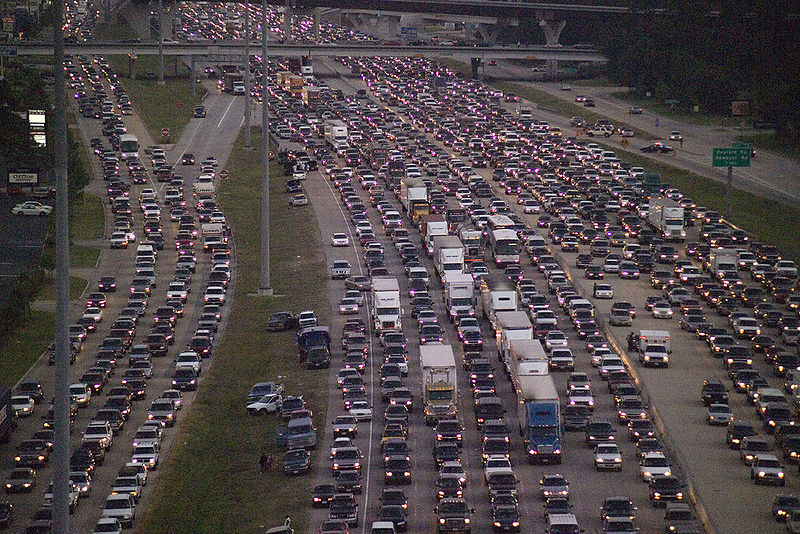
All of these are possibilities, but in each one, a thick population density will make it far worse. There’s no denying that people panic when a crisis occurs, and that panic is only multiplied when more people are living closely to one another.

More people will be killed in a shorter period of time in the major cities, the roads will be clogged as people and families try to escape, and furthermore, just look at the other threats that we listed first. Many of them are directly connected to population density.

If an economic collapse were to occur, then urbanized cities would be simply unable to rebuild their economies as fast as more rural areas (with coal mining, logging, farmer’s markets, etc.) could.

There are other factors that make certain areas in America unsafe and unsuitable for outlasting an apocalypse:

  • Strong natural disaster risks
  • A weak economy
  • High crime rates
  • Strict gun laws
  • A high cost of living
  • High taxes
  • Heavy traffic
  • Unfertile land for growing crops
  • Close proximity to nuclear/chemical power plants
  • Low populations of wild game and edible plants
  • Limited fresh water

In this story, we’re going to list out the five very worst retreat areas in the United States. These are the areas where you will definitely not want to be when disaster strikes, and if you live in or near any of these areas now, you may want to consider moving or have an alternate plan:

FEMA Emergency Alert! Hidden Terrible Situations Exposed- Watch the video below to find out the most shocking details!!!

With a whopping 1.03 million home invasions occurring every year in just the U.S. alone, there’s no reason you shouldn’t have a plan of action ready to utilize in case you become one of these unfortunate victims.

So pay chose attention because this video will change your life forever for the good!

1. East Coast

Many survival and disaster experts agree that the East and West Coasts together are among the worst locations to survive a long-term disaster in the United States. This is because both meet the “unsafe factors” we just outlined. High population density? Check. High cost of living? Check.  Strict Gun Laws? For the Northeastern states, check. High crime rate? In many cities, yes. High taxes and regulations? In the Northeastern states yes. Heavy traffic? Check. Threat of natural disaster, namely hurricanes? Check. Low populations of wild game and edible plants? Check. Potential enemy nuclear targets? For the major cities, definitely.

As a general rule of thumb, avoid anywhere along the East Coast if you can. It’s simply not a safe place if you want to survive a disaster. If you do live on or near the East Coast, fall back to retreat areas in the Appalachian Mountains or northern New England, like New Hampshire or Maine, when worst comes to worst.

2. West Coast

Many of our concerns expressed with the East Coast apply to the West Coast as well. The largest state along the West Coast, California, is already an economic disaster and thus not somewhere you would want to be in an economic collapse. Washington and Oregon are both, by far, better off economic-wise, but they still have their problems with high taxes, tough regulations and large government spending. The major cities of San Diego, Los Angeles, San Francisco and Seattle have extremely high population densities and are potential terrorist/nuclear targets.

In addition, the West Coast lies along the Ring of Fire, which adds earthquakes to the list of natural disaster risks to worry about. If you don’t think earthquakes are that big of a deal, well, just look at what happened to Japan in 2011. Plus, in Washington, you have volcanoes. All in all, both the East and West Coasts are dangerous hotspots in an apocalyptic-type scenario and are not recommended.

3. Florida

Florida, in general, is not somewhere you will want to be during a disaster. Not to mention the ever looming threat of hurricanes in the state, Florida also endures a high crime rate, a collapsed housing market and high costs of living, a very dense population, and the fact that much of the state is actually below sea level (the parts of the state that are higher aren’t above it by much).

There’s no denying that Florida has nice weather, which is why many people move there in the first place, but its negatives far outweigh its positives to the point that it’s one of the worst retreat locations you could be in for outlasting a long-term disaster.
4. Alaska

Woah, woah, wait, Alaska? The so-called “last frontier” in America is one of the worst places to survive an apocalypse? First of all, Alaska does have a few positives (not to mention the beauty of its geography) that would make it an initially attractive place to live for someone who wants to be in a safe region from a major disaster. It is true that Alaska has the lowest population density of all 50 states, along with low tax rates. It also has a great abundance of rivers, lakes, wildlife and edible plants.

But when we come to economics, Alaska is practically cut off from the rest of the United States. A lot of the supplies that Alaskans rely on are either flown or shipped into the state. In a disaster scenario, these planes and ships will likely no longer be making shipments, greatly limiting available resources. Furthermore, those who live more inland in Alaska will be extremely limited in what they can do with commerce.

Remember when we noted that the West Coast of the USA is prone to earthquakes due to being situated along the Ring of Fire? Well, so is Alaska. There’s also very limited transportation to get oil from the North Slope to where it needs to go, and much of the fuel that Alaskans use is already brought in from the Lower 48 states. The winters in Alaska can also be quite cold and brutal.

Alaska may seem like the prepper’s haven, but on closer inspection it becomes apparent that you’re going to have a much tougher time surviving there than you would think. This is one place you may want to avoid, unless you know how to live 100 percent off the grid.

5. Hawaii

Like Florida, Hawaii may be a great place to vacation, but it’s an utterly terrible location to be in during an apocalyptic scenario. Most of Hawaii’s resources, as with Alaska, are shipped in.  This includes food and fuel. That’s on top of a very high cost of living in the state coupled with generally poor farming soil.

Gun laws are very strict in the state, and there are many military bases on the islands that could be the targets of enemy attacks. Let’s also not forget one more thing: Should a big enough natural disaster ever happen to Hawaii, how will you escape? After all, it’s a series of islands in the middle of the Pacific Ocean. Unless you have access to a plane or a ship, you may be toast.

Every region in the US certainly has its pros and cons, but these are the areas where the cons outweigh the positives the most.

I highly recommend this book: The Home Doctor – Practical Medicine for Every Household – is a 304 page doctor written and approved guide on how to manage most health situations when help is not on the way.

If you want to see what happens when things go south, all you have to do is look at Venezuela: no electricity, no running water, no law, no antibiotics, no painkillers, no anesthetics, no insulin or other important things.

But if you want to find out how you can still manage in a situation like this, you must also look to Venezuela and learn the ingenious ways they developed to cope.

What To Do When Gun Control Gets Really Bad- We Need to Prepare For The Worst And Always Ready to Resist

Gun Control is a favorite tactic for many politicians on the left. It allows them to shift the blame from the person, whose worldviews and political party often aligns with theirs, to a simple tool they can ban. With an all Republican everything, you’d think we wouldn’t have to worry, but that’s far from true. These people seemingly always find a way to infiltrate politics and attempt to strip us of our God-given rights. So what do we do? How do we fight back if gun control legislation is proposed or passed?

#1. Learn How To Make Your Own

California is the beacon of cruddy gun control laws in the United States. They’ve gone above and beyond to reclassify your standard semi-automatic rifle into what they call an assault rifle. What we’ve seen is people and companies outsmarting the legislature at every turn. One of the most famous means was building your own gun. Specifically AR 15s. AR 15s are always on the chopping block, but even California couldn’t stop the signal.

With the advent of 80% lowers Californians were able to again build their own rifles within the law. The AR 15 is hardly the only weapon you can build. In fact, an enterprising patriot build can manufacture their own semi-auto Sten gun, Glocks, MAC 10/11s, AK rifles and more. The main issue is going to be acquiring the skills and tools needed to make these weapons. It takes a little mechanical skill and a lot of different tools.

It would be wise to start learning the insides and outsides of guns now. Learn to build them, acquire the tools, and fire up the Youtube machine. Here you’ll find as hard as they try they can’t stop the signal. You can build your own with a little practice, and it’s perfectly legal to do so. You aren’t just building guns, you are learning valuable skills regarding the construction and design of firearms that could be invaluable if things got really bad.

#2. Recognize the Gun Ban Matrix

One fact we’ve seen over and over again with anti-gunners is that they know absolutely nothing about guns. If the power these people had wasn’t so terrifying it would be hilarious. Every time they open their mouths about guns they say something incredibly stupid. They simply target guns that look scary and that’s it. That’s why the gun ban matrix exists. The gun ban matrix is a list of features and guns unlikely to be banned because anti-gunners are idiots and don’t understand firearms.

These are the guns you should consider investing in should sweeping legislation occur. In case the situations getting drastic and confiscation begins things may move too fast for people to react. In that event a neutered gun is better than no gun.

The first guns to go are going to be the traditional targets for anti-gunners, the AK 47s, the AR 15s, the Tavors, and the usual suspects. They may be banned by name, or by the features they share. A good alternative to these semi-auto rifles is the Ruger Mini 14 and Mini 30 series. They can be purchased in not so scary configurations.

Past the Mini 14 and Mini 30, there is the fixed magazine SKS rifle. It’s often left off ban lists, and it’s affordable and common. It’s limited to ten rounds, but with stripper clips, you can reload quite fast with practice.

Past this level we get into manually operated firearms, this includes pump-action shotguns, and lever and bolt action rifles. A good lever action rifle is a rapid firing gun and in the right caliber can hold up to 14 rounds. These guns are highly unlikely to be banned without a full constitutional amendment.

#3. Don’t Give A Single Inch

With the recent Las Vegas shooting there has been an increased interest in banning a firearm accessory known as a bump fire stock. These accessories are rather dumb and useless, and in no way did it make the shooter more lethal. Regardless of how dumb and useless they are there is no reason the firearms community should let them be banned without a fight. With the NRA even saying the ATF should reevaluate bump fire stocks.

This is how gun control starts, with tiny little cuts. We let them take one dumb accessory and next time they’ll push for something else, and they’ll keep pushing. Give them nothing, not a single inch. As gun rights advocates we have to defend what we have and go on the offensive. Fight back and take our God Given rights back.

#4. Push Back and Push Back Hard

If legislation gets passed regarding gun control, and I mean any legislation at all, we have to push back. The vast majority of gun owners are law abiding, tax paying, job having citizens who want nothing more than to live in peace. We all know actual gun control will do absolutely nothing to strip criminals of firearms, just good people who already obey the law.

If gun control happens as law abiding gun owners we have to flood the legislator’s offices with our demands. We have to protest, we have to write letters, we need to march on the capitals. In 2012 the gun community did an amazing job of coming together to resist any form of gun control. We need that same response to every law that passes, heck we need that reaction every gun control law that is even proposed.

We need to push at the local, state and federal level. Work every angle possible. We have to keep supporting companies that agree with our God-given rights, we have to join gun rights organizations of every kind. We literally have to put our money where our mouth is.

#5. Focus on the Small Politics as Much as the Large

It’s easy to forget the importance of local politics when it comes to federal gun control. Local and state politics can make all the difference. We saw Sheriff’s in states across the union step forward and say they would refuse to enforce federal gun control laws in their counties. We saw states and municipalities adopt laws that would act to nullify federal gun control laws.

If we can’t toss the anti-freedom and anti-gun bastards out of federal offices we can at least elect the right people at the local and state level to ensure the laws are useless.

Resist

As American citizens, we owe it to future generations to resist. Resist with every fiber we have. Resist gun control measures with everything we can. We need to prepare for the worst and always ready to resist.