Over decades, if not centuries, the US dollar has been the world’s leading currency. The central banks all over the world hold an enormous part of their investments in the US currency, while some private companies use it for international transactions. With this, the trade in US treasury has boosts the American economy and greases the wheels to the global financial system.
But, many experts predicted a tipping point will come that would cause the dollar to collapse, thus lead to a global economic problem. In this scenario, many investors would rush to other currencies to run off further losses. This would mean a breakdown of the national economy. The aftermath of this scenario could likely lead to a dollar collapse.
Full of sudden currency collapses have happened in history. A dollar collapse is characterized to a long-term depression in economic activity, increased poverty and a disruption of the social order. One of the primary roots of any collapse is the lack of confidence in the stability or efficacy of money to serve as an effective store of value or medium of exchange.
The main sign of a dollar collapse is when the value of US dollar drops. There are some conceivable scenarios that could cause a sudden crisis for the dollar. When there is a great threat of high inflation and high debt, in which rising consumer prices force the government to raise interest rates.
If the US entered a steep recession without dragging the rest of the world with it, anyone who holds dollar-denominated assets might sell them at any cost that includes foreign governments and no one wants to buy them, worst would leave the dollar. Thus, anytime, everyone should prepare for the worst, but you can prepare for a dollar collapse through these economic indicators.
Will the U.S. Dollar Collapse?
The collapse of the US dollar remains ambiguous until now. Several articles and websites urge us to prepare for the coming recession, but are the preconditions of a dollar collapse have been occurring? Foreign exporters do not want a dollar collapse because it would likely create a worldwide panic that frets the global economy.
Even if the United States had to default some debt obligations, there is a little indication that the world would let the dollar collapse and risk possible depression. But the collapse on Wall Street has been alarming and the US government must have a choice whether to default on the national debt or destroy the dollar.
If US dollar collapse happens, it might come to pass. No one would predict it. That’s because the signs of forthcoming failure are difficult to see. It is imperative for the government to take a necessary intervention to bring an economy back from collapse. Yet, this can often be slow to remedy the problem.
Bellow we have- Six Ways That Will Prepare and Protect You from a Dollar Collapse
A dollar collapse suggests an economic plight. It is akin to deep recession that scarcity and shortage of resources would occur. One must prepare for the worst scenario and to respond to this kind of uncertainty, you must be mobile. Here are few ways to prepare and protect yourself and survive a dollar collapse.
1. Prepare your Finances and Start being Smart with your Money Now.
One of the most important things you can do when it comes to financial preparedness is to put together a smart savings plan . If things go bad, having a plan of action will help increase your chances of surviving the chaos.
· You start with cutting all unnecessary expenses and spend that money to pay down your debt. The possibility of losing your home to debt collectors is a very real prospect.
· An Emergency Fund is a potential aid to prepare for financial troubles. It will give you stress-free during hard times. It can provide you with a fund to buy last minute supplies once things start to go bad.
· Remember to always have a cash on hand. When things go wrong, there is a very real possibility that the banks may freeze your accounts. It’s important to have cash that is accessible, either from a savings account or a cash box in your home. This can drift you over in an emergency until you can access money in your emergency fund.
2. Create a stockpile of Survival Essentials
Now is the perfect time to buy long-term supplies that you will need to survive in the future.
· Start stockpiling food and long-term supplies. In any type of crisis, especially during a collapse, food, water and long-lasting consumables are essential and indispensable. You will likely see main supply chain shortages and problems, making these types of supplies one of your most important pre-collapse concerns.
· Put together a supply of first-aid & medical supplies on hand. Once you create a kit, in the event of a collapse, you may not be able to shop for these supplies, so t’s important to have them on hand.
· Make sure you have all of the necessary supplies for survival . Include personal items such as medications for yourself and members of your family. Check the kit to make sure nobody has used any of the supplies. Also, check the end dates and replace expired items.
3. Secure your Home
· To prepare for a dollar collapse is to choose your shelter type. A separate shelter is designed to survive from natural disasters or man-made weapons or attacks. During this kind of crisis, power systems may fail and robbers and scavengers may threaten your home. Take precautions to protect yourself and your home.
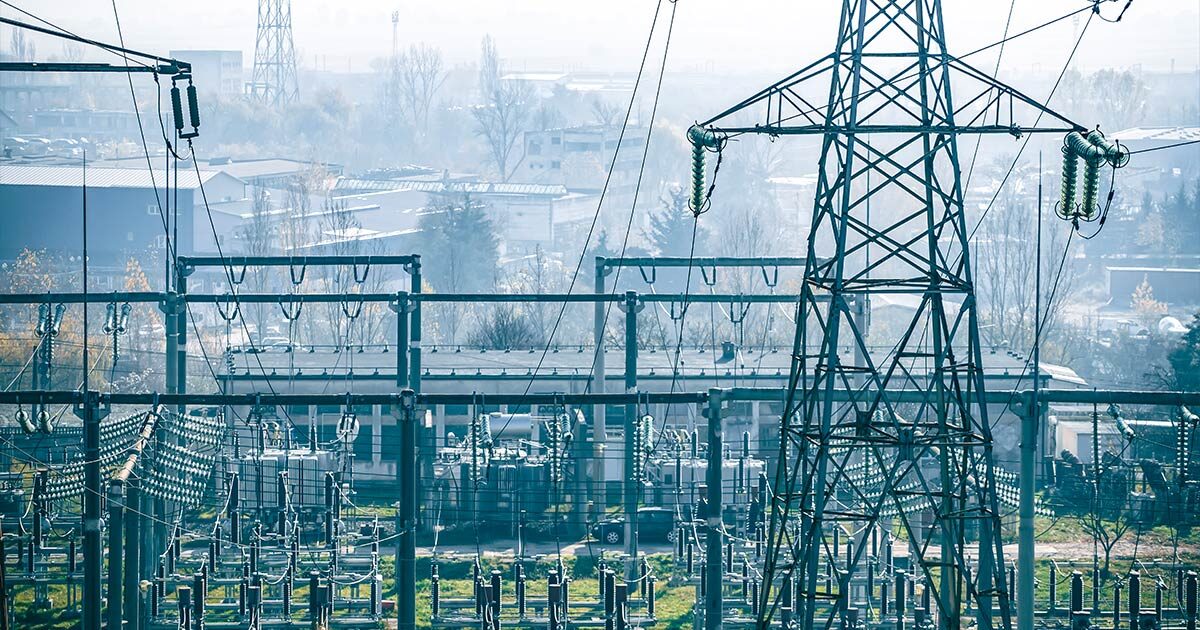
· Another thing is to create two sources of electricity. One source could be solar. Hook it up to your home and then run the system underground. The second source might be an underground generator. You will use this in the event of a total loss of power. Keep your energy sources hidden underground to protect them.
· Consider purchasing self-defense tools . Self-defense tools are generally harmless. They are used to prevent an attack by rendering the invader futile. You can use everyday objects, such as baseball bats or gears. Other tools you may buy like pepper spray, hand-held stun guns, Taser devices or Sonic alarms.
· Set an alarm system in your home. Home alert alarm systems are easy and inexpensive to install and maintain. Wireless security systems notify you if a trespasser is approaching your home. Hidden cameras allow you to see internal and exterior areas in your home where a trespasser may be present.
One of the prevalent risks you’re going to face during dollar collapse is the threat posed by people. Learn everything you can about self-defense. When things go bad, you are going to need a way to protect yourself and those you love, your home.
4. Prepare your Family
· Make sure that every member of the family is mindful of the situation. To prepare for a dollar collapse, you need have to guarantee that your whole family is ready with your preparations. This means informing them in honest terms what is about to happen and telling them what they should be doing. It is important that everyone takes the situation . Otherwise, they will not be mentally prepared in the event that collapse happens.
· Each family member must be informed of the steps you have taken to prepare your finances, essential supplies, food, and shelter. Instruct them on doing the same.
· Every member should understand the relationship between inflation and economic growth. Explain to them the adverse impact of a dollar collapse on your family’s socio-economic life.
· Consider including other family members, neighbors, or a community group in your preparations. Make sure that these are people who are reliable and will put to work for the benefit of the group.
5. Equip your Mind
Even more important than supplies, is survival knowledge and awareness. Knowledge is the key to your survival, and now is the time to get plenty. During any kind of crisis and survival, including a dollar collapse, knowledge is going to be your most powerful ally.
· Read books on survival and preparedness, then start collecting information on how to live a more independent lifestyle.
· Do your own research and don’t rely on government spun stories, or crafted in the media; you need to do your own research too. Check the reliability of the information you get to prepare for the collapse.
6. Expect a Financial Crisis
The major risk you are going to face in a dollar collapse is the downturn of your finances. It is important to be ready beforehand on what to do and what not to do on your financial systems.
· Check and track the price of commercial commodities. Changes in the prices of commodities affect the country’s economy and the value of the US dollar. An increase in commodity prices is associated with an increase in inflation. Increased inflation correlates with economic growth. But, if commodity prices drop, inflation slows, which indicates an economic decline.
· Take note of the financial markets. Big ups and downs in the markets are a red flag signaling a general decline.
· Watch the oil prices. When oil prices increase, the Gross Domestic Product (GDP) goes up too. Remember that the fluctuation of oil prices has a macroeconomic impact. If it is increasing, then the value of goods and services also increases.
What Life Will Be Like After A Dollar Collapse?
Everybody else could tell that a dollar collapse would be coming. A sudden dollar collapse would create global economic depression. It would allow the US government to come up with a currency system and a kind of economic strategies to avoid grave consequences.
· Demand for Treasury’s would drop, and interest rates would go up. US import prices would skyrocket, causing inflation.
· Irregular public services like school system experience frequent strikes that shut them down, power issues and outages become more frequent.
· Unemployment would worsen and more people will experience job loss or layoffs. More people are displaced and finding a job will become almost impossible.
· An increase in criminal activity will definitely happen. People will become desperate to feed themselves and their families and more people will be more willing to cross the line into criminal activity to get what they need.
· Lots of people will lose access to their healthcare when they lose their jobs. Healthcare appointments may become more difficult to schedule and it may take longer to get in to see a doctor because more people are getting sick and need care.
· You can expect increased incidents of domestic violence as family relationships are strained and crack under the stress of poor living conditions.
A dollar collapse is a real threat with far-reaching repercussions. While it is inevitable, there are advance preparations that individuals and their families can make, at the very least, protect themselves from the event triggers. Stay informed on top of the global economy. You can be safe in a dollar collapse if you follow the ways that protect you from an economic crisis.
The US Nuclear Target Map shows important places in the US that could be targets in a nuclear attack. This map, which clearly displays these key locations, has been popular online since news outlets like CBS first shared it in 2015. Military strategists and analysts create these maps using different intelligence sources to decide which locations are most important strategically.
Key Takeaways:
A US Nuclear Target Map highlights possible targets and safe areas, aiding emergency planning by showing where attacks may occur and locations less likely to be directly affected.
The world’s nuclear weapons, mainly held by the United States and Russia, present significant dangers. The Korean Peninsula, South Asia, and the Middle East are especially unstable.
Montana, Wyoming, North Dakota, South Dakota, Idaho, and Maine are seen as safe zones.
Government agencies like the CDC and FEMA prepare for nuclear events by promoting readiness, raising public awareness, and offering guidelines on protection and evacuation.
In this article, you’ll understand the importance of the US Nuclear Target Map. It aims to help you understand the potential effects of nuclear conflict, strategic planning, and its implications on global security.
Nuclear Threat Awareness
Understanding nuclear threats is vital for everyone, not just leaders and experts. It helps you see how serious nuclear weapons are and their effect on world safety and your own.
First, it shows why countries avoid using these powerful weapons, leading to talks about reducing arms and maintaining peace. Second, this knowledge lets you participate in meaningful discussions and decisions about your country’s defense and its role in the world.
Also, when informed, you can better understand the news and the hidden risks of global tensions. Knowing about nuclear strategies helps you form opinions on what actions your country and others should take on the international stage.
Latest Global Nuclear Arsenal Statistics And Potential Geopolitical Tensions
The latest statistics on global nuclear arsenals show a complex and evolving landscape, with significant expansion and modernization efforts underway by several key states. Here’s a summary of the current state of nuclear forces:
United States and Russia: These countries hold the largest shares of the world’s nuclear arsenal, collectively accounting for over 90% of the world’s nuclear weapons. Both are actively modernizing their nuclear forces, including warheads, missile systems, and aircraft delivery systems.
China: China is undergoing one of the most rapid expansions of nuclear capabilities among the nine nuclear-armed states. Recent estimates suggest that China’s stockpile includes around 500 nuclear warheads, with significant developments in missile capabilities and delivery systems.
United Kingdom: In a shift from previous disarmament policies, the UK plans to increase its nuclear warhead ceiling, reflecting a broader trend of reevaluating nuclear strategies.
Other Nuclear States: Countries like India, Pakistan, and North Korea are also enhancing their nuclear capabilities. North Korea, for instance, continues to prioritize and expand its nuclear program as a core element of its national security strategy.
Several nations are modernizing and expanding nuclear arsenals, reflecting ongoing updates in global military capabilities. These developments emphasize the dynamic nature of nuclear forces worldwide.
Getting Familiar with Potential Nuclear Targets in the US
Military bases, big cities, and key infrastructure are usually seen as the main targets in a nuclear attack. Hitting these places can significantly affect military strength and cause widespread fear. Cities packed with people are economically important and as transport and communication centers.
When determining which places might be targets, consider their symbolic importance and role in defense and the economy. Areas close to missile launch sites, big military bases, or important industrial areas could be more at risk. Yet, it’s important to remember that nuclear strategies and technologies are constantly changing, which could alter which targets are considered most important.
Identifying Nuclear Detonation Risks
Understanding the risks of nuclear detonations is essential for preparedness and mitigation efforts. Below are the different types of nuclear detonation risks and their potential impacts:
Explosive Blast
The explosive blast is a nuclear detonation’s most immediate and visually apparent effect. It can destroy or severely damage buildings, roads, and other infrastructure within a wide radius of the explosion. The intensity of the blast wave can vary significantly depending on the yield of the nuclear weapon and the distance from ground zero.
Thermal Radiation
Thermal radiation emits intense heat and light, causing severe burns to people and igniting fires across a broad area. This can lead to widespread firestorms, particularly in urban environments with high-density structures and flammable materials.
Initial Radiation
Within the first minute of a detonation, high doses of radiation are released, capable of causing acute radiation sickness. This includes nausea, vomiting, and a decreased white blood cell count, increasing susceptibility to infections.
Radioactive Fallout
Following the detonation, wind patterns carry out radioactive fallout over large areas. This fallout consists of radioactive particles that can contaminate air, water, and soil, posing long-term health risks to people and the environment. The extent of contamination and the duration of its effects depend on the size of the explosion and weather conditions.
Electromagnetic Pulse (EMP)
An EMP results from a nuclear explosion, which can disrupt or damage electronic devices and critical infrastructure over a vast area. This can lead to significant challenges in communication, transportation, and the delivery of essential services in the aftermath of a detonation.
Safe Zones and Factors Influencing Safety
Safe zones are typically far from strategic military sites and major urban centers that might be targeted in a nuclear strike.
When determining a safe zone, consider its distance from military bases, major cities, and facilities that could be strategically important. Additionally, areas outside the radius of potential blast and fallout zones, based on prevailing wind patterns and the size of the nuclear threat, are generally safer.
It’s also essential to look at the accessibility of these safe zones. You’ll want a location that you can realistically reach, given your transportation means and the timeframe you might have before a nuclear event occurs. Planning and familiarizing yourself with multiple routes to these areas can save valuable time in an emergency.
Geographical and Infrastructural Factors Contributing to Safety
Geography and buildings play a big part in protecting an area from nuclear fallout. Mountains can block radiation, but being downwind from a target means more risk. Buildings strong enough to handle natural disasters can also help protect people from a blast and offer a safe place to hide from fallout.
Good emergency services and living facilities, like clean water and food, are also important. It’s also better to be in a place with fewer people so there’s enough for everyone if something terrible happens. When picking a safe place, thinking about the land and how well the area can support people for a long time is crucial for staying safe.
Latest Findings on Nuclear Fallout Patterns and Evacuation Strategies
Recent research has improved people’s understanding of nuclear fallout patterns, showing that they can vary greatly depending on the size of the bomb, the height of detonation, and weather conditions at the time of the blast. This information is crucial for updating evacuation strategies, as it helps predict which areas might be affected and how quickly you need to move to stay safe.
Nowadays, evacuation plans use up-to-date information and predictions to guide people on what to do. By following these new methods and getting your news from reliable places, you can improve your chances of safely getting through a nuclear event. Make sure you have a plan for getting to your safe place, and go over it with your family.
How To Determine If A Nuclear Threat is Serious
To assess the seriousness of a nuclear threat, it is important to rely on reliable and authoritative sources. Official government alerts, reputable news outlets, and recognized international organizations are the primary channels for accurate and timely information.
Here are some examples of official government alerts that might be used to inform the public about a nuclear threat or other emergencies:
Emergency Alert System (EAS): This is a national public warning system in the United States that requires broadcasters, satellite digital audio service and direct broadcast satellite providers, as well as wireline video providers to offer the President the capability to address the American public during a national emergency. It can also be used by state and local authorities to deliver important emergency information such as weather information and local incident information.
Wireless Emergency Alerts (WEA): These are short emergency messages sent by authorized government authorities through your mobile carrier. They include alerts about severe weather, local emergencies r
equiring evacuation or immediate action, AMBER alerts, and Presidential Alerts during a national emergency.
National Warning System (NAWAS): This is a telephone system that connects participating federal, state, and local government agencies. It is used to convey warnings to governmental authorities and population centers in advance of emergencies.
Integrated Public Alert and Warning System (IPAWS): This system integrates the United States’ alert and warning systems, networks, and facilities. IPAWS’ goal is to provide public safety officials with an effective way to alert and warn the public about serious emergencies using various platforms.
Government websites and social media: Many government agencies use their websites and social media channels to issue warnings and updates about ongoing or imminent emergencies. This can include everything from detailed preparedness information to real-time updates during an emergency.
Emergency broadcast systems also play a crucial role in providing quick and dependable updates during a crisis. Ensuring that you receive information from these trusted sources is essential for understanding the situation and making informed decisions during a nuclear threat.
How to Prepare for a Possible Nuclear Strike
Preparing for a possible nuclear strike involves several steps to enhance your safety and readiness in the unlikely event of such an incident. Here’s a general guide on how to prepare:
Building Your Emergency Kit
Your emergency kit is your first line of defense. A well-stocked emergency kit should include the basics: water, non-perishable food, a first-aid kit, flashlights, and batteries. Additionally, considering the potential for nuclear emergencies, including potassium iodide (KI) tablets can be a vital precaution.
Potassium iodide helps protect the thyroid gland from radiation by blocking radioactive iodine uptake. It’s most effective if taken shortly before or immediately after exposure to radioactive iodine, which can be released during a nuclear emergency.
How to Get Potassium Iodide:
Pharmacies: Potassium iodide tablets are available at many pharmacies. Checking availability in advance is advisable as demand can increase during emergencies.
Online Retailers: These tablets can also be purchased from various online stores, including those specializing in medical supplies or emergency preparedness products.
Government Distribution: In certain scenarios, local or national health authorities may distribute potassium iodide to residents living near nuclear facilities.
When to Take It:
Potassium iodide should only be taken on the advice of public health or emergency management officials. It is most effective if taken within 24 hours before or just after exposure to radioactive iodine.
Dosage:
The appropriate dose depends on age and health condition. The U.S. Centers for Disease Control and Prevention (CDC) recommends the following doses:
***Adults over 40 should take potassium iodide (KI) only when officials recommend it, and if exposure levels are high enough to risk causing hypothyroidism.
How Do Early Warning Systems Help
Technology plays a crucial role in early warning systems for nuclear threats, using satellites and radar to watch for dangers all the time. When a threat is found, these systems quickly send out warnings through various channels, including emergency broadcasts and mobile phone alerts, giving people and communities time to get to safety.
Thanks to technology getting better, these warnings are now more accurate and less likely to be false, which helps avoid unnecessary fear. Knowing how to get and respond to these alerts is a key part of being prepared. Learning about your local warning systems and checking that you can receive alerts without problems is important.
As for protecting against radiation, new and better ways exist to reduce exposure and keep people safe. Innovations include new materials for shelters, protective clothing, and portable devices that let you check radiation levels on the go.
Governmental and Public Preparedness Efforts
As you begin to understand the scale and seriousness of nuclear threats, it’s natural to wonder how prepared you are. Governments and public health organizations have taken steps to prepare for the unthinkable. Exploring these efforts provides reassurance and a call to action for your preparedness.
Overview of CDC and FEMA Initiatives for Nuclear Preparedness
The Centers for Disease Control and Prevention (CDC) and the Federal Emergency Management Agency (FEMA) have developed comprehensive plans to respond to nuclear incidents. These initiatives focus on readiness, from immediate response to long-term recovery, ensuring that medical and logistical support systems are in place. For example, they offer guidelines on radiation sickness treatment and evacuation procedures.
Besides medical preparedness, these agencies also work on public awareness campaigns. They provide resources that help you understand the potential health risks of radiation and the steps you can take to protect yourself and your family. This dual approach of preparation and education is key to minimizing the impact of a nuclear incident on public health.
Local Government Efforts And Community Responses
Many cities and states have their plans to handle a nuclear emergency, customized to fit their specific needs and risks. This involves considering their proximity to potential targets and the resources available to them. They frequently conduct drills and educational programs to ensure that both emergency services and the public know how to respond in case of a nuclear incident.
Community groups also play a crucial role in preparedness. Local organizations and neighborhood groups provide support and share information, particularly with those who are most vulnerable. These local networks are essential for increasing awareness and providing assistance after an incident, complementing the efforts of larger government organizations.
Conclusion: Navigating the Future with Preparedness and Resilience
In the face of a potential nuclear strike, being prepared and resilient is crucial. Understanding the risks, staying updated on safe zones and evacuation plans, and getting your emergency supplies and shelters ready significantly increase your chances of staying safe. Engaging with your community and using the latest technology for early warnings and radiation protection boosts your readiness.
Remember, the goal of all this preparation isn’t to live in fear but to empower yourself with knowledge and tools. Taking proactive steps now ensures that you and your loved ones can face the future confidently, ready to tackle any challenges with preparedness and resilience.
Today, millions of Americans say that they believe that the United States is on the verge of a major economic collapse and will soon be entering another Great Depression. But only a small percentage of those same people are prepared for that to happen. The sad truth is that the vast majority of Americans would last little more than a month on what they have stored up in their homes. Most of us are so used to running out to the supermarket or to Wal-Mart for whatever we need that we never even stop to consider what would happen if suddenly we were not able to do that. Already the U.S. economy is starting to stumble about like a drunken frat boy. All it would take for the entire U.S. to resemble New Orleans after Hurricane Katrina would be for a major war, a terror attack, a deadly pandemic or a massive natural disaster to strike at just the right time and push the teetering U.S. economy over the edge. So just how would you survive if you suddenly could not rely on the huge international corporate giants to feed, clothe and supply you and your family? Do you have a plan?
Unless you already live in a cave or you are a complete and total mindless follower of the establishment media, you should be able to see very clearly that our society is more vulnerable now than it ever has been. This year there have been an unprecedented number of large earthquakes around the world and volcanoes all over the globe are awakening. You can just take a look at what has happened in Haiti and in Iceland to see how devastating a natural disaster can be. Not only that, but we have a world that is full of lunatics in positions of power, and if one of them decides to set off a nuclear, chemical or biological weapon in a major city it could paralyze an entire region. War could erupt in the Middle East at literally any moment, and if it does the price of oil will double or triple (at least) and there is the possibility that much of the entire world could be drawn into the conflict. Scientists tell us that a massive high-altitude EMP (electromagnetic pulse) blast could send large portions of the United States back to the stone age in an instant. In addition, there is the constant threat that the outbreak of a major viral pandemic (such as what happened with the 1918 Spanish Flu) could kill tens of millions of people around the globe and paralyze the economies of the world.
But even without all of that, the truth is that the U.S. economy is going to collapse. So just think of what will happen if one (or more) of those things does happen on top of all the economic problems that we are having.
Are you prepared?
The following is a list of 20 things you and your family will need to survive when the economy totally collapses and the next Great Depression begins….
#1) Storable Foo
Food is going to instantly become one of the most valuable commodities in existence in the event of an economic collapse. If you do not have food you are not going to survive. Most American families could not last much longer than a month on what they have in their house right now. So what about you? If disaster struck right now, how long could you survive on what you have? The truth is that we all need to start storing up food. If you and your family run out of food, you will suddenly find yourselves competing with the hordes of hungry people who are looting the stores and roaming the streets looking for something to eat.
Of course you can grow your own food, but that is going to take time. So you need to have enough food stored up until the food that you plant has time to grow. But if you have not stored up any seeds you might as well forget it. When the economy totally collapses, the remaining seeds will disappear very quickly. So if you think that you are going to need seeds, now is the time to get them.
#2) Clean Water
Most people can survive for a number of weeks without food, but without water you will die in just a few days. So where would you get water if the water suddenly stopped flowing out of your taps? Do you have a plan? Is there an abundant supply of clean water near your home? Would you be able to boil water if you need to?
Besides storing water and figuring out how you are going to gather water if society breaks down, another thing to consider is water purification tablets. The water you are able to gather during a time of crisis may not be suitable for drinking. So you may find that water purification tablets come in very, very handy.
#3) Shelter
You can’t sleep on the streets, can you? Well, some people will be able to get by living on the streets, but the vast majority of us will need some form of shelter to survive for long. So what would you do if you and your family lost your home or suddenly were forced from your home? Where would you go?
The best thing to do is to come up with several plans. Do you have relatives that you can bunk with in case of emergency? Do you own a tent and sleeping bags if you had to rough it? If one day everything hits the fan and you and your family have to “bug out” somewhere, where would that be? You need to have a plan.
#4) Warm Clothing
If you plan to survive for long in a nightmare economic situation, you are probably going to need some warm, functional clothing. If you live in a cold climate, this is going to mean storing up plenty of blankets and cold weather clothes. If you live in an area where it rains a lot, you will need to be sure to store up some rain gear. If you think you may have to survive outdoors in an emergency situation, make sure that you and your family have something warm to put on your heads. Someday after the economy has collapsed and people are scrambling to survive, a lot of folks are going to end up freezing to death. In fact, in the coldest areas it is actually possible to freeze to death in your own home. Don’t let that happen to you.
#5) An Axe
Staying along the theme of staying warm, you may want to consider investing in a good axe. In the event of a major emergency, gathering firewood will be a priority. Without a good tool to cut the wood with that will be much more difficult.
#6) Lighters Or Matches
You will also want something to start a fire with. If you can start a fire, you can cook food, you can boil water and you can stay warm. So in a true emergency situation, how do you plan to start a fire? By rubbing sticks together? Now is the time to put away a supply of lighters or matches so that you will be prepared when you really need them.
In addition, you may want to consider storing up a good supply of candles. Candles come in quite handy whenever the electricity goes out, and in the event of a long-term economic nightmare we will all see why our forefathers relied on candles so much.
#7) Hiking Boots Or Comfortable Shoes
When you ask most people to list things necessary for survival, this is not the first or the second thing that comes to mind. But having hiking boots or very comfortable and functional shoes will be absolutely critical. You may very well find yourself in a situation where you and your family must walk everywhere you want to go. So how far do you think you will get in high heels? You will want footwear that you would feel comfortable walking in for hours if necessary. You will also want footwear that will last a long time, because when the economy truly collapses you may not be able to run out to the shoe store and get what you need at that point.
#8) A Flashlight And/Or Lantern
When the power goes off in your home, what is the first thing that you grab? Just think about it. A flashlight or a lantern of course. In a major emergency, a flashlight or a lantern is going to be a necessity – especially if you need to go anywhere at night.
Solar powered or “crank style” flashlights or lanterns will probably be best during a long-term emergency. If you have battery-powered units you will want to begin storing up lots and lots of batteries.
#9) A Radio
If a major crisis does hit the United States, what will you and your family want? Among other things, you will all want to know what in the world is going on. A radio can be an invaluable tool for keeping up with the news.
Once again, solar powered or “crank style” radios will probably work best for the long term. A battery-powered until would work as well – but only for as long as your batteries are able to last.
#10) Communication Equipment
When things really hit the fan you are going to want to communicate with your family and friends. You will also want to be able to contact an ambulance or law enforcement if necessary. Having an emergency cell phone is great, but it may or may not work during a time of crisis. The Internet also may or may not be available. Be sure to have a plan (whether it be high-tech or low-tech) for staying in communication with others during a major emergency.
#11) A Swiss Army Knife
If you have ever owned a Swiss Army knife you probably already know how incredibly handy they can be. It can be a very valuable and versatile tool. In a true survival situation, a Swiss Army knife can literally do dozens of different things for you. Make sure that you have at least one stored up for emergencies.
#12) Personal Hygiene Items
While these may not be absolute “essentials”, the truth is that life will get very unpleasant very quickly without them. For example, what would you do without toilet paper? Just think about it. Imagine that you just finished your last roll of toilet paper and now you can’t get any more. What would you do?
The truth is that soap, toothbrushes, toothpaste, shampoo, toilet paper and other hygiene products are things that we completely take for granted in society today. So what would happen if we could not go out and buy them any longer?
#13) A First Aid Kit And Other Medical Supplies
One a more serious note, you may not be able to access a hospital or a doctor during a major crisis. In your survival supplies, be absolutely certain that you have a good first aid kit and any other medical supplies that you think you may need.
#14) Extra Gasoline
There may come a day when gasoline is rationed or is simply not available at all. If that happens, how will you get around? Be certain to have some extra gasoline stored away just in case you find yourself really needing to get somewhere someday.
#15) A Sewing Kit
If you were not able to run out and buy new clothes for you and your family, what would you do? Well, you would want to repair the clothes that you have and make them last as long as possible. Without a good sewing kit that will be very difficult to do.
#16) Self-Defense Equipment
Whether it is pepper spray to fend off wild animals or something more “robust” to fend off wild humans, millions of Americans will one day be thankful that they have something to defend themselves with.
#17) A Compass
In the event of a major emergency, you and your family may find yourselves having to be on the move. If you are in a wilderness area, it will be very hard to tell what direction you are heading without a compass. It is always a good idea to have at least one compass stored up.
#18) A Hiking Backpack
If you and your family suddenly have to “bug out”, what will you carry all of your survival supplies in? Having a good hiking backpack or “survival bag” for everyone in your family is extremely important. If something happened in the city where you live and you suddenly had to “go”, what would you put your most important stuff in? How would you carry it all if you had to travel by foot? These are very important things to think about.
#19) A Community
During a long-term crisis, it is those who are willing to work together that will have the best chance of making it. Whether it is your family, your friends, a church or a local group of people that you know, make sure that you have some people that you can rely on and work together with in the event that everything hits the fan. Loners are going to have a really hard time of surviving for long.
#20) A Backup Plan
Lastly, it is always, always, always important to have a backup plan for everything.
If someone comes in and steals all the food that you have stored up, what are you going to do?
If travel is restricted and your can’t get to your “bug out” location immediately do you have a Plan B?
If you have built your house into an impregnable survival fortress but circumstances force you to leave do you have an alternate plan?
The truth is that crisis situations rarely unfold just as we envision. It is important to be flexible and to be ready with backup plans when disaster strikes.
You don’t want to end up like the folks in New Orleans after Hurricane Katrina. You don’t want to have to rely on the government to take care of you if something really bad happens.
Right now the U.S. strategic grain reserve contains only enough wheat to make half a loaf of bread for each of the approximately 300 million people in the United States.
How long do you think that is going to last?
Now is the time to get ready.
Now is the time to prepare.
The United States economy is going to collapse and incredibly hard times are coming.
Will you be able to survive when it happens?
I want to present you one of the most interesting sites, where you will see new articles daily! www.321gold.com
First take a look at one of the most shocking videos in the world! This video actually shows us what the secret of the Trump family is related to their expressive health!!! –FULL VIDEO HERE
Predicting the collapse of a country is like reading between the lines of history, economics, and politics. Some nations, however, are walking on thin ice, where even a small additional burden could lead to their downfall. In this article, we’ll explore 11 countries facing severe risks that could put them on the brink of collapse by 2027. Some of these might surprise you.
1. Lebanon: A country where nothing works anymore Once hailed as the “Switzerland of the Middle East,” Lebanon is now in absolute economic chaos. Hyperinflation, currency collapse, and political corruption have brought the state to its knees. Ordinary citizens struggle to secure basic needs like food and fuel. Can Lebanon still be saved, or will it follow the fate of nations that fragmented into smaller entities?
2. Afghanistan: Taliban isolation and hunger Since the Taliban regained power, Afghanistan has plunged into international isolation. Its economy is collapsing, people are starving, and humanitarian organizations cannot meet the overwhelming needs. If the situation doesn’t improve, the state risks fragmentation into territories controlled by armed factions.
3. Haiti: From freedom to a nation ruled by gangs Haiti has been grappling with a crisis for years. With no functioning government, armed gangs dominate cities. Add to that natural disasters like earthquakes and hurricanes, and you have a recipe for complete collapse. Can Haiti ever rise again?
4. Sudan: A nation in perpetual conflict Sudan’s civil war between the army and militias is spiraling into catastrophe. Thousands are dead, millions are displaced, and famine looms large. If the conflict continues, Sudan could disintegrate into smaller regions controlled by local warlords.
5. Venezuela: From riches to rags Home to some of the world’s largest oil reserves, Venezuela has been in freefall for years. Hyperinflation, food shortages, and mass emigration have devastated the nation. Could Nicolás Maduro’s regime fall, or will Venezuela remain stuck in this “frozen collapse” for decades?
6. Myanmar: A coup that crushed hope The 2021 military coup plunged Myanmar into chaos. Protests, uprisings, and ethnic conflicts have become the norm. If the military junta doesn’t relinquish power, the country risks breaking into warring regions.
7. Yemen: A nation where survival is a battle Yemen is the epitome of disaster. Its civil war between Houthi rebels and the internationally recognized government has raged for years. Millions suffer from hunger and disease. If the conflict isn’t resolved, Yemen could vanish as a functioning state altogether.
8. North Korea: Behind the curtain of isolation Kim Jong Un’s regime appears solid, but what if it isn’t? Economic sanctions, famine, and a possible power struggle after his death could lead to an unexpected collapse. If that happens, the chaos could be unimaginable.
9. Pakistan: Battling economic and political storms Pakistan is grappling with an economic crisis deepened by debts and political instability. Extremism, corruption, and worsening relations with neighbors could weaken the country to the point of losing control over its regions.
The country is beset by enemies and is in a constant state of unrest. Frequent power outages and riots exacerbate the situation. The fact that Pakistan maintains the second-largest army does not help, given its current state.
I also feel that their military power is overrated. It’s hard to believe they rank as the seventh strongest considering the ongoing protests.
10. Somalia: A collapse that never ended Somalia has been a failed state for decades. The terrorist group Al-Shabaab still controls large swathes of territory, while the central government remains weak. Without minimal international support, total disintegration seems inevitable.
11. Georgia
Georgia is a country in the Caucasus region. Located at the crossroads between Eastern Europe and Western Asia, it is bounded to the west by the Black Sea, to the north by the Russian Federation, to the south by Turkey and Armenia, and to the southeast by Azerbaijan. The country’s capital and largest… read more
Georgia is underrated. They are very similar to Ukraine, but it isn’t a full-scale war like in Ukraine. They face the threat from Russia, South Ossetia, and Abkhazia. Also, the threat from a joint invasion from Russia and Armenia is possible. So, it is likely.
Why Do Countries Most Of Time Collapse? Normally, the collapse of a state is always the result of a combination of factors:
Economic instability: Hyperinflation, overwhelming debts, or resource shortages.
Political corruption: Weak governments unable to address crises.
Civil conflicts: Wars, ethnic tensions, or regional uprisings.
Climate change: Worsening conditions, natural disasters, and resource depletion.
International isolation: Sanctions or loss of foreign support.
Can Any of These Countries Be Saved? History shows us that even nations on the brink of collapse can change course with the right leadership, international assistance, or societal unity. While rescue is possible, these cases will require far more than just hope.
Which other countries do you think are at risk? Let’s discuss.
Beyond the most vulnerable states, there are also numerous other countries that could face significant challenges if their situations do not improve.
Here’s a broader look at nations where trouble may deepen:
Sri Lanka – Still recovering from its 2022 financial collapse, with inflation and mounting debts remaining major hurdles.
Ethiopia – The Tigray conflict has eased, but ethnic tensions and economic woes could destabilize the country again.
Libya – Political and military division between the east and west prevents the country from restoring order.
Belarus – Lukashenko’s regime relies heavily on Russia, but domestic protests and international isolation are increasing the pressure.
Iran – Sanctions, domestic unrest, and regional tensions could severely threaten the regime’s stability.
Zimbabwe – Chronic corruption, hyperinflation, and authoritarian governance undermine hope for improving living conditions.
Nigeria – Boko Haram violence, economic inequality, and corruption destabilize Africa’s most populous nation.
Democratic Republic of Congo – Ongoing conflicts and mismanagement of natural resources deepen poverty and unrest.
Bangladesh – Climate change and political unrest could pose major risks to this densely populated country.
Eritrea – One of the world’s most closed-off nations, facing poverty, repression, and isolation.
Kazakhstan – Political unrest and tensions with neighbours could affect the stability of this oil-rich country.
Tunisia – Democratic gains are threatened by political crises and economic struggles.
Armenia – Tensions with Azerbaijan over Nagorno-Karabakh continue to jeopardize regional peace.
Papua New Guinea – Violence, poverty, and corruption hinder the country’s potential for economic growth.
Mali – Terrorist attacks and military coups threaten the future of this West African nation.
Honduras – Criminal gangs and corruption create unbearable conditions for its citizens.
Colombia – Despite peace agreements with FARC, violence remains an issue, with new drug cartels gaining strength.
El Salvador – President Bukele faces accusations of authoritarianism, while gang violence remains a constant threat.
Mozambique – Islamic insurgencies in the north and widespread poverty destabilize this country.
Bosnia and Herzegovina – Ethnic tensions and weak political leadership risk undermining the fragile peace.
These countries may not necessarily collapse, but they face serious challenges that could affect their future.
What other nations do you think are at risk? Let’s discuss!
First take a look at one of the most shocking videos in the world! This video actually shows us what the secret of the Trump family is related to their expressive health!!! –FULL VIDEO HERE
For those professing a preference for one type of government over another, anugly reality is they all cut from the same cloth. Whether we are talking about Democracy,Communism, Socialism, or Fascism the strong link they share is one of dominance and a desire to control. While seen as vastly different systems with distinct goals, each is rooted in the promise people should sacrifice as needed for “the greater good.” The main flaw in a democracy is that it allows a simple majority to force their desires upon others. This is why our forefathers set checks and balances in the Constitution, however, even these do not guarantee freedom will remain.
Today, the burden of risk and the amount of “skin in the game” is not equally shared by all of society. Over time our financial system and institutions have been corrupted by crony capitalism and a political system that panders to the masses by exchanging favors for baubles. It could be argued that those in power don’t have to take away our freedom by force if we are willing to surrender it or trade it for a few paid weeks off work. Nor do they have to be fair in how they go about this if they simply get a majority of the populace to go along with their plan.
The suspicion governments are self-serving creatures is apparent in the old school British imperial definition of “commerce” which used free trade as a cover for the military dominance of weak nations. Those put in a position of being exploited often saw this as simply a ruse promoted by those wishing to abuse them. In short, opening borders and turning off protectionism simply makes it easier to rob countries of their wealth. America, a wayward child of England, has been accused of following this same path.
In an article from 2024, a case was made that the world was headed towards an economic crisis due to several factors. The problem is that such a scenario encompasses all aspects of life, from food and energy, to supply chains, geopolitics, and possibly even war. This article is an effort to offer up some ideas on how governments might respond to such an event based on current trends and some of the events that have occurred during the covid-19 pandemic. If we accept the idea that governments are self-serving and that a huge majority of the people suffer during an economic depression, we should expect frictions to develop as the populace seeks solutions to ease their pain.
Sadly, governments across the world have overreached and crushed the rights of individuals during the pandemic. People have been denied the ability to travel, locked in their homes, followed by drones, and even been jailed. This may have been just a taste of what we might expect if governments are put under pressure to perform. Many people have pointed to the fact that in the past “war has been the go-to answer” often used to take our eyes off of problems. Hopefully, that will not be the case, however, many of the other options possible in the age of almost total surveillance do not seem much better.
It is wise to remember that when all is said and done, those in power will not be kind to us but they will rapidly throw us under the bus without a thought. Silencing dissidents or those that protest or disagree by limiting free speech is only a start. Lock-downs and curfews take on a whole new meaning when harshly enforced. They can include things like house arrest, cutting power, links to the internet and communication, and even water to areas where unrest gets out of hand. You can expect governments to remove anything that gives us the power to control our fate.
The topic of our future and culture always circles back to and is directly linked to the issue of jobs vanishing as automation and an army of robots march into our workplace. This can result in a future that takes on a very grim dystopian appearance. The fear of being replaced by a robot or seeing your job being outsourced or eliminated is on the rise. Do not be surprised if in the end those displaced from the job market are only given enough to ensure they remain docile and behave. If and when this becomes an issue conflict and violence will arise.
While some people credit Rahm Emanuel with the saying, Winston Churchill was the first to say, “Neverletagoodcrisisgotowaste.” He said it in the mid-1940s as we were approaching the end of World War II, and history indicates those in government have taken heed. The one thing we can count on is that when things crumble, the old, “we should have done more” or the “it would have been far worse” lines always flow forth from those in charge. Under this logic, we should be prepared to be subjected to massive abuse by those with strong agendas.
Possibly, one of the most dire threats we face flows from the combination of big tech and those in pursuit of the highly touted one-world agenda. This brings together a slew of organizations, governments, companies, wealthy, individuals, and bankers with the goal of expanding their power. The gathering in Davos of the World Economic Forum is not for our benefit but more for plutocrats like Facebook’s Mark Zuckerberg and Amazon’s Jeff Bezos that desire to “break the world” with their ruthless agendas to bring more political power into their hands. Recently a great deal of attention has been given to some of the ideas and vision the WEF has floated. One of the most powerful became visible when WEF public relations released a video entitled: “8 Predictions for the World in 2030. Its 2030 agenda offers a telling glimpse into what the technocratic elite has in store for the rest of us. It promotes the idea that by 2030 “You will own nothing. And you’ll be happy.
How do you begin to fight or turn back a force that has even incorporated and leveraged the ever-present smartphone as an ultra-powerful surveillance device? By developing programs to organize phone data so that it provides real-time intelligence on every citizen, and using it to guide and influence our actions the power of the state has been deeply enhanced. The digital age has made it far easier for government to seize our computers and records to shape a case against anyone by massaging the data as they see fit. The reason we hear so little criticism of these actions from our government may be that we are next in line to have our freedom culled. Governments are not the friend of the average man. Orwell wrote about how governments could take on a life of their own and criticized totalitarianism throughout his writings.
Totalitarianism, the most extreme and complete form of authoritarianism is a political concept that defines a mode of government, which prohibits opposition parties, restricts individual opposition to the state and its claims, and exercises an extremely high degree of control over public and private life. Political power in totalitarian states is generally pushed by those on the far left or right with strong agendas and an all-encompassing propaganda campaign, which is disseminated through mass media. Signs of its growth are often marked by political repression, growing control over the economy, restriction of speech, and mass surveillance.
Of course, a huge step in individuals losing control over their lives would be the adoption of a single world currency.Those in charge of our financial machinery have indicated to the public their desire for more power. This means creating a truly global centralized economic system and a highly controlled world currency framework dominated by a select cult of banking oligarchs. This would, in effect makes the rest of the human race their slaves. The banking elites are positioning themselves to avoid blame for a disaster in which all fiat currencies fall in value by selling us on an elaborate recovery con-game which includes converting to a new worldwide currency. Remember, this is conceived and perpetuated by those with the most to gain.
For years the IMF has been discussing replacing the dollar with the SDR as the world reserve currency. It would require governments to borrow from the world central banking authority, rather than printing currency to finance their infrastructure programs. With governments floating the idea of going cashless and to digital currencies, this would give them even greater control over our lives. To be clear, the elites are positioned and merely waiting for a geopolitical disaster or catastrophe so overwhelming that when the time arrives they can portray themselves as our saviors by carrying out this plan.
This is all part of the New World Order and globalization idea pushed by many of the rich elite and world leaders. It contends that larger, more cooperative governments under one financial unit will benefit us all. The fact is Americans have a great deal to lose if the dollar is dethroned and declines in value. Those who will be crucified are the middle-class Americans whose wealth is locked into or are holding long-term USD bonds thinking they are a safe investment. To Americans, the fate of dollar-dominated assets and their value when the dust finally settles should be a huge concern but most Americans fail to grasp the implications.
The transition to a world currency would take a far greater toll on paper assets than tangible goods. While recognizing the flaws of the dollar and our current system I have come to believe the other fiat currencies such as the euro and yen hold even less merit. This includes cryptocurrencies such as bitcoin. Regardless, in the end, we should expect to be told and not given an option as to what is coming. If events unfold in the way those promoting a one-world currency hope, they will be able to portray cleaning up a financial mess as a blessing. The truth is, they will benefit greatly from putting a dagger in the heart of freedom. This is not written to frighten or as a prediction of doom but to dampen any illusions those at the top value those below them.
Assuming the whole world starts sharing a common currency whilst maintaining all existing border controls and barriers to trade and the movement of goods, capital and labour, there would be some fairly disastrous effects.
(TL;DR: most countries would exist in a state of disequilibrium, with very high unemployment in some and very high inflation in others, due to asymmetric economic shocks. Exporting firms would find it cheaper to obtain finance and international trade would increase significantly. Most nations would end up finding a World Currency very painful, and the only way to conceivably even slightly make it work is with a World Federation, i.e.: abolishing the idea of sovereign nations).
First, defining what a single currency entails: it means that all countries would give-up control of their money supply and interest rates (i.e.: monetary policy) to a hypothetical World Central Bank. This is NOT the same as the World Bank, which gives loans for development projects in countries – the World Central Bank instead would control the global money supply and interest rates for this new currency.
Secondly, some definitions: monetary policy is control the money supply and interest rates, and is managed by the central bank. Fiscal policy is control of government finances, and includes things like tax rates, government spending etc. The exchange rate is the value of the currency against other outside currencies – in a common global monetary union, take that to be the nominal value of the currency.
Now, it’s important to understand the idea of an “Optimum Currency Area (OCA)”, that is, a cluster/region of countries that can form a currency union without significant negative economic effects.
There are various theories for what constitutes an OCA, but the most famous is the one developed by Canadian economist Robert Mundell, who won the Nobel Memorial Prize in Economics for his work on OCAs and monetary union in 1999. Mundell theorised that currency unions need to have a high level of labour and capital mobility to work successfully. Say country A and country B share a currency (enter a currency union). Now, an asymmetric shock (which is an economic shock that impacts different countries in different ways) hits A negatively, causing a contraction of aggregate demand (AD) in country A. If it had its own currency, its exchange rate would depreciate against the rest of the world to restore competitiveness, reducing the price of exports and increasing the quantity of exports sold. This will allow AD to start increasing again and equilibrium will be restored. In a currency union, the exchange rate will depreciate slightly, but not all the way, as country B has not had a contraction of demand. This means both countries will now exist in a macroeconomic disequilibrium: A’s exchange rate is overvalued, hurting competitiveness and causing unemployment, and B’s exchange rate is undervalued, increasing exports and causing inflationary pressure. To restore equilibrium, labour and capital needs to be able to move from A into B – hence, an Optimum Currency Area needs a high level of labour and capital mobility across borders.
The incredibly highly integrated Eurozone, which has open borders and a common factor markets, already suffers from insufficient labour mobility across borders for a number of reasons, including differences in pension schemes, language barriers, differences in qualification acceptance etc. So the world does not in any capacity have sufficient mobility of labour and capital across borders: there are way too many barriers to the movement of factors of production. A world-currency implemented under anything close to the status-quo idea of independent nation states and borders would result in most countries being in a permanent state of disequilibrium, with high unemployment in some places and high inflation in others.
The world as a whole is also far too vulnerable to asymmetric shocks for it to be an OCA. Commodity-exporting countries in particular struggle to join OCAs as shocks to commodity markets are often far sharper than shocks that hit other industries.
In addition, countries would lose the ability to use monetary policy to correct economic shocks, that is, raising interest rates in times of high inflation and lowering them in times of high unemployment and low inflation. They would be forced to use fiscal policy to correct shocks, but different countries have different approaches to fiscal policy and without some sort of fiscal-policy rules and fiscal transfers implemented by the World Authority overseeing this, there would likely be many cases of countries’ fiscal responses negatively impacting other nations who are in different stages of their economic cycle; the global interest rate for some countries would end up too high and for others, too low. There is also the issue that many countries would become more vulnerable to sovereign default as they would have foregone control of interest rates and the money supply. This would likely result in a series of Greek-like disasters in countries with severe downturns, particularly in countries with poor fiscal discipline.
The case of the Eurozone shows its almost impossible to make a successful currency union without fiscal union and transfers, which effectively means to make a currency union work it needs to be federal entity with a common government.
Finally, Ronald McKinnon and the McKinnon Criterion tells us that in order to minimise the likelihood of asymmetric shocks, countries that enter a currency union should/must have a high level of trade amongst each other. This is not true for the whole world, and likely will not be for the forseeable future purely down to distances (the Gravity Model of trade tells us the value of trade between two nations is inversely proportional to the distance between them).
Now, common currency areas DO see increases in trade as common currencies reduce the cost of exporting and importing. It also reduces the uncertainty export-industry firms face in what their foreign revenues will be, which without a currency union, would fluctuate depending on the exchange rate. This increases investors’ and banks’ confidence in these firms, reducing their cost of obtaining finance and increasing production, thereby increasing exports. When this occurs in all currency union members, you get a surge in trade. Some economists therefore theorise that the creation of OCA is endogenous to STARTING a currency-union, in that a common currency facilitates more trade which brings the union closer to an OCA.
It also can make firms more efficient. As an example, pre-Eurozone, it was common for unions to negotiate high wages, which firms would accept, expecting the government to devalue the exchange rate to reduce the price of exports and make up for the lost competitiveness. Workers in different countries were effectively competing against each other; the introduction of a common currency, the Euro, removed this mechanism, making wage-setting more economically sensible and firms more competitive, reducing prices.
Overall, in the status-quo, a world currency union would result in the vast majority of countries being in a state of economic disequilibrium. For it to even slightly work, you would need a common world government with fiscal rules at the very least, and a world federation at best – and even then, much of the world would remain in disequilibrium as asymmetric shocks can never be totally removed.
Now, if you propose a global currency union AND the removal of all barriers to the movement of goods, capital and labour (i.e.: an open border world), with a common government, that gets more interesting but is beyond the scope of what I can answer at the moment.
I want to present you one of the most interesting sites, where you will see new articles daily! www.321gold.com
One area I’ve yet to cover in my numerous “early spread” articles is the question of whether Covid is/was really a “novel” virus.
Today, I’d like to expound on the reasons I believe a novel coronavirus – almost certainly produced in a lab – was “spreading” in the world and was, almost certainly, making people sick months before the experts say was possible.
In today’s article, I briefly address the theory – now increasingly common among growing numbers of “Covid Contrarians” – that viruses don’t exist … or, if they do, viruses are not “contagious” and do not cause other people to become sick.
In my opinion, the theory that viruses either don’t exist – or, if they do, they aren’t “contagious – is certainly a fair question for intellectual and scientific inquiry.
For my part, I believe viruses (that can and do produce symptomatic illnesses) have been infecting humans since man first inhabited the earth.
However, I also believe 99.9 percent of humans survive even if they are infected with a respiratory virus. That is, unlike many chroniclers of Covid, I don’t subscribe to the view that posits a novel virus would have to be unusually “deadly.”
These views shared, I do think “mad scientists” manipulating viruses in a lab probably could create a virus that was more “contagious” than naturally-occurring viruses. Per my belief, this is exactly what happened in 2019.
Part 1 of this 2-part in-depth treatment summarizes the evidence that far more Americans were becoming sick in the six-plus months before “official Covid.” To me, this evidence jibes with the theory that “mad scientists” could have indeed created a more-contagious virus.
Today’s dispatch presents compelling statistics showing that far more flu tests were given in the 2019-2020 flu season than any other flu season in history.
I also expound (again) on the significance of the (ignored) fact that an unprecedented number of U.S. schools closed “due to illness” in the months before official Covid, which is not a “trivial” piece of information and probably not just a “coincidence.”
Towards the bottom of this story, I point out that Anthony Fauci and his colleagues went to great lengths to promote the “natural origins” theory. Given that almost everything significant Fauci says is a lie, this, in my opinion, could be construed as further evidence of a lab-made, novel virus.
I also highlight the indispensable and criminal role the PCR test played in convincing people a terrible pandemic was occurring (long after tens of millions of people had experienced Covid symptoms).
As this is another of my “deep-dive” pieces, this article is lengthy. I’ve added sub-headlines and boldfaced text I think is particularly significant for readers who prefer to skim longer articles.
Now on to the reasons I think a contagious novel virus was circulating in the world at least by the fall of 2019 if not even earlier …
Far more people than normal got sick in the fall and winter of 2019-2020
Based on my extensive research, Iknowfar more people than usual become “sick” in the weeks and months before “official Covid” began. In my opinion, this is an undeniable statement of fact.
Weekly Influenza Like Illness (ILI) Surveillance Reports produced by the CDC and state health agencies in at least 49 U.S. states support the view that the “flu season” of 2019-2020 was “severe,” flu activity was “widespread” (and at the highest levels in at least 49 states at different points in the flu season) … began earlier than normal and lasted longer than any other recent flu season. (ILI percentages above the “expected baseline” persisted for approximately 25 consecutive weeks, an “all-time record.”)
Even Anthony Fauci was quoted in early January 2020 as saying this flu season was going to be bad.
“The initial indicators indicate this is not going to be a good season – this is going to be a bad season,” Fauci told a CNN journalist.
I include this quote to highlight a very important point – namely, every public health expert must have been well aware of the copious evidence of potential “early spread.”
Later in this document, I present summaries of evidence of the huge increase in the number of flu tests given and the massive increase in school closings – two more data points that must have been known to all half-way competent public health officials.
In my opinion, the fact this obvious evidence of possible early spread was dismissed, ignored or concealed from the pubic constitutes legitimate grounds to charge certain public health officials with professional malfeasance if not various crimes dealing with fraud and conspiracies.
Headline: ‘The U.S. winter flu season is off to its earliest start in more than 15 years.’
Key excerpts:
“Louisiana was the first state to really get hit hard, with doctors there saying they began seeing large numbers of flu-like illnesses in October.
“Children’s Hospital New Orleans has already seen more flu cases this fall than it saw all of last winter, said Dr. Toni Gross, the hospital’s chief of emergency medicine. Last month was the busiest ever at the hospital’s emergency department. Officials had to set up a triage system and add extra shifts, Gross said.
The same article also noted that “the most intense patient traffic” had been occurring in Louisiana’s six Deep South neighbors spanning from Texas east to Georgia (home of the CDC!)
According to the same article, by the end of November 2019, “flu was widespread in 16 states.”
To me, “early spread” is yet another indicator of a potentially “novel” spreading virus. (
The all-important PCR test …
It’s always struck me as bizarre (as well as “sneaky” or duplicitous) that, with Covid, the key metric for identifying a rapidly-spreading novel coronavirus was based entirely on results produced by a new, instantly-produced and approved PCR test.
While unknown even today, it’s very possible the majority of “Covid cases” were either asymptomatic (citizens who experienced no symptoms) or people who experienced symptoms so mild they did not affect their ability to perform normal daily tasks.
As myself and other skeptics have noted, officials intentionally changed the definition of a “medical case” – a massive departure from how flu or ILI cases had always been identified or “diagnosed.”
Regarding my “Early Spread” hypothesis, I remain gobsmacked that “symptoms identical to Covid” was, apparently, never a metric of interest to public health officials – a metric, one (incorrectly) assumes, might have been of great interest to officials seeking to gauge possible early prevalence of a novel virus.
Instead, the only metric or “case identifier” that mattered to officials was whether someone tested positive on a PCR test.
The CDC and other public health agencies do use symptoms (instead of a highly-dubious PCR test) to determine national and state ILI percentages, figures public health agencies report every week in updated “flu surveillance” reports.
Prior to official Covid, the number of Americans who became sick with ILI symptoms was the key metric used to determine the severity of a respiratory virus in a given “flu season.” After Covid (which officials state is a respiratory virus), this traditional criteria was deemed to be insignificant or moot. All that mattered was a positive test on a PCR test.
Not enough people think about this …
The problem with CDC’s reliance on a PCR test to hype a once-in-a-century pandemic is that virtually no American could get a PCR test before March 2020.
As it turned out, the CDC had produced only a tiny number of PCR “test kits” by early March 2020.
It was also the CDC that created the “testing protocols” which mandated that only citizens who’d recently been to China should be given such tests. Furthermore, with perhaps a few exceptions, the tests could be administered or analyzed only by the CDC at its Atlanta labs.
One reason I believe a novel virus (probably created in a lab) was circulating widely in America (and the world) prior to March 2020 is that the CDC and other public health “virus sleuths” clearly made a concerted effort to avoid testing tens of millions of American citizens who likely or possibly could have been infected by a “novel” virus in earlier months.
This “dog-that-didn’t-bark” evidence (things that should have happened but didn’t happen) suggestsa conspiracy to conceal evidence of early spread.
For myself, this aversion to identifying possible earlier cases suggests a cover-up.
As I can think of no reason why public health officials might seek to cover-up evidence of a naturally-occurring virus, the counter-theory is that officials were probably trying to cover-up evidence of a novel virus that was made in a lab – perhaps a lab in China, but, also, perhaps a lab in the United States.
Expressed as three equations:
“Lab-created virus” = “Massive scandal.”
“Naturally-occurring virus” = “Nobody’s fault.”
Also, a third equation has always resonated with me:
“No serious or credible early-spread investigation” = “No ‘confirmation’ of early spread.”
Press reports of major flu outbreaks were omnipresent …
I had no problem finding scores or hundreds of contemporaneous news reports from newspapers, magazines, TV stations and Internet sites that document that the winter of 2019-2020 was an unusually severe flu season. Practically every weekly ILI Surveillance Report published by the CDC and state health agencies document the same thing.
To further emphasize a point central to my hypothesis … if far more people than normal became sick in the weeks and months before official Covid, this should not be viewed as a trivial or insignificant epidemiological observation.
While skeptics of my hypothesis might proclaim, “this was simply a coincidence,” such Covid scholars should at least acknowledge it is a very interesting or odd coincidence.
FWIW, I do not think conspicuously-larger numbers of American becoming sick in the weeks and months just before official Covid is/was an irrelevant coincidence. Indeed, I think this is exactly the type of evidence someone who was looking for evidence of early spread of a novel virus would expect to find.
Two other metrics ….
Two other key metrics also support the hypothesis that a very contagious novel virus could have been spreading in America in the weeks and months before the lockdowns. These metrics are “school closings due to illness” and “flu tests given.”
In my opinion, the number of “flu tests administered” in a given year might be the best metric to gauge if the 2019-2020 flu season produced more people with symptoms of Covid or ILI.
Far more flu tests were given in 2019-2020 …
Thanks to the eye-opening research compiled at two citizen-journalist websites (Hail to You and Health Freedom Defense Fund), I found data that compared the number of flu tests given in the same weeks of eight flu seasons. The primary sources are from the “Flu View” Surveillance Network and “CDC Weekly Surveillance Reports.”
Note: Working from three sources, I was able to tally and compare “flu-tests-administered” data from Weeks 5 to 14 of eight consecutive flu seasons and also, from another source, data that compared Weeks 40 through 14 for the three flu seasons before “official Covid.” (Unfortunately, the source document for the longer-period analysis is no longer available. However, I did save this data, which I have used in parts of this section.)
As these summaries show, 34 percent more sick patients were given flu tests in 2019-2020 than the prior year.
Also, the number of flu tests administered in 2019-2020 was at least 13.4 percent higher than the Flu Season of 2017-2018 – which was often described as the worst or most severe flu season in “40 years.”)
Note:
For this analysis, I wasn’t particularly interested in the percentage of flu tests that were “positive” for Influenza A or B in given flu seasons, but the number of flu tests that were administered to sick patients who visited a medical clinic.
(Per my research, the percentages of “positive” flu tests are fairly constant in given flu seasons, ranging from 5 to 30 percent depending on the week reviewed. Significantly, this means 95 to 70 percent of flu tests are negative. Still these “flu-negative” citizens must have been sick from “something” or else they wouldn’t have gone to the doctor and been given a flu test.
Total flu tests administered (Weeks 40 thru 14):
2019-2020: 1,047,958*
2018-2019: 782,412
2017-2018: 924,205
As these numbers reveal, at least 265,546 more flu test (34 percent more tests) were administered in the 2019-2020 flu season compared to the prior flu season of 2018-2019.
*Note: I could not find data for Week 45 of 2019, which means the total for the 2019-2020 season is an undercount of approximately 21,266 (the average of “flu tests given” in Weeks 44 and 46).
Comparisons 2019-2020 vs. 2018-2019
According to several CDC “Flu Burden” articles, the 2018-2019 flu season was the longest flu season where ILI was “elevated” above an expected baseline since the CDC began compiling ILI statistics. However, the 2019-2020 flu season had elevated ILI percentages at least three weeks longer than this “record” season.
Compared to the 2018-2019 season, more flu tests were administered to sick patients for 26 consecutive weeks in the 2019-2020.
Comparison of Week 5 data from consecutive flu seasons …
Week 5 of the 2019-2020 flu season was January 26-February 1st. The difference in the number of flu tests in this week compared to the previous flu season of 2018-2019 is striking.
Note: 19,885 more flu tests (+59.6 percent) were administered at sampled clinics in 2020 compared to 2019.
Also, per my research, February 2019 (the flu season before “Early Covid” 2020) was the “peak” or worst part of the prior flu season, meaning 60 percent more flu tests were given in Week 5 of the 2019-2020 flu season than one of the peak weeks of the prior season.
Flu tests given – 2017-2018 vs. 2019-2020 …
For the 27 weeks compared, at least 123,753 more flu tests (+13.39 percent) were given in the Flu Season of 2019-2020 at clinics that were part of the Surveillance Network. (This figure would be higher by at least 22,000 if data from Week 45 was available.)
As I documented in a recent article, the flu season of 2017-2018 was widely-described as one of the most severe and “deadly” flu seasons of the last 40 years. (The same article documented that case estimates are almost-always dramatically revised downward. I believe 2019-2020’s major revisions might have been an effort to conceal evidence of “early spread.”)
Based on the “flu-tests-given metric,” the 2019-2020 Flu Season produced significantly more people who became sick, went to the doctor and were given a flu test than one of the worst flu seasons in four decades.
More flu tests were administered to citizens in the 2019-2020 flu season in 20 of the 27 weeks examined. (The difference in Week 8 was 0.07 percent or almost identical). The only weeks more flu tests were administered in 2017-2018 was Weeks 2 through 7, the peak of that severe flu season.)
The week-to-week comparisons presented below illustrate that far more flu tests were given in the 2019-2020 season in all but six weeks. This data shows statistics from two weeks before and after Weeks 2 through 7.
Week 10 (the first week of March):
2018: 28,213
2020: 43,868 (+ 55.8 percent)
Week 49 (Early December):
2017: 19,326
2019: 30,510 (+ 57.9 percent)
Total Flu Tests Given (Weeks 5 thru 12) – for 7 consecutive years …
Number of Flu test administered among members of surveillance networks sampled, Weeks 5 through 12. For 2020, this would be eight weeks from Jan. 26th through March 21st. Lockdowns began around March 15th.
2020: 385,422 (48,178/wk) + 32 percent compared to previous year; same 8 weeks.
2019: 292,099 (36,512/wk)
2018: 339,843 (42,480/wk)
2017: 235,765 (29,471/wk)
2016: 171,102 (21,388/wk)
2015: 151,494 (18,937/wk)
2014: 63,644 (7,956/wk)
Note 1: The comparison above includes Weeks 5, 6 and 7 – which occurred in the peak of the severe 2017-2018 flu season and the peak of the 2018-2019 season.
27-week totals and comparisons …
In the 2019-2020 season, more than 40,000 flu tests were administered in 13 weeks.
In the 2018-2019 season, more than 40,000 flu tests were administered in 1 week.
In the 2017-2018 season more than 40,000 flu tests were administered in 8 weeks.
Note 2: It should be noted that the CDC added more clinics that participated in the Flu Surveillance surveys after the 2015-2016 flu season, which would make numbers from earlier seasons smaller. However, the number of participating clinics is/was constant from 2017-2018, meaning the final three years are “apples-to-apples” comparisons.
To illustrate that the flu season of 2019-2020 started earlier than previous flu seasons (judged by “flu-tests-given”), I’ll present the flu-test statistics from Week 40 (end of September/First week of October 2019).
Week 40 – Flu Tests Given
2019: 14,227
2018: 12,336
2017: 10,152
Note: 40.1 percent more flu tests were given in Week 40 of 2019 than in the historically severe flu season of 2017-2018.
Flu-test summary:
CDC data showing that far more Americans received a flu test in the months before official Covid reinforces my opinion that something was making more people sick during these pre-Covid months.
Again, if far more people became sick with respiratory illness symptoms in these months, this atypical data/evidence would jibe with the view that a novel virus that was more-contagious might have been circulating in America (and word-wide).
Also, per my belief and common sense, the vast majority of Americans who become sick with cold and flu symptoms probably don’t go to the doctor when they are sick (as they believe there’s nothing doctors can do for them and they know they’ll get better on their own in a couple of days or a week or so). This means, ILI percentages based on doctors’ visits and flu-tests-given metrics don’t capture at least half of the population that was also sick in these periods.
Expressed differently, if more people were indeed sick from September 2019 to early March 2020, the number of sick people who didn’t go to the doctor would also be significantly larger. However, “official” statistics wouldn’t capture this cohort of the population.
The strange explosion of school closings in 2019-2020
According to a paper produced by the CDC and published in The Lancet, a record 2,886 American schools closed due to excess absences from November 2019 to February 2020.
In the seven previous flu seasons, an average of 749 schools closed due to illness in America. In 2019-2020, this figure exploded by 258 percent – an increase of almost 4-fold.
In American history, no flu season has caused more superintendents to close schools due to flu-like symptoms than the flu season of 2019-2020. In other words, this wasn’t a small increase – it was a massive increase.
In 2019-2020, school closings increased by 50.9 percent compared to 2018-2019. (Until 2019-2020, the prior season had set a record for most consecutive weeks where ILI percentages were above the expected baseline).
School closings increased by 45.3 percent compared to 2017-2018 flu season (said to be “the worst flu season in 40 years.”)
In the seven flu seasons before 2019-2020, 5,995 schools closed due to illness. In 2019-2020, 48.14 percent of this cumulative figure occurred in just one 4-month period.
One of the most-pronounced peaks of what I believe was “early Covid” occurred from mid-December 2019 to early January 2020. During these two weeks American schools would have been out for Christmas holidays. Otherwise, far more schools might have closed due to illness in the 2019-2020 flu season.
Also, it should be noted that schools in every section of the country closed during this flu season, which also suggests a respiratory virus that was affecting all parts of the country (albeit at different times in the flu season).
Per my own research into school closings, I found several school systems (for example, two in Texas) that “closed due to illness” in November 2019, which is extremely rare as the peak flu seasons are typically December and January. Numerous school systems closed in February, meaning school closings occurred in four consecutive months.
As the authors of The Lancet paper noted, school closing statistics are an excellent proxy for spreading ILI and strongly correlate to outbreaks of Influenza Like Illness (ILI).
Wrote the paper’s authors: “We observed annual occurrences of ILI-School Closings, which coincided with and were likely a result of widespread illness.”
This means that if 15 to 40 percent of students and teachers in local schools were sick, the same or similar percentages of parents and community residents might be expected to have been sick at the same time, which is worth thinking about when attempting to gauge what true “Covid prevalence” might have been in the weeks and months before the first Covid case had been “confirmed” by the CDC (on Jan. 9th, 2020).
A virus that was obviously ‘more contagious’ would be significant …
One reason I believe the coronavirus was a “novel” virus is that it was far more “contagious” than typical viruses. At least to myself, massive numbers of students and teachers getting sick in “congregate” school settings all at the same time obviously suggests the cause was a contagious pathogen.
I also place great significance on the “school-closing” metric for the simple reason that superintendents and principals would not have closed their schools unless huge numbers of students and staff suddenly became ill and were absent from school as a result.
That is, it’s impossible to hide or conceal huge numbers of sick students and teachers.
Generally speaking, school officials close local schools when a threshold of 15 to 20 percent of students and teachers miss school due to illness. However, from my own research, I found several examples of officials reporting that 40 percent of students and staff were all sick at the same time.
Unknown is the number of schools and school systems that had a large spike in ILI illnesses, but superintendents or principals chose to not close local schools. (This happened in my hometown of Troy, Alabama where large swaths of students became ill in January 2020, but local schools did not close.)
Two anecdotes that illustrate a very contagious spreading virus …
To cite two personal anecdotes, my wife was an English teacher at Charles Henderson High school in late January 2020 (when I became very sick with what I think was probably “Early Covid.”) One day when I was at home in bed, my wife came home from school and told me that 15 of 30 students in one of her four classes was absent due to illness.
A few days earlier – the same day I become sick – I checked my 3rd grade daughter out of school because she was ill. I later learned that eight of 21 of Maggie’s classmates were out sick – plus her teacher and all four of her teacher’s children.
In my opinion, anecdotes like this should matter.
The ‘no-virus’ theory doesn’t jibe with the above anecdotes…
To me, these particular anecdotes undeniably suggest a very contagious virus was spreading in my hometown (per my belief, from mid to late December 2019 through early February 2020).
Regarding those who believe contagious viruses don’t exist … one presumes or assumes that something made large swaths of local populations sick at the same time. (The alternative is nothing made them sick.)
I’ve read comments from posters who opine that human bodies shed toxic substances, a process of the natural immune system which creates illnesses. While this theory could be true, speaking for myself, I don’t think it’s likely or credible that 20 to 40 percent of people in one town or school would all shed toxins at the exact same time.
Which illustrates why I believe that viruses (that can be contagious and cause ILI symptoms) must be real.
Via deductive reasoning or logic, one can also plausibly conclude that all viruses are not equally contagious. That is, some viruses make more people sick than other viruses or are more likely to make large percentages of people sick.
Which leads me to my conclusion/hypothesis that, very possibly, a circulating, contagious virus that was somehow “novel” might very well have produced an atypical number of “sick” people.
To play contrarian with myself, I do allow that just because many more people became sick in a given five to six-month period doesn’t mean this virus was somehow made to be more contagious in a lab.
However, a conspicuously “novel”spike in the number of people who became sick certainly comports with the theory that a circulating virus in 2019 and early 2020 might have been noticeably different than typical ILI-producing viruses.
Preview of key points I will develop in Part 2 …
In Part 2, I will highlight how “Covid symptoms” – according to countless anecdotes – are/were different (in distinct respects) than bouts with illness people had previously endured.
I will note the numerous scientists who assert the Covid-19 virus – as viewed under an electronic microscope – has distinct markers, including a novel spike protein. I will also remind readers that it’s undeniable that “gain of function” research and experiments – funded by the government – had been occurring for years.
While I confess to being a scientific layman, the only reason I can think of that scientists might try to modify existing viruses is to make them either more deadly and/or more contagious. In my opinion, based on copious credible evidence, such “lab work” or “gain-of-function” experiments clearly took place.
I will also highlight the extreme measures that public health officials like Anthony Fauci took to convince the public that Covid-19 was caused by a naturally-occurring “virus” (with, Fauci and everyone else who matters in virology, stating infected bats were the true source of this pandemic).
I will also develop a point which I think is key but others might view as blasphemous or controversial.
Specifically, no person with discernment or common sense should believe anything officials like Anthony Fauci say. In fact, if officials (who have been proven to be liars time and again) say one thing, it’s almost certain the opposite must be true.
In the context of Covid, this alternative process of gauging the “real truth” tells skeptics that any virus that was circulating and making unusually large numbers of people sick in this period of time must NOT have been “naturally-occurring.” (Again, whatever the experts say, the opposite is likely the truth).
… Which makes me think this virus was not “natural” and was probably created in a lab, which, of course, is information no person in the U.S. government would want the public to know.
One more equation:
“Likely truth” = “Exact opposite of official claims.”
Conclusion …
As this document hopefully establishes, far more people than normal became sick with ILI symptoms in the pre-Covid months. This simple and, I believe, undeniable observation/evidence highlights one key difference between the virus circulating in 2019/early 2020 and previous circulating viruses – namely, whatever virus was circulating was definitely more contagious.
Said virus might have killed a few more people than a naturally-occurring virus, but any early Covid deaths were almost-certainly missed or mis-diagnosed. As I’ve noted ad nauseam, no spike in excess deaths was observed before mid-March 2020.
Also, as I’ve noted elsewhere, respiratory viruses typically don’t kill enough people to raise any alarms … and, say, necessitate a global lockdown nor mass panic.
Thus, it’s not the mortality figures of Covid that suggest a novel virus was circulating.
What does suggest a novel virus was circulating was the statistically-significant increase in the number of people who became sick … coincidentally only a few weeks or months before the “official” arrival of Covid-19.
And as I am now a bonafide conspiracy theorist, I do not believe in coincidences.
It is clear that knowing what happens during a recession, whether it is in a country or in the world at large, can be crucial information to have at your disposal. Yet, even before we can counter the effects of recession in our businesses, it imperative that we have a working definition of what a recession is and how it functions. Keep reading, and I’ll explain to you the basics of recession and tell you what it is – and what it’s not.
First, let’s define recession. It is used to refer to a period of time characterized by economic contraction that is limited in time frame or scope. This is in contrast to the classic economic recession which includes a dramatic decrease in a country’s real GDP. It has been defined as a decline of more than 10% over three or four years. With this clearer distinction, we can now take a closer look at what happens during a recession.
Characteristics Of A Recession Period
The first sign of trouble comes in the form of stock market crashes. The role of many economists is to be on the lookout for the sort of trends that could foretell the coming of another recessionary period. One of the biggest indicators is the most bear markets come just before recessions. This is due to the stock markets being influenced by the economic slowdowns that occur in the months or weeks prior to the actual contraction of the economy. By the same token, the markets can also indicate the end of the recession too.
1. Rate cuts– There is also a link between interest rates and market behavior. Often, the rates will drop during a recession. These cuts are made in order to encourage consumer spending by making it cheaper and easier to borrow money. At the same time, the State or other financial institutions may impose stricter regulations on the use of financial instruments so access to these instruments or systems is limited.
2. Job losses– This results from the loss of customer demand for products and services in the manufacturing sectors. In some cases, the demand bottoms out and the industry is forced to contract in the form of factory closing and further measures the retain liquidity. One of the first moves made by businesses is to cut jobs if the required turnover has not been reached after a a few months. If the company does go bankrupt, more job losses could result following the liquidation of the company’s assets.
3. Government intervention– At some point in the process, the government will intervene in by establishing policies and introducing incentive measures like tax cuts and rebates. Like interest rate cuts, these are part of a strategy to increase or stimulate consumer spending.
Getting Through A Recession
Even if you do know what happens during a recession, it is still vitally important to remain calm. This can mean the difference between success and failure if you have a business. Panicking doesn’t help at all since you end up losing the ability think clearly. You may end up making hasty decisions that could have detrimental effects on finances.
If you have any dissatisfaction with my content, you can tell me here and I will fix the problem, because I care about every reader and even more so about your opinion!
I want to present you one of the most interesting sites, where you will see new articles daily! www.321gold.com
Volatility is the price of uncertainty. But in modern markets, it’s not just a consequence, it’s a product.
From VIX to MOVE to CVIX, volatility indices and derivatives sit at the crossroads of risk pricing, macro signals, and trading opportunities. They’re also some of the most misunderstood tools in the global financial toolkit. This primer demystifies the key players in the volatility space and lays out how traders, hedgers, and macro investors use them.
This primer runs through:
– How to measure volatility – Key volatility indices – Major historical events – How to use volatility products – Key participants in the ecosystem
Measuring Volatility
Before we get into specific gauges, consider the two forms of volatility that are generally relevant for investors.
Realised Volatility (RV)
This is a backwards-looking measure of how much an asset’s price actually moved over a past period (e.g., last 10, 30, or 90 days). It’s calculated directly from historical price data
How it’s calculated:
Take historical prices (usually daily closes).
Calculate daily returns (Rt):Rt =ln (Pt / Pt−1)
Square each return (to remove direction).
Average them over the lookback window.
Take the square root and annualise (multiply by √252 for daily data).
Example: If the standard deviation of daily returns is 1%, the annualised realised vol is:
0.01 × 252 ≈ 15.9%
The key point is that RV is observable, but it’s about the past, not what traders expect next.
Implied Volatility (IV)
This is a forward-looking measure—the level of volatility the options market is pricing in for the future. It’s backed out from option prices using an options pricing model like Black-Scholes.
Let’s say you get a price from a market maker for an option. From the price, you can strip out elements that you already know that go some way to making up the price, such as the current underlying price, the strike level, the time to expiry, etc. By removing all of these, you can solve for the only unknown—implied volatility.
It’s the IV pulled from option prices that form the base when trying to quantify volatility for the future.
Below is an example for EUR/USD, showing the one-month historical vol compared to the one-month implied vol:
Volatility Gauges
The VIX: Equity Volatility’s Global Poster Child
What it is: The VIX is a model-derived measure of expected 30-day S&P 500 volatility, calculated from out-of-the-money SPX options. It’s quoted as a single number, but it’s not a dollar price; rather, a volatility percentage. The figure is in annualised percentage points, which you can convert to the implied one-month equivalent (e.g., VIX at 20 = implied 1-month SPX vol of ~5.8%).
How it works: Rather than tracking realised volatility, the VIX uses a weighted strip of SPX options to interpolate expected variance. It’s a forward-looking proxy for how much turbulence markets are pricing in.
Why it matters: The VIX reflects not just hedging demand, but also liquidity, positioning, and the cost of convexity. It’s also the backbone of a suite of ETPs and derivatives, from VIX futures to inverse vol ETFs.
The MOVE: Treasury Volatility’s Revival Signal
What it is: The MOVE Index (Merrill Option Volatility Estimate) is the bond market’s equivalent of the VIX. It measures the implied volatility of 1-month Treasury options across 2y, 5y, 10y, and 30y tenors, weighted to reflect market impact.
Why it matters: MOVE spikes often precede or coincide with funding stress, policy surprises, or convexity hedging cascades. In a world where macro risk increasingly lives in fixed income, MOVE is a critical signal of systemic stress.
Relationship to VIX: Historically, MOVE and VIX were positively correlated. Post-GFC, that relationship broke down. In 2023–2024, MOVE surged while the VIX stayed muted—a regime defined by bond volatility without equity panic.
The CVIX: Currency Volatility’s Black Box
What it is: CVIX refers to the Deutsche Bank FX Volatility indicator. It’s a synthetic index created by DB to track implied volatility in G10 foreign exchange markets. It takes 1-month at-the-money implied volatilities from FX options across a basket of liquid G10 currency pairs. Each pair is weighted by its global trading volume and liquidity so that bigger pairs (EUR/USD, USD/JPY) have more influence. The individual vols are then combined into a single, trade-weighted average, producing one daily number.
Why it’s underfollowed: CVIX gets less attention due to decentralisation. No single currency “index” defines the space. But for global macro traders, implied FX vol is often the cleanest expression of regime shifts, especially in EM.
Why it matters: FX vol is sensitive to interest rate differentials, central bank divergence, and geopolitical shocks. When FX vol jumps, it often signals cross-asset contagion brewing under the surface.
Key Historical Events: When Volatility Spoke Loudest
2008, GFC
During the Global Financial Crisis (GFC), volatility surged, with the VIX and MOVE registering some of their highest readings on record. The VIX spiked to an intraday high of 89.53 on October 24, 2008, and closed as high as 80.86 on November 20, 2008. That was nearly triple its 2007 average level of 17.5, underscoring the scale of equity-market panic.
The MOVE index followed a similar trajectory in the rates market, climbing from a pre-crisis low near 51 in May 2007 to a historic high around 264 in October 2008. This reflected extraordinary uncertainty around interest rates, credit conditions, and liquidity.
2013, Taper Tantrum
During the 2013 taper tantrum, market volatility followed a markedly different pattern than in more acute crises.
Equity-market fears, measured by the VIX, rose only modestly. In fact, the VIX remained generally below 20 throughout May‑July 2013—even as Fed tapering loomed—indicating that equity volatility stayed relatively contained.
Meanwhile, uncertainty rippled across emerging markets rather than US equities. After Federal Reserve Chairman Ben Bernanke hinted at scaling back QE in May 2013, emerging-market assets faced sharp corrections: exchange rates and stock indices tumbled, and bond yields and risk premiums widened substantially.
Within weeks, the S&P 500 dropped around 8%, world stock indices fell by nearly 10%, and EM currencies and equities declined by approximately 5% and 15%, respectively; at the same time, the U.S. 10‑year Treasury yield surged from around 2% to roughly 3%.
While equity volatility stayed muted, the MOVE index surged. Even though the CVIX only rallied modestly, the emerging market FX equivalent gauge saw an outsized move, as shown below:
2018, Volmageddon
Volmageddon in February 2018 was triggered by a violent unwind of the short-volatility trade that had flourished during the unusually calm markets of 2017. For most of that year, equity volatility was historically low, with the VIX spending months in single digits. This lulled investors into selling volatility—both directly, through shorting VIX futures, and indirectly, through inverse-VIX exchange-traded products (ETPs) like XIV and SVXY—to capture steady premium income.
The spark came on February 5, 2018, when U.S. equities suffered a sharp drop: the S&P 500 fell nearly 4% in a single session, its largest daily decline since 2011. As the market fell, the VIX more than doubled—its biggest single-day percentage jump on record—moving from around 17 to above 37. That spike in implied volatility caused massive mark-to-market losses for short-volatility positions. For inverse-VIX ETPs, the problem was structural: their daily rebalancing meant they had to buy VIX futures into a volatility spike to maintain exposure. This created a feedback loop—forced buying of VIX futures drove volatility even higher, which in turn forced more buying.
The result was a sudden, disorderly repricing in the volatility complex. XIV, one of the most popular inverse-VIX products, lost over 90% of its value in a day and was subsequently liquidated. The episode revealed just how fragile the ecosystem of short-vol strategies had become, and how quickly structural positioning can turn a garden-variety equity pullback into a self-reinforcing volatility explosion.
2020, COVID Crash
What made the COVID volatility episode unique was its breadth and simultaneity: equities, bonds, and currencies all experienced extreme implied and realised volatility at the same time, breaking the usual negative correlations that underpin multi-asset hedging strategies.
In equities, the VIX surged from a calm pre-pandemic level in the low teens in February 2020 to an intraday peak of 85.47 on March 18, 2020, just shy of its all-time GFC highs. The move was not just about the magnitude—it was the speed. Within a matter of weeks, equity implied volatility went from pricing orderly markets to reflecting full-blown systemic stress.
In fixed income, the MOVE index also spiked to extremes, breaching 160 in mid-March 2020. That jump was fueled by extraordinary swings in U.S. Treasury yields, driven by a scramble for cash, dysfunction in Treasury market liquidity, and aggressive repricing of Fed policy expectations as the central bank delivered emergency rate cuts to zero. MOVE’s surge was notable because Treasuries usually act as the calm, stabilising leg of a portfolio—yet in March 2020, they became a source of volatility themselves.
The CVIX spiked sharply as well, reflecting turbulence in currency markets as investors unwound carry trades, sought USD liquidity, and navigated unprecedented central bank and fiscal interventions. Dollar funding stress, revealed through widening cross-currency basis swaps, compounded the volatility in FX.
How Traders Use Volatility Products
There are an almost limitless number of permutations as to how and why someone might want to trade using volatility as a direct or indirect proxy. Below are some of the main ones from our experience.
VIX Calls To Hedge
When volatility is underpriced relative to event risk, or simply to hedge an existing portfolio, buying VIX calls and long VIX futures can provide asymmetric protection against equity drawdowns.
Calls offer defined-risk convexity, with payoff profiles that expand rapidly during vol spikes, making them well-suited for tail hedging when gamma and vega sensitivity are desired.
Futures provide more linear exposure to expected VIX levels at expiry, useful for tactical positioning ahead of known catalysts. The trade-off is that futures carry roll costs in contango and can bleed during quiet periods, whereas calls suffer time decay but avoid roll yield.
Sizing should be calibrated to the portfolio’s equity beta and expected vol beta, with notional chosen to offset drawdowns over the time period in question. In practice, traders often stagger maturities to reduce event timing risk and blend outright long calls with spreads to manage premium outlay while maintaining protection.
FX Options Structures
Traders don’t really use the CVIX as a way to exploit volatility movements. Rather, they use option structures on individual currency pairs that can benefit from a directional move in volatility.
For example, let’s say a trader takes a view that the implied volatility for the coming month on EUR/USD is too low. This could be due to events taking place during the next month, such as elections, central bank meetings or data prints.
They could buy a one-month ATM Straddle structure. This involves buying a 50 delta Call option and a 50 delta Put option, paying a combined upfront premium. This trade is direction agnostic. The trader doesn’t really care if the market moves higher or lower. But what he has isolated is the volatility element of the currency. He’s betting on a significant move (either way) and therefore a rise in realised volatility during the month.
Long Gamma Via Swaptions
Traders use long gamma positions via swaptions to protect against sharp, unexpected moves in interest rates—particularly when Federal Reserve policy uncertainty is high.
In practice, this means buying out-of-the-money payer and receiver swaptions on longer-dated swaps (often 5y–30y tenors) so that the position has high gamma exposure.
Gamma measures how quickly a position’s delta changes as rates move; being “long gamma” means the position gains sensitivity to the underlying rate in both directions as volatility increases.
When the Fed’s policy path is unclear—say, the market is debating whether the next move is a cut, a hold, or even a hike—long-end yields can react violently to incoming data or shifts in forward guidance. Long gamma positions thrive in such an environment because they benefit from large intraday or intraweek rate swings. For example, if you’re long a payer swaption on 10-year rates and yields suddenly spike on a hawkish Fed surprise, the option’s delta rapidly increases, and the mark-to-market gain from being long gamma can outweigh the premium cost. Conversely, if yields drop on a dovish pivot, a receiver swaption can capture the upside.
In many cases, traders mirror the earlier concept in FX structuring, namely buying straddles in long-end swaptions—owning both payer and receiver optionality—to create a direction-agnostic hedge that profits purely from realised volatility exceeding the implied levels at which the options were bought.
Equity Vol Dispersion Trades
An equity dispersion volatility trade is a relative-value position between index options and the single-stock options of its constituents, designed to isolate and trade correlation.
In the classic long-dispersion setup, the trader sells the index straddle or strangle and buys weighted straddles or strangles on the component stocks. This creates a position that is long single-name gamma and vega while short index gamma and vega, effectively betting that realised correlation will fall below the level implied in market pricing.
Because index volatility is a function of the average constituent vol and their pairwise correlations, a drop in correlation means individual stocks move more independently, causing single-stock options to outperform the index options on a hedged basis.
The P&L comes from this correlation differential as well as any relative mispricing in vol between the two legs, with traders often delta-hedging both sides to focus purely on the correlation exposure. Risks include sudden spikes in correlation—common during market stress—which can cause index vol to surge relative to single names, as well as the execution complexity and hedging costs of managing a large basket of single-stock options. In practice, many desks use a liquid subset of names to proxy the index and carefully size and hedge the trade to manage correlation shocks and vol term-structure mismatches.
Variance Swaps
A variance swap is an OTC product that gives you a pure, delta-neutral exposure to the realised variance (volatility squared) of an underlying over a set period.
At the start, both sides agree on a “variance strike,” which reflects the market’s current expectation for future volatility, squared. When the contract ends, the actual volatility that happened during the period is measured and squared to get the “realised variance.”
The difference between this realised variance and the strike determines who makes money: if actual variance is higher than expected, the trader who bought variance gets paid; if it’s lower, they pay the other side. Because variance is volatility squared, big market moves have an outsized effect on the payoff, which makes variance swaps very sensitive to sudden spikes in volatility. In short, it’s a pure way to trade the market’s choppiness, separate from any directional price bets.
Market Participants: Who’s In the Game?
Banks
Role: Primary market-makers in OTC volatility products (variance swaps, vol swaps, dispersion trades, exotics) and liquidity providers in listed volatility products (index and single-stock options, VIX derivatives).
Objectives:
– Facilitate client trades and earn bid–ask spreads. – Warehouse volatility risk temporarily and hedge it through option markets or dispersion strategies. – Run correlation books, volatility arbitrage books, and structured product hedges.
Typical Positions:
– Often short vol from selling to yield-hungry clients, hedged via option portfolios or other vol products. – May be long vol opportunistically in stressed markets to offset structured product exposures. – Pure vol trading jobs are rare these days, with most being incorporated into derivative structuring roles:
Hedge Funds / Volatility Arbitrage Funds
Role: Opportunistic traders in volatility mispricings, correlation trades, and tail hedges.
Strategies:
– All of the above trading strategies we ran through apply, ranging from dispersion ideas to hedging existing positions.
Profile:
– Often more nimble than dealers; will actively take the other side of structured product flows. – Use vol as a tactical overlay—buying gamma around events, expressing convexity views.
Asset Managers / Pension Funds
Role: Large end-users of equity and index options, often as overlays on long equity portfolios.
Objectives:
– Hedging: Use long vol positions (protective puts, collars, VIX calls) to insure against drawdowns. – Yield enhancement: Selling covered calls or put spreads to generate income, taking on short vol risk.
Impact:
– Their systematic overwriting programs create a steady supply of short-dated index vol. – Demand for hedges can spike during uncertainty, pushing up index skew.
Retail / Structured Product Buyers
Role: End clients around the globe, particularly HNW individuals, frequently buy structured notes linked to equity indices with yield-enhancing features.
Mechanics:
– These products are created by selling options (short vol) to the client, with the dealer taking the other side. – Dealers then hedge, often by selling vol in the listed market — adding to supply.
Risks:
– Selling structured products to retail can offer headaches when they go wrong, with accusations of misselling or the complexity of products being beyond what should be sold…
Volatility as a Cross-Asset Compass
Volatility products are more than fear gauges—they’re structured, tradable expressions of market uncertainty. Whether it’s VIX for equities, MOVE for rates, or CVIX for currencies, each tells a different story. Together, they offer a powerful cross-check on market complacency, dislocation, and where the next storm may be brewing.
Trading volatility products isn’t for the faint of heart. The complexity of using them in real life can be problematic unless you fully understand how to price them and risk-manage around them.
Yet ultimately, global markets are becoming increasingly choppy. So for cross-asset traders, understanding volatility signals—and how they interact—isn’t optional. It’s alpha.
The economy is a large complex system. A complex system by its nature is chaotic and unpredictable. People can see individual cracks in the financial system and economy, but it is hard to believe that anyone can understand all of its feedback loops until a crisis occurs.
. . . the world in which we live has an increasing number of feedback loops, causing events to be the cause of more events (say, people buy a book because other people bought it), thus generating snowballs and arbitrary and unpredictable planet-wide winner-take-all effects.
The factors that spark sudden economic crises like the Great Depression and the 2008 financial crisis tend to be systemic risks that amplify shocks. Correlation, connectedness, and contagion are three examples from Harvard Professor Hal Scott that can have these amplifying effects.
Their effects are often impossible to predict until after a shock occurs.
Highly correlated events and markets can cause financial panic. Markets are often uncorrelated until there is a crisis. Nonlinear feedback loops that no one new existed can suddenly become apparent as a result. This can lead to firesales that depress market prices below what people expected and amplify a shock.
Connectedness can lead to a domino effect and is often difficult to see in advance due to complexity and the limits to human comprehension. Many markets and financial institutions are connected in ways that are too complicated to understand. The collapse of the real estate market in Thailand can have unseen interconnections that hit Wall Street banks in New York—or they could not. Its hard to know in advance without an extremely comprehensive study. These interconnections can crash a system or be innocuous during a crisis.
Contagion in financial markets can be as dangerous and unpredictable as wildfire. It is impossible to know with high accuracy when people will start to lose faith in markets and start to panic. This can be the basis for a bank-run or a stock market crash. By its nature, contagion spreads in unpredictable ways and amplifies shocks to a system.
I feel obligated to add that both in the case of the Great Depression and 2008 financial crisis there were many weaknesses that should have been caught. However, my point about the unpredictability of crises is not that we should do nothing. The point that should taken away is that there should be more of a focus on resilience and remedying structural weaknesses rather than trying to predict events that are near impossible to predict.
Crises are unpredictable by nature because they are the result of nonlinear feedback loops that are not obvious until a shock triggers them. Factors that amplify these shocks in the economy include correlation, connectedness, and contagion. There should be a focus on resilience and remedying structural weaknesses rather than trying to predict the unpredictable.