Substitution is possible when silver is used only for a general property (conductivity, reflectivity, corrosion resistance), so industry will replace it where alternatives match performance.
Silver remains hard to eliminate where its unique combination of properties or small quantity per part make substitution impractical or uneconomic.
Even if prices spike, market responses (recycling, increased mining and byproduct recovery) and available reserves make total abandonment unlikely.
By: Tom Chandler- In my oipnion, silver used in industrial applications in electric contacts, and other industrial applications will not be abandoned..
Fifty (50) years ago I worked at a factory in Connectocut where we made hundreds of silver bearing alloys, some for industry, some for the arts, and some for culinary (Flatware). When the price for silver jumped dramatically in 1980 after the Hunt brothers attempted to corner the silver market and the price jumped over 700% , I witnessed the outcome.
Silver tableware market was devastated, Where it was once common to give silver flatware for wedding gifts , the outcome was fast with flatware cost jumping from hundreds per set to thousands.
On the other hand, silver and silver alloy used in electrical contacts for switchgears and relays was nescessary in most applications and the overall cost increase to the component assembly was not significant as the unit may only use ounces of silver
Silver was a major component in a silver- cadmium -indium alloy used as nuclear control rods. This would not be easily replaced or substituted
Silver for jewelry saw a temporary dive.
Silver alloys for brazing just became for costly, but they were still necessary as the silver content affected the brazing temperature profile of the processes that coud not be replaced.
An offshoot of the high silver pricce resulted a major recycling binge.
We saw old silver coins ( dollars) from US being remelted,
People were selling thier old flatware gifts to scrap dealers for cash. that were remelted into sivler items for indistrial applications
People wearing silver chains on their neck were being attacked on the streets on NYC where thr thieves could sell the stolen silver to the market on 42nd street.
The Canadian government invoked emergency powers and froze 210 bank accounts holding $7.8 million.
No trial. No due process. Just the government reaching into private citizens’ finances and turning off their money like flipping a light switch.
Families couldn’t buy groceries. Parents couldn’t pay rent. People who’d donated $50 to the protest found their accounts frozen.
And it happened in a Western democracy. In 2022. Not in some dystopian novel.
Now imagine that kind of power in a world where all money is digital, trackable, and programmable.
Where the government or corporations can monitor every purchase you make, decide what you’re allowed to buy, and shut off your financial life if you step out of line.
That world is closer than you think.
And Florida just became the first state to say: Not here. Not ever.
What Nobody’s Telling You About Digital Currency
Right now, only about 14% of U.S. consumer payments are made with cash. The rest are digital — cards, apps, electronic transfers.
That’s convenient. I use my debit card constantly.
But here’s what most people don’t realize:
Every digital payment leaves a trail. Banks and payment platforms automatically record where you shop, when you shop, what you buy.
Right now, that data is somewhat protected by privacy laws and corporate policies.
But what if the government issued its own digital currency — and gave itself direct access to all that data?
That’s exactly what a Central Bank Digital Currency (CBDC) would do.
A CBDC is government-issued digital money that can be:
Tracked in real-time
Programmed with restrictions
Remotely controlled or frozen
Set to expire if not spent by a deadline
This isn’t hypothetical. It’s already happening.
What China Is Already Doing With Digital Currency
China’s digital yuan is 100% trackable and programmable.
Authorities can:
Monitor every transaction in detail
Set limits on how money is used
Control which goods can be purchased
Make money expire (use it by deadline or lose it)
Translation: The government can watch everything you buy and decide whether you’re allowed to buy it.
Think that can’t happen here?
President Biden ordered studies into a U.S. CBDC in 2022.
Over 1.5 billion people worldwide already live in countries with CBDC pilot programs.
And the early results should alarm every American who values freedom.
How Governments Use Digital Currency to Control Citizens
Nigeria: Force People Into Digital Money by Choking Off Cash
Nigeria launched a government digital currency. Adoption was under 0.5% — people didn’t want it.
So the government created a cash shortage to force people onto the digital system.
Result? Public chaos. Economic disruption. Riots.
But the government got what it wanted: control.
Thailand: Your Money Only Works Where Government Allows
Thailand’s new digital wallet restricts where people can spend money — limiting purchases to government-approved items in your home district.
Think about what that means:
You can’t drive to the next town and buy what you want with your own money. The government decides what’s “approved” and what’s not.
The Pattern Is Clear
When governments control the currency, they control the people.
And once that infrastructure is built, there’s no putting the genie back in the bottle.
Florida Drew the Line (And Your State Should Too)
This year, Florida enacted the first-in-the-nation law explicitly banning any federal CBDC from being treated as money in our state.
Translation: If the federal government issues a “digital dollar” that allows tracking or control, it won’t be recognized in Florida.
Governor DeSantis signed it with this statement:
“The government and large credit card companies should not have the power to shut off access to your hard-earned money because they disagree with your politics.”
At least a dozen other states — including Indiana, Alabama, and South Dakota — are considering similar bans.
Why?
Because we’ve already seen what happens when financial institutions can punish people for their beliefs.
The “Debanking” Scandal: When Banks Cancel You for Your Views
Financial surveillance isn’t just a government problem. Corporations are doing it too.
PayPal Wanted to Fine You $2,500 for “Misinformation”
Last year, PayPal briefly announced a policy allowing them to withdraw $2,500 from your account for spreading “misinformation.”
They backed off after massive backlash and claimed it was an “error.”
But the intent was clear: A tech platform thought it could directly punish you — with your own money — for saying something they didn’t like.
UK Banker Scandal: Closing Accounts Over Politics
In the UK, a major bank (Coutts, under NatWest Group) closed politician Nigel Farage’s account because his political views didn’t align with the bank’s “values.”
Internal documents showed his opinions on Brexit were noted in the decision.
It wasn’t isolated. Banks in Britain were shutting over 1,000 accounts every working day.
The scandal forced resignations of top bank executives and a government inquiry into what’s now called “debanking.”
It’s Happening in America Too
JPMorgan Chase quietly dropped rapper Kanye West, giving him 60 days to move his accounts after public controversies.
Chase bank briefly barred General Mike Flynn’s family, citing “reputational risk,” then reversed after public outcry.
These are famous people with resources to fight back.
What happens to you — a regular parent, a small business owner, a church donor — if a bank decides you’re “risky” because of your politics or faith?
How This Threatens Every Parent and Family
Let me make this personal.
Imagine:
You donate to your church’s building fund. Your payment app flags “religious organization” and limits future donations.
You buy a children’s book about faith. The algorithm notes “controversial content” and downgrades your credit score.
You attend a school board meeting protesting curriculum. Someone films you. Six months later, your bank account is suddenly “under review for reputational risk.”
Your teenager uses your card to buy a hunting rifle for a school shooting sports team. The transaction is flagged. Your family is now on a watchlist.
Sound far-fetched?
Florida just banned credit card companies from using special tracking codes that would create a registry of gun purchases.
Why? Because major card networks were discussing tagging firearm store purchases “to monitor mass shootings.”
Privacy advocates warned it would be misused to surveil lawful gun owners.
Florida said: Not here.
Your Right to Privacy Starts With Cash
Here’s something the digital payment companies don’t want you to know:
72% of Americans want to keep the ability to make some purchases completely private — by using cash.
74% of Americans oppose any digital dollar that lets government control what people can buy.
Over half of Americans still carry cash daily or weekly.
45% say they’d be upset if the U.S. became fully cashless. (Only 9% would be happy.)
Even Gen Z and Millennials — the most digital generations — about half say they’re not ready to give up cash, mostly due to privacy and fees.
Cash = privacy and autonomy.
When you pay with cash:
No data trail to mine
No algorithm deciding if you’re “allowed” to buy something
No corporation or government watching
No fees extracted
That’s why they want to eliminate it.
The Slippery Slope We’re Already On
We’ve seen the preview:
Stores and stadiums going “card only”
Apps that won’t accept cash
Schools forcing digital payment platforms (with fees)
Venues where your legal tender is “not accepted here”
Each step normalizes a cashless world.
And once cash is gone, every transaction you make can be:
Tracked
Analyzed
Sold to marketers
Reviewed by algorithms
Flagged for “suspicious activity”
Used against you
In China, apps like WeChat Pay are convenient — and integrated with government monitoring.
Reports show accounts automatically frozen for:
Buying religious materials
Having low “social credit” scores
Behavior the government doesn’t like
Your money turned off as punishment.
Why Florida’s Law Matters for Every State
Florida’s Consumer Payment Rights law does three critical things:
1. Bans Federal CBDCs
No programmable, trackable government digital currency will be recognized in Florida.
2. Protects Against Financial Discrimination
Banks and payment processors can’t cut you off for lawful political or religious activity.
3. Preserves Your Right to Use Cash
Legal tender remains legal — you can’t be forced into digital-only systems.
This is preventative legislation.
It’s easier to stop surveillance infrastructure from being built than to dismantle it after the fact.
Think of it like this:
You don’t wait until your house is on fire to install smoke detectors.
You don’t wait until your kid is drowning to teach them to swim.
And you don’t wait until government has total financial control to protect freedom.
The Europe Lesson: Even They’re Worried
The European Union — not exactly a libertarian stronghold — is moving to legally guarantee citizens’ right to use cash alongside any digital euro.
Why?
Because even EU regulators recognize that inclusion and privacy require multiple options.
They understand what happens when a single system has monopoly power over money.
If Europe gets it, why can’t Washington?
What This Means for Your Family
Practical implications if we don’t act:
Your Kids’ Future
Every purchase they make tracked from childhood
Credit scores influenced by “approved” vs “unapproved” purchases
Social pressure to conform because financial systems punish deviation
Your Business
Can’t accept cash (excludes customers)
Must use approved payment processors (with fees and surveillance)
Risk of being “debanked” if someone doesn’t like your values
Your Faith
Churches monitored through donation tracking
Religious material purchases flagged
Financial pressure to moderate beliefs
Your Politics
Donations tracked and used against you
Protest support = financial risk
Self-censorship to protect bank account
Emergencies
Power outage = no way to buy food (digital systems down)
Banking error = frozen out of economy
Cyber attack = commerce stops entirely
Cash is the backup system when digital fails.
Cash is the privacy tool when surveillance overreaches.
Cash is the freedom option when corporations or government get too powerful.
What You Can Do Right Now
1. Support Cash Acceptance Laws in Your State
Find your state legislators. Tell them to follow Florida’s lead.
Model language: “I support legislation banning federal CBDCs and protecting consumers’ right to use cash. Financial freedom and privacy must be protected.”
2. Use Cash Regularly
The more we use it, the harder it is to eliminate.
Pay cash at local businesses when possible
Keep cash in your emergency kit ($500+ in small bills)
Teach your kids to use physical money
3. Demand Transparency from Banks
Ask your bank:
What’s your policy on closing accounts for political/religious reasons?
Do you share transaction data with third parties?
Will you commit to not participating in CBDC surveillance?
If they won’t answer, find a bank that will.
4. Support the Payment Choice Act
Federal legislation requiring businesses to accept cash for transactions under $500.
Contact your U.S. Representative and Senators. Tell them to co-sponsor it.
5. Educate Your Community
Most people have no idea this is happening.
Share this article. Talk about it at church, PTA meetings, your book club.
This isn’t partisan. It’s freedom.
The Bottom Line
Your money should be yours.
Period.
No government should be able to program it, track it, or turn it off because you donated to the “wrong” cause or said something unpopular.
No corporation should be able to cut you off from the financial system because an algorithm flagged you as “risky.”
No payment processor should be able to fine you for “misinformation” or wrong-think.
These are not hypothetical risks. They’re happening right now in other countries — and starting to happen here.
Florida drew a line in the sand.
The question is whether the rest of America will do the same — or sleepwalk into a surveillance state where every purchase is monitored and freedom is one frozen account away from extinction.
I know what I’m choosing.
I’m choosing freedom.
I’m choosing privacy.
I’m choosing a future where my kids can spend their hard-earned money without Big Brother or Big Tech watching every transaction.
Florida made the first move. Now it’s your state’s turn.
I want to present you one of the most interesting sites, where you will see new articles daily! www.321gold.com
“This article was created for educational purposes”
Predicting outright state collapse is inherently uncertain, but by 2040 several countries face materially elevated risk of severe state failure or collapse of central authority—meaning loss of effective governance over significant territory, large-scale internal conflict, or fragmentation. The following list identifies countries widely judged vulnerable by analysts, with the dominant factors driving risk for each. This is a probabilistic assessment (not a deterministic forecast); risks arise from combinations of governance failure, economic stress, demography, external interference, and climate and resource shocks.
High-risk (elevated probability of major failure or fragmentation by 2040)
Sudan
Key drivers: persistent civil war since 2023 between military and multiple paramilitary factions; fractured elites; collapsed economy; humanitarian catastrophe; regional proxy interventions; armed militias controlling territory. Absent a credible peace process and restoration of basic services, continued fragmentation and local warlord rule remain likely.
Libya
Key drivers: enduring rival governments and militias since 2011; localized war economies centered on oil; weak institutions; foreign military involvement from regional powers; fragmented security forces. Elections and stabilization have repeatedly failed; continuation of de facto partition or recurring armed confrontations is plausible.
Somalia
Key drivers: decades of weak central institutions; resilient Islamist insurgency (al-Shabaab); clan fragmentation; recurring drought and food crises; limited revenue base and heavy external dependence. Federal government holds territory intermittently; risk centers on further territorial losses to non-state actors and de facto regional autonomy.
Yemen
Key drivers: prolonged civil war (Houthi vs. internationally recognized government and southern movements), foreign intervention (Saudi/UAE, Iran-backed dynamics), collapsed public services, famine risk, and multiple competing authorities in north and south. A negotiated nationwide settlement before 2040 is possible but not assured; continued partition or frozen conflict is likely without major shifts.
Significant-concern (substantial vulnerability, where collapse is a realistic tail outcome under adverse shocks)
Democratic Republic of Congo (DRC)
Key drivers: vast territory with weak state reach, numerous armed groups in the east, fragile institutions, resource-driven local conflicts, poor infrastructure, and refugee flows. A regional conflagration or intensified localized state retreat could yield large-scale governance collapse in parts of the country.
Haiti
Key drivers: chronic political instability, powerful gangs controlling large urban areas (Port-au-Prince), weak security forces, economic collapse, natural disasters, and limited institutional capacity. Without decisive security reform and economic stabilization, de facto governance vacuums and quasi-failed-state dynamics will likely persist or worsen.
Afghanistan
Key drivers: the Taliban’s hold since 2021 has not produced unified, durable governance across ethnic lines; economic collapse, international isolation, insurgent pockets, factionalism, and climate-driven shocks. The risk is not classic internationalized collapse but fragmentation, governance breakdown in provinces, and potential return of competing armed groups.
South Sudan
Key drivers: weak institutions since independence, ethnicized politics, recurrent violence, dependence on oil revenues, poor service delivery, and climate stress on pastoralist livelihoods. Recurrent localized breakdowns remain likely; a full reversion to widespread civil war is a significant tail risk.
Medium-concern (fragility that could tip under severe economic, political, or climate shocks)
Lebanon
Key drivers: economic meltdown, currency collapse, sectarian/political paralysis, refugee burden, and state delegitimization. Collapse into prolonged governance paralysis and localized militias is possible if economic conditions and patronage networks deteriorate further.
Pakistan
Key drivers: economic crisis, political-military friction, extremist insurgency pockets, water scarcity, and institutional fragility. Full state collapse is low-probability, but severe governance crises, localized breakdowns, or loss of state capacity in border regions could occur under large shocks.
Nigeria
Key drivers: insurgency in the northeast (Boko Haram/IS affiliate), banditry and farmer–herder conflict in the middle belt, separatist pressures in the southeast, weak logistics and constrained fiscal space. Collapse of the whole state is unlikely, but protracted fragmentation or long-term erosion of state authority in large regions is a material risk.
Cross-cutting systemic factors that increase collapse risk
Weak political institutions and elite fragmentation: personalized rule, lack of legitimate inter-group power-sharing, or competing centers of power increase likelihood of violence and devolution of authority.
Economic collapse and fiscal insolvency: hyperinflation, loss of export revenue (commodity shocks), unsustainable debt, and inability to pay security forces degrade state capacity rapidly.
Prolonged armed conflict and proliferation of non-state armed actors: when militias, insurgents, or criminal gangs control territory and revenue streams, central authority becomes nominal.
External interference and proxy wars: foreign militaries, weapons flows, and proxy backers extend and complicate domestic conflicts, preventing settlement.
Climate change and resource stress: droughts, floods, crop failures, and water scarcity exacerbate displacement, food insecurity, and competition over land.
Demographic pressures and youth unemployment: large cohorts of unemployed young people create recruitment pools for armed groups and increase social volatility.
Humanitarian crises and displacement: mass refugee movements and internal displacement overload state and regional systems, eroding legitimacy and control.
How to interpret this assessment
Collapse is not binary; states often move into zones of partial failure where central control coexists with autonomous regions, militia rule, or competing authorities. The list above highlights countries where such severe deterioration is plausible by 2040 if current trajectories persist or if adverse shocks occur.
Time horizons and probabilities matter: some countries face near-term high risk (next few years), others face chronic fragility that could tip under repeated or large shocks before 2040.
External and internal policy choices matter: international mediation, targeted economic support, inclusive political settlements, and climate adaptation can materially change trajectories.
Indicators to watch through 2040 (early warning)
Sharp collapse in government revenue and public-sector payrolls (security forces unpaid).
Loss of monopoly on violence in large population centers or resource-producing regions.
Rapid increases in internally displaced people and refugee flows across borders.
Significant foreign military bases, covert arms flows, or open proxy deployments.
Breakdown in basic services (electricity, health, food distribution) for sustained periods.
Sources and limits
This assessment synthesizes patterns observed in conflict studies, fragile-states indices, UN humanitarian reporting, and regional expert analyses through May 2024. New diplomatic settlements, reform breakthroughs, or large-scale international interventions could alter trajectories before 2040.
If you have any dissatisfaction with my content, you can tell me here and I will fix the problem, because I care about every reader and even more so about your opinion!
I want to present you one of the most interesting sites, where you will see new articles daily! www.321gold.com
Planning for prolonged food shortages requires shifting from emergency thinking to resilient systems: diversify food sources, secure storage and production capacity, and build skills and community networks. The following actionable strategies cover immediate preparedness, medium-term resilience, and long-term self-reliance.
Mindset and priorities – Prioritize nutritional density and calories: focus on a mix of storable staples (calories) and nutrient-rich items (protein, fat, vitamins). – Resilience > perfection: redundancy across food, water, fuel, skills, and social support is more important than having one “perfect” supply. – Security and locality: plan based on realistic local risks (climate, supply lines, social stability).
Short-term food stockpiling (3–12 months) – Staples to store:
Grains: rice, wheat, rolled oats, cornmeal.
Legumes: dried beans, lentils, peas.
Fats: vegetable oil, ghee, coconut oil.
Sugar/honey, powdered milk, canned meats/fish, canned vegetables and fruits.
Salt, baking soda/powder, vinegar, yeast.
Storage best practices:
Use oxygen- and moisture-proof containers (Mylar bags + oxygen absorbers, food-grade buckets with gamma-seal lids).
Store in cool, dark, dry places; rotate stock using FIFO (first in, first out).
Perennial and low-maintenance foods: fruit trees, berry bushes, asparagus, rhubarb.
Seed saving: keep open-pollinated/non-hybrid seeds; store properly (cool, dry, dark).
Protein sources:
Poultry (chickens for eggs/meat) — small flock yields quick returns.
Rabbits — efficient meat producers for small spaces.
Fishponds or aquaponics where feasible.
Foraging and wild edibles—learn local species, seasons, and safe preparation.
Soil and fertility:
Composting (hot composting to kill pathogens), vermiculture (worm bins), green manures and cover crops.
Learn and practice crop rotation to reduce pests/diseases.
Water resilience:
Rainwater harvesting (legalities permitting), storage tanks, drip irrigation for efficiency.
Greywater reuse systems for irrigation where allowed.
Skills and tools – Food-prep and preservation skills: pressure canning, fermenting (sauerkraut, kimchi), lacto-fermentation, smoking, curing, drying. – Basic animal husbandry: coop design, feeding, health checks, slaughtering and butchering. – Gardening skills: seed starting, soil testing, grafting, pest management without synthetic chemicals. – Mechanical and energy skills: basic carpentry, small engine repair, solar panel installation, alternative cooking methods (rocket stove, efficient woodstove). – Medical and food-safety knowledge: wound care, dehydration treatment, safe water handling, canning safety.
Community and barter systems – Build local networks: neighborhood food-shares, tool libraries, skill exchanges, cooperative gardens. – Establish trustworthy barter items: preserved food, fuel, seeds, tools, medicines, batteries, skills (mechanic, carpenter, midwife). – Organize communal storage and production to pool labor and risk (community-rooted resilience is more robust than isolated stockpiles).
Security and risk reduction – Keep a low profile for stored supplies: avoid advertising holdings, use dispersal (divide stocks among trusted locations). – Diversify food sources across home, community, and possibly rental garden plots to reduce single-point failures. – Maintain basic defensive awareness and conflict-avoidance plans; avoid unnecessary escalation.
Financial and practical preparations – Convert some financial reserves into tangible, nonperishable assets: long-term food, seeds, fuel, tools. – Maintain small denominations of cash and barterable items; learn local currencies and informal exchange norms. – Prioritize portability: have a compact 72-hour kit for emergency mobility and a separate longer-term supply.
Psychological and household planning – Establish household roles and an emergency plan: who tends animals, who manages water, who preserves food. – Practice drills for rationing, garden succession planting, and alternative cooking methods to avoid surprises.
Low-cost, high-impact investments – Pressure canner, water filter (ceramic or multi-stage), high-quality seeds, sturdy hand tools, chest freezer with generator backup where electricity is reliable. – Fuel-efficient cookstove or rocket stove, solar oven, or small solar generator for essential power.
If starting from near-zero: practical entry sequence
Build a 1–3 month emergency food and water supply.
Add a small livestock project (backyard chickens).
Expand storage to 6–12 months while growing community ties.
Examples and typical stories
Urban balcony gardener who grew potatoes in containers, kept hens on a rooftop coop, and preserved surplus by fermenting and canning—reduced grocery dependence by ~60% in one season.
Small rural cooperative that pooled rainwater tanks, ran a shared greenhouse and root-cellar, and organized regular seed exchanges—maintained food supply through a local market collapse.
Caveats and legalities
Follow local laws about rainwater collection, livestock in residential zones, and foraging protected areas.
Food safety matters: improperly canned foods can cause botulism; follow tested recipes and procedures.
Outcome goals
Short-term survival: sufficient calories, clean water, and basic medicines for the household.
Medium-term stability: 6–24 months of supplies plus productive garden/animals and preservation capacity.
Long-term resilience: community networks, seed sovereignty, diversified food production and stored reserves enabling multi-year continuity.
Recommended next practical actions (immediate)
Buy a pressure canner or learn where to access one; store 3 months of staples; start a small raised-bed garden and save seeds from first harvests.
I want to present you one of the most interesting sites, where you will see new articles daily! www.321gold.com
People of the world at present can define what is recession and what is inflation. We all want to survive or recover. We do not want to have another great depression. As described in Wikipedia, the great depression was a worldwide economic downturn from 1929 and ending at different times in the 1930s and 1940s. This happened in most places of the different countries. It was known to be the largest and the most severe economic depression in the 20th century. Whenever there is a decline in the world’s economy, that great depression is used as an example of the extent of the decline that the world’s economy can actually have. There is always the other side of a story. Therefore, there is also, the other side of the life of the great depression. The other side that I am referring to are the reflections and lessons we can gain from it.
Life during the great depression was not easy. It was at this time that people – rich or poor became very vulnerable to the effect of the great depression. Rich or poor looked for means on how to survive the great depression. Both of them have experienced severe economic financial crisis and both of them sought for a crisis management plan. So, the first reflection that we can have is that reach or poor are affected and that life during the great depression crosses boundaries of culture, money, and race. Our being human is what remains to be there. Second reflection, although the rich people are affected, it is the poor who are greatly affected. Good for the rich people because they still have something to get from their pocket whenever their stomachs are hungry. The poor becomes poorer each day until some are starving already. Third reflection that I have is that people are the ones who cause the great depression and we are also the ones who suffer.
Another side of the life during the great depression are the lessons we can learn out of it. These lessons are:
Frugality.
We should learn how to be thrifty. Let us learn the lesson of the fable “The Ant and the Grasshopper.” The ant saves for rainy days, the grasshopper don’t. In this case, who are we then? Are we more of an ant or more of a grasshopper. Prioritize your needs. Never ever confuse your needs and wants.
Discipline.
Control your desires. Do not ever think that because you have a credit line, you will have to engage in debts. Be guided by the quote “Don’t spend money you don’t already have in your pocket.” More importantly, do not engage in gambling. “A gambler always loses.” If you have money, do not be a one day millionaire. You spend it all for one day and you suffer on the succeeding days.
Hard work.
Many times, we want to avoid chores. Why don’t you do the tasks which you can. Imagine how much you will be able to save when you do your part.
The people during the great depression have learned new mental attitude. Aside from the characteristics mentioned above, they were able to realize the value of close relationships with their immediate family, relatives, friends, and with God. The high-priced lesson they have is actually being able to realize that mo re import to material things are the quality of relationships that they build with their fellowmen. And this is the essence of the other side of the life during the great depression.
While everybody is losing money, jobs and properties would you believe that some people are at their best during recession? Be one of the people who discovered the secret to achieve true wealth during recession.
If you have any dissatisfaction with my content, you can tell me here and I will fix the problem, because I care about every reader and even more so about your opinion!
I want to present you one of the most interesting sites, where you will see new articles daily! www.321gold.com
WARNING! Watching The Following Video Will Give You Access To Knowledge The Government Does NOT Want You To Know About
Even some of our brightest scientific minds are projecting that there is absolutely no positive future for our civilization if we stay on our current course. Perhaps one of the reasons why our society has become so obsessed with short-term results is because most of us can’t bear to think about the long-term consequences of our actions. I have a website that focuses on “economic collapse”, but it isn’t just the economy that is headed for catastrophe. Virtually every aspect of our society is coming apart at the seams all around us, and the era that we are moving into will be more nightmarish than most people would dare to imagine. But our political leaders continue to insist that everything is going to work out just fine somehow, and most people choose to believe them.
In, an old MIT study from 1972 that projected that our civilization will collapse at some point during the 21st century made headlines on several major news sites…
In 1972, a team of MIT scientists got together to study the risks of civilizational collapse. Their system dynamics model published by the Club of Rome identified impending ‘limits to growth’ (LtG) that meant industrial civilization was on track to collapse sometime within the 21st century, due to overexploitation of planetary resources.
In particular, the study identified a period of time “around 2040” when societal collapse would be very likely…
The study was published in the Yale Journal of Industrial Ecology in November 2020 and is available on the KPMG website. It concludes that the current business-as-usual trajectory of global civilization is heading toward the terminal decline of economic growth within the coming decade—and at worst, could trigger societal collapse by around 2040.
Of course events are not going to transpire exactly as they foresaw, but as far as the big picture is concerned they were right on the money.
Our society is now in the process of collapsing all around us, and you can see evidence of this everywhere that you look.
Last years , civil unrest is causing widespread chaos in the streets in Cuba, South Africa, Beirut and Paris. We have entered a period of time when it seems like people are perpetually angry, and the wild scenes that are playing out around the globe are absolutely shocking.
Meanwhile, we are dealing with the worst epidemic of illegal drugs in our history. If you can believe it, drug overdose deaths were up nearly 30 percent last year…
Drug-overdose deaths in the U.S. surged nearly 30% in the last years, the tragic result of a deadlier supply and the destabilizing effects of the Covid-19 pandemic, according to preliminary federal data and public health officials.
Drug overdose deaths were already at an all-time high coming into 2024.
So for the number of deaths to rise 30 percent above that level in just one year is really, really tragic.
The corporate media should accept responsibility for their role in provoking these attacks.
For years, the corporate media has been relentlessly demonizing conservative Christians, and churches are the most visible symbols of conservative Christian culture in our society.
As the corporate media continues to blame conservative Christians for society’s ills, it is inevitable that there will be more attacks on churches in the future.
But of course there will be more violence everywhere around us as our society continues to steadily unravel.
I have never seen as much anger, frustration and hate as I am seeing right now, and there is no future for a society in which virtually everyone is filled with rage.
The years ahead are going to be extremely chaotic, and I would suggest that you plan accordingly.
So the old adage goes anyway, and for the prepper – the one who’s keeping abreast of current events – cash is one of the last man-made means of protection that he or she has against governments that have grown to a degree of power that they never had before.
The Dangers of a Cashless Society
There are two predominant dangers that come with a cashless society, and just about every negative that you can think of due to such will fall into one of these two groups:
Denial of purchasing power
A complete loss of anonymity
Denial of Purchasing Power
A cashless society is a controlled society. If everything must go through an online banking or credit card process, then you have just lost virtually all control over what you buy.
Anything that is not politically sanctioned(guns, ammo, body armor, helmets, particular books, particular website premium subscriptions, political donations, etc.) could very easily be vaporized overnight.
This, of course, would drive the makers and holders of such products into a black market to barter their goods, and this in turn would be responded to by the use of overwhelming government force. This will come in the form of Stryker vehicles, concussion grenades, snipers, and men with automatic rifles and body armor.
Don’t believe me? Read FA Hayek’s The Road to Serfdom. Totalitarian governments must resort to force simply for the sole reason that people will naturally refuse to comply with widespread theft of their own goods. This force will only continue to grow in its usage.
Totalitarians do not accept blame for their own economical failures. The state is the end of all things to them, and as such, the end justifies the means – no matter how terrifying such a means may be.
A Complete Loss of Anonymity
Once cash is abolished everywhere, your attempts at any form of anonymity will be destroyed.
You already have an amazing amount of data that has been collected from you from your Internet search history, GPS data, voting history, bank statements, credit card statements, phone data, and a host of other publicly available information that easily allows people to deduce information from you.
And where humans fail, algorithms thrive. I have a hobby interest in algorithm creation (particularly multiple linear regression analysis) and have used it within my healthcare job as a means of predicting patient attendance rather accurately on any given day. I’ve also used them to (somewhat less accurately) predict when a patient was going to have episodes of heart block.
Algorithms are a powerful tool, and the more data you feed them, the stronger they get. With the amount of data that has been collected on you already, the government may be able to make a much stronger prediction about who you are, what you believe, and what you possess than you would’ve ever thought possible.
Just think about what a cashless society would mean for the following purchases:
Medicine – The government can now invade your medical privacy to see what meds you need to live as well as know what could either improve or hamper your condition. For those who don’t believe that this is a concern, just keep in mind that it wasn’t that long ago that the US military was warning its soldiers against getting genetic testing to determine their family tree. Why? Because it was deemed to be a security risk. What do they know here that we don’t?
Food – Algorithms can easily predict when you are buying much more than what you could eat within a particular span of time. This then means that food stores can be predicted and located. Come disaster time, your house could easily be one of the first that is targeted for “hoarding”. And what happens if it’s determined that those with large food stores are likely to be “domestic terrorists”?
Firearms and Body Armor – This is the low-hanging fruit here. Weapons, ammunition, body armor – they could all be easily tracked (and later confiscated). Buying “too much” of one particular product may cause red flags to be attached to your file, and you could very easily end up with a visit from an alphabet agency full of men carrying what is now a felony for you to own.
Ham Radios – There already seems to be an attack against ham radio users as the government has realized that this is the route that many fearing censorship/silencing are turning toward. If you can shut down all communication other than what is government sanctioned, you have effectively silenced free speech.
Media – Do you like to watch documentaries that may be labeled as conspiracy theories? Is it that hard to imagine a “misinformation tax” to discourage Americans from imbibing in certain forms of media? Why not? We’ve already seen the “death by a thousand cuts” approach being used with firearms so that the argument can be made that “no, you can have a gun, but you just have to fill out these fifty forms, pay a $4000 fee, and have a license. See? There’s no infringement whatsoever.”
To think that the same idea couldn’t be applied to the news commentators that you like to listen to is naive.
Here are some arguments that will be used for a cashless society:
Physical Money Shortages
Throughout 2020 we were told that there was a coin shortage throughout the U.S.
As a result, retailers either quit giving coin change back or strongly discouraged customers from asking for it.
Kroger actually resorted to either giving you back your money in the form of credit vouchers (to that particular store of course) or by donating the change that they owed you to charity.
Control Over Dangerous and Illegal Purchases
In what can only be viewed as an incredibly ironic wordsmithing, we will be told that one of the benefits to a cashless society is that we can finally rein in purchases that are deemed by the government to be dangerous to the public.
Guns, ammunition, freedom-oriented books (“radical terrorist recruiting material”), and the like will be argued against so that we can keep our society safe. Notice that there is always an emphasis on safety throughout this entire process.
A Fomite of Disease
Once again, 2020 set the stage here. Cash purchases plummeted worldwide, with credit cards filling in the void as people began to avoid any and all cash purchases with the hopes of not getting themselves sick.
This was a talking point spouted throughout the mainstream media in 2020 and will continue to be used in the future as the push for the abolition of cash continues.
Cost of Creation Outweighs the Actual Value of Money
We see this already with the US penny. It actually costs 2.41₵ to produce a single penny.
While our government currently has no problem with making fiscally irresponsible decisions, when it finally does come around to deciding that “you know what, pennies aren’t worth it” – or any other form of cash for that matter – there will be nobody that will argue against them.
This decision will be portrayed as a means of reducing wasteful spending, and anyone who argues against this given reasoning for the abolition of cash will be labeled as an idiot who can’t do proper math.
Less Risk of Theft
We don’t often hear this argument being made currently, but it is out there.
The argument goes that if you’re mugged while you’re carrying $300 in cash, you simply lose all of your money.
However, if you’re mugged and all you have on you is your credit card, then you can quickly call the credit card company, cancel your card, and be reimbursed for any disputed charges that were made in the interim.
What Can We Do to Fight This Process?
While I do believe that a cashless society is inevitable, I do think that there are things we can do to fight against it and to slow it down.
Here is what we can do as freedom and privacy-loving Americans.
#1. You Need to Make Friends with Like-Minded People Now
I used to always blow off this idea. It wasn’t until I began talking with Forest of Prepper Net that I began to see the light on this issue. If you don’t have like-minded friends, you’re going to be up a creek without a paddle when a cashless society hits.
You need to know who has what skills, who has what goods, who can get what, and where their sympathies lie. Perhaps this is more of a cashless society survival skill, but nevertheless, refusal to comply is still a means of fighting against a cashless society.
And this isn’t just refusal to comply based on principal. This is refusal to comply because to do otherwise would mean certain death. When you’re not allowed into a store to buy food and other necessary goods for your family because you refuse to use Fedcoins for purchase or refuse to show a vaccination card you better be dang sure that you have some alternate means of getting what you need to live.
History has proven such. Read the diary of Anne Frank. Had Otto Frank (her father) not had connections with like-minded (this is key) people throughout his neighborhood well prior to his going into hiding with his family, they would’ve died well before the Nazis came and took them away.
Listen to what Good Patriot out of Texas has to say in her Fighting Back videos on Telegram. She’s echoing this same thought process. You need to make groupings of people who can work together to combat this evil.
#2. Develop Some Means of Production
Both Ayn Rand and Adam Smith harped on the fact that production is what equals true wealth. Whether it’s learning how to raise livestock, how to work with leather, how to tan hides, you need to learn some means of production so that you can still produce wealth when cash is taken from you.
You still have to eat. You still have to put bread on the table. And there are going to be others out there who have principles and love logic who will be of the same mind as you. They are going to want to trade for supplies. Barter will come back in full force. You’ll need to have some means of producing something of value so that you can get what you need.
#3. Invest in Precious Metals
Robert Kiyosaki harps upon this in his new book, Fake, the reason being, that precious metals have intrinsic value. They’ve been used as a form of money for roughly 6,000 years now, and they’re not going to stop being a store of value anytime soon. Within a barter society, this may be one of your best stores of wealth.
On top of this, over 40% of the US dollar supply has been printed within the past year alone. Every other economist you see is screaming about the signs of inflation. The U.S. dollar is about to collapse. There is no longer any denying it. Inflation has already risen drastically and will only continue to grow worse. You need to begin doing something to protect your wealth from inflation.
Precious metals are part of the solution.
#4. Start Using Masked Payments
If you don’t have one already, you need to set up a Privacy.com account. This is a form of masked debit card that will help to keep your purchases anonymous. Yes, this is a form of cashless payment, but it is still a way to fight against such a monster.
Provided that money is flowing out of your account but nobody can tell who you just bought from or what you bought, you’ll be much safer in your transaction privacy.
#5. Refuse to Cater to Businesses that Don’t Permit Cash Transactions
If you tug on their purse strings, they eventually change their mind. I’m sorry, but when good compromises with evil, evil wins. Do what you can to avoid these businesses like the plague, and then let them know why you’re avoiding them.
I used to carry around business cards detailing why I wouldn’t support businesses with ‘’no gun’’ stickers on the front doors. I’ve since ran out. I think that such a business card for businesses that don’t permit cash transactions would be an easy way to voice one’s displeasure as well.
Here’s a sample card template:
“I consider your refusal to accept cash as un-American, a forced invasion of my privacy, and a totalitarian tool. As such, I will cease from doing any business with you for the near future and will be spending my money at your competitors instead.”
This is similar to the language that I used within my Second Amendment business cards. I bought them easily off of Vistaprint (around 500 for $20 or so) and considered the money worth every penny.
#6. Learn How to Grow Your Own Food
There’s already a movement afoot within the U.S. to keep certain types of people out of grocery stores. Vaccination papers are beginning to be asked for before one gains access to certain venues or hotel chains. It won’t be long until cashless payments are the only means of accessing even groceries.
Because of this, I highly recommend that you learn how to grow most of your own food, and begin learning now. Gardening has quite a learning curve and is nowhere near as easy as Michael Bloomberg would have you believe. You need to ensure that your family can eat, and gardening is a great part of that process.
Final Thoughts
A cashless society truly is a scary world. Picture everything that you’ve read about in history books within other totalitarian regimes, and you’ll get a taste of what is to come. I implore you to do something now to protect yourself against the rolling stone that is coming down the mountain right for you.
If you follow the above advice, you’ll help to ease the blow. And there’s no doubt about it – it will be a smack in the face. But we can’t just sit back and do nothing as privacy dies a quiet death inside what was once the freest nation on Earth.
If you’ve found other ways to combat a cashless society that we did not cover within this article, by all means, please let us and others know within the comments. This is about helping our fellow man, and as much input is needed as possible.
First take a look at one of the most shocking videos in the world! This video actually shows us what the secret of the Trump family is related to their expressive health!!! –FULL VIDEO HERE
Aside from economic collapse scenarios, many countries are in the process of eliminating physical cash and coins. Instead, everyone has an account that holds their money. You cannot purchase goods or services without access to government-based cryptocurrency. Even if the currency itself is still backed by faith in the government, you have to use this electronic system.
The result is multiple problems that could leave you in a situation where you have the money in the bank to pay your bills and purchase goods and services, yet you cannot do so.
These hacks usually affect the bank or primary clearinghouse rather than a specific person’s account. You may be unable to purchase goods or services for hours or days. While this is inconvenient, it isn’t as bad as a full collapse, where the banks close for good.
There’s only so much you can do about this kind of hack other than make sure you can go two weeks without buying anything at any given time. It is also essential to keep a paper-based address book with phone numbers and account information so that you can contact utility companies or others who may be expecting payments from you while the bank or clearinghouse is down.
Let’s say you can connect to Wi-Fi independently of the SIM Card. Your phone app may not work with Wi-Fi. This is why I recommend having an app on your phone that doesn’t use the SIM card to dial out on Wi-Fi so that you can make the necessary calls.
Attacks Sponsored by Non-government Groups
If the hacker was able to steal money from your accounts, it could take weeks to years before you recover the money. In the short term, you will have to shut down credit cards and so on, then wait for new ones to come in the mail. You may also have to manage restoring devices and regaining access to your accounts.
Here again, make sure you can go at least 2 weeks without buying anything so that you can manage your basic necessities.
Merchant Category Codes and Social Credit Scores
Merchant Category Codes are unique identifiers that put different products into separate categories. For example, food has one set of numeric identifiers, while clothing has other identifiers.
Even without looking at your receipt, the bank and transaction clearinghouse may have some ideas about what you bought. The transaction cost can then give some estimates about quantity and item type. One day, data from all banks and clearinghouses may pool into a central government computer.
Social credit scores work like your financial-based credit scores. Consider how your financial credit score enables businesses to “reward” you with credit or better interest rates if you pay your bills on time and have an optimal debt-to-income ratio. Your social credit score looks at how you act in society. For example, China has a system that rewards things like donating blood.
This same system “punishes” people who drive drunk or engage in other activities that aren’t “beneficial to society.” People with good social credit scores may get tax breaks, an increased chance of getting a promotion, or other benefits.
When vaccines became available for COVID-19, governments worldwide were concerned because people hesitated to embrace mRNA vaccines. This led to people not complying with recommendations to get vaccinated. Social credit scores can be paired with cashless systems that will block purchasing from specific merchant category codes. It could become possible to deny people the ability to buy food, gas, and other essentials if they aren’t vaccinated.
When you can’t use cash, pressure campaigns like this will be almost 100% effective because you will have to comply or do without the necessities of life.
The only way to outlast a pressure campaign like this is to have a stockpile of food and other essentials that will last until the pressure tactics are stopped.
Moving Away From Hard Cash to Fiat Cryptocurrency
At first, you might think merchant credit codes will only come into play when the government seeks to limit, slow down, or prevent purchasing certain goods and services. The problem is that modern networks aren’t safe from hackers, including those who seek to disrupt trade for ethical reasons.
For example, the Internet Archive was recently targeted by a hacktivist group, Blackmeta. They claim they attacked this non-profit library site because it is based in the USA and, therefore, is aligned with Israeli activities. Ironically, the Internet Archive has been locked in multiple court battles with publishers that may be far more aligned with Israel. These publishers, in turn, are trying to shut down the Internet Archive because when people don’t buy from the publisher, it cuts into their profits.
Now imagine this kind of situation happening with the information stolen from the Heritage Foundation, and then used to target more granular data in banks and merchant clearinghouse systems. You could very easily see transactions declined for what appears to be “government” or other legislative curbs, when in fact, it’s some group attacking you because of a “social credit score” known only to them.
If you want to buy something right now, you can just put your credit card away and use cash. This won’t be possible once the only fiat currency available is electronic in nature. No matter how much you want to look at the potential for excess government imposition, the fact remains any group with sufficient skills and interest can cause serious problems.
AI-Based Curbing Impositions
AI can keep track of billions of records and patterns of activity. This includes determining if what you buy is “normal” for your location as well as for you as a consumer within a particular category.
Right now, that’s likely beyond the implementation of the cashless centralized government cryptocurrency systems.
At some point, though, someone on something like the “no-fly list,” etc., could wind up unable to buy certain items or in certain quantities and not realize there is a curb based on a government-based list. Considering how many lists there are, it may be difficult, if not impossible, to resolve the problem and purchase goods in a timely manner.
This includes lists that may be compiled based on estimated political slant. Consider that even now, traffic cameras can match license plates with bumper stickers and yard political signs to determine your likely preferences.
When you factor in non-governmental groups, the situation gets even worse. Technologically speaking, it’s within the scope of foreign agents and hacktivists to bring together limits on how you spend your money and non-financial activities.
As we are seeing in various hacks, there is certainly a “social credit score” being applied to businesses that can be scaled to target individuals who may want to purchase extra supplies to manage an emergency.
Use Multiple Banks to Store Your Money
Right now you can protect your money while it is still in your control. First, it is very important to keep your money in different banks. Even if one goes down, the others may still be functioning.
This applies to credit and debit cards. If you have only Visa cards, ensure you have at least one Mastercard. You can do this with prepaid cards as well as more permanent accounts.
This method won’t work if every transaction must go through a centralized clearinghouse that includes every possible bank or other institution. At this point, it’s impossible to say whether that kind of system exists and how various groups would use or misuse it.
Second, if you routinely buy from certain stores, you can purchase gift cards and have the money ready and waiting in your account. If you cannot access your bank account, you can still buy from that store. This won’t necessarily prevent you from running into rationing or other limits that may be imposed by the government through the store or at the store level.
Bartering: An Alternative to Using Fiat and Non-Government Currency
Preparing for small—and large-scale disasters is essential for your well-being and that of your family. You can still use bartering, provided you have a clear sense of the value of what you will offer and whether or not the other party needs what you have.
Make consistent contacts with small or local farmers and others who may be willing to take something in exchange for food. The trade could be anything from assisting with mechanical repairs to making garments. Everything will depend on the relationship you develop and the situation.
You can make barter arrangements for just about anything from tangible goods to training in various skills. Look for small businesses and local groups, as they may be more open to these kinds of arrangements. Spending a few dollars extra and supporting these people now may be very useful later on.
This is also a good time to form relationships with established flea markets and others with different kinds of products. These people may be very helpful when you find a way to barter for tools or other goods that you can no longer purchase using money. Here again, you have to know what their needs are and how you can meet them.
As hacks on banks, hospitals, water purification plants, and the government itself become more common, it should be obvious that a cashless society can pose significant risks if you aren’t prepared. Taking a few simple measures now may help you get through these situations as painlessly as possible.
The most shocking videos in the world! This video actually shows us what the secret of the Trump family is related to their expressive health!!! Video HERE.
None of us is really looking forward to the next great depression, even while we’re all expecting it to come. The reality is that rough financial times are worrisome for everyone, including the most prepared preppers amongst us. While you and I might be better off than our neighbors are, there’s still the possibility of losing our jobs, followed by our cars and then our homes.
Since one of the marks of depression is high unemployment, there’s no guarantee that any of us will manage to keep our jobs or even find another job if we lose ours. While 75% of people managed to keep their jobs back in the Great Depression of the last century, it is the 25% of them who lost their jobs that we all focus on.
This shaky job market, coupled with a potential for high inflation make for a rough financial time for just about everyone. Oh, there are always those who have enough money that it doesn’t really matter; I’m not one of those people and I doubt that you are either.
While we don’t know just when that next depression is going to come or what will be the actual trigger, there are plenty of things going on in the current economy to give us concern.
More and more economists and financial planners of all stripes are warning people about the collapse that’s coming. Some even going so far as to say that it will be much worse than the Great Depression of the last century.
So, what are we going to do when it comes? Or, perhaps even more importantly, what should we avoid doing when it comes?
Don’t Panic
The first thing to realize is that the shape of the economy, including the shape of the stock market, is largely psychological. Stocks rise and fall in value due to people’s perceptions, more than anything tangible that can be pointed to.
Once those people realize the mistake they’ve made, things can turn around just as quickly. It’s easy to fall into fear during times of uncertainty.
But that fear will cause you to make poor decisions, just like those people trading on the stock market.
While there may be plenty to be fearful about, you don’t have to fall for it, even if everyone else does. Rather, think through your situation and make the best possible decisions to protect yourself and your family.
Remember, even though 25% of workers lost their jobs during the Great Depression, 75% of the people managed to keep theirs. Work on being part of that 75%.
Don’t Quit Your Job
Whatever you do, don’t quit your job, no matter how bad you think it is or how much you feel they don’t appreciate you. At least you have a job and you can pay the bills.
If you quit, without already having another job that you’re contracted for, you may not end up being able to get another job for months or even years.
If you don’t feel that the job is meeting your financial needs, then the answer isn’t quitting, it’s reevaluating your spending and looking for a way to lower your costs.
Chances are that you’re living above your means. That’s not your employer’s fault, so you can’t expect them to pay for it.
Don’t Take Your Job for Granted
With so many people losing their jobs, the one thing you want to do is make sure you keep your own. In many companies, that means becoming the indispensable person. The last one they would want to lay off.
That won’t work in jobs which are controlled by unions, as all that matters then is seniority, but if that’s not an issue for the job you have, then do whatever you have to, in order to make them think that they can’t live without you.
More than anything, this means going above and beyond on a regular basis.
I did this in my engineering career, earning myself a number of promotions. I then passed that work ethic on to my children. When my son’s company (he works for a petroleum company) was laying people off left and right, he got a 40% raise, because they couldn’t afford to lose him.
Don’t Buy Anything on Credit
The people who have the most trouble dealing with any financial downturn are those who are saddled with a lot of debt. That can be exacerbated even more by losing a job.
But even for those who manage to keep their jobs, unnecessary debt becomes a burden that’s hard to bear.
It’s not a hard and fast rule, but inflation generally goes hand-in-hand with times of economic downturn.
While that doesn’t mean that the cost of those debts will climb in any way, it does mean that the amount of disposable income available will shrink, leading to making some hard decisions, like paying for the new car or eating.
For those who lose their jobs, all those debts make it harder to survive, financially speaking.
Not only are they likely to lose whatever they bought on credit, but in trying to do everything they can to keep their heads above water, financially speaking, they might end up losing something even more important, like their home, because of that car payment.
Cosigning on a loan is a risky move at any time. By doing so, you’re promising to make the payment, if the borrower can’t. That puts your finances in captivity to their ability to pay their obligations.
If they don’t follow the kind of advice I’m writing in this article and end up losing their job, you’re going to end up being legally forced to pay for whatever you cosigned on.
During a time of financial depression, that could be enough to sink your own finances.
Don’t Switch to an Adjustable Rate Mortgage
The “Great Recession” of 2008-2009 was caused by adjustable rate and balloon mortgages. Written in the time of President Clinton’s presidency, these were intended to make it possible for people who couldn’t otherwise afford a home, the ability to buy one.
The idea was sold on the basis of some financial projections that didn’t come to pass.
When the interest rate or mortgage payment went up, the people who had taken out those loans found themselves unable to make their payments.
It was even worse for those whose mortgages included balloon payments, as they hadn’t prepared for that huge payment.
The result was that thousands of people lost their homes, pushing the nation and then the world into the recession.
There’s nothing wrong with refinancing, if it can be done in such a way as to save you money. But take care when doing so, that you understand exactly what the terms of the loan are.
Don’t accept something which will cause your payments to go up sometime in the future. As we’ve all seen, that’s dangerous.
Don’t Make Investments that Aren’t Secure
The last Great Depression came about largely due to people investing money they didn’t have, in stocks they didn’t understand. They were essentially buying stocks with borrowed money. That still happens today, with people “leveraging” their funds to buy more than they otherwise would be able to.
The problem with that investment, like any other investment, is that it can go down, just as easily as it can go up.
The “sure thing” your buddy talks you into may not be anywhere near as sure as he thinks it is. While some percentage of those really do pay off; most do not, leaving people with a sizeable loss.
My personal philosophy about investing is that I see it as a gamble. As such, I won’t invest any more than I feel I can afford to lose. While I’ve missed a lot of opportunities that way, including a recent one that could have paid me 30 to 1, I haven’t lost any money that way either.
Don’t Upgrade Your Lifestyle
Perhaps one of the more foolish things that someone can do during a depression, besides taking on new debt, is to upgrade their lifestyle.
Even if you get a promotion at work, with a nice fat raise, there’s no real security that you’ll hang onto that during a time of depression.
Rather than spending that money to buy a new car or a boat, use it to pay down your debt, so that later, when the economy is on steadier ground, you can afford to really enjoy it.
If anything, a depression is a time to bring down your lifestyle a bit; doing everything you can to lower your expenses. That will give you more flexibility with your finances, especially if things take a turn for the worst.
Don’t Keep Your Wealth in Cash
I know this is going to sound like a contradiction to the last item; but don’t keep your money in cash either.
Rather, put it into some sort of investment that is secure; while at the same time not requiring any borrowing on your part.
Assuming that you are buying at the beginning of the inflationary cycle, probably the most secure investment would be in precious metals.
That isn’t the only secure investment though. Bonds, especially federal and municipal bonds are secure investments. So are utility stocks and some of the blue chip stocks. Look to invest in things that will have to exist through the depression because people need them. Those are the places to invest.
My favorite investment, for people who don’t have a lot to invest, is to invest in non-perishable food. On the average, food has been going up about 8% per year, even while the general inflation rate has been hovering under 1%.
So, if someone buys $1,000 worth of food and holds onto it for five years, it will be worth almost $1,500 at the end of that time. They don’t even have to sell it to cash in either; all they’ve got to do is eat it and use the money they would normally spend on that food for other things.
Don’t Defraud Your Creditors
Finally, do everything you can to avoid defrauding your creditors. There are things you can do to protect your relationship with them, even if you can’t make your payments.
The last thing that any creditor wants is to have one of their customers default, causing them to repossess property. They’re not in the business of selling that property; they’re in the business of selling loans.
While loan forgiveness is rather rare, you might be able to get a forbearance or deferment on that loan. Both are common for student loans and mortgage companies are amiable to working with you in that way as well. Make contact with your lender, telling them what your situation is and asking them what they can do for you.
Remember, you won’t be the only one going through hard financial times. They’re probably going to be even more aware of the problems going on than you are, as they are going to have a wider picture to look at. As such, they would rather work with you, than have to go through foreclosure.
The ultra-wealthy are planning your future right now. They’ll call it ‘utopia’ and sell it to you as such, but it’s actually the opposite. Welcome to the first of a two-part series.
Utopia is a place of “ideal perfection, especially in laws, government, and social conditions.” At least, that’s the dictionary definition.
The thing is, despite humans having tried for thousands of years to attain Eden-esque perfection, it’s impossible. Worse, the irony of such efforts is literally baked into the word ‘utopia:’
From Merriam Webster (emphasis added):
In 1516, English humanist Sir Thomas More published a book titled Utopia, which compared social and economic conditions in Europe with those of an ideal society on an imaginary island located off the coast of the Americas. More wanted to imply that the perfect conditions on his fictional island could never really exist, so he called it “Utopia,” a name he created by combining the Greek words ou (“not, no”) and topos (“place”).
Still, that doesn’t stop people from trying to create fictional paradise. The latest attempts are — unsurprisingly — conceived of, funded by, and built by our billionaire overlords, who aim to own everything and define how our lives will be lived in the future.
At the same time, a paradox is unfolding. While several attempts at billionaire-initiated paradises are currently in the works, some efforts are failing, some are falling apart, and some are simply struggling to get off the ground.
What we know about Silicon Valley elites, bitcoin bros, and AI billionaires is that they dream big and have virtually limitless finances. So even failed attempts at utopia — or whatever their version of it is — gets the entire cohort a step closer to decoding a formula that might stick. It’s like unlimited funding to indulge a God complex.
In part one of this series, we’re looking at four concepts for creating paradise on earth crafted by the freedom loving, libertarian, optimized-living-through-technology crowd. What exactly do these communities promise? Who’s behind them? And most importantly, could they just be 15-minute dystopian wolves in utopian sheep’s clothing? Let’s dive in.
1. Próspera (Honduras)
Próspera began as a bold libertarian experiment on the tropical island of Roatán, off the northern coast of Honduras. It’s the brainchild of Erick Brimen, a Venezuelan-born wealth fund manager who imagined a city run not by politicians, but by market forces and blockchain logic. He’s aiming to create a low-tax, deregulated tech haven where businesses can make their own laws, or choose to implement existing national laws from a menu of 36 countries. Residents pay low taxes (payable in Bitcoin), and biotech startups push the limits of radical life extension with experimental, as yet unproven treatments disallowed in other countries.
With venture capital backing from Coinbase and Sam Altman–linked projects, plus support from figures like Peter Thiel, Próspera has quickly become a magnet for crypto evangelists, longevity obsessives, and deregulation devotees. It hosts conferences with themes like: “Make death optional.” It’s creating a walled city with private arbitration courts, judges who adjudicate online from Arizona (no idea why Arizona — our research was not explicit), and QR-code entry checkpoints.
But like all utopias, this charter city dream has clashed with reality. One critic called it a “libertarian fantasy… that’s not going to turn out well.” The Honduran government that initially supported the project and allowed for the zoning laws making it possible has since collapsed in scandal — with the former president serving time in US prison for conspiring to import and distribute over 400 tons of cocaine. That’s a lot of blow.
Locals in the nearby village of Crawfish Rock have not taken kindly to the idea of the gated city and have accused Próspera of land grabs, environmental damage, and trying to push them out. When the current democratic socialist President, Xiomara Castro, declared the former administration’s zoning laws unconstitutional, Próspera fought back in international court, demanding nearly $11 billion USD in damages — about a third of the country’s GDP — an amount that would bankrupt the country if they lose the case.
Brimen is doubling down, lobbying American politicians to argue in his favor and launching a spin-off project aimed at Africa.
This all plays out as an ironic twist of history: a 21st-century version of the banana republic, complete with foreign investors, private courts, and corporate control over land, law, and labor. The term ‘banana republic’ was coined by author O. Henry to describe Honduras — a place where US fruit companies ran the economy. Now, crypto-capitalists and Silicon Valley VCs are picking up where the plantations left off, except this time, they’re promising immortality instead of bananas.
2. NEOM (Saudi Arabia)
NEOM was supposed to be Saudi Arabia’s leap into the future: a $500 billion high-tech oasis in the desert that would make even Silicon Valley blush. Conceived in 2017 by Crown Prince Mohammed bin Salman as the crown jewel of his Vision 2030 plan, NEOM promised flying taxis, robot dinosaurs, artificial moons, a desert ski resort with fake snow, and a 170-kilometer mirrored city called The Line.
This mirrored city was meant to stretch 170 kilometers across the desert with no cars, no roads, and no emissions — just smart infrastructure, biometric surveillance, and those previously mentioned flying taxis.
But like many utopias, the fantasy is already buckling under the weight of reality. The goal was for The Line to eventually be home to 9 million people, with 1.5 million residents by 2030. Middle East Eye reports that Saudi officials now predict fewer than 300,000 in that time frame. Only 2.4 kilometers of The Line may actually be completed by 2030. Oil revenues — the main funding source — have declined sharply, and insiders say the kingdom is facing an “environment of limited resources.” Budget reviews are underway, and other NEOM projects (like the year-round ski resort) have been shelved, delayed, or drastically scaled back.
Behind the glossy renderings lies a construction project with a dystopian work culture. NEOM’s former CEO, Nadhmi al-Nasr, developed a reputation for abusive management. “I drive everybody like a slave,” he said, celebrating “[w]hen they drop down dead… That’s how I do my projects.” In one case, he told an employee to “walk into the desert and die” so he could urinate on their grave. As a result, there has been a mass exodus of foreign executives, many of whom forfeited six-figure contracts just to escape the toxic environment.
Meanwhile, members of the Howeitat tribe, native to the land NEOM occupies, have resisted the development. Many have been forcibly removed, at least one activist was killed, and others have been imprisoned for resisting eviction. Human rights groups have condemned the project, while NEOM’s own consultants warned that the mega-structure could actually change the weather and decimate bird populations due to its massive mirrored walls.
None of this matters; Saudi officials press on. Promotional videos still promise a gleaming future where “Neomians” live in harmony with nature, technology, and robot dinosaurs. But those on the ground tell a different story — of constant surveillance, sexual harassment allegations ignored by leadership, and Orwellian control over employee life. Promises of a liberalized social zone — with alcohol, gender mixing, freedom — have quietly been walked back by a government known for its public stonings and other extreme punishment for ‘immorality.’
NEOM may, in fact, never turn out to be the future of urban life. But it may just be the world’s most expensive monument to authoritarian delusion: a dystopian nightmare of a city built on sand, surveillance, and slogans.
3. Telosa (Somewhere, USA)
Telosa is what happens when a billionaire tries to build a utopian city without using the word ‘utopia.’ Marc Lore, former Walmart executive and founder of Jet.com and Diapers.com, envisions a new city rising from scratch somewhere in the American desert (or possibly Appalachia), designed to be sustainable, walkable, tech-forward, and just equitable enough to keep you from asking too many questions.
According to Telosa’s website, this categorically, definitely, 100 percent isn’t a utopia.
Is the goal to create a utopia?
No, we are absolutely not attempting to create a utopia. Utopian projects are focused on creating a perfect, idealistic state — we are not. We are firmly grounded in reality and what is possible.
We are focused on the best, most sustainable solutions for infrastructure, urban design, economic vibrancy and city services, but we fully recognize that no solution is perfect and all human systems have flaws. Therefore, we are committed to new ideas, finding the best way to solve difficult problems and constant improvement.
And yet the renderings and promo videos suggest otherwise: gleaming towers, shaded plazas, handicap-accessible courtyards, and monorails slicing silently through eco-optimized zones. If it looks like utopia, smells like utopia, and plans to engineer human behavior like utopia — well, you do the math.
The project is called “Telosa,” from the Greek word telos — meaning “highest purpose.” Hey — stop calling it utopia!
The big idea is for 50,000 people to move to this yet-to-be-determined place by 2030 and have the population eventually grow to 5 million. Everyone lives within a short walk (15 minutes maybe?) of everything they need — a school, a park, a job (lolz!), and probably an AI wellness coach. Cars, of course, are banned. There will be solar-powered towers and vertical farms and an economy based on “equitism,” a remix of a 19th-century idea where the city itself owns the land and uses rising property values to fund social services.
But for all its lofty ideas, Telosa has yet to put a single shovel in the ground. There’s no final site, no government approval, and no clear funding beyond Lore’s initial push. It’s still just a shimmering concept, a mirage sketched by a star architect (Bjarke Ingels) and floated in interviews, TED talks, and design expos.
Critics argue that if Lore really wanted to help people, he could invest in solving infrastructure problems in existing cities. Others point out that “15-minute cities” — the model Telosa clearly mirrors — have become a global flashpoint, praised by urban planners but derided by skeptics as a way to centralize control, limit movement, and monitor citizens.
So far, Telosa’s biggest achievement is that it’s really good at marketing a city that doesn’t exist. If it ever does gets built, we may finally get to ask: does a billionaire-designed city really offer freedom — or just the illusion of choice in a world where the architecture has already made the decisions for you?
4. Seasteading & Arkpad (Southeast Asia)
If you’ve ever dreamed of escaping taxes, regulations, and society itself, there’s a billionaire-funded plan for that: Seasteading — the floating libertarian fantasy that just won’t sink, no matter how many times it fails.
First floated (literally and ideologically) by the Seasteading Institute in 2008, the project was originally funded by… wait for it… Peter Thiel. He envisioned self-governing cities bobbing peacefully in international waters until backing away from the idea and stating they were “not quite feasible from an engineering perspective.”
The concept was a nation without a nation, where entrepreneurs could escape pesky things like labor laws, zoning, and democracy. In short: Silicon Valley meets Waterworld, minus the humility.
An initial prototype near Thailand ended with Thai authorities raiding the floating platform and accusing the residents of endangering national sovereignty, an offense punishable by life imprisonment or death. The couple that lived on the house boat went into hiding and the Thai navy eventually hauled away what was essentially a raft with Wi-Fi.
The broader Seasteading movement has since splintered, evolved, and — most recently — mutated into a newer project with fresher branding: Arkpad. “By building a community in the ocean, you’re not just creating a home; you’re crafting a legacy of innovation, freedom, and sustainability,” reads the marketing copy.
Arkpad bills itself as a “sovereign lifestyle project” and a “network state” — crypto-native language for the same old dream: private governance, no taxes, total control. Based in the Philippines, Arkpad is aiming to build on ocean-based platforms and create a floating community, complete with decentralized ID systems, underwater real estate, and NFTs for residency. Because, of course.
Their YouTube channel mixes crypto sermons with dreamy renderings of sleek structures rising from the sea — modern-day Noah’s Arks, minus the animals or flood, but heavy on Bitcoin and barnacles. Watch the videos carefully and you’ll see the architects’ sleek computer-generated renderings blur into the reality of what an Arkpad really is: a concrete block floating in the middle of absolutely nowhere. No word on whether they supply residents with free Dramamine.
Check out that roof deck — no Jimmy Buffett vibes here.
Just like Seasteading before it, Arkpad suffers from a chronic case of reality avoidance. Engineering constraints, rising ocean temperatures, maritime law, international sovereignty, and basic logistical challenges all still exist. What’s more, these projects have always been less about freedom for all and more about escape for the few. Not everyone is invited to these floating utopias. They’re luxury lifeboats for a digital elite preparing to sail away from the consequences of the world they helped wreck.
Until further notice, Seasteading and Arkpad remain what they’ve always been: libertarian lighthouses in the fog — glowing ideals with no mooring in the real world.
Final thought: utopias always fail
Whether real or imagined, all these utopian concepts promise clean slates and high-tech harmony in their own way, plugged into the seductive guarantee of a new way to live. Blockchain ruled and perfect in efficiency, there remains only one slight problem: Reality.
History shows that when elites indulge in the fantasy of utopias, reality always gets in the way. Wealthy eccentricity is tolerable for a small group of like-minded disciples, but humans are not robots. Therefore, it’s unlikely that a utopia cooked up by some micro-dosing, immortality-seeking tech bro could ever be scaled up except through heavy reliance on surveillance, coercion, and control — where things eventually devolve into socially engineered, privacy-erasing digital prisons, wrapped in glossy marketing brochures and eco-communal delusion.
There’s also the problem of governments — they’re not into the whole competition thing. But hey, that’s not going to stop these billionaires from trying. So in part two of this series, we’ll look at some of the other ways billionaires are planning to control the future of urban living and how it might affect you.
I want to present you one of the most interesting sites, where you will see new articles daily! www.321gold.com


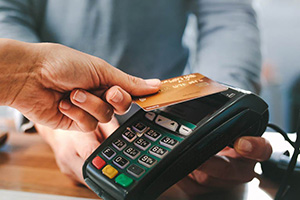
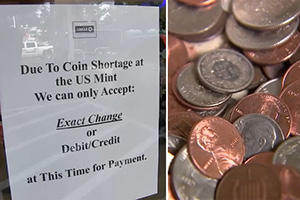
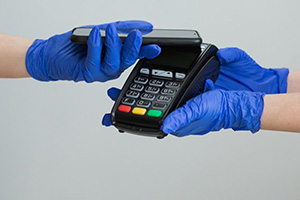















 Preppgroup